How to Get Early Samples of Kids Sunglasses for Pre-Launch Photoshoots?
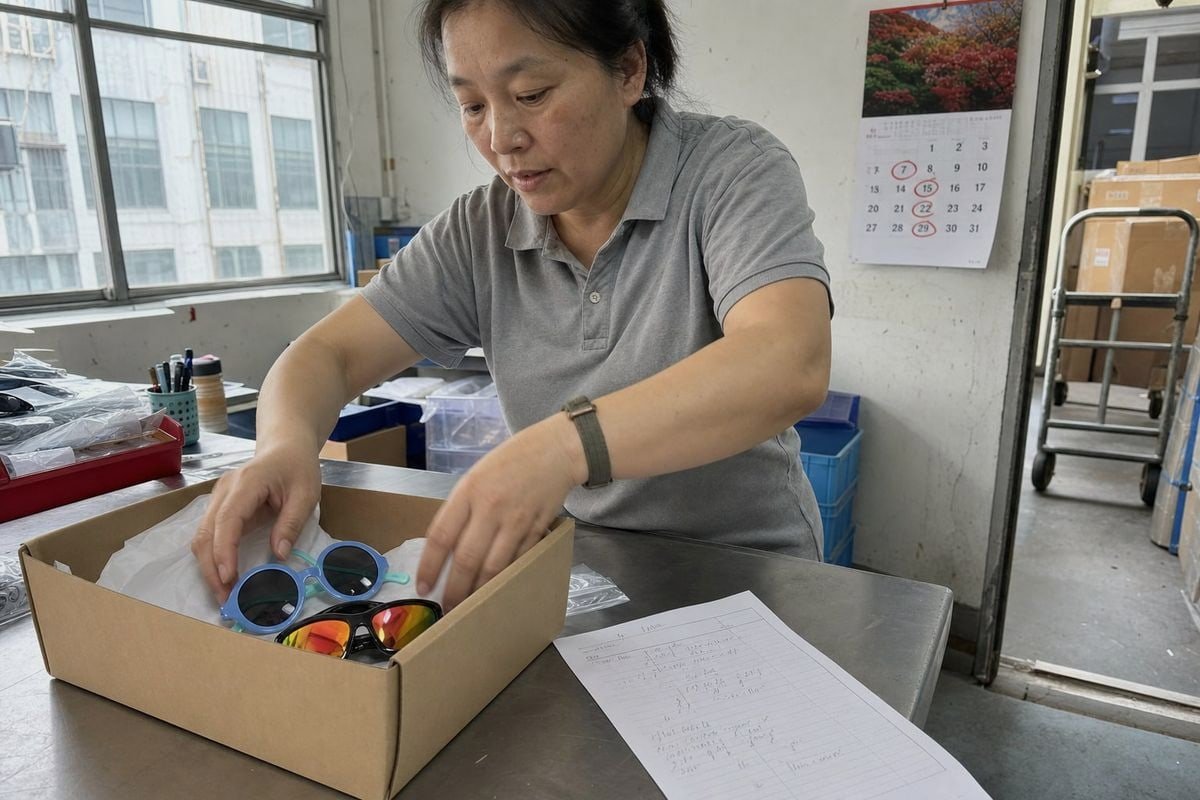
Getting early samples of kids sunglasses in hand before launch day is harder than most new brands expect. I have watched buyers book photographers, models, and studios — then wait weeks for frames that never arrived on time. The shoot slips, the launch slips, and the marketing calendar collapses. On our production line, we solved this by building a dedicated sampling workflow, and in this guide I will show you exactly how to use one.
To get early samples of kids sunglasses for a pre-launch photoshoot, contact an OEM eyewear supplier directly, request pre-production or salesman samples from existing catalog styles, confirm lens tint and sizing in writing, and pay a small sample fee. Most factories can ship samples within 2–7 days.
That is the short answer. But the details matter. The route you choose, the questions you ask, and the timeline you plan will decide whether your photoshoot happens on schedule. Let me walk you through each step.
How can I request early samples without committing to a full production order?
A buyer from Australia once emailed me worried she had to place a 5,000-piece order just to see one frame. She was relieved to learn that is not how sampling works at our factory — or at most serious factories.
You can request samples with no production commitment by choosing from a supplier's existing catalog, paying a per-unit sample fee plus shipping, and asking for a sample-to-order credit. Reputable suppliers deduct sample costs from your first bulk invoice, so sampling carries no long-term obligation.
The key idea is simple: samples and production orders are two separate transactions. A factory sends samples to win your trust. You are not signing a contract by asking. In our experience exporting to 20+ countries, the buyers who get the best sampling terms are the ones who ask clearly and professionally.
The three main sampling routes
Your best route depends on who you are working with. Here is how the options compare:
| Route | الدفع الآمن عبر المنصة | التكلفة النموذجية | Commitment level |
|---|---|---|---|
| ODM catalog samples | New brands testing the market | Low sample fee + shipping | لا شيء |
| Custom OEM pre-production sample 1s | Brands with finalized designs | Higher fee, sometimes $50–$150 per pair | Usually tied to a planned order |
| Brand outreach / creator route | Content creators, collaborators | Often free if pitch is strong | Content deliverables |
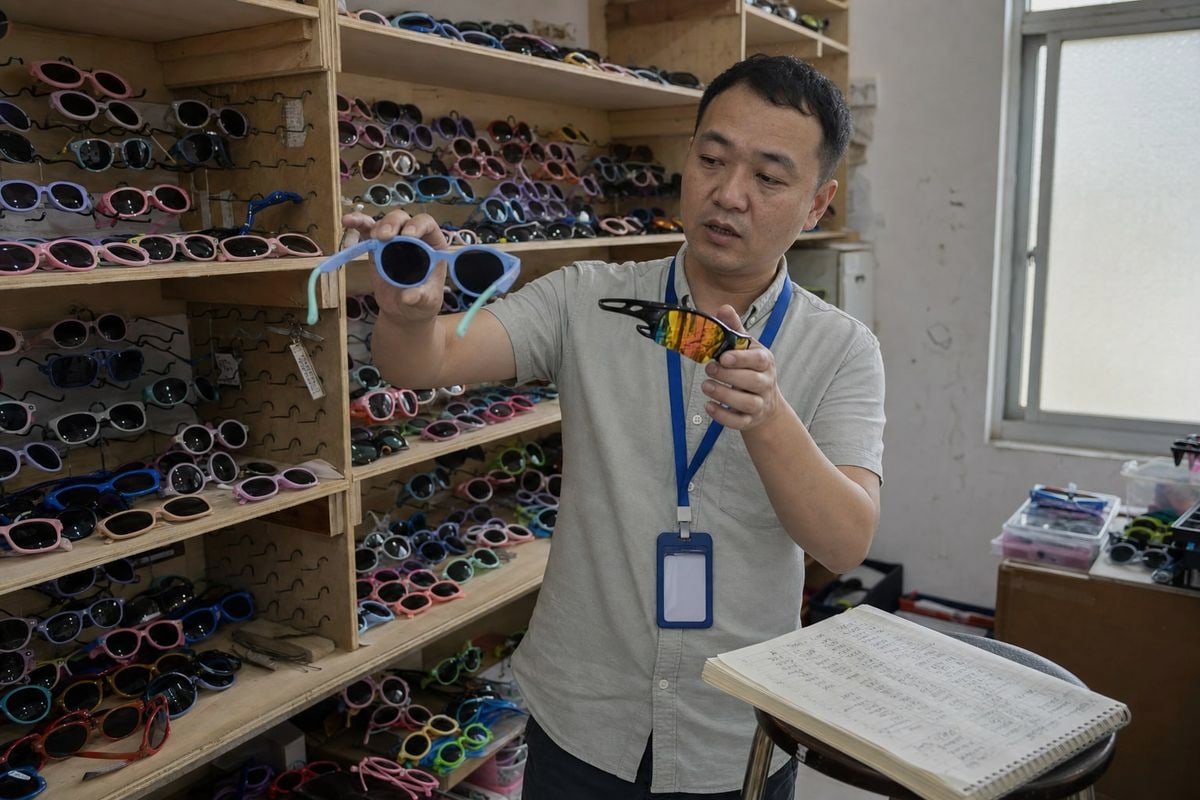
The ODM catalog route is the fastest. Because we keep roughly 800 existing styles in our library, a buyer can pick three or four frames, pay a small fee, and receive photoshoot-ready units without any mold investment. This is the essence of private label manufacturing — you launch on proven tooling and avoid the risk of custom prototype development before you have sales data.
How to write the request
Keep your outreach email tight. Cover six points: what product you want, how many samples you need, when you need them, where they will be used, why the shoot benefits the supplier, and how shipping will be handled. When a buyer tells me the samples are for a launch campaign or lookbook, I prioritize that request, because a successful launch usually means a repeat customer.
One more negotiation tip: ask for the sample-to-order credit in writing. Most factories, ours included, will happily deduct sample fees from your first Minimum Order Quantity 2 purchase. It costs the supplier little and signals good faith on both sides.
What should I check in a kids sunglasses sample before using it in my photoshoot?
Our QC team once caught a sample batch where the lens tint was two shades lighter than the approved spec. On camera, that difference would have been obvious — and the retail product would not have matched the launch photos.
Before the photoshoot, verify that the sample matches final production in lens tint, frame color, size, and branding. Check UV400 protection markings, hinge quality, fit on a child's face, and surface finish. Confirm in writing whether it is a catalog sample or a true pre-production sample.
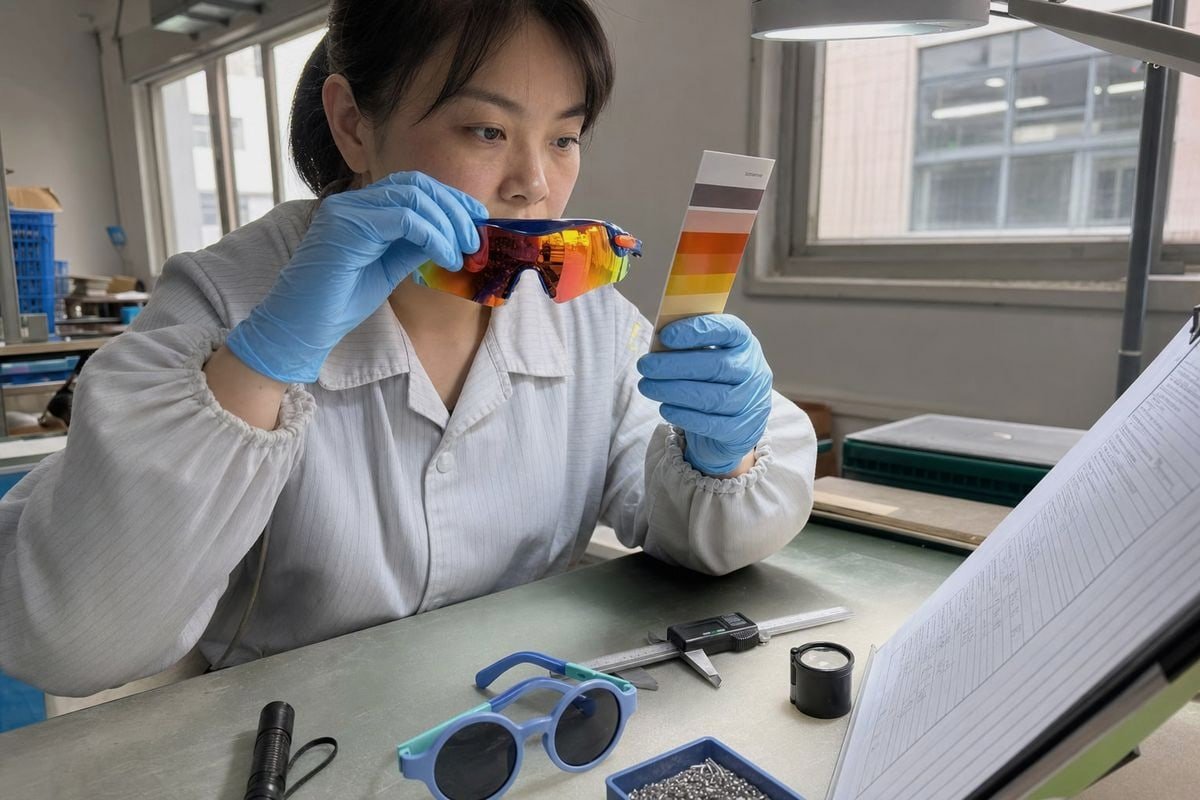
Kids sunglasses are not just smaller adult sunglasses. The frames must flex without snapping, sit correctly on a small nose bridge, and stay put on an active child. That is why we build most of our children's styles in TPEE flexible frames and TR90 — a frame that twists safely matters both for safety compliance and for how naturally a child model wears it on set.
Your pre-shoot inspection checklist
| Check point | What to look for | Why it matters on camera |
|---|---|---|
| Lens tint and gradient | Matches approved color spec | Photos must match retail product |
| Frame color and finish | Matte vs. glossy consistency | Reflections change under studio lights |
| Fit and bridge width | Sits level on a child's face | A sliding frame ruins every shot |
| Flexibility and safety | TPEE/TR90 bends without breaking | Child comfort and CPSIA safety standards |
| يو في 400 3 markings | Correct lens category labeling | Claims in marketing must be accurate |
| Hinges and screws | Smooth action, no wobble | Macro shots expose loose hardware |
| Logo and branding | Placement, size, print quality | Close-ups show every printing flaw |
Sample type changes what you can trust
A standard catalog sample shows you the style, but it may not carry your custom colors or logo. A pre-production sample is finished to retail quality and made on the same line as your bulk order. For lifestyle product photography that represents the final product, always request the pre-production version — or at minimum, get written confirmation of every difference between the sample and the mass-produced unit.
Order multiple units when you can. Keep one pristine pair for photography, one for wear testing on a real child, and one as a backup or comparison reference. Quality assurance testing on your side is cheap insurance; reshooting a campaign is not.
How fast can a factory provide sample pairs for a pre-launch timeline?
The trade-off I weigh most often with new buyers is speed versus customization. An in-stock catalog style can leave our warehouse in days. A custom-colored frame with your logo takes longer — and knowing which one you actually need is half the planning battle.
A factory can ship in-stock catalog samples in 2–7 days, while custom pre-production samples typically need 7–15 days plus international shipping. For a safe pre-launch photoshoot timeline, request samples 4–6 weeks before your shoot date to allow revisions and transit.
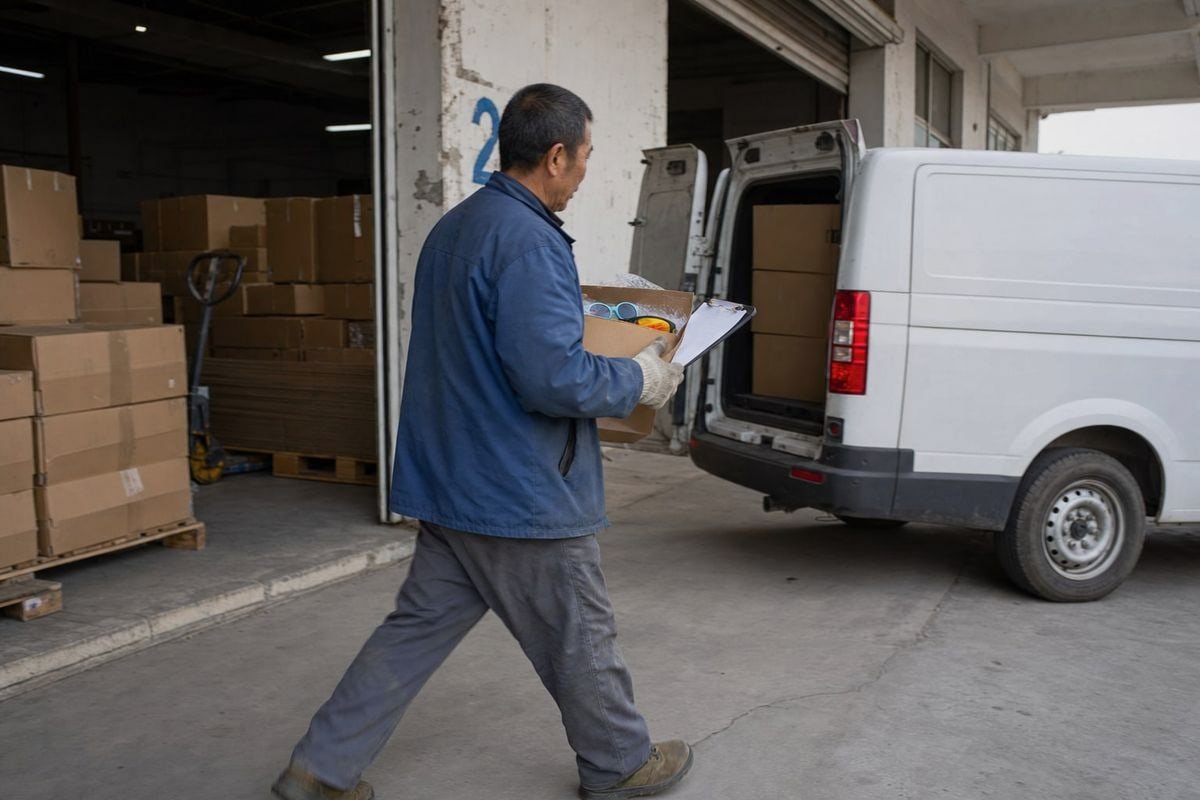
Sample production lead time depends on three things: whether the style exists, whether it needs custom work, and how it ships. Here is a realistic planning table based on how we run our own sampling workflow:
| Sample type | Factory time | Shipping (express) | Total buffer to plan |
|---|---|---|---|
| In-stock catalog sample | 2-7 أيام | 3–7 days | 2 weeks |
| Custom color / logo sample | 7–15 days | 3–7 days | 3–4 weeks |
| New mold pre-production sample | 25–45 days | 3–7 days | 6–8 weeks |
Build your timeline backward
Start from the shoot date and work in reverse. Reserve time for التخليص الجمركي 4, one revision round, and your own inspection. A numbered plan keeps everyone honest:
- Shortlist styles from the catalog, using photos or virtual try-on tools to narrow options.
- Send your sample request with quantities, deadline, and shipping address.
- Approve sample photos before dispatch — good suppliers send confirmation photos and tracking.
- Inspect samples on arrival within 48 hours.
- Request one revision if needed, or approve for the shoot.
- Hold a backup shoot date one week later, just in case.
What to do if samples are delayed
Delays happen — customs holds, material shortages, holiday shutdowns. Smart brands prepare alternatives. You can shoot behind-the-scenes content with raw early prototypes, which builds authenticity during the manufacturing wait. You can also launch an AR virtual try-on filter 5 using digital design files to generate pre-launch buzz while physical stock is in transit. Some brands even use 3D-printed frame prototypes 6 with donor lenses for close-up macro shots. These are useful stopgaps, but none of them replaces real photography of the real product on a real child, especially where fit, reflection, and lens tint carry the visual story.
Can I get custom colors or branding on my samples before mass production begins?
A Japanese baby-brand buyer once asked us to match her packaging's exact pastel palette on the frames before she would sign off on production. Two Pantone-matched sample rounds later, her launch photos and retail units were indistinguishable — which is exactly the point of custom sampling.
Yes. Full OEM/ODM suppliers can produce samples with custom frame colors, printed or engraved logos, custom lens tints, and branded packaging before mass production. Expect a higher sample fee and 7–15 extra days, but you get retail-ready units for photography and final approval.
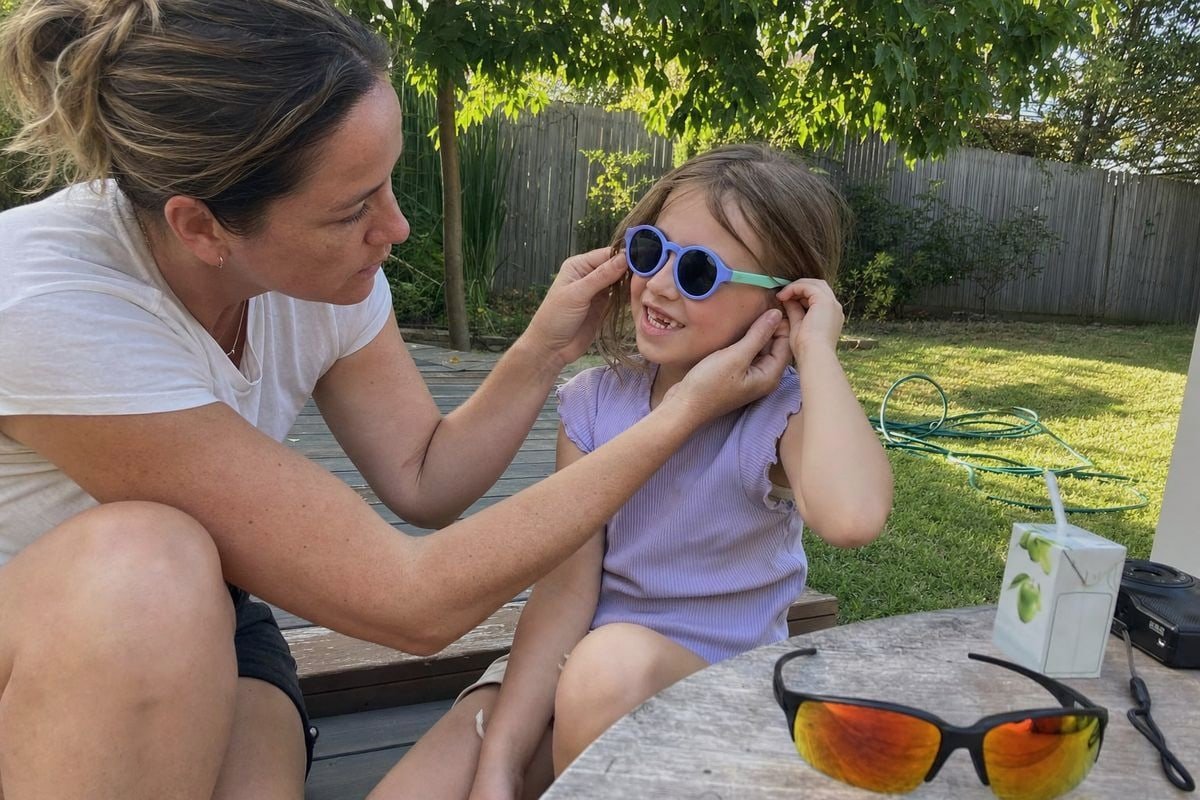
Custom sampling is where brand identity development becomes physical. A stock frame proves the fit; a branded pre-production sample proves the product. At our Taizhou workshop, custom sample work usually covers four areas: frame color matching, logo application, lens options, and packaging.
What can be customized at the sample stage
Frame colors are matched to Pantone references 7, whether you want a soft periwinkle-and-mint two-tone for toddlers or a bold mirrored sport shield for older kids. Logos can be pad-printed, engraved, or embossed on temples. Lenses can be specified as UV400, polarized, mirrored gradient, or category-specific tints. Packaging — pouches, cases, hang tags, retail boxes — can carry your full branding, so your photoshoot can include unboxing and shelf-presentation shots, not just the frames.
One honest caveat: custom samples cost more, sometimes $50–$150 per pair for genuinely new work, because small-batch color runs and printing setups carry real costs. Do not treat that fee as a red flag. Treat it as tuition — and negotiate it as a credit against your first order.
Custom samples versus stock samples for your shoot
If your launch photos will show logos and exact colors, you need custom pre-production samples. If your shoot is conceptual — lifestyle mood, model casting, styling tests — stock catalog samples arrive faster and cost less. Many of our buyers do both: stock samples first for planning and blocking, then branded samples for the hero campaign images. A finalized tech pack with precise bridge measurements and temple lengths for each age bracket helps enormously here; it means the first custom sample is usually photoshoot-ready without revision rounds. If you work through sourcing agent services instead of directly with the factory, insist on the same photo-confirmation and tracking workflow so nothing gets lost in translation.
الخلاصة
Late samples sink launches. The fix is planning: request early samples of kids sunglasses from a proven OEM partner, verify everything, and build in buffer time. We are ready when you are.
ملاحظات ختامية
1. Wikipedia entry defining the pre-production phase in manufacturing and product development. ↩︎
2. Alibaba.com is a major B2B sourcing platform where MOQ negotiation practices are standard. ↩︎
3. CDC guidance on UV protection supports the lens tint and UV400 verification advice. ↩︎
4. WTO customs valuation resource explains procedures affecting international shipping timelines. ↩︎
5. Background on augmented reality technology used for virtual try-on marketing tools. ↩︎
6. Background on 3D printing technology used to create early frame prototypes. ↩︎
7. Background on the Pantone color matching system referenced for custom frame colors. ↩︎
مقالات أخرى قد تعجبك
August 1, 2026
هل يجب على المصنع التعامل مع تغليف ووضع ملصقات نظارات الأطفال الشمسية، أم استخدام مورد مخصص؟
August 1, 2026
مستودع خاص مقابل الوفاء المباشر من المورد: أيهما يقلل تكاليف الإرجاع لعلامات نظارات الأطفال الشمسية؟
August 1, 2026
مباشر إلى ميناء المستودع أو التخزين الخارجي: أيهما يوفر أكثر على شحن نظارات الأطفال الشمسية؟
هل تبحث عن شريك موثوق به للنظارات للأطفال؟
استكشف أكثر من 800 نمط جاهز ودعم OEM/ODM كامل مصمم خصيصًا لعلامتك التجارية.
اتصل بنا English
  Español de México
  Deutsch
  Français
  日本語
日本語  العربية
  Português do Brasil