How to Design a PDQ Display Tray for Kids Sunglasses for Instant In-Store Display?
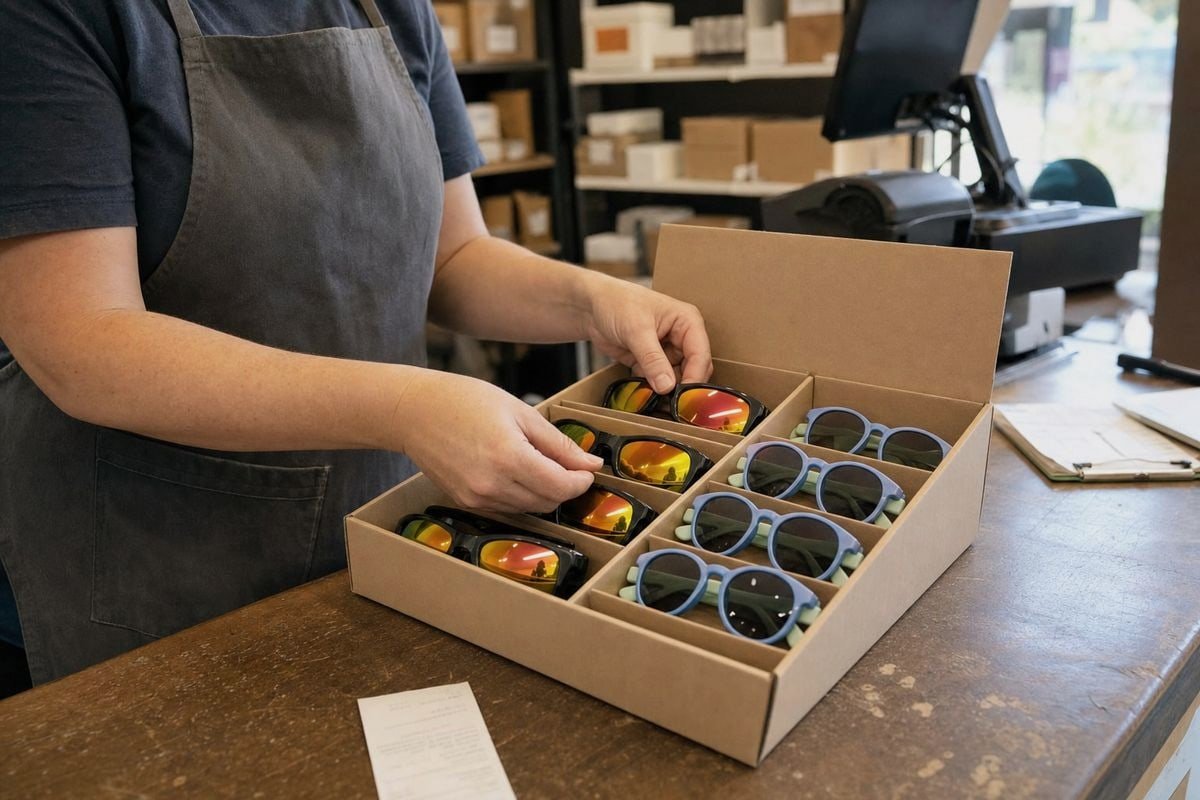
A great pair of kids sunglasses can die on the shelf عدسات UV400 1. I have watched buyers order beautiful frames from our Taizhou factory, then lose sales because store staff never set them up properly. Loose pairs in a bin look cheap. A well-designed PDQ display tray for kids sunglasses fixes that in seconds.
To design a PDQ display tray for kids sunglasses, size the tray around folded frame dimensions, use printed corrugated cardboard with divided slots, add a bold header card, engineer a reinforced base with a front lip, and ensure tool-free setup so staff can place it on the counter instantly.
That is the short answer. The full answer covers materials, sizing, branding, and how to get custom trays produced without painful minimum order quantities. Let me walk you through each step, the same way I walk our B2B clients through it.
What Materials and Structure Work Best for a Durable PDQ Tray Design?
During one QC review at our workshop, we loaded a sample tray with twelve TR90 frames and left it on a shelf for two weeks. The front edge sagged. That test changed how we specify board strength for every display we ship.
Corrugated cardboard, usually E-flute or B-flute with a printed litho-laminated surface, works best for a durable PDQ tray. Pair it with a reinforced double-wall base, divider slots for each pair, a front retaining lip, and a rear support panel to prevent sagging during sell-through.
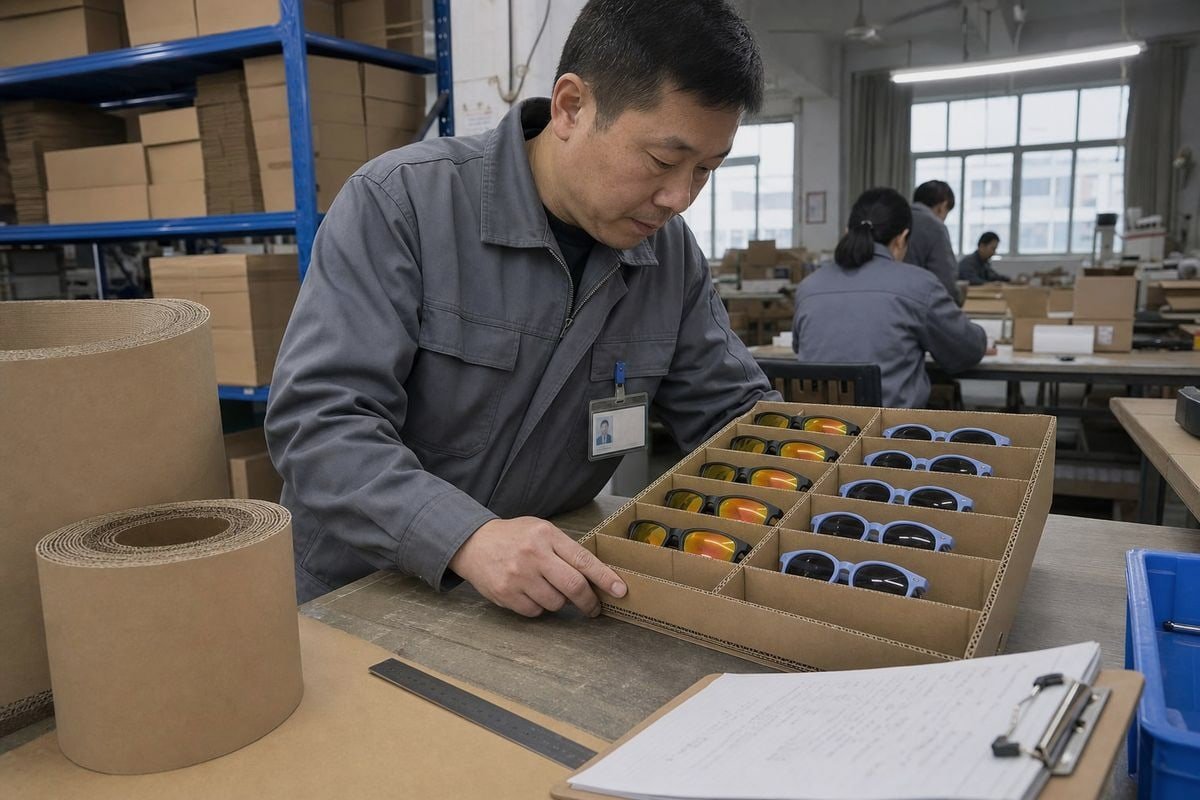
Material choice drives everything else in the design. Cardboard dominates the PDQ category for good reasons. It is light, cheap to ship flat, easy to print, and recyclable. Retailers also increasingly ask for proof of sustainable sourcing, such as FSC-certified board 2, before they approve a display for their stores. So paper-based construction is not just a cost decision. It is often an entry requirement.
Choosing the Right Board Grade
Not all cardboard performs the same. Here is how the common options compare for a kids sunglasses tray:
| المواد | Strength | Print Quality | Cost | Best Use |
|---|---|---|---|---|
| E-flute corrugated | جيد | جيد جدًا | منخفض إلى متوسط | Standard countertop trays |
| B-flute corrugated | جيد جدًا | جيد | متوسط | Heavier loads, floor shippers |
| Litho-laminated E-flute 3 | جيد | ممتازة | متوسط–مرتفع | Branded retail programs |
| Coated paperboard only | مقبول | ممتازة | منخفض | Light trays, short campaigns |
For most kids sunglasses programs, we recommend litho-laminated E-flute. It gives sharp graphics on the outside and real structure underneath.
Structural Details That Prevent Failure
Sunglasses are light, but a full tray still carries real weight. In our experience, four details decide whether a tray survives eight weeks in a store. First, use a double-layer or folded-under base so the bottom never bows. Second, add divider walls that double as vertical supports. Third, include a front lip about two to three centimeters high. It holds frames in place but keeps the lens colors visible, which matters for our mirrored gradient styles. Fourth, add a rear panel that supports the header card and stops the tray from tipping backward. Flexible TPEE and TR90 frames forgive some rough handling, but scratched lenses do not. Shallow, snug slots protect the mirrored coatings during shipping and restocking.
How Do I Choose the Right Size and Layout to Maximize In-Store Shelf Impact?
A buyer from Australia once sent us the exact counter dimensions of her retail chain before we quoted a single tray. That email saved her program. The tray fit perfectly on day one, and reorders followed.
Size the tray footprint to fit standard checkout counters, roughly 25–35 cm wide and deep, then build the layout around 6–12 folded pairs in angled front-facing slots. Keep total height under 45 cm including the header so it never blocks sightlines.
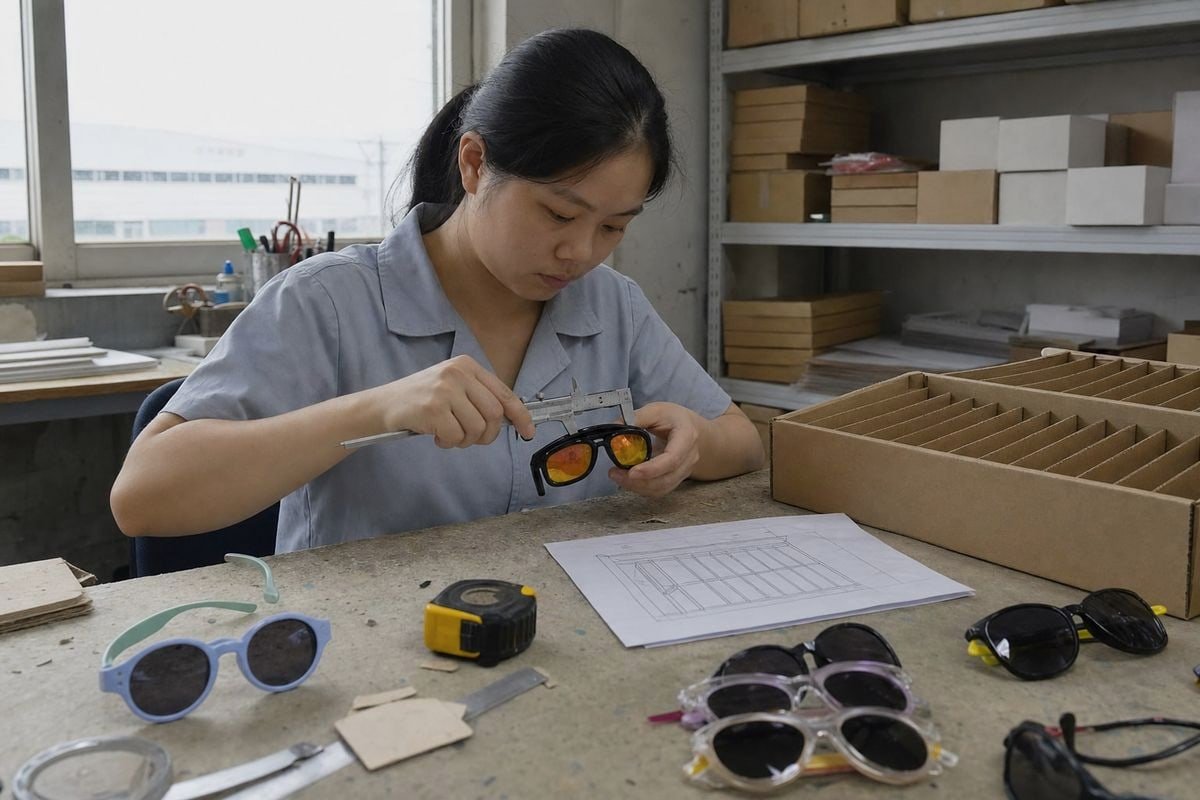
Start with the product, not the tray. Our kids frames fold to a fairly consistent size, but wraparound sport shields sit wider than round pastel frames. So we always measure the largest style in the assortment first, then set cavity width and depth from that. Overcrowding is the most common layout mistake we see. When slots are too tight, kids struggle to pull a pair out, frames snag, and staff avoid restocking the unit.
A Practical Sizing Framework
Here is the sizing logic we use when engineering trays for client programs:
| Design Factor | Recommended Spec | لماذا هو مهم |
|---|---|---|
| Footprint | 25–35 cm square | Fits checkout counters and gondola shelves |
| Capacity | 6–12 pairs | Full look at launch, easy replenishment |
| Slot angle | 15–30 degrees tilted forward | Shows lens color to shoppers at a glance |
| Total height | Under 45 cm with header | Keeps cashier sightlines clear |
| Slot pitch | Frame width plus 8–10 mm | Easy grab-and-return for small hands |
Placement Changes the Math
Think about where the tray will actually sit. A checkout counter rewards a small footprint and forward-tilted slots. A front-of-store seasonal table allows a wider tray with two rows. If the display targets children directly, remember eye level. A child sees the world at roughly 36 to 48 inches. A tray on a low table at that height invites self-selection, which drives impulse purchase 4 far better than a display placed at adult height. We also encourage modular thinking. Two identical trays side by side look intentional, and retailers can scale the program without new tooling.
What Branding and Graphic Elements Should I Include to Boost Retail Appeal?
There is a trade-off I weigh on almost every artwork approval: the louder the tray graphics, the harder it becomes to see the actual sunglasses. With kids products, restraint takes discipline, because everyone wants more color everywhere.
Include a tall header card with your logo and a short benefit message like UV400 protection, bright color-blocked side panels, a clean front strip with price or age cues, and playful shapes that frame the product without hiding it. Keep text minimal and legible from one meter away.
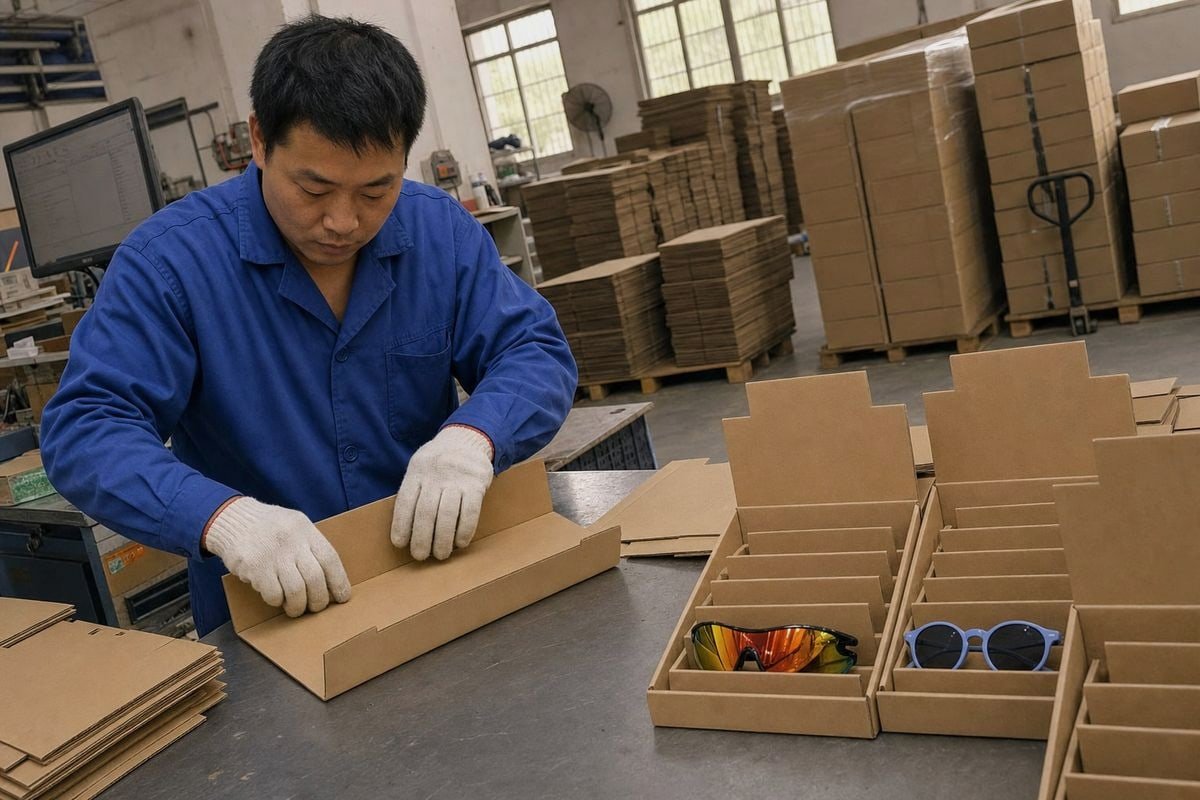
Treat the tray as a mini billboard at the point of sale. It has three audiences at once: the child, the parent, and the retail buyer who approved it. Each one needs something different from the graphics.
Design for Three Audiences
The child responds to color and character. Bright color blocking, friendly rounded shapes, and simple illustrations pull small eyes toward the display. Our pastel two-tone frames, for example, pair beautifully with soft mint and periwinkle tray graphics that echo the frame colors. The parent responds to trust cues. This is where the header card earns its space. Short claims like عدسات UV400 5, flexible safe frames, or lightweight comfort answer the parent's silent question: is this safe for my child? We build our frames in flexible TPEE and TR90 exactly because parents worry about breakage near a child's face, and the tray should say so in five words or fewer. The retailer responds to professionalism. Consistent brand colors, a clean logo, and tidy print finishing signal that your brand belongs in their store.
A Simple Graphics Checklist
- Header card: logo, one benefit line, one visual hook.
- Front lip: price point or age range, nothing more.
- Side panels: brand colors and pattern, visible from aisle angles.
- Interior: a calm, light color so lens gradients pop.
- Back panel: reorder information for store staff.
One more practical note. Mirrored lenses, like our orange-to-teal gradient shields, are already the loudest element on the tray. Let them do the work. A neutral interior with bold exterior branding almost always outperforms a fully saturated design.
How Can I Work with My Manufacturer to Get Custom PDQ Trays Without MOQ Headaches?
New brands often tell me the same thing during first calls: they want retail-ready presentation, but they cannot commit to huge display quantities before proving sell-through. That concern is fair, and there are clean ways around it.
Choose a factory that bundles sunglasses and display production, start from existing tray dies with custom printing instead of new tooling, align tray quantity with your frame order, and approve a physical pre-production sample before mass production. This keeps MOQs low and risk manageable.
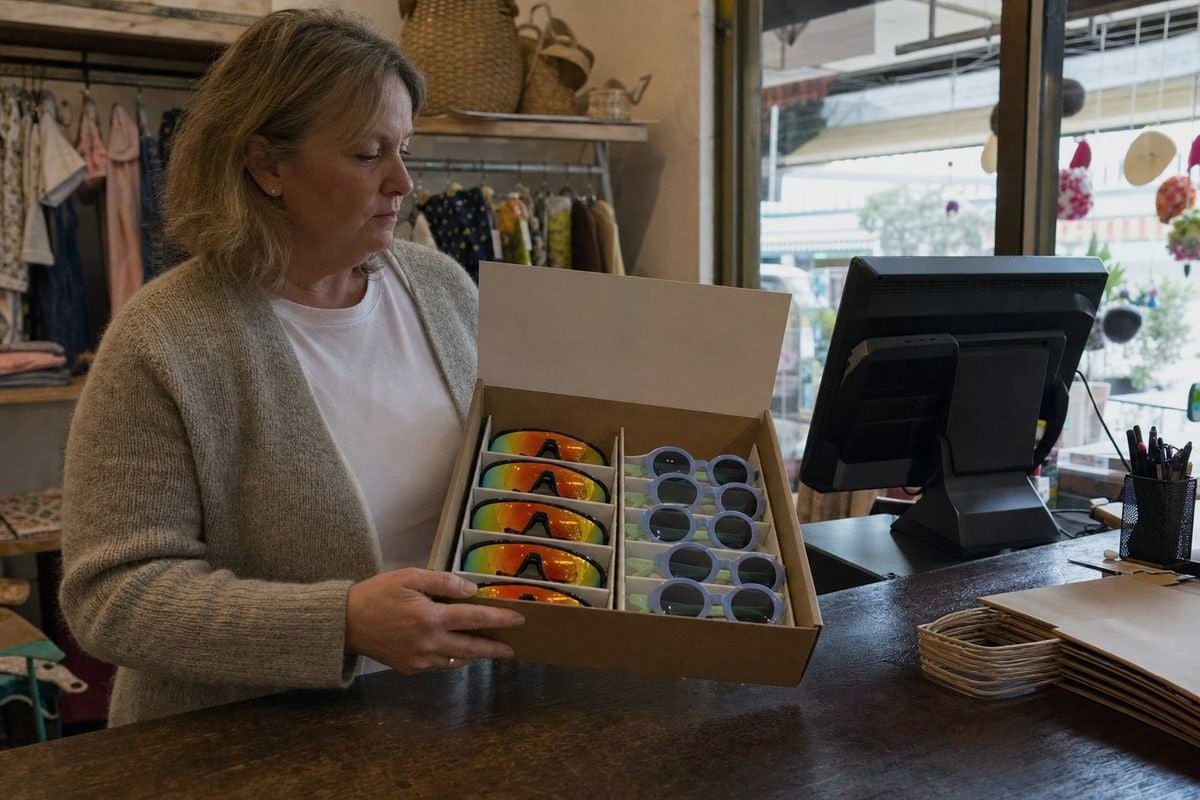
The biggest MOQ trap is custom structural tooling. A brand-new die-cut shape 6 requires setup costs that only make sense at volume. The workaround is simple: keep the structure standard and make the print custom. Because we already supply around 800 existing frame styles 7 that buyers can launch without mold investment, we apply the same low-risk logic to displays. A proven tray structure with your artwork gives you a branded, retail-ready program at a fraction of the commitment.
A Step-by-Step Collaboration Process
This is the sequence we follow with clients from our 20-plus export markets:
- Share your assortment plan: which styles, how many pairs per tray.
- Confirm the retail placement: counter, shelf, or seasonal table.
- Select a standard tray structure that fits your frame dimensions.
- Supply artwork or ask the factory's design team to adapt your brand assets.
- Approve a digital proof, then a physical sample loaded with real frames.
- Test the sample: assembly time, stability, and a shake test for transit.
- Run production, pre-pack the trays, and ship retail-ready.
Matching Order Size to Display Strategy
| Order Stage | Suggested Approach | MOQ Pressure |
|---|---|---|
| Market test | Standard tray, custom print, one artwork | منخفض |
| First retail rollout | Custom print, small structural tweaks | متوسط |
| Established program | Fully custom die-cut and structure | Higher, justified by volume |
One lesson from fifteen years of eyewear production: always insist on a loaded physical sample before mass production. A tray that looks perfect empty can lean, sag, or hide lenses once real frames go in. Ten minutes with a sample saves weeks of correction later.
الخلاصة
A PDQ display tray for kids sunglasses succeeds when it sets up in seconds, protects the frames, charms both child and parent, and fits your order size. Design it deliberately, sample it loaded, then launch with confidence.
ملاحظات ختامية
1. WHO explains UV radiation risks, supporting the UV400 protection claim aimed at parents. ↩︎
2. FSC is the authoritative certification body for sustainably sourced paper and cardboard materials. ↩︎
3. Background on corrugated fiberboard grades explains the flute types referenced in the tray design. ↩︎
4. Explains the consumer behavior concept driving low-table, child-eye-level display placement strategy. ↩︎
5. Authoritative eye health source verifies UV400 protection claims used to reassure parents about child safety. ↩︎
6. Background on die-cutting explains why new structural tooling raises MOQ costs for custom trays. ↩︎
7. Alibaba.com is a leading B2B sourcing platform for existing product styles without new tooling investment. ↩︎
مقالات أخرى قد تعجبك

August 1, 2026
هل يجب على المصنع التعامل مع تغليف ووضع ملصقات نظارات الأطفال الشمسية، أم استخدام مورد مخصص؟

August 1, 2026
مستودع خاص مقابل الوفاء المباشر من المورد: أيهما يقلل تكاليف الإرجاع لعلامات نظارات الأطفال الشمسية؟

August 1, 2026
مباشر إلى ميناء المستودع أو التخزين الخارجي: أيهما يوفر أكثر على شحن نظارات الأطفال الشمسية؟
هل تبحث عن شريك موثوق به للنظارات للأطفال؟
استكشف أكثر من 800 نمط جاهز ودعم OEM/ODM كامل مصمم خصيصًا لعلامتك التجارية.
اتصل بنا English
  Español de México
  Deutsch
  Français
  日本語
日本語  العربية
  Português do Brasil