كيف أتواصل مع متطلبات الحجم عند البحث عن إطارات بصرية للأطفال؟
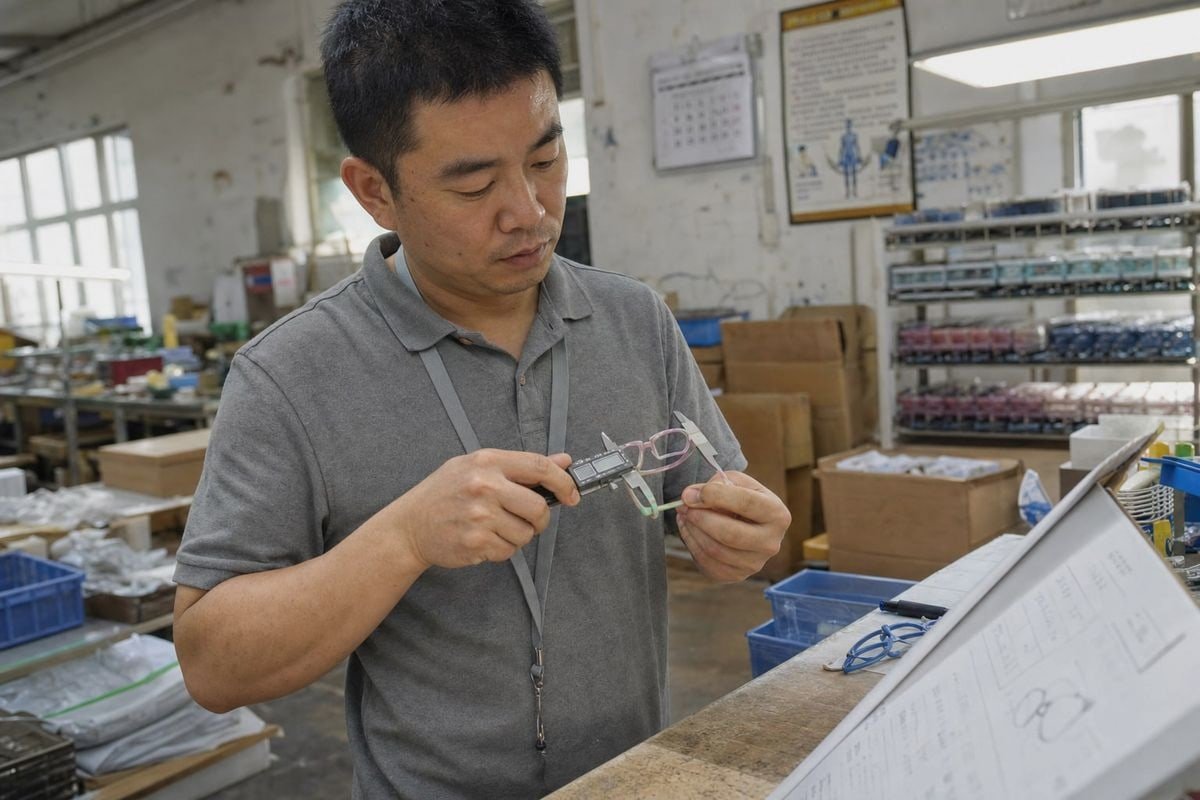
التواصل مع متطلبات الحجم لإطارات الأطفال البصرية يبدو بسيطًا حتى تصل حاوية من الإطارات غير المناسبة. في خط الإنتاج لدينا، تعد موجزات التحجيم الغامضة السبب الأول لإعادة العمل المكلفة.
قم بتوصيل متطلبات الحجم لإطارات الأطفال البصرية عن طريق تحديد قياسات دقيقة بالمليمتر - عرض العدسة، وعرض الجسر (DBL)، وطول الذراع - بالإضافة إلى الفئة العمرية المستهدفة، ونطاق مسافة البؤبؤ، وقواعد الملاءمة الوظيفية مثل البؤبؤ المركزي، وعدم الانزلاق، وعدم ملامسة الخد أو الحاجب.
هذه هي الإجابة المختصرة. أدناه، سأقوم بتقسيمها إلى القياسات الدقيقة، والفئات العمرية، والمخططات، وتفاصيل حزمة التكنولوجيا التي يجب أن ترسلها إلى أي مورد.
ما هي قياسات الحجم التي يجب أن أقدمها عند طلب عينات إطارات الأطفال البصرية؟
تواصل مشترٍ من أستراليا ذات مرة معنا يطلب "إطارات لأطفال في السادسة من العمر". هذه الجملة الواحدة أجبرت ثلاث جولات من أخذ العينات. الأرقام الدقيقة كانت ستحلها في جولة واحدة.
قدم ثلاثة قياسات أساسية بالمليمتر: عرض العدسة (عادةً 35-52 ملم للأطفال)، عرض الجسر أو DBL (14-18 ملم)، وطول ذراع الصدغ (115-130 ملم). أضف العرض الأمامي الإجمالي، قياس B، والمسافة البؤبؤية المستهدفة حتى يتمكن المصنع من تأكيد المقاس قبل أخذ العينات.
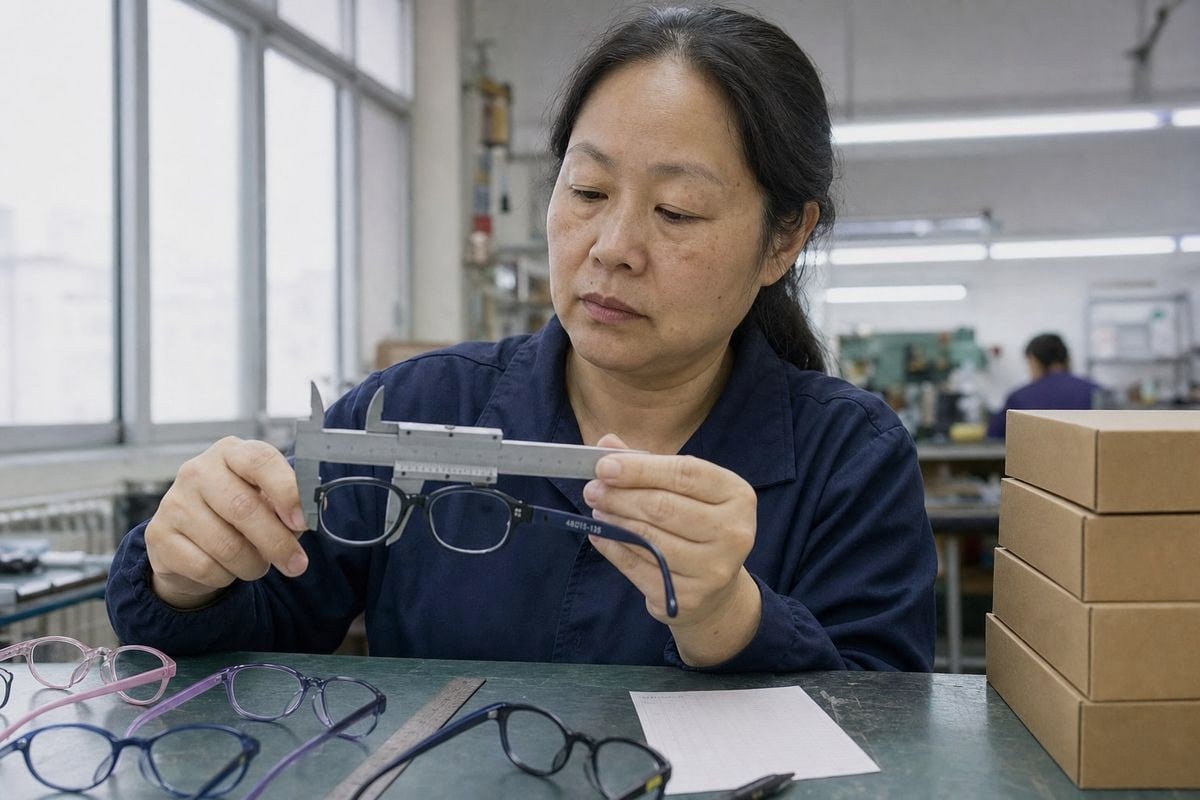
تستخدم صناعة البصريات لغة موحدة تسمى نظام التغليف 1. يتم وصف كل إطار على أنه A-DBL-Temple: عرض العدسة الأفقي (A)، والمسافة بين العدسات (DBL)، وطول ذراع المعبد. ستجد رمز الحجم هذا مطبوعًا على الجانب الداخلي لذراع المعبد لأي إطار موجود تقريبًا. عندما يتلقى فريق المبيعات لدينا هذا الرمز، يمكننا تقديم عرض أسعار وأخذ عينات بثقة.
القياسات الخمسة الأكثر أهمية
إليك ما يجب أن تتضمنه طلبات التحجيم الكاملة، ولماذا كل رقم مهم لوجه الطفل.
| قياس | نطاق الأطفال النموذجي | لماذا هو مهم |
|---|---|---|
| عرض العدسة (A) | 35–52 ملم | يحدد المقياس العام للإطار وحجم العدسة |
| عرض الجسر (DBL) | 14–18 ملم | جسور الأنف المسطحة للأطفال تجعل هذه النقطة الأكثر شيوعًا للفشل |
| طول ذراع المعبد | 115–130 ملم | الطويل جدًا ينزلق؛ القصير جدًا يقرص خلف الأذن |
| العرض الأمامي الكلي | من طرف إلى طرف | يجب ألا يتجاوز العرض الصدغي للطفل |
| قياس B (ارتفاع العدسة) | 30 ملم+ موصى به | تحتاج عدسات إدارة قصر النظر الحديثة إلى مناطق معالجة عمودية |
يستحق قياس B اهتمامًا خاصًا الآن. يقوم العديد من عملائنا من شركات البصريات في اليابان وأوروبا بتركيب عدسات التحكم في قصر النظر 2, ، والتي تحتاج إلى ارتفاع عدسة عمودي لا يقل عن 30 ملم للحفاظ على منطقة المعالجة. إذا كنت تخدم هذا السوق، فاذكر الحد الأدنى لقياس B بشكل صريح.
بالإضافة إلى الأرقام الخام، أخبر المورد الخاص بك بالهدف المستهدف للمسافة المركزية الهندسية (GCD). عندما يكون GCD للإطار قريبًا من المتوسط المسافة بين الحدقتين 3 لمجموعة العمر المستهدفة، تصبح العدسات أرق ويقل تشوه المحيط. قاعدة مفيدة: يجب ألا يتجاوز حجم الإطار وحجم الجسر PD للطفل بأكثر من 8 ملم.
أخيرًا، أرسل زوجًا مرجعيًا إذا كان موجودًا. نسخ رمز الحجم المطبوع من إطار مناسب هو الأساس الأسرع والأكثر موثوقية لتصنيع النظارات OEM.
كيف أعرف أي مقاسات الإطارات تناسب فئات عمر الأطفال المختلفة؟
هناك مفاضلة حقيقية نزنها في كل قالب جديد: هل نقوم بتحديد حجم الإطار ليناسب اليوم، أم نترك مجالًا للنمو؟ يؤدي التحجيم المفرط إلى إفساد محاذاة العدسة بهدوء، لذلك نميل نحو الملاءمة الدقيقة مع المواد المرنة.
أحجام إطارات الأطفال تتناسب تقريبًا مع العمر: عرض عدسة 35-40 مم للأعمار من 0-3 سنوات، 41-45 مم للأعمار من 4-6 سنوات، 46-48 مم للأعمار من 7-9 سنوات، و 49-52 مم للأعمار من 10-13 سنة. اعتبر جداول الأعمار نقطة انطلاق؛ عرض الوجه الفعلي، ملاءمة الجسر، والمسافة بين الحدقتين هي مؤشرات أكثر دقة.
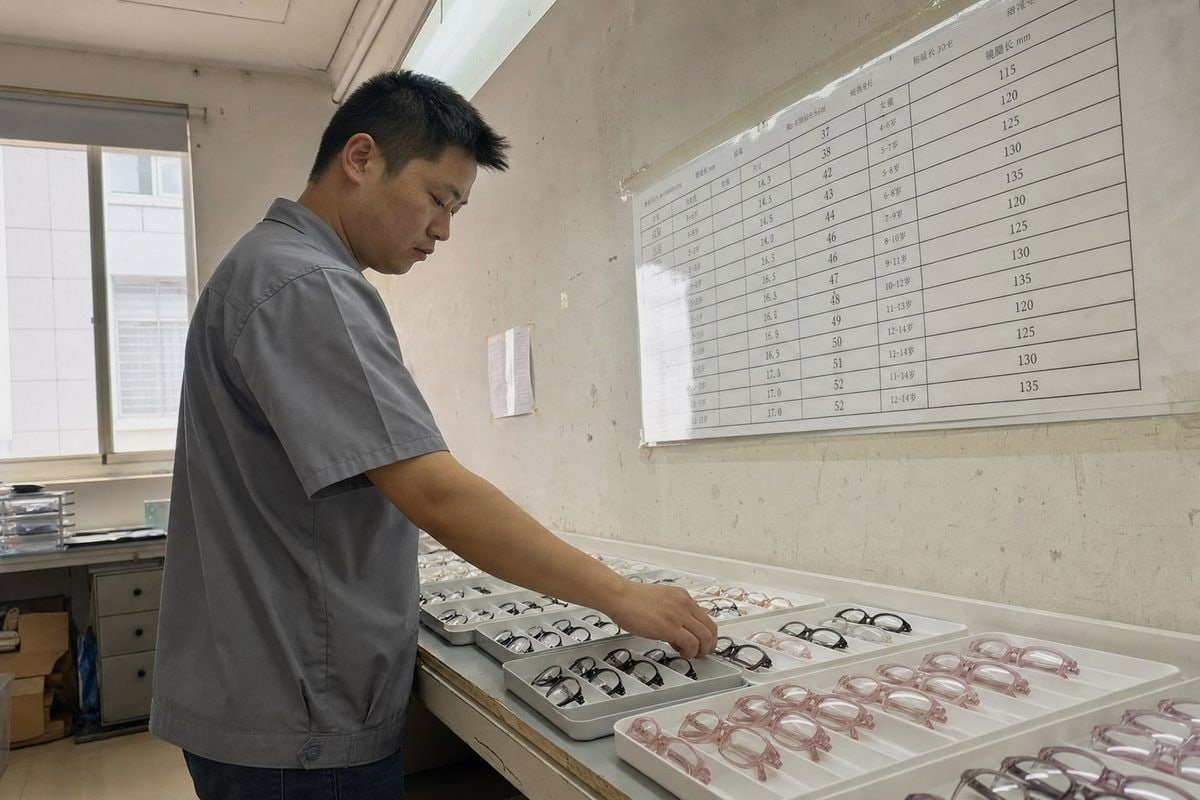
التحجيم حسب العمر مريح للتسويق، ولكنه مجرد بديل. يمكن أن يحتاج طفلان في السابعة من العمر إلى إطارات تختلف بعدة مليمترات في كل بعد. في خبرتنا التي دامت خمسة عشر عامًا في تصنيع نظارات الأطفال، يستخدم المشترون الناجحون الفئات العمرية لتحديد خط منتج، ثم يتحققون من قياسات الوجه الفعلية قبل تأمين المواصفات.
مخطط تحجيم عملي لنظارات الأطفال
| الفئة العمرية | عرض العدسة | الجسر (DBL) | طول الذراع |
|---|---|---|---|
| 0-1 سنوات | 35-37 ملم | 14–15 ملم | 110-115 ملم |
| 1–3 سنوات | 37–40 ملم | 14–16 ملم | 115-120 ملم |
| 4–6 سنوات | 41-45 مم | 15–16 ملم | 118-125 ملم |
| 7–9 سنوات | 46-48 مم | 15–17 ملم | 120-128 ملم |
| 10–13 سنة | 49–52 ملم | 16–18 ملم | 125–130 ملم |
لماذا الجسر هو نقطة الفشل المخفية
لا يضمن ملصق حجم الطفل أن قياس الجسر سيكون مناسبًا. يعاني الأطفال الصغار ومرحلة ما قبل المدرسة من جسور أنف مسطحة وغير متطورة، لذا فإن الجسر القياسي على طراز الكبار ينزلق مباشرة على الأنف بغض النظر عن مدى صحة عرض العدسة. بالنسبة للفئات العمرية الأصغر سنًا، حدد تصميم جسر سرجي أو جسر مفتاحي, ، أو اطلب وسادات أنف من السيليكون 4 on the frame. A DBL distance of 14–17 mm covers most pediatric cases well.
Handling the "Room to Grow" Objection
Buyers often push us to size up so parents feel they get longer wear. I understand the retail logic, but I push back. An oversized frame shifts during play, positions the optical center wrongly, and creates the "bug-eye" look parents dislike. The better answer is frame material flexibility. Our TR90 frames with TPEE temples flex with a growing face without permanent deformation, which gives real longevity without compromising optical alignment on day one.
Also account for pediatric anatomy in the tilt. Children have lower ear positions and flatter facial profiles, so we calibrate pantoscopic tilt near 0 degrees on our kids molds rather than copying adult geometry.
هل يمكنني الحصول على جدول مقاسات أو دليل قياس من الشركة المصنعة للنظارات الخاصة بي؟
One lesson I learned early: buyers who launch without a fitting guide field endless returns and support emails. Now we prepare sizing documentation for clients as a standard part of OEM development.
نعم. يجب أن يوفر أي مصنع احترافي لنظارات الأطفال قائمة بمخطط المقاسات لكل مقاس SKU، وقياسات A-DBL-Temple، وعرض الواجهة الأمامية الإجمالي، وقياس B، بالإضافة إلى دليل ملاءمة موجه للمستهلك مع توصيات العمر وقائمة مرجعية للملاءمة الوظيفية. إذا لم يتمكن المورد من تقديم ذلك، فاعتبره علامة حمراء.

A serious factory measures every style during quality control, so producing a size chart costs them nothing. When we onboard a new brand client, we send a spreadsheet covering all requested styles from our catalog of roughly 800 existing designs, with each dimension listed to the millimeter. That lets a procurement manager compare styles against their target age groups before ordering a single sample.
But ask for more than the chart. The strongest sourcing partnerships include two documents.
The Factory Size Chart
This is the technical document: A-DBL-Temple codes, total frontal width, B-measurement, lens shape, weight in grams, and material per style. Use it to shortlist styles. Cross-check the GCD against your target market's average PD so lens labs get frames they can glaze efficiently.
The Consumer Fitting Guide
This is the retail-facing document. Since most families now buy children's glasses online, they need remote fitting help. A good guide includes an age-to-size table, printable sizing tools, and a functional checklist: eyes centered in each lens, no red marks on the nose, temples straight without bowing, no contact with cheeks or eyebrows, and no slipping when the child looks down. We help clients adapt our internal fit standards into branded guides for their own websites and packaging.
One more forward-looking request: ask whether the factory can share 3D CAD files (.obj or .stl) of your chosen styles. These files feed Virtual Try-On tools, which increasingly drive online kids' eyewear sales and cut return rates further.
ما هي التفاصيل التي يجب أن أدرجها في حزمة التكنولوجيا الخاصة بي لتجنب أخطاء التحجيم؟
During a QC review last year, we caught a batch where a client's tech pack specified طول الذراع but never mentioned the ear-hook drop. The frames measured perfectly and still slid on active kids. That gap taught us to demand functional fit language in every frame tech pack.
يجب أن تتضمن حزمة التقنية الإطارية الكاملة جميع قياسات نظام الملاكمة مع التفاوتات، ونوع تصميم الجسر، والحد الأدنى لقياس B، والميل البانْتُوسْكُوبِي، ومواصفات المواد، ونوع المفصلة، ونطاق PD المستهدف، ومتطلبات الملاءمة الوظيفية المكتوبة مثل عدم الانزلاق أثناء اللعب وتركيز حدقة العين في حدود 3-4 مم.
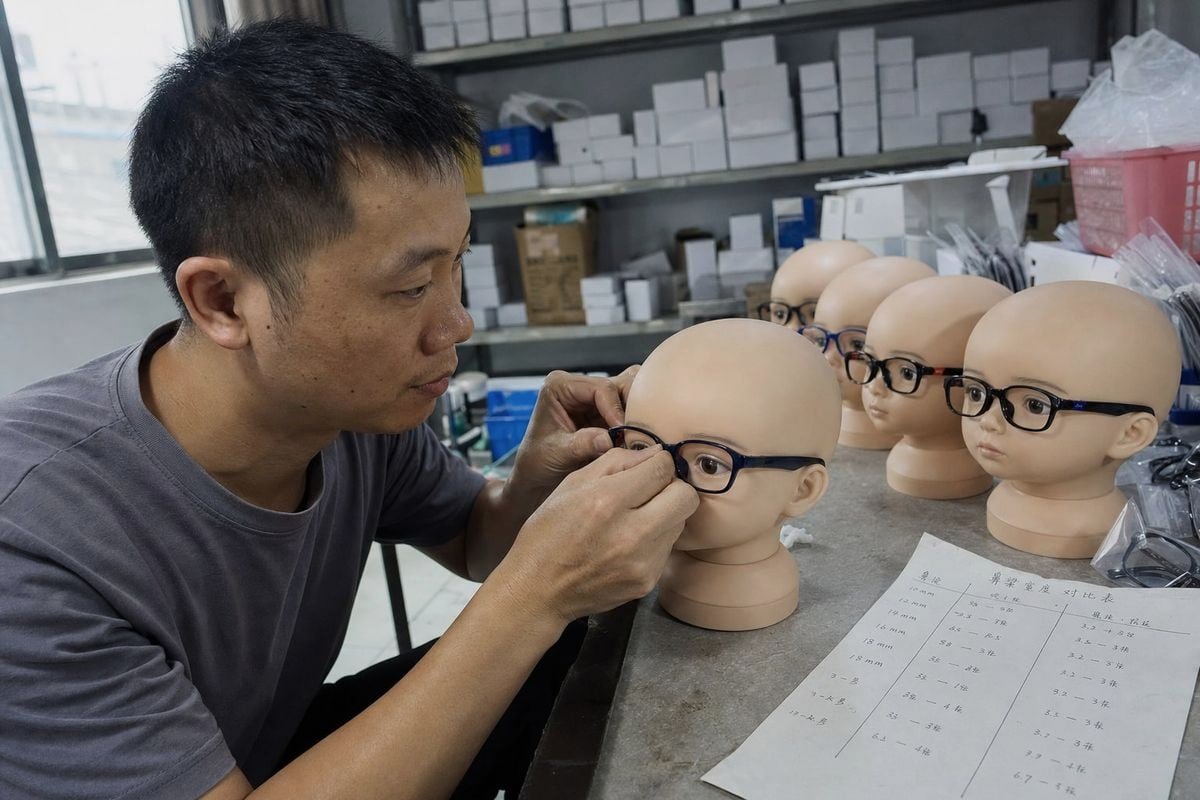
A frame tech pack does two jobs. It tells the factory exactly what to build, and it gives your QC team objective pass/fail criteria at inspection. Vague packs produce disputes; precise packs produce consistent shipments.
Tech Pack Checklist for Kids Optical Frames
| القسم | ما يجب تحديده | مثال |
|---|---|---|
| الأبعاد | A-DBL-Temple with tolerance | 44-15-120, ±0.5 mm |
| Lens height | Minimum B-measurement | ≥30 mm for myopia-management lenses |
| الجسر | Design type and fit target | Saddle bridge, low nasal profile |
| Tilt | Pantoscopic angle | Near 0° for pediatric anatomy |
| المواد | Polymer type and certification | TR90 front, TPEE temples, food-grade certified |
| المفصلات | Type and cycle expectation | Spring hinge durability tested to open-close cycles |
| Fit behavior | Functional requirements | No sliding, no cheek contact, pupils centered ±3–4 mm |
| Optical | Target PD alignment | GCD within 8 mm of target PD range |
Specify Materials and Safety Alongside Size
Size and material interact. Rigid acetate holds dimensions but snaps; flexible polymers like TR90 و TPEE 5 resist permanent deformation from twisting and support cold-glazing at the lens lab. For toddler lines, require food-grade certification 6 on all polymers, since young children chew temple tips. If sustainability matters to your market, request GRS traceability 7 on recycled materials. Add adjustable silicone nose pads or slip-resistant temple tips where the design allows — details like the silicone ear hooks on our sport-style kids frames exist precisely because measurements alone cannot guarantee fit on a moving child.
Include Sample Wording Your Supplier Can Act On
A single clear sentence prevents most sizing mistakes. Something like: "Child frame approx. 44-15-120, total frontal width suited to a narrow face, eyes centered in lenses, secure saddle bridge, no cheek contact, flexible temples, and no sliding during active play." Any experienced factory can build, sample, and inspect against that sentence.
الخلاصة
Precise millimeter specs, age-appropriate ranges, factory size charts, and a complete tech pack turn kids optical frame sourcing from guesswork into a repeatable process. Communicate clearly, and returns disappear.
ملاحظات ختامية
1. Background on standardized eyewear sizing conventions referenced by the Boxing System. ↩︎
2. NIH’s National Eye Institute explains myopia management relevant to lens height specs. ↩︎
3. NIH’s eye institute is an authoritative source on pupillary distance and vision measurement. ↩︎
4. Background on silicone material properties used for adjustable nose pads on kids frames. ↩︎
5. Explains thermoplastic elastomer properties behind flexible TR90 and TPEE eyewear materials. ↩︎
6. FDA guidance on food-contact substances supports certification requirements for chewed temple tips. ↩︎
7. ISO oversees traceability and recycling standards referenced for sustainable eyewear materials. ↩︎
مقالات أخرى قد تعجبك

هل تبحث عن شريك موثوق به للنظارات للأطفال؟
استكشف أكثر من 800 نمط جاهز ودعم OEM/ODM كامل مصمم خصيصًا لعلامتك التجارية.
اتصل بنا English
  Español de México
  Deutsch
  Français
  日本語
日本語  العربية
  Português do Brasil