How to Calculate Total Landed Cost for Kids’ Sunglasses Beyond Unit Price?

Total landed cost for kids’ sunglasses trips up more buyers than any quote I send from our Taizhou factory identical Incoterms 1. A “$1.20 unit price” can quietly become $2.40 — and your margin vanishes.
Total landed cost for kids’ sunglasses equals the factory unit price plus per-unit freight, customs duties and taxes, brokerage, insurance, compliance testing, packaging, and inland delivery. Divide all shipment-level charges by total units, then add them to the quoted price for your real cost.
That formula sounds simple. In practice, most first-time importers miss at least three cost lines. Let me walk you through each one, using real numbers from kids’ eyewear shipments.
What Hidden Costs Should I Include When Calculating Landed Cost for Kids' Sunglasses?
Last spring, a new Australian brand asked me why their first shipment "cost double the quote." When we sat down and listed every invoice together, nothing was mysterious — just uncounted.
Hidden costs in landed cost for kids' sunglasses include compliance testing, quality control inspections, retail packaging, cargo insurance, port handling fees, customs brokerage, currency exchange movements, inventory carrying costs, and a return buffer. Each is small alone, but together they often add 40–80% to the unit price.

The unit price you receive from a factory like ours usually covers the frame, the lens, basic assembly, and a polybag. Everything else sits outside that number. For children's eyewear, the "everything else" list is longer than for most accessories, because child safety raises the bar.
The Full Hidden-Cost Checklist
| Cost Category | Typical Trigger | Often Missed? |
|---|---|---|
| اختبارات امتثال CPSIA 2 | Selling children's products in the US | Very often |
| CE / EN standard testing | Selling in the EU | Often |
| FDA registration fees 3 | Sunglasses classed as medical devices in the US | Very often |
| Quality control inspections 4 | Pre-shipment third-party checks | Sometimes |
| Retail packaging and inserts | Branded boxes, cases, hang tags | Sometimes |
| Marine insurance premiums | Ocean freight coverage | Often |
| Port and terminal handling | Container unloading, documentation | Very often |
| تكاليف حمل المخزون | Warehouse storage while stock sells | Almost always |
| Return / breakage buffer | Kids' sizing fit-risk and damage | Almost always |
Why Kids' Eyewear Carries Extra Lines
Sunglasses for children are not generic accessories. In our experience exporting TPEE and إطارات TR90 5 to 20+ countries, buyers in the US must budget for CPSIA compliance testing, and sunglasses sold there also involve FDA registration fees because lenses fall under drop-ball impact requirements. European buyers need CE documentation. These are per-order or per-year costs, but they must still be spread across your units.
Then add currency exchange rates. If you agree on a USD price and your home currency weakens 5% between deposit and balance payment, your landed cost just rose 5% without a single invoice changing. We always suggest buyers build a small currency buffer into their model.
Finally, count inventory carrying costs. Sunglasses are seasonal. Stock ordered in October for a spring launch sits in a warehouse for months. That storage and tied-up cash is a real cost per unit.
How Do Shipping, Duties, and Customs Fees Affect My Total Import Cost?
One trade-off we discuss with almost every buyer is order size versus freight burden. A small trial order feels safer, yet it can carry triple the per-unit shipping cost of a consolidated shipment.
Shipping, customs duties and taxes, and brokerage typically add 30–60% to the FOB price of kids' sunglasses. Freight is charged per shipment, duties are a percentage based on HS code and destination, and brokerage plus port fees are flat charges divided across units.
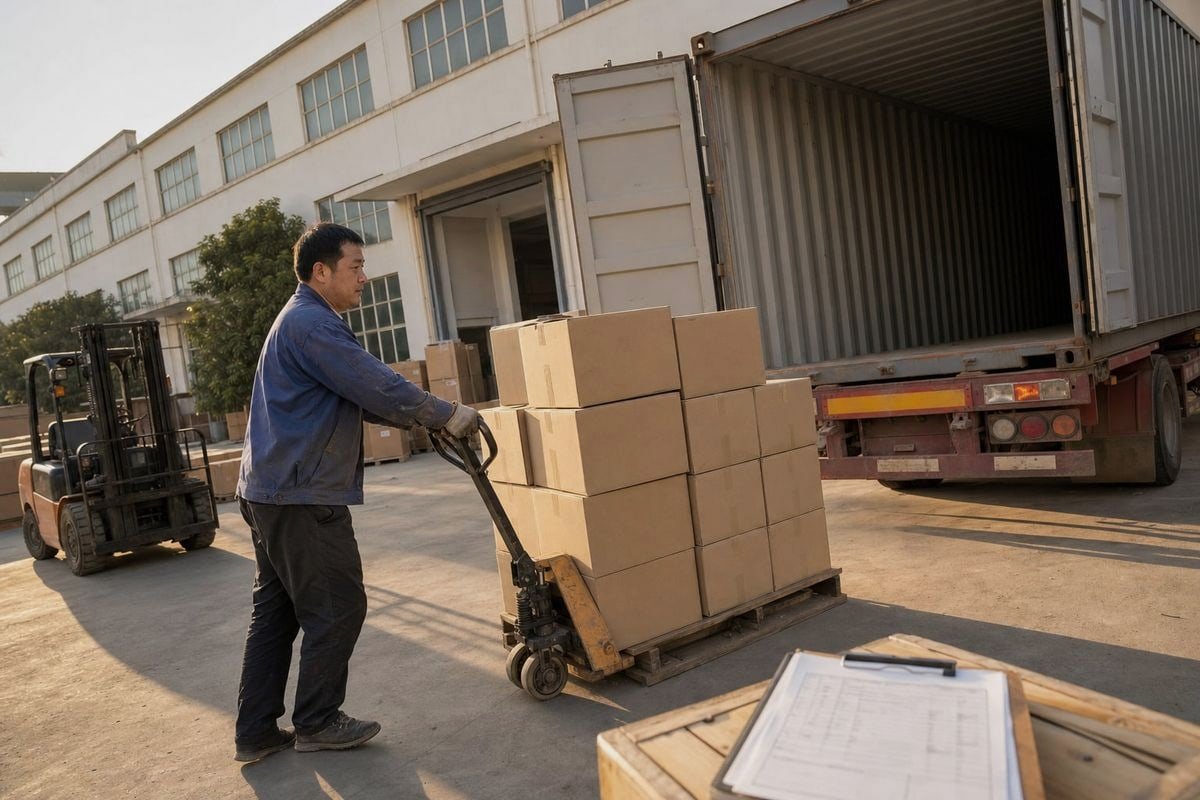
Let me show you how this works with a realistic example. Suppose you order 5,000 pairs of our wraparound sport shields with mirrored lenses at $1.20 FOB per pair. Here is how the shipment-level charges land on each unit.
Sample Per-Unit Allocation, 5,000 Pairs
| Cost Line | Shipment Total | Per Unit |
|---|---|---|
| FOB product cost | $6,000 | $1.20 |
| Ocean freight (LCL) | $850 | $0.17 |
| Marine insurance premiums | $60 | $0.012 |
| Customs duties and taxes (est. by HS code 6) | $480 | $0.096 |
| Import brokerage charges | $150 | $0.03 |
| Port and terminal handling | $200 | $0.04 |
| Inland trucking to warehouse | $300 | $0.06 |
| Landed cost | $8,040 | $1.61 |
That is a 34% increase before packaging, testing, or storage. Now run the same math with only 1,000 pairs. The freight forwarding fees, brokerage, and port charges barely shrink, so the per-unit add-on roughly triples. This is why we often help smaller brands consolidate two or three styles into one shipment.
Incoterms Decide Who Pays What
Your quote's Incoterms define where factory responsibility ends. Under EXW, you pay everything from our door. Under FOB, we cover getting goods onto the vessel. Under DDP, the seller handles duties too — but that cost is simply baked into a higher price. None of these terms make costs disappear; they only move them.
Classify Correctly, Never Guess
Duty rates depend on the HS code for sunglasses and your destination country. Do not rely on a generic percentage from a blog post. Ask your customs broker to confirm the classification and current tariff before you order, because a wrong code can mean penalties or retroactive duty bills.
Why Does Choosing the Right OEM/ODM Factory Reduce My Long-Term Landed Cost?
A lesson I learned early in our 15 years of eyewear production: the cheapest quote is rarely the cheapest outcome. One rejected shipment erases years of penny-saving on unit price.
The right OEM/ODM factory lowers long-term landed cost by preventing failed compliance tests, reducing defect and return rates, offering existing molds that avoid tooling investment, and shipping retail-ready packaging that cuts fulfillment prep. Fewer surprises mean fewer unbudgeted per-unit costs.

Think of landed cost as having two layers: the costs you can see on invoices, and the costs created by problems. A capable factory attacks the second layer. Here is how that plays out, step by step, in our own workflow.
First, existing styles remove tooling cost. We keep around 800 ready styles — from bold shield lenses with gradient mirror coatings to soft pastel round frames — so a new brand can launch without paying thousands for custom molds. That tooling saving alone can cut early landed cost per unit dramatically on small first orders.
Second, material expertise reduces the return buffer. Flexible TPEE temples and TR90 fronts bend instead of snapping on a child's face. Fewer breakages in transit and in use mean a smaller reverse-logistics reserve in your cost model. Rigid, brittle frames force you to budget more for replacements.
Third, in-house quality control inspections catch defects before the container leaves. Our 5S-managed workshop runs checks on hinges, lens coating, and UV400 performance. When goods pass a فحص طرف ثالث موثق the first time, you avoid re-inspection fees, air-freight rush replacements, and delayed launch dates — all of which inflate true landed cost.
Fourth, retail-ready OEM/ODM packaging shifts work upstream. When cases, cleaning cloths, and branded boxes arrive assembled, your warehouse skips fulfillment prep labor. That is a per-unit saving on every single order, forever.
Finally, a stable long-term partner smooths pricing. Consistent orders let us plan material purchasing, which protects you from spot-price swings and sudden requotes.
How Can I Compare Suppliers Fairly When Their Unit Prices Look Similar?
A procurement manager from Japan once sent me two competing quotes, both within three cents of ours, and asked how to choose. My answer: stop comparing prices, start comparing landed models.
Compare suppliers by building a full landed-cost sheet for each: quoted price under identical Incoterms, plus testing, packaging, QC, freight, duties, defect allowance, and payment terms. Then reconcile estimates against actual invoices after the first shipment to reveal the true lowest-cost partner.
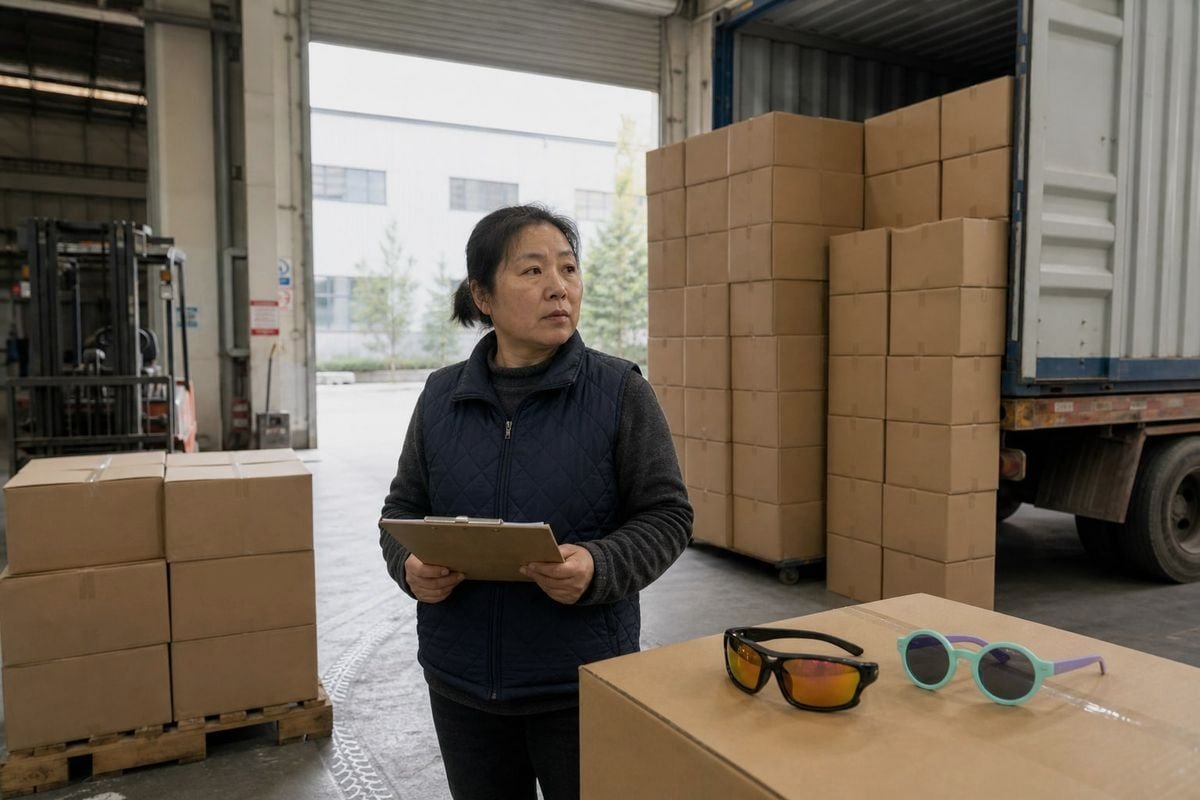
Similar unit prices hide very different total costs. The trick is to force every quote into the same structure before judging it. Use a comparison sheet like this one.
Supplier Comparison Worksheet
| Comparison Line | Supplier A | Supplier B | لماذا هو مهم |
|---|---|---|---|
| Quoted price and Incoterms | $1.20 FOB | $1.18 EXW | EXW shifts more freight cost to you |
| Test reports included? | نعم | لا | You pay for CPSIA compliance testing yourself |
| Packaging included | Retail box | Polybag only | Adds $0.15–0.30 per unit later |
| QC standard | In-house + third-party friendly | Unclear | Failed inspections cost time and money |
| Defect rate history | Ask for it | Ask for it | Drives your return buffer |
| MOQ and mold needs | Existing styles | New tooling required | Tooling can add thousands upfront |
| Payment terms | 30/70 | 100% upfront | Affects cash flow and currency risk |
Three Rules for a Fair Comparison
- Normalize the Incoterms. Ask every supplier to quote FOB from the same port. Otherwise you are comparing apples to shipping containers.
- Price the gaps, not just the goods. If one quote excludes lens testing or retail packaging, add your real cost of buying those separately. A "cheaper" quote often becomes the expensive one here.
- Reconcile after the first order. Estimates are fine to start. But once the shipment lands, replace every estimated line — freight forwarding fees, import brokerage charges 7, last-mile delivery to your 3PL — with actual invoice numbers. Update the sheet per SKU. Within two or three orders, you will know each supplier’s true landed cost, not their marketing number.
We encourage buyers to run this exercise on us too. A factory confident in its quality and communication has nothing to hide in a landed-cost comparison.
الخلاصة
Unit price is only the starting line. Build a full landed-cost sheet, reconcile it with real invoices, and choose partners who prevent hidden costs — that protects your margin.
ملاحظات ختامية
1. Official source for international commercial terms defining buyer and seller responsibilities.
مقالات أخرى قد تعجبك

August 1, 2026
هل يجب على المصنع التعامل مع تغليف ووضع ملصقات نظارات الأطفال الشمسية، أم استخدام مورد مخصص؟
August 1, 2026
مستودع خاص مقابل الوفاء المباشر من المورد: أيهما يقلل تكاليف الإرجاع لعلامات نظارات الأطفال الشمسية؟

August 1, 2026
مباشر إلى ميناء المستودع أو التخزين الخارجي: أيهما يوفر أكثر على شحن نظارات الأطفال الشمسية؟
هل تبحث عن شريك موثوق به للنظارات للأطفال؟
استكشف أكثر من 800 نمط جاهز ودعم OEM/ODM كامل مصمم خصيصًا لعلامتك التجارية.
اتصل بنا English
  Español de México
  Deutsch
  Français
  日本語
日本語  العربية
  Português do Brasil