How to Add a Photo-Sharing Card to Kids Sunglasses Packaging?
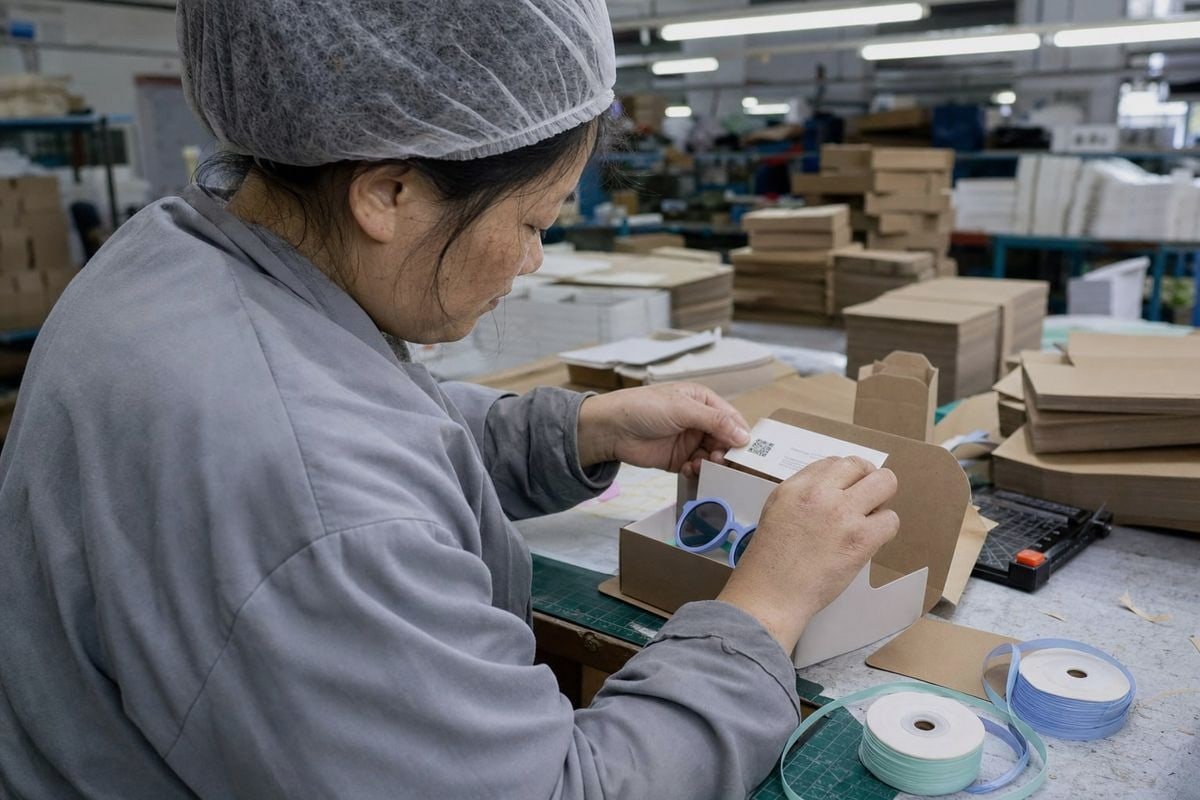
A photo-sharing card in kids sunglasses packaging solves a real problem I see on our production line: great products getting unboxed in silence, with no photos shared, no tags, and no repeat sales influencer marketing strategy 1. That silence costs brands real marketing value. The fix is surprisingly simple, and we build it into packaging every week.
To add a photo-sharing card to kids sunglasses packaging, design a small printed insert or backing card with a scannable QR code, a branded hashtag, and a short call to action, then print it on durable cardstock and place it on top of the sunglasses inside the box.
That is the short answer. Below, I will walk you through the design steps, the engagement logic, material choices, and the real cost impact — based on what actually works in production.
How can I include a photo-sharing card in my kids sunglasses packaging design?
Last spring, a buyer from Australia asked our team to add a QR insert to her order of TR90 2 kids sunglasses. Our packaging team turned it around in one sampling round, and the process taught us a repeatable workflow.
Include a photo-sharing card by creating a shared photo gallery or social landing page, generating a QR code that links to it, designing a card sized to your box or blister pack, and inserting it as the first item customers see when they open the package.

The execution matters more than the concept. In our experience producing branded packaging inserts for children's eyewear brands across 20+ countries, the workflow breaks down into five clear steps.
Step 1: Build the destination first
Before any design work, decide where the QR code 3 goes. Options include a shared photo album, a branded social media post, or a simple landing page with upload instructions. For children's products, we always recommend a private or permission-controlled album unless the brand runs a public campaign. Test the link on multiple phones before printing anything.
Step 2: Generate and test the QR code
Use a static QR code for a permanent link, or a dynamic one if you may change the destination later. Dynamic codes cost a little more but save you from reprinting cards. Print the code at a minimum of 2 x 2 cm. Smaller codes fail on cheaper phone cameras, and a failed scan kills the whole idea.
Step 3: Design the card to fit the package
Kids sunglasses packaging varies a lot. A round-lens frame in a slim box needs a different insert than a wraparound sport style in a display case. Here is how we match card formats to common packaging types:
| Packaging Type | Best Card Format | Placement |
|---|---|---|
| Folding paper box | Flat insert card | On top of the sunglasses |
| Blister / hang pack | Backing card with QR printed on rear | Behind the product |
| Zip pouch or soft case | Folded mini card | Tucked inside the pouch |
| Rigid gift box | Double-sided keepsake card | In a lid pocket or on tissue paper |
| Display tube | Wrap-around band with QR panel | Around the tube exterior |
Step 4: Write the instruction line
Never print a bare QR code. Add plain-English copy like "Scan to share your favorite moments" or "Tap the code to upload your pics." One sentence is enough. Parents open dozens of packages; they will not guess what your code does.
Step 5: Position it for the unboxing experience
Place the card as the first thing seen when the package opens. In our assembly workshop, we position inserts directly on top of the sunglasses or case. This single placement decision often decides whether the card gets read or thrown away with the tissue paper.
Why should my brand add a photo-sharing card to boost customer engagement?
One trade-off we discuss with nearly every kids brand we work with is this: keep packaging minimal, or use it as a marketing channel. After fifteen years of building retail-ready packaging, I lean firmly toward the second option — when it is done cleanly.
A photo-sharing card turns every sold pair of kids sunglasses into free marketing. It generates user-generated content, builds social proof, drives repeat traffic to your brand channels, and converts a one-time unboxing into an ongoing customer relationship — all for pennies per unit.
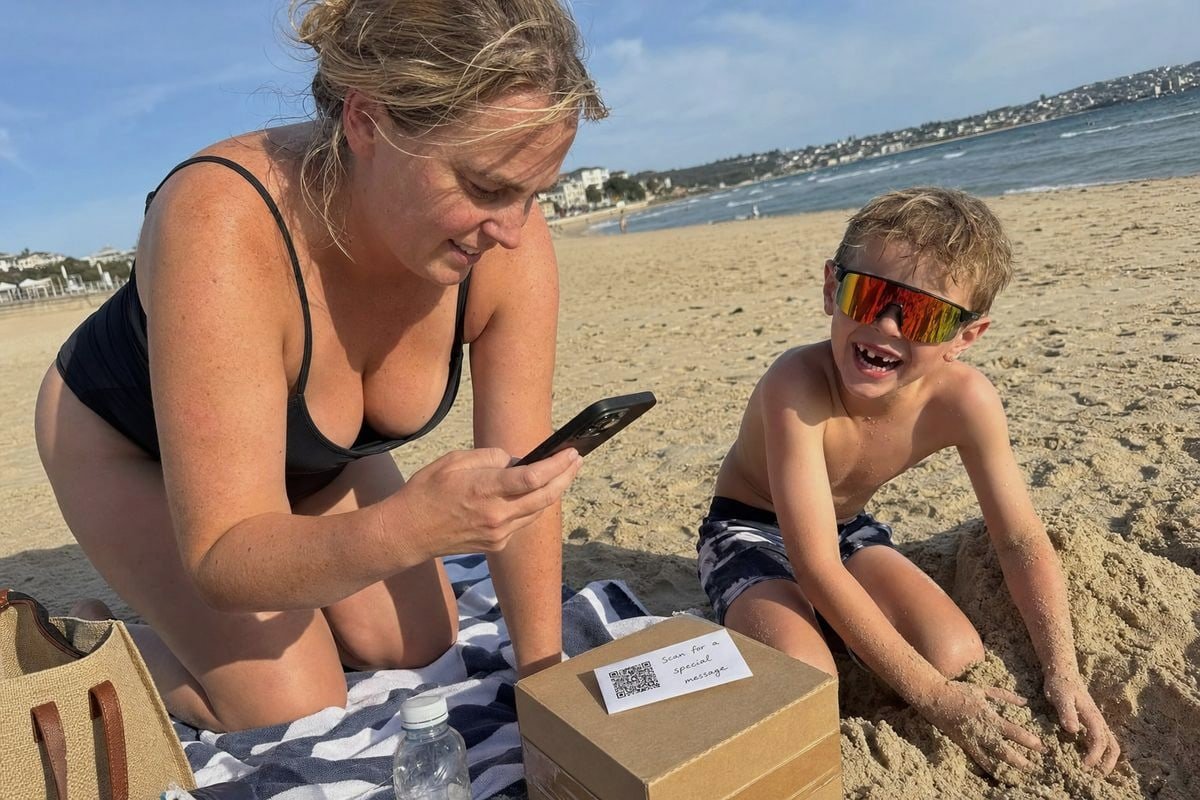
Kids sunglasses are naturally photogenic products. A child in bright sunglasses at the beach, at a birthday party, or on the first day of summer camp is exactly the kind of moment parents already photograph. The card simply channels those photos toward your brand instead of letting them disappear into private camera rolls.
The engagement math is simple
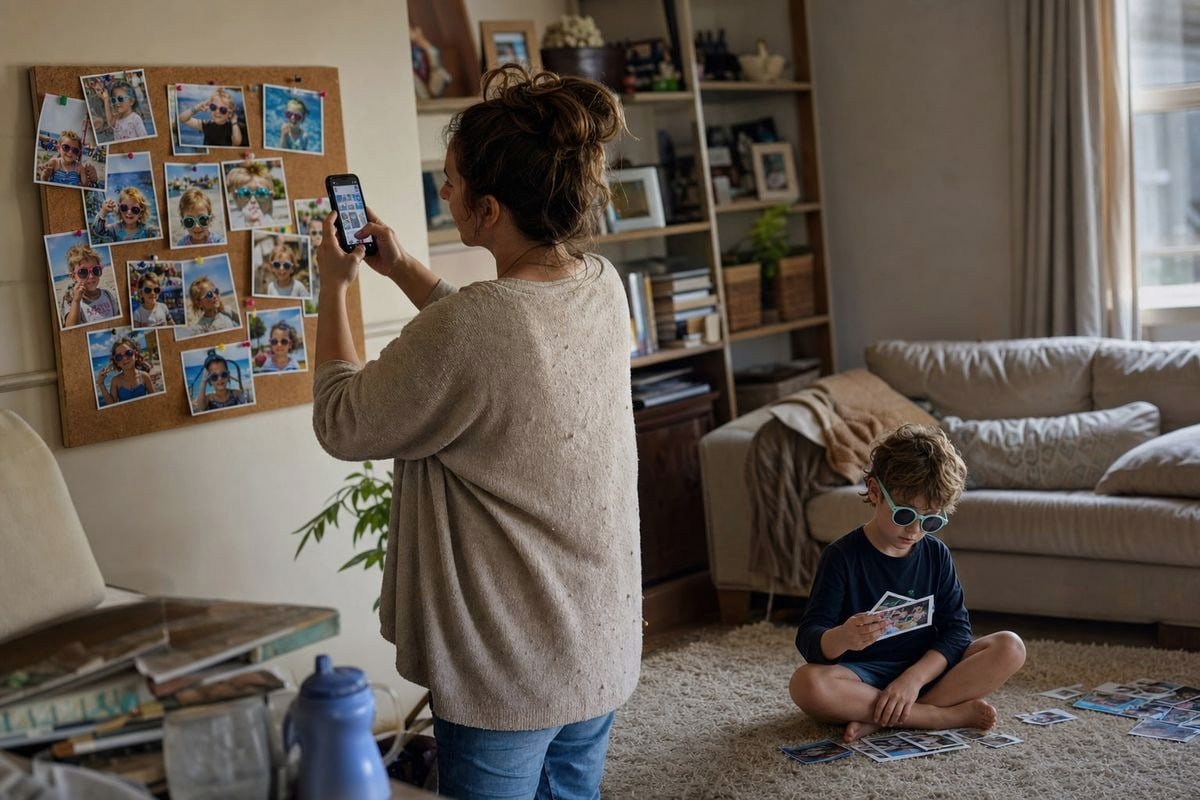
Consider what happens without the card. A parent buys the sunglasses, the child wears them, photos are taken, and the brand gets nothing. With the card, a percentage of those parents scan, upload, tag, and share. Each shared photo works as social proof 4 marketing that a paid ad cannot match, because it comes from a real family. This is why user-generated content 5 sits at the core of most modern influencer marketing strategy playbooks — micro-scale, authentic, and low cost.
Customer engagement tactics that stack with the card
The card works even harder when you combine it with other elements. These are the customer engagement tactics we see brands pair with photo-sharing inserts most often:
- A next-purchase discount code revealed after the customer shares a photo.
- Entry into a monthly photo contest with a small prize.
- A single branded hashtag promotion, printed clearly with your social handles.
- A "Thank You" note and care instructions on the reverse side, which raises the card's perceived value so parents keep it.
- A die-cut frame or sun-shaped prop element kids can hold up in photos, making sharing playful rather than transactional.
Address the obvious objection
Some buyers tell me they prefer a clean, minimalist package and worry the card feels like clutter. I understand the instinct, but the concern usually points to bad execution, not a bad idea. A single well-designed card with clear purpose adds to the unboxing experience; three random flyers subtract from it. Design one card that does one job, and the minimalist objection disappears. The second objection is that customers ignore cards they do not understand — which is true, and exactly why the instruction line and social media call-to-action must be impossible to miss.
Privacy deserves a paragraph of its own
Because these are children's products, handle sharing responsibly. Some brands now include a short "mindful sharenting 6" note — tips like using stickers over faces or checking account privacy settings before posting. This small gesture signals that your brand takes child safety seriously, which is exactly what parents buying kids eyewear want to see. In our conversations with European buyers especially, this kind of care builds more trust than any discount.
What design and material options work best for a photo-sharing insert card?
During a QC round last summer, our team rejected a batch of insert cards because thin paper had curled inside humid shipping containers. That lesson shaped how we now specify materials for every packaging insert we produce.
The best photo-sharing insert cards use 300–350 gsm coated cardstock, a matte or soft-touch finish, high-contrast QR printing, and kid-friendly colors matched to the sunglasses. Double-sided layouts with a thank-you message on one face and the QR code on the other perform best.
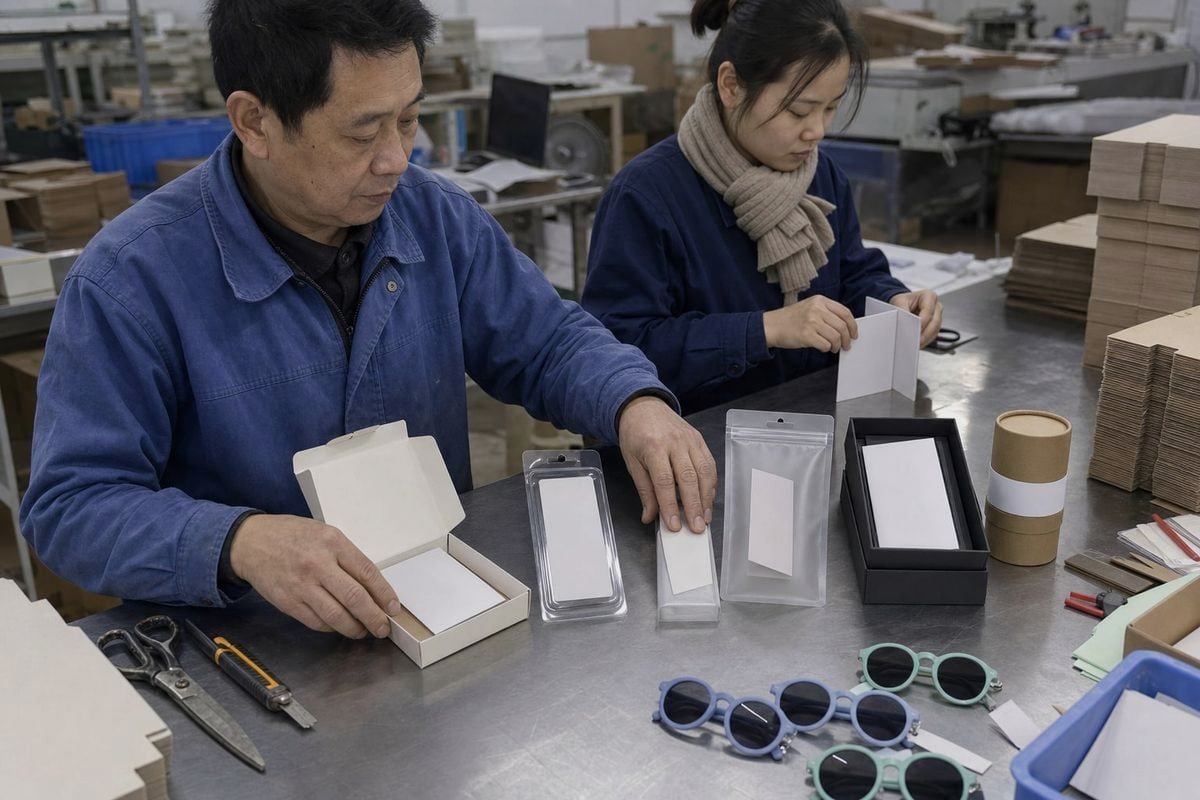
Material and design decisions decide whether your card survives shipping, scans reliably, and gets kept rather than binned. Let me break down what we specify at our factory in Taizhou and why.
Cardstock weight and finish
Custom cardstock printing is where most brands under-spend. Thin paper feels cheap and curls in humidity. Here is the comparison we walk buyers through:
| Material Option | الوزن | Feel | الأفضل لـ | التكلفة النسبية |
|---|---|---|---|---|
| Standard coated paper | 200 gsm | Flexible, light | Budget promo runs | الأدنى |
| Coated cardstock 7 | 300 gsm | Firm, professional | Most retail inserts | منخفض |
| Soft-touch laminated card | 350 gsm | Premium, velvety | Gift boxes, premium lines | متوسط |
| Textured/kraft cardstock | 300–350 gsm | Natural, eco look | Eco-positioned brands | متوسط |
| Die-cut shaped card | 350 gsm | Playful, interactive | Photo props, party favors | أعلى |
For children's brands, we usually recommend 300 gsm with a matte finish. Matte reduces glare, which matters because glare on glossy cards can interfere with QR scanning under store lighting or sunlight.
Design principles that fit kids eyewear
Match the card's colors to the product. A periwinkle-and-mint round frame pairs naturally with soft pastels and rounded typography. A bold wraparound sport style with an orange-mirror shield lens calls for high-energy gradients and angular graphics. Vibrant, kid-friendly illustrations and high-contrast colors ensure the card grabs attention the moment the box opens.
Keep the QR code on a white or very light background with dark modules. Never reverse it, never print it over a photo, and leave a quiet zone of blank space around it.
Formats worth considering
- A flat single-sided card is the cheapest and fastest to produce.
- A double-sided card lets you put your brand story or care instructions on the back, doubling its usefulness.
- A backing card can structurally hold the sunglasses in a blister pack while carrying the QR code — two functions, one piece.
- A die-cut frame kids hold up in photos makes sharing interactive.
- For brands that want a wow factor, an AR trigger launching a branded face filter, or UV-sensitive ink that reveals a hidden message in sunlight, adds novelty — though I advise proving the basic QR card works before investing in these.
Will adding a photo-sharing card affect my packaging cost or minimum order quantity?
The question I hear most from procurement managers — usually within the first ten minutes of a packaging call — is whether an insert card raises the unit price or forces a higher MOQ. The honest answer is more reassuring than most buyers expect.
A photo-sharing card typically adds only a few cents per unit at wholesale volumes and rarely changes your MOQ, because insert printing runs alongside your existing packaging production. The main cost variables are cardstock weight, finishes, die-cutting, and hand-assembly time.
Let me be transparent about how the numbers actually work in a factory setting, because vague answers help no one plan a launch.
Where the cost actually comes from
Insert cards are cheap to print but not free to handle. The cost stack looks like this:
| التأثير على سعر الوحدة | Impact on Unit Cost | How to Control It |
|---|---|---|
| Cardstock and printing | Very low at volume | Standardize on one card size across styles |
| Special finishes (soft-touch, spot UV) | Low to medium | Reserve for premium lines only |
| Die-cutting 8 | Medium (one-time tooling) | Use standard rectangle unless the shape sells |
| Hand insertion during assembly | Low but real | Combine with existing packing steps |
| Dynamic QR service fees | Ongoing, small | Use static codes for permanent links |
The one-time costs — die-cut tooling and design setup — spread thinner as order volume grows. At typical wholesale quantities for kids sunglasses, the per-unit impact usually lands in the range of a few cents, not a meaningful percentage of your landed cost.
Why MOQ usually does not change
Your MOQ is driven by the sunglasses themselves — molds, materials, and lens options — not by a paper insert. At our facility, we already run OEM packaging 9 jobs with custom boxes, logos, and inserts as one integrated order. Adding a card to that flow does not create a new minimum. The exception is highly specialized printing like UV-sensitive magic ink, where the ink supplier may impose its own print minimums.
The low-risk way to test the idea
One advantage of working with a factory holding roughly 800 existing frame styles is that you can test a photo-sharing card without heavy investment. Pick an existing style — say, a flexible TPEE round frame or a TR90 sport wraparound — customize the packaging and insert, and run a smaller trial order. If the card drives shares and repeat purchases, scale it across your line. If it needs adjusting, you have only spent trial money, not tooling money.
One limitation deserves honesty: for very low-margin, high-volume promotional sunglasses, even a few cents per unit may not pay back if the brand has no social channel to receive the traffic. Build the destination first; print the cards second.
الخلاصة
A simple QR card turns kids sunglasses packaging into a marketing channel. Design it well, print it on sturdy cardstock, place it on top — and every unboxing works for your brand.
ملاحظات ختامية
1. Authoritative business source relevant to modern marketing tactics referenced in the text. ↩︎
2. Background on the polymer material family used in TR90 sunglasses frames mentioned repeatedly. ↩︎
3. Explains the core scannable technology used in the photo-sharing card design. ↩︎
4. Wikipedia background on the psychological concept driving customer engagement claims. ↩︎
5. Background concept underpinning the article’s marketing strategy discussion. ↩︎
6. Defines the parental social media practice the article warns brands to handle responsibly. ↩︎
7. Authoritative Wikipedia entry defining coated paper and cardstock materials. ↩︎
8. Corrected Wikipedia URL for the manufacturing process, replacing the broken hyphenated link. ↩︎
9. WTO relevance to international trade and manufacturing/OEM order practices discussed. ↩︎
مقالات أخرى قد تعجبك

August 1, 2026
هل يجب على المصنع التعامل مع تغليف ووضع ملصقات نظارات الأطفال الشمسية، أم استخدام مورد مخصص؟
August 1, 2026
مستودع خاص مقابل الوفاء المباشر من المورد: أيهما يقلل تكاليف الإرجاع لعلامات نظارات الأطفال الشمسية؟

August 1, 2026
مباشر إلى ميناء المستودع أو التخزين الخارجي: أيهما يوفر أكثر على شحن نظارات الأطفال الشمسية؟
هل تبحث عن شريك موثوق به للنظارات للأطفال؟
استكشف أكثر من 800 نمط جاهز ودعم OEM/ODM كامل مصمم خصيصًا لعلامتك التجارية.
اتصل بنا English
  Español de México
  Deutsch
  Français
  日本語
日本語  العربية
  Português do Brasil