What Does EN71-1 Small Parts and Choking Hazard Testing Mean for Kids’ Sunglasses?
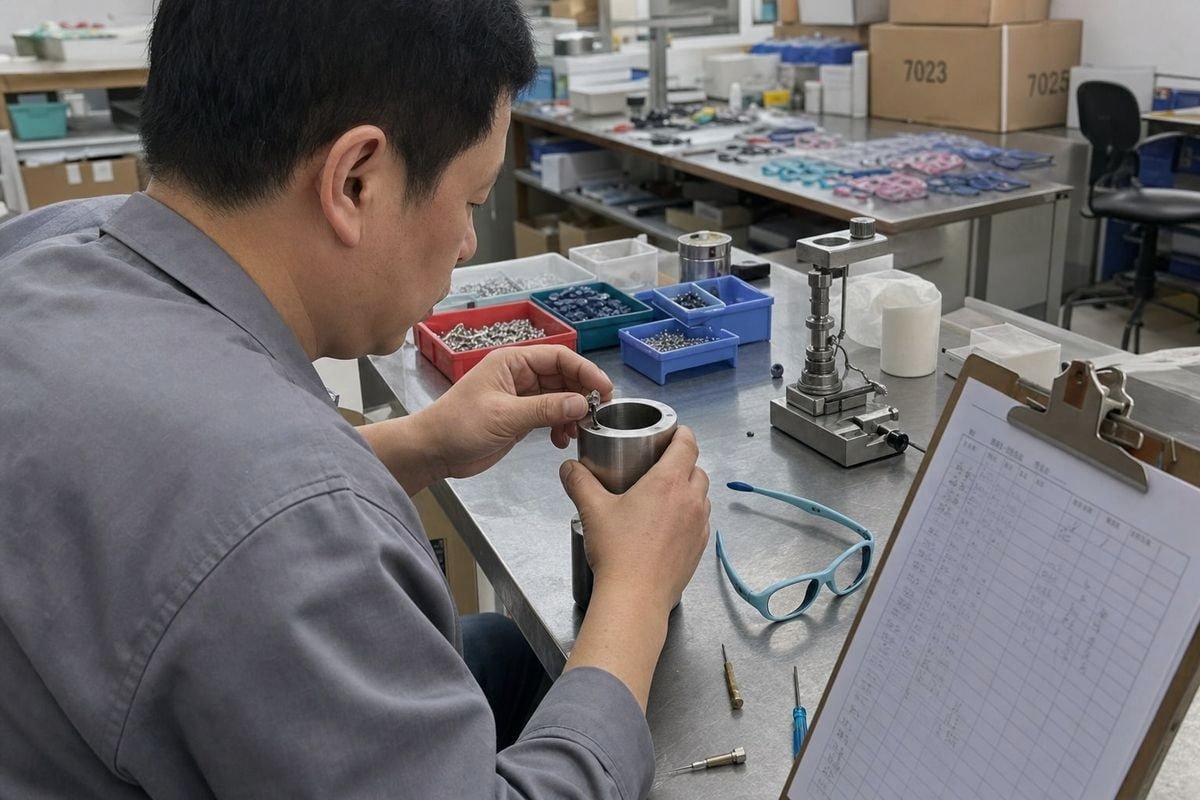
EN71-1 small parts and choking hazard 1 testing decides whether kids’ sunglasses can legally reach European shelves, and on our production line in Taizhou, it shapes every design decision we make.
EN71-1 small parts and choking hazard testing checks whether kids’ sunglasses, or any component that detaches during twist, pull, drop, or impact tests, fits entirely into a 31.7 mm test cylinder. If it does, the part is a choking hazard, and products for children under 3 fail.
That is the short answer. But the real risk hides in the details: which parts fail, how labs test them, and what proof you should demand from your supplier third-party lab reports 2. Let me walk you through all of it.
What exactly does EN71-1 testing check on my kids' sunglasses before they reach store shelves?
A buyer from Germany once asked me why her sample failed testing when the frame looked perfectly solid. The answer surprised her: it was a tiny hinge screw, not the frame itself.
EN71-1 testing checks the mechanical and physical properties of kids' sunglasses. Labs inspect the product as received, then apply tension and torque tests, drop tests, and impact tests. Any component that detaches and fits fully into the small parts cylinder is classified as a choking hazard.
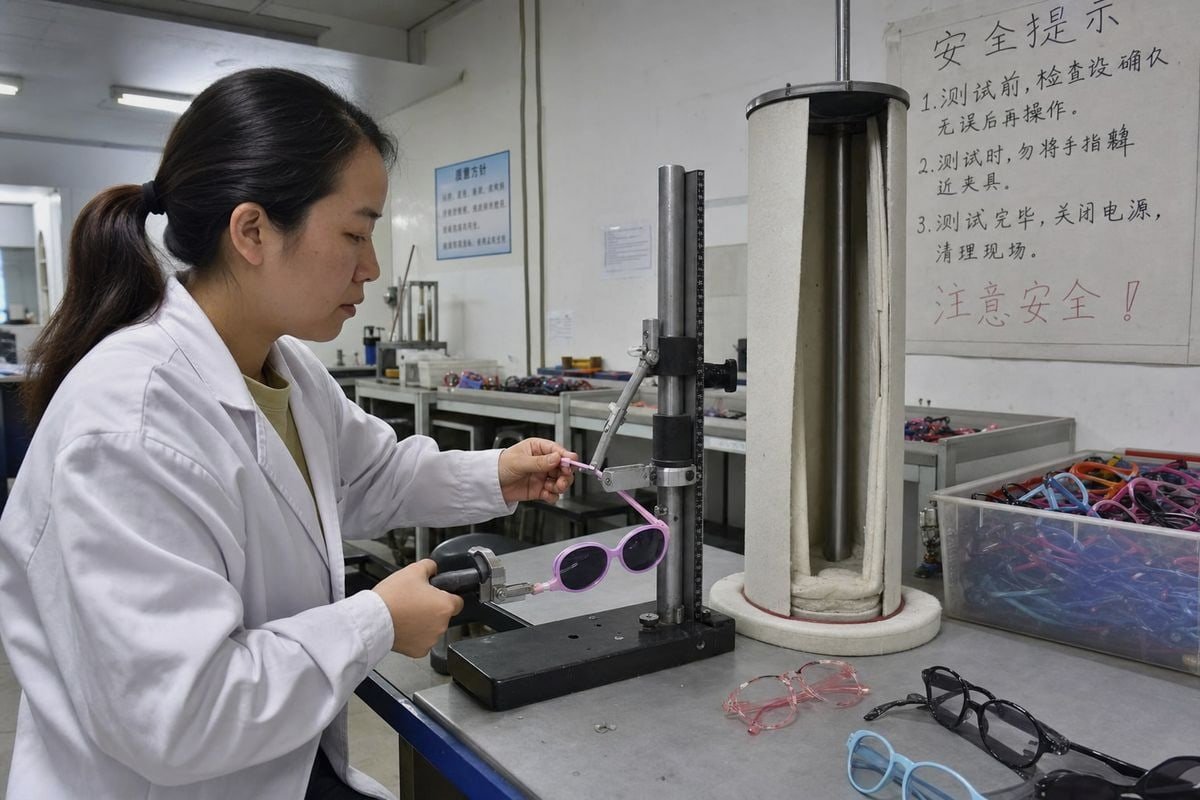
EN71-1 is the mechanical safety part of the European toy safety framework under the Toy Safety Directive 2009/48/EC 3. It is not about UV protection. It is about whether a product can produce dangerous pieces during normal use and foreseeable misuse by a child.
The small parts cylinder explained
The heart of the standard is the small parts cylinder. It is a hollow tube roughly 31.7 mm in diameter and 57.1 mm deep, designed to approximate a young child's throat. The rule is simple. If any object, or any detachable component, fits completely inside the cylinder without compression and in any orientation, it counts as a small part. For products intended for children under 36 months, that is a fail.
The two-stage testing logic
Labs do not just look at the sunglasses out of the box. They test in two stages:
| Stage | What happens | What it simulates |
|---|---|---|
| As-received inspection | Every accessible component is checked against the cylinder | A child handling a new product |
| Post-abuse testing | Torque, tension, drop, and impact tests are applied, then detached pieces are re-checked | Twisting, pulling, biting, and throwing during real play |
This matters for eyewear because a frame that looks robust can still shed a screw cap, a decorative bead, or even a lens after abuse testing. In our fifteen years making children's frames, the post-abuse stage is where most cheap sunglasses fail, not the initial inspection. The whole product is never the risk. The fragments are.
How do I know if my supplier's frames and lenses truly pass small parts and choking hazard requirements?
Verifying compliance is a trade-off we discuss with importers every week: trusting a supplier's word costs nothing today, but a recall costs everything later. Real verification takes evidence, not promises.
You verify compliance by requesting accredited third-party lab reports specific to your exact product, checking that tension and torque tests and impact tests were performed, confirming the report matches your SKU and materials, and reviewing the small parts cylinder results for every detachable component.
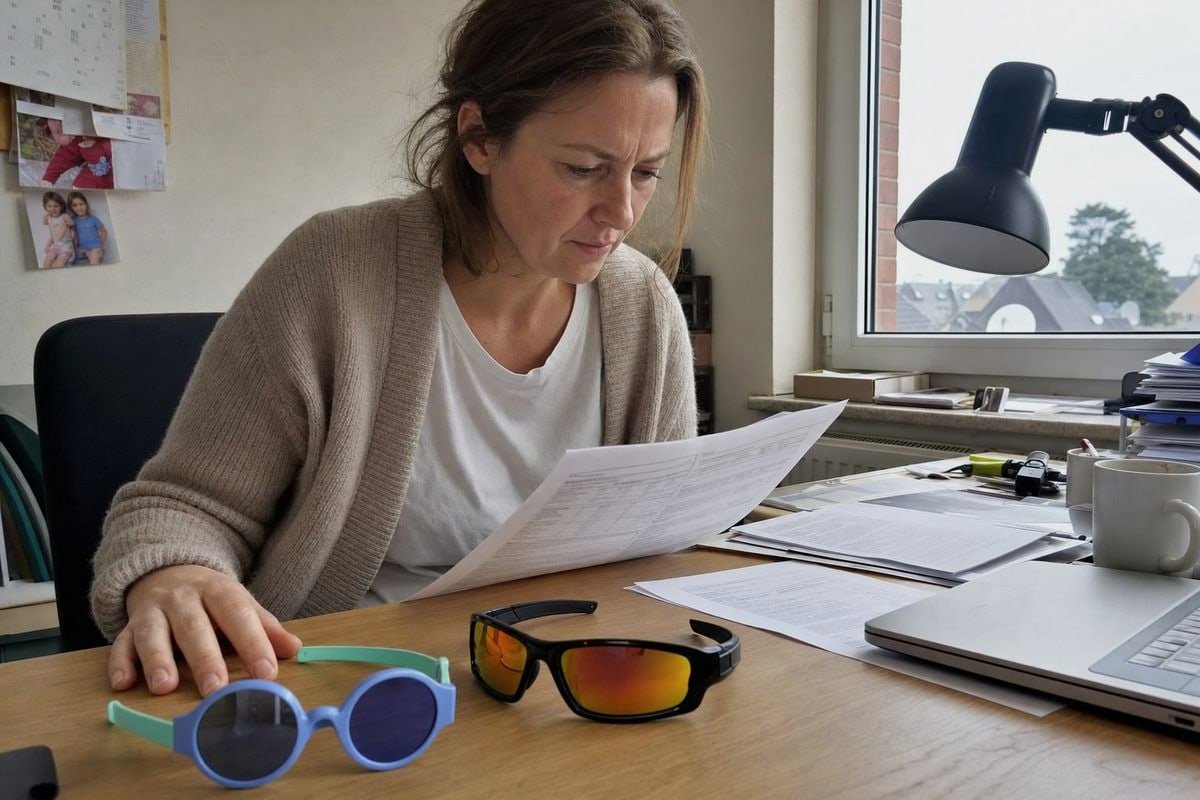
A genuine test report tells a story. A fake or recycled one tells a different story if you know where to look. In our experience exporting to buyers in twenty-plus countries, the most common problem is not fraud. It is mismatch. A supplier tests one colorway or one material batch, then ships you a different one.
What a valid report must show
Check these five things every time:
- The lab is accredited and independent, not an internal factory report alone.
- The report references EN71-1 and, for sun protection claims, the ISO 12312-1 4 standard.
- The tested sample matches your frame material, lens type, and accessories exactly.
- The report is recent, ideally within the last one to two years.
- Each test line shows a clear pass, including small parts, sharp edges, and impact resistance.
Common red flags versus healthy signals
| Red flag | Healthy signal |
|---|---|
| One report covers "all styles" | Reports issued per style or per material family |
| No abuse testing listed | Torque, tension, drop, and impact tests documented |
| Report predates a material change | Retesting after any material or supplier change |
| Vague product description | Photos and item numbers matching your PO |
| Supplier resists sending the full report | Full PDF shared without hesitation |
Material changes matter more than most buyers realize. Newer sustainable materials can fracture differently than TPEE or TR90 5 under impact, sometimes creating sharp-edged small fragments. That is why we retest whenever a resin formula changes, even if the mold stays identical. Ask your supplier if they do the same. Their answer tells you a lot.
Which design features help my sunglasses avoid choking hazard risks in the first place?
The cheapest test to pass is the one your design never risks failing. When our engineers develop a new kids' style, we remove failure points before the first sample ever leaves the workshop.
Choking-safe kids' sunglasses use one-piece or snap-fit hinges instead of tiny screws, permanently bonded or captive lenses, molded-in decoration rather than glued charms, integrated nose bridges, and flexible TPEE or TR90 materials that bend under stress instead of snapping into small fragments.
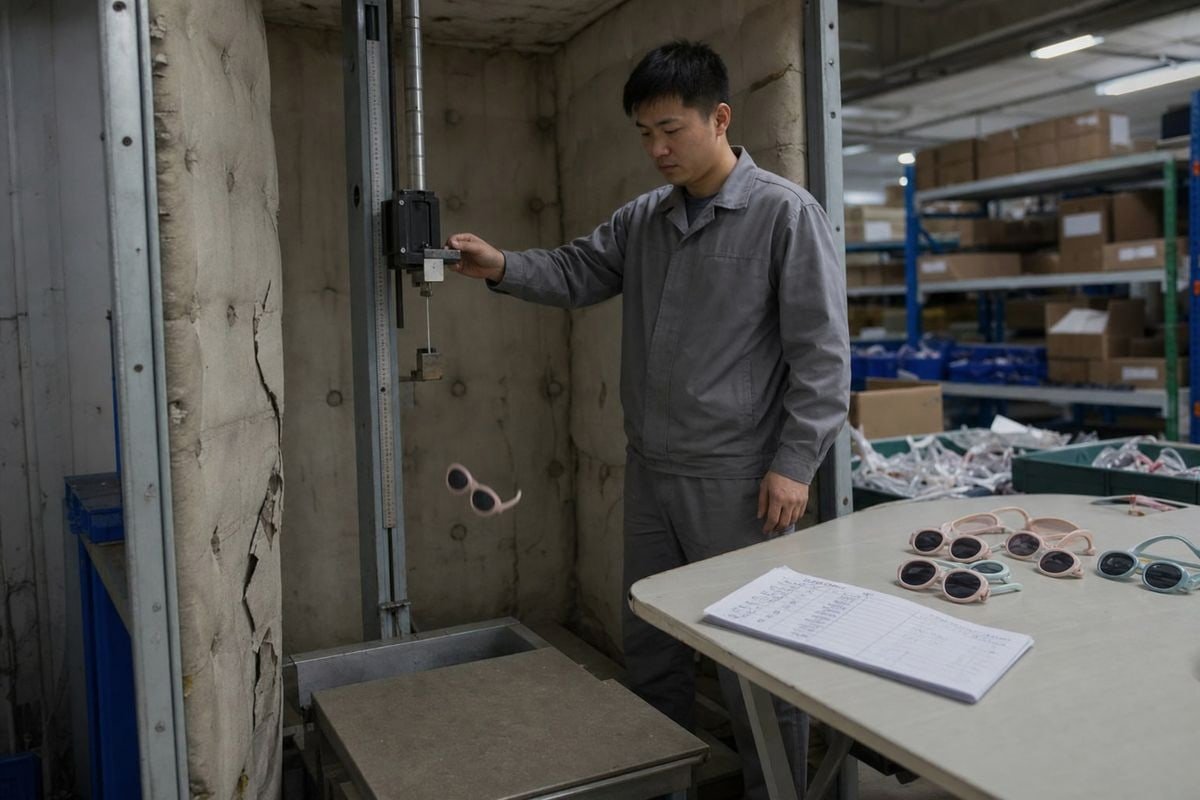
Compliance-first design is a growing expectation among serious kids' brands, and for good reason. Every detachable component is a potential small part. Every glued ornament is a potential lawsuit. The smartest approach is to engineer the risk out entirely.
High-risk features and safer alternatives
| Risky feature | Why it fails | Safer alternative |
|---|---|---|
| Metal hinge screws | Loosen over time, fit the cylinder easily | Integrated snap-fit or one-piece flex hinges |
| Glued decorative charms | Detach under tension testing | Molded-in patterns or printed graphics |
| Removable lens inserts | Become accessible detachable components | Permanently bonded, captive lenses |
| Separate nose pads | Pull off during torque tests | Molded-in nose bridge |
| Beaded strap adjusters | Slide off elastic cords | Sewn-in or oversized retainers |
| Brittle low-grade plastic | Shatters into fragments on impact | Flexible TPEE temples with TR90 fronts |
Why material choice is a safety decision
Material is the quiet hero here. Flexible TPEE bends and returns to shape when a toddler twists it, which is exactly what tension and torque tests simulate. Brittle plastics crack instead, and cracked pieces can fit the cylinder. In ultra-small infant sizes, even a popped-out lens can fit into the small parts cylinder, so permanent lens bonding becomes essential rather than optional. We also watch lens coatings carefully, because certain coating chemistries can cause environmental stress cracking in frame material, which leads to unexpected breakage during standard impact testing. Good design considers the whole system, not just individual parts.
What documentation should I request from my manufacturer to prove EN71-1 compliance?
A lesson I learned early in this business: paperwork problems surface at the worst possible moment, usually at customs or after a retailer audit. Complete documentation up front prevents both.
Request an accredited EN71-1 test report for your exact SKU, a Declaration of Conformity referencing the Toy Safety Directive 2009/48/EC where applicable, CE marking compliance evidence, an ISO 12312-1 report for UV claims, material declarations, and age-appropriate labeling artwork approvals.

Documentation is your legal shield as the importer or brand owner. In most markets, the entity placing the product on the market carries the liability, not the factory. So the file you build is the file that protects you.
The complete compliance file
Here is the document set we prepare for brand customers, in the order authorities usually ask for it:
- Third-party EN71-1 test report covering mechanical and physical properties, including small parts, sharp points, and abuse testing results.
- ISO 12312-1 test report covering UV filtration and optical quality, since sunglasses carry protective claims beyond toy rules.
- Declaration of Conformity 6, signed and dated, listing the applicable directives and standards.
- CE marking 7 compliance evidence, including how and where the marking appears on product or packaging.
- Material and chemical declarations, confirming what the frames and lenses actually contain.
- Labeling and packaging artwork approvals, showing warnings, age grading, and traceability details like batch codes.
- Factory quality control records, such as incoming material checks and pre-shipment inspection reports.
Match every document to the shipment
The single most important habit is cross-referencing. The item number on the test report should match the number on your purchase order, the Declaration of Conformity, and the carton labels. When a buyer in Australia audited us a few years back, that cross-referencing was what got the file approved in one round. A stack of impressive-looking certificates means little if they describe a different product. Real product safety certification is specific, current, and traceable, and any factory serious about children's products will hand it over without being chased.
Conclusion
EN71-1 small parts and choking hazard testing is not red tape. It is the line between a safe kids' product and a recall waiting to happen.
The risk is real: a single loose screw, popped lens, or glued charm can fit the 31.7 mm cylinder and end a product launch overnight. But the solution is straightforward. Choose designs that engineer small parts out, insist on flexible materials like TPEE and TR90, demand style-specific test reports covering abuse testing, and build a complete compliance file before the first container ships. At our factory in Taizhou, we have spent fifteen years building children's eyewear around exactly these principles, and we have seen how much easier a brand's life becomes when safety is designed in from day one. If you are developing a kids' sunglasses line, start with compliance as the foundation, not the afterthought — your customers, your retailers, and the children wearing your product will all be better for it.
Footnotes
1. CDC resource on choking hazards supports the article’s core safety concern for young children. ↩︎
2. ISO page on conformity assessment explains accredited third-party testing referenced for verifying supplier compliance. ↩︎
3. Official European Union legislation portal (EUR-Lex). ↩︎
4. Official ISO standard page for the sunglasses UV filtration and optical quality standard referenced repeatedly. ↩︎
5. Wikipedia background on thermoplastic materials like TR90 used for flexible, impact-resistant eyewear frames. ↩︎
6. Background concept explaining the legal document manufacturers must provide for compliance. ↩︎
7. Official EU source explaining CE marking compliance evidence requirements mentioned for documentation. ↩︎
More Articles You Might Like
August 1, 2026
Should Factory Handle Kids Sunglasses Packaging & Labeling, or Use a Designated Supplier?

August 1, 2026
Own Warehouse vs Supplier Direct Fulfillment: Which Cuts Return Costs for Kids Sunglasses Brands?

August 1, 2026
Direct-to-Port Warehouse or Overseas Staging: Which Saves More on Kids Sunglasses Shipping?
Looking for a Reliable Kids Eyewear Partner?
Explore 800+ ready styles and full OEM/ODM support tailored to your brand.
Get in Touch English
  Español de México
  Deutsch
  Français
  日本語
日本語  العربية
  Português do Brasil