What to Check the First Time Kids Wear New Sunglasses?
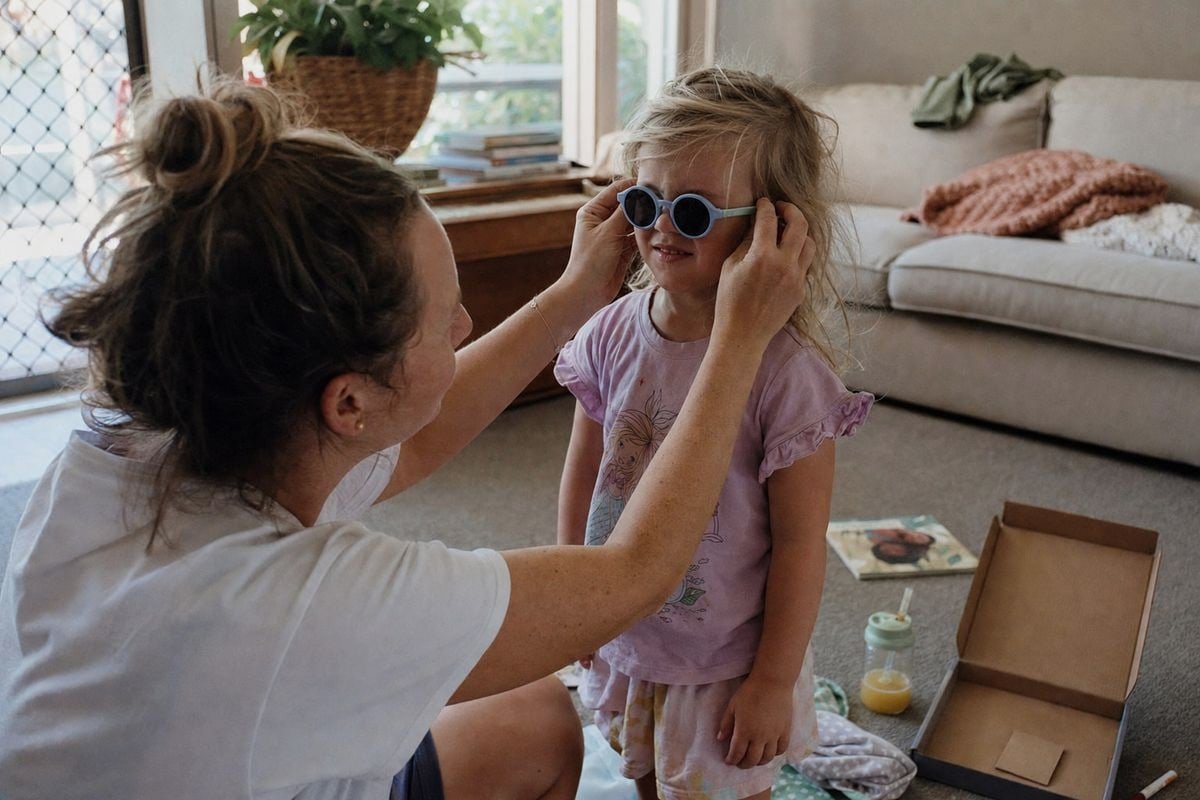
When kids wear new sunglasses for the first time, small problems hide easily. On our production line in Taizhou, I have seen how a slightly warped frame ruins everything. A pair that pinches, slips, or distorts vision gets thrown in a drawer within a week — and the child’s eyes stay unprotected. That first-wear inspection is the moment that decides it all.
The first time kids wear new sunglasses, check that the lenses block 99%–100% of UVA and UVB rays, the frame sits level with pupils centered, nothing pinches the nose or ears, lenses show no distortion, and the glasses stay put when the child moves.
Each of these checks takes less than a minute. Below, I walk through them in the order I would do them myself, from safety to fit to materials.
What safety checks should I do before letting my child wear new sunglasses?
Last year, a buyer from Australia sent back a competitor's sample for us to review. The lenses looked dark and stylish, but they had no verified UV filtering 1 at all. That sample taught her team a lasting lesson.
Before your child wears new sunglasses, confirm a UV400 or 100% UVA/UVB label, check for safety certifications such as CE or ANSI Z80.3, inspect lenses for scratches and bubbles, and test that hinges and frame parts feel solid with no loose screws or sharp edges.
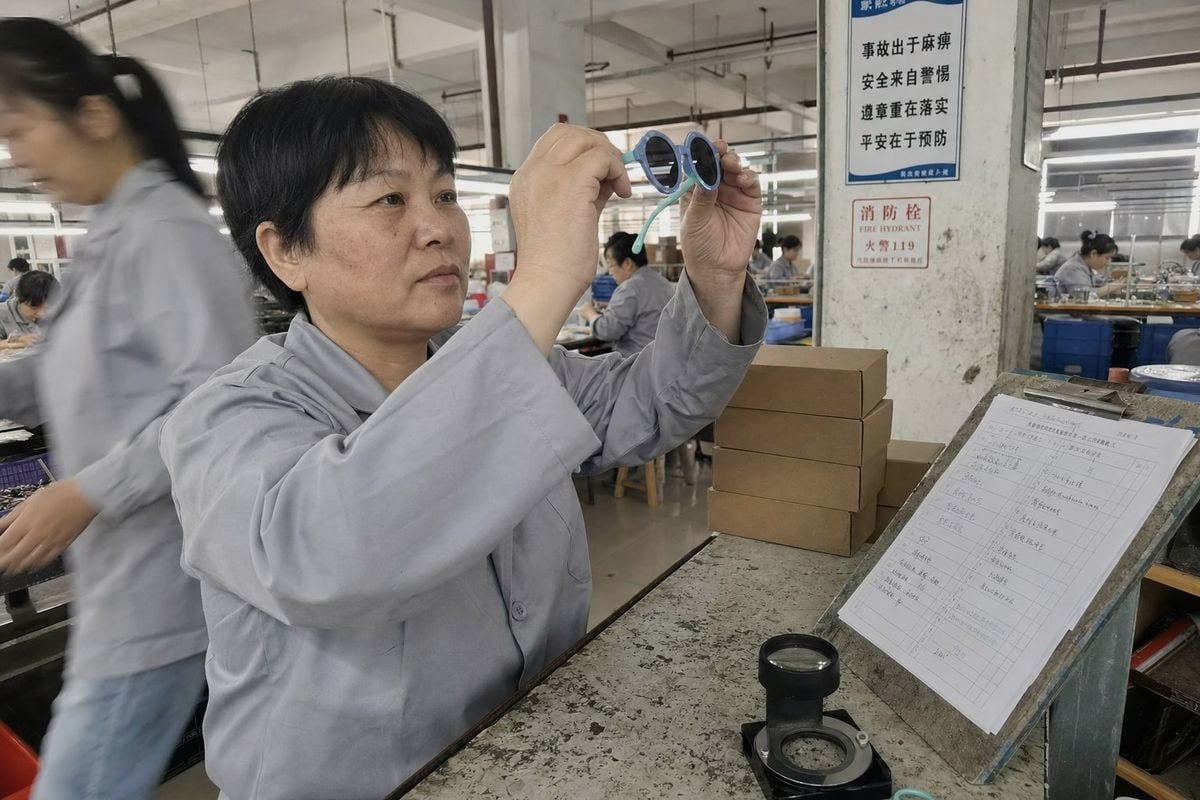
Safety comes before style, always. In our QC workshop, every batch goes through the same sequence before it ships, and you can repeat a simple home version of it in about sixty seconds.
The 60-second home safety check
- Read the label first. Look for "UV400 2" or "blocks 99%–100% of UVA and UVB." No label means no guarantee.
- Look for a certification mark. CE marking 3 in Europe or ANSI Z80.3 in the US signals the product met impact and UV standards.
- Hold the lenses up to light. Scan for scratches, bubbles, or cloudy spots. Any of these can strain young eyes.
- Do the straight-line test. Look through each lens at a door frame or tile line. If the line waves or bends, the lens distorts vision.
- Flex the hinges gently. They should open smoothly and hold their position. Wobbly hinges usually mean loose screws or weak molding.
- Run a finger along all edges. Children's skin is delicate. There should be no rough seams, sharp corners, or exposed metal.
| Safety check | What a pass looks like | What a fail looks like |
|---|---|---|
| UV protection | UV400 or 99%–100% UVA/UVB stated | No label, or vague "sun protection" wording |
| Lens quality | Clear view, no bubbles or waves | Wavy lines, scratches, cloudiness |
| Certification | CE or ANSI Z80.3 marking | No standard referenced anywhere |
| Hardware | Firm hinges, tight screws | Loose screws, rattling parts |
| Edges | Smooth all around | Rough seams, sharp molding flash |
Here is one point I want to stress, because parents ask us about it constantly: dark lenses are not automatically safe lenses. Tint darkness and UV filtering are two separate things. A very dark lens without UV filtering is actually worse than no sunglasses at all, because the pupil dilates behind the dark tint and lets more unfiltered UV in. Certified UV protection is the non-negotiable item on this list.
How do I know if the fit and comfort are right for my child's face?
Fit is where I spend the most time with our design team. We often adjust a nose bridge by a single millimeter between sample rounds, because that tiny change decides whether a three-year-old keeps the glasses on or rips them off.
The fit is right when the frame sits level, pupils are centered in the lenses, nothing touches the cheeks or eyelashes, there is no pressure on the nose or behind the ears, and the sunglasses stay in place when the child looks down or shakes their head.
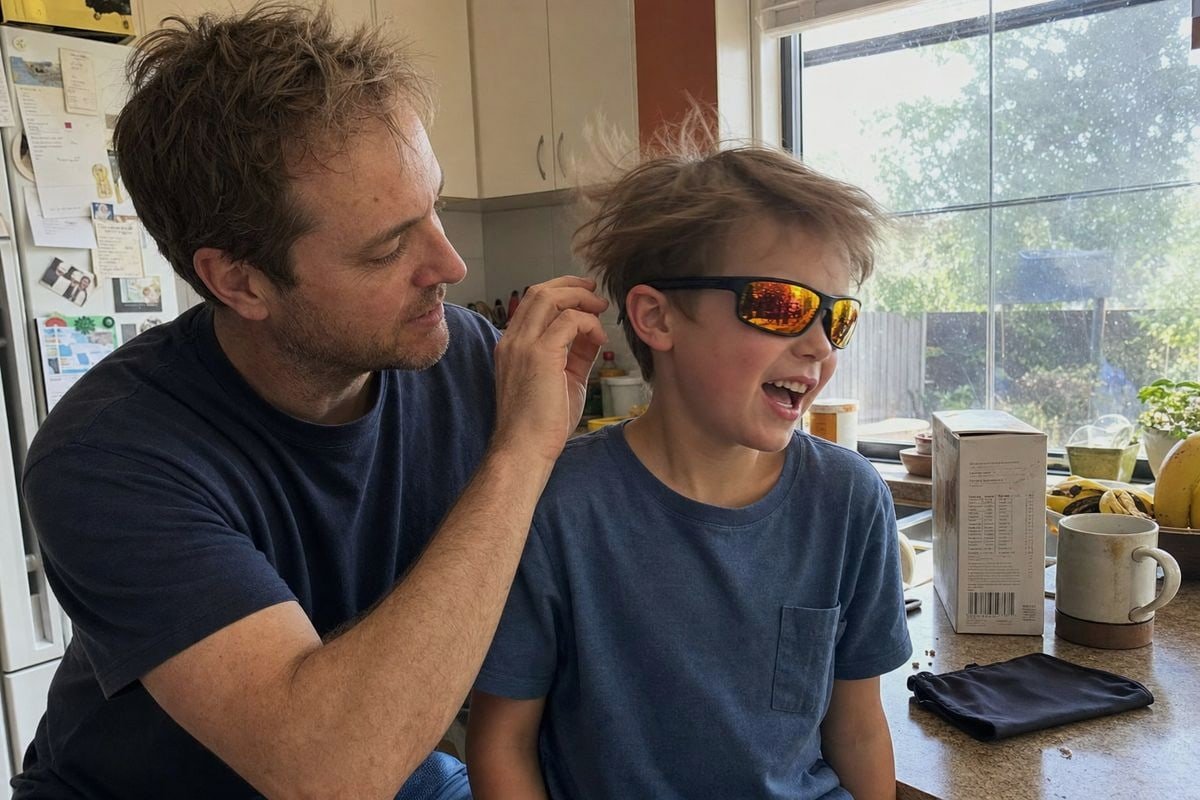
Kids rarely explain fit problems in adult words. They say the glasses feel "pinchy," "heavy," or "itchy," or they simply stop wearing them. So you need to check fit in three stages: the moment they put the glasses on, while they move, and after a few minutes of wear.
The moment they put them on
Stand in front of your child and look at the frame straight on. It should sit level, not tilted to one side. The eyes should sit roughly in the center of each lens. Then ask your child to smile big and talk. The bottom of the frame should not ride up on the cheeks. Also check that the eyelashes do not brush the back of the lenses. If they do, the frame sits too close to the face.
While they move
Ask your child to look down at their shoes, then gently shake their head side to side. Well-fitted sunglasses stay put. A slight shift is fine. Sliding down the nose or tilting dramatically is not. Then have them jump a few times. Active kids will do far worse on a playground.
After a few minutes
This is the stage most parents skip. Let your child wear the glasses for five to ten minutes, then take them off and look for red marks on the nose bridge or behind the ears. Red marks mean pressure points, and pressure points mean the glasses will end up in a bag, not on a face. Ask direct questions too: Do they feel tight? Loose? Too dark? Hard to see through?
One more note from our experience with growing children: fit is not permanent. A frame that fits perfectly at age four may pinch at age five. Recheck fit every few months, and expect to size up as your child grows.
What UV and lens quality standards should I confirm before purchase?
Buyers from Europe and Japan ask us the same two questions on nearly every order: which UV standard do the lenses meet, and how do we verify optical quality? Those are exactly the right questions for a parent to ask, too.
Before purchase, confirm the lenses are rated UV400 or block 99%–100% of UVA and UVB, meet a recognized standard like CE or ANSI Z80.3, show no optical distortion, and keep enough visible light so the child can still recognize colors and traffic signals.
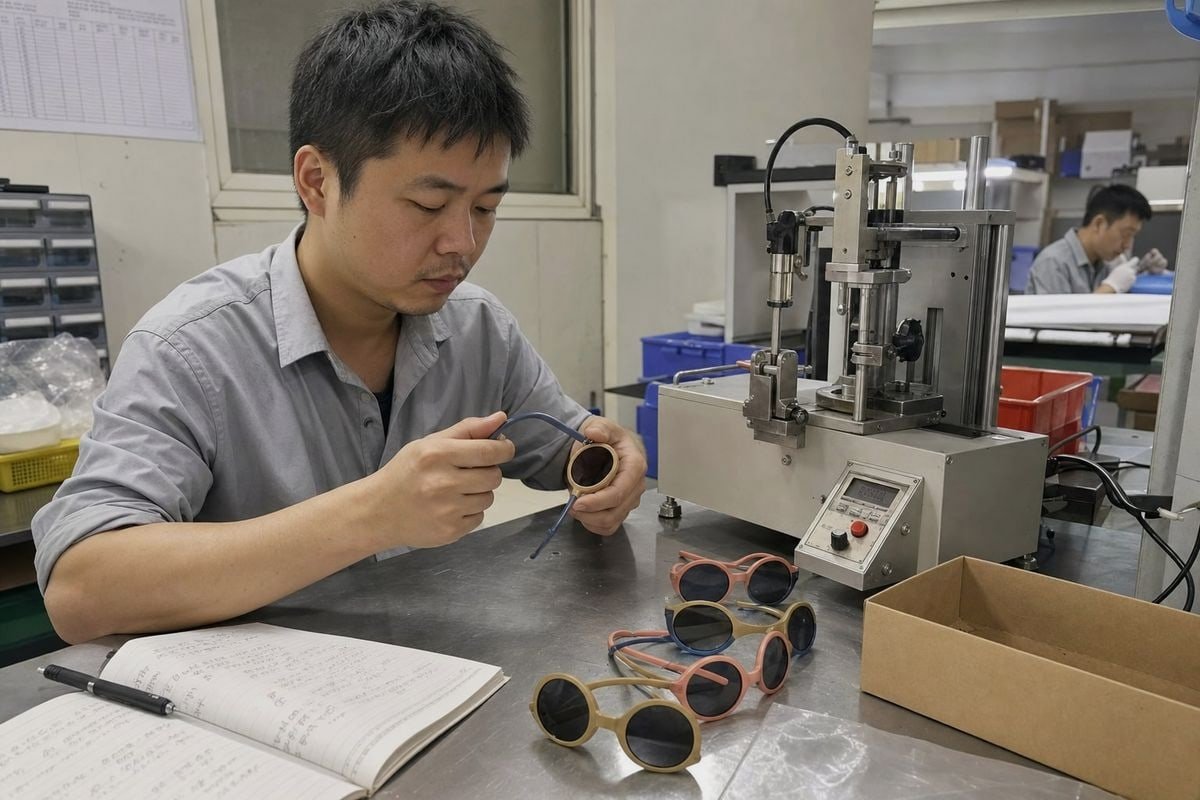
UV protection is invisible, so you have to rely on labels, standards, and a few smart tests. Here is how I would break it down as a parent shopping for a child.
Understand what the labels actually mean
| Label or term | What it means | Good enough for kids? |
|---|---|---|
| UV400 | Blocks UV light up to 400nm — nearly all UVA and UVB | Yes, this is the benchmark |
| 100% UVA/UVB | Same protection level, different wording | Yes |
| CE marking 4 | Meets European safety requirements | Yes, when combined with UV400 |
| ANSI Z80.3 | US standard for nonprescription sunglasses | Yes |
| "Blocks UV" (no number) | Vague, unverified claim | No — ask for specifics |
| No label at all | No stated protection | No — walk away |
Separate UV protection from tint darkness
This deserves repeating because it is the single biggest misconception we encounter. Tint controls visible light and comfort. UV coating controls invisible ultraviolet light and safety. A child needs both, but they are not the same thing. In fact, an overly dark lens can create its own problem: it cuts visible light so much that the child struggles to see steps, curbs, or the color of a traffic light. For everyday play, a medium tint with full UV400 filtering usually beats a very dark lens.
Test optical quality yourself
Do the straight-line test through each lens. Look at tile grout, a window frame, or ruled paper. The lines should stay straight as you move the lens slowly. Waviness signals molding defects that cause eye strain and headaches. Then check color perception. Ask your child to name the colors of a few objects while wearing the glasses. If reds and greens look confusing, the tint is distorting color — a real safety issue near roads. Polarized lens options can further cut glare from water and pavement, which is a nice upgrade for beach or snow days, but UV400 remains the baseline that matters most.
How can I tell if the frame material is safe and durable for active kids?
Material choice is the decision we agonize over most in development. After fifteen years making children's eyewear, our team settled firmly on flexible materials like TPEE and TR90 5, because we watched too many rigid frames snap in drop tests — and rigid frames snap the same way on playgrounds.
A safe, durable kids' frame uses lightweight, flexible material such as TR90 or TPEE that bends without breaking, pairs with impact-resistant polycarbonate lenses, contains no skin irritants like nickel, and has smooth edges with securely fastened hinges and screws.
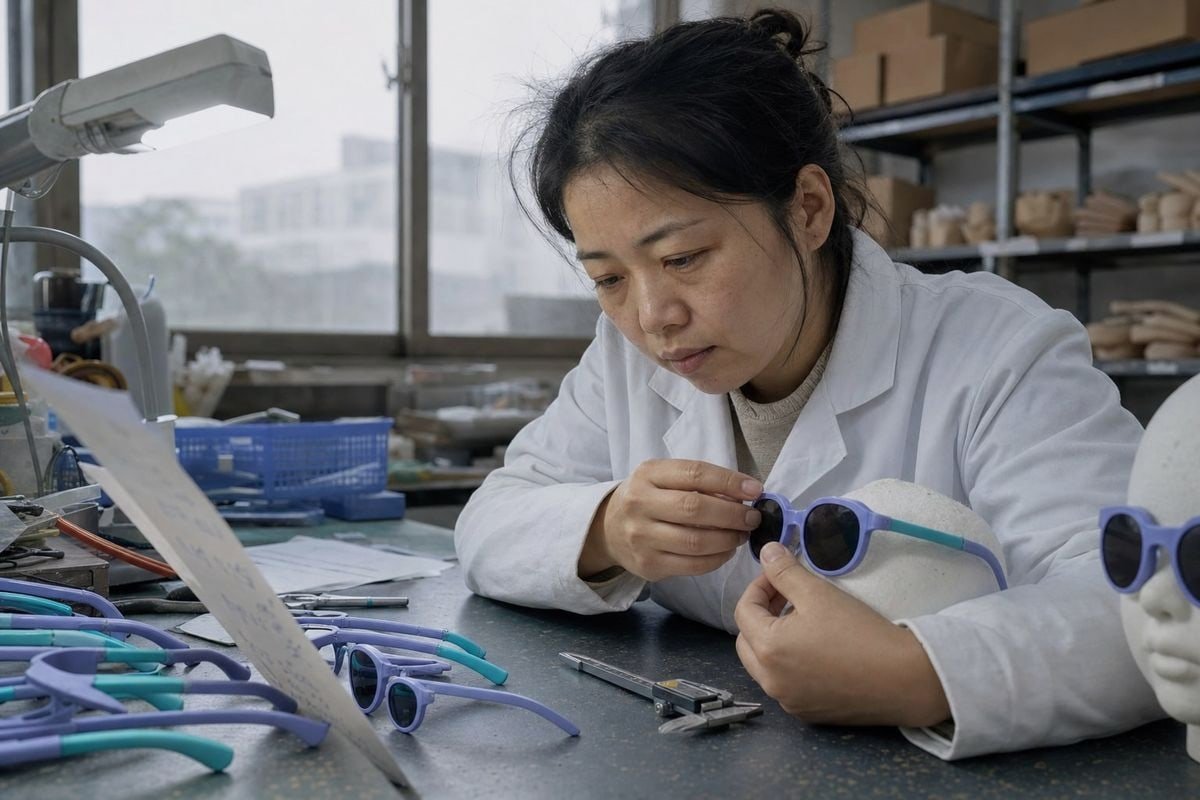
Active kids are brutal on eyewear. They sit on their sunglasses, drop them on concrete, and twist them in ways adults never would. The material has to survive all of that without turning into sharp fragments near a child's eyes.
Do the flex test
Hold the frame by both temples and gently twist. A good children's frame flexes and springs back to shape. A brittle frame resists, creaks, or whitens at stress points. In our workshop, we bend sample temples repeatedly during QC. Flexible materials like TPEE handle this without complaint; cheap rigid plastics do not. You do not need to torture the frame at home — a gentle twist tells you plenty.
Compare common frame materials
| Material | Flexibility | Weight | Best for |
|---|---|---|---|
| TR90 | High — bends and recovers | Very light | Everyday and sport frames for kids |
| TPEE | Very high — nearly unbreakable in normal use | Very light | Toddlers and highly active children |
| Standard rigid plastic | Low — can snap under stress | Light to medium | Occasional adult use, not active kids |
| Metal | Low — bends permanently, may contain nickel 6 | Medium | Older users; risky for sensitive skin |
Check for skin safety and small parts
Children's skin is more reactive than adult skin. Avoid frames with exposed nickel parts if your child has sensitive skin, and choose materials described as hypoallergenic 7 or environmentally friendly. Inspect the screws and hinge areas closely. Screws should sit flush and tight, with no risk of working loose into small parts a young child could handle. Recheck these points every month or two, because screws loosen with daily wear.
Think about lens material, too
Polycarbonate lenses 8 belong on every active child's face. They resist impact far better than glass or basic acrylic, so a fall or a flying ball is far less likely to shatter them. Finally, consider whether the frame accepts a retainer strap or sports band. For toddlers and for sports, a strap prevents both loss and impact damage — and it dramatically raises the odds the glasses actually stay on.
Conclusion
Unchecked sunglasses fail silently — kids abandon them, and UV damage accumulates for years. So inspect protection, fit, and materials together at first wear, and recheck as your child grows. One minute of checking protects years of healthy vision.
Footnotes
1. WHO fact sheet explains UV radiation risks that justify proper UV filtering in lenses. ↩︎
2. EPA explains UV Index and rating scales relevant to UV400 lens claims. ↩︎
3. Official EU source explaining CE marking requirements for consumer safety products like sunglasses. ↩︎
4. Official EU source explaining CE marking requirements cited as a safety standard. ↩︎
5. Explains the thermoplastic elastomer class of materials that TR90 belongs to. ↩︎
6. CDC resource on nickel exposure supports the skin-irritation caution for frame hardware. ↩︎
7. Background on the hypoallergenic concept referenced for sensitive-skin frame materials. ↩︎
8. Background on polycarbonate material properties explaining its impact resistance. ↩︎
More Articles You Might Like

August 1, 2026
Should Factory Handle Kids Sunglasses Packaging & Labeling, or Use a Designated Supplier?

August 1, 2026
Own Warehouse vs Supplier Direct Fulfillment: Which Cuts Return Costs for Kids Sunglasses Brands?

August 1, 2026
Direct-to-Port Warehouse or Overseas Staging: Which Saves More on Kids Sunglasses Shipping?
Looking for a Reliable Kids Eyewear Partner?
Explore 800+ ready styles and full OEM/ODM support tailored to your brand.
Get in Touch English
  Español de México
  Deutsch
  Français
  日本語
日本語  العربية
  Português do Brasil