Quais Detalhes de Aparência os Compradores Podem Personalizar em Óculos de Sol Infantis?
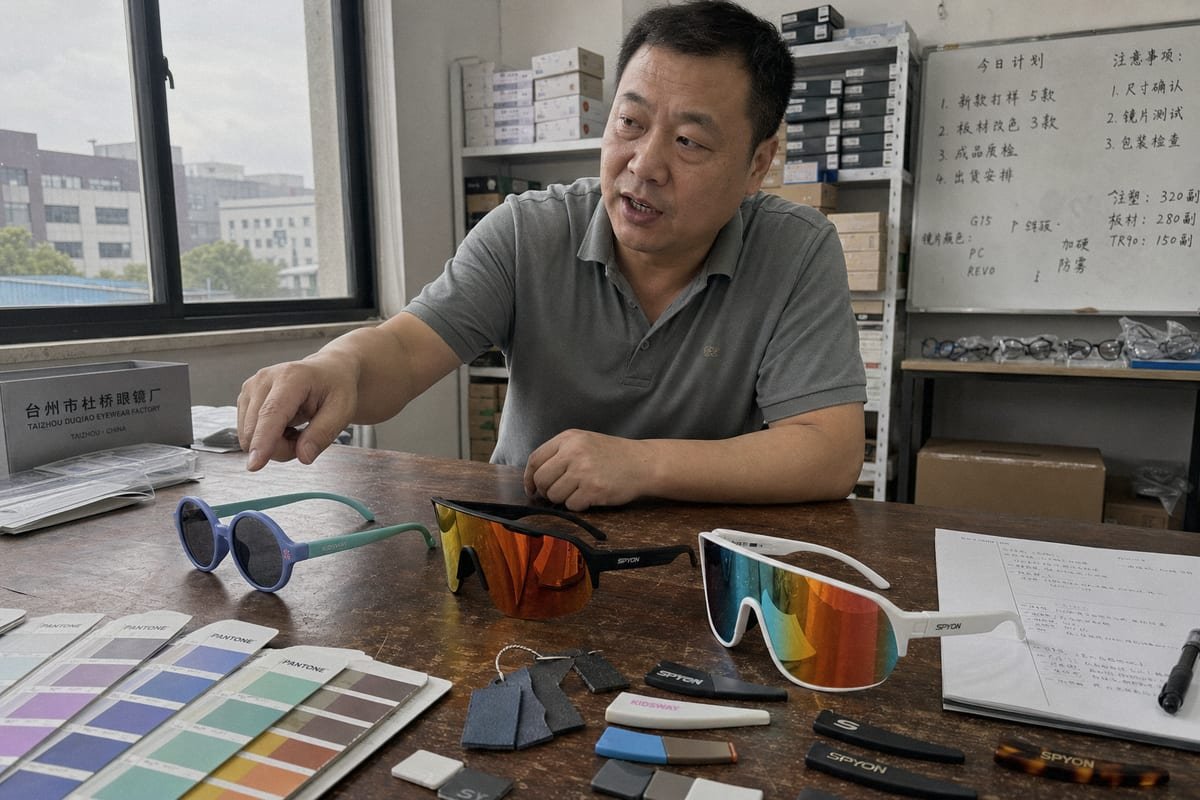
Muitos compradores me perguntam quais detalhes de aparência em óculos de sol infantis eles podem realmente personalizar Referências Pantone 1. Estilos genéricos de catálogo se misturam nas prateleiras de varejo. Isso prejudica a venda. Nossa fábrica em Taizhou resolve isso com [opções profundas de OEM](https://okayeyewear.com/kids-sunglasses-support-oem-brand-customization-does/).
Os compradores podem personalizar paletas de cores de armações, acabamentos foscos ou brilhantes, combinações de duas cores, estampas nas hastes, logotipos de marca própria, tonalidades de lentes, revestimentos espelhados ou polarizados, embalagens e acessórios como estojos e alças. A geometria da armação geralmente permanece fixa, a menos que um novo molde seja aberto.
Deixe-me guiá-lo por cada área personalizável. Usarei exemplos reais de nossa linha de produção, para que você saiba exatamente o que solicitar a um fornecedor.
Como Posso Personalizar as Cores e Acabamentos das Armações para a Minha Linha de Óculos de Sol Infantis?
Na primavera passada, um comprador da Austrália nos enviou um cartão Pantone para uma coleção de praia. Nossa oficina combinou uma frente azul perolado com hastes verde-água em duas rodadas de amostra.
Os compradores podem escolher paletas de cores personalizadas para as armações usando referências Pantone, selecionar acabamentos foscos, brilhantes ou emborrachados, e combinar esquemas de duas cores, como uma frente colorida com hastes contrastantes. As opções incluem materiais sólidos, translúcidos, degradê e até mesmo que mudam de cor, todos aplicados em moldes existentes.
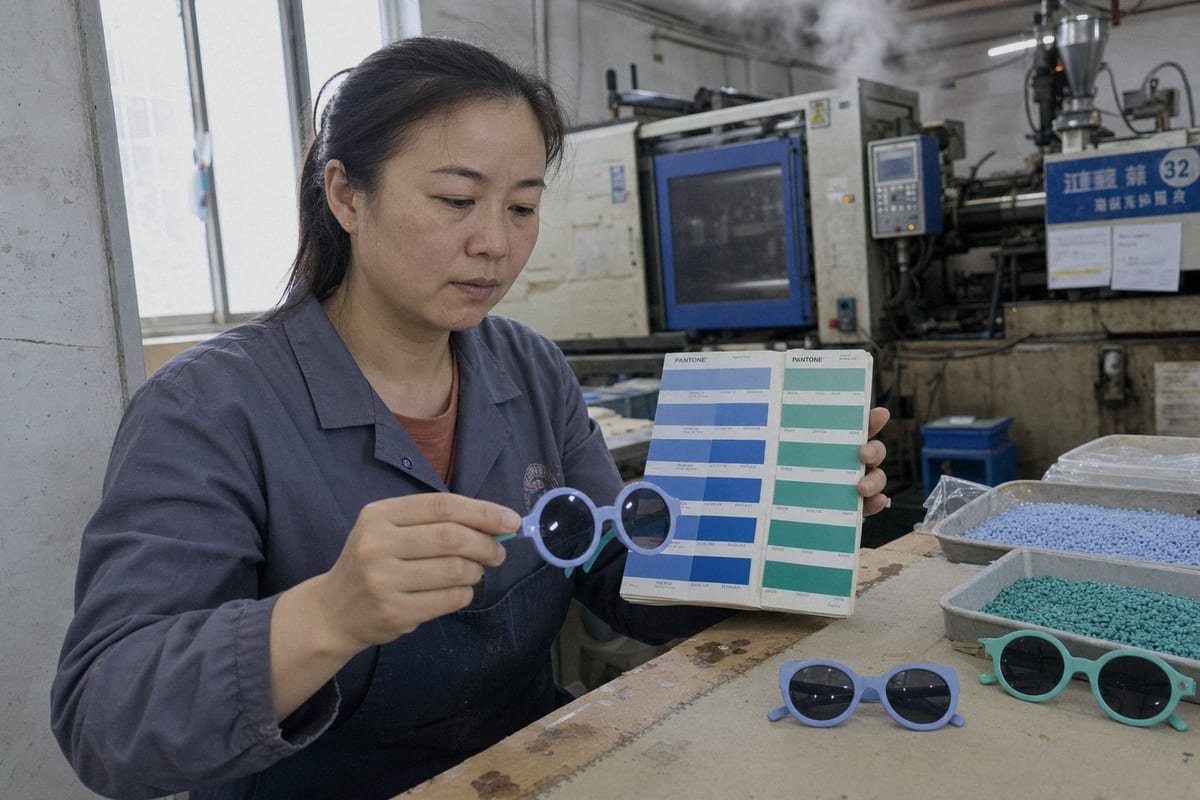
A cor da armação é a maneira mais rápida de fazer um estilo de estoque parecer seu próprio design. Como mantemos cerca de 800 estilos existentes, a maioria dos compradores nunca paga por um novo molde. Eles simplesmente mudam a cor de uma forma comprovada. Nossas armações flexíveis de TPEE e armações TR90 2 aceitam pigmento muito bem, então a cor atravessa o material em vez de ficar na superfície. Isso significa que não descasca quando as crianças as derrubam.
Opções de Cor que Você Pode Solicitar
Você pode ir muito além de um catálogo básico. Aqui está o que produzimos comumente:
| Detalhe da Cor | O Que Você Pode Escolher | Uso Típico |
|---|---|---|
| Cor sólida Pantone | Qualquer referência Pantone C | Linhas consistentes com a marca |
| Combinações de duas cores | Cores diferentes na frente e nas hastes | Estilos de varejo divertidos |
| Translúcido / cristal | Tons transparentes como gelatina | Coleções orientadas para tendências |
| Degradê | Uma cor se misturando em outra | SKUs fashion-forward |
| Conjuntos neon ou pastel | Cores vibrantes ou tons suaves de berçário | Segmentação por idade |
Opções de Acabamento que Mudam a Sensação
O acabamento da superfície é tão importante quanto a cor. Um acabamento fosco ou brilhante muda tanto a aparência quanto o toque. Acabamentos foscos e revestimentos emborrachados soft-touch parecem premium e escondem impressões digitais. Acabamentos brilhantes fotografam bem para e-commerce. Para estilos de escudo esportivo, como nosso modelo preto wraparound, uma armação preta brilhante parece atlética. O mesmo escudo em branco brilhante parece fashion-forward e voltado para jovens. Um molde, dois produtos muito diferentes.
Uma dica prática. Sempre solicite amostras físicas de cores antes da produção em massa. As cores da tela enganam. Enviamos cartões de amostra com cada projeto de cor personalizada para que os compradores aprovem o tom exato.
Posso Adicionar Meu Próprio Logotipo e Marca às Hastes ou Lentes?
Um comprador de uma marca japonesa de bebês uma vez me disse que seu maior medo: pagar por 5.000 unidades que parecessem produtos de mercado sem marca. A colocação do logotipo foi o fator decisivo dela.
Sim. Os compradores podem adicionar um logotipo de marca própria através de serigrafia, tampografia, gravação a laser, gravação em relevo ou emblemas de metal, geralmente em uma ou ambas as hastes. A marca nas lentes é possível através de gravação a laser sutil no canto da lente. Provas de arte são aprovadas antes da produção.
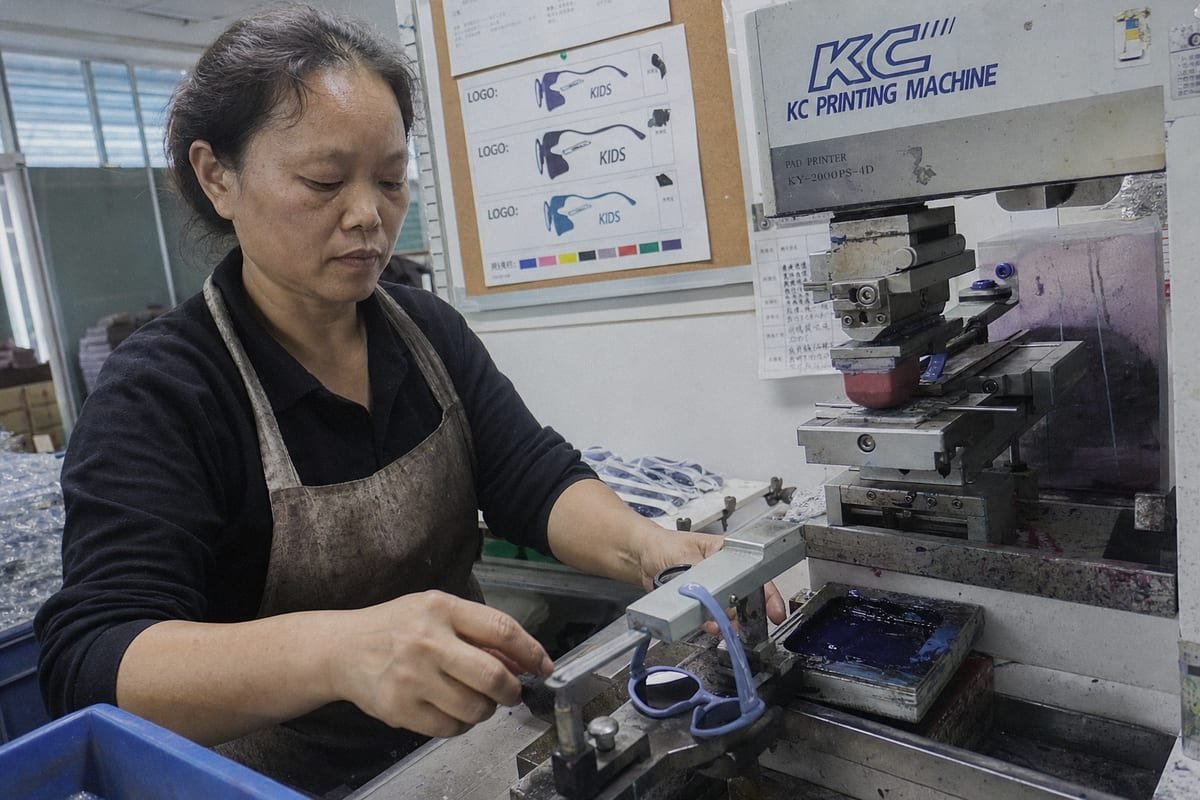
A marca transforma um produto de fábrica em seu produto. Em nossa experiência exportando para compradores em mais de vinte países, a haste é o local padrão para o logotipo. É visível quando usado, plano o suficiente para impressão limpa e não interfere na área da lente.
Métodos Comuns de Aplicação de Logotipo
Cada método se adapta a um orçamento e estética diferentes:
| Método | Aparência | Melhor Para |
|---|---|---|
| Serigrafia | Tinta plana, uma ou várias cores | Logotipos brilhantes e divertidos |
| Tampografia | Impressão precisa em superfícies curvas | Hastes curvas |
| Gravação a laser | Tom sobre tom, sutil, permanente | Premium minimalist brands |
| Embossed / debossed | Raised or recessed in the mold texture | Tactile, upscale feel |
| Metal badge inlay | Small metal emblem | Flagship or gift lines |
Where the Logo Can Go
The outer left or right temple is the classic spot. Some brands print inside the temple instead, keeping the outside clean while still carrying legal marks and sizing info. Custom temple patterns are another route entirely. Instead of a small logo, we print a repeating pattern, stars, waves, or a mascot, along the full temple length. This works beautifully for character-licensed or seasonal lines.
Lens etching is more restrained. A tiny logo in the upper lens corner signals a premium positioning, similar to adult designer eyewear. We keep it small so it never enters the child's field of vision. For promotional buyers, one-color temple printing remains the fastest and most economical choice, and we always send a digital proof, then a physical pre-production sample, before any bulk run starts.
Que opções de tonalidade e revestimento de lentes posso escolher para combinar com o estilo da minha marca?
Choosing lenses always involves a trade-off we discuss with buyers: visual impact versus cost per unit. A mirrored gradient lens sells the product on the shelf. A classic smoke lens protects margin.
Os compradores podem selecionar opções de tonalidade de lente, incluindo tons cinza, marrom, azul, rosa e degradê, além de revestimentos como espelhado, multicolorido revo e camadas polarizadas. Todas as lentes devem ter revestimento protetor UV400 como padrão, independentemente da tonalidade cosmética escolhida.
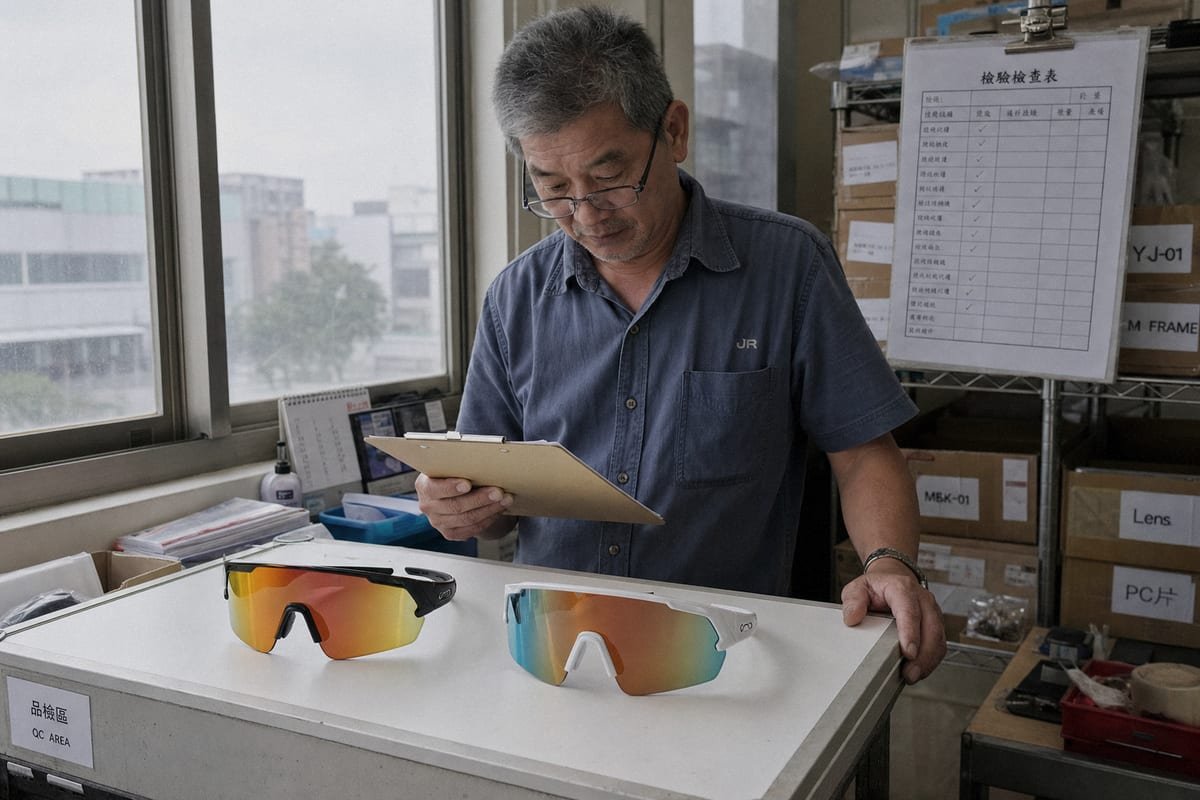
The lens defines your brand personality faster than any other component. Compare two products from our own line. Our round pastel frame carries a dark charcoal-grey lens, calm, minimalist, Scandinavian in feel. Our sport shield carries a mirrored lens coating that shifts from orange to golden-yellow to teal, loud, athletic, and impossible to miss on a rack.
Tints, Coatings, and What They Communicate
Here is how the main lens choices map to brand positioning:
| Lens Option | Visual Effect | Brand Signal |
|---|---|---|
| Solid smoke / grey | Neutral, true-color vision | Classic, parent-trusted |
| Marrom / âmbar | Warm, contrast-boosting | Outdoor, natural lifestyle |
| Pink / blue fashion tints | Soft colored view | Playful, fashion-led |
| Gradient tint | Dark top fading lighter | Retro, dressy styles |
| Mirrored / revo | Reflective rainbow sheen | Sporty, high-energy |
| Polarized lens 4 features | Glare-cut on water and roads | Premium, performance |
Protection Is Not Optional
Style choices sit on top of safety, never instead of it. UV400 protective coating blocks wavelengths up to 400 nanometers and must be present in every kids lens Proteção UV400 5, tinted or clear. In fact, a dark lens without UV protection is worse than no sunglasses, because the pupil dilates behind the dark tint. When we develop lenses, UV400 is the baseline, and polarized lens features are the upgrade tier for brands targeting beach, snow, or driving-age families. Ask your supplier for UV transmission test reports on every lens batch, not just the first sample.
Quais Detalhes de Embalagem e Acessórios Posso Personalizar para um Visual Pronto para Varejo?
Early in my career at our Taizhou workshop, I watched a beautiful custom order lose a retail listing because it shipped in plain poly bags. That lesson shaped how we handle packaging today.
Os compradores podem personalizar caixas impressas, etiquetas penduradas, bolsas de microfibra personalizadas, estojos rígidos ou macios, panos de limpeza, alças de cabeça destacáveis e adesivos de código de barras. Embalagem de marca própria completa transforma óculos de sol de fábrica em um produto de marca pronto para prateleira, sem trabalho extra no destino.
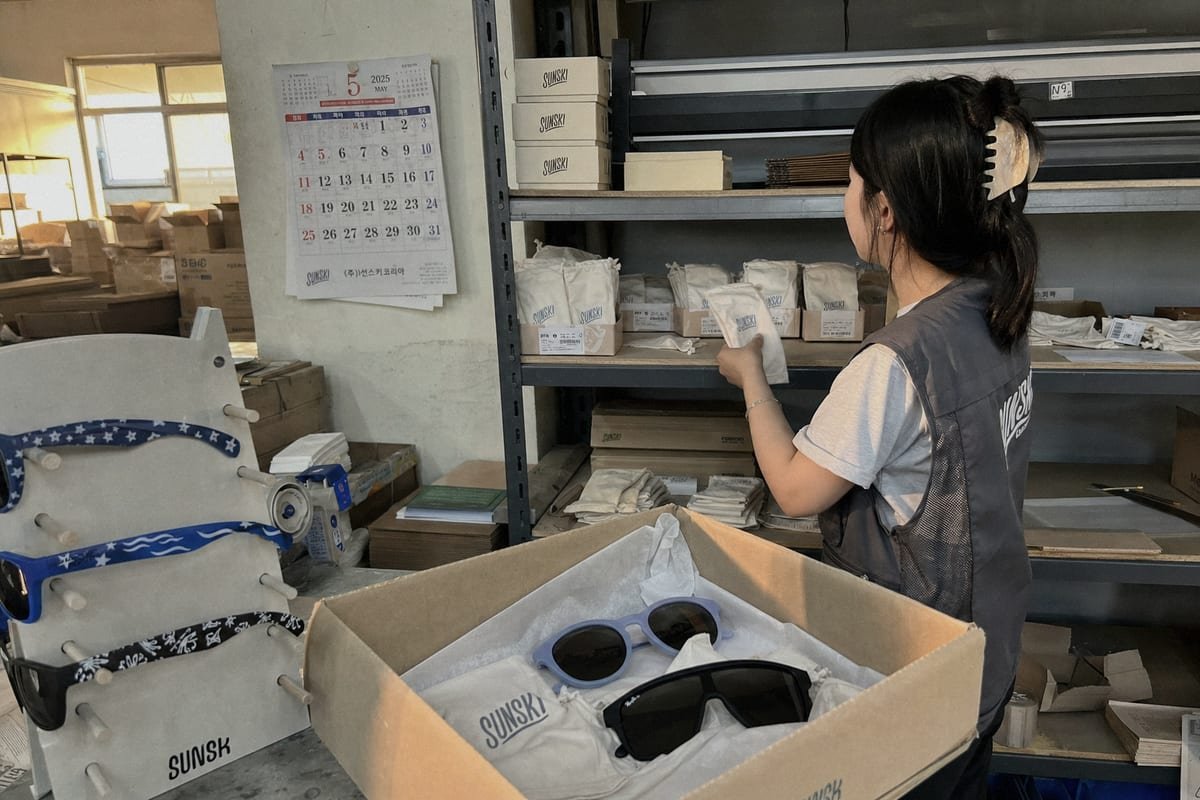
Packaging is the part of customization buyers most often underestimate, yet it decides whether a product looks like a gift or a giveaway. Retail chains in Europe and Australia frequently require specific packaging formats before they will even review a kids eyewear line.
The Retail-Ready Checklist
When we prepare an OEM order for shelf placement, we typically customize these items:
- Printed color box or window box with your artwork, brand story, and compliance icons.
- Hang tag with barcode, age grading, and UV400 claim, ready for scanning at checkout.
- Microfiber pouch or cleaning cloth printed with your private label logo 6.
- Hard case or zipper case for premium tiers and gift positioning.
- Detachable head straps in matched colors, a strong add-on for toddler and sport styles.
- Inner display trays or counter display units for multi-SKU retail programs.
Accessories That Add Perceived Value
Small accessories change the unboxing experience. A color-matched strap on a wraparound sport shield tells parents the product is built for active play. A soft pouch in the same pastel tone as the frame makes a round toddler style feel like a curated gift set. These items cost little at factory level but lift the retail price point meaningfully. We also help buyers plan carton markings, polybag warnings, and labeling rules for their destination market, so goods clear inspection and go straight to shelf.
Conclusão
Unbranded sunglasses disappear on shelves, and brands lose margin daily. The fix is deliberate customization: colors, logos, lens tints, coatings, and packaging. Choose a factory partner who handles all four well.
Notas de rodapé
1. Wikipedia background on the Pantone color matching system used for frame customization. ↩︎
2. Background on TR90 nylon-based polymer material used in flexible eyewear frames. ↩︎
3. Wikipedia explains injection molding process referenced for frame tooling and color production. ↩︎
4. American Academy of Ophthalmology resource on sunglasses lens types and eye protection. ↩︎
5. Authoritative guide from the American Academy of Ophthalmology specifically defining UV400 and lens safety standards. ↩︎
6. ISO standards govern manufacturing and labeling practices relevant to private label production. ↩︎
Mais Artigos que Você Pode Gostar



Procurando um Parceiro Confiável em Óculos Infantis?
Explore mais de 800 estilos prontos e suporte completo OEM/ODM adaptado à sua marca.
Entre em Contato English
  Español de México
  Deutsch
  Français
  日本語
日本語  العربية
  Português do Brasil