Quais Métricas Chave Importam na Compra de Óculos de Sol Infantis a Granel?
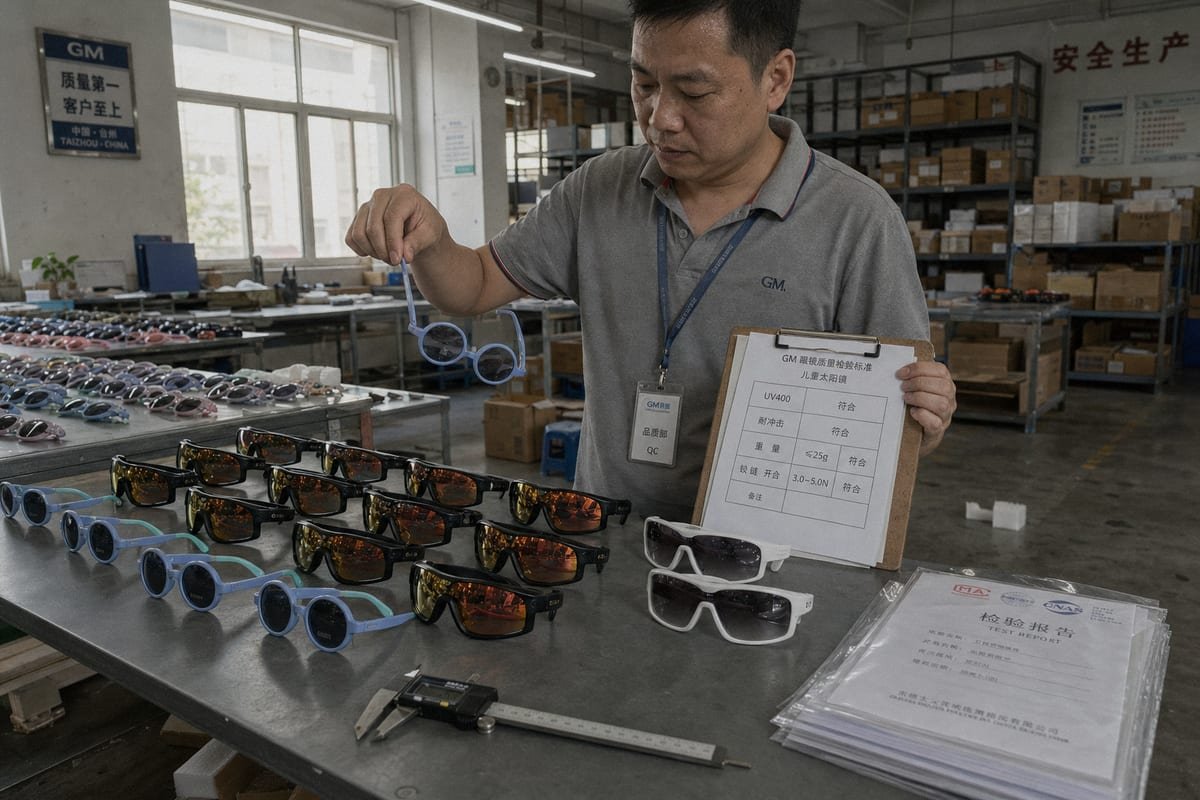
Comprar óculos de sol infantis a granel parece simples até que um contêiner de armações quebradiças chegue REACH 1. Em nossa linha de produção em Taizhou, vi como uma métrica errada arruína uma temporada inteira.
As principais métricas ao comprar óculos de sol infantis a granel são proteção UV400, resistência ao impacto, conformidade de segurança do material, dimensionamento específico para a idade, flexibilidade da armação, controle de qualidade do fornecedor, quantidade mínima de pedido, preço unitário de atacado, prazo de entrega e capacidade de personalização. Avalie primeiro a prova de segurança, depois os termos comerciais.
Essa é uma lista longa. Então, deixe-me dividi-la em quatro perguntas práticas que todo comprador deve fazer antes de enviar um depósito. Cada uma vem com pontos de verificação que você pode usar amanhã.
Como Avalio a Segurança e o Conforto do Material Antes de Fazer um Pedido em Massa?
Um comprador da Austrália uma vez me enviou uma armação de um concorrente que havia quebrado na dobradiça e deixado uma borda afiada. Essa única amostra a ensinou mais sobre a escolha do material do que qualquer catálogo jamais poderia.
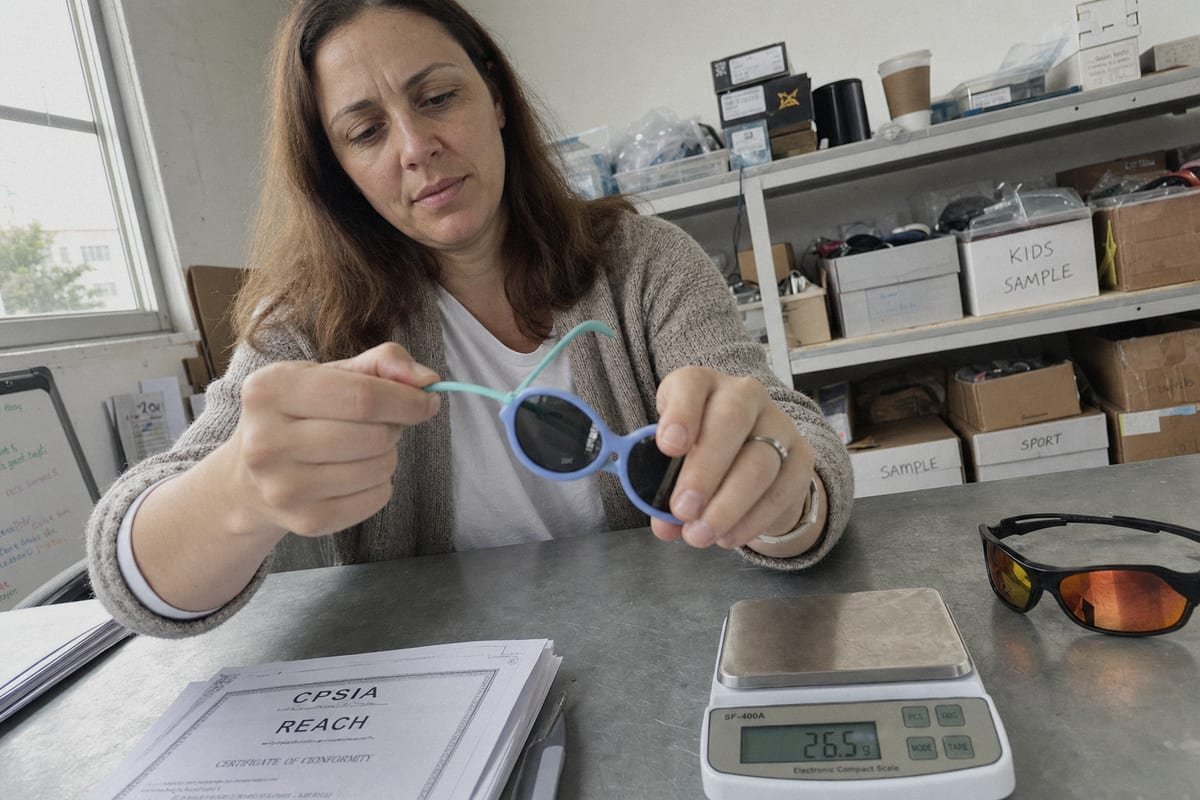
Avalie a segurança do material solicitando relatórios de teste UV400, certificados de material livre de BPA e ftalatos, e documentos de conformidade como CPSIA, REACH ou CE. Em seguida, teste o conforto através de amostras físicas: verifique o peso da armação, flexibilidade, ajuste da ponte e se as hastes dobram sem quebrar ou apertar.
Óculos de sol infantis são primeiro um produto de segurança e segundo um acessório de moda. Os pais compram com essa mentalidade, e os varejistas que a ignoram veem altas taxas de retorno. Portanto, sua avaliação deve seguir a mesma ordem: lentes, depois material da armação, depois conforto.
Comece Com a Lente
Proteção UV400 2 é inegociável. As lentes devem bloquear 99–100% dos raios UVA e UVB. Não confunda tonalidade escura com proteção UV. Uma lente escura sem um revestimento UV adequado é pior do que nenhum óculos de sol, porque dilata a pupila e permite a entrada de mais luz prejudicial. Peça ao seu fornecedor documentação de teste de lente, não promessas verbais. Policarbonato 3 o material da lente é a recomendação padrão para crianças porque resiste a estilhaçamento em caso de impacto.
Em seguida, Verifique o Material da Armação
Nossos engenheiros trabalham principalmente com TPEE e TR90 4 porque esses materiais se dobram e retornam à forma. Armações de PC baratas racham; armações flexíveis sobrevivem ao teste da mochila. Veja como as opções comuns se comparam:
| Material | Flexibilidade | Peso | Perfil de Segurança | Melhor Uso |
|---|---|---|---|---|
| TPEE | Excelente, quase inquebrável | Muito leve | Macio, amigável à pele, livres de BPA 5 opções | Crianças pequenas e crianças ativas |
| TR90 | Muito bom, flexibilidade com memória | Leve | Grades duráveis e hipoalergênicas disponíveis | Crianças de 3 a 12 anos, ópticas e de sol |
| Plástico PC padrão | Ruim, quebradiço | Médio | Pode rachar em bordas afiadas | Itens promocionais de baixo custo |
| Metal | Baixo | Mais Pesado | Riscos de aperto e alergia | Raro em linhas de crianças pequenas |
Finalmente, Julgue o Conforto na Mão
Peça amostras físicas. Uma armação amigável para crianças deve ser leve, idealmente abaixo de 20 gramas. Torça as hastes suavemente. Elas devem flexionar e recuperar. Verifique a ponte: crianças pequenas têm pontes nasais planas e subdesenvolvidas, então um design de ponte mais plana modificada evita o deslizamento. Acabamentos foscos soft-touch também importam mais do que os compradores esperam; algumas crianças com sensibilidades sensoriais rejeitam plásticos duros e brilhantes. Verifique materiais livres de BPA por escrito, porque crianças pequenas mastigam as pontas das hastes. Parecer seguro não é o mesmo que ser verificado como seguro.
Qual MOQ e Estrutura de Preços Devo Esperar de um Fabricante Confiável?
O compromisso que discuto com mais frequência com novas marcas é o investimento em moldes versus testes de mercado. Comprometer-se com um molde personalizado antes de provar a demanda é o erro mais caro nesta categoria.
Espere uma quantidade mínima de pedido de aproximadamente 300–1.200 peças por estilo para designs existentes, com preços unitários de atacado que caem em níveis de volume. Moldes personalizados exigem compromissos mais elevados. Fábricas confiáveis publicam intervalos de preços claros, taxas de amostragem e prazos de entrega em vez de cotações vagas.
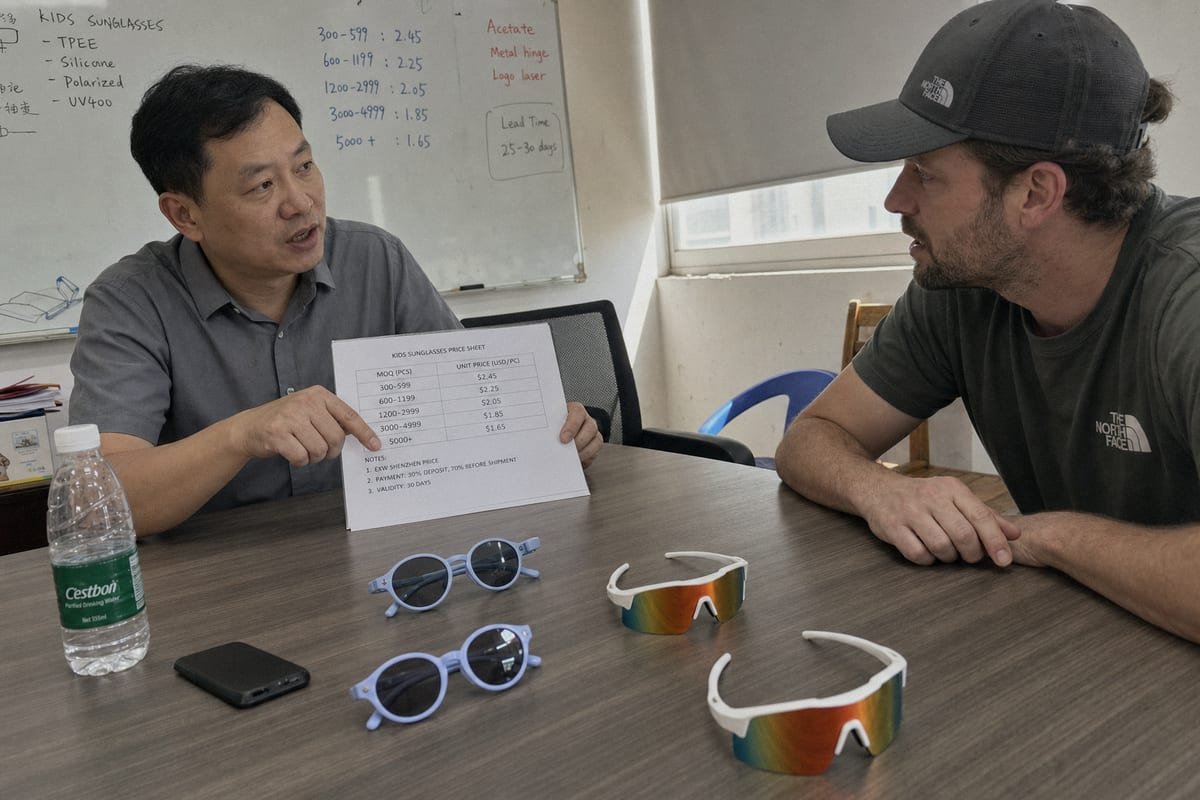
MOQ e preços dizem muito sobre uma fábrica antes mesmo de você ver um produto. Respostas vagas geralmente significam que o fornecedor é um comerciante que está passando sua consulta por uma cadeia. Uma fábrica real pode explicar exatamente por que um número é o que é.
Por que o MOQ Varia Tanto
A quantidade mínima de pedido depende de quanto trabalho de configuração seu pedido aciona. Escolher da biblioteca de estilos existente de uma fábrica mantém os MOQs baixos, porque os moldes já existem. Em nossa oficina, os compradores podem escolher entre cerca de 800 estilos existentes, o que permite que uma nova marca teste o mercado com quantidades modestas e sem custo de ferramental. Uma forma totalmente personalizada significa novos moldes, novo masterbatch de cor e novas bases de CQ, então o MOQ aumenta para justificar essa configuração.
| Tipo de Pedido | Faixa Típica de MOQ | Custo de Ferramental | Melhor Para |
|---|---|---|---|
| Estilo existente, cores de estoque | 300–600 peças/estilo | Nenhuma | Teste de mercado, primeiros pedidos |
| Estilo existente, cores personalizadas + logotipo | 600–1.200 peças/estilo | Baixo | Lançamentos de marca |
| Especificação de lente personalizada (polarizada, espelhada) | 000+ peças | Baixo-médio | Linhas diferenciadas |
| Molde totalmente personalizado (ODM) | 000–5.000+ peças | Alto | Established brands scaling up |
Read the Pricing Structure, Not Just the Price
Wholesale unit pricing should scale with volume in published tiers. But the per-pair price is only one input. Calculate your true landed cost per sellable pair: unit price plus freight, duties, packaging, defect allowance, and storage. A pair that costs $0.20 less but ships with a 5% defect rate is not cheaper. One more planning tip we share with retail buyers: use about six months of sales data to estimate style-level demand, then add roughly 20% safety stock for seasonal spikes like summer and back-to-school. Lead time matters here too. Ask for the production timeline in writing, and confirm whether it starts at deposit or at sample approval.
Como Posso Verificar os Padrões de Controle de Qualidade e Durabilidade para Óculos Infantis?
Fifteen years of eyewear production have taught me one blunt lesson: the sample you approve and the bulk goods you receive are two different negotiations unless QC is documented.
Verifique o controle de qualidade solicitando relatórios de teste de terceiros em conformidade com os padrões ANSI Z80.3 ou EN, registros de auditoria de fábrica e procedimentos de inspeção em linha. Em seguida, confirme a durabilidade com suas próprias verificações: ciclos de flexão das hastes, torque das dobradiças, testes de queda, resistência ao impacto das lentes e comparações de consistência entre amostras e lotes.
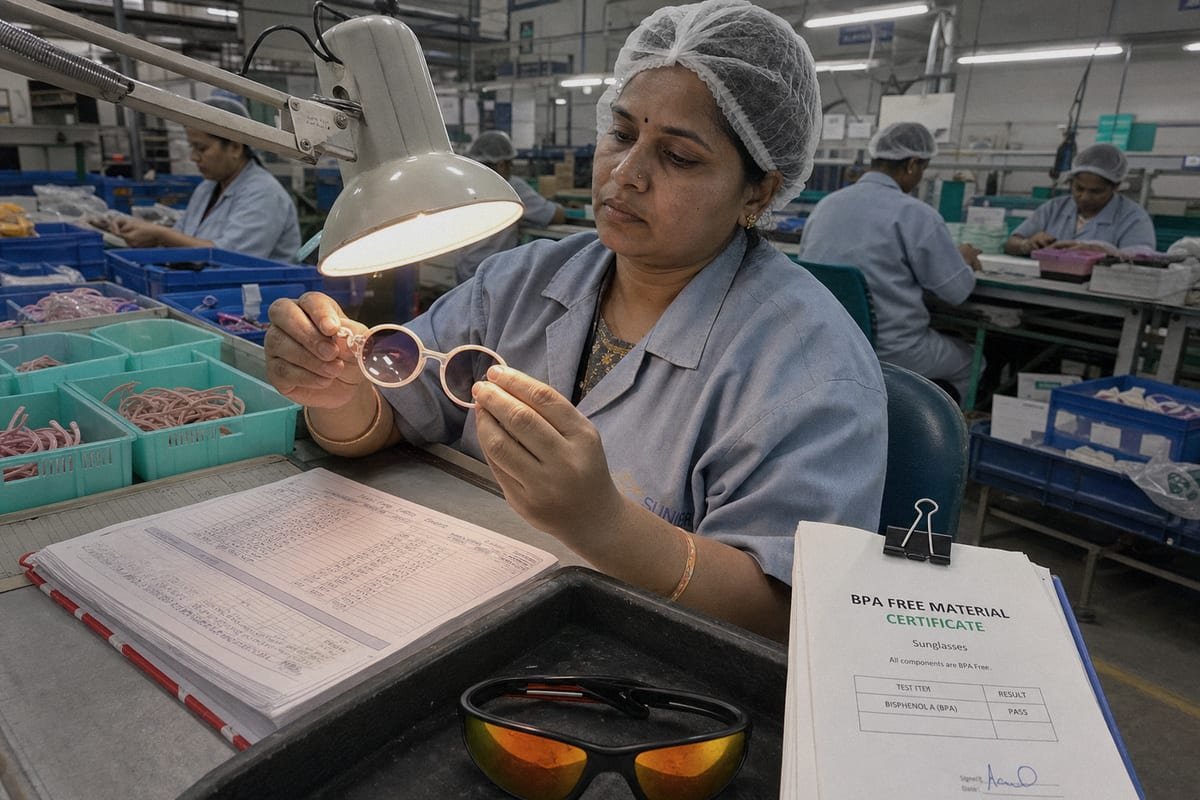
Promises are free. Proof costs a supplier time and money, which is exactly why proof separates reliable factories from resellers. Your verification should work in three layers: documents, factory process, and your own hands-on testing.
Layer 1: Documents
Ask for lens test reports referencing ANSI Z80.3 6 standards for nonprescription sunglasses, or the EN equivalents for European markets. Request material traceability for BPA-free and phthalate-free claims, plus CPSIA 7 or REACH documentation depending on where you sell. A factory with an organized, 5S-managed workshop can produce these files quickly. Hesitation or excuses are a warning sign.
Layer 2: Factory Process
A children's eyewear line needs in-process checks, not just a final inspection. Useful questions to ask:
- What is your acceptable defect rate, and how is it measured (AQL level)?
- How do you control color tolerance between production batches?
- How is logo placement checked — by jig, by eye, or by camera?
- Do you perform flexibility and hinge testing during production or only after?
- Can you share production photos or video during my order?
Layer 3: Your Own Tests
When samples arrive, be rough with them. That is how kids will treat them. Twist the temples flat against the frame; TPEE flexible frames should return to shape without stress marks. Drop the sunglasses onto a hard floor from table height. Press the lens center firmly; polycarbonate should flex, never crack. Open and close hinges fifty times and feel for loosening. Finally, when bulk goods arrive, compare five random pairs against your golden sample for color, fit, weight, and print quality. Consistency across those five pairs predicts consistency across the whole shipment.
Que Opções de Personalização Devo Procurar ao Fornecer Óculos de Sol Infantis em Atacado?
One of my favorite projects last year started with a Japanese baby brand that only wanted "our colors, our logo, our box." Three rounds of Pantone matching later, they had a retail-ready line that looked nothing like a generic import.
Procure cores de armação personalizados com correspondência Pantone, impressão ou gravação de logotipos, atualizações de lentes como revestimentos polarizados ou espelhados, tamanhos específicos para a idade, de crianças a jovens, e embalagens de varejo personalizadas com estojos, bolsas e alças. Suporte completo OEM/ODM transforma estoque genérico em uma marca vendável.
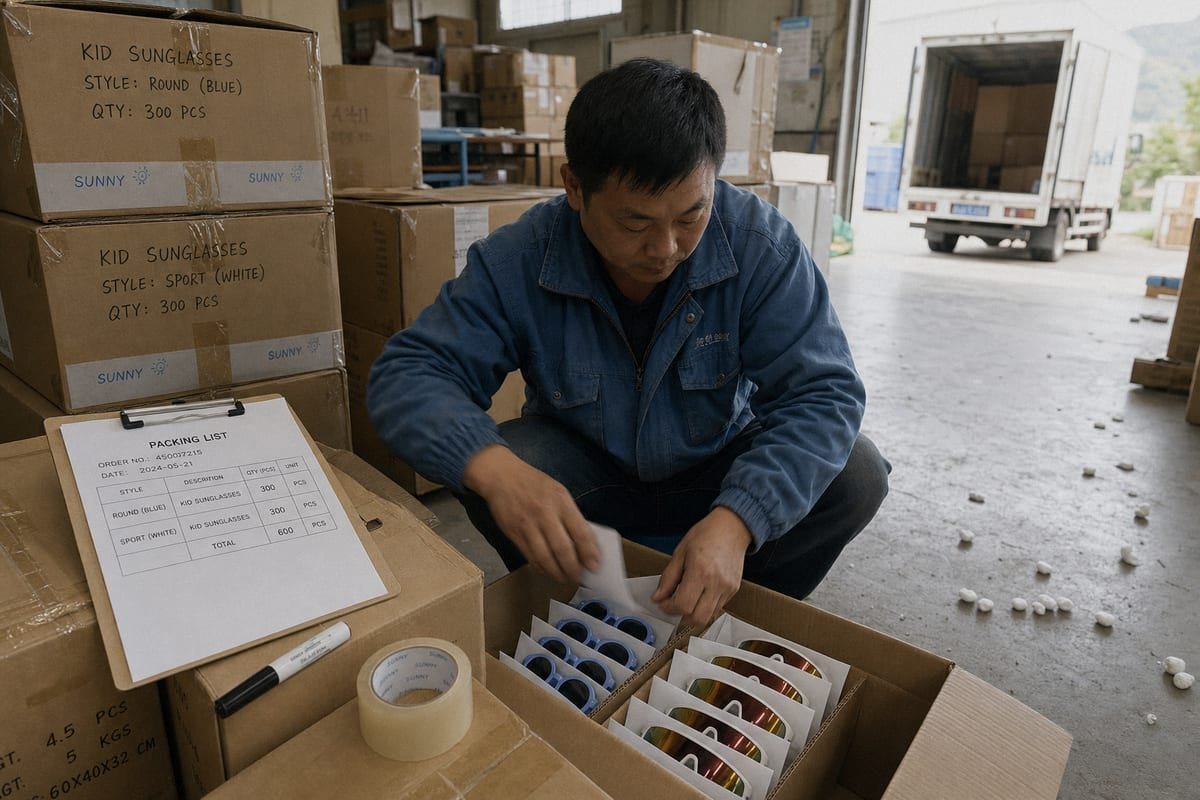
Customization is where bulk buying stops being a commodity purchase and starts being brand building. But not all customization carries equal cost or equal impact. Prioritize the options that shoppers notice on the shelf and that fit your MOQ reality.
The Customization Menu, Ranked by Impact
| Personalização | Impacto de Custo | Shelf Impact | Typical Requirement |
|---|---|---|---|
| Custom frame colors (Pantone) | Baixo-médio | Alto | Per-color MOQ |
| Logo on temple (print, emboss, laser) | Baixo | Alto | Small setup fee |
| Lens upgrade: polarized lenses, mirror coating | Médio | Médio-alto | Volume dependent |
| Branded packaging: box, case, pouch, hang tag | Médio | Muito alto | Print MOQ |
| Age-specific sizing runs (toddler / kid / youth) | Médio | Alto | Per-size MOQ |
| Custom mold shape | Alto | Alto | Large commitment |
Match Lens Options to Your Market
UV400 is the baseline, always. Polarized lenses are a premium upsell that cuts glare near water and snow; they help sell-through in beach and outdoor markets but are not a safety requirement. Mirrored gradient coatings, like the orange-to-gold shield lenses popular in sporty youth styles, add strong visual appeal for active-kid lines. Some buyers now ask about HEV blue light filtration for outdoor screen use, which can be a talking point for tech-aware parents.
Do Not Overlook Sizing and Accessories
Age-specific sizing is customization too. Face curvature, bridge width, and temple length change fast between ages two and ten, so a serious partner offers graded sizes, not one shrunken adult frame. Also ask about loss-prevention accessories: universal strap compatibility and secure cases reduce the number-one parent complaint, which is lost sunglasses. Finally, confirm the packaging is retail-ready — barcode placement, compliance labeling, and inner-carton counts that match your warehouse workflow. Good customization saves you work downstream, not just cost upfront.
Conclusão
Cheap, stylish stock that fails on safety, fit, or durability will cost you in returns and reputation. Score suppliers on proof, performance, and commercial terms — then order with confidence.
Notas de rodapé
1. Official European Commission overview of REACH chemical safety regulations. ↩︎
2. Background on UV protection standards referenced throughout the sunglasses safety discussion. ↩︎
3. Background on the impact-resistant lens material recommended for children’s eyewear. ↩︎
4. Background on the nylon-based flexible frame material compared in the durability table. ↩︎
5. FDA guidance on BPA safety relevant to material safety certificates discussed for kids products. ↩︎
6. Official standard reference for nonprescription sunglasses testing mentioned in QC verification. ↩︎
7. Official source for the CPSIA compliance standard mentioned for children’s product safety. ↩︎
Mais Artigos que Você Pode Gostar


Procurando um Parceiro Confiável em Óculos Infantis?
Explore mais de 800 estilos prontos e suporte completo OEM/ODM adaptado à sua marca.
Entre em Contato English
  Español de México
  Deutsch
  Français
  日本語
日本語  العربية
  Português do Brasil