O que difere nas especificações de lentes, armações e ferragens para óculos de sol infantis por preço?
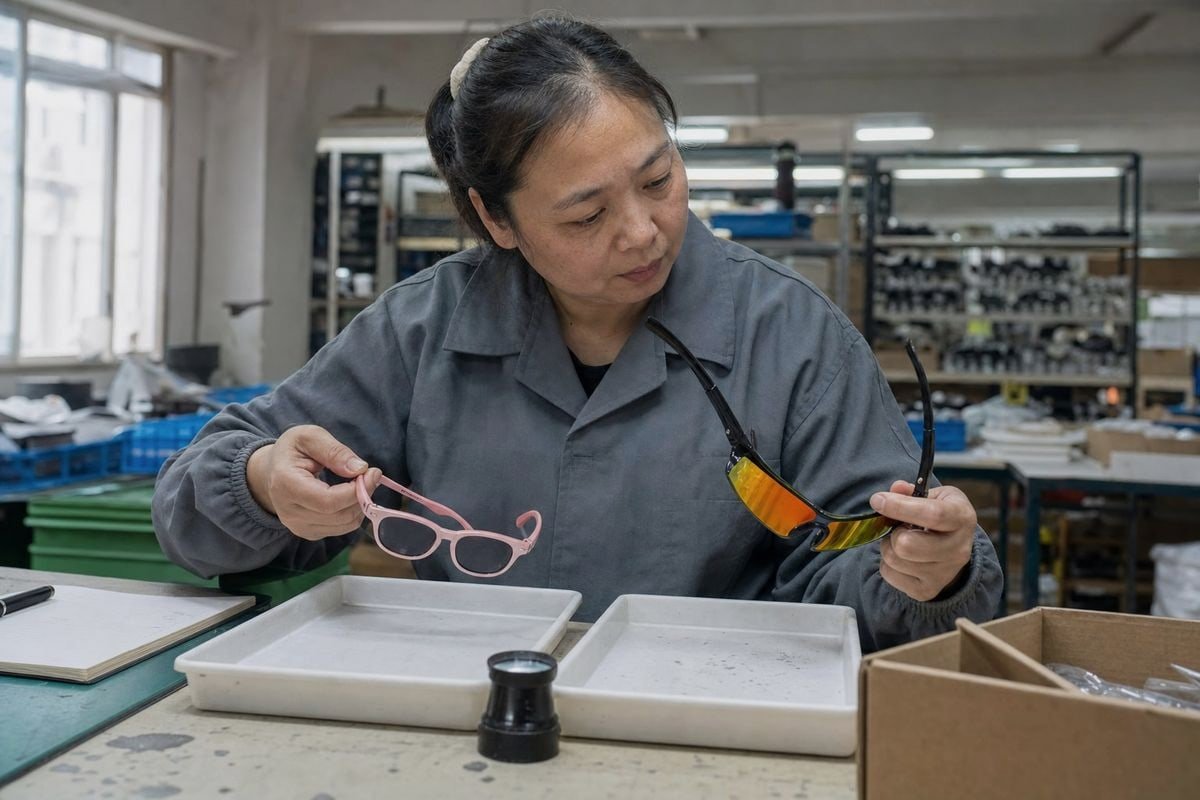
Especificações de lentes, armações e ferragens para óculos de sol infantis confundem muitos compradores elastômero termoplástico 1. Em nossa linha de produção em Taizhou, vejo porquê: dois pares podem parecer idênticos, mas funcionam de forma completamente diferente. Escolha errado, e sua marca absorve devoluções, reclamações e risco de segurança. plástico moldado por injeção 2. A solução é saber exatamente o que cada nível de preço compra.
As especificações de lentes, armações e ferragens para óculos de sol infantis diferem por preço principalmente em materiais e construção. Pares econômicos usam lentes de PC básicas, armações de plástico rígido e dobradiças aparafusadas. Pares premium adicionam lentes polarizadas UV400, armações flexíveis TR90 ou TPEE, dobradiças de mola e dimensionamento infantil preciso.
Essa é a resposta curta. Mas se você está fornecendo uma linha de óculos infantis, os detalhes importam muito mais. Deixe-me guiá-lo por cada componente, nível por nível.
No ano passado, um comprador da Austrália me enviou duas amostras de lentes para comparar. Uma custou o triplo da outra. Sob nosso equipamento de teste, o desempenho UV era quase idêntico - a diferença estava em outro lugar.
Tanto óculos de sol infantis de baixo custo quanto premium podem oferecer proteção total contra raios UVA/UVB. As reais diferenças nas lentes por preço são atualizações ópticas: pares premium adicionam polarização, certificação UV400, revestimentos espelhados, resistência a arranhões e policarbonato com melhor classificação de impacto, enquanto pares econômicos oferecem proteção básica com menos refinamentos.
Isso surpreende muitos novos proprietários de marcas. Eles assumem que uma lente barata significa uma lente insegura. Isso não é automaticamente verdade. O material de bloqueio de UV é barato de incluir, então mesmo óculos de sol infantis vendidos no atacado por alguns dólares por dúzia geralmente oferecem proteção UV genuína. A história não é 'barato versus seguro". É "proteção básica versus óptica aprimorada"."
O que cada nível de lente realmente entrega
É assim que eu detalho as especificações das lentes ao orçar projetos para nossos clientes B2B:
| Nível de preço | Material típico da lente | Especificação UV | Recursos extras |
|---|---|---|---|
| Económico | Acrílico ou PC básico | UVA/UVB alegado, às vezes não certificado | Raramente algum |
| Gama média | Policarbonato 3 | UV400, testado | Muitas vezes polarizado, revestimento anti-riscos |
| Premium | PC com classificação de impacto ou óptica de marca | UV400, certificado pelas normas ANSI ou EN | Polarizado, acabamento espelhado, tons esportivos |
Onde o dinheiro realmente vai
Três coisas aumentam o custo da lente. Primeiro, profundidade de proteção: UV400 bloqueia a luz até 400 nanômetros e geralmente vem com documentação de teste real, não apenas um adesivo. Segundo, aprimoramento óptico: filme polarizado corta o brilho da água, areia e estradas, o que realmente ajuda crianças ativas ao ar livre. Terceiro, revestimentos: camadas espelhadas e resistentes a arranhões adicionam custo, mas estendem a vida útil do produto.
Em nossa oficina, adaptamos opções de lentes UV400 e polarizadas em estilos de todas as faixas de preço. Meu conselho aos compradores é simples: nunca aceite uma alegação de UV sem um relatório de teste. Um certificado custa pouco ao fornecedor. Uma alegação falsa custa tudo à sua marca.
Que materiais de armação devo procurar ao comparar óculos de sol infantis em diferentes faixas de preço?
A escolha do material é o compromisso que mais pondero ao desenvolver um novo estilo. Uma armação rígida é mais barata de moldar, mas uma armação flexível sobrevive à vida diária de uma criança - e isso decide qual recomendamos.
Procure plástico rígido moldado por injeção em óculos de sol infantis econômicos, silicone mais macio em estilos para bebês e TR90 ou TPEE flexível em linhas de gama média e premium. Faixas de preço mais altas adicionam materiais de armação dobráveis, com memória e hipoalergênicos que resistem a quebras, parecem mais leves e se ajustam com mais precisão aos rostos das crianças.
As armações são onde nossa fábrica investiu a maior parte de seus quinze anos de experiência. Somos especializados em TR90 5 e TPEE precisamente porque as crianças tratam os óculos mal. Elas sentam em cima. Elas torcem. Elas as jogam em mochilas escolares. Um material de armação deve perdoar tudo isso.
A escada de material da armação
| Material | Nível típico | Pontos fortes | Pontos fracos |
|---|---|---|---|
| Plástico rígido padrão | Económico | Barato, fácil de colorir | Quebra sob torção, pode parecer pesado |
| Silicone | Econômico a médio | Macio, seguro para crianças pequenas | Menos retenção de forma, estilos limitados |
| TR90 (à base de nylon) | Intermediário a premium | Flexível, leve, durável, retenção de memória | Custo mais alto de material e ferramental |
| TPEE | Intermediário a premium | Extremamente dobrável, confortável, mais ecológico | Custa mais do que plástico comum |
Por que a construção importa tanto quanto o material
O material é apenas metade da história da armação. O método de construção também é importante. Armações econômicas são frequentemente montadas a partir de várias peças, e cada costura é um ponto potencial de falha. Armações premium tendem para moldagem por injeção de peça única ou construções híbridas inteligentes. Nossa própria estrutura mais vendida combina uma frente TR90 com hastes TPEE — a frente mantém a forma da lente firmemente, enquanto as hastes flexionam em torno da cabeça de uma criança sem apertar.
Há também uma dimensão de conforto. Armações mais pesadas deslizam em narizes pequenos. Polímeros flexíveis mais leves permanecem no lugar. E materiais hipoalergênicos e ecologicamente corretos importam para pais em mercados como Europa, Japão e Austrália, onde nossos clientes enfrentam expectativas rigorosas dos consumidores. Ao comparar preços, pergunte aos fornecedores do que é feita a armação e como ela é construída — não apenas como ela se parece.
As dobradiças e ferragens são realmente mais duráveis em óculos de sol infantis de preço mais elevado?
Durante uma rodada de CQ em nossa oficina gerenciada por 5S 6, minha equipe uma vez rejeitou um lote inteiro de dobradiças terceirizadas. Os parafusos afrouxaram após ciclos repetidos de abrir e fechar. Essa tarde me ensinou que o hardware é a especificação mais silenciosa, mas mais decisiva em uma armação infantil.
Sim, dobradiças e ferragens são geralmente mais duráveis a preços mais altos. Óculos de sol infantis de baixo custo usam dobradiças fixas com parafusos minúsculos que se soltam e quebram. Pares premium usam dobradiças de mola, juntas moldadas sem parafusos, barris reforçados e detalhes de aderência como pontas de têmpora de silicone que sobrevivem ao manuseio diário brusco.
O hardware é onde as diferenças de preço se tornam visíveis mais rapidamente no uso real. Um material de armação pode esconder sua fraqueza por meses. Uma dobradiça barata falha em semanas. Crianças arrancam óculos de sol com uma mão, o que torce a dobradiça muito além do ângulo projetado. Apenas certos hardwares sobrevivem a isso.
A lista de verificação de hardware por nível
- Hardware econômico. Dobradiças rígidas fixas, parafusos pequenos, reforço mínimo. Os parafusos podem afrouxar com o tempo, e um parafuso solto em um produto infantil também é um risco potencial de asfixia risco de asfixia infantil 7.
- Hardware de gama média. Barris com melhor ajuste, às vezes dobradiças de mola básicas e controle de torque de parafuso mais consistente no nível da fábrica.
- Hardware premium. Dobradiças de mola 360 graus, designs de dobradiças sem parafusos ou moldados, pontas de haste flexíveis, almofadas de nariz de silicone e geometrias envolventes que mantêm a armação no lugar durante o esporte.
Hardware de ajuste, não apenas hardware de dobradiça
Recursos de retenção também contam como hardware. Designs envolventes esportivos, como os estilos de lente tipo escudo que produzimos para marcas de crianças ativas, usam hastes curvas e pontas aderentes em vez de depender apenas da dobradiça. Opções de ajuste de ponte baixa e pontes de nariz anatomicamente moldadas são cada vez mais padrão em pontos de preço mais altos porque os varejistas agora segmentam por problemas de ajuste, não apenas por estilo.
Um teste prático que dou aos compradores: abra e feche uma amostra duzentas vezes, depois verifique a tensão do parafuso e o jogo da dobradiça. O hardware econômico geralmente se revela antes que você termine. Um bom hardware parece idêntico no ciclo um e no ciclo duzentos. Essa é a durabilidade pela qual você está realmente pagando.
Como sei se um preço mais alto realmente significa maior segurança e conforto para a linha de óculos de sol dos meus filhos?
Um gerente de compras do Japão uma vez me fez uma pergunta direta: "Se eu pagar 40% a mais, o que exatamente eu recebo?" Eu respeito essa pergunta, porque um preço de fábrica mais alto deve sempre corresponder a especificações verificáveis — nunca a promessas vagas.
Verifique se um preço mais alto oferece valor real exigindo prova: relatórios de teste UV400 certificados, padrões de impacto como ANSI Z80.3 ou EN ISO, confirmação de material flexível TR90 ou TPEE, testes de ciclo de dobradiça, níveis de tamanho específicos para crianças e documentação consistente de CQ. Preço sem evidência não significa nada.
O preço é um sinal, não uma garantia. Já vi pares caros com hardware medíocre e já vi pares honestos de preço médio que os superam. Portanto, em vez de confiar no número da cotação, audite o que está por trás dele.
Um framework de verificação para compradores
| O que verificar | Sinal de alerta de orçamento | Ponto de prova premium |
|---|---|---|
| proteção UV | Apenas alegação em adesivo | Relatório de teste de laboratório UV400 |
| Segurança contra impacto | Nenhum padrão citado | Teste ANSI Z80.3, EN ou AS/NZS |
| Material da armação | Listado apenas como "plástico" | Polímero nomeado: TR90, TPEE, silicone |
| Dimensionamento | Tamanho único para a maioria | Níveis de tamanho para bebês, crianças, pré-adolescentes com dimensões em mm |
| Hardware | Dobradiças não especificadas | Dobradiça de mola ou design sem parafusos, testado em ciclo |
| Controle de qualidade da fábrica | Nenhum processo compartilhado | Etapas de inspeção e amostras documentadas |
Combine o nível com o caso de uso
Nem todo produto em sua linha precisa da especificação premium. Um estilo casual para bebês pode ter sucesso com uma armação de silicone macio e lentes UV certificadas a um custo modesto. Um estilo esportivo para crianças de oito a doze anos — pense em escudos envolventes com lentes espelhadas polarizadas — justifica a construção em TR90, flexibilidade de mola e recursos de aderência, porque deve permanecer no lugar durante a atividade real.
É aqui que uma biblioteca de estilo existente também ajuda. Com cerca de 800 estilos desenvolvidos em nossas prateleiras, nossos clientes podem construir uma linha escalonada — de entrada, principal e premium — sem pagar por novos moldes em cada nível. Eles testam o mercado primeiro, depois investem em desenvolvimento OEM/ODM personalizado, cores, logotipos e embalagens prontas para varejo assim que os vencedores estiverem claros. Essa sequência mantém o risco baixo e mantém cada ponto de preço honesto.
Conclusão
Comprar óculos infantis às cegas arrisca armações quebradas e perda de confiança. Mas, uma vez que você lê as especificações de lentes, armações e ferragens por nível, o preço se torna previsível — e sua linha se torna mais segura.
Em todos os projetos que realizamos em Taizhou, o padrão se mantém. O orçamento compra proteção UV básica em plástico rígido com dobradiças simples. A faixa intermediária adiciona polarização, TR90 ou TPEE flexível e melhores proporções. O premium oferece ótica certificada, ferragens com mola ou sem parafusos e dimensionamento específico para crianças. O preço não garante segurança por si só — especificações verificadas garantem. Exija os relatórios de teste, nomeie os materiais, gire as dobradiças e construa sua linha nível por nível. Faça isso, e cada dólar em sua linha de óculos de sol infantis ganhará seu lugar no rosto de uma criança.
Notas de rodapé
Informações sobre a classe de material TPEE explicam suas propriedades de flexibilidade e durabilidade. ↩︎
Explica o processo de fabricação usado para a construção de armações econômicas descrito no artigo. ↩︎
Referência de fundo sobre as propriedades do material da lente discutidas ao longo do artigo. ↩︎
Explica os riscos de exposição à radiação UV que justificam as alegações de proteção de lentes UVA/UVB. ↩︎
Referência da Wikipedia sobre polímeros à base de nylon explicando a composição do material TR90. ↩︎
A ISO é o órgão autoritário para sistemas de gestão da qualidade referenciados pelas práticas de fabricação 5S. ↩︎
O recurso do CDC sobre riscos de asfixia apoia a preocupação de segurança levantada sobre parafusos soltos no hardware. ↩︎
Mais Artigos que Você Pode Gostar

Procurando um Parceiro Confiável em Óculos Infantis?
Explore mais de 800 estilos prontos e suporte completo OEM/ODM adaptado à sua marca.
Entre em Contato English
  Español de México
  Deutsch
  Français
  日本語
日本語  العربية
  Português do Brasil