Can Kids’ Sunglasses Lenses Be Replaced Separately?
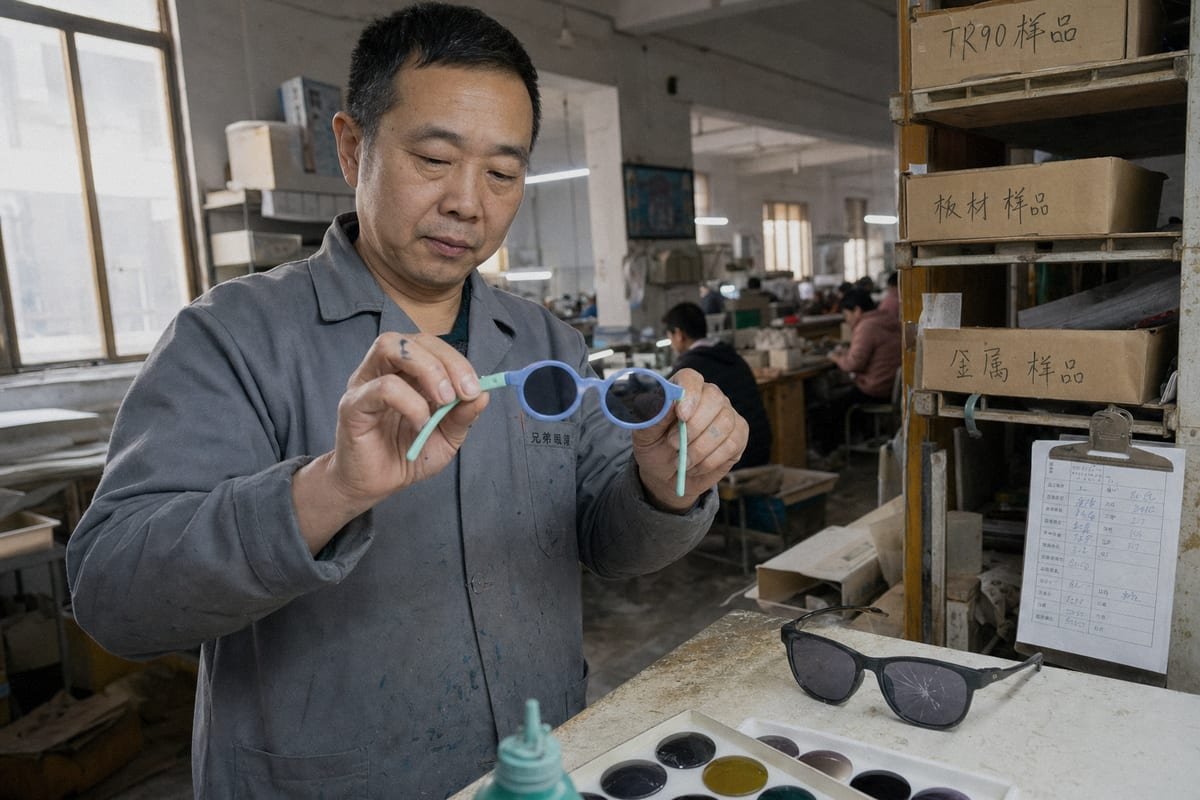
Kids’ sunglasses lenses can often be replaced separately, and I hear this question weekly on our production line in Taizhou. [Scratched lenses](https://okayeyewear.com/kids-sunglasses-still-used-scratched-lenses-can-be/) frustrate parents, and brands lose repeat customers when the only answer is “buy a new pair.” The fix? Understand which frames actually support lens replacement — and design or source accordingly.
Yes, kids’ sunglasses lenses can be replaced separately, but only when the frame is designed for lens removal. Full-rim flexible frames like TR90 usually allow it, while glued or ultra-cheap frames do not. Replacement lenses must match the original size, curve, and UV400 safety standard exactly.
That short answer hides a lot of practical detail. Below, I break down your replacement options, how to find the right supplier, the safety checks that matter, and how custom UV400 or polarized lenses work.
What options do I have for replacing lenses on children's sunglasses without buying a new frame?
Last month, a buyer from Australia sent us photos of scratched lenses from her best-selling kids' style. She asked exactly this question, so I walked her through the three real options.
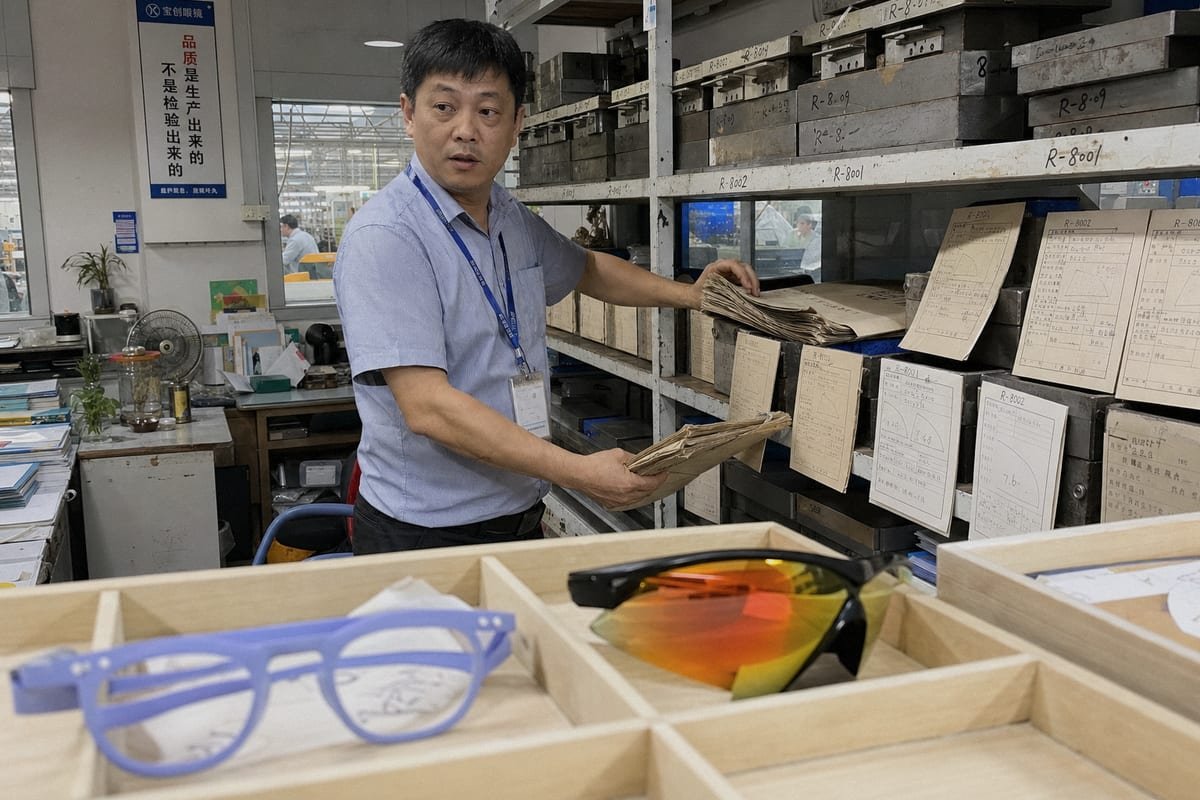
Parents and brands have three options for replacing children's sunglasses lenses without a new frame: brand-specific replacement lenses that pop into the original frame, professional reglazing at an optical shop, or a careful DIY lens installation on flexible full-rim frames designed for it.
Each route suits a different situation, so let me compare them the way I would for a buyer evaluating after-sales support for their own kids' eyewear line.
The three replacement routes compared
| Option | Melhor Para | Typical Cost | Nível de risco |
|---|---|---|---|
| Brand-specific replacement lenses | Frames with model-matched lenses available | Baixo a moderado | Baixo |
| Professional reglazing | Prescription sunglass lenses or valuable frames | $50–$100+ for basic lenses | Muito baixo |
| DIY lens installation | Flexible, full-rim, non-prescription frames | Lowest | Moderado |
Brand-specific replacement lenses are the cleanest option. When a maker cuts lenses for one exact model, the size, base curve 1, and thickness already match. The lens pops in, seats fully in the groove, and the frame holds it securely. Even some kids' Ray-Ban models have replacement lenses sold this way, which shows how normal this practice has become.
Professional reglazing goes further. An optician measures the frame, cuts new lenses to fit, and performs the professional lens fitting on proper equipment. This is the only sensible route for prescription sunglass lenses, because the optical center and prescription must stay accurate. Some optical labs claim they can reglaze the vast majority of frames, though rimless and shield styles are harder.
DIY works best on flexible frames. Our TR90 frames with TPEE temples flex enough for an adult to warm the rim slightly, ease the old lens out, and press the new one in. On rigid or glued frames, forcing a lens is how cracks happen. Full-rim designs are the safest candidates; semi-rimless and wraparound shields usually need special handling.
One more note: partial replacement is standard practice in eyewear. UK NHS guidance 2 for children under 16 even covers repair of one lens, both lenses, or the whole frame — so replacing a single damaged lens is a recognized, legitimate repair path, not a workaround.
How do I find a manufacturer that offers separate lens replacement for kids' eyewear?
A trade-off we discuss with almost every new brand client is this: replacement lens support costs a little more upfront, but it builds serious customer loyalty later.
To find a manufacturer offering separate lens replacement for kids' eyewear, look for factories that produce both frames and lenses in-house, keep mold and lens-cutting records per model, offer spare lens sets with orders, and confirm replacement lenses meet UV400 and impact resistance standards.
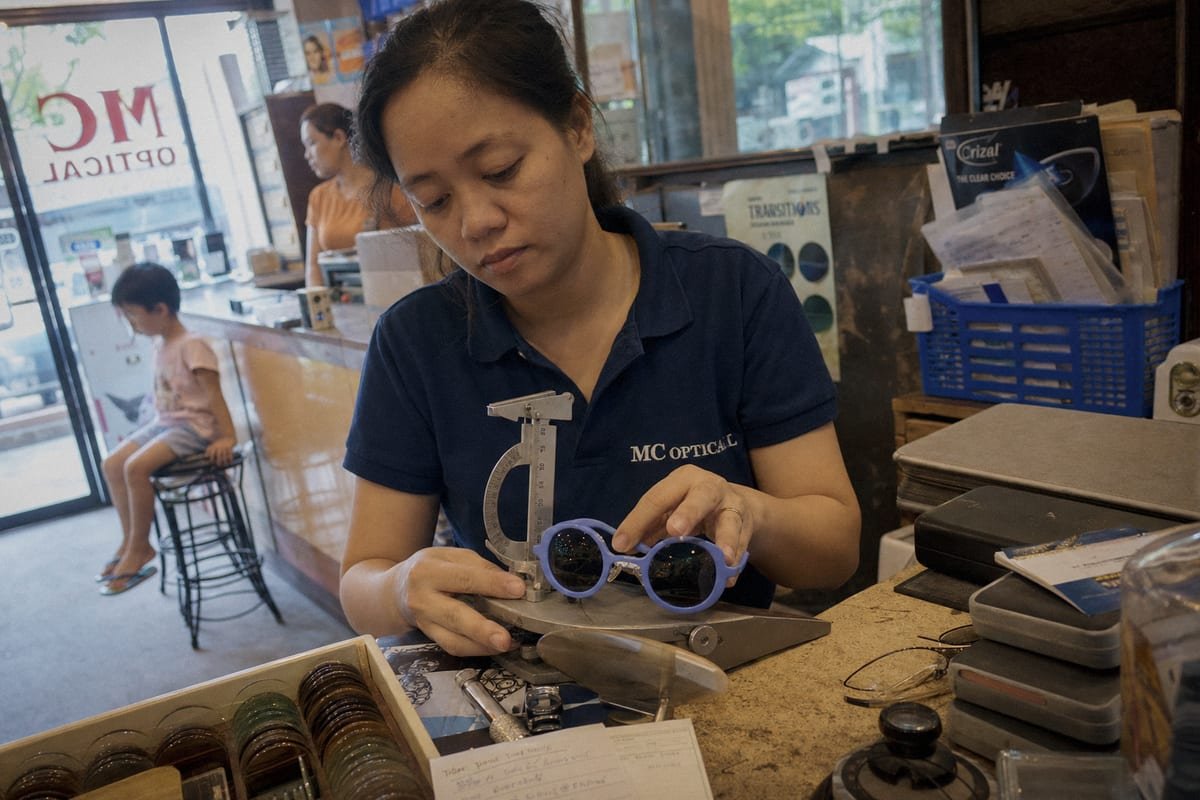
Not every supplier can genuinely support lens replacement. Trading companies often cannot, because they never controlled the tooling. A real factory keeps the lens-cutting data for every style it produces. At our workshop, we hold the lens specifications for roughly 800 existing styles, which means we can cut a matched replacement lens for any of them years after the original order shipped.
Questions to ask a potential supplier
- Do you cut lenses in-house, or buy generic pre-cut lenses?
- Can you supply spare lens sets with my main frame order?
- Do you keep lens curve and size records for reorders?
- Are replacement lenses tested to the same UV protection rating as the originals?
- Can replacement lenses be branded and packed retail-ready?
The second question matters most for B2B buyers. Ordering spare lens sets alongside your frames — even five percent extra — gives your brand an instant after-sales program. When a parent emails about a scratched lens, you ship a matched replacement instead of losing the sale. We set this up for several importers who now market "replaceable lenses" as a selling point on their packaging.
Also check how the supplier handles optical frame repair questions in general. A factory that understands hinge tolerances, rim groove depth, and lens bevel angles will produce frames where replacement actually works. One that treats the lens as a throwaway component will not. In our experience exporting to buyers in over 20 countries, the brands that plan for lens replacement at the sourcing stage almost never regret it.
Red flags to avoid
| Bandeira Vermelha | Por Que Importa |
|---|---|
| No in-house lens cutting | Replacement lenses will never match precisely |
| No style records after shipment | Reorders and spares become impossible |
| Glued-in lens construction | Frame is not designed for removal at all |
| No UV or impact test documentation | Replacement lenses may fail child safety standards |
What should I check for lens compatibility and safety before replacing children's sunglasses lenses?
Early in my time in this industry, I watched a QC colleague reject an entire lens batch over a base-curve mismatch smaller than a millimeter. That lesson stuck: with children's eyewear, "close enough" is not enough.
Before replacing children's sunglasses lenses, verify the lens size, base curve, and thickness match the originals exactly; confirm the new lens is shatterproof polycarbonate with UV400 protection; inspect the frame for micro-cracks and hinge fatigue; and match any original polarization or scratch resistant coating.
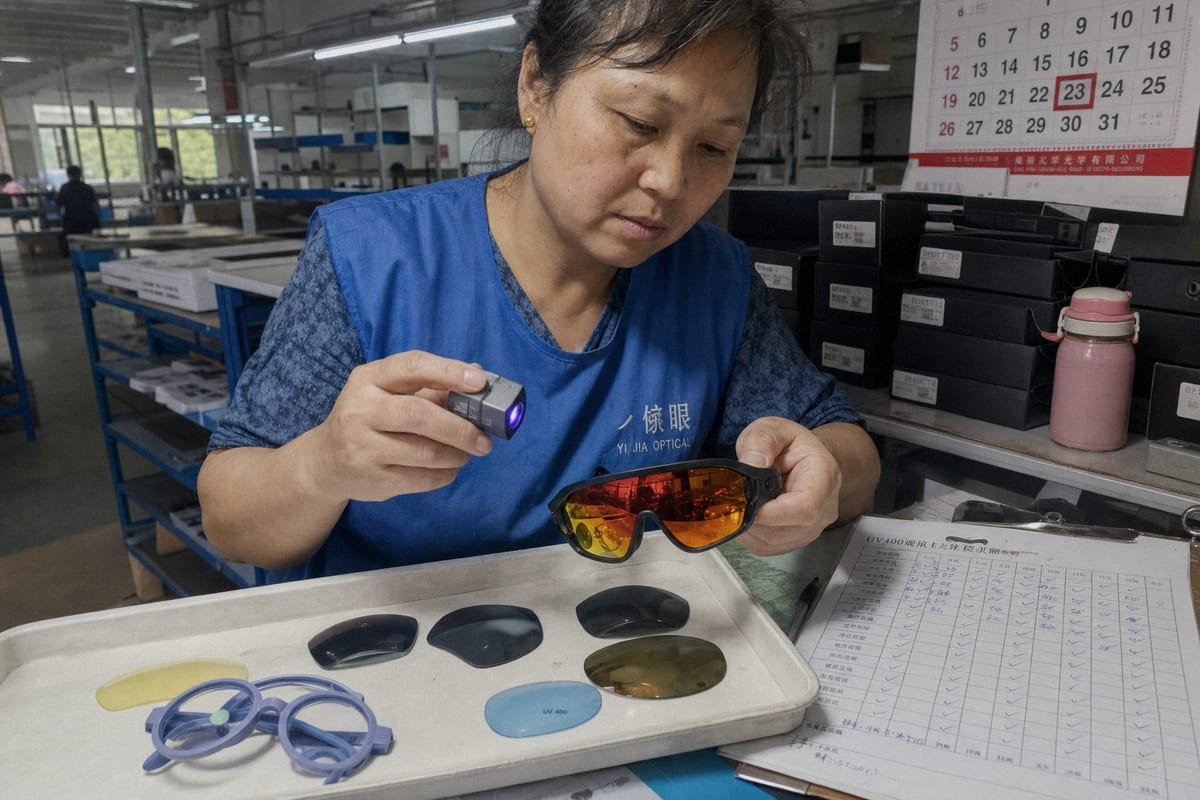
Compatibility and safety are two separate checklists, and both must pass. A lens can fit perfectly and still be unsafe for a child. A lens can be perfectly safe and still pop out of the frame on the playground. Here is how I break it down.
Fit and compatibility checks
Measure the old lens across its widest point and its height. Check the base curve — the front curvature of the lens. A flatter or steeper replacement will either bow the frame or refuse to seat. Thickness matters too, because the rim groove is cut for a specific edge profile. If the frame is a wraparound shield style, like the sport models with a single mirrored lens, the replacement must reproduce the full shield geometry, not just two lens shapes.
Then inspect the frame itself. Flex the rims gently and look for micro-cracks, whitened stress marks, or hinge fatigue where the temple screw sits. Inserting a new lens applies real pressure, and an aged or sun-brittled frame can snap during installation. Our TPEE and TR90 materials resist this aging far better than cheap acrylic frames, which is exactly why we chose them, but any frame deserves a look before you commit.
Safety checks that protect the child
- Material: lentes de policarbonato 3 are the standard for kids because this shatterproof lens material absorbs impact instead of splintering.
- UV protection rating: the replacement must block UVA e UVB 4 fully; a dark lens without UV filtering is worse than no lens, because pupils dilate behind it.
- Impact resistance standards: ask for documentation that the lens meets recognized impact requirements 5 for children's eyewear.
- Revestimentos: if the original had polarization 6 or a scratch resistant coating, match them so the child's visual experience stays consistent.
One more point for prescription wearers. A child's pupillary distance 7 changes quickly as they grow. If the sunglasses carry a prescription, a simple lens swap without professional re-measurement 8 can misalign the optical centers and cause eye strain. In that case, skip the DIY route entirely and use professional lens fitting.
Can I get custom UV400 or polarized replacement lenses for my kids' sunglasses collection?
A Japanese kids' brand once asked us to develop polarized replacement lenses for a beach-focused collection they had launched two seasons earlier. We pulled the style records, cut samples in a week, and matched the fit exactly.
Yes, custom UV400 or polarized replacement lenses can be produced for kids' sunglasses collections through OEM manufacturers. Factories with in-house lens capability can match existing frame specifications while upgrading tint, mirror coating, polarization, or UV protection to suit a brand's positioning and market.

Custom replacement lenses are not just a repair solution. For brands, they are a product opportunity. A replacement program lets you upgrade a lens without re-tooling a frame, refresh a collection with new colors, and extend the retail life of your best sellers. Here is what is realistically possible.
What can be customized on a replacement lens
| Característica | Options | Best Use Case |
|---|---|---|
| UV filtering | UV400 standard across all lenses | Every children's product, no exceptions |
| Polarization | Polarized replacement lenses in grey, brown, or mirrored | Water, snow, and beach collections |
| Mirror coatings | Gradient orange-gold, teal-blue, silver, revo finishes | Sporty wraparound and shield styles |
| Tint color | Solid, gradient, or fashion tints | Pastel lifestyle frames and retro rounds |
| Coating upgrades | Scratch resistant coating, anti-reflective backside | Premium lines and heavy daily use |
| Therapeutic tints | Specialized tints such as FL-41 | Children with light sensitivity or migraines |
Take two of our own style families as examples. A soft pastel round frame — periwinkle-blue front, mint-teal temples — carries classic dark grey lenses. For that style, a brand might offer replacement lenses in gradient rose or amber to refresh the look each season. A glossy black or white sport wraparound with a single mirrored shield lens is a different job: the gradient orange-to-gold mirror coating and the full shield geometry must be reproduced precisely, and polarization is a natural upgrade for outdoor sport positioning.
Minimums and lead times depend on whether the lens shape already exists. For our existing styles, replacement lens sets are straightforward because the cutting data is on file. For a brand-new lens shape or a special coating, expect sampling rounds and a modest minimum order. There is also a growing sustainability angle: bio-based lens materials with lower carbon footprints are emerging in pediatric eyewear, and replacement programs themselves reduce waste by keeping good frames in use instead of in landfill.
My honest advice for buyers: build replacement lenses into the plan from day one. Order spare lens sets with your first production run, brand the packaging, and turn a common complaint — scratched lenses — into an after-sales experience that keeps parents loyal.
Conclusão
Scratched lenses do not have to mean discarded sunglasses. With a removable-lens frame, matched replacement lenses, and proper safety checks, kids' sunglasses lenses can be replaced separately — affordably and sustainably.
Notas de rodapé
1. Wikipedia’s lens overview clarifies curvature concepts referenced in lens fit checks. ↩︎
2. NHS provides official guidance on eyewear repair and coverage for children under 16. ↩︎
3. Wikipedia explains polycarbonate’s impact-resistant properties used in children’s eyewear. ↩︎
4. EPA explains UV radiation types, supporting why UV400 filtering matters for kids’ lenses. ↩︎
5. ISO sets international standards for impact resistance in children’s eyewear lenses. ↩︎
6. FDA consumer guidance covers polarized lens benefits when choosing protective sunglasses. ↩︎
7. Wikipedia defines pupillary distance, key to safe prescription lens replacement in children. ↩︎
8. Mayo Clinic explains eye strain risks relevant to misaligned prescription lens fitting. ↩︎
Mais Artigos que Você Pode Gostar
1 de agosto de 2026
A Fábrica Deve Lidar com a Embalagem e Rotulagem de Óculos de Sol Infantis, ou Usar um Fornecedor Designado?
1 de agosto de 2026
Armazém Próprio vs. Envio Direto do Fornecedor: Qual Reduz os Custos de Devolução para Marcas de Óculos de Sol Infantis?
1 de agosto de 2026
Armazém Direto ao Porto ou Estiva no Exterior: Qual Economiza Mais no Envio de Óculos de Sol Infantis?
Procurando um Parceiro Confiável em Óculos Infantis?
Explore mais de 800 estilos prontos e suporte completo OEM/ODM adaptado à sua marca.
Entre em Contato English
  Español de México
  Deutsch
  Français
  日本語
日本語  العربية
  Português do Brasil