Como Verificar a Tabela de Tamanhos de um Fornecedor para Armações Ópticas Infantis?

Todas as semanas, na nossa linha de produção, vejo como a tabela de tamanhos de um fornecedor para armações ópticas infantis pode fazer ou quebrar o primeiro pedido de um comprador.
Para verificar a tabela de tamanhos de um fornecedor para armações ópticas infantis, cruze a largura da lente listada, a largura da ponte e o comprimento da haste contra as marcações físicas da armação, meça amostras com paquímetros, compare os resultados com dados de distância pupilar de crianças e solicite evidências de teste de ajuste antes de se comprometer com a produção em massa.
Isso parece simples. Na prática, a maioria dos compradores pula metade dessas etapas. Abaixo, vou guiá-lo por cada estágio de verificação da mesma forma que lidamos em nossas próprias auditorias de fábrica.
Como posso confirmar se a tabela de tamanhos de um fornecedor corresponde realmente às medidas faciais reais de crianças?
Um comprador da Austrália uma vez me enviou a tabela de um concorrente que listava uma largura de lente de 52 mm como "tamanho para bebês". Nossos dados de ajuste diziam o contrário, e isso me preocupou.
Confirme a precisão comparando a largura da lente e a largura da ponte do gráfico com os intervalos publicados de distância pupilar pediátrica e, em seguida, teste as armações em crianças reais ou manequins padronizados. Um guia credível de dimensionamento de armações sempre vincula as medições em milímetros aos dados faciais, nunca apenas a rótulos de idade.
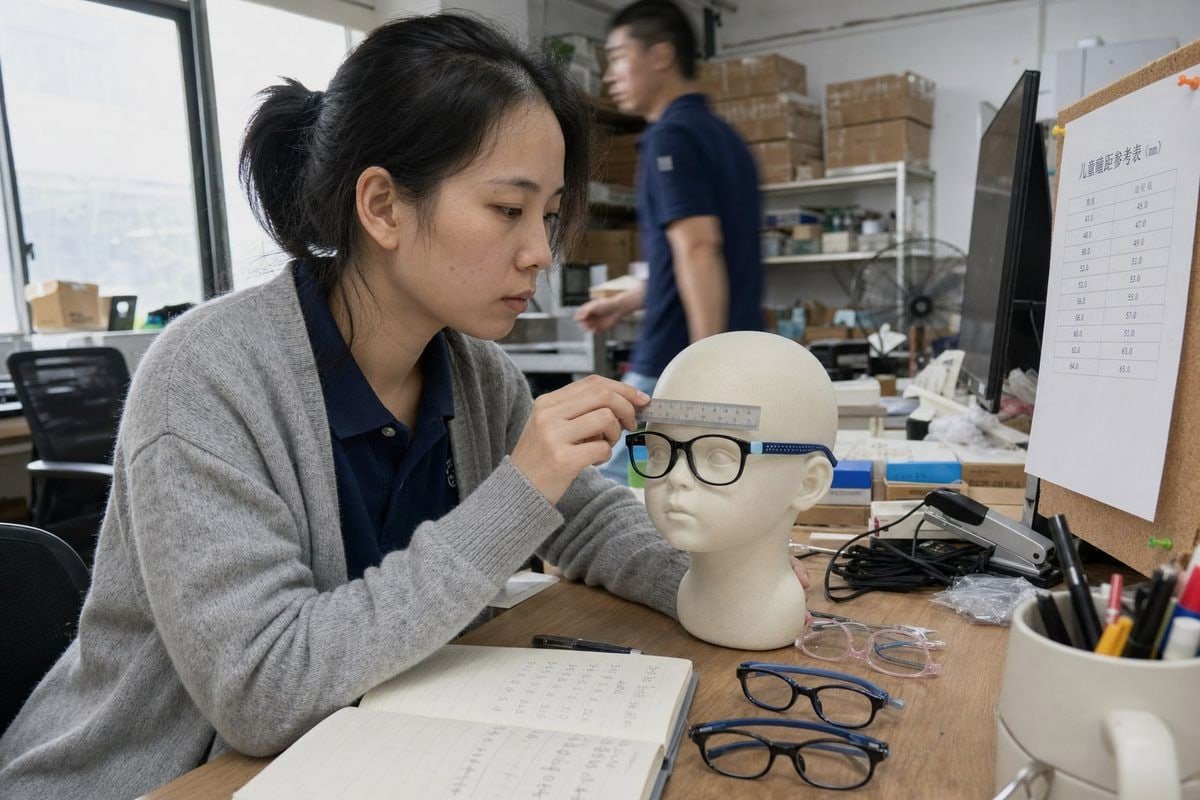
Tabelas baseadas em idade são convenientes. Os pais gostam delas, e os varejistas as usam porque elas separam rapidamente. Mas as larguras da cabeça das crianças variam muito dentro de qualquer faixa etária. O crescimento também muda o ajuste em meses. Portanto, uma tabela apenas por idade é um ponto de partida, não uma prova de nada. Quando desenvolvemos um novo molde em nossa fábrica em Taizhou, validamos primeiro contra dados de medição facial e atribuímos uma faixa etária apenas depois.
Comece com a distância pupilar como sua âncora
A distância pupilar é a verificação cruzada mais confiável. A DP de uma criança deve ficar próxima à distância geométrica central da armação, que é igual a largura da lente mais largura da ponte 1. Se um fornecedor afirma que uma armação serve para idades de 4 a 7 anos, mas a largura da lente mais a largura da ponte totalizam 68 mm, a matemática entra em conflito com os valores típicos de DP para essa idade. Recomendamos medir a DP duas ou três vezes para consistência, pois uma única medição com régua em uma criança agitada raramente é precisa.
Compare a tabela com os benchmarks do mercado
Diferentes guias de dimensionamento em toda a indústria se agrupam em faixas semelhantes. Esse agrupamento é uma evidência útil.
| Faixa Etária | Faixa Típica de Largura da Lente | O que Questionar |
|---|---|---|
| 0–1 anos | 35–37 mm | Qualquer coisa acima de 38 mm |
| 1–2,5 anos | 37–38 mm | Largura da ponte acima de 15 mm |
| 2,5–4 anos | 40–42 mm | Comprimento da haste acima de 125 mm |
| 4–7 anos | 43–45 mm | Largura total acima de 120 mm |
| 7–10 anos | 45–47 mm | Geometria de ponte estilo adulto |
| 10–16 anos | 47–52 mm | Dados de medição B ausentes |
Se a tabela de um fornecedor cair muito fora dessas faixas sem explicação, pergunte o porquê. Às vezes, há uma razão de design válida. Mais frequentemente, a tabela foi escrita por uma equipe de marketing, não por um engenheiro. Uma boa tabela se lê como uma folha de especificações técnicas. Ela deve listar o diâmetro da lente, a largura da ponte, o comprimento da haste e a largura total da armação para cada SKU, e idealmente a medição vertical B também.
O que devo perguntar a um fabricante para provar que a sua tabela de tamanhos é precisa antes de fazer um pedido?
Uma lição que aprendi no início de nossos quinze anos de trabalho com óculos: compradores que fazem perguntas perspicazes antes de fazer o pedido quase nunca registram reclamações de dimensionamento após a entrega.
Peça ao fabricante para confirmar a que cada tamanho corresponde, forneça a largura da ponte e o comprimento da haste para cada armação, explique como as medições foram obtidas, divulgue as tolerâncias de fabricação e compartilhe os registros de inspeção de controle de qualidade que mostram a consistência dimensional de lote para lote.

As perguntas que você faz revelam como uma fábrica realmente funciona. Um fornecedor que responde vagamente sobre tolerâncias provavelmente não as mede. Um fornecedor que lhe envia desenhos dimensionais 2 em um dia provavelmente opera uma oficina disciplinada. Em nossa própria instalação gerenciada por 5S 3, mantemos as dimensões mestras de amostra arquivadas para cada um de nossos aproximadamente 800 estilos existentes, porque compradores internacionais as solicitam constantemente. Essa é uma prática normal para uma fábrica séria. Deveria ser normal para o seu fornecedor também.
A lista principal de perguntas
Aqui está a lista exata que eu usaria em qualquer auditoria de fornecedor b2b para óculos infantis:
- A que correspondem exatamente os tamanhos das suas armações — largura da lente, largura frontal total ou um grupo etário?
- Você pode fornecer a largura da ponte, o comprimento da haste e a medição B para cada armação infantil?
- Suas tabelas de tamanhos são baseadas em testes de ajuste reais em crianças ou apenas em rotulagem interna?
- Você usa moldes diferentes para diferentes grupos etários e tamanhos de rosto?
- Quais são suas tolerâncias de fabricação para o diâmetro da lente e a largura total da armação?
- Você pode compartilhar um relatório de inspeção de controle de qualidade 4 de uma corrida de produção recente?
- Como você controla o encolhimento do material em peças de TR90 moldadas por injeção?
Por que as tolerâncias importam tanto quanto a tabela
Uma tabela pode ser honesta e o produto ainda pode desviar. Materiais moldados por injeção como TR90 encolhem à medida que esfriam, e esse encolhimento difere de armação de acetato cortada em CNC 5 especificações. Uma armação listada com 44 mm de largura de lente pode sair do molde com 43,4 mm em um dia quente se os controles de processo forem frouxos. Pergunte ao fornecedor o que tolerância dimensional 6 eles mantêm — uma linha bem administrada para armações infantis deve manter as medições dentro de limites rigorosos e documentados e verificá-las na entrada, durante o processo e na inspeção final. Se o fornecedor não conseguir descrever esses pontos de verificação, a tabela de tamanhos é um desejo, não uma especificação. Os padrões de fabricação de óculos existem precisamente para que um número impresso e um produto entregue permaneçam em acordo.
Como comparo tabelas de tamanhos entre diferentes faixas etárias para armações de óculos infantis?
Quando cotamos uma nova marca infantil, muitas vezes coloco três de nossas armações lado a lado — infantil, pequena e média — porque as diferenças proporcionais explicam o dimensionamento mais rápido do que qualquer planilha.
Compare gráficos alinhando a largura da lente, a largura da ponte e o comprimento da haste por faixa etária, em seguida, verifique se cada medição aumenta logicamente. Gráficos confiáveis mostram crescimento gradual e proporcional entre as faixas; saltos erráticos ou categorias sobrepostas indicam um guia de dimensionamento de armação não confiável.
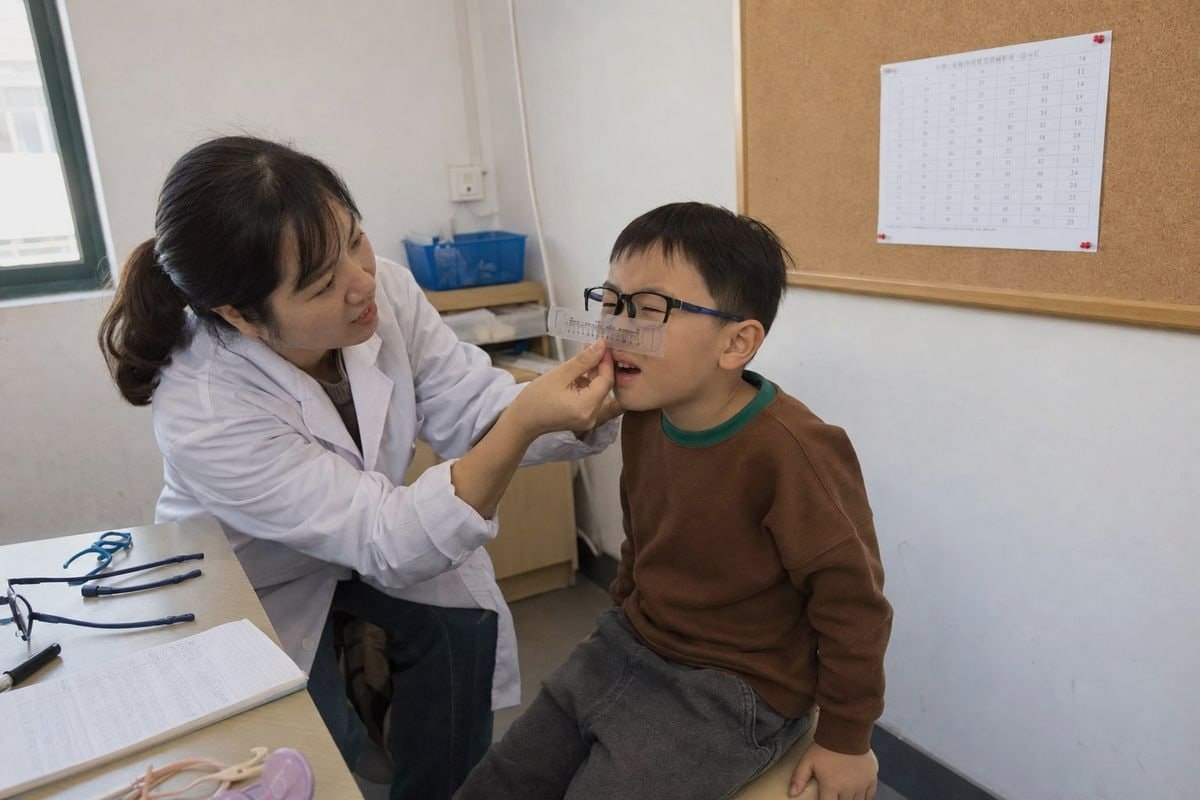
Fornecedores diferentes fatiam o mercado de maneiras diferentes. Um usa faixas de largura de lente para definir X-pequeno a Grande. Outro agrupa puramente por idade. Um catálogo pediátrico pode agrupar idades de 4 a 6 anos em 41–46 mm, enquanto um varejista geral coloca Pequeno em 41–45 mm. Esses sistemas são semelhantes, mas não são idênticos. Essa lacuna é exatamente o motivo pelo qual você nunca deve confiar em uma tabela cegamente. Crie sua própria tabela de comparação em vez disso.
Crie uma tabela de normalização
Converta os rótulos de cada fornecedor em milímetros brutos. Então as tabelas se tornam diretamente comparáveis.
| Lógica da Categoria | Fornecedor A (baseado em idade) | Fornecedor B (baseado em largura) | Verificação de Consistência |
|---|---|---|---|
| Infantil / X-pequeno | 0–2,5 anos, mm não listados | 35–40 mm de largura de lente | Pergunte ao A os dados em mm |
| Pequeno | 4–6 anos, 41–46 mm | 41–45 mm | Alinhado |
| Médio | 7–9 anos, 46–48 mm | 46–48 mm | Alinhado |
| Grande | 10–13 anos, 48–52 mm | 49–58 mm | B se estende até adolescentes |
Observe o que isso expõe. O Fornecedor A oculta os dados em milímetros para bebês, o que é um sinal de alerta. A faixa Grande do Fornecedor B se estende até 58 mm, o que se desvia para o território adulto. Nenhuma tabela está errada, mas nenhuma é completa sozinha.
Verifique a consistência interna, não apenas o acordo externo
Uma tabela também deve concordar consigo mesma. O comprimento da haste deve crescer com a largura da lente, pois um rosto mais largo significa uma distância maior até a orelha. Se uma tabela lista uma largura de lente de 47 mm com um comprimento de haste de 120 mm e uma armação de 42 mm com uma haste de 130 mm, algo está invertido. Da mesma forma, a largura da ponte deve permanecer proporcionalmente maior em relação à largura da lente em tamanhos infantis, porque crianças pequenas têm perfis nasais mais planos e largos. Uma geometria de ponte baixa 7 com curvatura reduzida se adapta a esses perfis mais planos. Quando nossos engenheiros projetam moldes infantis, a ponte é a parte em que passamos mais tempo, precisamente porque uma tabela não pode capturar a curvatura da ponte em um único número.
Posso solicitar amostras físicas para verificar novamente o dimensionamento declarado por um fornecedor antes da produção em massa?
O compromisso que mais pondero com novos compradores é o custo da amostra versus o risco. Algumas amostras de armações custam pouco; um contêiner de 10.000 unidades de tamanho incorreto custa uma temporada.
Sim, e você sempre deve. Solicite amostras de pré-produção, meça-as com paquímetros digitais em relação ao gráfico publicado, teste a abertura das dobradiças e o ajuste das lentes, e exija uma amostra mestre assinada para que a produção em lote seja contratualmente mantida às dimensões verificadas.
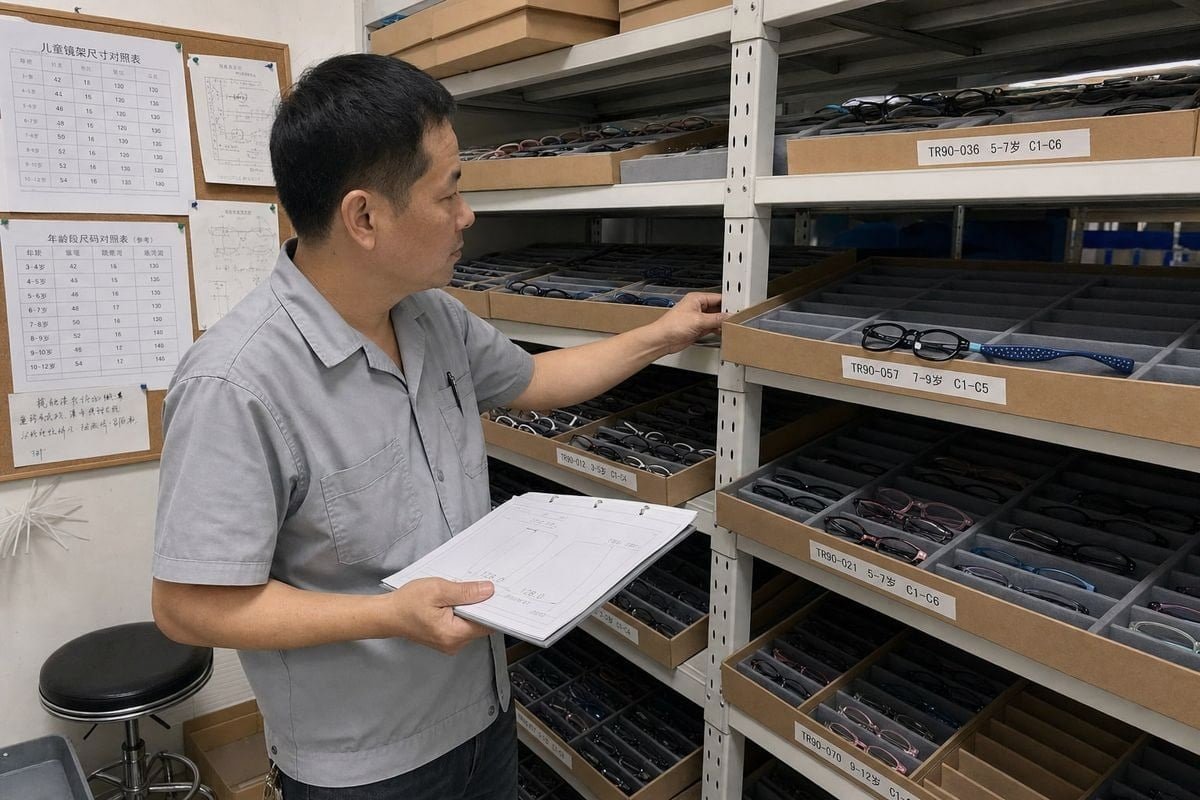
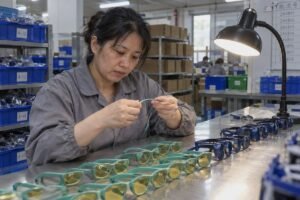
Qualquer fábrica respeitável espera solicitações de amostra. Em nosso trabalho de exportação em mais de vinte países, enviamos amostras antes de quase todos os primeiros pedidos e incentivamos os compradores a medi-las independentemente. Marcações impressas na haste são uma alegação; leituras de paquímetro 8 são evidências. A lacuna entre os dois diz o quão disciplinada a fábrica realmente é.
Um processo de verificação de amostra passo a passo
- Solicite duas ou três unidades por tamanho, não uma. Uma única amostra não pode mostrar variação de lote.
- Meça os "três grandes" — diâmetro da lente, largura da ponte, comprimento da haste — com paquímetros digitais, não com uma régua.
- Meça a largura total da armação de dobradiça a dobradiça, pois isso determina se a armação aperta as hastes.
- Verifique a medição B, a altura vertical da lente, especialmente se o seu mercado precisar de prescrições mais altas onde a espessura da borda importa.
- Teste o ângulo das dobradiças em dobradiças flexíveis ou de mola medindo o ângulo de flexão para fora. As armações infantis flexionam constantemente em uso, portanto, a largura vestível dinâmica é mais importante do que a estática.
- Inspecione a posição do chanfro da lente e a profundidade do sulco. A montagem pode estreitar sutilmente o ajuste efetivo da ponte quando lentes reais são inseridas.
- Verifique a inclinação pantoscópica em um rosto ou cabeça de manequim, confirmando que a borda inferior não toca as bochechas.
- Compare tudo com uma armação de referência — um par conhecido e bem ajustado — para sanidade proporcional.
O que um bom ajuste parece em uma criança real
| Ponto de Ajuste | Passar | Falha |
|---|---|---|
| Nariz | Apoia sem apertar | Marcas vermelhas ou deslize |
| Bochechas | A borda inferior toca a pele | A armação toca ao sorrir |
| Hastes | Apoia firmemente atrás das orelhas | Apertando ou com folga |
| Largura | Encaixa rente nas têmporas | Dobradiças abertas ou apertando |
| Estabilidade | Permanece no lugar durante o movimento | Desliza ao olhar para baixo |
Se as amostras forem aprovadas, bloqueie os resultados. Peça ao fornecedor para guardar uma amostra mestre assinada e para realizar uma inspeção de controle de qualidade contra ela para cada lote. Se óculos de uma criança que se ajustam bem estiverem disponíveis, use essas medidas internas como referência também. Essa é a ferramenta de verificação mais barata em todo o processo.
Conclusão
Uma tabela de tamanhos não verificada coloca a reputação da sua marca no rosto das crianças. Trate a tabela de tamanhos de cada fornecedor para armações ópticas infantis como uma folha de especificações técnicas a ser testada, não confiada. Verifique os milímetros em relação aos dados de DP, exija tolerância e evidências de inspeção, normalize as tabelas entre faixas etárias e sempre meça amostras físicas antes da produção em lote. Em nossa fábrica, recebemos exatamente esse escrutínio — porque quando os compradores verificam cuidadosamente, ambos os lados ganham, e a criança que usa a armação ganha mais de todos.
Notas de rodapé
Explica o
Mais Artigos que Você Pode Gostar

Procurando um Parceiro Confiável em Óculos Infantis?
Explore mais de 800 estilos prontos e suporte completo OEM/ODM adaptado à sua marca.
Entre em Contato English
  Español de México
  Deutsch
  Français
  日本語
日本語  العربية
  Português do Brasil