How to Verify Payment Account Matches Supplier Entity When Sourcing Sunglasses from China?

Knowing how to verify the payment account matches the supplier entity when sourcing sunglasses from China protects your deposit. Our factory in Taizhou sees buyers burned by this every year.
To verify a payment account matches your supplier entity, compare the bank beneficiary name against the Chinese business license, the contract party, and the invoice issuer. All four must point to the same legal entity, confirmed through China’s official registry and a callback to a previously verified phone number.
The problem is simple. A real quotation, a friendly sales contact, and a professional proforma invoice can all be genuine, yet the bank account can still belong to someone else. If that happens, your money is gone and the factory never sees it. The good news is that a clear verification workflow closes this gap. Below, I walk through the exact checks we recommend to our own buyers before they wire a single dollar.
How can I confirm the payment account name matches my China sunglasses supplier's registered business license?
A buyer from Australia once asked me why our bank beneficiary name looked different from our English trading name. That conversation taught me how confusing Chinese entity names can be for overseas purchasing teams.
Request the supplier's business license, note the exact registered Chinese legal name and Unified Social Credit Code, then confirm the bank beneficiary name on the proforma invoice matches that legal name character for character. Verify the entity independently through China's National Enterprise Credit Information Publicity System.
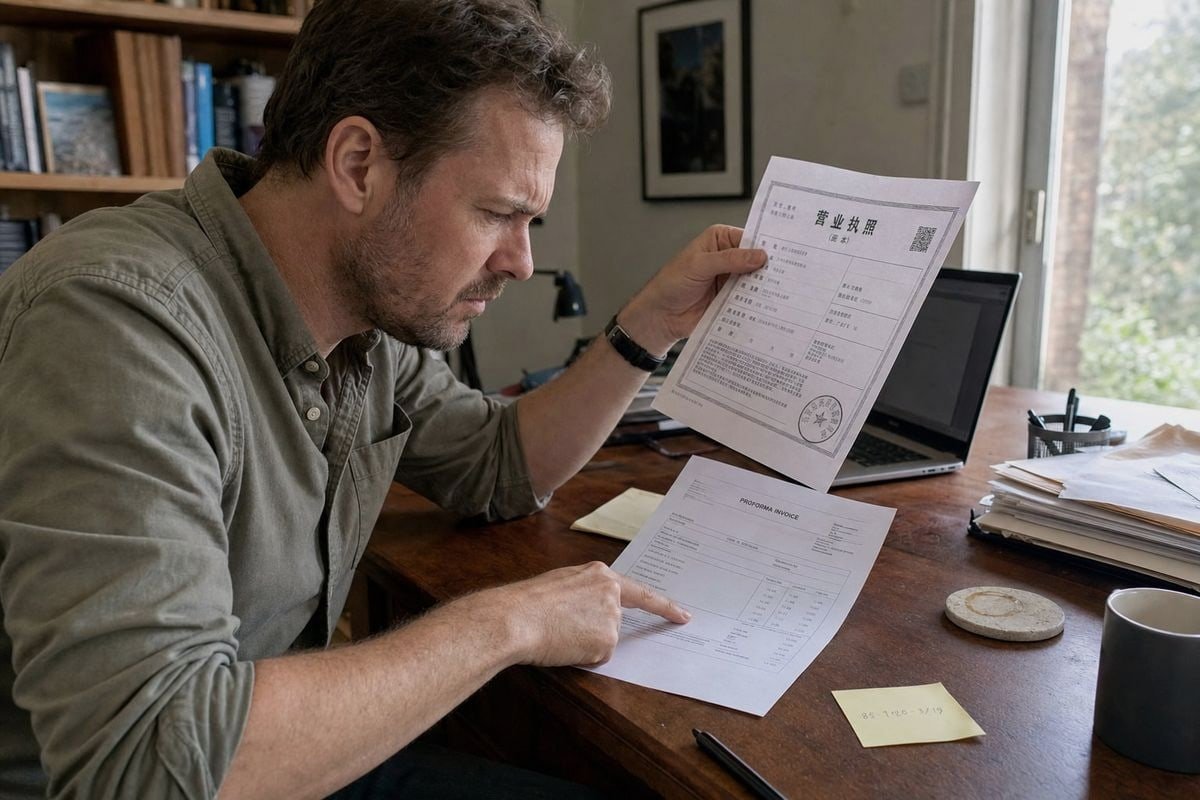
The core principle here is entity matching, not just company existence. A supplier can be a completely real, registered company and still ask you to pay an account that does not belong to that company. So your job is to line up four names and check they are identical.
The four names that must match
| Item to check | Where you find it | What must match |
|---|---|---|
| Registered legal name | Chinese business license | The exact legal entity name and suffix |
| Bank beneficiary name | Proforma invoice or bank letter | Identical to the license name |
| Contract party | Sales contract with company chop | Same entity as license and account |
| Invoice issuer | Fatura comercial | Same entity again, no substitutions |
Start by asking for a copy of the business license. Every legitimate Chinese company has one. It shows the Chinese legal name, the Unified Social Credit Code 1, the registered address, and the business scope. Check that the scope actually covers eyewear manufacturing or trading. A company registered for construction materials that suddenly sells sunglasses deserves questions.
Next, run the Chinese name and the credit code through the National Enterprise Credit Information Publicity System 2. Confirm the company status is active and the registration data matches the license copy you received. Third-party verification tools work too, but the official registry is free and authoritative.
Then compare the bank beneficiary name on the proforma invoice against the license. In our experience exporting to more than twenty countries, the English beneficiary name should be the official English registration of the same legal entity, including the exact suffix such as "Co., Ltd." A "close enough" match is not a match. If "Taizhou Bright Optical Co., Ltd." appears on the license but the account says "Bright Optical Trading Limited," stop and investigate before paying.
What red flags should I watch for if a supplier asks me to pay a personal account instead of a company account?
Every so often a new buyer forwards me a competitor's quotation and asks whether paying "Mr. Chen's personal account" is normal in China. My answer is always the same: it is not, and it should stop the deal cold.
Payment requests to a personal account are a major red flag signaling an unlicensed intermediary, a rogue employee, or outright fraud. Legitimate exporters receive foreign payments through corporate accounts under the registered entity name. Refuse personal-account payments and demand a corporate beneficiary before proceeding.

Personal-account requests are the most common warning sign, but they are not the only one. Fraud in sunglasses sourcing usually appears as a "change event" — something shifts right before payment. You need to recognize the whole pattern, not just one symptom.
The red-flag checklist
Here are the warning signs I tell every first-time buyer to watch for:
- Payment to an individual's name. Chinese export regulations push legitimate trade through corporate accounts. A personal account bypasses foreign exchange controls 3 and tax records.
- Beneficiary name differs from the legal name with no documented, stamped explanation of the relationship.
- A Hong Kong or third-country account with no clear commercial rationale for a mainland factory. Some groups do have legitimate Hong Kong sales entities, but the burden of proof sits with the supplier.
- Last-minute bank detail changes by email. This is the classic Business Email Compromise 4 pattern. A hacker sits in the email thread, waits for the invoice stage, and swaps the account. Always verify changes by phone using a number you confirmed earlier — never the number in the new email.
- Refusal to provide documents. If a supplier will not share a business license, stamped bank proof, or registry data, they are hiding something.
- Mismatch between the sales contact, the PI issuer, and the receiving entity. Three different names on three documents means someone in the chain is not who they claim to be.
At our workshop, we keep our banking details on our official letterhead with our company chop, and we tell buyers our details do not change without a phone call from a known contact. Any professional factory should do the same. If your supplier gets defensive when you ask for verification, treat that reaction itself as a red flag. Serious manufacturers welcome scrutiny because it filters out the exact fraudsters who damage the industry's reputation.
Which documents can I request to verify my sourcing payment is going to a legitimate, factory-owned entity?
When we onboard a new brand client for our kids' sunglasses lines, we send a standard verification pack before they even ask. Fifteen years of exporting taught us that transparent paperwork upfront builds trust faster than any sales pitch.
Request the business license with the Unified Social Credit Code, a proforma invoice naming the beneficiary entity, a stamped bank confirmation letter showing account holder and account number, export or customs records under the same name, and — if a different entity collects payment — a chopped authorization letter.
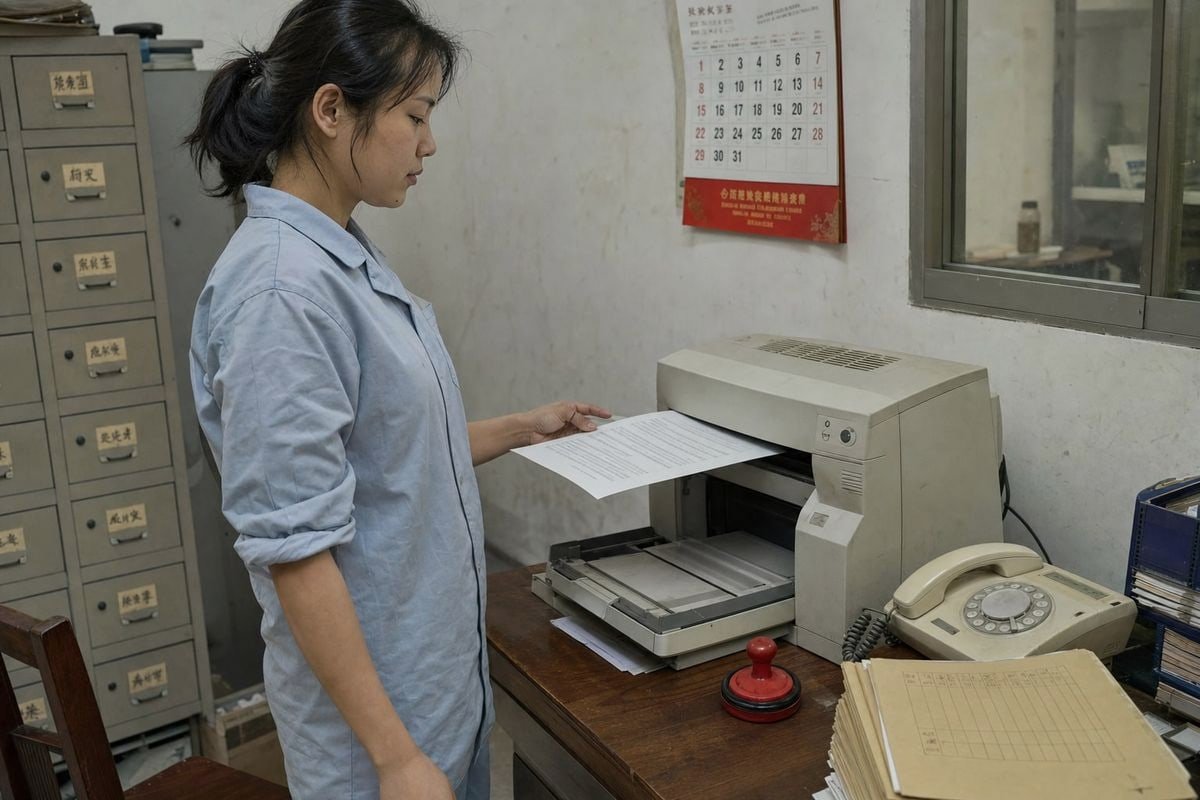
Documents are only useful if you know what each one proves and how to check it independently. Supplier-provided paperwork can be forged, so pair every document with an outside verification step.
Document request list and how to verify each one
| Documento | O que prova | Independent check |
|---|---|---|
| Business license copy | Legal name, USCC, business scope | Search the National Enterprise Credit Information Publicity System |
| Proforma invoice | Beneficiary entity and payment terms | Compare against license and contract names |
| Bank confirmation letter | Account holder, bank, branch, account number | Callback to the bank or a verified supplier number |
| Export/customs records | Real export track record under the same name | Cross-check via trade data platforms like ImportGenius or Panjiva |
| Company chop samples | Legal authority to bind the entity | Compare the chop name against the registered legal name |
| Authorization letter (if paying a different entity) | Documented right to collect funds | Verify both entities in the registry and confirm by callback |
A few practical notes from our side of the trade. First, the bank letter matters more than most buyers realize. A stamped certificate from the supplier's bank stating the account holder name is far stronger evidence than a screenshot. For larger wires, you can also ask for a SWIFT MT103 5 reference after a small test payment to confirm exactly where the funds landed.
Second, check the chop. In China, the red company seal carries legal authority, and the entity name is engraved into it. A chop that shows a different name than the license is a serious problem.
Third, export history is a quiet but powerful check for eyewear. A factory that genuinely ships sunglasses will have customs declarations under its registered name. A shell entity or a fresh impersonator will not. For high-value first orders, a third-party on-site verification firm can physically confirm the license, banking documents, and the legal representative's ID at the factory address — a small cost against a five-figure deposit.
How do I protect my payments when working with a trading company instead of a direct eyewear manufacturer like OKAY EYEWEAR?
One lesson from years of running our 5S-managed factory floor in Taizhou: many buyers do not actually know whether they are dealing with a factory or a trader until the payment stage exposes the entity structure.
Trading companies are not automatically unsafe, but they add an entity layer you must document. Confirm the trader's own license and corporate account match, obtain a written explanation of the factory relationship, use escrow or trade assurance for first orders, and send a small test transfer before large deposits.

Sunglasses sourcing is full of layered structures: OEM/ODM 6 factories, export agents, Hong Kong sales entities, and pure traders. Some of these arrangements are legitimate. A mainland group may collect USD through a Hong Kong entity for currency reasons. An export agent may handle customs for a small workshop. The question is never "is a different name automatically fraud?" It is "can the supplier prove, in writing, why this entity collects the money?"
A safe payment workflow for first orders
- Get the full Chinese legal name, business license, and USCC of the entity you are contracting with — trader or factory.
- Verify registry status and confirm the business scope fits eyewear trading or manufacturing.
- Line up the quotation, proforma invoice, contract, and bank beneficiary. All must name the same entity.
- Call the supplier on a previously verified number and have their finance team confirm beneficiary name, account number, branch, and currency by both phone and email.
- If a different entity collects payment, demand a stamped Chinese authorization letter explaining the relationship and the authority to receive funds.
- Prefer escrow, trade assurance 7, or a letter of credit 8 over direct T/T for a first order.
- Send a small test transfer and confirm receipt through a separate channel before releasing the full deposit.
- Before every reorder, watch for changed bank details, new contacts, or company status changes. Fraud often strikes after onboarding, not before.
There is a strictness spectrum here. Some advisers accept a documented trader or Hong Kong entity in the chain. Others insist the license, USCC, and beneficiary match exactly with zero exceptions. For high-value first orders and large deposits, I lean toward the strict rule. When buyers work directly with our factory, the entity chain is short: the company that quotes, contracts, invoices, and receives payment is the same legal entity that runs the production line making the sunglasses. That is the simplest structure to verify — which is one more reason many brands prefer sourcing directly from a factory rather than through layered intermediaries.
Conclusão
Payment fraud thrives on mismatched entities. Treat every bank account check as entity verification: match license, contract, invoice, and beneficiary — or pause, call back, and demand written proof.
Notas de rodapé
1. Defines the official Chinese business identifier used throughout verification steps. ↩︎
2. Official Chinese registry referenced for verifying business license authenticity. ↩︎
3. Background concept explaining why personal accounts bypass regulatory oversight in China. ↩︎
4. FBI resource explaining the fraud pattern described for altered bank details. ↩︎
5. Explains the wire transfer confirmation reference used to trace payments. ↩︎
6. Clarifies manufacturing arrangement terminology used when describing supplier entity layers. ↩︎
7. Alibaba’s payment protection
Mais Artigos que Você Pode Gostar

1 de agosto de 2026
A Fábrica Deve Lidar com a Embalagem e Rotulagem de Óculos de Sol Infantis, ou Usar um Fornecedor Designado?

1 de agosto de 2026
Armazém Próprio vs. Envio Direto do Fornecedor: Qual Reduz os Custos de Devolução para Marcas de Óculos de Sol Infantis?

1 de agosto de 2026
Armazém Direto ao Porto ou Estiva no Exterior: Qual Economiza Mais no Envio de Óculos de Sol Infantis?
Procurando um Parceiro Confiável em Óculos Infantis?
Explore mais de 800 estilos prontos e suporte completo OEM/ODM adaptado à sua marca.
Entre em Contato English
  Español de México
  Deutsch
  Français
  日本語
日本語  العربية
  Português do Brasil