How Can I Verify a Factory’s Capacity for a Million Kids’ Sunglasses in Weeks?
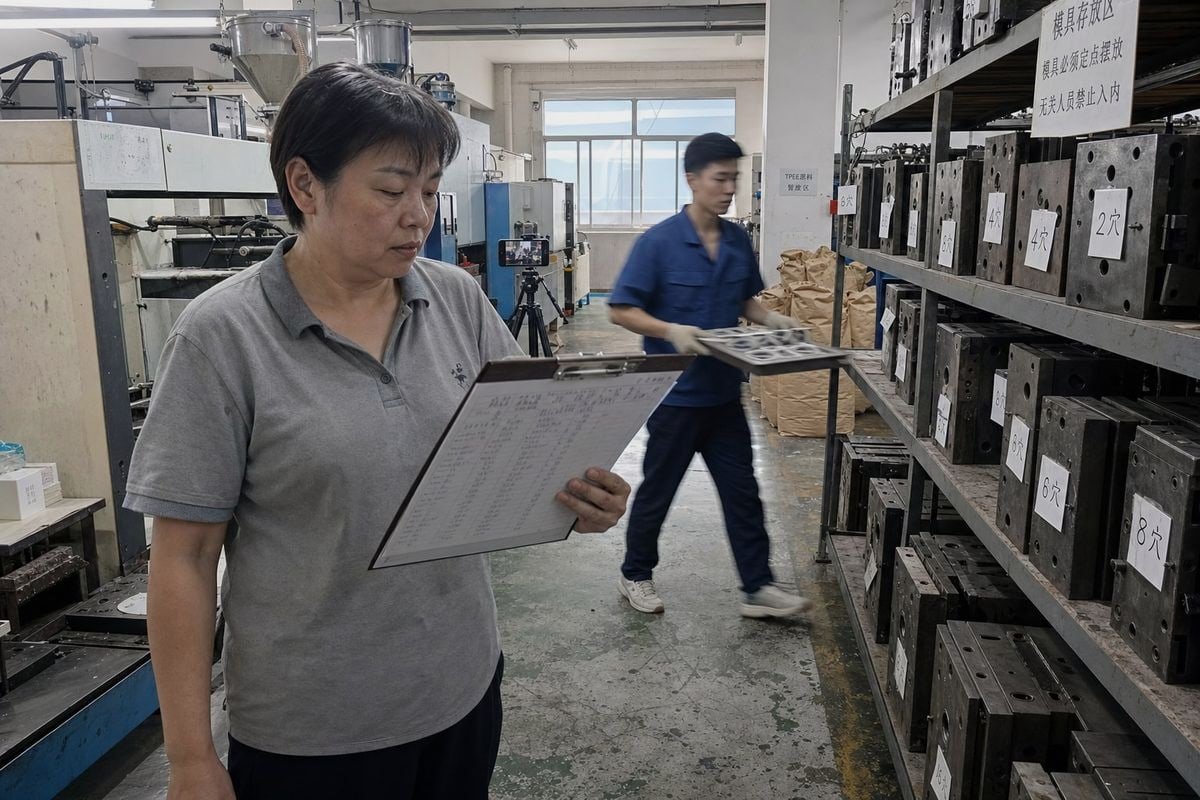
Buyers often ask me how to verify a factory’s capacity for a million kids’ sunglasses on a tight deadline. On our Taizhou production floor, I see why claims mislead.
To verify a factory’s capacity for a million kids’ sunglasses in weeks, demand documented daily line output, mold and cavity counts, shift schedules, defect rates, raw material stock proof, and recent comparable order records — then confirm everything through a live video walkthrough or third-party audit.
A headline capacity number tells you almost nothing. Real verification means converting claims into math. Let me walk you through exactly how I would check a supplier, step by step, using what I know from running our own kids’ eyewear lines.
How Do I Know If a Factory Can Really Scale to a Million Units Without Sacrificing Quality?
A few years back, a European buyer sent us an urgent surge order. Our team mapped every process step before we accepted. That exercise taught me where scaling really breaks down.
A factory can scale to a million units without quality loss only if its injection molding, assembly, lens fitting, QC, and packaging stages each independently support the required daily output — verified through line-by-line throughput data, cavity counts, staffing levels, and documented defect rates.
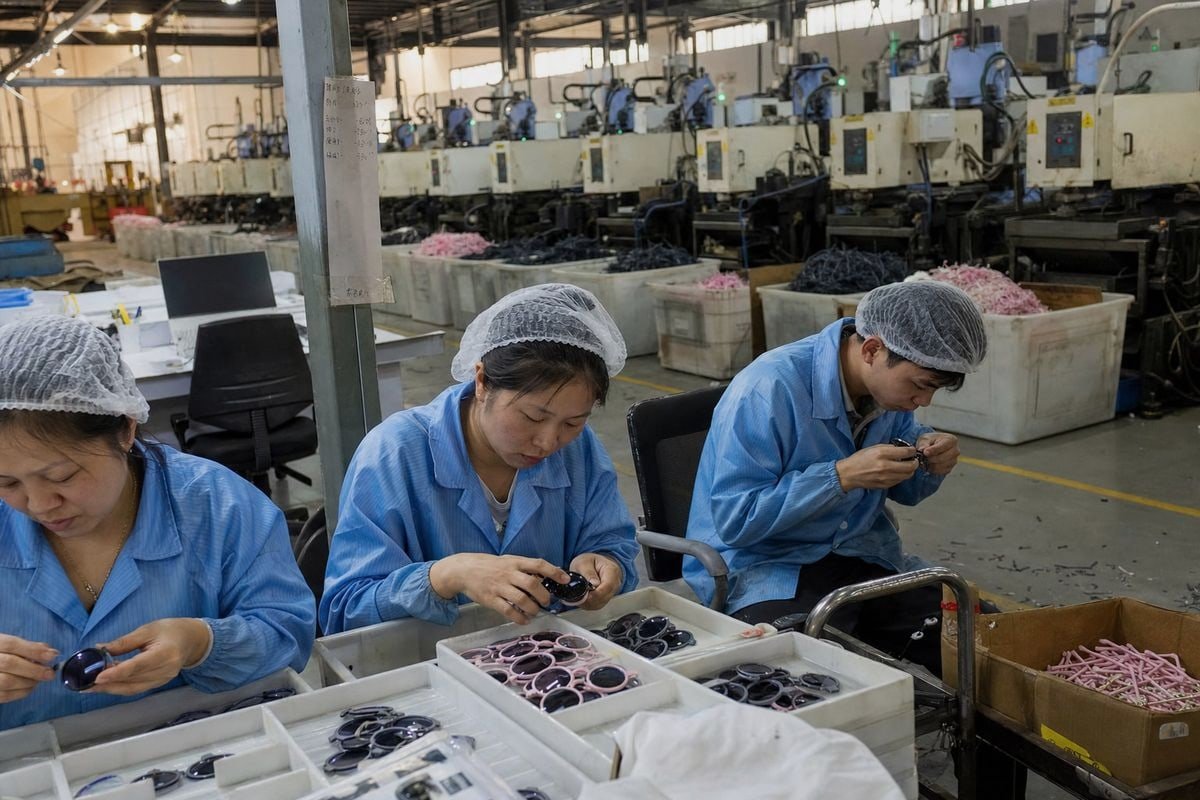
The key concept here is the difference between rated capacity and real capacity. Rated capacity is the marketing number. Real capacity is what a factory actually produces per day, under real conditions, with real defect rates. In our workshop, we plan every large order around the slowest stage, not the fastest one. That slowest stage is your bottleneck, and it decides everything.
Start With the Bottleneck, Not the Total
A factory may run powerful moldagem por injeção 1 machines but only have two lens-fitting benches. Or it may mold frames fast but hand-assemble hinges slowly. For kids' sunglasses in flexible TPEE 2 or TR90, molding cycle times also differ from rigid cheap plastics. Each stage must be checked separately.
Do the Math Yourself
Here is a simple feasibility check for one million units:
| Timeline | Required Daily Output | Realistic Requirement (at 90% yield) |
|---|---|---|
| 2 weeks (12 working days) | ~83,300 units/day | ~92,600 units/day |
| 3 weeks (18 working days) | ~55,500 units/day | ~61,700 units/day |
| 4 weeks (24 working days) | ~41,600 units/day | ~46,300 units/day |
Now ask the supplier: how many usable units does each line produce per day? A factory claiming 150,000 pieces per month produces roughly 5,000–6,000 per day. That factory cannot deliver a million units in a month alone, no matter what its sales team says. Only factories with genuine multi-line depth, multi-cavity molds, and double shifts can approach these numbers. Quality adds another layer. For children's eyewear, a rushed defect slipping through is not just a return — it is a safety and compliance risk. Speed without QC discipline is a false economy.
What Questions Should I Ask to Confirm Their Real Production Capacity Before I Sign a Contract?
One trade-off I weigh constantly is transparency versus speed. When buyers ask our team hard questions before signing, I respect them more — because those questions protect both sides.
Before signing, ask for line-by-line daily output records, mold and cavity inventories, shift schedules, workforce headcount, defect and rework rates, raw material stock proof, packaging capacity, recent comparable order references, and third-party audit reports — then cross-check answers against customs export data.
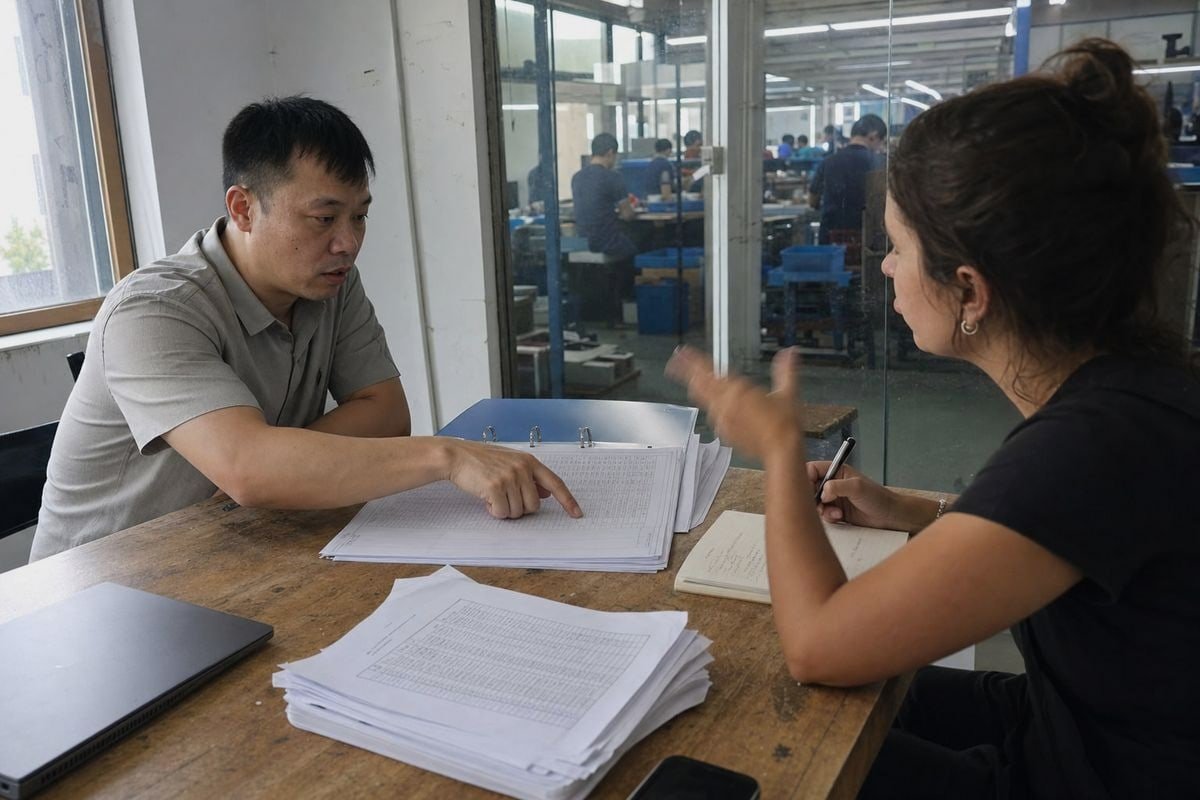
Vague questions get vague answers. "How big is your factory?" invites marketing talk. Specific questions force specific documents. In fifteen years of making children's eyewear, I have never seen an honest factory refuse to share production math. Evasion itself is an answer.
The Question Checklist That Actually Works
Group your questions by stage. Each stage has its own capacity, and any one can sink your deadline:
| Estágio | Key Questions to Ask | Proof to Request |
|---|---|---|
| Molding | How many machines? How many cavities per mold? Cycle time? | Mold inventory list, machine floor photos |
| Assembly | How many lines and workers per shift? Shifts per day? | Shift schedule, staffing records |
| Lens fitting | UV400 3 or polarized lens stock levels? Supplier lead time? | Material purchase records, stock photos |
| CQ | Inspectors per line? Defect and rework rate? | Recent QC reports for a similar SKU |
| Embalagem | Daily packing capacity for retail-ready boxes? | Packaging line output records |
Cross-Check, Don't Just Collect
Answers alone are not enough. Ask for recent production records of a comparable SKU. Ask for references from buyers who placed similar-volume orders. Check customs export data 4 through platforms like Panjiva or ImportGenius to see what the factory actually shipped in recent months. If a supplier claims massive capacity but customs records show modest volumes, you have found trading-company inflation — a middleman dressed up as a factory. Also ask directly: will all one million units be made in-house, or subcontracted? Quiet outsourcing of lens cutting or polishing to satellite workshops is common, and it dilutes quality control exactly when you can least afford it. Finally, request a live video walkthrough during working hours, not a pre-recorded tour. Running lines, staffed benches, and material stock are hard to fake in real time.
Can I Trust a Factory's Timeline Promises for Such a Large, Fast-Turnaround Order?
Early in my career, I watched a competitor promise an impossible deadline just to win a contract. The order shipped six weeks late. That lesson shaped how our team quotes today.
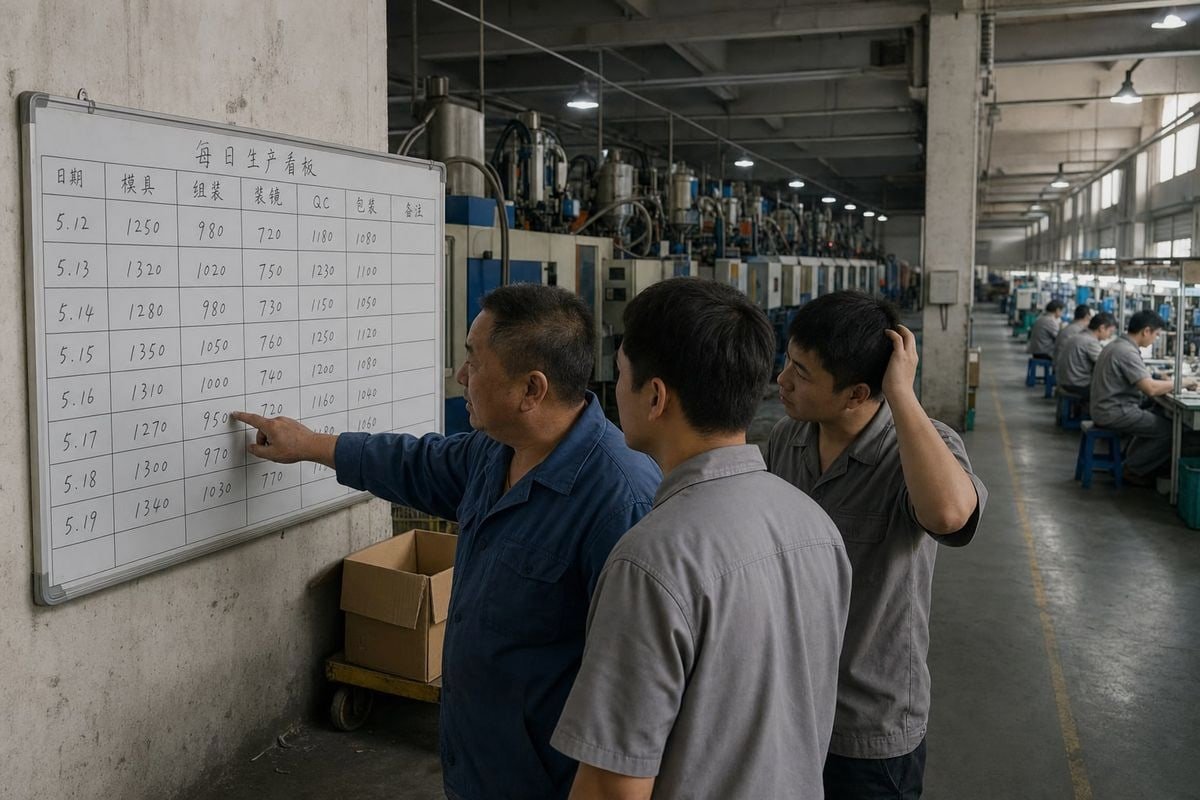
Trust a timeline only when it is broken into stage-by-stage milestones — tooling, material procurement, molding, assembly, QC, and packing — each with dates and evidence. A single confident delivery date without a backing production plan is a sales promise, not an engineering commitment.
Published eyewear lead times tell a sobering story. Ready stock ships in 3–7 days. Small wholesale orders take 7–15 days. Private label work needs 15–30 days. Fully custom eyewear commonly runs 45–90 days. So when a supplier promises one million custom kids' sunglasses in three weeks, that promise contradicts industry norms — unless specific conditions already exist.
When "Weeks" Is Actually Possible
In my experience, a compressed timeline works only when several things are already in place before you sign:
- The styles are existing molds, not new tooling. New molds alone can consume 30–45 days. This is exactly why we maintain roughly 800 existing styles — buyers can launch without mold investment and without mold lead time.
- Raw materials are in stock. TPEE, TR90 6, and lens blanks with UV400 or polarized coatings must be on hand, not on order. Material shortage is the most common rush-order killer.
- Customization stays light. Custom colors and logo printing add days. Custom packaging design adds more. Each extra layer stacks onto the critical path.
- Lines are genuinely free. Ask what other orders are running in the same window. Your deadline competes with every other customer's deadline.
Demand a Milestone Schedule
A trustworthy factory will give you a dated plan: material confirmation by day X, first article approval by day Y, weekly output targets, inline QC checkpoints, and a packing completion date with buffer before shipping. Then hold them to the first milestone. How a factory performs in week one predicts how it performs in week four. A smart pre-test is a trial batch of 5,000–10,000 units. If they struggle to deliver that quickly and cleanly, scaling to a million will not fix the problem — it will multiply it.
What Red Flags Should I Watch For When a Supplier Claims They Can Handle Bulk Orders This Quickly?
A procurement manager from Australia once forwarded me a competitor's quote and asked why it seemed too good. It was. The warning signs were all there once we looked together.
Watch for instant "yes" answers without questions back, prices far below market, refusal of live video walkthroughs or audits, no comparable order references, vague answers on subcontracting, missing safety test documentation for children's products, and capacity claims that contradict factory size or customs records.

Red flags rarely appear alone. They cluster. One vague answer might be a language gap. Three vague answers form a pattern. Here is how I would sort what you hear from a supplier during negotiation:
| What You Observe | Green Flag | Bandeira Vermelha |
|---|---|---|
| Response to your volume | Asks about SKU mix, colors, packaging split before quoting | Says "no problem" instantly, asks nothing |
| Factory visibility | Offers live video tour during working hours | Only shares polished pre-recorded videos |
| Capacity evidence | Shares line output records and audit reports | Cites one big round number, no documents |
| Subcontracting | Discloses which steps, if any, go outside | Deflects or changes the subject |
| Child safety | Provides testing process and compliance documentation | Says "kids' products are the same as adult ones" |
| Price | Consistent with material and QC costs | Dramatically below every other quote |
The Kids' Product Trap
For children's sunglasses, one red flag matters above all others: silence on safety. A supplier who can push units fast but cannot explain impact resistance, UV400 verification, small-parts security 7, or material safety is offering you regulatory risk and potential recalls, not savings. On our lines, flexible TPEE temples and TR90 frames exist precisely because children fall, sit on glasses, and chew temple tips. A factory that treats kids' eyewear as shrunken adult eyewear does not understand the category. Also beware the "we will just add overtime" answer. Sustained double shifts without added QC staffing predictably raises defect rates. And extremely fast custom timelines often signal off-site production in workshops you will never see. Speed claims must always be paired with a quality plan — otherwise they are just claims.
Conclusão
Verify a factory's capacity for a million kids' sunglasses with math, documents, and live evidence — never with promises. Demand daily output data, milestone schedules, safety compliance, and trial batches before you commit.
Notas de rodapé
1. Explains the manufacturing process central to frame production and cycle-time calculations. ↩︎
2. Background on the flexible polymer material used for children’s sunglasses temples. ↩︎
3. CDC sun safety guidance supports the importance of UV protection in children’s eyewear. ↩︎
4. Official US trade data source that verifies actual shipped export volumes claimed by suppliers. ↩︎
5. Points to a trade data platform used to verify actual shipped export volumes. ↩︎
6. TR90 is a nylon-based polymer; nylon background clarifies its properties for eyewear frames. ↩︎
7. CPSC toy safety guidance covers small-parts hazards relevant to children’s product compliance. ↩︎
Mais Artigos que Você Pode Gostar
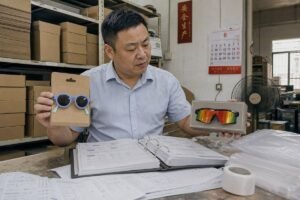
1 de agosto de 2026
A Fábrica Deve Lidar com a Embalagem e Rotulagem de Óculos de Sol Infantis, ou Usar um Fornecedor Designado?
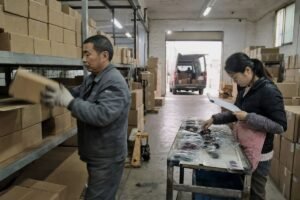
1 de agosto de 2026
Armazém Próprio vs. Envio Direto do Fornecedor: Qual Reduz os Custos de Devolução para Marcas de Óculos de Sol Infantis?
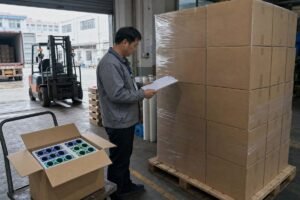
1 de agosto de 2026
Armazém Direto ao Porto ou Estiva no Exterior: Qual Economiza Mais no Envio de Óculos de Sol Infantis?
Procurando um Parceiro Confiável em Óculos Infantis?
Explore mais de 800 estilos prontos e suporte completo OEM/ODM adaptado à sua marca.
Entre em Contato English
  Español de México
  Deutsch
  Français
  日本語
日本語  العربية
  Português do Brasil