How to Verify CE Marking, Warning Labels & Language on Kids Sunglasses in the EU?
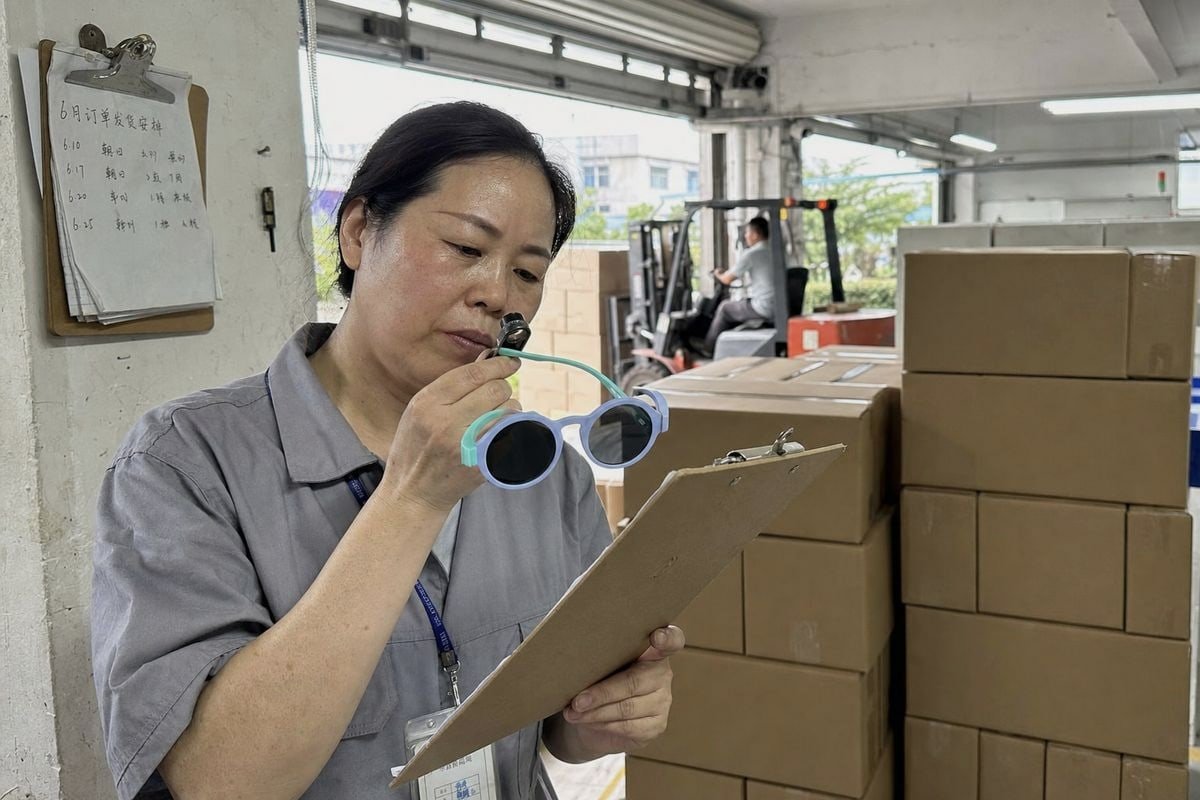
Buyers ask me weekly how to verify CE marking on kids sunglasses before an EU launch. On our production line, I’ve seen one missing label freeze an entire shipment at customs.
To verify CE marking on kids sunglasses in the EU, confirm the product is Category I PPE under Regulation 2016/425, check the CE mark is correctly sized and durable, request the EU Declaration of Conformity citing EN ISO 12312-1, and ensure warnings appear in each destination country’s official language.
That sounds like a lot. It is not, once you know what to check and in what order. Let me walk you through each step, the same way I brief our own B2B clients.
How can I check if my kids' sunglasses supplier's CE certificate is genuine and valid?
A German importer once forwarded me a rival supplier's "CE certificate" for review. Our compliance team spotted the problem in two minutes: it referenced a standard withdrawn years earlier. That taught the buyer a lasting lesson.
Check that the certificate names the exact product model, cites PPE Regulation 2016/425 and the EN ISO 12312-1 standard, and matches the supplier's legal name and address. Then request the supporting EU Declaration of Conformity and test reports, and verify any listed lab actually exists.

The first thing I tell buyers is this: for sunglasses, there is no such thing as a "CE certificate" issued by the EU itself. Sunglasses are Category I PPE. That means the manufacturer self-declares conformity after testing. So the core document is the EU Declaration of Conformity, backed by relatórios de testes de laboratório. Any supplier waving a vague, gold-stamped "certificate" without those two things deserves scrutiny.
Here is how I recommend you audit what a supplier sends you.
Um processo de verificação passo a passo
- Match the model numbers. The DoC and test report must name the exact frame model you are buying, not a generic product family.
- Check the cited regulation. It must reference PPE Regulation 2016/425 1, not the old PPE Directive 89/686/EEC, which is obsolete.
- Check the cited standard. Look for the EN ISO 12312-1 2 standard. If you see only EN 1836, the testing is outdated.
- Verify the lab. Search the testing laboratory's name online. Real labs like SGS, TÜV, or Intertek let you verify report numbers.
- Confirm the signatory. The DoC must carry the manufacturer's legal name, address, and a responsible person's signature.
Red flags I see in real documents
| Red flag | Por que importa |
|---|---|
| Certificate covers "sunglasses" generically | It may not cover your actual model |
| References withdrawn standards | Testing is invalid for current EU market entry |
| No lab report number | The report cannot be independently verified |
| Supplier name differs from factory name | You may be dealing with a trader, not the maker |
| Refuses to share test reports | The reports may not exist |
At our factory in Taizhou, we keep test reports for every lens and frame material on file, and we share them before a purchase order is signed. Any serious factory should do the same. If a supplier hesitates, walk away.
What warning labels and safety information must I include on children's sunglasses packaging?
There is a trade-off we weigh on every kids' packaging project: parents want clean, attractive retail boxes, but EU rules demand a specific set of warnings. Good design fits both without clutter.
Children's sunglasses packaging must show the CE mark, the UV filter category, warnings against direct sun observation, a "not suitable for driving at night" note where relevant, the manufacturer's and importer's name and address, and an electronic contact point required by GPSR 2023/988.

Warnings are not decoration. They define how a caregiver uses the product safely. In our experience developing retail-ready packaging for European kids' brands, the following items come up in every compliance review.
The core warning set
| Label element | What it must say or show | Where it goes |
|---|---|---|
| Marca CE | Correct proportions, minimum 5 mm height | Temple arm and/or packaging |
| UV filter category | Category 0–4 (most kids' lenses are category 3) | Packaging or hang tag |
| Solar observation warning | "Not suitable for direct observation of the sun" | Instruction leaflet or box |
| Driving limitation | Category 4 lenses are not suitable for driving | Leaflet, if applicable |
| Traceability | Manufacturer name, address, model reference | Packaging and documents |
| GPSR contact | Email or URL for consumer recourse | Embalagem |
Extra points specific to children
Kids' products invite extra scrutiny. If your design has detachable charms, straps, or toy-like decorative features with high "play value," authorities may expect EN 71 toy safety testing 3 on top of the PPE assessment. In that case, a small parts warning for children under three may also be required. We flag this early whenever a client asks us to add playful accessories to one of our roughly 800 existing styles.
Metal hardware matters too. The small silver hinge screws on a typical rounded kids' frame must meet nickel release limits under REACH compliance rules 4, because children's skin is more sensitive to prolonged contact. Our TPEE and TR90 constructions minimize exposed metal for exactly this reason, but where hinges exist, we test them.
Finally, the CE mark itself. EU guidance prefers it directly on the product, usually inside the temple arm. Packaging is an accepted fallback only when product marking is genuinely impossible. On soft, flexible kids' frames, we mold or pad-print it so it cannot rub off.
Which languages do I need for labels and instructions when selling across different EU countries?
One of our long-term distributor clients sells the same rounded two-tone kids' frame in five EU markets. Their single biggest packaging headache was never the design. It was the language block on the leaflet.
You need the official language of every EU member state where the product is sold. The CE mark itself needs no translation, but warnings, instructions, and safety information must be easily understood by end users, which in practice means local-language text for each market.
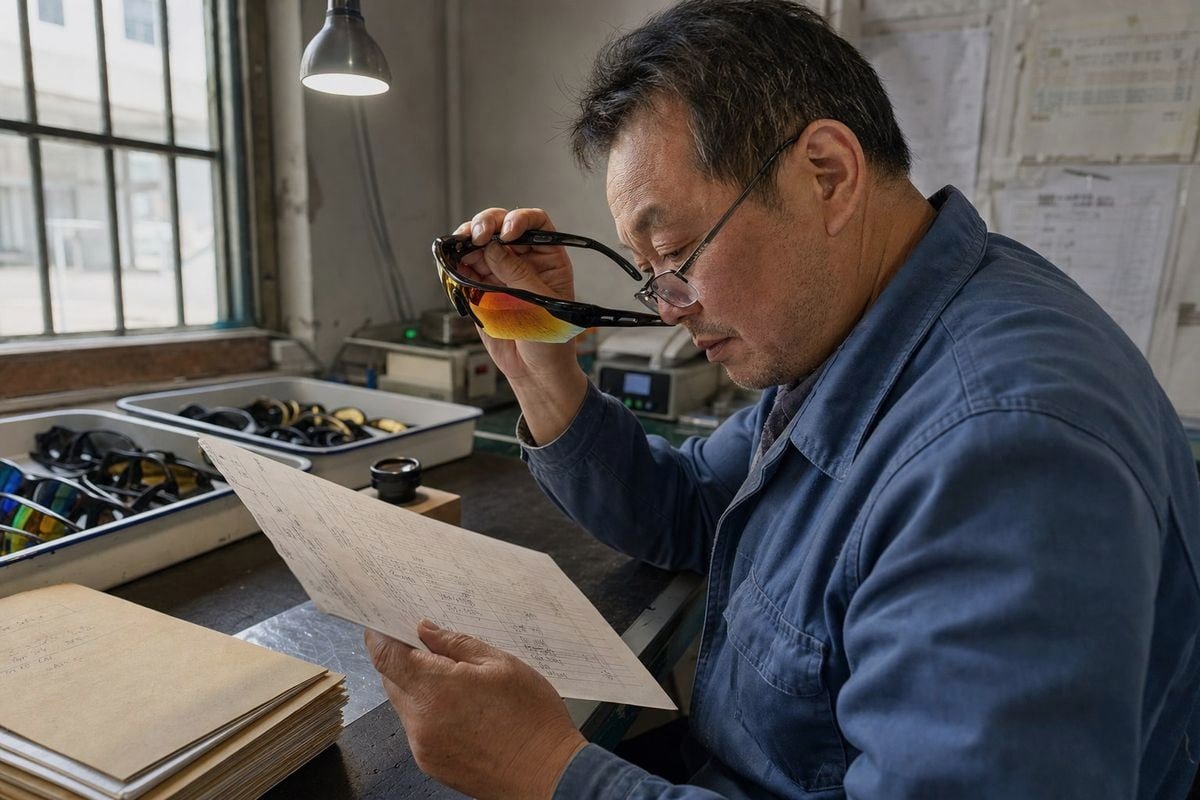
The rule sounds simple, but the execution trips up many importers. EU law does not set one central language rule. Instead, each member state decides which language is acceptable on its territory. France requires French. Germany requires German. Some smaller markets accept English in limited cases, but for consumer products aimed at children, local language is the safe and expected route.
Practical approaches we see working
There are three common strategies, and each has a cost profile:
- Multilingual leaflet. One folded insert covers six to ten languages. This is the most common approach for pan-EU distribution. Print cost stays low, but the leaflet gets dense.
- Market-specific packaging. Separate SKUs per country. Cleaner presentation, but higher minimum order quantities and inventory complexity.
- Core languages plus stickers. A base pack in major languages, with compliant stickers added for smaller markets. Flexible, but stickering must be done carefully to stay legal.
For most of our EU clients, we produce a multilingual insert as part of our OEM packaging service. The client's Authorized Representative 6 or importer usually confirms the final language list, because they carry legal responsibility for correct labeling in each market. We then handle user manual translation checks against the approved master text, so the safety warnings say the same thing in every language.
One caution from experience: machine-translated warnings are a genuine liability. A mistranslated "not for direct solar observation" warning on a children's product is the kind of detail a market surveillance authority will notice. Budget for professional translation once, then reuse the text across seasons and styles.
What documents should I request from my manufacturer to prove EU compliance before importing?
Early in my export career, I assumed buyers only wanted test reports. A Dutch procurement manager corrected me with a full document checklist, and we have built our compliance pack around that structure ever since.
Request the EU Declaration of Conformity, EN ISO 12312-1 test reports, REACH and nickel release test results, technical file documentation or a summary, labeling and packaging artwork proofs, and confirmation of your Authorized Representative arrangement before shipping any kids' sunglasses to the EU.

As the importer, you become legally responsible the moment the goods enter the EU. That is why the paperwork must be in your hands before the container leaves China, not after. Here is the document pack I advise every buyer to demand.
The essential compliance pack
| Documento | O que prova | When to request it |
|---|---|---|
| EU Declaration of Conformity | Legal self-declaration under PPE Regulation 2016/425 | Before signing the PO |
| EN ISO 12312-1 test report | Optical quality, UV absorption, mechanical strength | Before signing the PO |
| UV filter category confirmation | Correct category 0–4 classification per lens spec | At sample approval |
| REACH / nickel release reports | Chemical safety of frames, lenses, and metal parts | Before signing the PO |
| Technical file summary | Design drawings, risk assessment, production controls | Before first shipment |
| Label and packaging proofs | CE mark placement, warnings, languages, GPSR contact | At artwork approval |
| Authorized Representative details | An EU-based contact if you have no EU entity | Before market entry |
Two nuances buyers often miss
First, the full technical file stays with the manufacturer, and authorities can demand it for ten years. You do not need to hold every page, but you should confirm in writing that your supplier maintains it and will release it to authorities on request. We give clients that written commitment as standard.
Second, watch for an emerging trend: QR codes on packaging linking to digital compliance documents. Some retailers already ask for this as an early form of the Digital Product Passport 7. It simplifies checks for customs and buyers alike, and we can integrate it into custom packaging on request.
If a supplier cannot produce this pack, the risk is not abstract. It is a rejected shipment, a forced recall, or a marketplace delisting, all under your brand name.
Conclusão
Verifying CE marking, warning labels, and language compliance protects your brand and the children wearing your product. Check documents early, demand proof, and partner with a factory that treats compliance as standard practice.
Notas de rodapé
1. Official EU legal text defining the PPE regulation cited for sunglasses conformity. ↩︎
2. ISO is the standards body publishing the sunglasses safety standard referenced. ↩︎
3. Background on toy safety testing standards relevant to decorative kids’ eyewear features. ↩︎
4. Official European Commission overview of REACH chemical regulations and industry obligations. ↩︎
5. European Commission page detailing GPSR obligations including electronic contact points. ↩︎
6. Explains the role of an authorized representative in EU regulatory compliance. ↩︎
7. Background concept on the emerging EU digital compliance documentation trend. ↩︎
Mais Artigos que Você Pode Gostar

1 de agosto de 2026
A Fábrica Deve Lidar com a Embalagem e Rotulagem de Óculos de Sol Infantis, ou Usar um Fornecedor Designado?

1 de agosto de 2026
Armazém Próprio vs. Envio Direto do Fornecedor: Qual Reduz os Custos de Devolução para Marcas de Óculos de Sol Infantis?

1 de agosto de 2026
Armazém Direto ao Porto ou Estiva no Exterior: Qual Economiza Mais no Envio de Óculos de Sol Infantis?
Procurando um Parceiro Confiável em Óculos Infantis?
Explore mais de 800 estilos prontos e suporte completo OEM/ODM adaptado à sua marca.
Entre em Contato English
  Español de México
  Deutsch
  Français
  日本語
日本語  العربية
  Português do Brasil