How to Track Production Progress for Kids’ Sunglasses to Spot Delays Early?

Learning to track production progress for kids’ sunglasses saved several of our buyers’ seasons. A delayed order missed once cost a brand its entire summer launch window — and nobody saw it coming until the ship date passed.
To track production progress for kids’ sunglasses, break the order into stage-level milestones, assign each a due date and owner, require weekly factory updates with photos, monitor planned-versus-actual output, and watch early metrics like WIP aging and inspection pass rates to catch delays before shipment slips.
That answer sounds simple. In practice, most buyers only track one date — the final delivery date. Below, I will show you the full system, stage by stage.
What Production Milestones Should I Monitor to Catch Delays Before They Escalate?
A procurement manager from Australia once asked me why her order "suddenly" slipped two weeks. When we reviewed it together, the delay had actually started at raw material procurement 1 — a month earlier. Our team now maps every order for buyers so nothing hides.
Monitor eight milestones: pre-production sample approval, raw material procurement, frame molding, lens production, assembly, printing and branding, quality control inspections plus compliance testing, and packing with despatch. Each milestone needs its own due date, status, and responsible person — not just one final deadline.
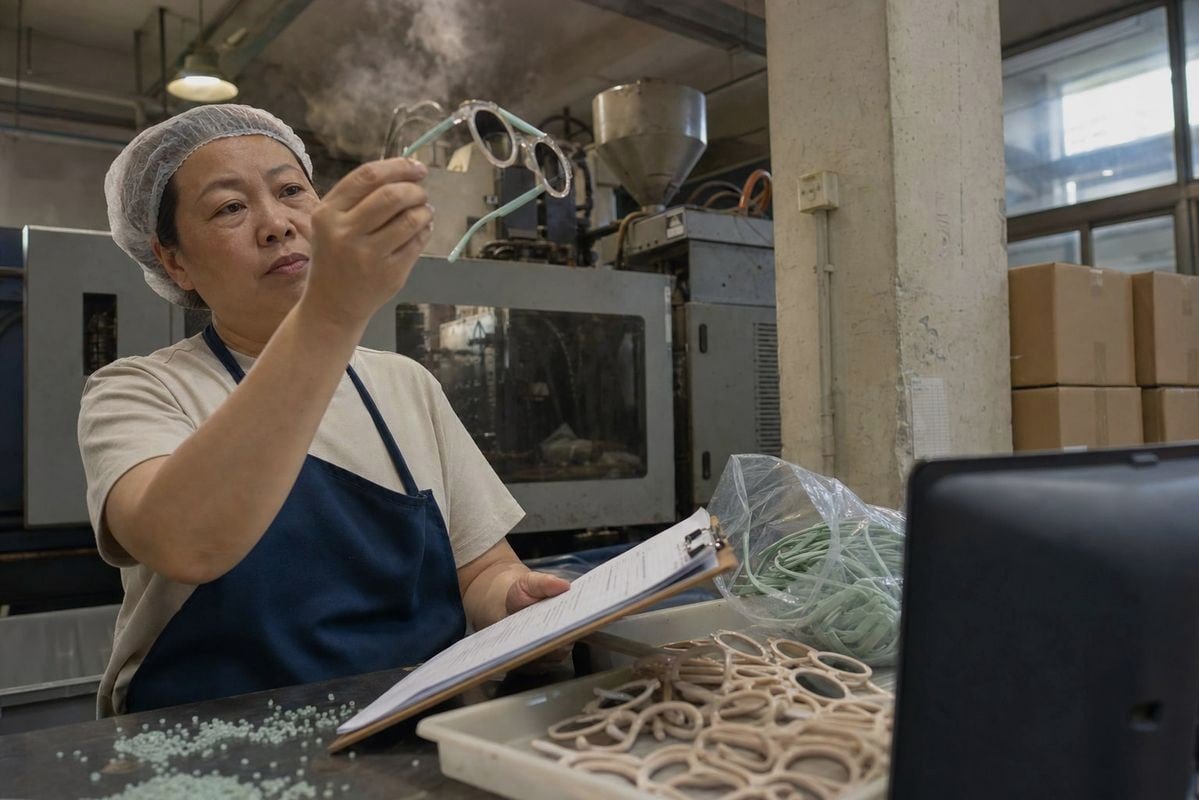
A single delivery date is a black box. Milestones turn that black box into a visible pipeline. In our Taizhou workshop, we schedule every kids' sunglasses order — whether it is a flexible TPEE 2 wraparound style or a TR90 round frame 3 with pastel temples — against a stage-by-stage production calendar 4 before the deposit is even paid. That calendar becomes the shared reference point between us and the buyer.
The Milestones That Matter Most
Here is the milestone structure I recommend to every brand we work with:
| Marco | What to Confirm | Typical Delay Risk |
|---|---|---|
| Pre-production sample (PPS) | Approved within 48 hours of receipt | Slow buyer feedback creates idle time |
| Raw material procurement | TPEE/TR90 pellets and lens blanks physically in the factory | Sub-supplier lead time slippage |
| Frame molding | First-pass yield on molded frames | Mold adjustments, material batch issues |
| Lens production | UV400/polarized lenses cut and coated | Coating rework, gradient mirror defects |
| Assembly | Hinges, temples, lens fitting complete | Component shortages |
| Printing/branding | Logo placement and color approved | Artwork approval turnaround |
| QC + compliance | In-line checks and CPSIA testes de conformidade 5 passed | Lab holds, rework loops |
| Packing + despatch | Cases, pouches, and cartons synchronized | Packaging sub-supplier bottleneck |
Two milestones deserve special attention for children's eyewear. First, compliance testing sits on the critical path method 6 for kids' products — a lab hold can freeze a finished order. Second, packaging synchronization is a classic hidden trap. We have seen finished sunglasses sit for a week because kid-sized cases from a sub-supplier arrived late. Track peripheral items with the same discipline you apply to frames and lenses.
Also verify materials before production officially starts. If the raw material is not physically on-site on day one, your timeline is already fiction.
Which Reporting Tools Can Help Me Stay Updated on My Factory's Progress?
There is a real trade-off we weigh with every new client: lightweight tracking is fast to set up, while system-based tracking gives deeper supply chain visibility. Our factory supports both, because a startup brand ordering from our 800 existing styles has different needs than a large optical distributor.
Use a layered toolkit: a shared production schedule spreadsheet for milestones, a kanban-style board for order status, weekly photo or video reports from the factory floor, and batch-level work-order tracking. Larger buyers can add ERP dashboards and barcode-based WIP scanning for real-time visibility.
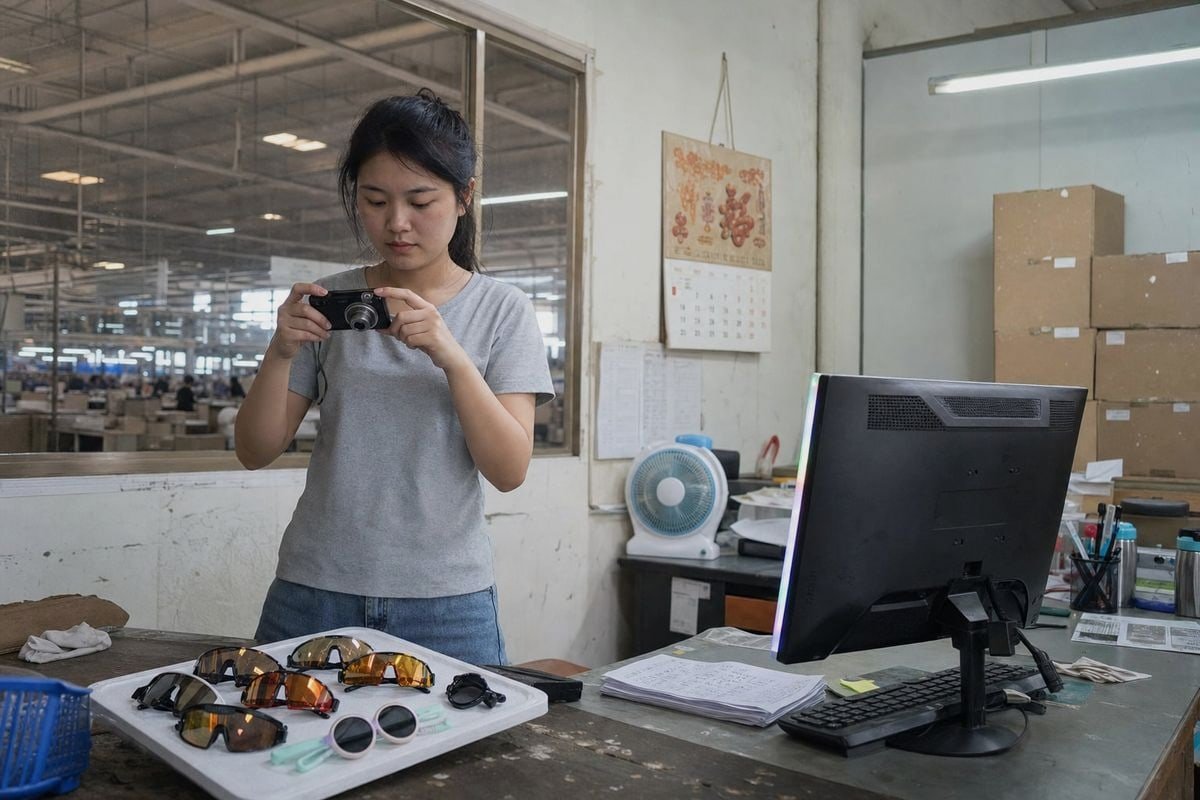
Tools sit on a spectrum. The right choice depends on your order volume, your risk tolerance, and how much traceability children's products demand in your market.
Matching the Tool to Your Order Size
| Tool Type | Melhor Para | What It Shows | Limitation |
|---|---|---|---|
| Shared spreadsheet / template | Small brands, first orders | Planned vs actual dates, stage status | Manual updates, easy to neglect |
| Kanban board (e.g., ClickUp-style) | Growing brands, multiple SKUs | Orders by stage: planning, production, QC, despatch | No batch-level detail |
| Photo/video milestone reports | Every buyer, every order | Physical proof of progress on the floor | Snapshot only, not continuous |
| ERP/MRP with barcode scans | High-volume importers, distributors | Real-time WIP, batch traceability, alerts | Cost, training, factory integration |
Why Visual Proof Belongs in Every Toolkit
Whatever system you choose, insist on visual documentation. When we run a batch of mirrored-lens sport shields or two-tone TR90 round frames, we send buyers photos at molding, assembly, and packing. A photo of your actual batch on the line is worth ten status emails. It confirms the order is physically moving, and it doubles as an informal quality check — buyers have caught color deviations from mid-production photos before a single unit was packed.
Batch tracking also serves compliance. Because children's sunglasses need tracking labels 7 that link back to production date, location, and batch or run number, your delay-tracking data and your recall-readiness data can share the same structure. One work-order number per batch does both jobs. Add factory audit reports to your annual routine, and your visibility covers both the order and the partner behind it.
How Often Should I Request Status Updates from My Manufacturer?
Early in our fifteen years of eyewear production, a European buyer taught me something useful: he asked for updates on a fixed weekly rhythm, not "when something happens." Orders with scheduled updates almost never surprised him. We adopted that cadence as our default.
Request a structured update weekly during normal production, with photos or videos at each major milestone. Increase to twice weekly or daily during critical phases — sample approval, compliance testing, and final pre-shipment inspection — and require immediate notification within 24 hours of any issue.
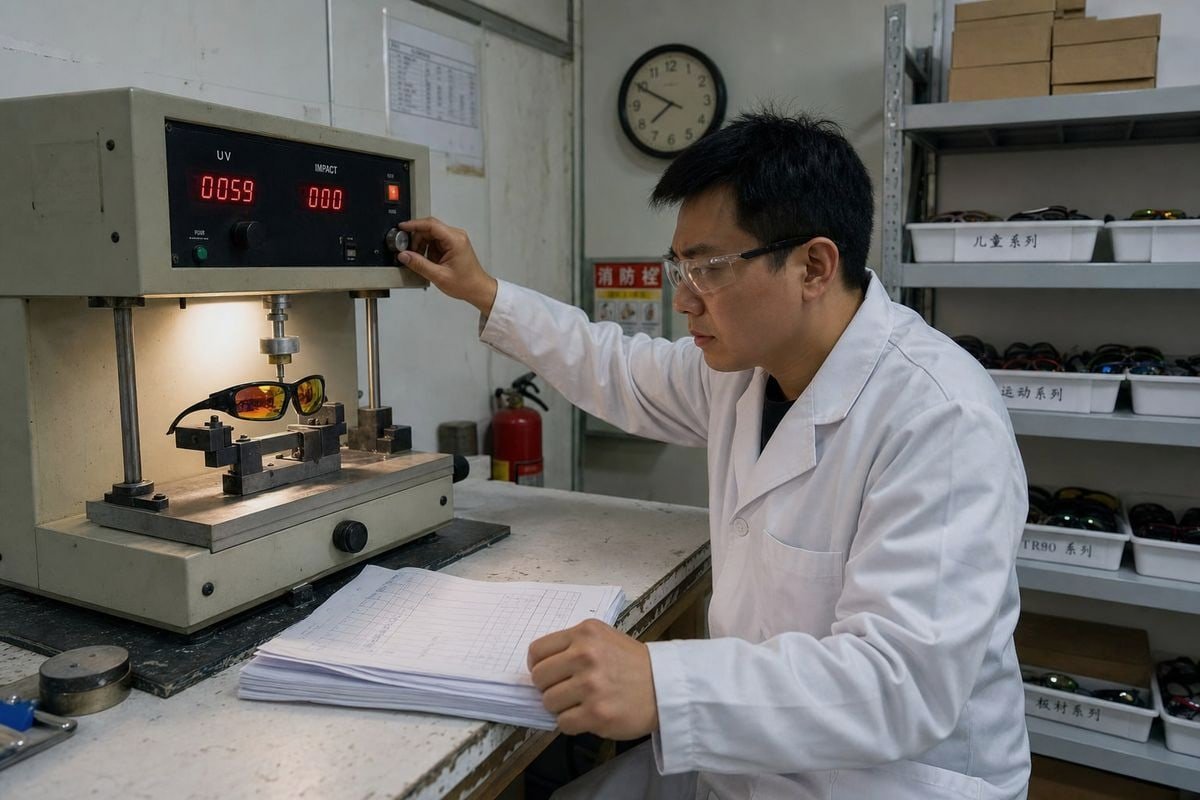
Frequency matters less than structure. A vague "everything is on track" email every day is worth less than one precise weekly report. So define what each update must contain, then set the rhythm.
A Practical Update Cadence
- Before deposit: a full production calendar with milestone dates. If a factory cannot produce this, that itself is a warning.
- Weekly during production: current stage, planned vs actual output, photos of work in progress, and any flagged risks.
- At each milestone: confirmation with visual proof — molded frames, coated lenses, assembled units, printed logos, packed cartons.
- Within 48 hours on your side: pre-production sample feedback. Idle time waiting for buyer approval is one of the most common self-inflicted delays. We hold molding capacity for approved samples, but that slot cannot wait forever.
- During QC and despatch: daily updates covering inspection results, pre-shipment inspection booking, and logistics bottleneck management once cartons leave the factory.
Why the 48-Hour Feedback Window Matters
Manufacturing lead times are usually quoted assuming zero idle days. Every day a sample sits unapproved in a buyer's inbox pushes the whole critical path back — and the factory may reassign your production slot in the meantime. We tell buyers plainly: fast feedback protects your own delivery date more than any pressure applied later ever will.
One more point. Update quality is a signal in itself. If reports arrive on time and answer your questions directly, the order is likely healthy. If they slow down or become vague, dig deeper immediately.
What Warning Signs Indicate My Kids' Sunglasses Order Might Be Falling Behind Schedule?
During one peak-summer season, our planning team flagged an internal order because WIP had aged four days at the lens-fitting station — twice the normal cycle time. We caught it, added a shift, and shipped on time. The buyer never felt the wobble. That is what early-warning metrics do.
Watch for tasks stuck in progress beyond normal cycle time, actual output falling below plan, aging WIP at one station, rising inspection failure or rework rates, slower or vaguer factory updates, missing milestone photos, and component or packaging shortages. Any one of these signals drift before the ship date moves.
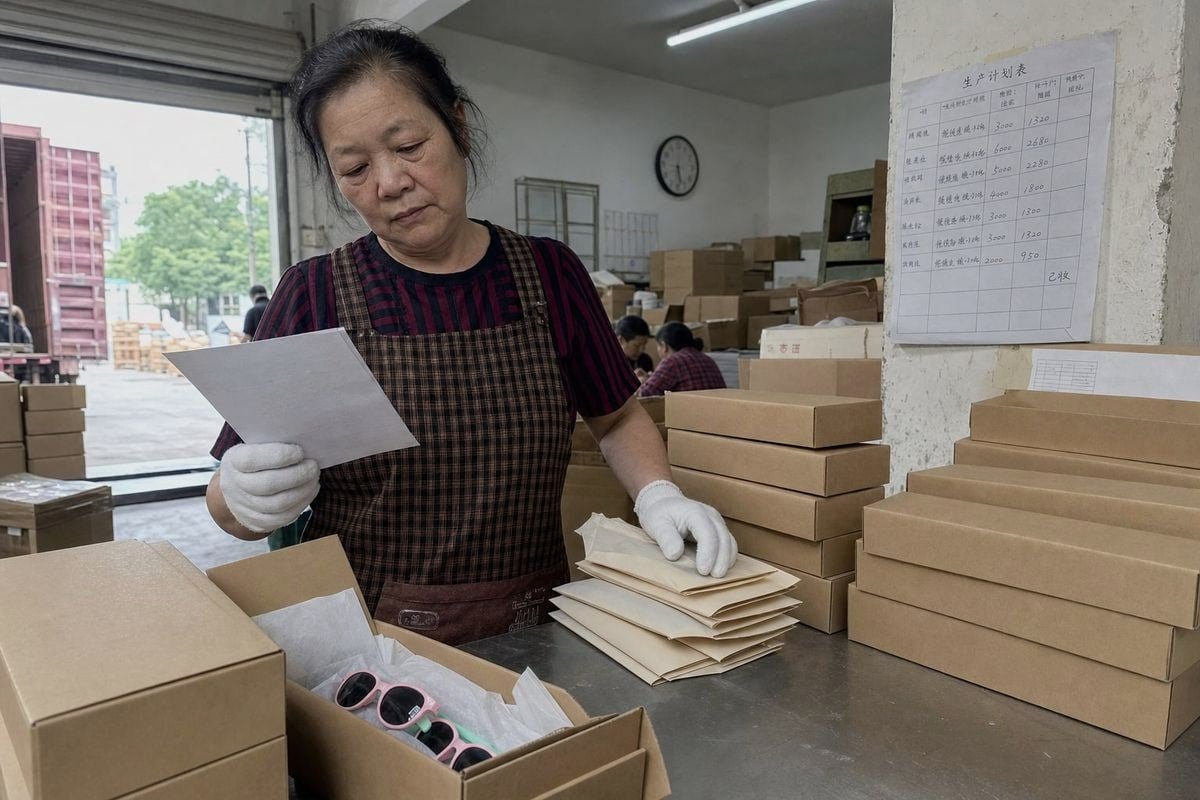
Delays rarely announce themselves. They accumulate quietly at individual stations while the promised delivery date stays unchanged on paper. Your job is to read the small signals.
The Metrics That Predict Slippage
Track a small, consistent set of numbers. A few metrics reviewed every week beat a dozen reviewed occasionally.
| Métrica | What It Reveals | Red Flag Threshold |
|---|---|---|
| Planned vs actual output | Whether daily production matches the schedule | Actual below plan two reports in a row |
| WIP aging | How long batches sit at one station | Any stage exceeding its normal cycle time |
| First-pass yield (molding) | Material or mold problems, especially with flexible TPEE | Falling yield on early runs |
| Inspection pass/fail rate | Quality drift that forces rework loops | Rising rework on the same defect |
| Approval turnaround time | Idle days waiting on samples or artwork | Anything beyond 48 hours |
| Component arrival status | Sub-supplier sync for lenses, hinges, cases | Missing items at production start |
Behavioral Warning Signs
Numbers are only half the picture. Watch factory behavior too. Milestone updates that shrink from detailed reports to one-line replies. Photos that stop arriving. A "small issue" mentioned casually without a recovery plan. Requests to shift the pre-shipment inspection date. During peak summer demand, also ask directly about capacity and seasonal labor — smaller kids' orders sometimes get deprioritized behind larger adult eyewear runs at factories that treat children's styles as a sideline. Because children's eyewear is our core business, we schedule kids' orders as first-class work, but not every factory does.
First-pass yield deserves special mention for kids' materials. Flexible TPEE behaves differently from rigid plastics in molding. If early yield is low, volume production will run slower than quoted — a delay you can predict weeks in advance if you ask for the number.
Conclusão
A missed summer window can sink a kids' brand's whole season. Milestone tracking, weekly visual updates, and a few honest metrics turn factory black boxes into visible, controllable pipelines.
Notas de rodapé
1. Overview of the strategic process for acquiring goods and materials within a supply chain. ↩︎
2. Technical overview of thermoplastic elastomers used for flexible children’s eyewear frames. ↩︎
3. Technical specifications for the high-performance transparent polyamide material commonly used in eyewear frames. ↩︎
4. Authoritative academic overview of manufacturing scheduling, resource allocation, and production planning. ↩︎
5. Official US government requirements for safety testing and certification of children’s products. ↩︎
6. Project management technique used to identify the sequence of essential stages in manufacturing. ↩︎
7. Official guidelines for mandatory tracking labels required on children’s products for safety and traceability. ↩︎
Mais Artigos que Você Pode Gostar
1 de agosto de 2026
A Fábrica Deve Lidar com a Embalagem e Rotulagem de Óculos de Sol Infantis, ou Usar um Fornecedor Designado?
1 de agosto de 2026
Armazém Próprio vs. Envio Direto do Fornecedor: Qual Reduz os Custos de Devolução para Marcas de Óculos de Sol Infantis?

1 de agosto de 2026
Armazém Direto ao Porto ou Estiva no Exterior: Qual Economiza Mais no Envio de Óculos de Sol Infantis?
Procurando um Parceiro Confiável em Óculos Infantis?
Explore mais de 800 estilos prontos e suporte completo OEM/ODM adaptado à sua marca.
Entre em Contato English
  Español de México
  Deutsch
  Français
  日本語
日本語  العربية
  Português do Brasil