How to Tell If Kids’ Sunglasses Have Real Polarized Lenses?
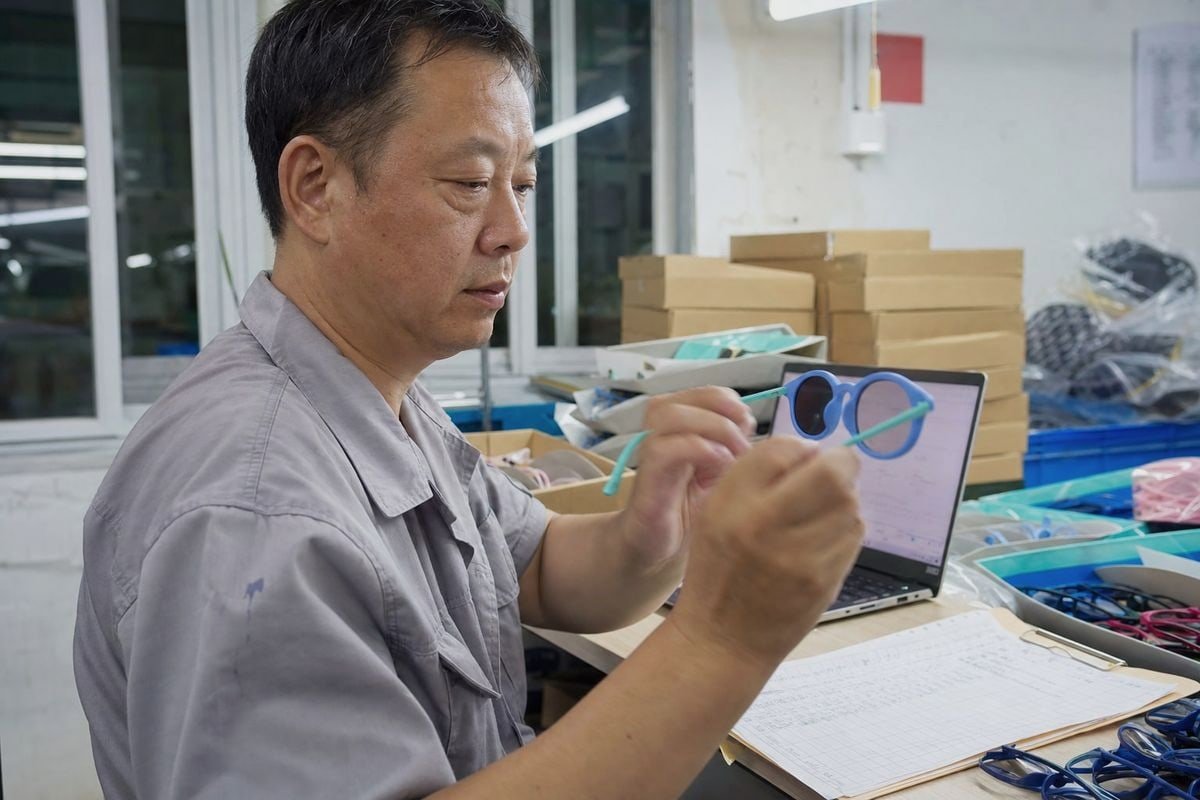
Fake polarized lenses in kids’ sunglasses are everywhere. On our production line in Taizhou, we regularly test competitor samples that buyers send us — and many fail the most basic polarization check. If your brand ships mislabeled lenses, you risk returns, bad reviews, and lost trust. The good news: verifying real polarization takes less than a minute, and I will show you exactly how.
To tell if kids’ sunglasses have real polarized lenses, hold them in front of an LCD screen and rotate them 90 degrees. Genuine polarized lenses will turn dark or nearly black at certain angles. Non-polarized lenses show no change, no matter how dark or mirrored they look.
That is the short answer. But there is more you should know. Below, I walk through the home tests, why certificates matter, the UV400 trap, and how to pick a supplier who never cuts corners.
What Simple Tests Can I Use to Check for Real Polarization at Home?
A buyer from Australia once sent us three "polarized" samples she bought online for comparison. In our QC room, two of the three failed the rotation test within seconds.
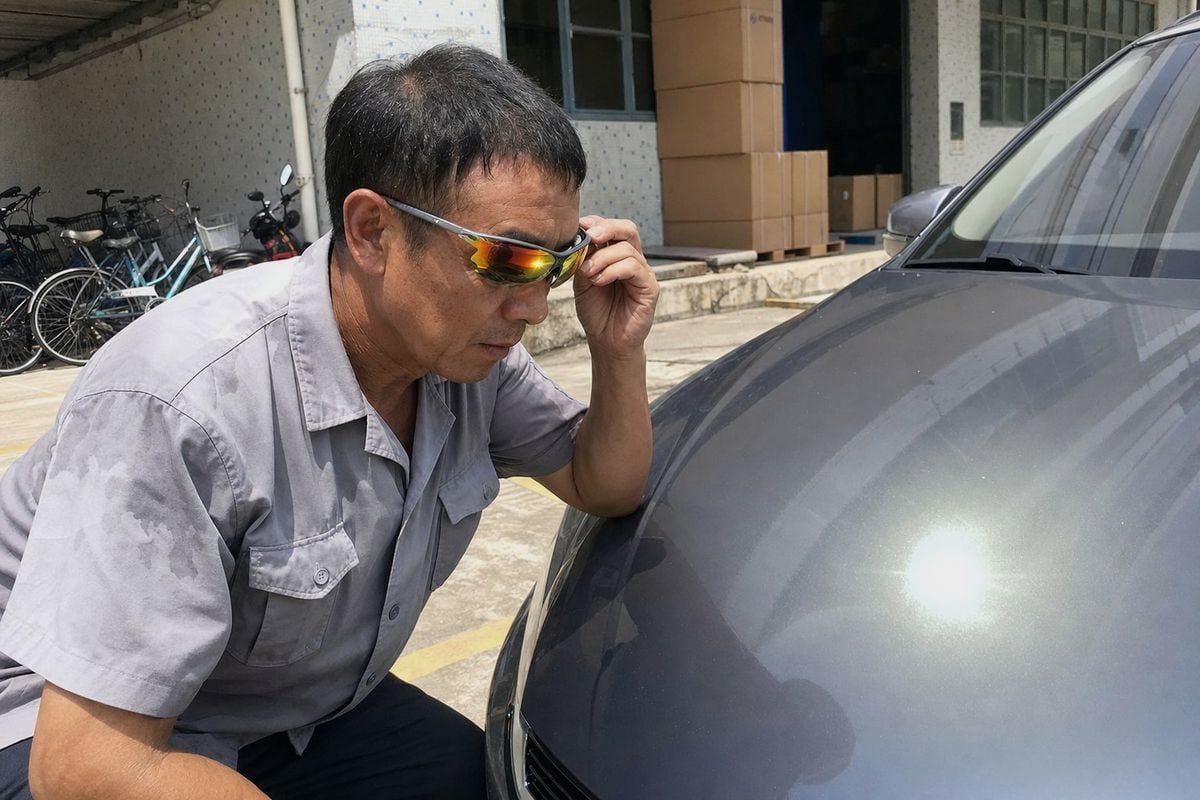
The fastest home test is the LCD screen test: hold the lenses in front of a phone or laptop screen and rotate them 90 degrees. Real polarized lenses darken dramatically. You can confirm with the crossed-lenses test or by checking glare reduction on water or a car hood.
Polarized lenses work by blocking horizontal light waves — the reflected glare that bounces off flat surfaces like water, pavement, and windshields. Every real polarized lens has a fixed polarization axis 1. When you rotate that axis against another polarizer, such as an LCD screen, the two filters cross and block light transmission almost completely. That predictable blackout is your proof.
The Three Core Tests, Ranked
| Teste | Como Fazer | What Real Polarization Shows |
|---|---|---|
| LCD screen test | Hold lenses in front of a bright phone or laptop screen, rotate slowly to 90° | Screen turns very dark or black at certain angles |
| Crossed-lenses test | Hold a known polarized pair behind the suspect pair, rotate one pair 90° | The overlapping area becomes nearly opaque |
| Reflective-surface test | Look at glare on water, glass, or a shiny car hood and tilt the glasses | Harsh glare visibly fades at some angles |
Bonus Checks Worth Trying
There are a few extra tricks I like. Look through the lenses at a car's tempered rear window — real polarized lenses reveal hidden checkerboard stress patterns. Hold clear rigid plastic between the lens and a light source, and you may see rainbow stress colors invisible to the naked eye. You can also look at the sky at a 90-degree angle from the sun; a true polarizer deepens the blue noticeably.
One important note: do not judge by appearance. A dark tint, a mirror coating, or a bold color proves nothing. Kids' sunglasses are often sold with playful marketing, and parents assume "polarized" from the look alone. Only the angle-based tests give you real evidence. If your result is ambiguous, an optical shop can confirm polarization with a photometer.
Why Does My Supplier's Lens Certificate Matter If I Can't Verify It Myself?
In fifteen years of exporting children's eyewear to more than twenty countries, I have learned one thing: a certificate is only as trustworthy as the factory behind it.
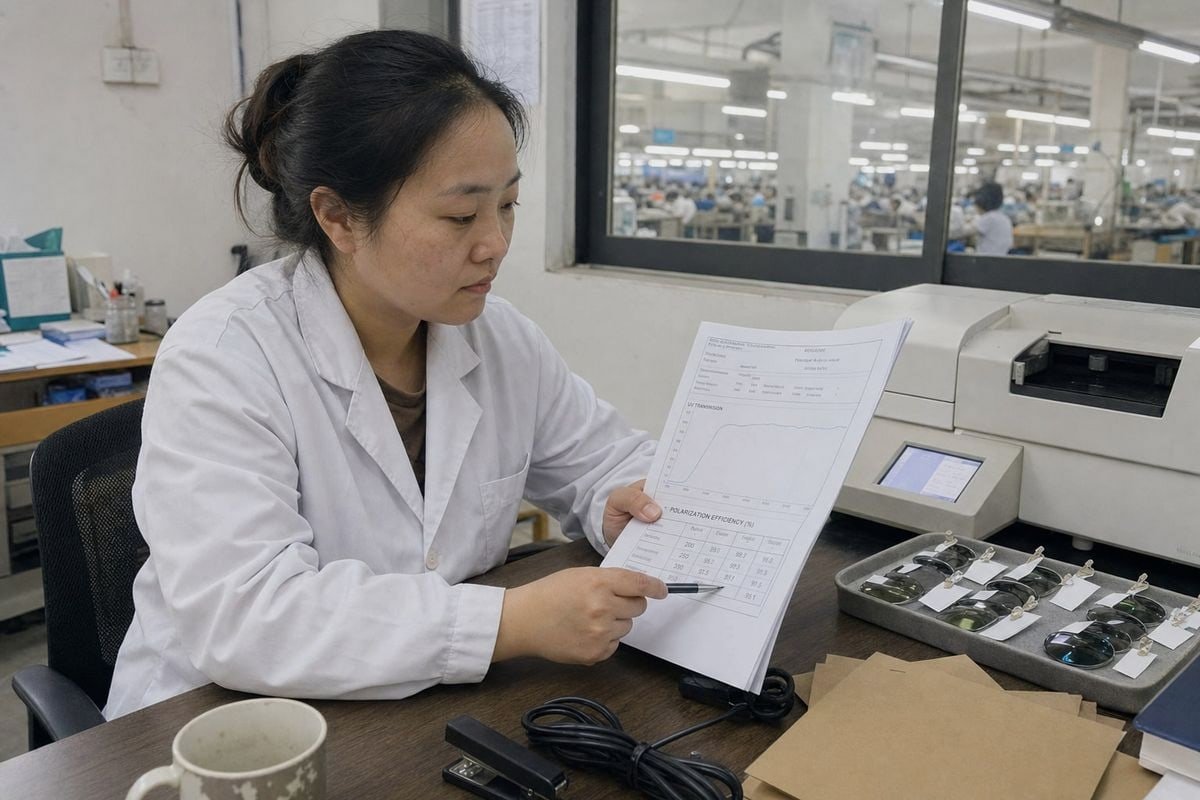
Lens certificates matter because they document batch-level testing you cannot replicate at home — spectral UV transmission, impact resistance, and optical quality. Home tests confirm polarization exists; certificates confirm it meets standards consistently across thousands of units, which protects your brand legally and commercially.
Here is the honest truth. The LCD screen test tells you one sample is polarized. It tells you nothing about the other 4,999 pieces in your shipment. It also tells you nothing about UV400 protection, lens distortion, or impact safety — the things regulators and parents actually care about most for children.
What a Proper Certificate Package Should Cover
A serious kids' eyewear supplier should be able to provide documentation for each of these areas:
- UV transmission testing. Confirms the lenses block wavelengths up to 400nm. This is the baseline for children's eye safety.
- Polarization efficiency. Measures how effectively the film blocks horizontal light waves, not just whether it darkens on a screen.
- Optical clarity and distortion. Ruim TAC lenses 2 can pass a polarization test yet still cause eye strain in daily wear.
- Material and mechanical safety. For children's frames, flexibility and impact behavior matter as much as the lens itself.
Quando realizamos pedidos de OEM 3 at our factory, batch testing is part of the workflow, not an afterthought. Our team pulls samples from production runs, checks the polarization axis alignment, and verifies visual clarity before packing. Why axis alignment? Because a polarized film glued in at the wrong angle still passes a casual screen test but performs poorly against real-world glare.
So even if you cannot personally read a spectrophotometer report, requesting certificates does two things. It filters out suppliers who cannot produce them quickly, and it gives you a paper trail if a retail partner or customs authority ever questions your product claims. Cross-check the certificate with your own screen test on arrival samples. When both align, you can sell with confidence.
Can Fake Polarized Lenses Still Pass Basic UV400 Protection Standards?
A tricky question — and one a Japanese buyer asked me directly during a factory visit last year. The answer surprised her.
Yes. UV400 protection and polarization are completely separate features. A cheap non-polarized lens can block UV rays perfectly, and a lens falsely labeled polarized may still pass UV testing. Passing UV400 proves eye safety, but it never proves glare reduction or genuine polarization.
This is where many brands get misled. proteção UV 4 comes from absorbers built into or coated onto the lens material. Polarization comes from a separate laminated film — usually inside a TAC lens sandwich — that filters horizontal light waves. One does not require the other. A supplier can honestly pass a UV400 lab test while dishonestly printing "polarized" on the hang tag.
UV400 vs. Polarization: What Each One Actually Does
| Característica | Proteção UV400 | Real Polarization |
|---|---|---|
| Propósito | Blocks harmful UVA/UVB up to 400nm | Corta o brilho refletido de superfícies planas |
| Safety role | Essential for children's eye health | Comfort feature, reduces eye strain |
| Como funciona | UV absorbers in the lens material | Polarizing film with a fixed axis |
| Can it be clear? | Yes, even clear lenses can be UV400 | No, polarized lenses always reduce light transmission |
| Home verification | Not possible without a UV meter | Yes, via the LCD screen test |
Why This Matters for Your Product Claims
Let me be fair to the other side. Polarization is optional. A child wearing well-fitted, non-polarized UV400 sunglasses is fully protected from UV damage. The baseline safety concern is always UV blocking plus proper fit — not glare filtering.
But the moment your packaging says "polarized," the claim must be true. Mislabeling is a legal risk 5 in the EU, Australia, and Japan, and it is a reputational risk everywhere. In our experience developing lens options for kids' brands, the honest path is simple: specify polarized TAC lenses when the use case involves water, snow, or driving-adjacent glare, and specify quality UV400 tinted lenses when budget matters more. Both are legitimate products. Only the false claim is not.
How Do I Choose a Manufacturer I Can Trust to Deliver Genuine Polarized Lenses Every Time?
The hardest lesson I learned early in my career came from a rushed order: consistency, not capability, is what separates real factories from resellers.
Choose a manufacturer with in-house production, documented QC at the lens-assembly stage, verifiable certificates, and willingness to let you test pre-shipment samples. A trustworthy factory welcomes the LCD screen test, provides batch-level polarization checks, and offers traceable materials like TAC film and TR90.
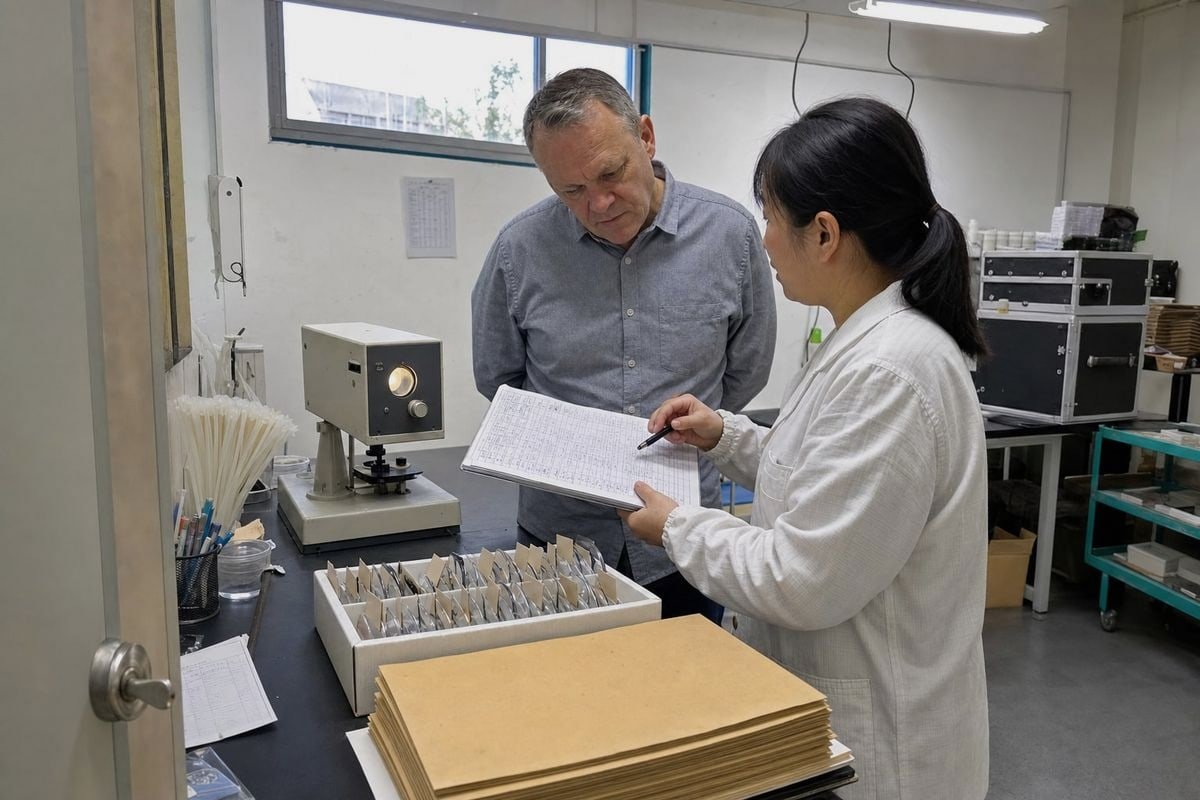
Trading companies can source polarized lenses one month and quietly substitute cheaper tinted lenses the next. A factory with its own workshop and stable supply chain has far less incentive — and far less opportunity — to swap materials mid-relationship. At our oficina gerenciada por 5S 6 with around 120 workers, every lens type is logged against the order specification, so a polarized SKU cannot silently become a non-polarized one.
A Practical Supplier Evaluation Checklist
| O que verificar | Por Que Importa | Bandeira Vermelha |
|---|---|---|
| Status de fábrica vs. trader | Factories control lens sourcing and assembly directly | Vague answers about production location |
| Sample testing policy | You should test polarization before mass production | Reluctance to send pre-production samples |
| Certificate turnaround | Real test reports exist and arrive fast | Certificates that take weeks or look recycled |
| Material transparency | TAC lenses, TR90 and TPEE frames should be specified in writing | "Polarized" claimed with no lens spec sheet |
| Existing style range | A deep catalog signals real production depth | Only a handful of generic listings |
| Kids-specific expertise | Children's frames need flexibility and safe materials, not just adult designs shrunk down | No dedicated children's line |
What Working With a Real Kids' Eyewear Factory Looks Like
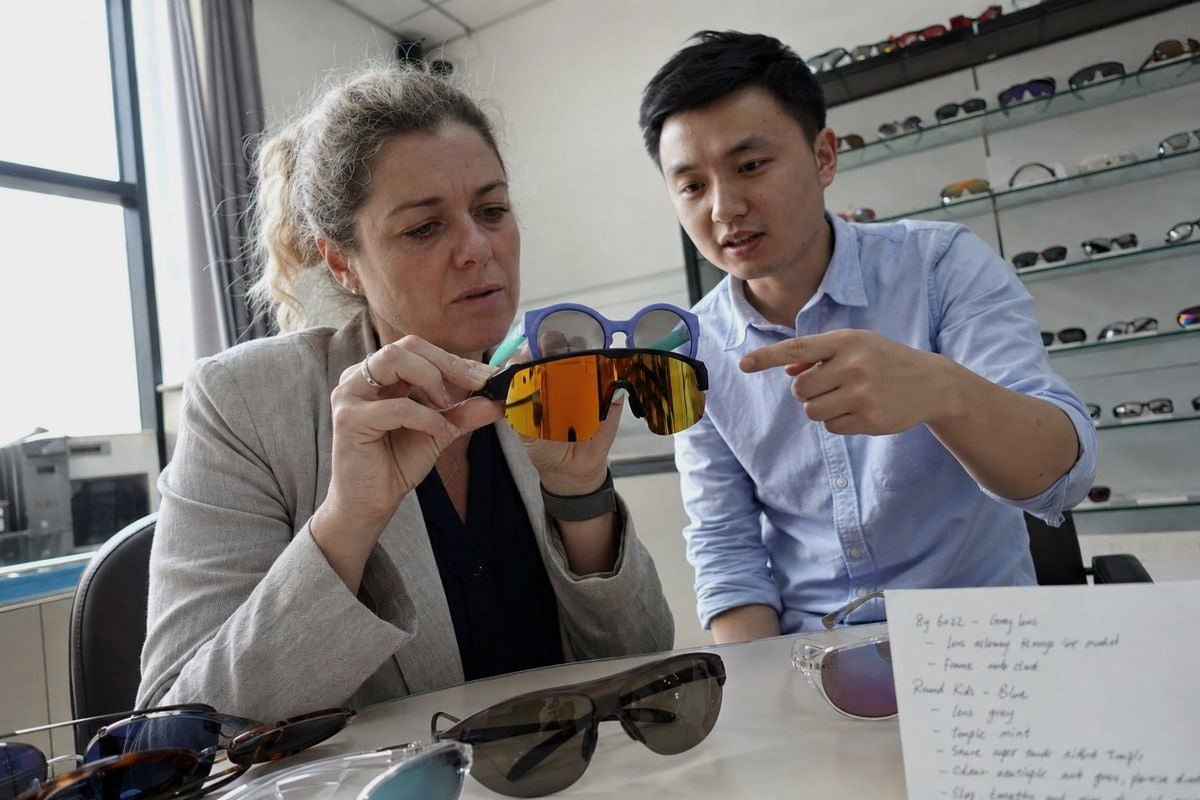
When brands come to us, they usually start by selecting from roughly 800 existing styles — sporty wraparound shields with mirrored gradient lenses, playful two-tone round frames in soft periwinkle and mint, and everything between. That lets a new brand launch without heavy mold investment. From there, our OEM/ODM team customizes colors, logos, lens options, and retail-ready packaging.
For polarized orders specifically, insist on this workflow: approve a golden sample, test it yourself with the screen test, then require the factory to test random units from the production batch before shipping. Ask how they verify the polarization axis during lens cutting. A factory that answers in detail — and pairs polarized TAC lenses with flexible, child-safe frames 7 instead of brittle plastics — is a partner. One that dodges the question is a risk.
Fit matters, too. Genuine polarized lenses in a frame that pinches or slips will still get abandoned in a backpack. We build our children's frames in flexible TR90 with soft TPEE temples precisely because visual clarity only helps a child who actually keeps the sunglasses on.
Conclusão
Fake polarization claims can quietly damage a kids' brand. Test with an LCD screen, demand certificates, separate UV400 from polarization, and partner with a factory that proves consistency — every batch, every time.
Notas de rodapé
1. Explains the physics of polarizing filters and axes central to the lens testing method. ↩︎
2. Explains the triacetate cellulose material commonly used in polarized lens construction. ↩︎
3. Background on OEM manufacturing relationships referenced in the factory workflow discussion. ↩︎
4. WHO fact sheet explains UV radiation risks, supporting the article’s UV400 safety claims. ↩︎
5. Authoritative FTC hub for truth-in-advertising and marketing regulations. ↩︎
6. Authoritative government resource explaining the 5S methodology for workplace organization. ↩︎
7. CPSC oversees children’s product safety, relevant to frame material and construction claims. ↩︎
Mais Artigos que Você Pode Gostar

Procurando um Parceiro Confiável em Óculos Infantis?
Explore mais de 800 estilos prontos e suporte completo OEM/ODM adaptado à sua marca.
Entre em Contato English
  Español de México
  Deutsch
  Français
  日本語
日本語  العربية
  Português do Brasil