How to Set a Reasonable Defect Allowance Rate for Kids’ Sunglasses Purchases?
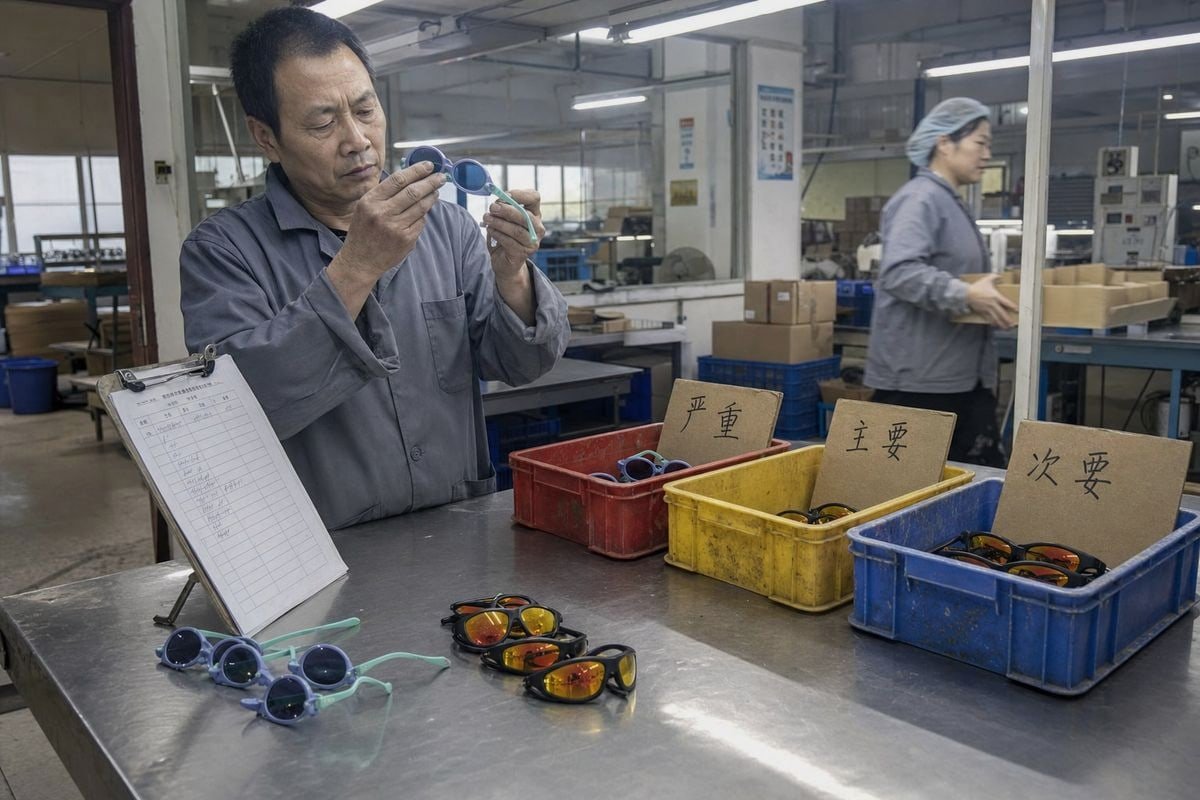
Setting a defect allowance rate for kids’ sunglasses feels like guesswork for many buyers lentes de policarbonato 1. On our production line in Taizhou, I have seen one vague number ruin whole shipments.
A reasonable defect allowance rate for kids’ sunglasses is 0% for critical defects like UV failure or choking hazards, AQL 1.0%–2.5% for major functional defects, and AQL 2.5%–4.0% for minor cosmetic flaws, adjusted by age group and price point.
Below, I will break down each threshold, show you how to verify your supplier’s standards, and explain what to write into your contract.
What Is a Reasonable Defect Rate Percentage When I Order Kids' Sunglasses in Bulk?
A buyer from Australia once asked me to promise "zero defects" across 20,000 units. I had to explain why one number cannot cover every defect type in children's eyewear.
A reasonable defect rate for bulk kids' sunglasses uses three tiers: 0% tolerance for critical safety defects, AQL 1.0%–2.5% for major defects like scratched lenses or loose hinges, and AQL 2.5%–4.0% for minor cosmetic issues such as small packaging flaws.
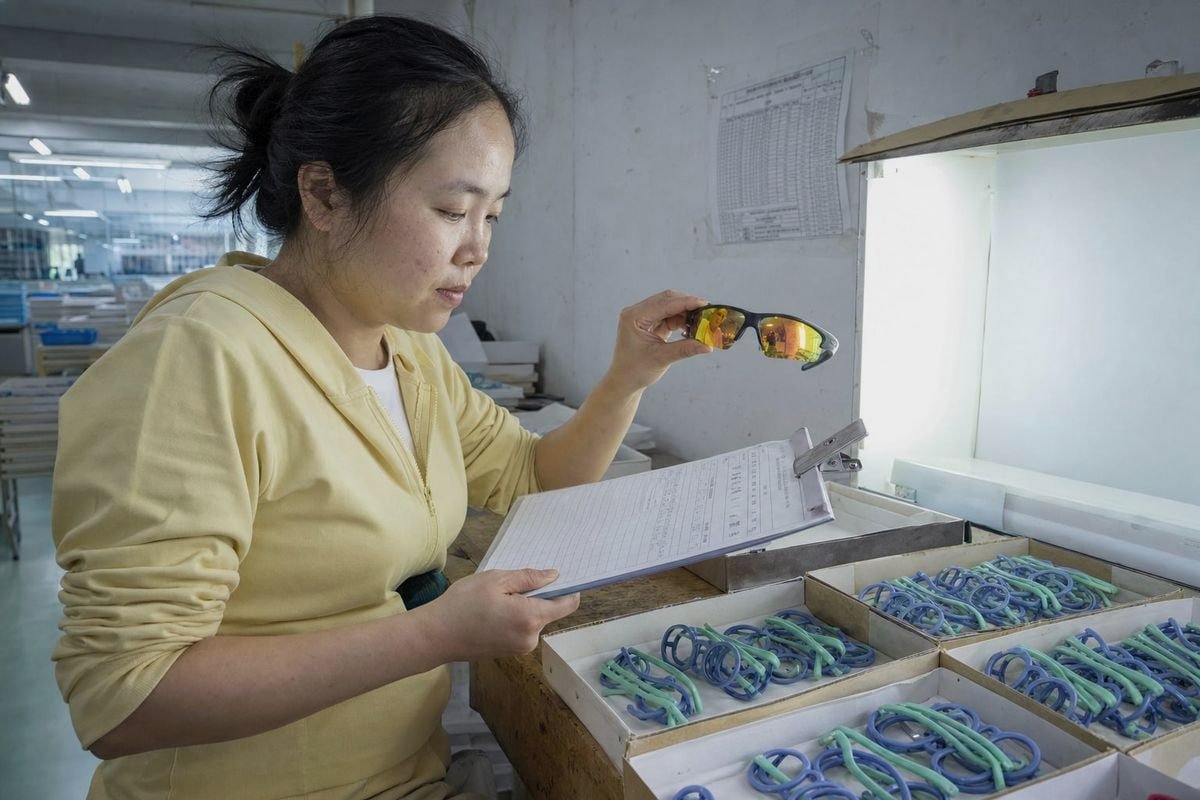
The key idea is simple. "Reasonable" does not mean one fixed number. It means a policy that matches the risk of each defect type. Kids' sunglasses are protective eyewear, not just fashion accessories. So the policy must start with safety, not cosmetics.
The Three-Tier Framework
Here is the standard breakdown we use with our own B2B clients:
| Defect Category | Recommended AQL | Examples for Kids' Sunglasses |
|---|---|---|
| Crítico | 0% (zero tolerance) | Missing or false UV400 protection, sharp edges, lens detachment, small parts that detach, missing mandatory compliance marks |
| Principal | 1.0%–2.5% | Scratched or chipped lenses, loose temple arms, warped frames, gaps between lens and frame, poor fit |
| Menor | 2.5%–4.0% | Tiny cosmetic scratches, slight print misalignment, minor packaging flaws, small finish imperfections |
When to Tighten the Standard
Not every order should use the same thresholds. In our fifteen years of making children's eyewear, we have learned that age group matters most. Sunglasses for toddlers demand near-zero tolerance for any small detachable part. A hinge screw that loosens on an eight-year-old's frame is a major defect. On a two-year-old's frame, it can be a choking hazard. That makes it critical.
For baby and toddler products, or for private-label imports where your brand carries the liability, I recommend the stricter end: critical at 0%, major at 0.65%–1.0%, and minor at 2.5%. Price point also matters. If you sell a premium product in Japan or Europe, parents expect near-flawless quality. Your defect allowance rate should reflect what your end customer will accept, not just what inspection tables allow.
How Do I Know If My Supplier's Quality Control Standards Match My Defect Allowance Expectations?
Early in our export history, a European client and our QC team used the word "major defect" to mean two different things. That mismatch cost us a week of re-inspection and taught me to align definitions first.
Verify alignment by requesting the supplier's written defect classification list, their AQL levels and inspection method, sample inspection reports from past orders, and evidence of in-process quality checks. Then compare each item against your own three-tier defect standard before placing an order.

Most disputes over defect rates are not really about defects. They are about definitions. Your supplier may honestly believe a slightly loose hinge is a minor issue. You may classify it as major. If you never compare lists before production, you will only discover the gap after the goods arrive.
Questions to Ask Before You Order
Here is the checklist I encourage buyers to run through with any factory, including ours:
- Do you have a written defect classification document for children's sunglasses specifically, not just generic eyewear?
- Which AQL levels 3 do you apply by default for critical, major, and minor defects?
- What inspection level do you use? General Inspection Level II 4 is the common default for consumer goods.
- Can you share anonymized inspection reports from recent shipments?
- How do you test UV protection, hinge durability, and frame flexibility during production, not just at final inspection?
- Do you accept third-party inspection companies on-site before shipment?
A factory that hesitates on any of these questions is telling you something. In our oficina gerenciada por 5S 5, we keep defect classification sheets at each station, because workers cannot sort defects they cannot define. Ask to see how classification happens on the line, not just in a sales presentation.
Compare Definitions Side by Side
Build a simple comparison table with your supplier before the first purchase order. List ten common defects, then have both sides classify each one. Where you disagree, negotiate and document the final classification. This one-hour exercise prevents most post-shipment arguments. It also reveals whether the factory understands that children's eyewear sits closer to protective equipment than to fashion accessories.
What Should I Include in My Purchase Contract to Protect Myself Against Excessive Defects?
One lesson from years of OEM work with brands across 20+ countries: a friendly relationship is not a substitute for a clear contract. The best partnerships we have are built on the most specific quality clauses.
Your purchase contract should specify AQL levels per defect category, a written defect classification list, the inspection standard and sample size method, pre-shipment inspection rights, remedies for failed lots such as rework or refund, and a claims window for defects found after delivery.
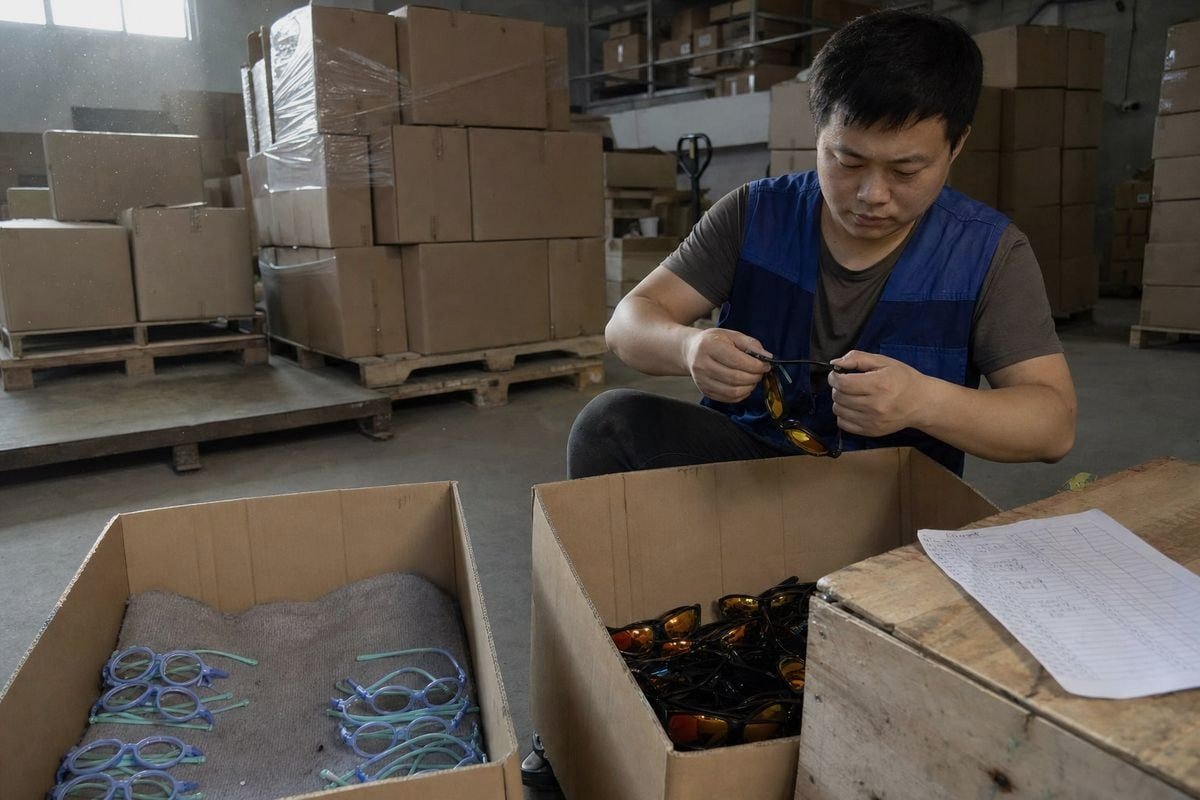
A defect allowance rate only protects you if it is enforceable. That means the number must live inside your contract, with clear definitions and clear consequences. Vague phrases like "good quality" or "industry standard" give you almost nothing in a dispute.
Essential Contract Clauses
| Cláusula | What It Should State | Por Que Importa |
|---|---|---|
| Defect classification | Attached list defining critical, major, and minor defects for this product | Removes ambiguity in inspection results |
| AQL thresholds | 0% critical, agreed AQL for major and minor, per ANSI/ASQ Z1.4 or ISO 2859-1 | Makes accept/reject decisions objective |
| Inspection rights | Buyer or third party may inspect before shipment at agreed notice | Catches problems before goods leave the factory |
| Compliance documents | UV400 test reports and required market certifications per shipment | Protects against false protection claims |
| Failed-lot remedies | Rework, replacement, discount, or refund options, with timelines | Defines what happens when a lot fails |
| Post-delivery claims | Window for reporting defects found after arrival, with photo evidence | Covers defects that pass sampling but appear in market |
Do Not Forget the Remedies
Many buyers write the thresholds but skip the consequences. Then a lot fails inspection, and both sides argue about what happens next. Your contract should answer that in advance. Can the factory rework and re-inspect? Who pays for the second inspection? Is there a deadline so a failed lot does not delay your season? At our factory, we prefer contracts that spell out rework timelines, because clarity protects the schedule for both sides. Also include a clause covering post-sale monitoring. If return data shows lenses popping out under normal wear, you want the right to raise a claim and to tighten future inspection terms.
How Can I Reduce Defect Rates Before Shipment Instead of Just Accepting an Allowance?
The trade-off I weigh every week is this: catching a defect at final inspection costs ten times more than preventing it at the injection molding stage. Prevention is always the cheaper path.
Reduce defect rates before shipment by choosing durable materials like TR90 and TPEE, approving a golden sample, requiring in-process inspections at molding and assembly, running stress tests on hinges and frames, booking third-party pre-shipment inspection, and tracking supplier defect data over time.
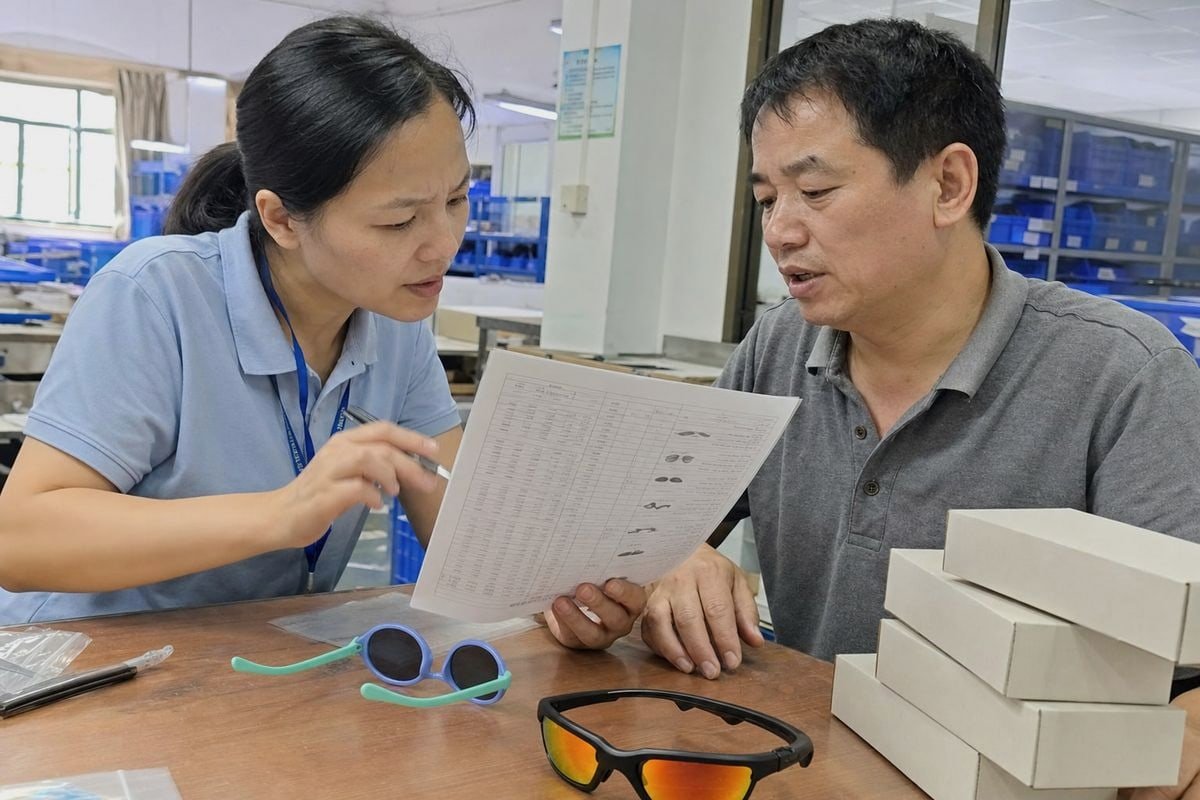
An allowance rate is a safety net, not a strategy. The smartest buyers we work with treat AQL as the last line of defense and put most of their effort earlier in the process. Here is where defects actually get prevented.
Start With Materials and Design
Many defects are designed in before production even starts. Brittle plastics crack at the hinge. Rigid frames snap when a child bends them. This is why we build most of our children's frames in TR90 e TPEE 6. Flexible materials bend instead of breaking, which cuts breakage defects at the source and makes the product safer on a child's face. If your current samples fail flex tests, changing the material often solves more than tightening the AQL ever will.
Build Checkpoints Into Production
| Estágio | Prevention Action | Defects It Catches Early |
|---|---|---|
| Sample approval | Sign a golden sample with agreed tolerances | Fit, color, lens quality disputes |
| Injection molding | First-article inspection each shift | Warped frames, micro-bubbles, short shots |
| Lens fitting | Check lens-to-frame gaps and UV batch reports | Loose lenses, UV protection failures |
| Assembly | Hinge torque and pull tests on samples per batch | Loose arms, weak hinges, detachable parts |
| Packing | Final random AQL inspection before sealing cartons | Cosmetic flaws, wrong packaging, mixed colors |
Use Data to Improve Each Order
Track every supplier’s defect history by order. If a factory delivers consistently clean lots, you can relax inspection frequency slightly and reward reliability. If defect counts trend upward, tighten the AQL for the next order and ask for a corrective action plan. Watch seasonal patterns too. Humid manufacturing months can raise micro-bubble rates in lentes de policarbonato 7, so a temporarily tightened inspection during those periods is sensible. Finally, feed your return and complaint data back into the loop. In-market failures reveal defects that sampling missed, and they should reshape both your allowance rate and your supplier's process.
Conclusão
A vague defect allowance invites disputes and risks children's safety. Set 0% for critical, tiered AQLs for the rest, contract it clearly, and prevent defects at the source.
Notas de rodapé
1. Background on polycarbonate material properties relevant to micro-bubble defect discussion. ↩︎
2. WHO reference on UV radiation risks supports why UV protection testing matters for children. ↩︎
3. Explains the statistical sampling standard underlying the AQL thresholds discussed throughout the article. ↩︎
4. Explains AQL sampling levels referenced when defining inspection rigor for defect classification. ↩︎
5. Explains the workplace organization system referenced for sorting defects at each production station. ↩︎
6. Background on flexible thermoplastics used to reduce breakage defects in eyewear frames. ↩︎
7. Background on the lens material prone to micro-bubble defects during humid manufacturing periods. ↩︎
Mais Artigos que Você Pode Gostar

1 de agosto de 2026
A Fábrica Deve Lidar com a Embalagem e Rotulagem de Óculos de Sol Infantis, ou Usar um Fornecedor Designado?

1 de agosto de 2026
Armazém Próprio vs. Envio Direto do Fornecedor: Qual Reduz os Custos de Devolução para Marcas de Óculos de Sol Infantis?

1 de agosto de 2026
Armazém Direto ao Porto ou Estiva no Exterior: Qual Economiza Mais no Envio de Óculos de Sol Infantis?
Procurando um Parceiro Confiável em Óculos Infantis?
Explore mais de 800 estilos prontos e suporte completo OEM/ODM adaptado à sua marca.
Entre em Contato English
  Español de México
  Deutsch
  Français
  日本語
日本語  العربية
  Português do Brasil