How to Negotiate Return Arrangements for Slow-Moving Kids’ Sunglasses with Suppliers?

Negotiating return arrangements for slow-moving kids’ sunglasses is a question our factory hears constantly. Unsold seasonal stock ties up cash, clogs shelves, and quietly erodes profit until you act.
Negotiate return arrangements for slow-moving kids’ sunglasses by requesting written return authorization, a defined return window, tiered credit terms, and a seasonal swap option. Offer forecasting data, larger future orders, or a modest restocking fee in exchange for the supplier’s flexibility.
Below, I break down what to ask before agreeing to anything, how to negotiate without souring the relationship, which arrangements are realistic, and how to protect your margins.
What Should I Ask My Supplier Before Agreeing to a Return or Buyback Policy?
A buyer from Australia once emailed our Taizhou team asking to "just return" 3,000 unsold frames — with no return authorization, no condition standard, and no agreed remedy. We had to start the conversation from zero.
Before agreeing to a return or buyback policy, ask about the return window, return authorization requirements, condition and packaging standards, who pays freight, whether the remedy is credit or refund, restocking fees, and whether unsold stock is treated differently from defective goods.

The single biggest mistake I see buyers make is assuming a wholesale return policy works like a retail one. It does not. Retail eyewear returns often allow 14 to 30 days for a change of mind. Wholesale supply agreements 1 can prohibit returns entirely except for defective or recalled items. Some contracts only allow returns with prior authorization, within 90 days, in original packaging, and in resaleable condition. You need to know exactly where your supplier sits on that spectrum before you sign — not after your stock stalls.
The Questions That Actually Matter
In our fifteen years of exporting children's eyewear, these are the questions that separate prepared buyers from frustrated ones:
| Pergunta a Fazer | Por Que Importa |
|---|---|
| Is a return authorization (RA) number required? | Goods shipped back without one are often refused outright. |
| What is the return window? | 30, 90, or 180 days changes your whole clearance timeline. |
| What condition standard applies? | Missing cases, tags, or packaging can void the credit. |
| Who pays return freight and bears transit loss? | Reverse logistics on lightweight frames still adds up fast. |
| Is the remedy cash, a credit memo, or exchange? | Most suppliers strongly prefer credit or swap over refunds. |
| Is there a restocking fee, and how much? | Fees of 10–20% are common and directly hit your margin. |
| Are unsold goods treated differently from defects? | Almost always yes — negotiate the two tracks separately. |
One more point from our side of the table. Defective goods are our responsibility, and we handle them under quality-control procedures 2. Slow movers are a market-risk question, so they sit in a different conversation. Buyers who understand that distinction upfront negotiate far better terms, because they ask for the right thing in the right lane.
How Can I Negotiate Fair Return Terms Without Damaging My Supplier Relationship?
There is a real trade-off we weigh every time a buyer asks for return rights: reverse-logistics cost and resale risk on our side, versus inventory risk on theirs. Good negotiations acknowledge both sides openly.
Negotiate fair return terms by leading with sell-through data, not complaints, and by offering something in exchange — larger opening orders, better forecasts, or earlier replenishment commitments. Frame returns as shared risk management, request tiered terms, and put every concession in writing.
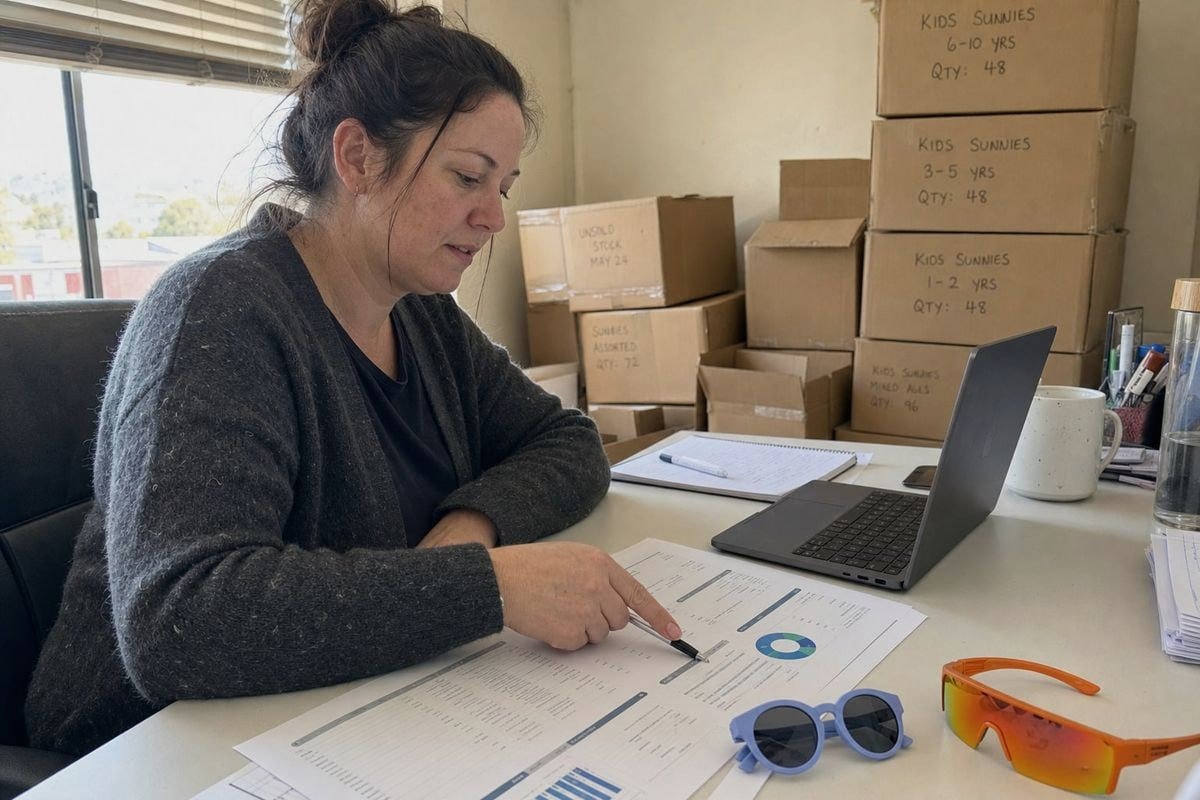
Strong vendor relationship management 3 is not about squeezing the hardest. It is about making your supplier's risk smaller so they can say yes. When a buyer approaches us with SKU-level sell-through reports and a credible clearance plan, the conversation changes instantly. We can see they run disciplined deadstock management, and that discipline is exactly what earns flexibility.
Lead with Data, Not Emotion
Before you email your supplier, pull your numbers. Identify which styles, colors, and sizes are underperforming. Calculate your inventory turnover ratio 4 for the category. A buyer who says "our periwinkle round frames turned 1.2 times this season versus 4.0 for the wraparound shield styles" gets taken seriously. A buyer who says "these aren't selling, take them back" does not.
Trade Value for Flexibility
Suppliers rarely give return rights away. They trade them. Here is what you can put on the table:
- A larger opening order or a firm reorder commitment for next season.
- Shared forecasting data so the factory can plan production more accurately.
- Acceptance of a reasonable restocking fee, typically 10–20%, to offset handling costs.
- High-quality marketing assets — lifestyle photography or user-generated content — traded for partial buyback credit.
- Exclusive distribution commitments or tighter, more predictable payment terms.
Time Your Ask
Annual renewal discussions 5 are the natural moment to revisit terms. Policies change, and renegotiation is easier at review time than mid-crisis. From our experience with buyers across 20+ countries, the ones who raise return terms calmly at contract renewal — rather than in a panic in late September — keep both better terms and better relationships.
What Return Arrangements Are Realistic for Slow-Moving Kids' Sunglasses Styles?
Last spring, a European kids' brand asked our sales team to take back an entire season of unsold TPEE frames for cash. We could not do that. But we could — and did — structure a seasonal swap into fresher colorways.
Realistic arrangements include seasonal swaps into next season's styles, stock rotation between slow and fast SKUs, credit memos against future orders, pre-approved return baskets capped at a percentage of the order, markdown allowances, sell-through guarantees, and consignment inventory for high-risk new styles.

Kids' sunglasses are fashion plus protection. Demand is seasonal, size-sensitive, and prone to color misfires. A mint-teal round frame that flies in one market can sit dead in another. Because of that, the realistic arrangements are almost never full cash refunds. They are structured exchanges that keep value moving. Here is how the common models compare:
| Arrangement | Como Funciona | Supplier Acceptance | Melhor Para |
|---|---|---|---|
| Seasonal swap | End-of-season return exchanged for next season's styles | Alto | Trend-driven colorways |
| Stock rotation | Slow SKUs swapped for evergreen or faster styles | Alto | Multi-line orders |
| Credit memo | Unsold value offset against future purchases | Alto | Parcerias contínuas |
| Pre-approved return basket | Return capped at, say, 10–15% of order value | Médio | Buyers with volume commitments |
| Markdown allowance | Partial credit offsets your clearance discounts | Médio | Stock you can still sell locally |
| Sell-through guarantee | Automatic return trigger if targets miss within ~90 days | Medium-Low | New, untested styles |
| Consignment inventory | Supplier retains ownership; you provide shelf space | Baixo | High-risk launches only |
| Geo-transfer | Supplier redirects stock to a region where the style trends | Baixo | Suppliers with wide networks |
Why Our Catalog Model Reduces the Problem Upfront
One reason we maintain roughly 800 existing styles at our factory is precisely this risk. Buyers can test small quantities across proven designs — sporty wraparound shields with mirrored gradient lenses, soft two-tone round frames in flexible TPEE — without heavy mold investment. Smart SKU rationalization 6 at the ordering stage prevents most deadstock before any return clause is ever needed. Some buyers also raise a circular angle: reclaiming plastic materials for recycling 7 in exchange for future order discounts. It is worth asking about, though logistics costs often limit it in practice.
How Do I Protect My Margins When Negotiating Returns on Unsold Inventory?
A lesson our export team learned early: a generous return clause is never free. Buyers who won broad return rights usually paid for them somewhere else — higher unit prices, stricter minimums, or heavier packaging requirements.
Protect your margins by modeling the total cost of each return option — restocking fees, return freight, packaging compliance, and credit-versus-cash differences — before agreeing. Cap return percentages, negotiate fee reductions in writing, and prefer credit memos that offset orders you would place anyway.
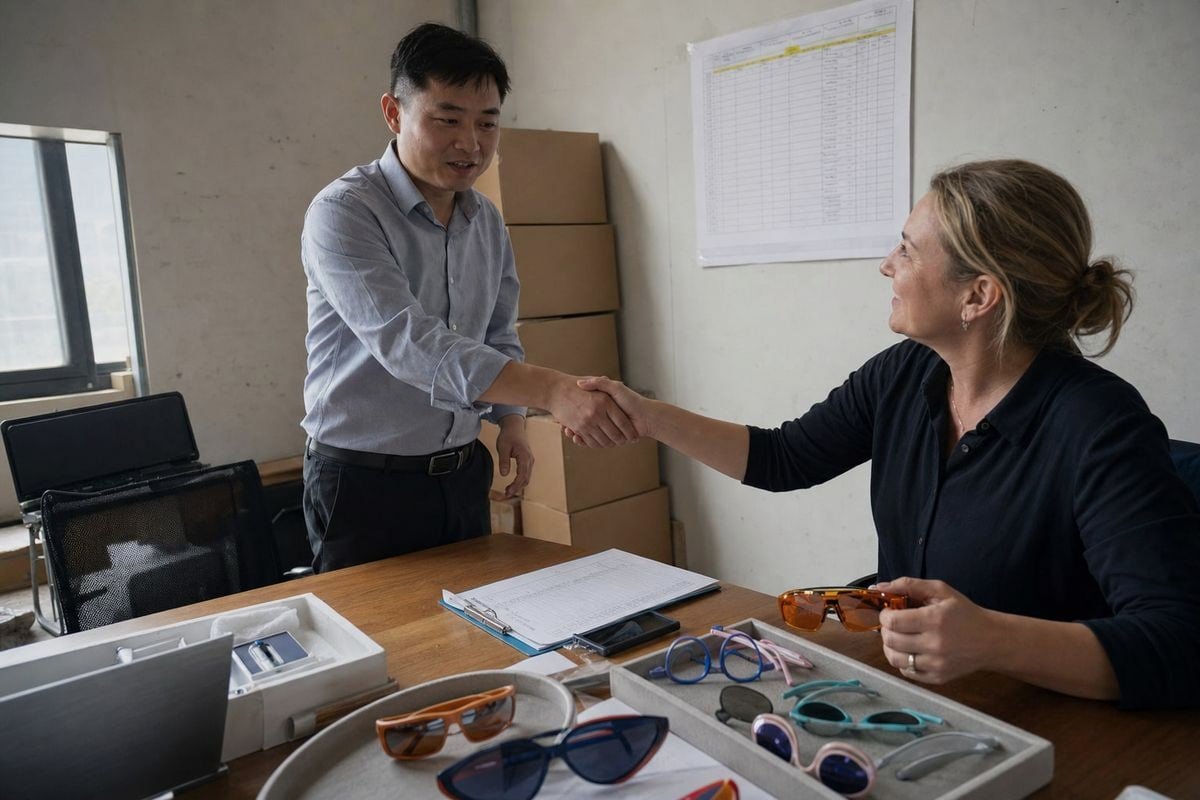
Think of a good return clause as an inventory-insurance policy. Like any insurance, it has a premium. Your job is to make sure the premium costs less than the risk it covers. That means running the numbers on every option before you sign, not after your seasonal inventory liquidation is already underway.
Model the True Cost of Each Path
Compare what you actually recover under each scenario for, say, $10,000 of unsold stock:
| Option | Typical Recovery | Hidden Costs | Margin Impact |
|---|---|---|---|
| Return with 15% restocking fee | ~85% in credit | Return freight, repackaging labor | Moderate, predictable |
| Credit memo against next order | 100% of value, in credit | Cash stays tied up until reorder | Low, if you reorder anyway |
| Markdown allowance | 30–50% subsidy on discounts | You still handle the clearance sale | Moderate, keeps stock moving |
| Deep clearance alone | 40–60% of retail | Brand perception, shelf space | High, but frees cash fast |
| Write-off | 0% | Disposal cost | Severe — the outcome to avoid |
Guard the Fine Print
Condition standards quietly destroy recovery value. If frames come back without cases, tags, or original packaging, the credit shrinks or vanishes. Train your warehouse team to preserve retail-ready packaging on slow movers. Also cap your exposure: a pre-approved return basket of 10–15% of order value gives you real protection without pricing pressure. Finally, document everything. Every RA number, every fee waiver, every buy-back agreement clause — in writing, in the contract or a signed amendment. Verbal courtesies are discretionary. Written terms are enforceable. From our side of hundreds of B2B shipments, the buyers who never lose margin to disputes are the ones whose paperwork was airtight from day one.
Conclusão
Slow stock drains cash quietly, and panic makes it worse. Negotiate structured return arrangements early — data-led, written, and traded fairly — and unsold kids' sunglasses become a manageable, shared risk.
Notas de rodapé
1. WTO provides context on international trade agreement norms governing wholesale supply contracts. ↩︎
2. Authoritative .gov source explaining ISO quality management standards and system implementation. ↩︎
3. Wikipedia background on managing supplier partnerships supports the negotiation strategy discussed. ↩︎
4. Wikipedia explains this metric buyers use to justify return negotiations with sell-through data. ↩︎
5. Alibaba’s B2B marketplace illustrates common contract renewal cycles among wholesale suppliers. ↩︎
6. Wikipedia explains SKU management concepts underlying deadstock prevention strategies mentioned. ↩︎
7. EPA explains materials recycling practices relevant to reclaiming unsold plastic eyewear frames. ↩︎
Mais Artigos que Você Pode Gostar

1 de agosto de 2026
A Fábrica Deve Lidar com a Embalagem e Rotulagem de Óculos de Sol Infantis, ou Usar um Fornecedor Designado?

1 de agosto de 2026
Armazém Próprio vs. Envio Direto do Fornecedor: Qual Reduz os Custos de Devolução para Marcas de Óculos de Sol Infantis?

1 de agosto de 2026
Armazém Direto ao Porto ou Estiva no Exterior: Qual Economiza Mais no Envio de Óculos de Sol Infantis?
Procurando um Parceiro Confiável em Óculos Infantis?
Explore mais de 800 estilos prontos e suporte completo OEM/ODM adaptado à sua marca.
Entre em Contato English
  Español de México
  Deutsch
  Français
  日本語
日本語  العربية
  Português do Brasil