Como Negociar Direitos Exclusivos para Óculos de Sol Infantis de Marca Compartilhada de Fornecedores Chineses?
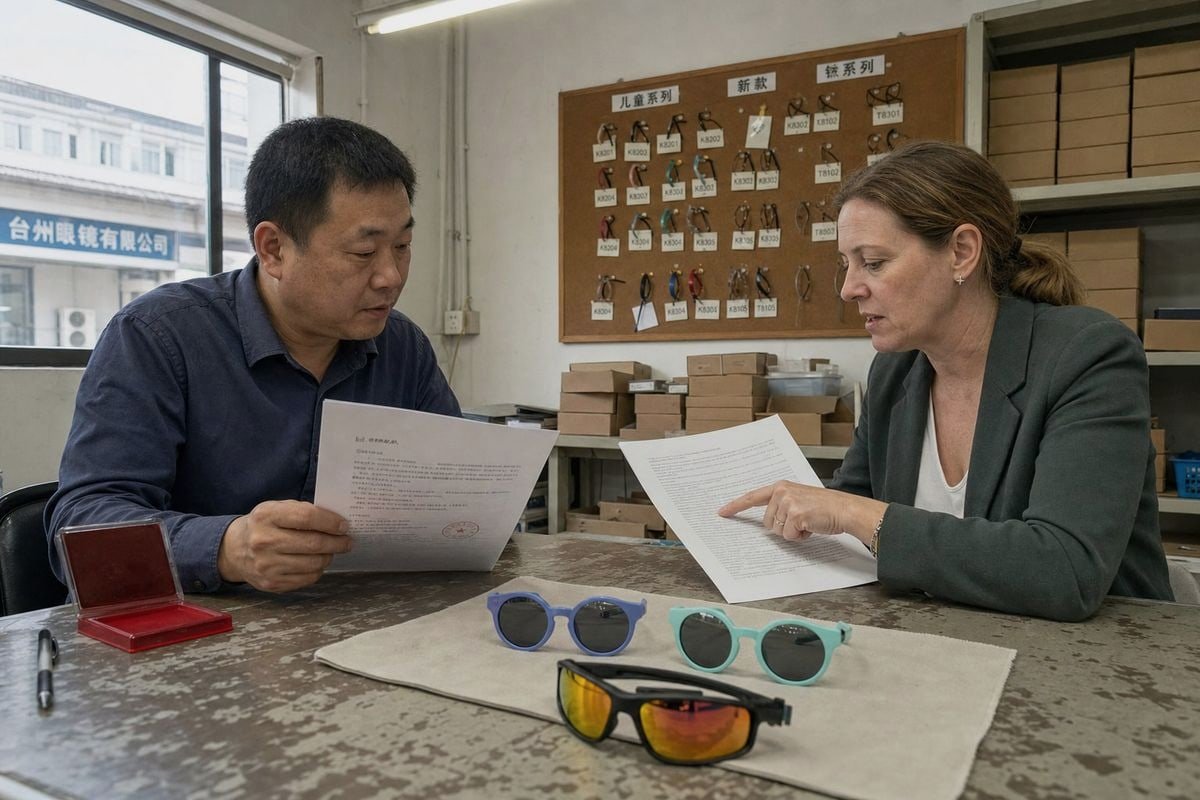
Negociar direitos exclusivos para óculos de sol infantis de marca compartilhada pode parecer unilateral. Em nossa linha de produção em Taizhou, vi compradores perderem designs simplesmente porque sua ’exclusividade“ nunca foi definida.
Para negociar direitos exclusivos para óculos de sol infantis de marca compartilhada, defina com precisão o escopo do produto, território e canal, vincule a exclusividade a metas de compra cumulativas, assine um acordo NNN aplicável na China, registre as marcas registradas na China primeiro e garanta a propriedade do molde mais direitos de rescisão em um contrato escrito e detalhado.
Essa única frase esconde muitas partes móveis. Abaixo, divido a negociação em quatro perguntas que os compradores me fazem com mais frequência, com as alavancas exatas que discutimos na mesa da fábrica.
O que devo perguntar a um fornecedor chinês antes de solicitar direitos de distribuição exclusiva?
Uma compradora da Austrália uma vez me pediu exclusividade global em uma armação que vendíamos há seis anos. Nossa equipe teve que dizer não – mas as perguntas que ela fez em seguida foram exatamente as certas.
Antes de solicitar um Acordo de Distribuição Exclusiva, pergunte se o design é de molde aberto ou personalizado, quem é o proprietário das ferramentas, quais mercados o fornecedor já atende, quais volumes justificam a exclusividade e se a fábrica assinará um acordo NNN específico para a China cobrindo não uso e não circunvenção.
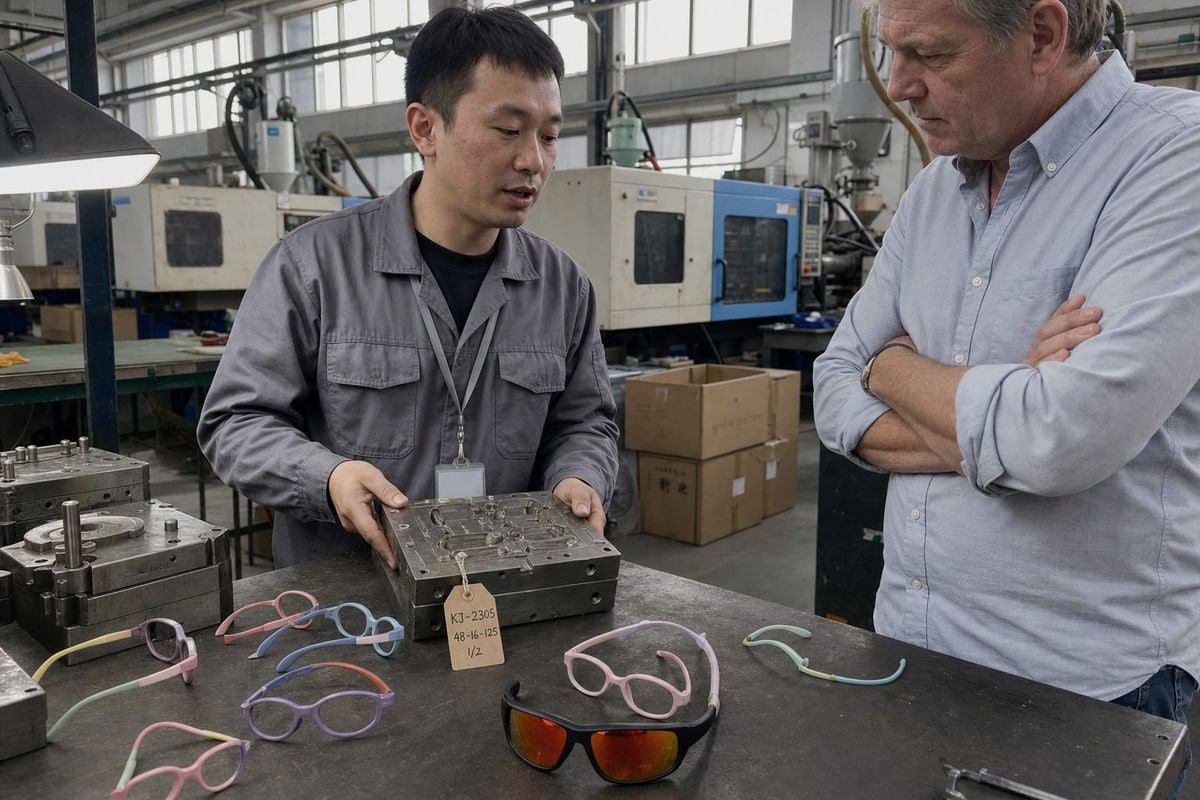
O maior erro que vejo é os compradores pedirem exclusividade antes de entenderem o que a fábrica pode realmente conceder. Em nossa oficina, produzimos cerca de 800 modelos existentes. Esses designs de molde aberto são ativos compartilhados. Nenhuma fábrica honesta pode prometer a você direitos exclusivos sobre uma armação que outros dez importadores já compram. Portanto, sua primeira pergunta deve separar o molde aberto do trabalho personalizado.
As cinco perguntas que revelam tudo
Faça estas perguntas em sua primeira conversa séria, não na quinta:
- Este modelo é de molde aberto ou podemos construir uma versão personalizada? Uma nova TR90 1 frente com hastes de TPEE, uma mistura de cores personalizada e sua embalagem de marca compartilhada cria algo que a fábrica pode genuinamente restringir.
- Quem é o proprietário dos moldes de injeção se eu pagar pela ferramental? Obtenha isso por escrito dentro do Contrato de Fabricação OEM, porque se você encomendar ferramentas personalizadas. Se você pagar por um molde, o contrato deve declarar que o design é exclusivo para você, para que a fábrica não possa vender o mesmo estilo para seu concorrente. Para estilos de molde aberto de um catálogo existente, negocie exclusividade de cores em vez disso - é mais barato e rápido. é sua alavancagem de saída.
- Para quais territórios e canais você já vende? Se o fornecedor envia uma armação semelhante para um distribuidor em seu mercado, a exclusividade territorial está morta na chegada.
- Qual volume anual torna a exclusividade valiosa para você? As fábricas pensam em horas de máquina e cronogramas de trabalhadores. Uma base de clientes restrita deve ser paga com pedidos previsíveis.
- Você assinará um acordo NNN 2 — não um Acordo de Não Divulgação ocidental, mas um documento aplicável na China cobrindo não uso e não circunvenção?
Esse último ponto é o mais importante. Um NDA padrão apenas impede o fornecedor de falar sobre seu design. Um NNN os impede de usá-lo, copiá-lo ou contorná-lo para seus clientes de varejo. Quando um comprador começa com uma solicitação de NNN, nossa equipe de vendas sabe que eles estão falando sério, e a conversa se torna mais franca imediatamente.
Confirme também as credenciais de segurança antecipadamente. Para óculos de sol infantis, pergunte sobre verificação de lente UV400 3 e se a fábrica entende Padrões de Conformidade CPSIA 4 para o mercado dos EUA. A exclusividade em um produto que falha nos testes de segurança é inútil.
Como estruturar um acordo justo de MOQ e preços para óculos de marca exclusiva?
Há uma troca que eu pondero toda vez que a exclusividade surge: um comprador travado nos dá estabilidade, mas um espaço de produção vazio nos custa dinheiro real. MOQ justo e termos de preço precisam equilibrar ambos os lados.
Estruture o acordo em torno de metas anuais de compra cumulativas em vez de mínimos mensais rígidos, negocie preços unitários com níveis de desconto por volume publicados, limite os aumentos anuais de preços em uma porcentagem acordada vinculada aos custos de material e substitua o pagamento inicial de 100% por termos de 30/70 ou 50/50.
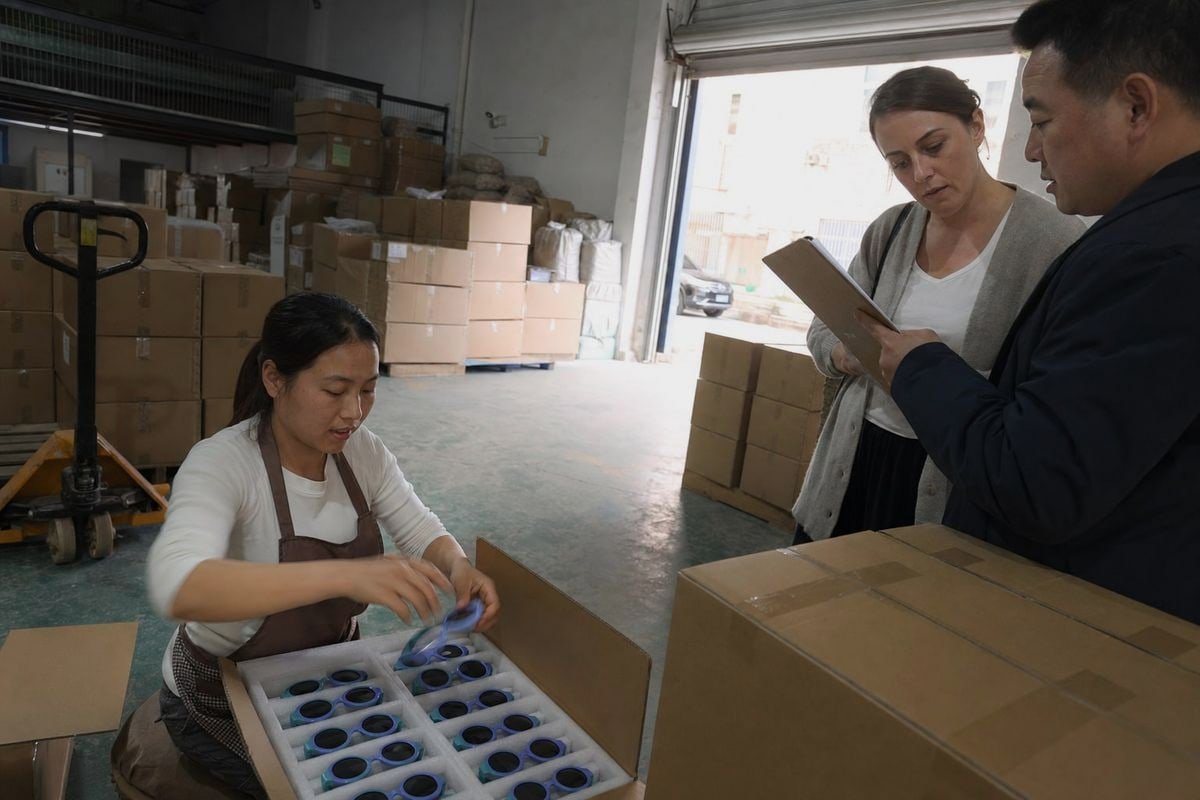
Óculos de sol infantis são uma categoria sazonal. Em nossa experiência exportando para a Europa e Austrália, os compradores compram muito antes do verão local e ficam quietos por meses. Uma Quantidade Mínima de Pedido rígida mensal pune esse ritmo natural. Portanto, recomendamos metas cumulativas: por exemplo, a exclusividade se mantém enquanto o comprador adquirir um total anual de unidades acordado, medido anualmente, não mensalmente.
Construindo a estrutura de preços
A negociação do preço unitário para um produto de marca compartilhada nunca deve ser um número único. Deve ser um cronograma. Aqui está uma versão simplificada de como estruturamos níveis para uma armação infantil TR90 personalizada com hastes de TPEE:
| Elemento | Acordo Fraco | Acordo Justo |
|---|---|---|
| Base de MOQ | Mínimos mensais fixos | Meta anual cumulativa |
| Preços | Um preço negociado, revisável a qualquer momento | Cronograma escalonado com descontos por volume |
| Aumentos de preço | A critério do fornecedor | Limitado (por exemplo, no máximo 5% por ano), vinculado a custos de material documentados |
| Pagamento | 100% adiantado | 30% de depósito, 70% após inspeção aprovada |
| Remédio para meta perdida | Rescisão imediata do contrato | A exclusividade se converte em não exclusiva; o fornecimento continua |
Essa última linha é importante para ambos os lados. Se você perder seu alvo em um ano lento, não deve perder seu fornecedor. Você deve perder apenas a exclusividade — e ser capaz de recuperá-la.
O que você pode trocar por melhores condições
Exclusividade é um pacote de concessões, não um favor. Ofereça à fábrica coisas que reduzam seu risco: uma previsão contínua de 6 meses, pagamento mais rápido do depósito, aprovação de amostras dentro de janelas fixas e evidências de marketing de que você pode realmente mover volume. Quando um comprador nos mostra um plano de varejo real e uma previsão, nossa disposição para manter moldes, reservar lotes de material TPEE e restringir um design aumenta dramaticamente. Alguns compradores até propõem uma pequena taxa de sucesso baseada em desempenho ao proprietário da fábrica. Esse modelo de parceiro com interesse transforma um relacionamento de fornecedor em uma aliança, e é muito mais difícil para um concorrente quebrar.
Que termos devo incluir num contrato de exclusividade para proteger a minha marca a longo prazo?
Quando co-desenvolvemos um projeto de marca própria com uma marca japonesa de artigos para bebês, o contrato demorou mais do que a fabricação de ferramentas. Essa foi a ordem correta das prioridades.
Inclua uma definição precisa do escopo exclusivo (produtos, território, canais), termos de renovação baseados em desempenho, licenças de marca registrada mútuas com cláusula de não registro, propriedade de moldes e arte, padrões de qualidade com direitos de inspeção e gatilhos de rescisão para uso indevido de PI ou vendas não autorizadas — tudo selado com o carimbo da empresa.
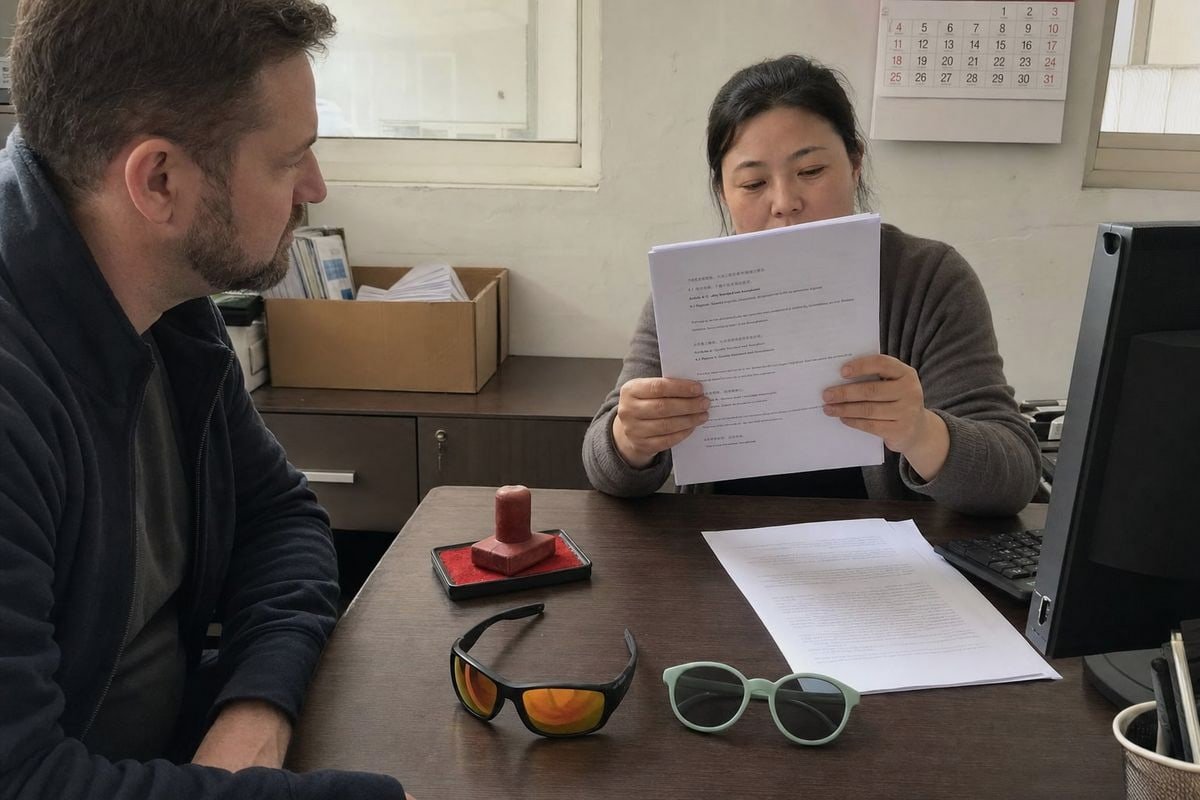
Exclusividade vaga é exclusividade perigosa. "Direitos exclusivos de óculos de sol infantis' não significa nada em uma disputa. Seu contrato deve responder a quatro perguntas de escopo com listas, não adjetivos: quais SKUs exatos, quais países, quais canais de vendas e por quanto tempo. A Cláusula de Exclusividade Territorial que nomeia "varejo de óculos infantis de boutique na América do Norte' é aplicável. "O mercado dos EUA" convida a discussões.
A lista de verificação da cláusula
| Cláusula | O que deve especificar |
|---|---|
| Definição de escopo | Lista exata de SKUs, territórios nomeados, canais nomeados, duração |
| Termos de marca registrada | Quem possui marcas existentes, escopo de licença mútua para co-branding, cláusula de não registro |
| Propriedade de ferramentas | Propriedade do comprador de moldes pagos, arte e matrizes de embalagem |
| Exclusividade de componentes | Dobradiças proprietárias, masterbatches de cores personalizadas, tratamentos de lentes exclusivos |
| Controle de qualidade | Processo de aprovação de amostra, níveis de AQL, direitos de inspeção de qualidade de terceiros |
| Desempenho e renovação | Metas cumulativas, condições de renovação, conversão para não exclusivo |
| Rescisão | Gatilhos para uso indevido de PI, vendas não autorizadas em território, falha crônica de qualidade |
Co-branding adiciona uma camada que a maioria dos compradores perde: ambas as marcas aparecem no produto, então a Proteção de Propriedade Intelectual deve funcionar em ambas as direções. Você licencia a fábrica para aplicar sua marca; a fábrica ou marca parceira licencia a deles. Defina exatamente quem pode usar qual marca, em quais produtos e por quanto tempo após o término do acordo.
Duas regras específicas da China são inegociáveis. Primeiro, registre sua marca registrada na China 5 antes que negociações profundas comecem. A China é primeiro a registrar 6, e registros de má-fé são um risco real. Adicione uma cláusula de não registro proibindo o fornecedor de registrar suas marcas em qualquer lugar. Segundo, insista no selo oficial da empresa — o selo vermelho — em cada página. Nos tribunais chineses, o selo tem muito mais peso do que a assinatura de um gerente. Um contrato assinado, mas não selado, pode não vincular a empresa de forma alguma.
Exclusões também merecem uma linha. Você pode não querer exclusividade cobrindo a Amazon, canais de produtos promocionais ou licitações governamentais. Excluir canais que você nunca usará torna a restrição mais barata para a fábrica e mais fácil de conceder.
Como posso saber se um fabricante honrará a exclusividade em vez de vender meu design para concorrentes?
Quinze anos no setor de óculos ensinou à nossa equipe uma verdade simples: fábricas que pretendem honrar a exclusividade se comportam de maneira diferente durante a negociação, muito antes de qualquer contrato ser assinado.
Fábricas confiáveis aceitam acordos NNN sem resistência, concordam com moldes de propriedade do comprador ou custódia de moldes, aceitam auditorias não anunciadas e inspeções de terceiros, mantêm registros transparentes de projetos de moldes abertos versus personalizados e estruturam a exclusividade em torno de metas de desempenho compartilhadas, em vez de promessas vagas.
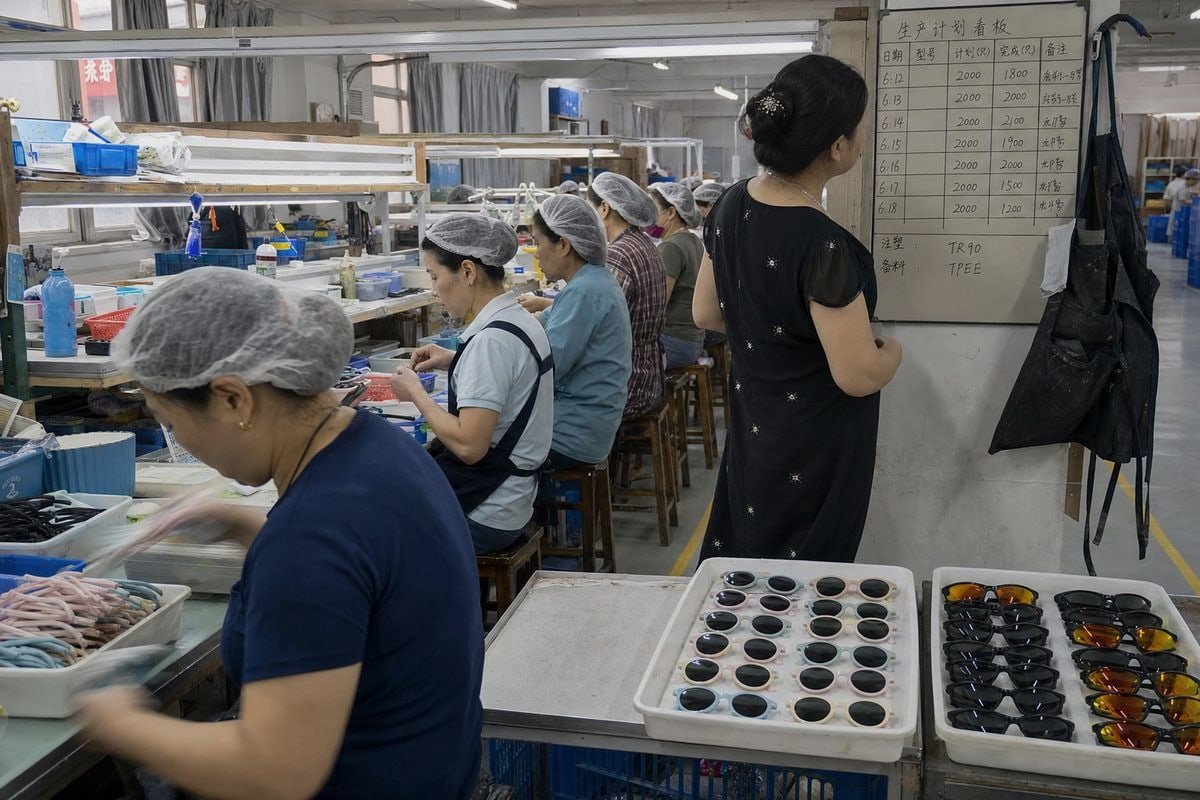
Você não pode ler intenções, mas pode ler incentivos e comportamento. Observe como um fornecedor reage a três solicitações específicas durante a negociação.
Três testes comportamentais
Primeiro, o teste NNN. Peça à fábrica para assinar um NNN aplicável na China com danos liquidados. Um fornecedor que planeja revender seu design co-branded irá hesitar, diluir a cláusula de não uso ou propor um NDA apenas em inglês sem força em vez disso. Um fornecedor comprometido com a parceria trata o NNN como papelada rotineira. Em nossa fábrica, consideramos um NNN bem redigido um sinal de que o comprador investirá adequadamente no projeto.
Segundo, o teste de ferramentas. Proponha que você possua os moldes de injeção pelos quais paga, ou use um acordo de custódia de moldes onde as ferramentas ficam em um "hotel de moldes" neutro de terceiros entre os lotes de produção. O controle físico dos moldes torna as corridas fantasmas — excedentes não autorizados produzidos à noite em suas ferramentas — praticamente impossíveis. Uma fábrica sem nada a esconder pode negociar a logística, mas não rejeitará o princípio.
Terceiro, o teste de rastreabilidade. Pergunte como a fábrica ajudaria você a detectar unidades do 7 mercado cinza.
Parceiros sérios discutem codificação de lote, contagem de caixas seladas e até mesmo autenticação embutida como códigos QR ou tags NFC dentro das hastes da armação. Cada unidade se torna verificável, então excedentes da fábrica vendidos de lado são instantaneamente identificáveis.
| Salvaguardas estruturais que superam a confiança | Salvaguarda |
|---|---|
| Como protege você | Moldes de propriedade do comprador / custódia de moldes |
| Impede fisicamente corridas de produção não autorizadas | Exclusividade em nível de componente |
| Bloqueia dobradiças proprietárias ou cores de masterbatch personalizadas apenas para sua linha | QC de terceiros com contagem de peças |
| Reconcilia a produção em relação aos pedidos, expondo excedentes | Detecta unidades do mercado cinza em campo |
| Conversão automática não exclusiva | Remove o incentivo da fábrica para trapacear, facilitando a saída honesta |
Finalmente, lembre-se do lado do fornecedor do livro. Do nosso ponto de vista, a exclusividade é arriscada se um comprador não puder financiar o estoque ou atingir as metas. Alguns compradores ouvem essa objeção e assumem que a fábrica não é confiável. Geralmente, o oposto é verdadeiro — um fornecedor que negocia duramente as metas está planejando honrar a restrição. As fábricas a serem temidas são aquelas que concordam com tudo instantaneamente e não colocam nada por escrito.
Conclusão
Direitos exclusivos para óculos de sol infantis de marca conjunta são conquistados, definidos e protegidos — nunca simplesmente concedidos. Limite-o estritamente, vincule-o ao desempenho, registre seu IP primeiro e obtenha o corte.
Notas de rodapé
Contexto sobre o material polimérico à base de nylon usado na construção de armações de óculos. ↩︎
Explica a base legal dos acordos de não uso, não divulgação e não circunvenção referenciados ao longo do artigo. ↩︎
Contexto sobre os padrões de proteção UV relevantes para a verificação de segurança de óculos de sol infantis. ↩︎
Fonte oficial da lei de segurança de produtos de consumo dos EUA que rege produtos infantis. ↩︎
Recurso da OMPI sobre registro internacional de marcas relevante para a proteção de marcas na China. ↩︎
URL corrigida da Wikipedia para o princípio legal de prioridade de primeiro a registrar. ↩︎
Define a questão do canal de revenda não autorizado discutida em relação à rastreabilidade e exclusividade. ↩︎
Mais Artigos que Você Pode Gostar

Procurando um Parceiro Confiável em Óculos Infantis?
Explore mais de 800 estilos prontos e suporte completo OEM/ODM adaptado à sua marca.
Entre em Contato English
  Español de México
  Deutsch
  Français
  日本語
日本語  العربية
  Português do Brasil