How to Negotiate Child Model Photo & Video Usage Rights With Kids’ Sunglasses Suppliers?
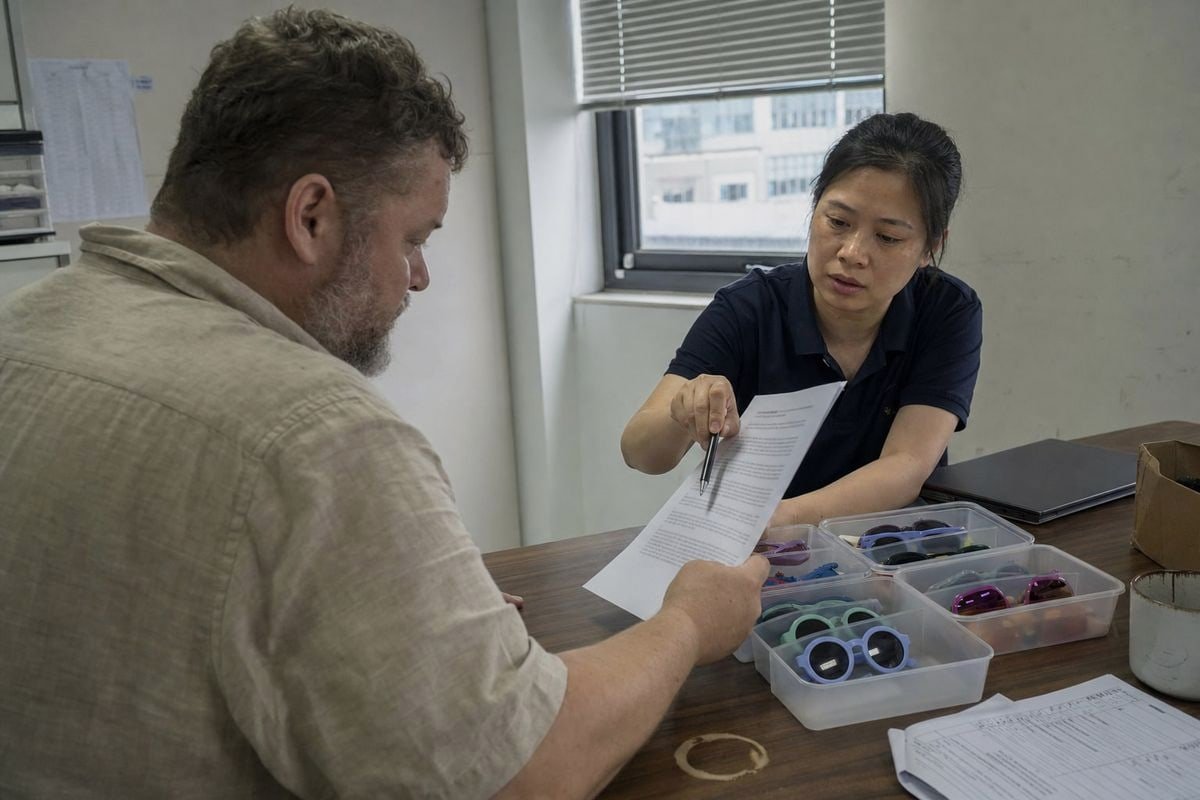
Negotiating child model photo and video usage rights confuses many of our buyers child labor 1. A shoot fee gets paid, images go live, and suddenly nobody knows who actually owns what. At our Taizhou factory, we see this problem derail launches copyright 2. The fix is treating usage rights as a separate negotiation.
To negotiate child model photo and video usage rights with kids’ sunglasses suppliers, secure a guardian-signed minor model release, then define channels, duration, territory, paid versus organic use, and editing limits in writing. Price usage separately from the shoot fee, and require renewed consent for any expanded campaign scope.
That is the short answer. The longer answer covers what rights to ask for, how to protect the child and your brand, what contract terms matter, and how to avoid legal trouble later. Let me walk you through each piece.
What Usage Rights Should I Request From My Sunglasses Supplier for Marketing Photos?
Last year, a buyer from Australia asked us for lifestyle photos of our TR90 kids frames. Her first question was smart: who holds the rights to reuse them? Most buyers never ask.
Request a written license that lists every channel you will use: product pages, marketplace listings, organic social, paid ads, email, print catalogs, and point-of-sale advertising. Confirm whether rights are exclusive or non-exclusive, whether video is included, and whether you may sublicense images to your retailers.
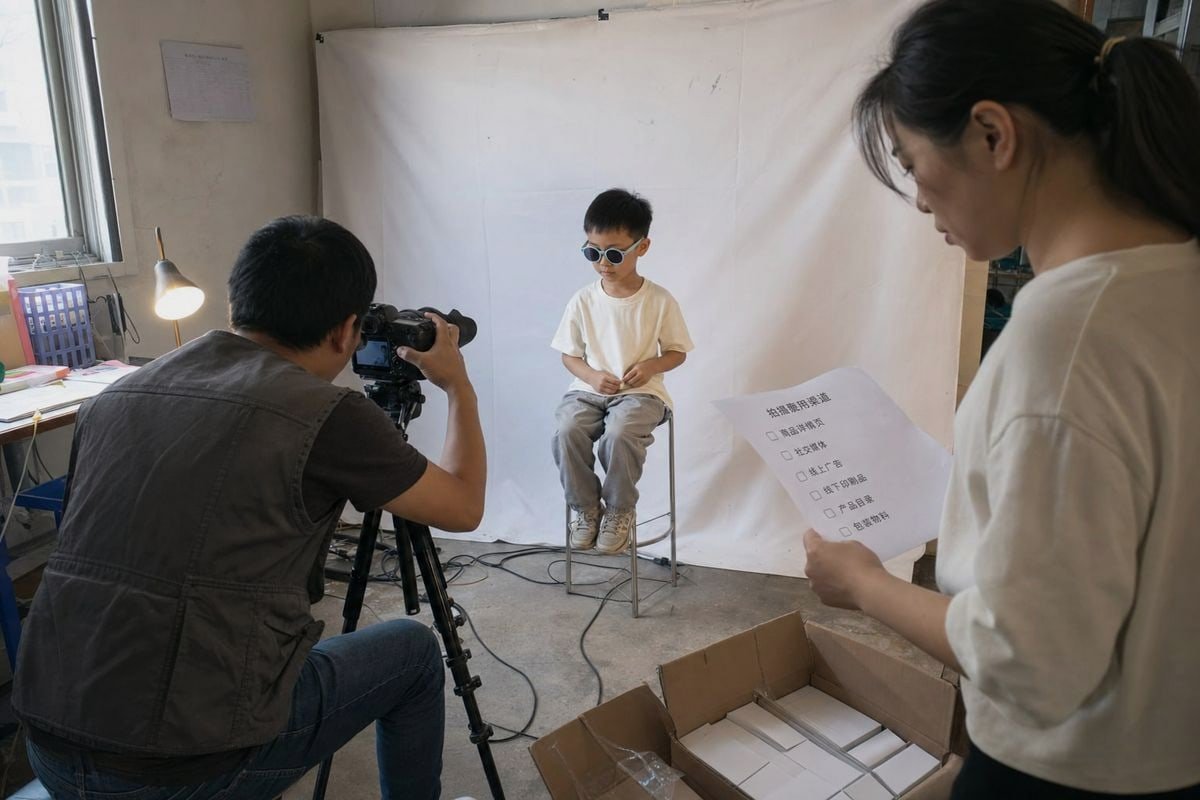
The core mistake is assuming that paying for a photoshoot buys everything. It does not. There are three separate pieces: the creation fee for the shoot, the parental consent documentation for the minor, and the license to publish the assets commercially. Each piece must be settled on its own. When we run photoshoots for our own catalog of roughly 800 existing styles, we handle all three layers before a single image reaches a client, because a private label manufacturing partner who skips this step passes the risk straight to you.
The Usage Menu You Should Negotiate
Think of usage as a menu, not a single yes or no. Each line item carries a different commercial value. Here is how we break it down for buyers:
| Usage Type | Typical Scope | Relative Cost |
|---|---|---|
| Ecommerce product pages | Your own website and marketplace listings | Base level |
| Organic social media | Unpaid posts on your brand accounts | Low add-on |
| Paid social and display ads | Boosted posts, performance campaigns | High add-on |
| Print and point-of-sale advertising | Catalogs, shelf displays, trade shows | Moderate add-on |
| Retailer sublicensing | Sell sheets and retailer sites | Negotiated separately |
Do Not Forget Video
Language about image rights often misses motion content. Ask specifically about video footage, behind-the-scenes clips, short-form social edits, and paid-ad cutdowns. If your kids' sunglasses launch includes a wraparound sport style with mirrored gradient lenses, that product almost begs for video. Make sure the license says so. Stills-only rights will block your best-performing creative later, and renegotiating after launch always costs more.
How Can I Protect My Brand When Using Child Models in Supplier Photoshoots?
A hard lesson from our early exporting years: one client reused a child's photo on an unrelated product line, and the family objected publicly. The cleanup cost far more than proper paperwork would have.
Protect your brand by requiring a guardian-signed minor model release form, restricting use to sunglasses-related marketing only, adding edit and caption approval rights, banning AI training on the child's likeness, and including a moral association clause that lets either side pull content if a scandal emerges.
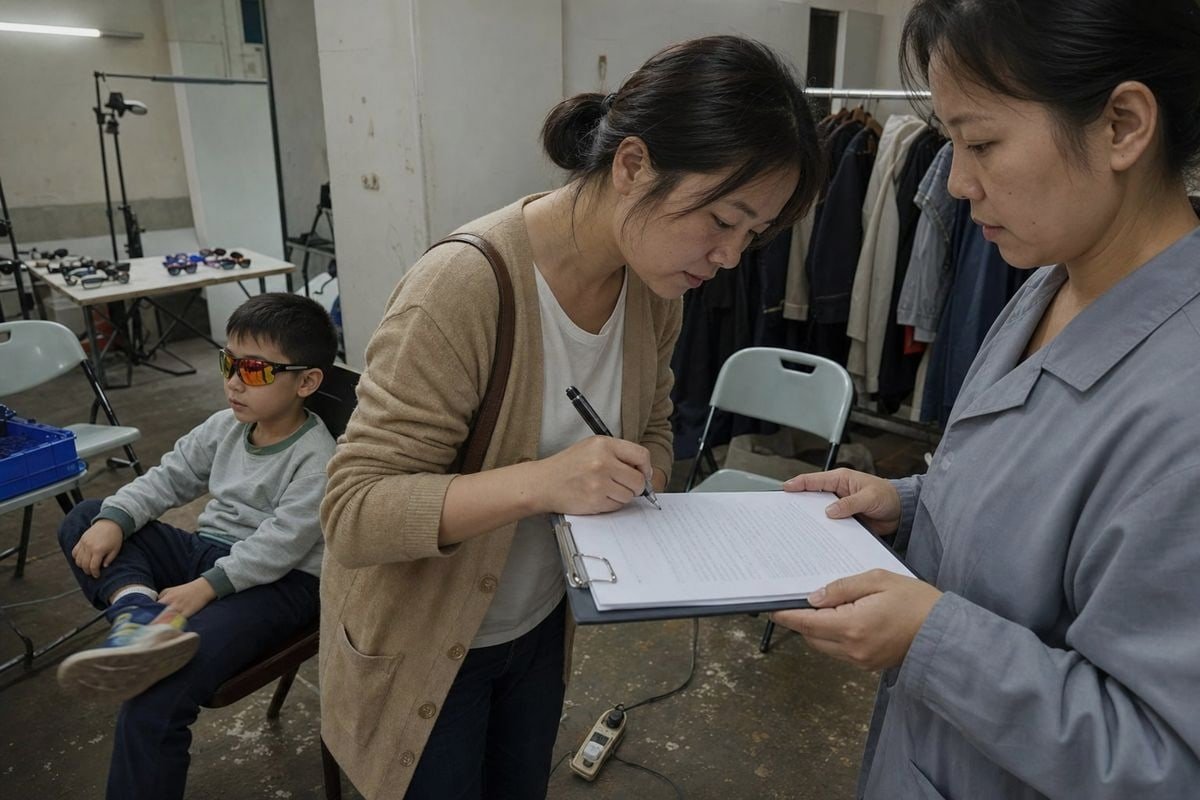
Children cannot legally consent on their own. A minor's signature carries no legal weight and can make the whole contract voidable. So the first protection is procedural: the release must be signed by a parent or legal guardian, and it must identify the child, the guardian, and the business using the images. When we organize shoots for our flexible TPEE and TR90 frames, we file the guardian signature before the camera comes out. No signature, no shoot.
Protections That Matter Most for Children's Products
Brand safety and child safety overlap here. I recommend these specific clauses:
- A category restriction, so the child's likeness is used only for eyewear marketing, never for unrelated products.
- Approval rights over heavy retouching, captions, and context, so the child is never misrepresented.
- An explicit ban on using the photos to train generative AI models 3 or to create synthetic "digital twins" of the child.
- A moral association clause allowing immediate termination if either party faces an ethics scandal or unethical labor allegations.
- A "digital sunset" provision requiring the supplier or brand to scrub the child's likeness from digital assets once the license expires.
Why This Also Protects You as the Buyer
Some buyers push back and say these clauses slow down commerce. In my experience, the opposite is true. Clear child protections signal professionalism to retailers, especially in Europe, Japan, and Australia, where buyers audit their supply chains. A supplier who resists a minor model release 4 form is telling you something about their overall quality discipline. Treat it as a due-diligence signal, the same way you would treat a refusal to share UV400 test reports 5.
What Contract Terms Do I Need to Cover Image Usage Duration and Territory?
When quoting OEM projects, I always weigh a trade-off with clients: broad perpetual usage rights simplify their marketing, but narrow terms cost less and respect the family more. The right answer sits in the contract details.
Your contract should state a fixed commercial licensing duration, typically 12 to 24 months, a defined geographical usage scope matching your actual sales markets, exclusivity terms, renewal pricing, and intellectual property ownership of the underlying files. Avoid perpetual, worldwide grants unless the fee reflects that breadth.
Duration and territory are where scope creep hides. A supplier may want worldwide rights forever because it avoids future paperwork. A family usually wants the child's image untied from a brand once the child outgrows the product. Both positions are reasonable. Your job is to price the gap, not to argue about it.
Duration: Cap It, Then Price Renewals
Time-limited licensing is the industry norm for child models. A 6-month term suits a seasonal test. A 12-month term suits a standard launch. A 24-month term suits an evergreen hero product. Beyond that, negotiate a full buyout agreement only if the compensation is strong and the guardian is genuinely comfortable. One common commercial model prices a buyout as a multiple of the base shoot fee; for example, a 500% buyout on a £160 shoot fee means an £800 rights payment for 12 months of use. That kind of modular pricing keeps everyone honest.
Territory and Exclusivity
Restrict territory to markets where the products actually sell. "Worldwide" is a real cost item, not boilerplate. The same logic applies to exclusivity clauses: category exclusivity prevents the child from modeling for other eyewear brands, which limits the family's income and should carry a clear premium.
| Contract Term | Narrow Position | Broad Position | Pricing Impact |
|---|---|---|---|
| Duration | 6 months, season only | Perpetual usage rights | Buyout multiple of shoot fee |
| Territory | Home market only | Worldwide | Fee scales with market reach |
| Exclusivity | Non-exclusive | Category exclusive | Significant premium |
| Media | Stills, ecommerce only | All media incl. paid ads | Modular add-ons |
| Sublicensing | Not allowed | Retailer and distributor use | Negotiated per partner |
Also settle intellectual property ownership 6. The photographer usually holds copyright in the files, the supplier or brand holds a license, and the model's likeness is rented, never owned. If a talent agency commission is involved, confirm who pays it and whether it covers rights renewals, not just the shoot day.
How Do I Avoid Legal Risks When Reusing Supplier-Provided Child Model Content?
A procurement manager from Japan once forwarded us a supplier's lifestyle images and asked a simple question before listing them: can we legally reuse these? That instinct saves brands from serious trouble.
Before reusing supplier-provided child model content, obtain copies of the signed guardian releases, verify the license covers your channels, territory, and dates, confirm sublicensing to you is permitted, check compliance with child labor rules like the Coogan Act, and track every expiry date in a rights register.

Here is the uncomfortable truth: when a supplier hands you photos, you inherit their paperwork gaps. If their release never permitted sublicensing to third-party brands, your Amazon listing may infringe the child's rights even though you acted in good faith. That is why we provide documentation alongside imagery whenever clients use our catalog photos for their branded lines, and why we encourage clients running their own shoots to keep the same discipline.
A Practical Verification Process
Follow these steps before any supplier image touches your digital marketing rights stack:
- Request the signed minor model release and confirm the guardian's signature and the child's identification.
- Read the scope: channels, duration, territory, and whether paid media is included.
- Confirm the release names or permits your company as a licensed user, not just the supplier.
- Check regional compliance, such as trust-account requirements under laws like the Coogan Act 7 where they apply.
- Log the expiry date and set a takedown reminder 60 days before it.
- Get written confirmation before expanding scope, for example moving an ecommerce image into boosted social ads.
Keep a Rights Register
Small brands lose track of expiry dates constantly. A simple register prevents it:
| Campo | Example Entry |
|---|---|
| Asset ID | KS-2025-014, blue round kids frame lifestyle set |
| Guardian release on file | Yes, signed and dated |
| Licensed channels | Website, marketplaces, organic social |
| Territory | Australia and New Zealand |
| Expiry date | 30 June 2026 |
| Paid ads permitted | No, requires renewal fee |
| AI training permitted | Explicitly prohibited |
Renewed consent matters most when reusing old assets in a new season. Children change quickly. An image shot two summers ago may no longer reflect the child, and the family may no longer want it circulating. Ask again, pay fairly, and document it.
Conclusão
Unclear usage rights turn great kids' sunglasses campaigns into liabilities. Negotiate channels, duration, territory, and consent upfront, in writing. Partner with suppliers who treat children's imagery as carefully as children's safety.
Notas de rodapé
1. ILO is the authoritative source on international child labor standards referenced in compliance discussion. ↩︎
2. Explains the legal ownership concept photographers hold over image files discussed in the contract section. ↩︎
3. Background on AI training technology relevant to the ban on using child likeness for AI training. ↩︎
4. Explains the legal concept underpinning guardian-signed consent for using a child’s image commercially. ↩︎
5. ISO standards body relevant to sunglasses UV protection testing mentioned as a quality signal. ↩︎
6. WIPO provides authoritative background on copyright ownership discussed for licensed photo files. ↩︎
7. Background on the law protecting child performers’ earnings referenced for compliance checks. ↩︎
Mais Artigos que Você Pode Gostar

1 de agosto de 2026
A Fábrica Deve Lidar com a Embalagem e Rotulagem de Óculos de Sol Infantis, ou Usar um Fornecedor Designado?

1 de agosto de 2026
Armazém Próprio vs. Envio Direto do Fornecedor: Qual Reduz os Custos de Devolução para Marcas de Óculos de Sol Infantis?

1 de agosto de 2026
Armazém Direto ao Porto ou Estiva no Exterior: Qual Economiza Mais no Envio de Óculos de Sol Infantis?
Procurando um Parceiro Confiável em Óculos Infantis?
Explore mais de 800 estilos prontos e suporte completo OEM/ODM adaptado à sua marca.
Entre em Contato English
  Español de México
  Deutsch
  Français
  日本語
日本語  العربية
  Português do Brasil