How Do Kids Sunglasses from Chinese OEM Factories Compare to Renowned Brands?
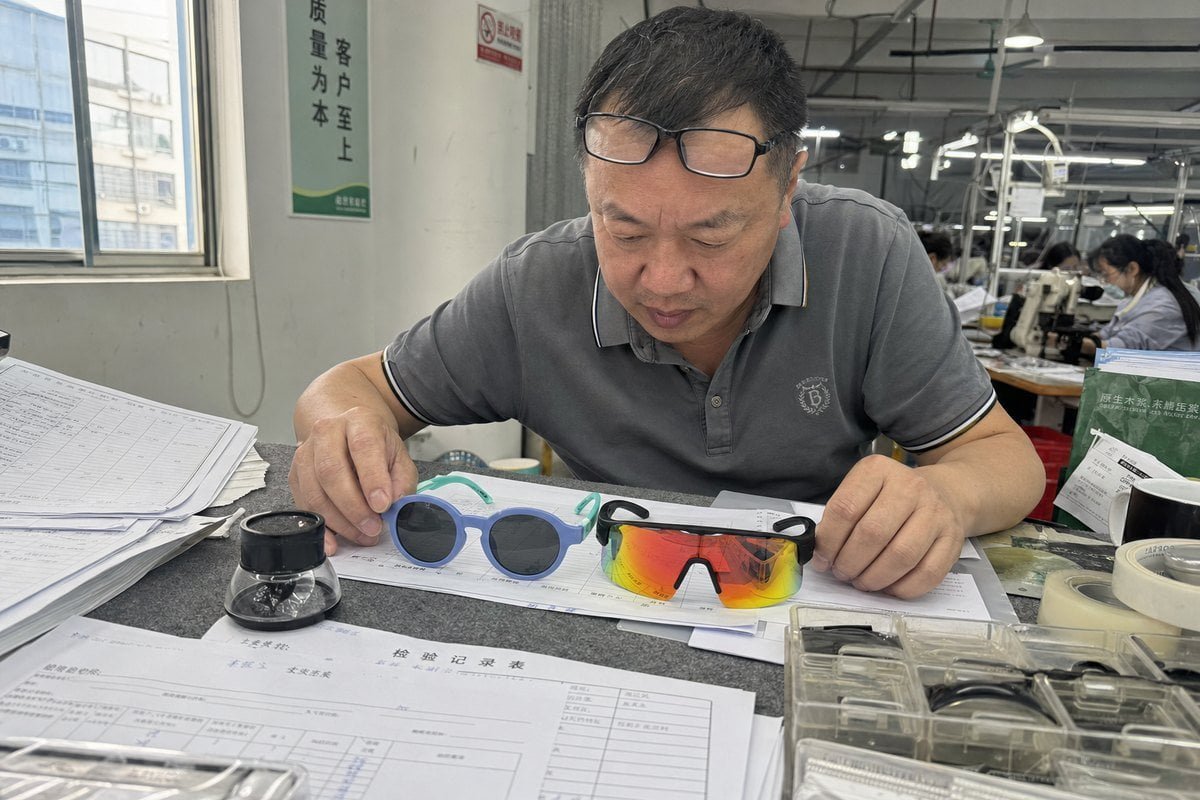
Buyers often ask me whether kids sunglasses from Chinese OEM factories 1 can truly match famous brands. On our production line in Taizhou, I see the honest answer every single day.
Kids sunglasses from Chinese OEM factories can match renowned brands in UV400 protection, flexible materials, and durability when the factory is properly vetted. The main differences are brand markup, marketing, and documentation depth — not the physical product quality itself, which often comes from the same manufacturing ecosystem.
That answer surprises many first-time buyers. So let me break it down piece by piece. I will compare materials, UV protection, pricing, and quality control. By the end, you will know exactly what changes when you switch from a branded supplier to an OEM partner.
How Do Chinese OEM Kids Sunglasses Compare in Material Quality and Safety Standards?
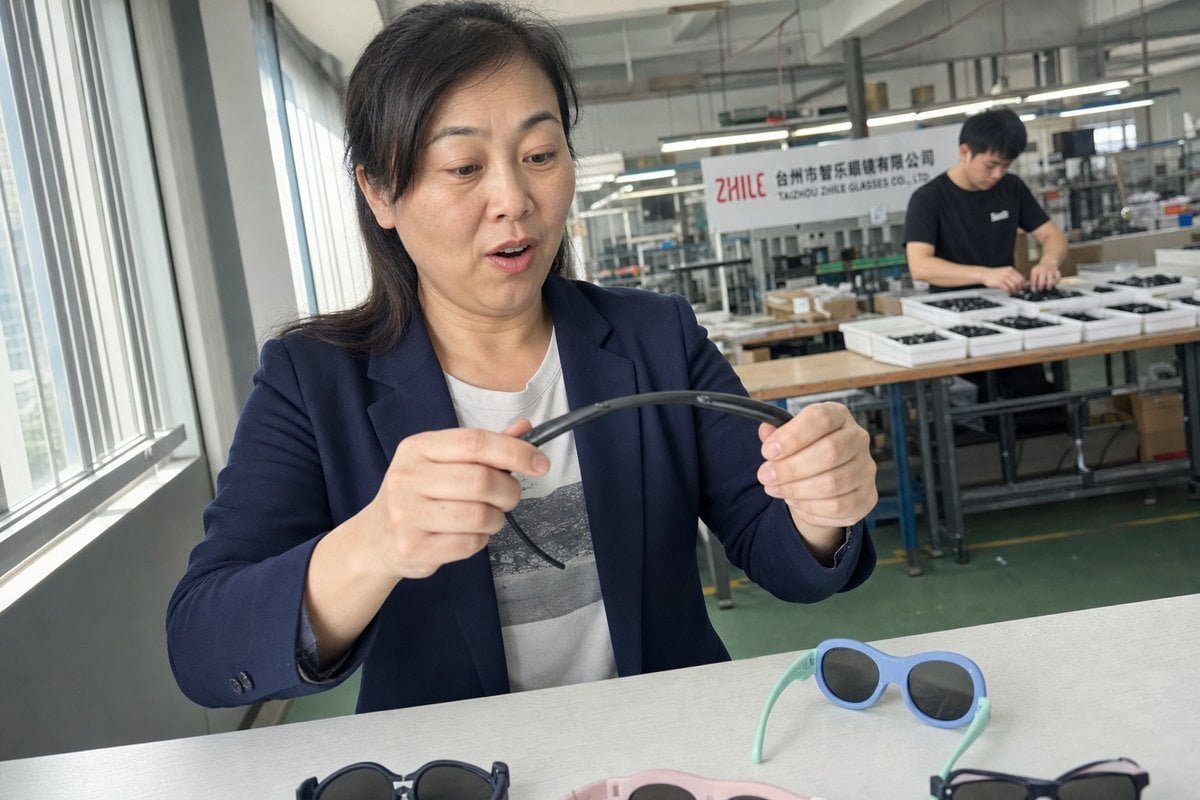
A procurement manager from Australia once bent one of our armações TR90 2 into a full circle during a factory visit. She expected it to snap. It sprang straight back, and that moment told her more than any catalog page could.
Chinese OEM kids sunglasses from capable factories use the same optical grade materials as renowned brands — TPEE flexible frames, TR90, and BPA-free plastics. Safety depends on the individual factory's standards and testing, not on whether a famous logo appears on the temple arm.
Material quality is where the "China vs. brand" debate falls apart fastest. Many renowned eyewear brands manufacture somewhere in the Chinese supply chain. The frames on a branded shelf and the frames from a good OEM factory 3 often start from very similar raw materials. What differs is who specifies them, and how strictly.
The Materials That Actually Matter for Kids
Children's eyewear is a special category. Kids drop their glasses. They sit on them. They twist the temples while daydreaming. Adult fashion frames would fail within weeks. That is why we build almost everything around armações flexíveis de TPEE 4 and TR90. In our fifteen years of eyewear work, these two materials have proven themselves again and again. TPEE bends dramatically without breaking. TR90 is lightweight, impact-resistant, and holds its shape. Our most popular construction pairs a TR90 front with TPEE temples, giving structure where you need it and flexibility where children stress the frame most.
BPA-free materials are non-negotiable for us, and they should be for any supplier you consider. Reputable factories also test against chemical safety requirements like REACH and RoHS for export markets.
Side-by-Side Material Comparison
| Fator | Capable Chinese OEM | Renowned Brand | Low-End Generic |
|---|---|---|---|
| Material da armação | TPEE / TR90, optical grade | TPEE / TR90 / acetate | Cheap PC or ABS |
| BPA-free verification | Yes, with test reports | Yes, standardized | Often unverified |
| Flexibility testing | Bend and twist checks | Standardized protocols | Rarely tested |
| Hinge durability | Cycle-tested on request | Cycle-tested | Weak point, fails early |
| Fit for children | Pediatric-first sizing | Well-developed sizing | Shrunken adult templates |
The last column matters. "China OEM" is not one quality level. The gap between a vetted factory and a bargain-bin supplier is far wider than the gap between a good OEM and a famous brand. Some specialized factories now even design pediatric-first ergonomics instead of simply shrinking adult frames — something we consider basic practice for children's faces.
Can I Get the Same UV400 Protection from an OEM Factory as I Would from a Name Brand?
There is a trade-off I weigh every time we quote a lens package: a few cents saved on lens sourcing can quietly erase the very protection parents are paying for. That is why we treat lens specification as the least negotiable part of any kids sunglasses order.
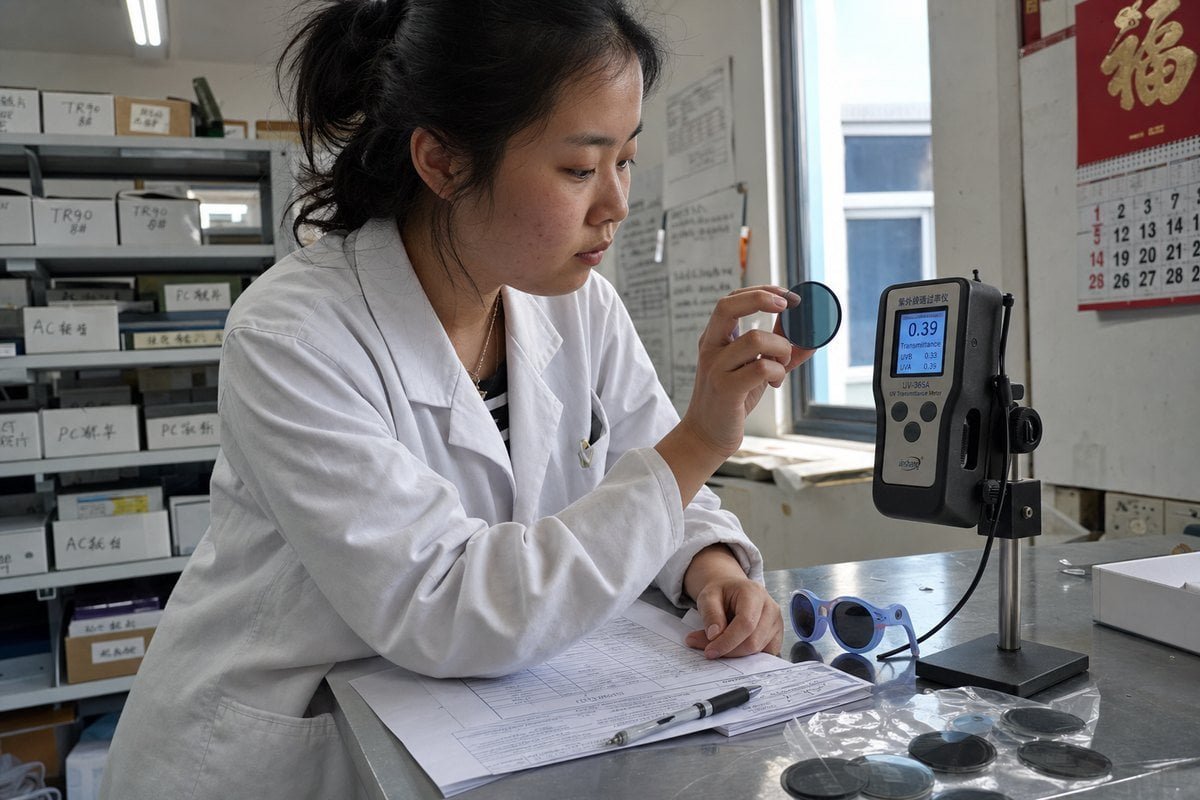
Yes. UV400 protection is a lens specification, not a brand feature. A properly equipped OEM factory can supply lenses blocking 99–100% of UVA and UVB rays, verified by test reports. The key is demanding documented UV testing rather than accepting catalog claims.
UV protection is the single most important function of children's sunglasses. Kids' eyes let in more UV light 5 than adult eyes, so a failure here is not cosmetic — it is a health issue. The good news is that UV400 protection standards are well defined and easy to verify.
What UV400 Actually Means
UV400 means the lens blocks light wavelengths up to 400 nanometers. That covers both UVA and UVB rays. This is a measurable, testable property of the lens material and coating. A spectrophotometer either confirms it or it does not. Brand prestige plays no role in the physics.
Renowned brands do invest in third-party laboratory verification 6, and they do it consistently. That is a genuine strength. But nothing stops an OEM buyer from demanding the same. When our customers request it, we provide lens test reports referencing international benchmarks such as EN ISO 12312-1 7 and ANSI Z80.3. Compliance with these standards is the real quality benchmark, regardless of whether the product is branded or OEM.
How to Verify UV Claims from Any Supplier
- Ask for a recent UV transmission test report for the exact lens you will receive.
- Confirm the standard referenced — EN ISO 12312-1 for Europe, ANSI Z80.3 for the US market.
- Request FDA and CE certification evidence relevant to your destination market.
- Test golden samples independently before mass production, not after.
- Re-test randomly during repeat orders, because consistency matters as much as the first pass.
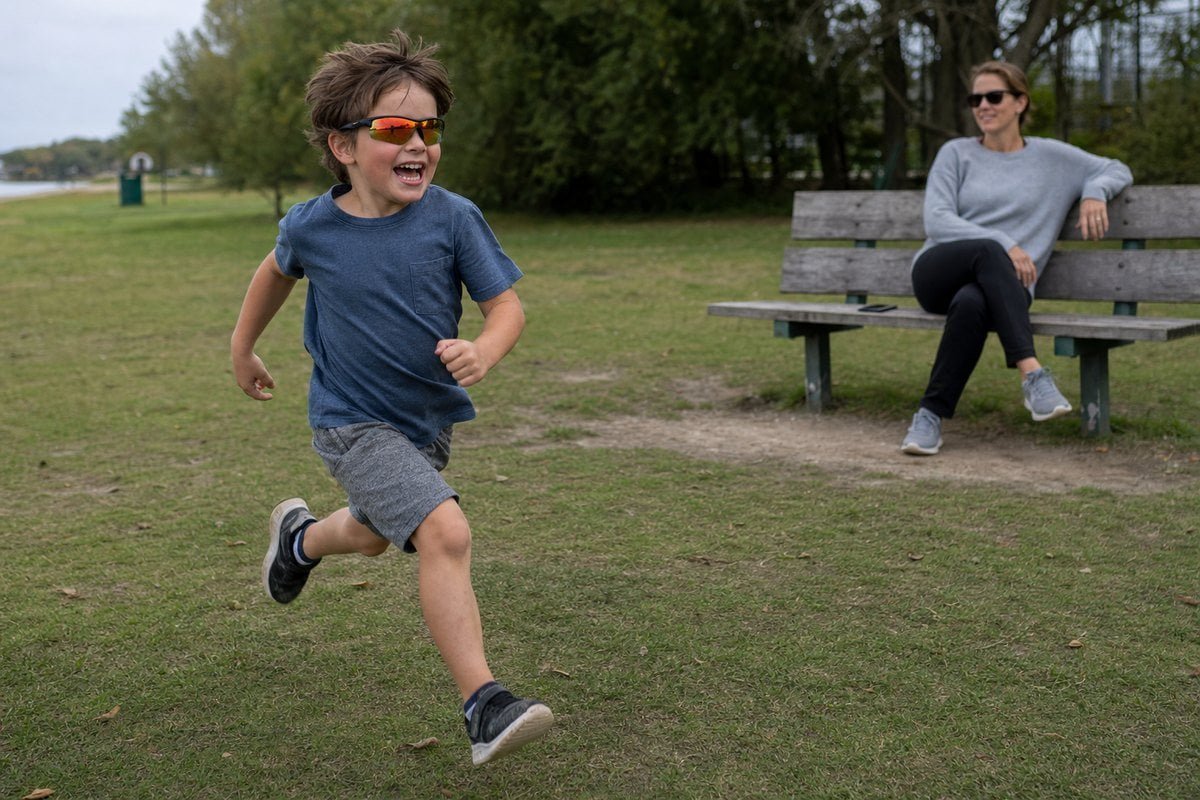
Polarized lens technology is also fully available at the OEM level. We offer polarized options across many of our kids styles, which cut glare from water and pavement — useful for active children outdoors. Mirrored and gradient coatings, like the orange-to-teal shield lenses on our sport wraparound styles, are cosmetic layers on top of the UV function, not substitutes for it. A cheap mirrored lens without real UV blocking is the most dangerous product in this category, because the dark tint dilates a child's pupils while letting UV through.
What Should I Expect in Terms of Pricing When I Switch from Branded Suppliers to OEM Manufacturing?
A founder of a small European kids' accessory brand once showed me the wholesale invoice from her previous branded supplier. When I quoted the same specification from our line, she asked me twice whether I had missed a digit. I had not.
Expect landed costs to drop by 50–80% when moving from branded suppliers to direct OEM manufacturing, because you remove brand markup, licensing, and distribution layers. Product cost stays similar; what disappears is the premium paid for marketing and retail positioning.
The price gap between branded and OEM kids sunglasses is mostly not about the product. It is about the layers stacked on top of it. Understanding those layers helps you negotiate confidently and price your own line intelligently.
Where the Branded Price Actually Goes
| Cost Layer | Branded Product | Direct OEM Sourcing |
|---|---|---|
| Manufacturing cost | Included | Included |
| Brand markup and licensing | Significant share of price | Nenhuma |
| Global marketing spend | Built into price | Nenhuma |
| Distributor and importer margins | Often multiple layers | You control it |
| Retail placement fees | Common | Not applicable |
| Your margin potential | Compressed | Substantially wider |
The "brand tax" primarily funds marketing, licensing fees, and retail placement — not superior raw materials. When you buy OEM, wholesale production costs reflect materials, labor, tooling, lenses, and packaging. Everything else becomes your margin or your customer's savings.
The Costs You Should Not Cut
Here is where I push back on buyers, honestly. Some new customers arrive chasing the lowest possible unit price. We are not that supplier, and I tell them why. Cutting corners on lens coatings, hinge components, or material grade produces returns, complaints, and — in children's products — real safety exposure. The savings from removing brand markup are substantial. The savings from downgrading a lens are trivial and dangerous.
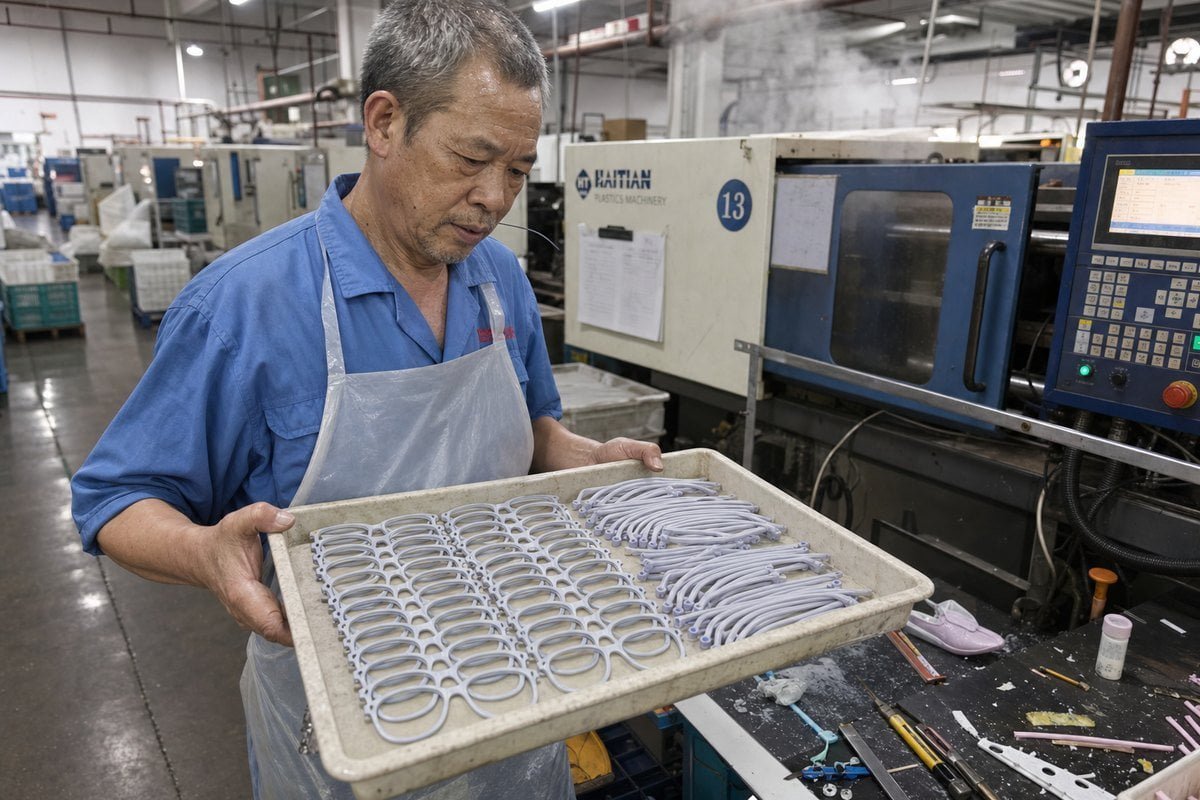
There is also the mold question. Custom tooling for a new frame shape is a real investment, often the biggest barrier for new brands. This is exactly why we maintain roughly 800 existing styles. A new brand can select proven frames, apply custom colors, logos, and packaging, and test the market without heavy mold costs. Minimum order quantity on existing styles is far lower than on fully custom tooling, which lowers your launch risk dramatically. Once your bestsellers prove themselves, investing in exclusive molds becomes a data-driven decision instead of a gamble.
Private label eyewear manufacturing works best when you treat the factory as a development partner, not a vending machine. Bring your target retail price, and a good factory will engineer backward to a specification that protects both your margin and the child wearing the product.
How Do I Ensure Consistent Quality When Sourcing Kids Sunglasses from a Chinese OEM Factory?
Early in my career, I learned a lesson that shaped how we run our workshop today: a beautiful golden sample means nothing if batch three hundred looks different. Consistency is a system, not an accident, and it is the area where famous brands historically held their biggest edge.
Ensure consistency by validating certified factories, approving golden samples, defining written specifications, and enforcing quality control protocols with inspections at incoming materials, in-line production, and pre-shipment stages. Repeat-order stability comes from documented standards, not from supplier promises.
Renowned brands earn trust through predictable standardization across batches. That is a real advantage, and I will not pretend otherwise. But it is an advantage of process, and process can be replicated by any serious buyer working with any serious factory. Our own 5S-managed workshop exists precisely because international buyers expect brand-level discipline from their OEM partners.
A Practical Vetting and QC Framework
| Estágio | What to Check | O Que Parece Bom |
|---|---|---|
| Factory vetting | Certifications, audit reports, ISO 9001 | Verifiable documents, welcome to visit |
| Specification | Written spec sheet for every component | Materials, tolerances, lens data defined |
| Amostragem | Golden sample approval | Signed, sealed reference samples |
| Pre-production | Material and component inspection | Incoming QC records available |
| In-line QC | Checks during assembly | Hinge torque, lens fit, finish checks |
| Final inspection | AQL-based pre-shipment audit | Third-party inspection permitted |
| Post-delivery | Defect tracking on repeat orders | Corrective action reports on issues |
Testing That Belongs in Every Kids Order
Impact resistance testing should apply to lenses and frames alike, because children treat sunglasses roughly. Drop tests, temple flex cycles, and hinge open-close cycling reveal weaknesses before parents do. For export markets, insist on documentation supporting FDA and CE certification requirements, plus chemical compliance for children's products 8 in your region. Ask how the factory controls color consistency across dye lots — pastel frames like our periwinkle and mint kids styles show batch variation faster than black frames do.
Communication habits matter as much as machinery. Consistent factories answer technical questions specifically, share inspection data without defensiveness, and flag problems early. In our experience exporting to buyers in more than twenty countries, the orders that go smoothly are the ones where specifications were nailed down in writing before the first component was cut. Vague agreements produce variable products. Precise agreements produce consistent ones. That principle holds whether your supplier is in Taizhou or anywhere else.
Conclusão
Choosing between OEM and branded kids sunglasses is really choosing between trust you buy and trust you build. If unverified suppliers worry you, the fix is simple: demand test reports, approve golden samples, and partner with a factory that treats children's safety as the specification, not the sales pitch. Do that, and the quality gap disappears — while the price gap works entirely in your favor.
Notas de rodapé
1. Wikipedia entry defining the role and function of Original Equipment Manufacturers in global production. ↩︎
<span id="
Mais Artigos que Você Pode Gostar
1 de agosto de 2026
A Fábrica Deve Lidar com a Embalagem e Rotulagem de Óculos de Sol Infantis, ou Usar um Fornecedor Designado?
1 de agosto de 2026
Armazém Próprio vs. Envio Direto do Fornecedor: Qual Reduz os Custos de Devolução para Marcas de Óculos de Sol Infantis?
1 de agosto de 2026
Armazém Direto ao Porto ou Estiva no Exterior: Qual Economiza Mais no Envio de Óculos de Sol Infantis?
Procurando um Parceiro Confiável em Óculos Infantis?
Explore mais de 800 estilos prontos e suporte completo OEM/ODM adaptado à sua marca.
Entre em Contato English
  Español de México
  Deutsch
  Français
  日本語
日本語  العربية
  Português do Brasil