How to Get Factories to Submit Cost-Reduction Proposals in Multi-Round Bidding for Kids’ Sunglasses?

Getting factories to submit cost-reduction proposals in multi-round bidding for kids’ sunglasses is hard volume forecast 1. On our production line, silence from suppliers usually means fear, not lack of ideas.
To get factories to submit cost-reduction proposals in multi-round bidding, share a detailed cost baseline, run structured rounds where savings ideas influence the award, invite specific alternatives in materials, tooling, and packaging, and score bids on total value — not just the lowest ex-factory price.
That answer sounds simple, but the execution is where most buyers fail. Let me walk you through how to design each part of the process so factories actually open up.
A buyer from Australia once asked us why no supplier in her tender volunteered savings ideas. Our quoting team gave her an honest answer: her RFQ never rewarded them for it.
Structure three clear rounds: a baseline quote on a fixed spec, a dedicated cost-innovation round where each factory submits quantified savings ideas, and a revision round with updated pricing. Make it explicit that strong proposals can change who wins the award.
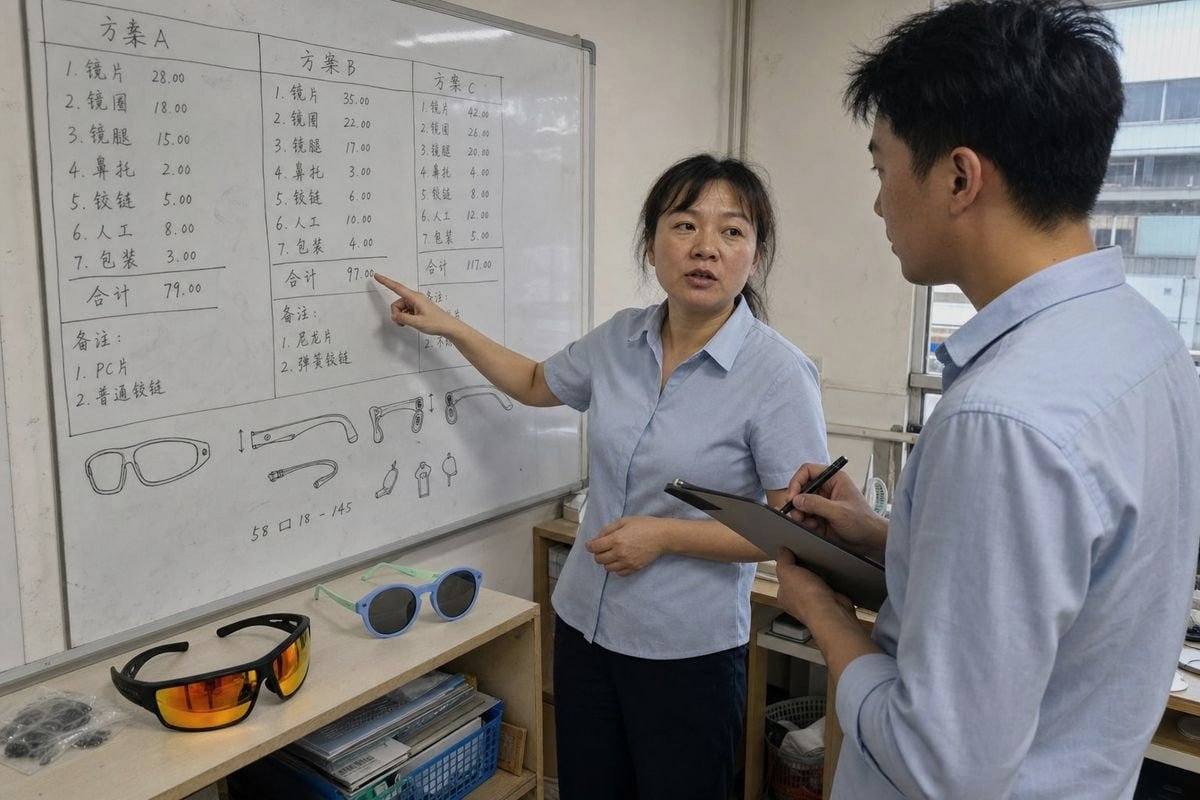
Factories stay quiet for one main reason. They assume any cost-down idea will be used against them — shared with rivals, or turned into a demand for a deeper discount. In our fifteen years quoting kids' eyewear, we have held back good ideas ourselves when a buyer only asked for "your best price on this spec." The bid format tells suppliers what behavior gets rewarded. So design the format first.
A round-by-round playbook
| Round | What you ask for | What the factory learns |
|---|---|---|
| Round 1 | Baseline quote on the current spec, with a cost breakdown | The scope is fixed and comparable |
| Round 2 | Three or more quantified cost-reduction ideas per supplier | Ideas are scored, not just prices |
| Round 3 | Revised pricing after you shortlist feasible ideas | Smart engineering can win the order |
| Award | Best total landed value, quality and compliance included | The relationship rewards openness |
Two design details matter most. First, keep the cost-innovation round separate from price negotiation. When we receive an RFQ with a dedicated ideas round, our engineers treat it as a technical exercise, not a haggling trap. Second, tell every bidder — in writing — that alternative proposals are eligible to win. Without that sentence, factories will quote the spec exactly as written and keep their mold-consolidation or packaging ideas to themselves. One more tip: cap the process at three rounds. Endless renegotiation creates fatigue, and tired suppliers submit lazy bids.
Our engineers can only propose real savings when they can see the real cost drivers 2. Vague RFQs with a photo and a target price give us almost nothing to work with.
Share a full bill of materials, annual volume forecasts, target markets and compliance standards, packaging requirements, and a should-cost breakdown covering resin, lenses, molding, assembly, and freight. The more cost structure you expose, the more precise and comparable the factory proposals become.

Think of it this way: a factory cannot optimize what it cannot see. When a buyer sends us only a reference image of a wraparound sport style with a mirrored gradient lens, we quote defensively. We pad for unknowns. But when the same buyer sends a BOM listing the frame polymer, lens grade, hinge type, and coating, our team can immediately spot where an alternative saves money without hurting the product.
Build a simple should-cost model
You do not need perfect data. Break the unit price into its major buckets and ask each bidder to comment on every line. For a typical kids' sunglasses style, the buckets look like this:
| Cost bucket | What to share with bidders | Typical savings lever |
|---|---|---|
| Material da armação | Polymer type (TR90, TPEE, PC), color count | Resin substitution, fewer colorways |
| Lente | UV400 vs polarized, coating, mirror finish | Coating simplification, standard tints |
| Molding | Style count, shared tooling potential | Mold consolidation, cycle-time gains |
| Assembly | Hinge type, decoration steps | Fewer parts, standardized hinges |
| Embalagem | Box, pouch, insert, hang tag | Redesign, carton density |
| Logistics | Incoterm, destination, order cadence | Carton optimization, consolidated shipping |
Also share your volume forecast 3 honestly. When we quoted a European kids' brand a two-tone round frame — pastel blue front, mint temples — the packaging idea we proposed only made sense above a certain order quantity. Without the forecast, we would never have raised it. Finally, anonymized benchmarks help. Telling bidders "your lens cost sits above the median of this tender" grounds the discussion in evidence rather than pressure.
How do I make sure cost-cutting suggestions don't compromise safety or quality in kids' sunglasses?
There is a trade-off we weigh on every kids' frame: shave grams and cost, or keep the flex and wall thickness that survive a four-year-old sitting on their glasses. Cost-down proposals must respect that line.
Define non-negotiable requirements upfront — UV400 protection, impact resistance, child-safe materials, and compliance with standards like EN ISO 12312-1, CPSIA, or AS/NZS 1067 — then require every cost proposal to state its effect on each requirement and pass verification testing before adoption.

Children's eyewear is not a generic commodity. A saving that weakens a hinge, thins a temple, or downgrades a lens coating 4 is not a saving at all — it is a recall risk. So the fix is structural, not emotional. Split your specification into two lists before Round 2 opens.
Separate constraints from variables
The first list holds your locked requirements: UV protection level 5, lens impact performance, material safety (no harmful plasticizers or coatings), minimum frame flexibility for a child's face, and your target-market standards. The second list holds the open variables: colorways, decoration methods, packaging format, hinge standardization, carton design, and shipping terms. Factories may only propose changes inside the second list, and every proposal must declare its compliance impact.
In our own workshop, we ask three questions of any cost idea before it reaches a customer. Does it change how the product performs on a child's face? Does it change what any test lab would measure? Does it change durability over a season of playground use? If the answer to all three is no — for example, consolidating two frame styles onto shared tooling, or switching to a denser export carton — the idea moves forward. If any answer is yes, the idea needs a sample and third-party verification 6 first. Some buyers go further and co-fund certification testing for validated proposals. That small investment tells the factory you take their engineering seriously, and it keeps every accepted saving defensible.
What should I ask my factory partner to include when comparing cost-reduction proposals across bidding rounds?
A lesson we learned early in exporting: two proposals that both claim "8% savings" are rarely equal. One may need new tooling and three months; the other may start next order.
Ask each factory to submit, per proposal: the affected cost line, quantified saving per unit, any tooling or setup cost, impact on lead time and MOQ, compliance and quality effects, and verification evidence. Then compare proposals on total landed cost, not ex-factory price.
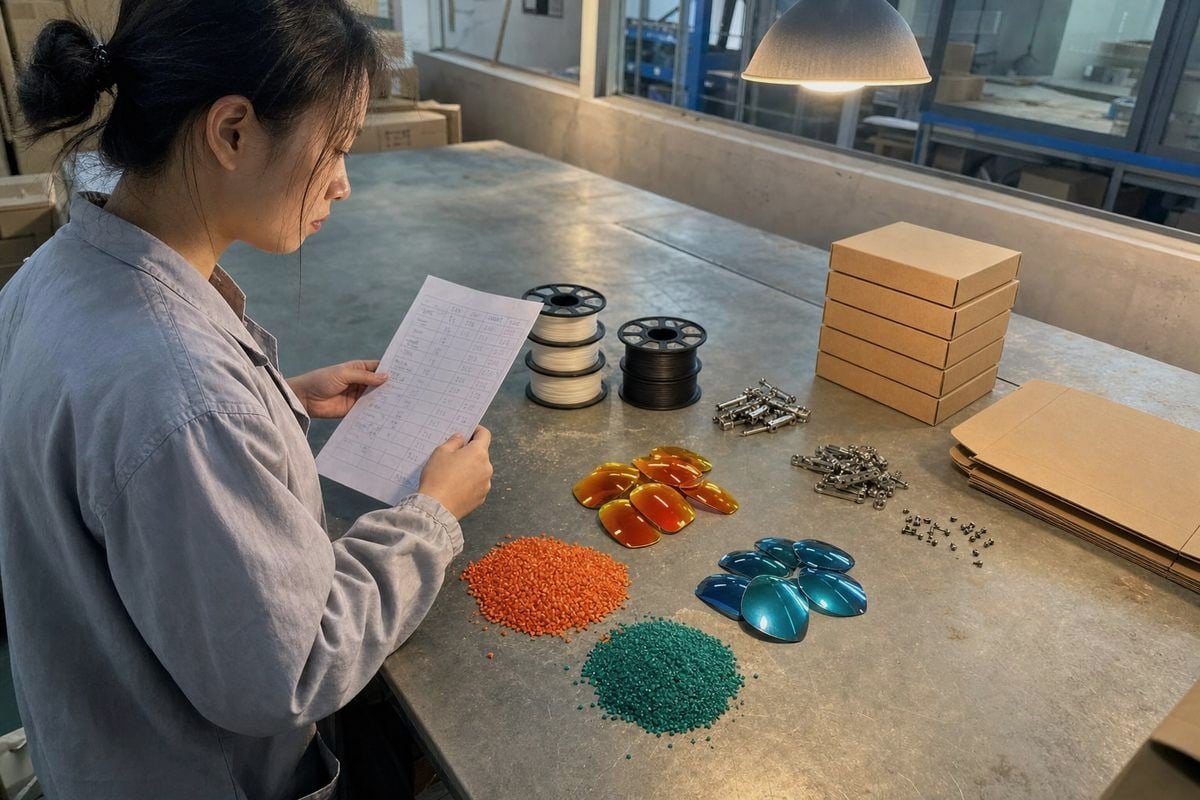
Without a standard submission format, you end up comparing a vague promise against a detailed engineering plan, and the vague promise often looks cheaper. So force structure onto every idea. We use a similar internal template when we propose value-engineering options to our own brand customers, and it changes the conversation completely.
A proposal comparison scorecard
| Field to require | Por que importa |
|---|---|
| Affected BOM line | Ties the saving to a verifiable cost item |
| Saving per unit and per annual volume | Makes small and large ideas comparable |
| One-time cost (tooling, samples, testing) | Reveals the true payback period |
| Lead-time and MOQ impact | A saving that delays launch may cost more |
| Compliance and quality effect | Protects child safety non-negotiables |
| Evidence offered | Sample, test report, or material datasheet |
| Implementation date | Separates ready ideas from concepts |
Two more comparison rules help. First, evaluate ideas independently of the bidder's headline price. A factory with the third-lowest baseline quote may hold the best mold-consolidation idea; if you dismiss them early, you lose it. Second, consider a shared-savings clause for verified factory-originated ideas — splitting the gain for a defined period. In our experience, nothing keeps proposals flowing across future orders like knowing the factory keeps part of the value it creates. That turns a one-off tender into a repeatable supplier-innovation channel, which is worth far more than any single round of price cuts.
Conclusão
Factories share cost-reduction proposals when the bid rewards them. Share your cost baseline, protect safety constraints, run structured rounds, and award on total value — then savings keep coming.
Notas de rodapé
1. World Bank trade resources contextualize how accurate demand forecasting affects sourcing and cost decisions. ↩︎
2. Explains the cost accounting concept underlying why visibility into cost drivers enables real savings proposals. ↩︎
3. Background concept explaining how forecasted order volumes shape supplier cost-saving proposals. ↩︎
4. Background on optical coatings clarifies why altering lens coatings can affect performance and safety. ↩︎
5. Authoritative health guidance on UV exposure supports why UV protection is a locked safety requirement. ↩︎
6. ISO oversees conformity assessment standards relevant to verifying cost-saving proposal safety claims. ↩︎
Mais Artigos que Você Pode Gostar

1 de agosto de 2026
A Fábrica Deve Lidar com a Embalagem e Rotulagem de Óculos de Sol Infantis, ou Usar um Fornecedor Designado?

1 de agosto de 2026
Armazém Próprio vs. Envio Direto do Fornecedor: Qual Reduz os Custos de Devolução para Marcas de Óculos de Sol Infantis?

1 de agosto de 2026
Armazém Direto ao Porto ou Estiva no Exterior: Qual Economiza Mais no Envio de Óculos de Sol Infantis?
Procurando um Parceiro Confiável em Óculos Infantis?
Explore mais de 800 estilos prontos e suporte completo OEM/ODM adaptado à sua marca.
Entre em Contato English
  Español de México
  Deutsch
  Français
  日本語
日本語  العربية
  Português do Brasil