How to Design Wholesale Tiered Pricing for Kids Sunglasses for Optometry Stores?
Wholesale tiered pricing for kids sunglasses trips up many buyers I quote from our Taizhou factory. Flat pricing squeezes margins, confuses staff, and leaves optometry stores with deadstock nobody wants.
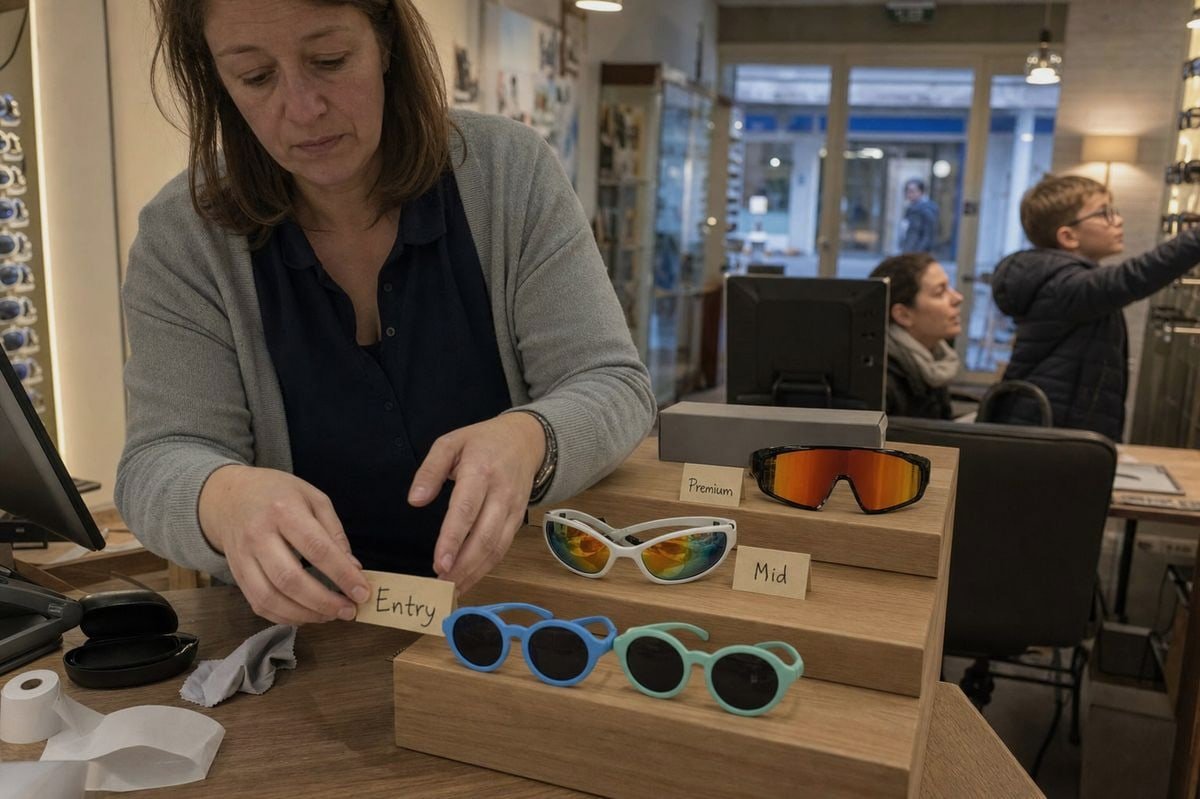
Design wholesale tiered pricing for kids sunglasses using three tiers built on landed cost: an entry tier for basic UV400 styles, a mid tier for flexible TR90 frames, and a premium tier for polarized TPEE styles, with volume discounts at clear quantity breaks like 500, 1000, and 3000 units.
Let me walk you through how we structure this for optical buyers. Each section below tackles one piece of the pricing puzzle.
What tiered pricing structure works best for optometry store orders of kids sunglasses?
Last spring, a European optical chain asked our team to quote a single flat price across 12 styles. We pushed back, and their sell-through improved once we split the range into tiers.
A three-tier good-better-best structure works best for optometry stores: an entry tier of basic UV400 kids sunglasses, a mid tier of flexible frame materials with better fit, and a premium tier of polarized lenses with retail-ready packaging, each priced from landed cost plus a target margin.
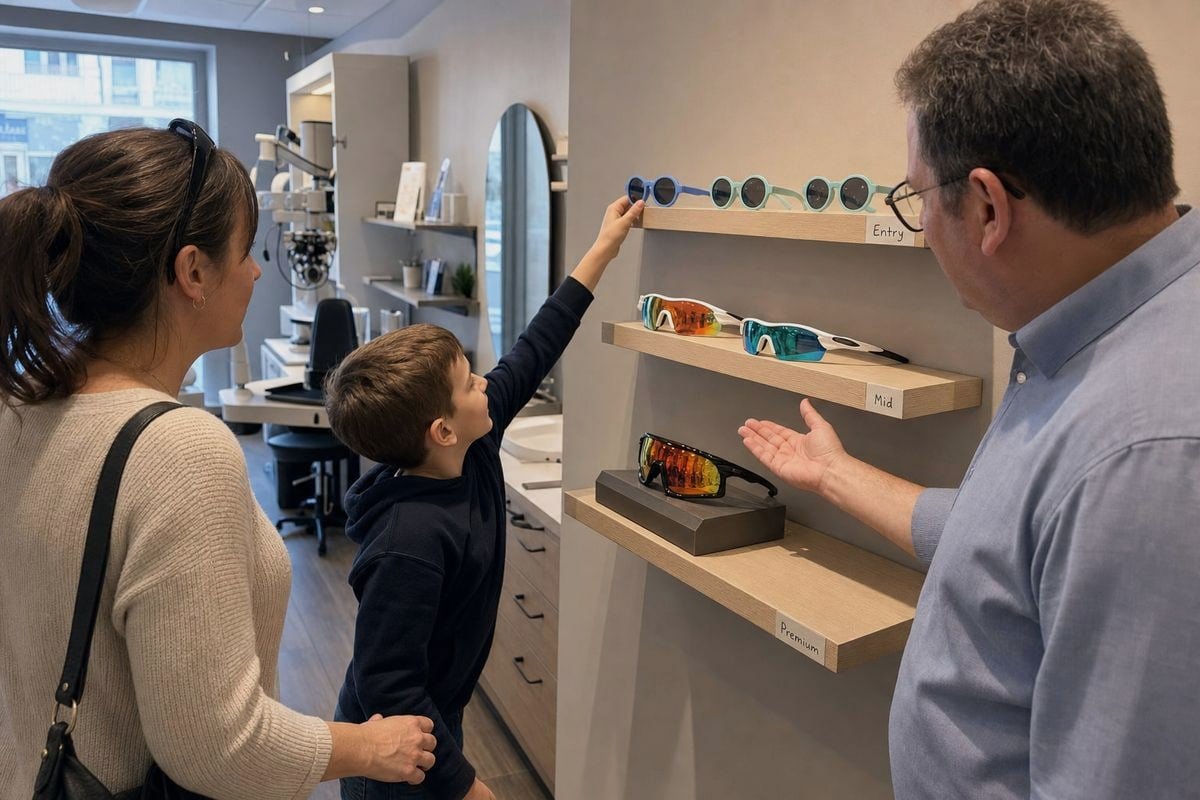
Optometry stores are not novelty shops. They sell trust. So the pricing structure has to let staff present clear choices to parents without a long explanation. In my experience quoting optical companies across 20+ countries, three tiers hit the sweet spot. Two tiers feel thin. Five tiers confuse everyone.
Start with landed cost, not factory price
Never build a tier from the ex-factory price alone. Freight, duties, packaging upgrades, and quality control 1 can add 15–30% to your real cost, especially on smaller orders. We always encourage buyers to calculate the full custo de chegada 2 per unit before they lock in retail pricing. If you skip this step, your "profitable" entry tier can quietly lose money.
A sample three-tier ladder
Here is a simplified ladder we often discuss with optical buyers:
| Tier | Product profile | Typical wholesale range | Target retail markup |
|---|---|---|---|
| Entry | Basic frame, UV400 lenses, simple packaging | $2–$4 per unit | 2.5x–3x |
| Mid | TR90 or flexible frame, more colorways, better fit | $4–$7 per unit | 3x |
| Premium | Lentes polarizadas 3, TPEE comfort, branded packaging | $7–$12 per unit | 3x–4x |
The exact numbers shift with order size and customization. But the logic holds. Each tier serves a different parent: the budget shopper 4, the value shopper, and the safety-first premium buyer. One SKU cannot serve all three. Three tiers can. And staff can explain the differences in under thirty seconds, which matters at a busy dispensing desk.
How do I set MOQ and volume discounts without undervaluing my kids eyewear brand?
A buyer from Australia once told me she avoided a competitor because their deep bulk discounts made her question the frame quality. That conversation shaped how I think about volume pricing.
Set a realistic minimum order quantity per style, then offer modest volume discounts of roughly 5–12% at breaks like 500, 1000, and 3000 units. Allow mixed-SKU orders to reach thresholds, and reward larger commitments with shipping or warranty benefits instead of extreme price cuts.
Discounts should reward commitment, not signal desperation. When we price pediatric eyewear at our factory, we protect the perceived value of the product because our optical customers resell on trust, not on price alone. A frame that sits on an optometrist's shelf next to prescription eyewear cannot look like a dollar-store item, and its pricing cannot behave like one either.
Keep quantity breaks shallow and clear
Steep discount curves train buyers to wait for bigger deals and squeeze your margin on every reorder. Shallow, predictable breaks do the opposite. They make budgeting easy and reordering routine, which improves inventory turnover for the store.
| Order volume | Discount off base wholesale | Added benefit |
|---|---|---|
| MOQ – 499 units | 0% | Standard terms |
| 500 – 999 units | ~5% | Priority production slot |
| 1000 – 2999 units | ~8% | Free display stand or POP support |
| 3000+ units | ~10–12% | Free shipping or extended replacement warranty |
Use non-price bulk purchase incentives
Notice the third column. Free displays, extended warranties, and marketing kits 5 act as bulk purchase incentives without gutting your price ladder. A frame replacement benefit is especially powerful in the kids segment, because parents fear breakage and optical staff love a warranty story.
Allow mixed-SKU flexibility
Optometry stores rarely need 1000 units of one style. With around 800 existing styles in our catalog, we let buyers mix colors, sizes, and models to hit a volume threshold. This lowers their risk, fills their display with variety, and still gives us efficient production runs. Everyone wins, and nobody undercuts the brand.
Should I offer different pricing tiers for TR90 versus TPEE kids sunglasses styles?
The trade-off between TR90 and TPEE comes up in almost every quotation our sales team prepares. The two flexible frame materials feel different on a child's face, and they should sit differently on a price list too.
Yes. TR90 styles suit your entry and mid tiers because the material is light, durable, and cost-efficient, while softer TPEE styles and TR90-plus-TPEE hybrids justify mid and premium tiers thanks to superior flexibility, comfort, and safety for younger children.

Material-driven price brackets are one of the cleanest ways to build tiers, because the difference is real and easy to demonstrate. Staff can literally bend a TPEE temple in front of a parent. That physical proof supports a higher price better than any brochure.
How the materials compare for pricing purposes
| Fator | TR90 | TPEE |
|---|---|---|
| Flexibilidade | Alto | Very high, almost unbreakable bend |
| Peso | Muito leve | Very light and soft-touch |
| Best age fit | Ages 5–12 | Babies, toddlers, active young kids |
| Safety feel | Impact-resistant | Extra-soft, gentle on skin |
| Suggested tier | Entry to mid | Mid to premium |
Layer lens features on top of material
Material sets the floor of each tier. Lens spec sets the ceiling. Standard Proteção UV400 6 should be non-negotiable in every tier, since no optometrist can defend selling kids sunglasses without full UV blocking. Polarized lenses, mirrored coatings, and gradient shield lenses then push a style upward. One of our sporty wraparound shields with a mirrored orange-to-gold lens sells naturally as a premium item, while a soft matte two-tone round frame with standard smoke lenses fits perfectly at entry or mid level. Same catalog, different tiers, clear logic.
Hybrids deserve their own note
TR90 frames with TPEE temples are our most requested hybrid. They combine structure with softness at the contact points behind the ears. I recommend positioning hybrids at the top of the mid tier or the bottom of the premium tier. They give the store a strong step-up story without the full premium price, which smooths the upsell path for staff.
How can I use OKAY EYEWEAR's ready styles to keep tiered pricing simple for optometry buyers?
Fifteen years of running eyewear production has taught our team one clear lesson: new optical accounts stall when pricing requires custom molds and long development cycles before the first order.
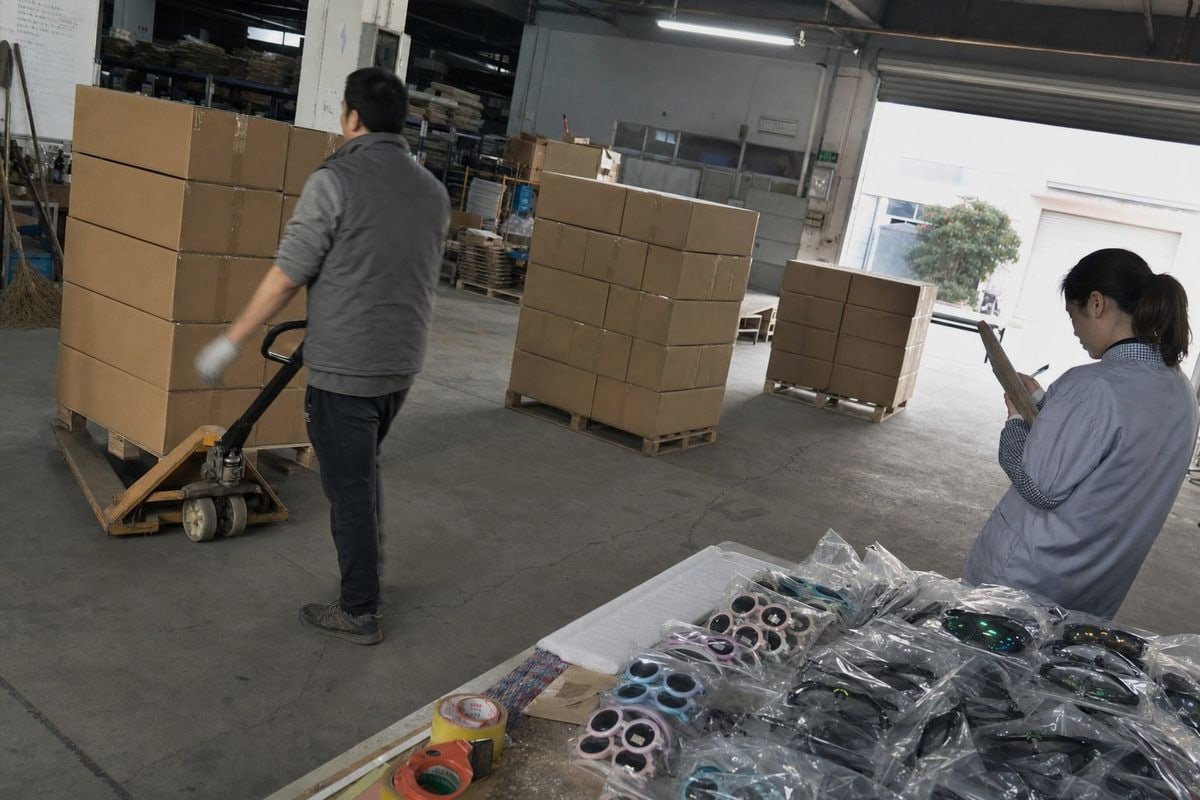
Use our roughly 800 ready styles to build a no-mold three-tier program: pick entry styles from basic UV400 rounds, mid styles from TR90 flexible frames, and premium styles from polarized TPEE options, then add your logo and packaging through OEM/ODM without tooling investment.
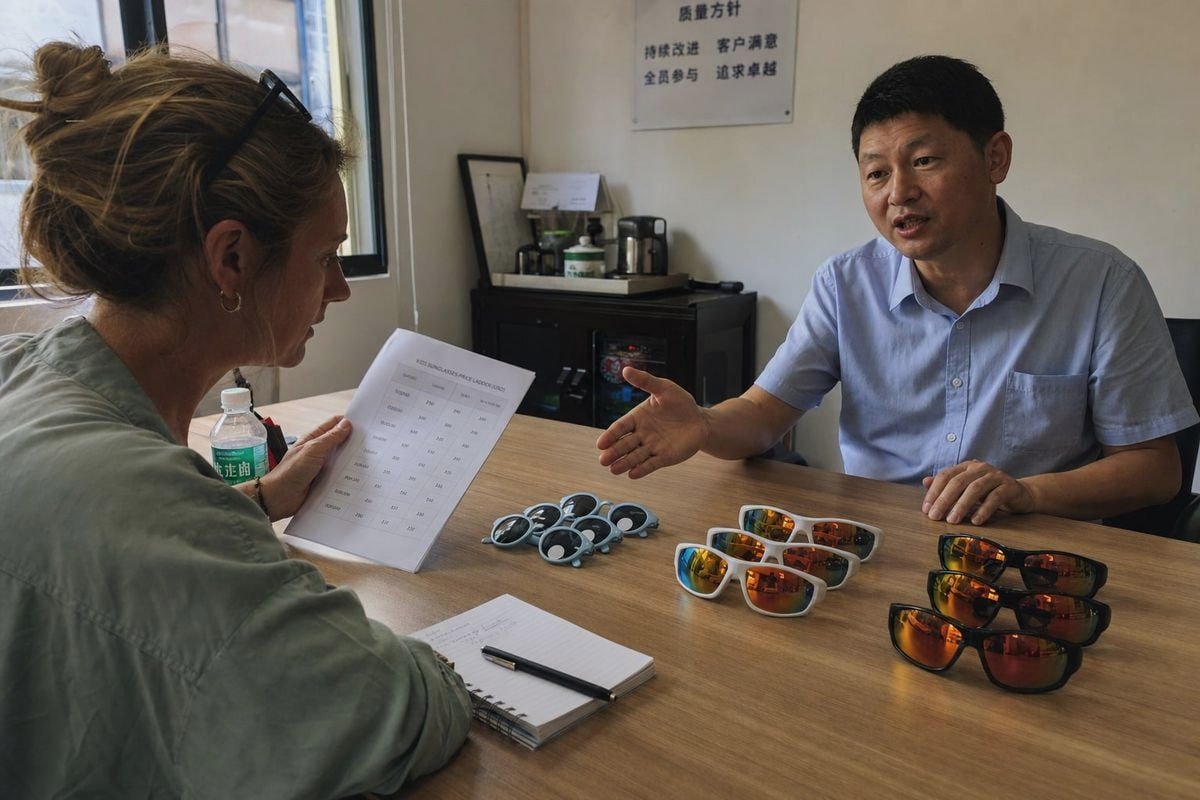
Ready styles remove the biggest friction in wholesale pricing: uncertainty. When an optical buyer selects from an existing catalog, we can quote fast, confirm the minimum order quantity per style, and ship samples within days. There is no mold fee to amortize across the price, so the tier ladder stays clean and easy to explain.
A practical way to build your assortment
Here is the process I walk new optometry buyers through:
- Choose two or three entry styles, such as soft round frames in gentle two-tone colors like powder blue and mint. These are approachable, unisex, and easy for parents to say yes to.
- Add three or four mid-tier TR90 styles in stronger colorways with better fit adjustment. This becomes your volume workhorse and drives inventory turnover through the summer season.
- Cap the range with one or two premium pieces, like a white sport wraparound with an iridescent mirrored shield lens or a polarized TPEE style. These anchor the display and make the mid tier look like great value.
- Set your MSRP for each tier at roughly 2.5x to 4x your landed cost, then check it against local competitors before finalizing.
Add branding without complexity
Our OEM/ODM support covers custom logos 7, lens tints, colors, and retail-ready packaging. For an optometry environment, professional packaging matters more than buyers expect. A clean box and a case with the store's branding turn a $15 impulse item into a credible pediatric eyewear purchase. Because we handle QC in our own 5S-managed workshop, buyers can commit to a tier program knowing reorders will match the first shipment. Consistency is what keeps a three-tier system trustworthy season after season.
Conclusão
Flat pricing wastes margin and confuses staff. Build three tiers from landed cost, keep volume discounts shallow, price by material and lens features, and start with ready styles to launch fast.
Notas de rodapé
1. Links to the international standard for quality management systems in manufacturing. ↩︎
2. Defines the total cost of a product including shipping and taxes. ↩︎
3. Explains how polarized technology reduces glare for improved visual comfort. ↩︎
4. Relates to consumer segments and purchasing behavior based on price sensitivity. ↩︎
5. Defines the collection of media used to promote a brand or product. ↩︎
6. Describes the industry standard for blocking 100% of harmful UV rays. ↩︎
7. Discusses the significance of logo design in establishing brand identity and recognition. ↩︎
Mais Artigos que Você Pode Gostar

1 de agosto de 2026
A Fábrica Deve Lidar com a Embalagem e Rotulagem de Óculos de Sol Infantis, ou Usar um Fornecedor Designado?

1 de agosto de 2026
Armazém Próprio vs. Envio Direto do Fornecedor: Qual Reduz os Custos de Devolução para Marcas de Óculos de Sol Infantis?

1 de agosto de 2026
Armazém Direto ao Porto ou Estiva no Exterior: Qual Economiza Mais no Envio de Óculos de Sol Infantis?
Procurando um Parceiro Confiável em Óculos Infantis?
Explore mais de 800 estilos prontos e suporte completo OEM/ODM adaptado à sua marca.
Entre em Contato English
  Español de México
  Deutsch
  Français
  日本語
日本語  العربية
  Português do Brasil