How to Convey EDI Orders to Non-EDI Factories When Sourcing Kids Sunglasses from China?

Conveying EDI orders to non-EDI factories is a headache we see weekly at our Taizhou workshop. Retyped SKUs, missed lens specs, wrong cartons — one slip delays your whole kids sunglasses launch.
To convey EDI orders to non-EDI factories in China, automatically convert your EDI 850 purchase orders into PDF, Excel/CSV, or supplier-portal formats, require written acknowledgment within 24–48 hours, and track changes and ship notices through one shared, structured channel.
That is the short answer. Below, I will walk through each step in detail, using real examples from kids sunglasses production. Let’s start with the translation problem itself.
What steps can I take to translate my EDI purchase orders into a format my China factory can actually use?
A buyer from Australia once sent our sales team a raw EDI 850 file EDI 850 purchase orders 1 for polarized kids sunglasses. Our production planners could not read it. We solved it together in one afternoon — with Excel.
Convert each EDI purchase order into a human-readable document: export the 850 to Excel or PDF, map every data field to plain labels, add bilingual terms if possible, and include SKU, color, lens type, quantity, packaging, ship-to, and due date. Send it through one agreed channel.

The core idea is simple. Your EDI system speaks in structured segments. A factory floor speaks in work orders, pick lists, and carton marks. Your job is to build a clean bridge between the two. The good news is that most EDI platforms and ERPs can export orders automatically. You rarely need to retype anything by hand.
Step-by-step conversion process
First, identify which EDI documents actually matter. For most kids eyewear orders, that means the purchase order (850), the acknowledgment (855), the advance ship notice 2 (856), and the invoice (810). Everything else is secondary.
Second, build a conversion template. Map each EDI field to a plain-English column. In our experience, orders for children's sunglasses carry more variant data than adult styles — frame color, temple color, lens coating, age size, and gift packaging can all differ line by line. A wraparound sport shield in glossy black with an orange-to-gold mirrored lens is a different SKU from the same shield in white with a red-to-teal gradient lens. If your template drops even one attribute, the factory may pick the wrong variant.
Third, agree on the delivery format with your supplier. Here is how the common options compare:
| Format | Factory effort | Data accuracy | Melhor para |
|---|---|---|---|
| PDF via email | Muito baixo | Medium (manual re-entry) | First orders, small factories |
| Excel/CSV | Baixo | High (structured data back) | Most kids eyewear orders |
| Supplier portal | Médio | Muito alto | Repeat, high-volume suppliers |
| Middleware/API | Low for factory | Muito alto | Scaled, multi-supplier programs |
Fourth, keep field names consistent from order to order. When our team receives the same template every time, we process orders faster and make fewer mistakes. Consistency beats sophistication.
Finally, always include the original EDI PO number on the converted document. That reference ties your internal system, the factory's paperwork, and the eventual shipment together.
How do I make sure order accuracy and timelines don't suffer when my supplier isn't EDI-integrated?
Years ago, a distributor's emailed PO listed "blue frame" with no Pantone reference 4. We had three blues in that round retro style — including a periwinkle front with mint temples. The clarification round cost eleven days.
Protect accuracy and timelines by requiring order acknowledgment within 48 hours, using one master order document with version numbers, confirming every change in writing, cross-checking pre-shipment samples against the original EDI data, and setting milestone dates for sampling, production, and shipping.
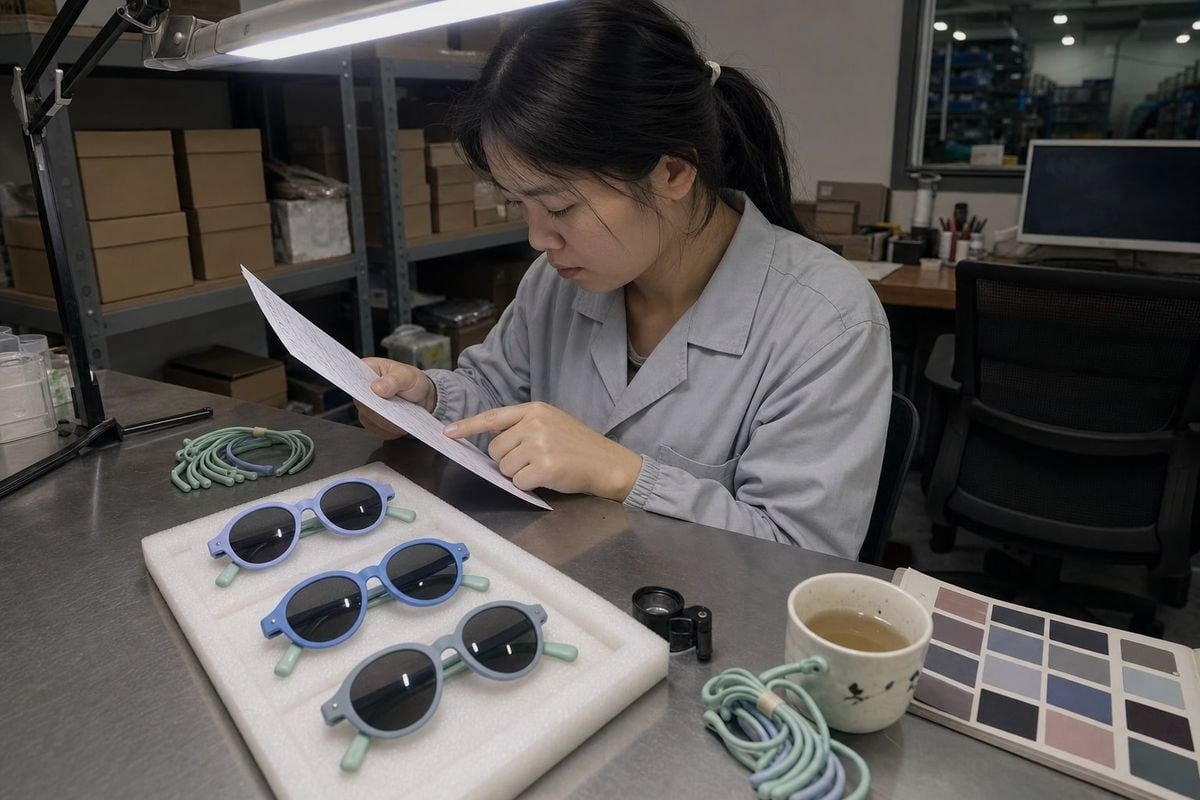
Accuracy problems with non-EDI suppliers almost never come from bad intent. They come from missing structure. EDI enforces discipline automatically; without it, you have to enforce that discipline through process. In our 15 years of making children's eyewear, the buyers who run the smoothest manual workflows all do the same few things.
Build a closed acknowledgment loop
Never assume an order was received and understood. Require your factory to confirm three things in writing: receipt of the order, agreement with quantities and specs, and the confirmed ship date. This mirrors the EDI 855 acknowledgment, just done by a human. If a factory cannot commit to a 48-hour acknowledgment, that tells you something about how they will handle production too.
Control versions ruthlessly
Change orders are where manual workflows break. A kids sunglasses order might change lens coatings, split shipments, or swap gift-box artwork mid-cycle. Every revised document should carry a version number and a change summary at the top. The factory should confirm the new version and explicitly retire the old one. When our planners receive "PO-2041 Rev 3," we stamp Rev 1 and Rev 2 as void so no one on the floor works from stale paper.
Verify before shipment, not after
Children's products carry extra labeling and compliance sensitivity, so a mis-pick is costly. Use this simple control checklist:
| Control point | Timing | What to check |
|---|---|---|
| Order acknowledgment | Within 48 hours of PO | Quantities, SKUs, ship date |
| Pre-production sample | Before mass production | Colors, lens type, frame flexibility |
| Mid-production check | ~50% complete | Assembly quality, packaging print |
| Pre-shipment verification | Before booking | Carton marks, labels vs. original EDI data |
Photo verification over WeChat or email works well at each stage. Pictures cross language barriers faster than paragraphs do.
Should I ask my kids sunglasses factory to adopt EDI, or is a manual workaround more practical for my business?
The trade-off we weigh with buyers is always the same: integration depth versus onboarding speed. A brand testing 3,000 units across five styles has very different needs from a chain reordering 50,000 units quarterly.
For most kids sunglasses buyers, a structured manual workaround is more practical. Full EDI adoption only pays off for high-volume, long-term supplier relationships. Start with Excel or PDF workflows, then upgrade strategic factories to a portal or lightweight EDI connector as volumes grow.

Here is the honest picture from the factory side. Our workshop runs about 120 workers and roughly 800 existing styles. We are operationally capable — 5S-managed floor 5, structured QC, custom packaging lines — but a full EDI stack is a real cost in software, testing, and trained staff. For a smaller or mid-sized factory, that investment only makes sense when one buyer's volume justifies it. Most Chinese eyewear factories will quietly deprioritize a buyer who demands EDI onboarding before the first meaningful order.
Compare the two paths honestly
| Fator | Full EDI adoption | Structured manual workflow |
|---|---|---|
| Onboarding time | Semanas a meses | Days |
| Setup cost for factory | Significant | Quase zero |
| Error risk | Very low once live | Low with good controls |
| Supplier pool | Narrow | Wide |
| Scalability | Excelente | Moderado |
| Best fit | Strategic, high-volume partners | New or seasonal suppliers |
A phased approach works best
In practice, I recommend a three-phase model. Phase one: run your first orders on Excel/CSV templates with strict acknowledgment rules. This lets you test a factory’s quality and communication with almost no friction — the same logic behind starting with existing styles instead of investing in custom molds. Phase two: once reorders become regular, move the factory onto a lightweight supplier portal where they confirm orders and upload shipment data. Phase three: for your top one or two factories, evaluate EDI-as-a-Service connectors or middleware, possibly with incentives like better payment terms to share the onboarding effort.
This phased path protects your timeline now and your scalability later. You never force a choice between full automation and manual chaos.
What communication tools can help me bridge the gap between my EDI system and a non-EDI eyewear manufacturer?
One lesson our export team learned early: the tool matters less than the rule that only one tool holds the official order. Scattered WeChat messages, emails, and calls create five versions of the truth.
Use a layered toolset: a shared cloud spreadsheet or supplier portal as the single source of order truth, email with PDF attachments for formal documents, WeChat or WhatsApp for fast clarifications and photo approvals, and optional middleware to sync everything back into your EDI system.
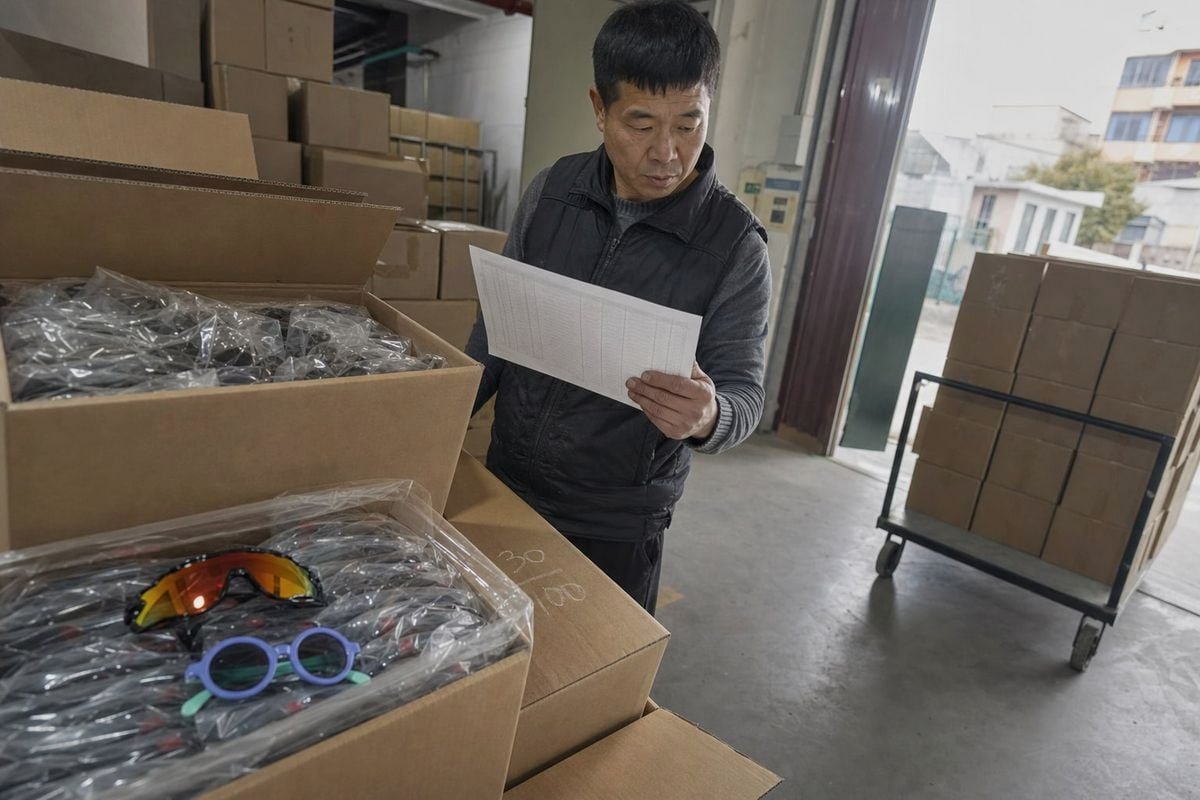
No single tool covers the whole workflow. The buyers we work with most smoothly combine three or four tools, each with a defined job. The key is assigning one — and only one — as the authoritative order record.
The practical tool stack
Cloud spreadsheets like Google Sheets are the most underrated bridge. Both sides can view the same order lines in real time. You update quantities; the factory updates production status and ship dates. Note that Google services can be unreliable inside mainland China, so many buyers use a mirrored file, an Alibaba Cloud 6 sheet, or a shared Excel file exchanged on a fixed schedule instead.
Supplier portals sit one level up. A lightweight web portal lets factory admin staff view orders, click to acknowledge, and enter shipment details — data that your system can convert back into EDI 855 and 856 documents automatically. Training a factory clerk on a simple portal takes an afternoon.
WeChat and WhatsApp handle speed. Time-zone gaps between Europe or Australia and China shrink when quick questions get answered on mobile. Photo confirmation is especially powerful for kids sunglasses: a picture of the approved periwinkle-and-mint sample or the mirrored gradient shield lens removes all ambiguity before mass production starts. Just remember the rule — chat messages clarify, but the master document decides.
Middleware and third-party EDI conversion services close the loop for scaled programs. They translate your EDI stream into factory-friendly outputs and convert factory responses back, keeping compliance documentation for children’s products synchronized without any software on the factory side. QR-code traceability tags 7 linking cartons back to the original EDI PO number add another safeguard for audits and recalls.
Conclusão
Bridging EDI orders to non-EDI factories does not require forcing software on your supplier. Convert orders cleanly, demand acknowledgments, control versions, verify with photos — and your kids sunglasses program stays accurate, compliant, and on schedule.
Notas de rodapé
1. Explains foundational EDI concept referenced throughout the article. ↩︎
2. Explains ANSI X12 EDI transaction standards like the 856 advance ship notice referenced in the text. ↩︎
3. Background concept on ERP systems used for EDI export automation. ↩︎
4. Industry color-matching standard relevant to frame color specification accuracy. ↩︎
5. Explains the 5S lean manufacturing methodology mentioned for factory operations. ↩︎
6. Official reference for the cloud service alternative mentioned for mainland China access. ↩︎
7. Background on QR code technology used for carton traceability and audits. ↩︎
Mais Artigos que Você Pode Gostar

1 de agosto de 2026
A Fábrica Deve Lidar com a Embalagem e Rotulagem de Óculos de Sol Infantis, ou Usar um Fornecedor Designado?

1 de agosto de 2026
Armazém Próprio vs. Envio Direto do Fornecedor: Qual Reduz os Custos de Devolução para Marcas de Óculos de Sol Infantis?

1 de agosto de 2026
Armazém Direto ao Porto ou Estiva no Exterior: Qual Economiza Mais no Envio de Óculos de Sol Infantis?
Procurando um Parceiro Confiável em Óculos Infantis?
Explore mais de 800 estilos prontos e suporte completo OEM/ODM adaptado à sua marca.
Entre em Contato English
  Español de México
  Deutsch
  Français
  日本語
日本語  العربية
  Português do Brasil