How to Choose Kids Sunglasses Nose Bridge Design for Your Market’s Face Shapes?
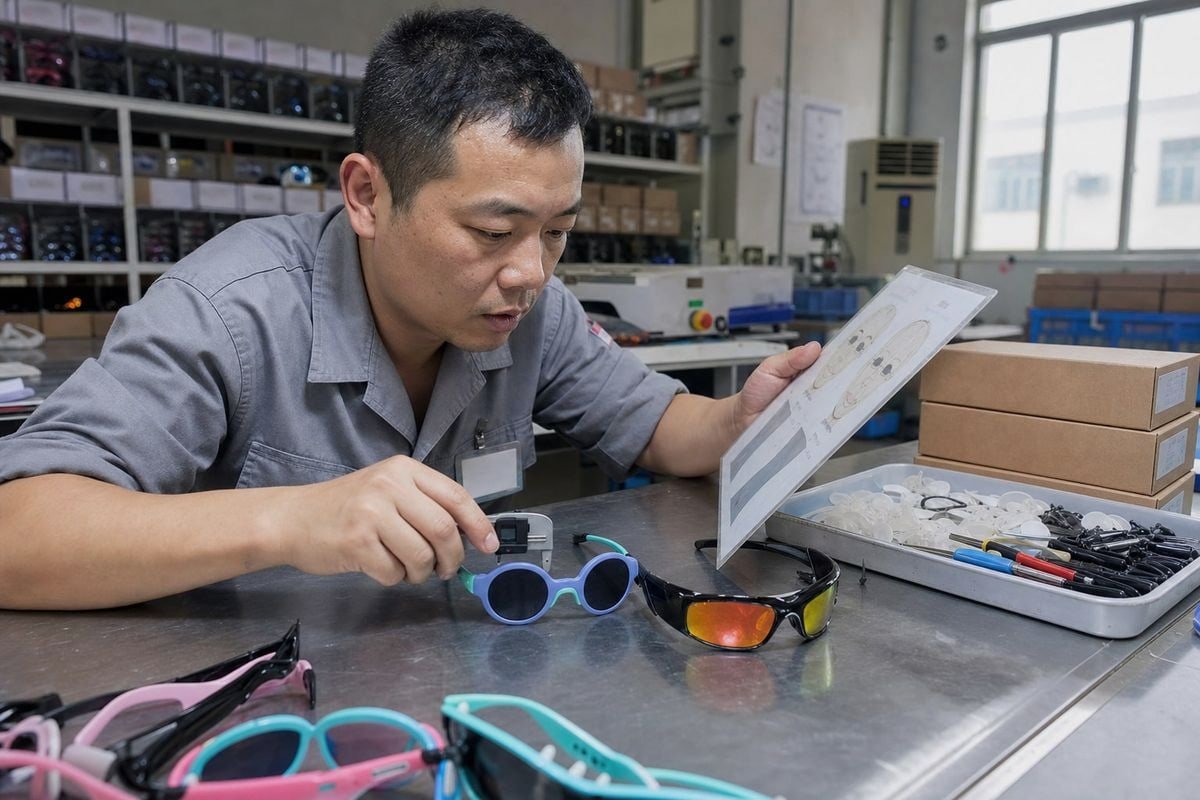
Choosing the right kids sunglasses nose bridge design decides whether frames stay on a child’s face or end up returned. On our production line, we see this problem every week: buyers pick styles by color and shape, ship them to their market, and then discover the frames slide down flat nose bridges or dig into narrow ones. Returns pile up, reviews mention “keeps falling off,” and the brand takes the blame — not the factory. The fix is simpler than most buyers expect: match bridge geometry to the facial anatomy of your target market before you order, not after complaints arrive.
Choose kids sunglasses nose bridge design by matching bridge height, bridge width, and cheekbone prominence to your market’s facial anatomy. Use low bridge fit with larger pads for flatter profiles, saddle bridges for active kids, and adjustable nose pads where face shapes vary widely.
That is the short answer. The rest of this guide breaks it down step by step. I will cover ethnic face profiles, pre-production fit testing, materials that stop slipping, and how to customize bridges without paying for new molds.
What Nose Bridge Shapes Work Best for Different Ethnic Face Profiles in My Target Market?
A distributor from Southeast Asia once returned a sample set to our Taizhou factory with one note: "Beautiful frames, but they sit on the cheeks." That single sentence taught our design team more than any spec sheet. The frames were built for a higher nasal root 1 than his market's children actually have.
Markets with flatter nasal profiles and higher cheekbones need low bridge fit designs with taller, larger nose pads. Markets with higher, narrower bridges suit keyhole bridge or standard saddle bridge geometry. Segment by facial anatomy — bridge height, width, and cheekbone prominence — not by country alone.
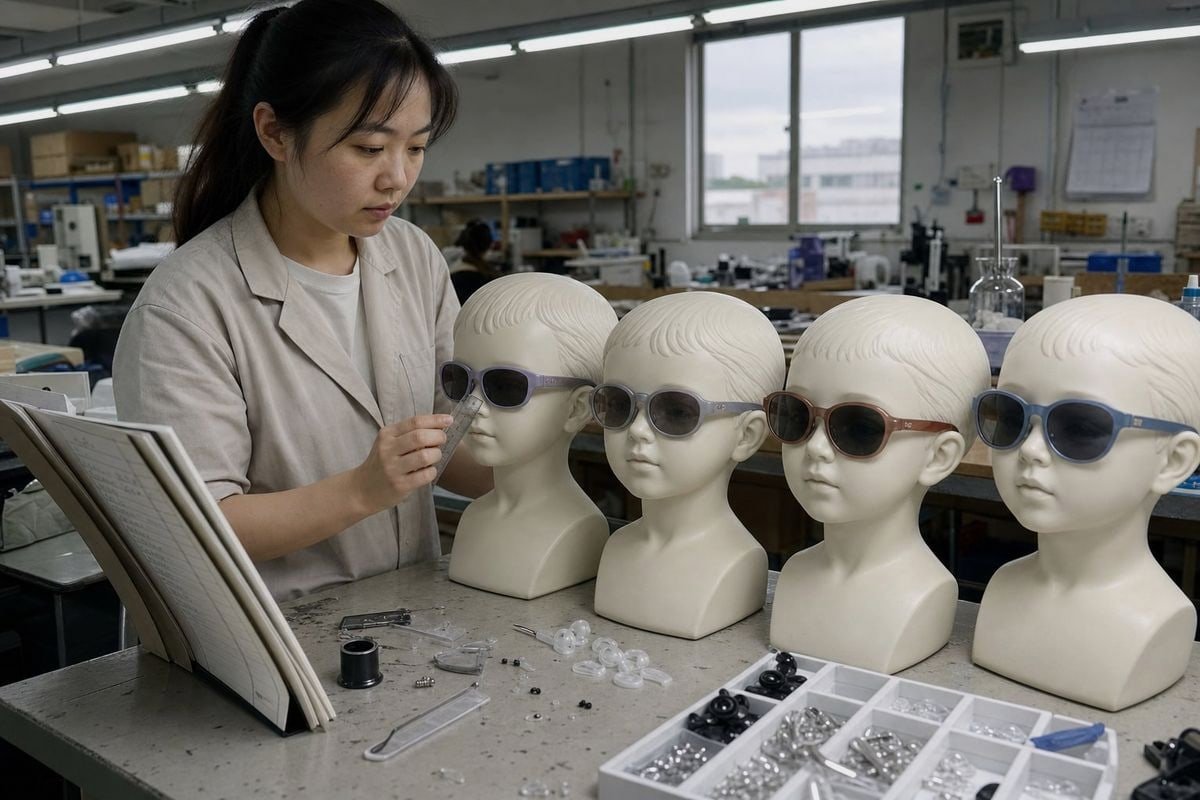
The first thing to understand is that three different measurements get confused all the time: bridge height, bridge width, and cheekbone height 2. They are separate fit problems. Bridge height is how high the nasal root sits relative to the pupils. Bridge width is the gap the frame must span, often listed as Distance Between Lenses (DBL) 3 on spec sheets. Cheekbone height determines whether the lens bottom touches the face. Mixing these up leads to poor product selection, because a frame can have the right width but the wrong height, and it will still slide.
Children add another layer. Kids have lower, less developed nose bridges, fuller cheeks, and smaller ears than adults. This is why shrunken adult frames almost always fail on toddlers. Pediatric eyewear sizing 4 has to start from a child's facial anatomy, not a scaled-down adult template.
Matching Bridge Geometry to Regional Profiles
Some advanced brands now use craniofacial cluster mapping — regional anthropometric data 5 that distinguishes "low-wide" nasal profiles from "low-narrow" ones. You do not need a research lab to apply the same logic. Here is a practical starting matrix we share with buyers from over 20 countries:
| Market Profile | Typical Anatomy | Recommended Bridge Design |
|---|---|---|
| East / Southeast Asian markets | Lower bridge, higher cheekbones, wider nasal base | Low bridge fit: taller built-up pads, adjusted lens tilt, curved temples |
| Northern European markets | Higher, narrower bridge | Keyhole bridge 6 or narrower saddle bridge with smaller DBL |
| Mediterranean / Middle Eastern markets | Medium-high bridge, prominent root | Standard saddle bridge, medium DBL |
| Mixed / multicultural markets (US, AU, UK) | Wide variation within one market | Adjustable nose pads or dual-fit SKU strategy |
| African markets | Often lower, wider nasal base | Low-wide bridge geometry with broad, soft pad contact |
The keyhole bridge deserves a special note. Its shape grips higher on the nasal root, so it works well for narrow or underdeveloped bridges where a flat saddle would slip. For flatter profiles, though, a keyhole just floats above the nose — that is where built-up low bridge fit pads earn their keep by preventing the frame from resting on the cheeks and fogging the lenses.
How Do I Test Nose Bridge Fit and Comfort Before Committing to a Full Production Order?
Before any of our buyers confirm a container order, we push them through a sampling loop — even the ones in a hurry. One Australian brand skipped local wear testing on their first order years ago, and the lesson cost them a season of reviews. They never skipped it again.
Test fit before mass production by ordering samples, running short wear trials on 10–20 children in your actual market, and checking three signals: sliding within five minutes, red pressure marks within thirty minutes, and gaps between bridge and nose. Adjust specs before tooling the full run.
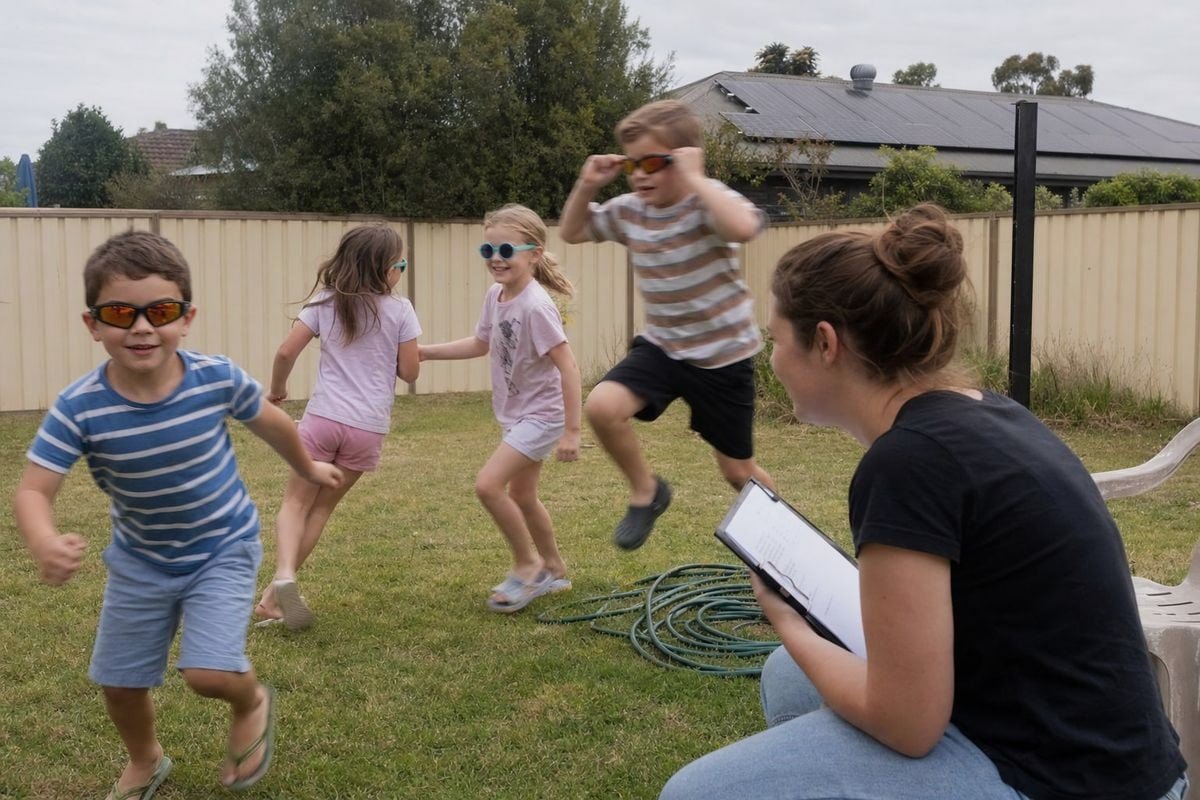
Fit testing does not require expensive equipment. It requires discipline and real children from your real market. Here is the process we recommend to procurement managers, refined over fifteen years of running samples through our workshop:
A Five-Step Pre-Production Fit Protocol
- Request physical samples in your target bridge specs. Ask your factory for the exact DBL, pad height, and lens tilt you plan to order. Photos and CAD files hide fit problems that a real face reveals in seconds.
- Recruit a small local panel. Ten to twenty children across your target age range is enough to spot patterns. Include the youngest age you plan to sell to, because toddlers expose bridge flaws fastest.
- Run a static check first. Look for gaps. A good fit leaves little to no space between the bridge and the nose. A visible gap means the geometry is wrong for that face, no matter how the frame looks.
- Run an active wear trial. Have kids run, jump, and look down at a tablet for fifteen to thirty minutes. The head-down posture is important — modern bridge design increasingly considers pantoscopic tilt so the lens stays properly positioned during screen use.
- Read the two failure signals. Constant sliding means the bridge is too wide or the height is mismatched. Quick red marks mean the bridge is too narrow or the pressure is too concentrated.
Interpreting the Spec Sheet
When you review samples, check these numbers against what you observed:
| Spec | Faixa Típica Infantil | O Que Isso Significa Para Você |
|---|---|---|
| Bridge width / DBL | 12–19 mm | Whether the optical center aligns with the child's pupils |
| Pad height | Low / built-up | Whether the frame clears the cheeks on flatter profiles |
| Lens tilt (pantoscopic) | Slight forward tilt | Whether the lens stays aligned when the child looks down |
| Temple curve | Gentle wrap | Whether frame stability comes from the ears, not just the nose |
Bridge width matters more than lens size here. If the DBL is wrong, the optical center sits off-pupil, and even a comfortable frame delivers poor vision and glare protection. We flag this on every sample sheet we send out, because it is the number buyers most often ignore.
Which Nose Bridge Materials Prevent Slipping and Irritation on Active Kids' Faces?
Material choice is a trade-off we weigh on every new style. A harder polymer holds its shape and its optics, but it punishes a wider nasal base. A softer one grips and flexes, but it must still keep the lens stable. Our answer, after years of iteration in TPEE and TR90, is usually a combination rather than a single material.
Flexible TR90 frames with TPEE or silicone bridge contact zones prevent slipping and irritation best. TR90 provides a stable, lightweight structure, while soft TPEE or silicone nose pad inserts grip the skin gently, flex with movement, and avoid pressure marks during active play.

Frame stability on a running, sweating child comes down to two things: grip at the contact points and flex across the structure. Rigid frames transfer every impact and every head shake directly to the nose. Flexible materials absorb that movement instead.
Why Flexibility Is a Fit Feature, Not Just a Safety Feature
TR90 é um thermoplastic with memory 7. It bends and returns to shape, which lets the frame "splay" slightly to adapt to a wider nasal base without pinching. That splay is a real fit mechanism — it spreads contact pressure across a broader area of the bridge instead of clamping two small points. TPEE goes further. It is softer, rubbery to the touch, and grippy even when a child sweats. On many of our best-performing kids styles, we pair a TR90 front with TPEE templados 8, and we use TPEE or silicone in the bridge contact zone. Both materials are also environmentally friendlier options than many legacy plastics, which matters to the European and Australian brands we supply.
The sport shield styles in our range — the wraparound single-lens designs built for cycling and outdoor play — show this clearly. Their molded nose bridge cutout only works because the surrounding material flexes; a rigid shield with the same cutout would bounce on every stride.
| Bridge Material Approach | Grip When Sweaty | Pressure Comfort | Durability for Active Play | Melhor Caso de Uso |
|---|---|---|---|---|
| Hard molded plastic saddle | Baixo | Médio | Alto | Casual, short wear only |
| TR90 molded bridge | Médio | High (flexes) | Muito alto | Everyday kids frames |
| TPEE / rubberized contact zone | Alto | Muito alto | Alto | Toddlers, sport styles |
| Silicone nose pad inserts 9 | Muito alto | Muito alto | Medium (replaceable) | Sports, low bridge fit SKUs |
| Adjustable metal-arm pads with silicone tips | Alto | High (tunable) | Médio | Older kids, optical frames |
One emerging option worth watching: thermal-adaptive polymers that soften slightly at body temperature, letting the bridge self-mold to a child's contours over a few minutes of wear. It is promising for bespoke-feel comfort, though for most volume orders today, a well-designed TPEE contact zone delivers ninety percent of the benefit at a proven cost.
A saddle bridge in a soft material remains the workhorse for active kids. It distributes frame weight evenly across the nasal ridge, which minimizes pressure points and the red marks parents complain about in reviews.
Can I Customize Nose Bridge Design Across My Existing Frame Styles Without New Mold Costs?
A question I hear from nearly every new buyer at trade shows is some version of: "I love this frame, but my market needs a different bridge — do I have to pay for a new mold?" The honest answer is usually no, and it is one of the reasons we keep roughly 800 existing styles on our shelves for brands to build from.
Yes. You can localize bridge fit without new molds by adding silicone nose pad inserts, switching to adjustable nose pads, using modular snap-in bridge inserts, or selecting an existing frame variant with different bridge geometry. Full retooling is only needed for entirely new frame silhouettes.
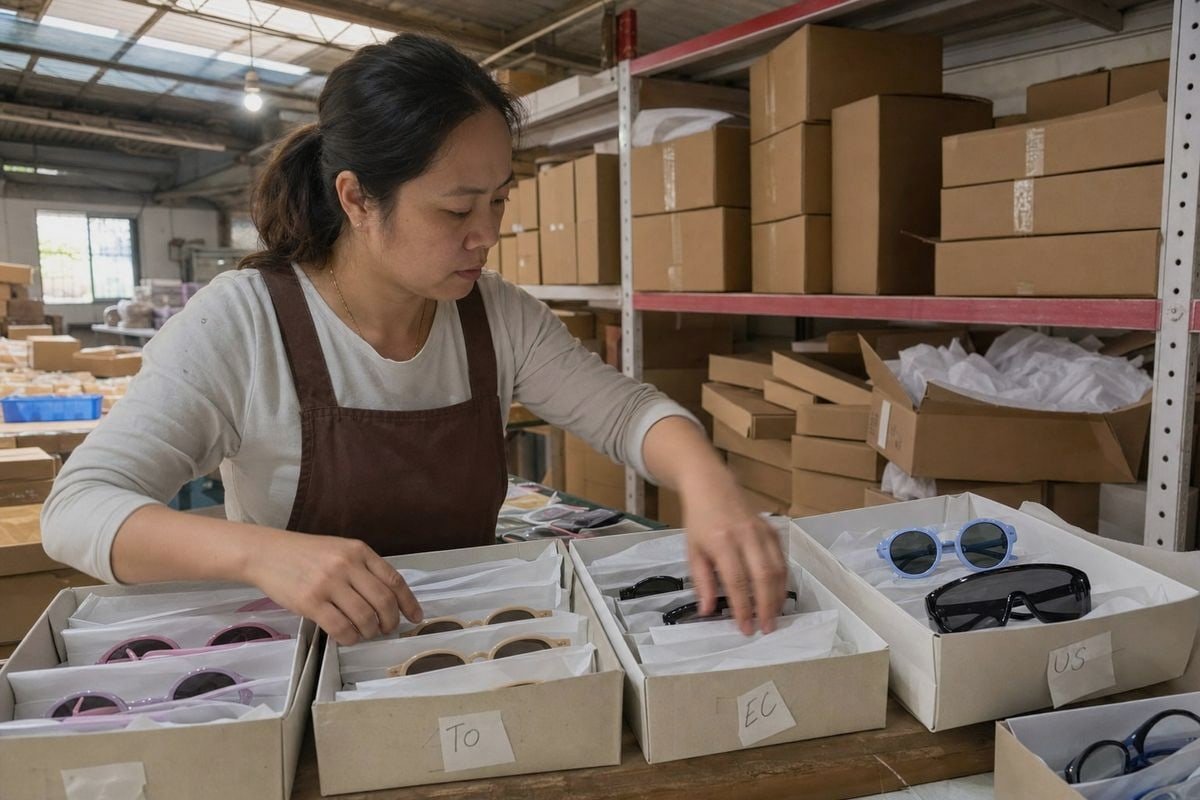
Molds are the biggest fixed cost in eyewear development, so smart buyers exhaust the no-mold options first. In our OEM/ODM work, we walk brands through four escalating levels of bridge customization.
Four Levels of Bridge Customization, From Cheapest to Most Involved
- Add-on pads and inserts. Bonded silicone nose pad inserts or overmolded soft zones can raise the effective pad height on an existing frame. This is often enough to convert a standard style into a low bridge fit variant for Asian or other flat-bridge markets.
- Adjustable nose pads. Swapping a molded bridge for adjustable pad arms lets each family fine-tune height and width at home. This suits asymmetrical faces and fast-growing children, and it extends the usable life of the frame — a genuine selling point on product pages.
- Modular bridge systems. Interchangeable snap-in bridge inserts of varying depths let one frame platform serve multiple markets. You order the same front and temples, then specify shallow inserts for one region and built-up inserts for another. Some pediatric frame catalogs already offer multiple bridge options within a single frame family for exactly this reason.
- Existing-style selection. Sometimes the cheapest customization is choosing a different base. With a large enough style library, there is usually already a frame with the DBL, pad height, and tilt your market needs — no engineering required. That is precisely why we built our catalog to 800 styles: new brands can test a market with low bridge fit and standard fit versions side by side, without any mold investment at all.
There is a real debate here worth addressing head-on. Some buyers insist adjustable nose pads are always the answer, since they compensate for growth and varied bridge shapes. Others prefer simple molded saddle bridges — lighter, nothing for a child to bend or break, nothing for a parent to fiddle with. Both views are partly right. Our position after fifteen years: molded soft bridges win for toddlers and sport styles, adjustable pads win for school-age optical frames and multicultural markets, and a multiple-fit inventory strategy beats forcing either choice when your market spans several facial profiles. So-called universal fit frames sound efficient on paper, but in practice a two-SKU fit strategy — standard fit plus alternative fit — usually cuts returns more than any single "universal" geometry can. Label the fits clearly on your product pages so parents can self-select correctly; anatomy-based fit language now outperforms generic "kids size" wording.
Conclusão
Poor bridge fit quietly kills kids’ eyewear brands through returns and bad reviews. The solution is deliberate: map your market’s facial anatomy, test samples on real children, choose flexible materials, and localize bridge geometry using existing tooling. At our Taizhou factory, we help brands work through exactly these decisions across our TPEE and TR90 kids ranges — because a frame that stays comfortably on a child’s face is the cheapest marketing a brand will ever buy.
Notas de rodapé
1. Background on nasal anatomy explains why bridge height varies across populations. ↩︎
2. Authoritative NIH StatPearls guide on zygomatic bone anatomy and facial prominence. ↩︎
3. ISO 12312-1 sunglasses standard formally defines frame measurement specs like DBL. ↩︎
4. FDA consumer guidance on choosing properly fitting sunglasses for children. ↩︎
5. Defines the population measurement science behind regional facial clustering methods. ↩︎
6. Ophthalmology guidance on sunglasses fit supports discussion of bridge geometry choices. ↩︎
7. Background on thermoplastic materials explains TR90’s flexible, shape-retaining properties. ↩︎
8. Comprehensive Wikipedia entry covering thermoplastic elastomers including TPEE. ↩︎
9. Detailed breakdown of eyeglass components and nose pad functionality. ↩︎
Mais Artigos que Você Pode Gostar



Procurando um Parceiro Confiável em Óculos Infantis?
Explore mais de 800 estilos prontos e suporte completo OEM/ODM adaptado à sua marca.
Entre em Contato English
  Español de México
  Deutsch
  Français
  日本語
日本語  العربية
  Português do Brasil