Hard Case or Velvet Pouch: How to Store Kids’ TPEE Sunglasses Daily?
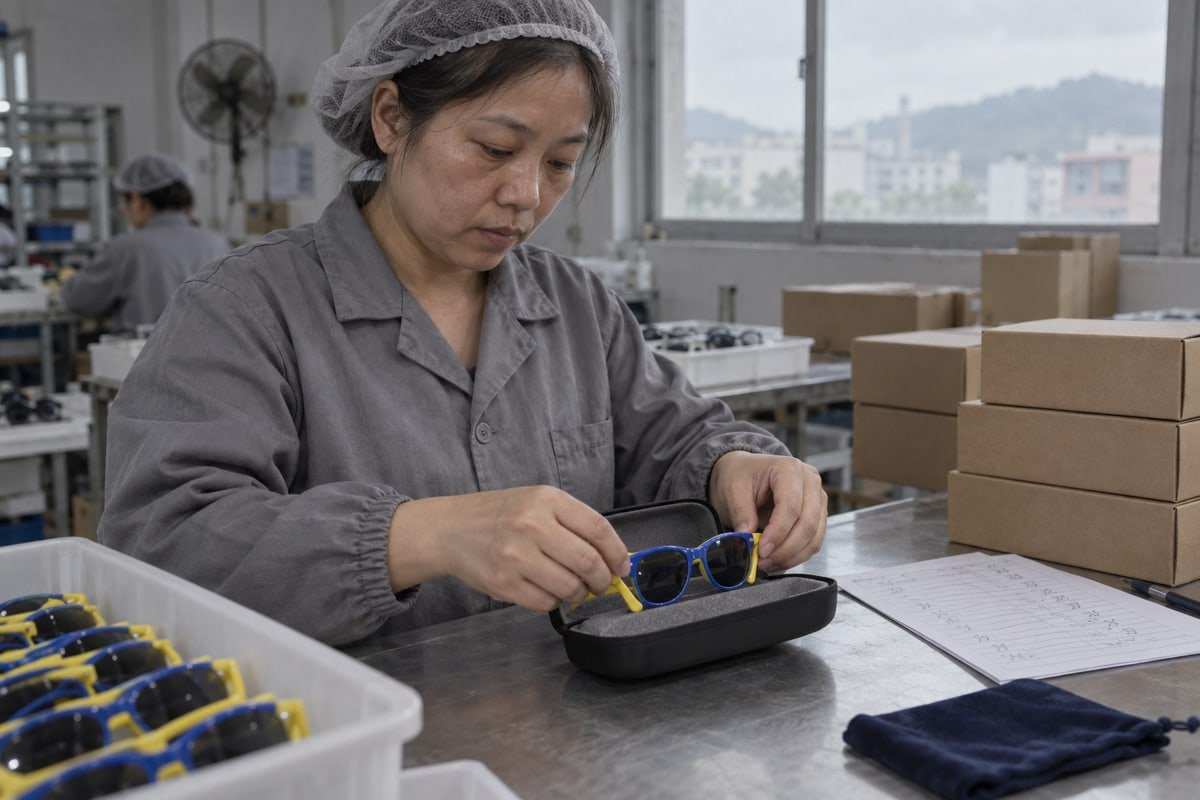
A buyer once asked our factory why kids’ TPEE sunglasses 1 came back scratched after one school term. The frames were fine. The lenses were ruined by loose backpack storage.
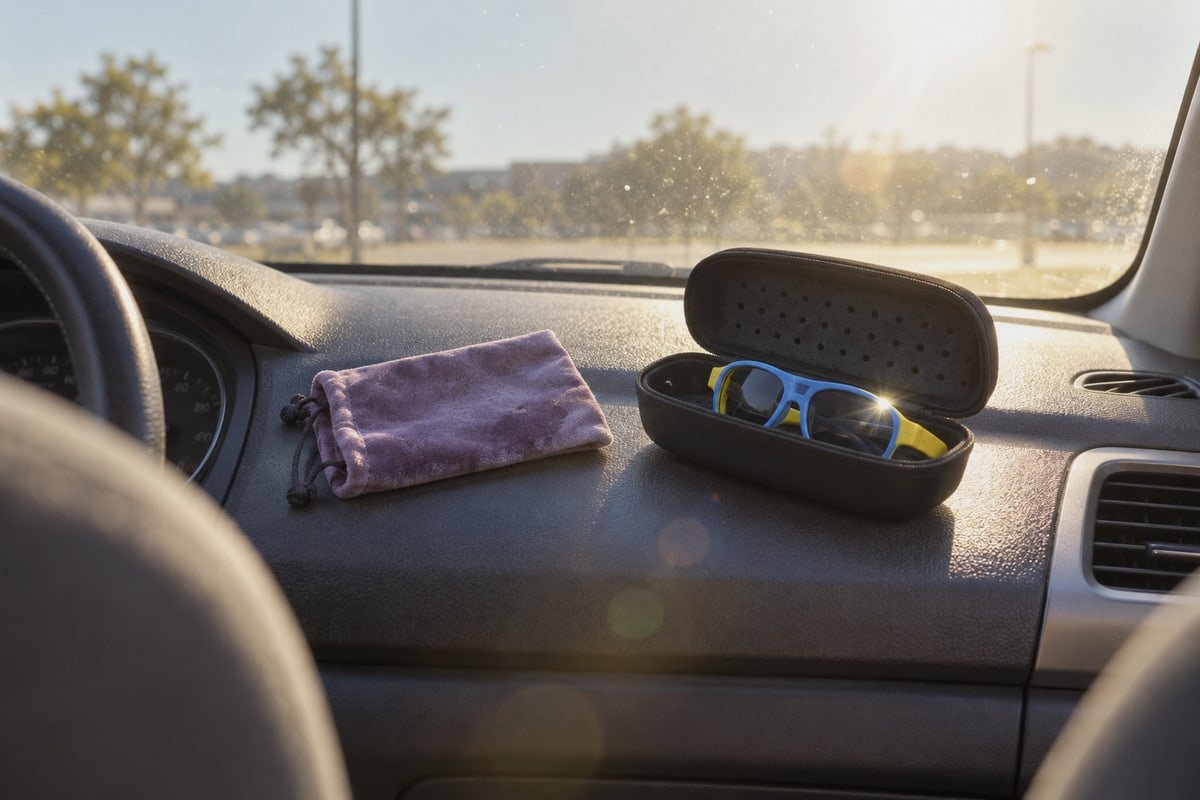
Store kids’ TPEE sunglasses in a hard case by default, especially in backpacks, cars, and travel. Use a velvet pouch only for brief, low-risk storage at home. The flexible frame survives bending, but lenses and coatings still need crush and scratch protection.
That answer sounds simple. In practice, the right storage accessory depends on the child’s routine, the brand’s positioning, and the freight budget. Below, I walk through each decision the way we discuss it with buyers.
How do I choose between a hard case and a velvet pouch for my kids' sunglasses line?
A distributor in Australia recently asked us to quote both options for the same order. Her question was simple: which one will her retail customers actually thank her for?
Choose a hard case when the sunglasses will travel in school bags, strollers, or cars, and choose a velvet pouch when portability and quick access matter more than impact resistance. Most kids' lines do best offering a hard case as standard and a pouch as an add-on.
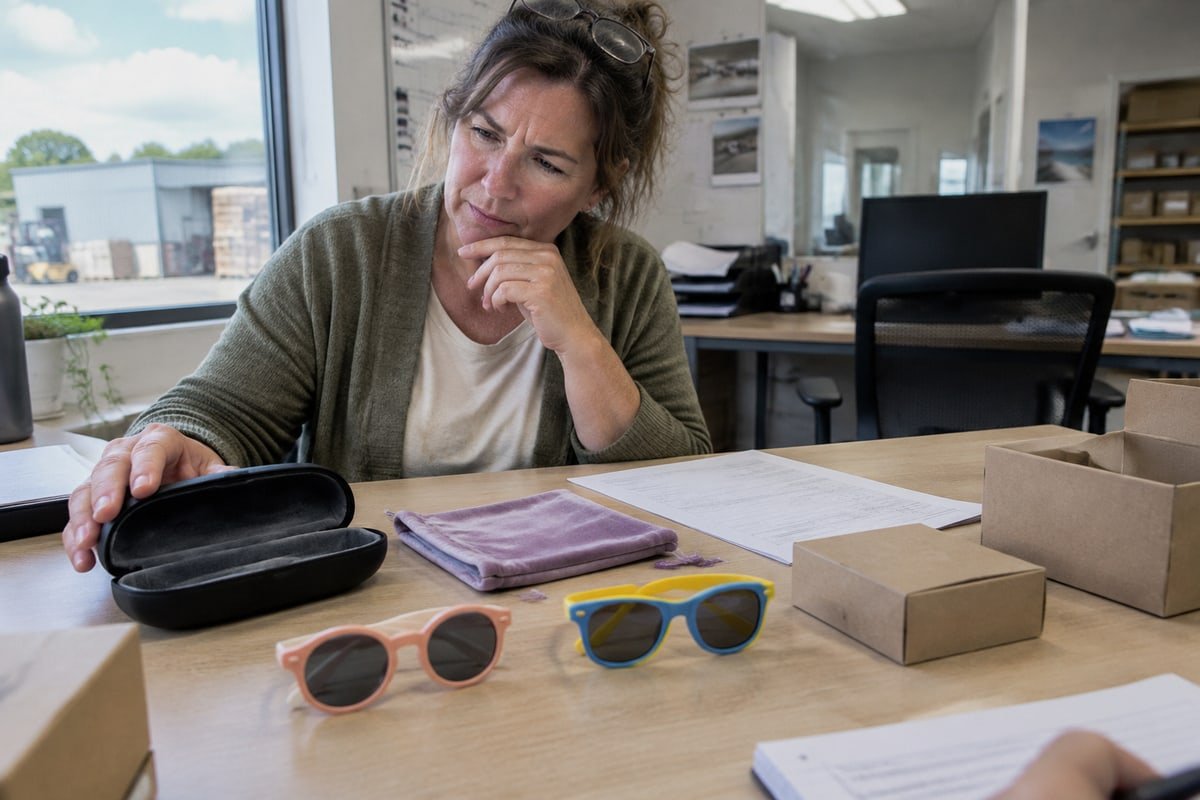
Here is the comparison we share with buyers before they decide.
| Fator | Capa rígida | Velvet pouch |
|---|---|---|
| Crush and impact resistance | Strong protection in bags and luggage | Very limited |
| Proteção contra arranhões | Good, with a soft lining | Good on the surface only |
| Dust and sand | Sealed when closed | Parcial |
| Weight and bulk | Heavier, takes bag space | Light, fits a pocket |
| Child can open alone | Usually yes from age 4 or 5 | Yes, even toddlers |
| Dual use as cleaning cloth | Não | Yes, if microfiber |
| Melhor uso | School, travel, car, outdoors | Home drawer, brief indoor storage |
What each accessory actually protects against
A hard-shell case defends the lenses and hinges against crushing, bending, drops, dust, and sharp objects like keys or toy edges. A soft pouch mainly protects against surface scratches and light dust. That difference matters because kids' sunglasses spend more time in bags than on faces. When a child sits on a backpack, the pouch does nothing.
Match the accessory to the child's day
I usually ask buyers three questions. Does the child carry the sunglasses to school or daycare? Do they ride in a car where the glasses get left on a seat? Do they go to the beach or park with sand and sunscreen around? If the answer to any of these is yes, the hard case wins. If the sunglasses live in a basket by the door, a pouch is enough.
The objection we hear most often
Buyers often say, "TPEE is nearly unbreakable, so why add a bulky case?" I understand the logic. A durabilidade flexível da armação is real, and our TPEE temples bend past ninety degrees and return to shape. But the lens is not TPEE. Even a scratch-resistant lens coating will mark when it rubs against a zipper for a week. Durable frames do not mean durable lenses, and parents notice scratched lenses first.
Can the wrong storage accessory damage flexible TPEE frames over time?
During an incoming inspection last year, our QC team unpacked sample pouches and found the bridges of several TPEE frames pinched inward. The pouches were simply too tight.
Yes. A cramped pouch can exploit TPEE's material memory and slowly misshape the bridge or temples, car-dashboard heat can degrade the polymer and delaminate lens coatings, and damp velvet can trap sweat and bacteria. A spacious, ventilated hard case avoids all three problems.
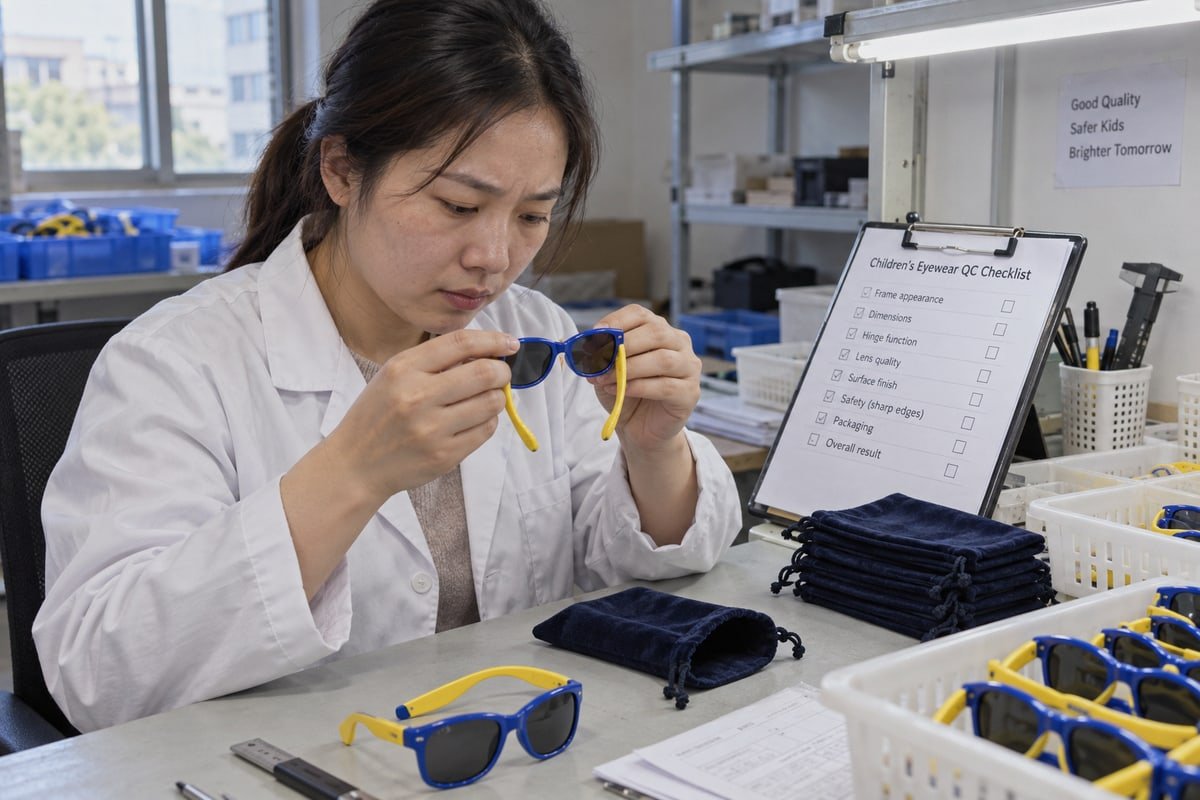
The good news is that every one of these problems is preventable. The bad news is that the damage is slow and quiet, so nobody notices until the fit is wrong.
Material memory and the bridge
TPEE is flexible because the polymer chains move under stress and then relax. That is what makes it safe on a toddler's face. But if a frame sits folded and compressed for weeks, the material can settle into that new shape. We see this most on the bridge and at the temple tips. A pouch that is a few millimetres too small does this. So does stacking several pairs in one drawer. A hard case with proper clearance keeps the frame in its original alignment, which is why we recommend it for overnight and long-term storage.
Heat, coatings, and the car problem
Heat is the second silent killer. A car dashboard in summer gets far hotter than the air outside. That heat softens TPEE and can also cause the lens coating to delaminate at the edges. Once a coating lifts, Proteção UV400 2 stays in the lens material, but the anti-scratch and anti-reflective layers are gone. A hard case does not make the car cool, but it slows the temperature swing and keeps direct sun off the lens.
Hygiene and the matte finish
Kids sweat, drool, and drop things. A standard velvet pouch absorbs that moisture and holds it against the frame. Over time it can harbor bacteria. A ventilated case, or a pouch treated with an antimicrobial finish, is a better choice for toddler eyewear maintenance. Matte TPEE also attracts skin oils that bond to the surface, so a lint-free, closed container keeps atmospheric dirt from staining the frame.
| Risco | Velvet pouch | Capa rígida |
|---|---|---|
| Bridge or temple misshaping | High if pouch is tight | Low with correct clearance |
| Coating delamination from heat | High in cars | Reduced |
| Moisture and bacteria | Traps sweat | Ventilated designs breathe |
| Oil staining on matte finish | Moderado | Baixo |
What packaging options should I offer buyers who want retail-ready, branded presentation?
Every packaging quote we prepare balances two numbers: the unboxing impression a brand wants and the carton volume its freight budget allows. Bulky cases look premium but ship expensively.
Offer a tiered menu: a branded hard case with microfiber cloth as the premium default, a semi-rigid EVA zip case for toddler lines, a printed velvet pouch as a lightweight option, and a custom hang-tag or gift box for shelf presentation. Print logos consistently across every piece.
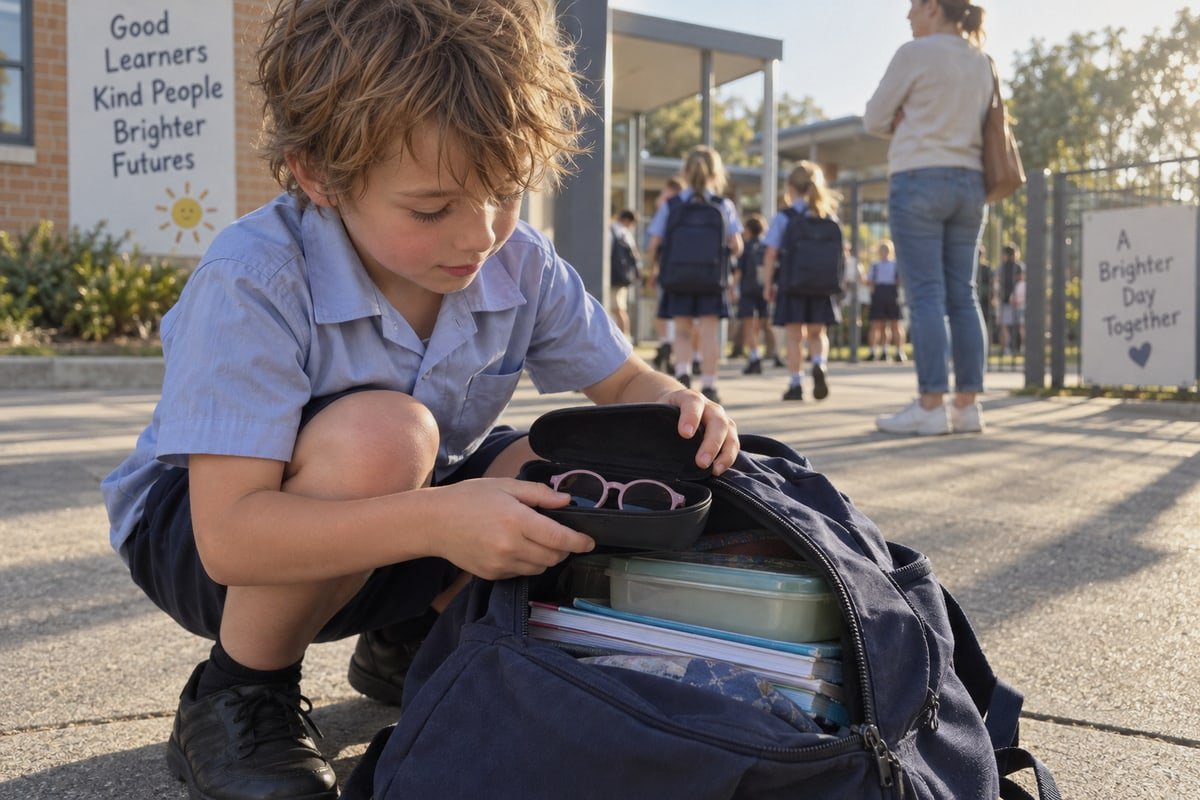
Our OEM/ODM support covers custom colors, logos, lenses, packaging, and accessories, so this menu is what we build for most brands. The trick is to make the tiers feel deliberate rather than random.
The packaging menu we quote most often
| Opção | Melhor para | Branding surface | Observações |
|---|---|---|---|
| Rigid hard case with soft lining | Premium kids' and optical lines | Embossed or printed logo on lid | Include a pano de limpeza de microfibra 3 inside |
| Semi-rigid EVA zip case | Toddler and baby lines | Printed patch or debossed logo | Light, crush-resistant, easy for small hands |
| Velvet or microfiber pouch | Promotional, budget, or second pair | Screen-printed logo | Doubles as a cleaning cloth |
| Gift box with insert | Boutique retail and gifting | Full-colour print | Holds case plus cloth plus card |
| Hang-tag and UV400 sticker | Rack display | Card print and QR code | Communicates BPA-free materials and shatterproof eyewear claims |
A process that keeps things smooth
- Pick the frame styles first. Our catalogue holds around 800 existing styles, so a brand can launch without mold investment and test the market with lower risk.
- Decide the accessory tier per style. A bold royal-blue square frame with yellow temples may suit a playful EVA case, while a lavender cat-eye or blush-pink round frame fits a boutique gift box.
- Send logo files and Pantone references. We match case colour to frame colour where the brand wants a coordinated look.
- Approve a pre-production sample of the full set: frame, case, cloth, and box.
- Confirm carton dimensions with your freight forwarder before the bulk run.
What buyers in Japan and Europe ask for
Buyers in these markets tend to care about the small details. They want the Marcação CE 4 visible on the temple, the lens category printed on the tag, and the polarized lens care instructions 5 included when polarized options are chosen. A card inside the case that explains cleaning and storage is inexpensive and makes the brand look thoughtful. We print these cards in the buyer's language on request.
How do I balance cost, durability, and everyday convenience when sourcing eyewear storage accessories?
The lesson our team learned the hard way is that the cheapest accessory rarely stays cheap. One returned pair of scratched sunglasses costs more than several upgraded cases.
Balance the three by matching accessory rigidity to real use: hard cases for anything that leaves the house, semi-rigid EVA for toddlers, and pouches for home or promotional use. Judge cost per protected pair, not unit price, and confirm lining softness and hinge clearance before ordering.
I think of this as a three-way trade. You can rarely maximise all three, but you can avoid the bad corners.
A simple scoring approach
| Critério | Capa rígida | Semi-rigid EVA | Velvet pouch |
|---|---|---|---|
| Custo unitário | Mais alto | Middle | Mais Baixo |
| Freight volume | Mais alto | Middle | Mais Baixo |
| Resistência ao impacto | Mais alto | Bom | Baixo |
| Proteção contra arranhões | Alto | Alto | Médio |
| Child convenience | Médio | Alto | Mais alto |
| Return risk from damage | Mais Baixo | Baixo | Mais alto |
For most kids' lines sold through retail, the EVA case sits in the sweet spot. It gives the impact resistance of a hard case with the light, kid-friendly feel of a pouch. For optical frames and polarized sunglasses with higher lens value, the full hard case earns its cost.
Quality checks before you commit
Ask for samples and check these points yourself. First, the lining must be soft and lint-free. Second, the internal length must exceed the folded frame by a clear margin so the temples never press the bridge. Third, hinges and zips must open easily for a child. Fourth, no strong chemical smell, which usually signals poor materials. In our 5S-managed workshop, we check these on every incoming accessory batch, but I always encourage buyers to verify with their own hands.
Pair the accessory with a daily routine
Protective storage solutions only work when the routine matches. We include a short care card with these steps:
- Rinse the lenses with lukewarm fresh water to remove sand, salt, and sunscreen.
- Add a drop of mild, non-moisturising soap if the lenses are greasy.
- Dry with the microfiber cleaning cloth, never a paper towel or T-shirt.
- Close both arms and place the glasses lens-up in the case.
- Keep the case in a cool, dry spot away from direct sun and car heat.
Common mistakes to warn parents about include placing sunglasses lens-down on a table, tossing them loose into a backpack, leaving them on a dashboard, and storing several pairs together without separation.
Conclusão
Scratched lenses and warped bridges quietly erode a brand. Default to a hard or semi-rigid case, offer the pouch as a light option, and brand every piece consistently.
Interested in sourcing the products mentioned in this article? See details and request a quote here:
Notas de rodapé
1. ISO provides international standards for thermoplastic elastomers used in consumer products like eyewear. ↩︎
2. The FDA regulates sunglasses as medical devices to ensure they provide adequate UV protection. ↩︎
3. Technical explanation of microfiber materials used for cleaning sensitive optical surfaces. ↩︎
4. The CE mark indicates compliance with health and safety standards for products sold within the EEA. ↩︎
5. General overview of sunglass types, including polarized lenses and their protective functions. ↩︎
Mais Artigos que Você Pode Gostar

Procurando um Parceiro Confiável em Óculos Infantis?
Explore mais de 800 estilos prontos e suporte completo OEM/ODM adaptado à sua marca.
Entre em Contato English
  Español de México
  Deutsch
  Français
  日本語
日本語  العربية
  Português do Brasil