How to Tell If TR90 Kids Optical Frames No Longer Fit a Growing Child’s Face?
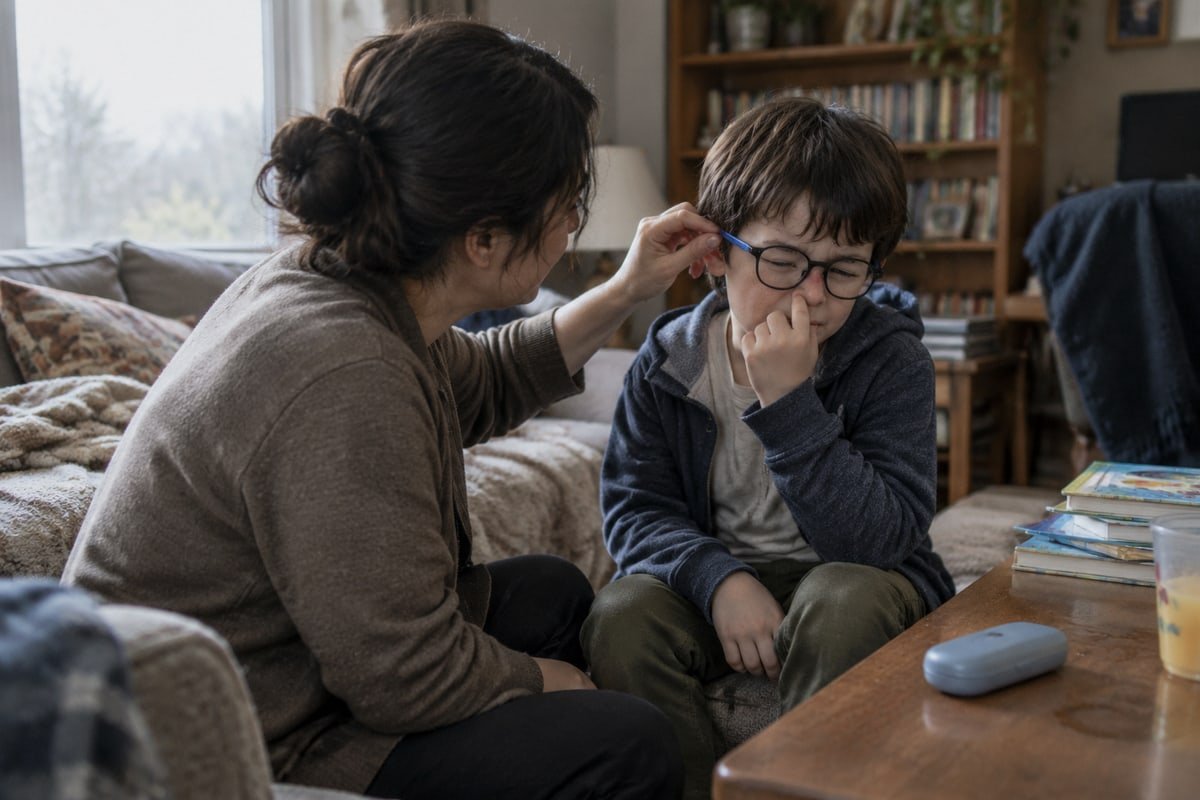
Every sample that leaves our production line passes a flex test 1, yet TR90 kids optical frames get outgrown. Parents miss the signs, kids stop wearing glasses, and brands hear complaints.
As armações ópticas infantis de TR90 deixam de servir quando apertam as têmporas, deixam marcas vermelhas no nariz ou nas orelhas, escorregam repetidamente, ficam tortas ou não mantêm as pupilas centralizadas nas lentes. Quaisquer dois desses sinais juntos geralmente significam que é necessário ajuste ou substituição.
The good news is that outgrowing follows a pattern. Once you know the pattern, you can spot it in under a minute. Below, I walk through the signs, the timing, the adjust-or-replace decision, and what to ask your supplier so you always have the next size ready.
Quais são os primeiros sinais de alerta de que as armações de TR90 do meu filho estão ficando pequenas demais?
During a recent returns review, our QC team noticed most "defective" kids frames had nothing wrong. The child had simply grown, and the frame had stopped fitting.
Os primeiros sinais de alerta são marcas vermelhas na ponte do nariz ou atrás das orelhas, armações escorregando, uma armação torta ou inclinada, pupilas descentralizadas nas lentes, hastes curvando-se para fora e uma criança que constantemente empurra os óculos para cima ou olha por cima deles.
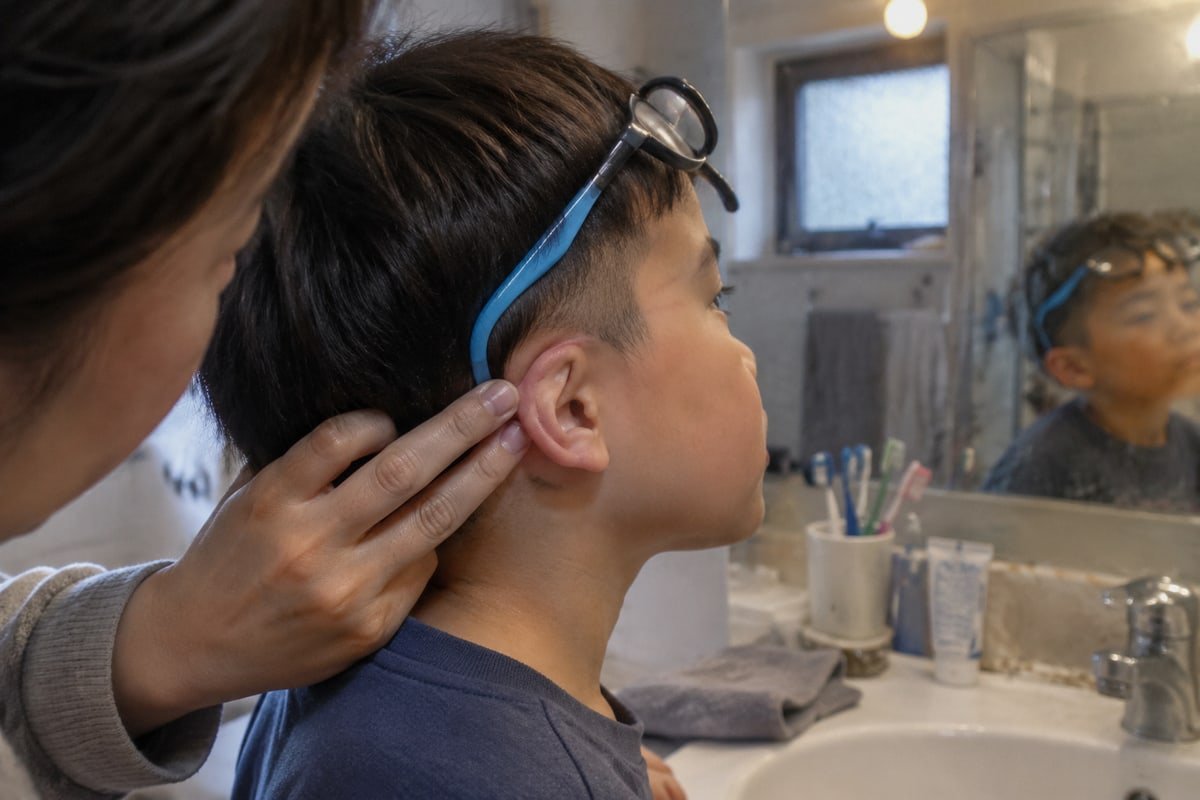
Fit has two parts. The frame must sit comfortably, and it must line up with the eyes. A frame can fail one part while passing the other. That is why I group the signs into three types.
Physical signs you can see
These show up on the skin and on the frame itself. Nose pad pressure marks that stay red for more than a few minutes after removal are the most common. Grooves behind the ears come next. On TR90, watch the temple arms too. If they bow outward when the glasses are on, the head has grown wider than the frame was designed for. Over time, this constant stretch causes what we call memory fatigue. The polymer loses its snap-back tension 2, and the frame that used to grip now feels loose and slides. Flexibility delays this problem. It does not prevent it.
Behavioral signs parents miss
Children rarely say "my glasses are too small." They act it out instead. Watch for these habits:
- Pushing the glasses up every few minutes because the frame is sliding down the nose
- Looking over the top of the frame or tilting the head back to see through the lenses
- Turning the whole head to follow a ball or the teacher instead of moving the eyes
- Frequent nose-twitching or ear-wiggling to relieve static pressure from a narrow frame
Optical signs that matter most
This is the part many parents skip. Pediatric fit guidance says each eye should sit no more than 3 to 4 mm off-center in its lens. If the pupils have drifted higher, lower, or to one side, the prescription is no longer working as intended. A second check: the combined lens width plus bridge width should not exceed the child's distância pupilar 3 measurement by more than 8 mm. Growth in the bridge can also push the lenses closer to the eyes, so eyelashes brush the back of the lens and leave constant smudges.
| Sign you notice | O que geralmente significa | Area of the face that has grown |
|---|---|---|
| Marcas vermelhas atrás das orelhas | Comprimento da haste 4 too short or bend misplaced | Head length and ear position |
| Marcas vermelhas no nariz | Bridge now too narrow | Nose bridge width |
| A armação escorrega para baixo | Bridge too narrow or temples lost grip | Bridge and head width |
| Temples bow outward | Frame front too narrow for head | Head width at the temples |
| Pupilas descentralizadas | Lens size no longer matches PD | Pupillary distance |
| Eyelashes touch lens | Nasal bridge protrudes more | Bridge depth |
| Head turns instead of eyes | Lens too small for visual field | Overall face width |
If you tick two or more rows in this table, the frame has been outgrown. One row alone may be an adjustment issue, which I cover later.
Com que frequência devo verificar o ajuste da armação óptica do meu filho conforme ele cresce?
One trade-off we weigh with every brand partner is replacement cadence. Frames that last forever sound great, but children's facial growth patterns don't wait for the frame to wear out.
Verifique o ajuste das armações ópticas de uma criança pequena a cada três ou quatro meses, e espere que bebês e crianças em idade pré-escolar precisem de um novo tamanho a cada três ou seis meses. Crianças em idade escolar geralmente podem esperar mais tempo, mas faça uma nova verificação após estirões de crescimento, férias escolares ou qualquer reclamação de desconforto.
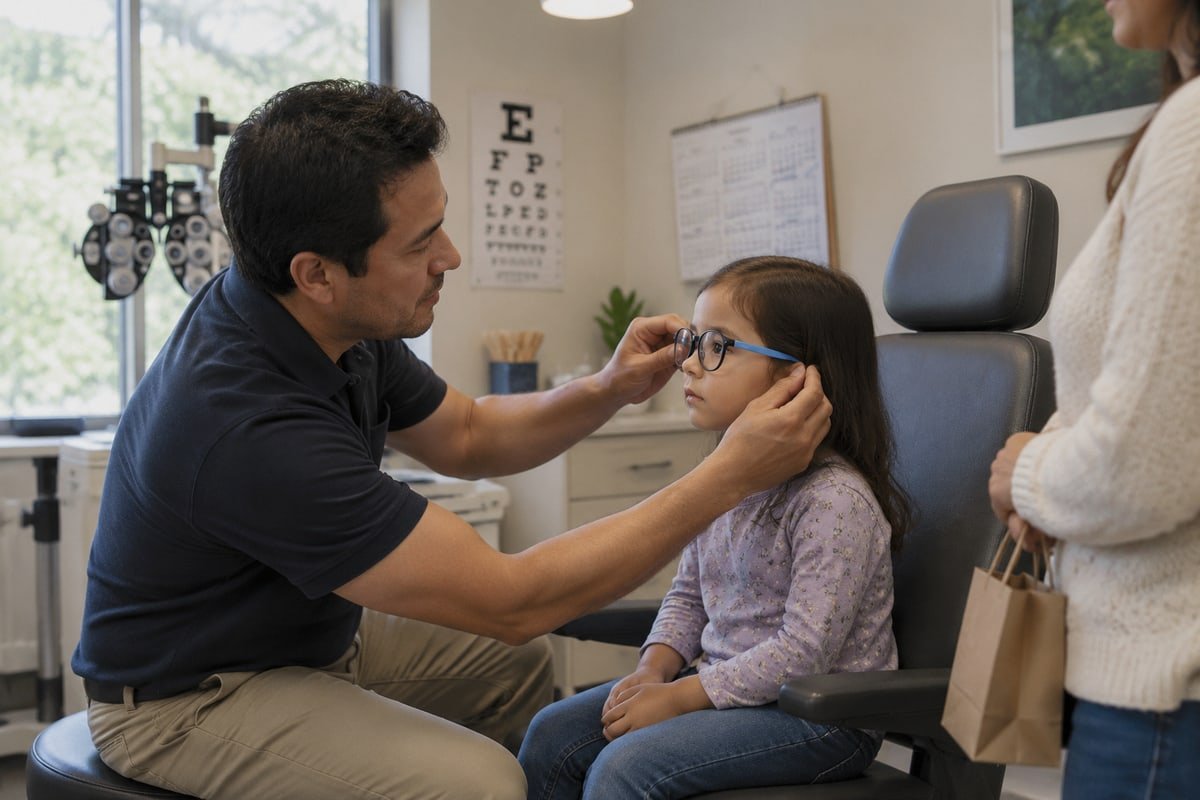
Growth is not steady. A child can stay the same size for months and then jump in a few weeks. That is why I recommend a fixed check schedule plus event-based rechecks. The schedule catches slow drift. The event triggers catch the jumps.
A fit schedule by age group
The table below is a starting point. Some children grow faster, some slower. Use it as a rhythm, not a rule.
| Faixa etária | Suggested fit check | Janela de substituição típica | Where growth shows first |
|---|---|---|---|
| Crianças pequenas (1–3) | Every 3 months | Every 3–6 months | Bridge width and head width |
| Pré-escolar (3–5) | A cada 3–4 meses | Every 3–6 months | Bridge width, temple length |
| Early school (6–9) | Every 4 months | Roughly once a year, sometimes sooner | Face width, lens size |
| Older school (10+) | Every 4–6 months | Often more than a year | Temple length, overall width |
Notice that the youngest children need the most attention. Their bridge and temple dimensions change fastest, and they are the least able to tell you something feels wrong.
Event triggers that should prompt a recheck
Beyond the calendar, I tell parents and retailers to recheck after these moments:
- A visible growth spurt, such as shoes or trousers suddenly not fitting
- The end of a long school break, when children often grow noticeably
- Any complaint of headaches, tightness, or glasses "feeling weird"
- A new prescription, because a new lens is a good time to confirm frame size
- Return to sports season, when sliding and slipping become obvious
The 60-second home fit check
Since many parents now buy flexible kids frames online, an in-store fitting is not always available. This quick routine works at home. Have the child look straight at you, then check in order: Are the pupils roughly centered in each lens? Is the frame level, not tilted? Does the bridge sit flat without gaps or pressure? Do the temple bends land just behind the ears? Ask the child to look down at the floor. Does the frame stay put? Finally, take the glasses off and look for red marks. If anything fails, note it and book an eye care professional consultation to confirm.
Por que "espaço para crescer" dá errado
Some parents try to skip the schedule by buying a bigger frame. Pediatric dispensing guidance is clear that glasses should fit now, not later. An oversized frame slides, throws off alinhamento óptico 5, and gets pushed up all day. The child wears it less, and the prescription does less. Correct size now, plus regular checks, is the shorter path.
Can I Adjust TR90 Frames Myself, or Should I Contact My Supplier for a Resize?
A procurement manager in Australia once asked us to heat-stretch a batch of returned frames for older kids. We advised against it, and explained why thermoplastic material properties have limits.
Minor issues like slight tilt, loose temple tips, or a bend sitting too far forward can be adjusted at home or by an optician. A frame that is too narrow, too short in the temple arm length, or no longer centers the pupils needs a larger size, not a resize.

The word "resize" causes confusion in our conversations with buyers. TR90 can be adjusted. It cannot be resized. Those are different things, and the difference decides whether you save a frame or waste an afternoon.
What TR90 will and will not tolerate
TR90 is a thermoplastic. It softens slightly with gentle heat and holds a new shape when it cools. That is useful for small changes. It is not useful for making the frame front wider or the lens openings bigger. The lens openings are fixed. The bridge is molded. The temple length is molded. Heat only moves the thin sections, mainly the temple tips and, to a small degree, the temple angle. Our own TR90 kids optical frames with TPEE temples are even more forgiving at the tips, because TPEE is softer and bends by hand. But the front stays the same size no matter what you do.
Adjust or replace: a decision table
| Problema | Adjust or replace? | How it is fixed |
|---|---|---|
| A armação inclina-se para um lado | Adjust | Even out the temple angle at the hinge |
| Temple tips too straight, frame slips | Adjust | Warm and curve the tips to hook behind ears |
| Slight pressure behind one ear | Adjust | Move the bend back a few millimeters |
| Bridge sits high with gaps | Sometimes adjust | Bridge width adjustment only works if nose pads are present |
| Temples bow outward | Substitua | Front is too narrow; no safe fix |
| Red marks on both ears daily | Substitua | Temple arm length outgrown |
| Pupils off-center more than 3–4 mm | Substitua | Lens size no longer matches PD |
| Frame lost its grip after stretching | Substitua | Memory fatigue in the polymer |
Safe adjustments at home
Keep it small. Warm the temple tips with a hairdryer for a few seconds, not boiling water. Bend gently in one direction. Test on the child. Repeat if needed. Never heat the frame front near the lenses, and never force a cold TR90 frame past its natural flex. If the frame has nose pads, a bridge width adjustment can add a little life, but most one-piece kids frames do not have them. When in doubt, an optician can do the same work with better tools and check optical alignment at the same time.
When to talk to your supplier
If you run a brand or a retail chain, "contact the supplier" should not mean asking for a resize. It should mean ordering the next size up in the same style. This is where a stepped size range pays off. When a family loves a frame, the child moves from the small to the medium without a new search, and you keep the customer. We build most of our children's styles this way for exactly that reason.
What Should I Look for When Sourcing a Wider Range of Kids' Frame Sizes from My Manufacturer?
Fifteen years of making kids eyewear taught us one hard lesson: a single "kids size" is a myth. Brands that stock stepped sizes tend to see fewer fit complaints and steadier reorders.
Look for a manufacturer offering stepped lens, bridge, and temple sizes across age groups, consistent measurements from batch to batch, flexible TR90 or TPEE construction, growth-friendly details like spring hinges, full OEM/ODM support, and a large existing style library to avoid mold costs.

Everything in this article comes back to one supply question. If a child outgrows a frame every few months, can your brand offer the next size without a delay or a redesign? That depends on what you ask for at the sourcing stage.
Size structure, not just style count
Ask how each style is sized. A good range steps the lens width, bridge width, and temple arm length together, because facial growth patterns move all three. Our two-tone round style, with a matte black front and soft sky-blue temples, is a good example. The keyhole bridge sits low on a small nose, and the curved temple tips hold without pressure. Our translucent rounded-square style, fading from clear at the lower rim to pink along the brow, follows the same logic in a slightly larger cut for school-age children. Same design language, different dimensions. That is what lets a brand move a child up a size without changing the look they chose.
Consistency you can measure
Sizing on paper means nothing if batch two differs from batch one. Ask how the factory controls it. On our side, a 5S-managed workshop and about 120 workers running dedicated lines let us check key dimensions on every batch against the approved sample. For a pediatric eyewear fit that depends on a few millimeters at the bridge, that discipline matters more than any marketing claim.
Growth-friendly features, in their place
Spring hinges, soft TPEE temple tips, and repositionable pads all help a frame stay comfortable a little longer. Ask for them. But do not let a supplier sell them as a substitute for proper sizing. A spring hinge on a frame that is too narrow just lets it bow outward more comfortably. It still slides, and the pupils are still off-center.
A sourcing checklist
- Stepped sizes across toddler, preschool, and school-age groups
- Documented lens, bridge, and temple measurements per size
- Flexible TR90 or TPEE construction with environmentally friendly materials
- Batch-to-batch dimensional checks against an approved sample
- Custom colors, logos, lenses, and retail-ready packaging under one roof
- A large ready-made library so you can launch and test without mold investment
That last point is where new brands save the most. Our library holds around 800 existing styles across TR90 and TPEE. A founder can pick three sizes of a proven design, add a logo and custom packaging, and test the market in 20-plus countries' worth of experience before committing to a mold. Fit problems then become a size-up sale, not a lost customer.
Conclusão
Outgrown TR90 kids optical frames pinch, slip, tilt, and blur vision. Left unchecked, children stop wearing them. Check fit every few months and stock stepped sizes.
Interessado em adquirir os produtos mencionados neste artigo? Veja detalhes e solicite um orçamento aqui:
Notas de rodapé
1. ISO 12870 specifies the fundamental requirements and test methods for spectacle frames, including mechanical stability and flex tests. ↩︎
2. Explains the material science of shape-memory polymers like TR90 and how they retain or lose their snap-back tension. ↩︎
3. NIH research emphasizes the necessity of accurate pupillary distance for maintaining optical performance and comfort in pediatric eyewear. ↩︎
4. ScienceDirect provides technical details on spectacle dimensions, including temple arm length, and their impact on pediatric facial fit. ↩︎
5. The FDA regulates spectacle frames as medical devices to ensure they maintain proper optical alignment and safety standards. ↩︎
Mais artigos que você pode gostar

9 de novembro de 2026
Como saber quando as armações ópticas infantis em TR90 precisam de substituição?

8 de novembro de 2026
Por Que as Armações Ópticas Infantis em TR90 Ficam Amarelas e Quebradiças, e O Que Acelera Isso?
7 de novembro de 2026
Quanto Tempo Duram as Armações Óticas Infantis em TR90 Antes da Substituição?
Procurando um parceiro confiável em óculos infantis?
Explore mais de 800 modelos já desenvolvidos e suporte OEM/ODM completo sob medida para a sua marca.
Entre em contato English
 Español de México
 Deutsch
 Français
 日本語
 العربية
 Português do Brasil