Can a Private Label Kids Eyewear Brand List Only Its Name on FDA Labels?
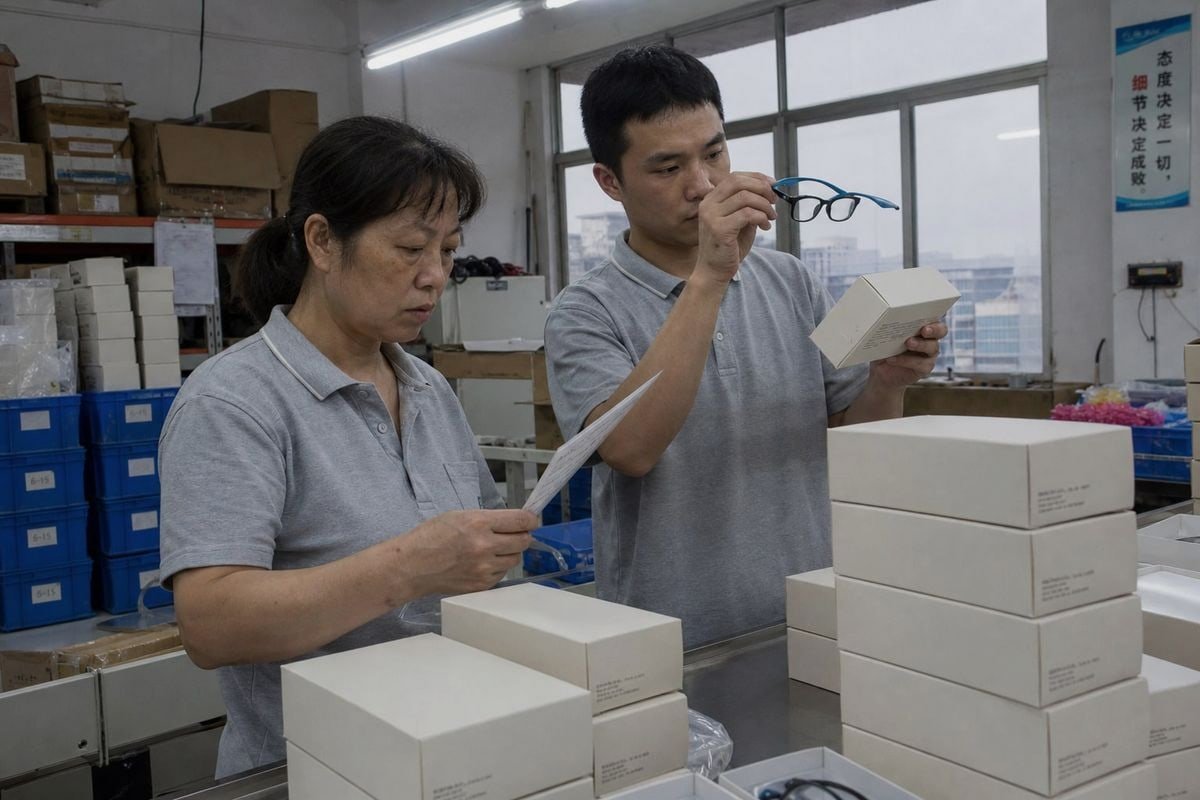
Many buyers ask me whether a private label kids eyewear brand can put only its name on FDA labels. On our production line, we see this mistake stall shipments — and it can trigger costly misbranding trouble.
No, usually not. A private label kids eyewear brand cannot list only its brand name on FDA labels unless it is the actual manufacturer. FDA rules require the responsible company’s name and full business address, plus a qualifying phrase like “Manufactured for” or “Distributed by” when the brand did not make the product.
That short answer hides a lot of detail. Let me walk you through what the label actually needs, how other brands handle it, and where the real risks sit.
What does the FDA actually require on my private label kids eyewear packaging?
Last year, a European buyer sent us artwork for a TR90 kids optical frame box with nothing but a logo on it. Our packaging team flagged it before printing — and that saved the whole order.
The FDA requires kids eyewear packaging to state the common device name in bold, the name and place of business of the manufacturer, packer, or distributor — including street address, city, state, and ZIP code — all in English, under the general labeling rules in 21 CFR Part 801.
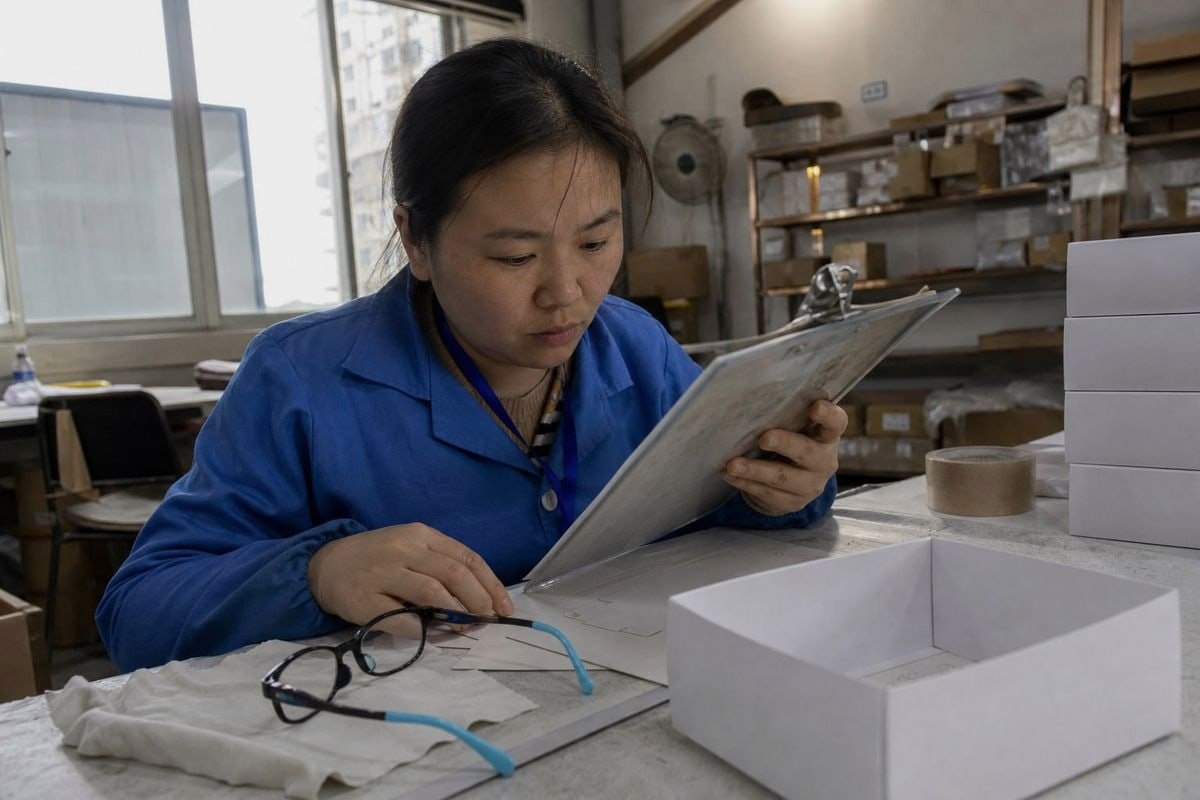
The first thing to understand is that eyewear is not treated like a toy or a fashion accessory in the United States. Spectacle frames, prescription lenses, and sunglasses are all classified as medical devices 1. That means medical device regulations apply to the label, even if the product itself is 510(k) exempt 2. Exemption from premarket notification does not remove labeling obligations. This surprises many new brand owners.
The core elements your label must carry
Here is what we check on every retail-ready box before it leaves our workshop for the US market:
| Label Element | What It Means | Where the Rule Comes From |
|---|---|---|
| Common device name | E.g., "sunglasses" or "spectacle frame," shown conspicuously | 21 CFR Part 801 3 |
| Responsible business name | The manufacturer, packer, or distributor | 21 CFR Part 801 |
| Full place of business | Street address, city, state, ZIP code | 21 CFR Part 801 |
| Qualifying phrase | "Manufactured for…" or "Distributed by…" if you are not the maker | 21 CFR Part 801 |
| Impact-resistance compliance | Lenses certified as impact resistant | 21 CFR 801.410 4 |
| English language | All required statements in English | 21 CFR Part 801 |
There is one narrow exception on the address. The street address can sometimes be omitted if the company appears in a current local directory. But in our experience exporting to the US for fifteen years, the safe default is to print the complete address. And because these are children's products, CPSIA tracking-label information — identifying the manufacturer or private labeler plus production details — often needs to appear alongside the FDA elements. One label, two regulatory regimes.
Can I use my brand name only, or do I still need to disclose the manufacturer?
Here is the trade-off I discuss most often with new brand owners: they want clean, minimalist packaging for their kids' sunglasses line, but the law wants a clear, traceable business identity. Both goals can coexist — with the right wording.
You can feature your brand name prominently, but you must also disclose a responsible business identity. If your company is not the actual manufacturer, FDA expects a "Distributed by" or "Manufactured for" statement with your name and address. A bare brand name alone is not compliant.
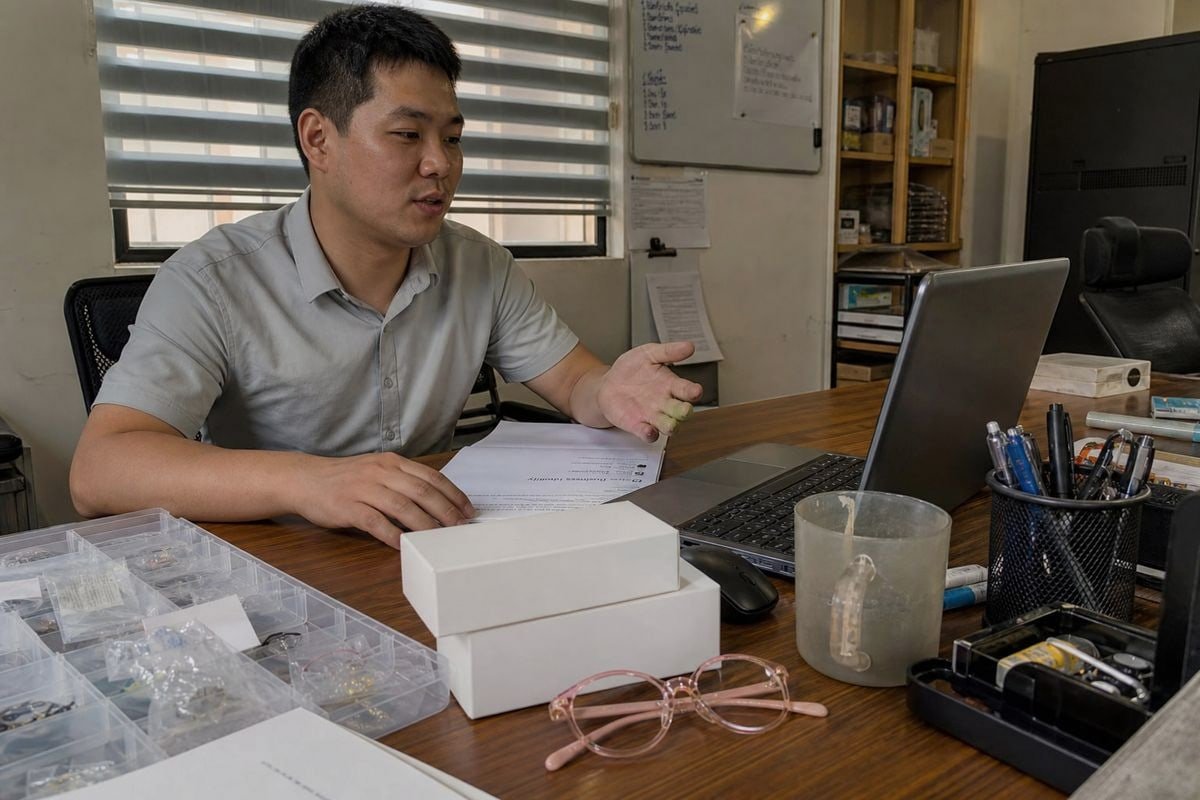
The good news for private label brands is this: the FDA does allow the private labeler's name to appear on the label without naming the OEM factory. Our name — the actual factory — does not have to appear on your retail box at all. Your customers see only your brand. But the label must still identify who is legally responsible for the device, and it must not mislead the buyer about who made it.
Brand name versus label identity
These are two different things, and confusing them is the root of most labeling errors:
| Concept | Purpose | Is It Enough Alone? |
|---|---|---|
| Brand name / logo | Marketing identity; builds consumer trust | No — it does not identify the responsible firm |
| Label identity | Legal business name plus full address | Yes, when paired with the correct qualifying phrase |
| Qualifying phrase | Clarifies your role (distributor vs. maker) | Required whenever the named firm is not the manufacturer |
What compliant wording looks like
If your company only markets and sells the eyewear, the standard formats are:
- "Distributed by: [Your Company Legal Name], [Street Address], [City, State, ZIP]"
- "Manufactured for: [Your Company Legal Name], [Street Address], [City, State, ZIP]"
Beyond the label text, a private label distributor also carries back-end obligations. You are generally expected to handle establishment registration with the FDA and complete a device listing under your own name, often cross-referencing the original manufacturer's product code. On the Unique Device Identification 5 side, there is nuance: optical lenses such as prescription lenses, plano sunglass lenses, and OTC readers are exempt from UDI labeling and reporting, while frames and some non-prescription sunglasses may still fall under UDI requirements. We help buyers map these obligations before artwork approval, because fixing a printed box is far more expensive than fixing a PDF.
How do other kids' eyewear brands handle FDA labeling for private label products?
A procurement manager from Australia once shared three competitor boxes with us and asked which ones would clear US customs cleanly. Only one of the three would have. That exercise taught me how inconsistent real-world practice is.
Most compliant kids' eyewear brands print their brand prominently on the front, then place a "Distributed by" statement with their legal name and address on the back or bottom panel, alongside CPSIA tracking information, age grading, choking-hazard warnings where needed, and the impact-resistance and UV claims.
In practice, we see three common approaches among the brands we produce for across 20+ countries. Two of them work. One of them fails.
Three real-world labeling patterns
| Approach | Description | Compliance Result |
|---|---|---|
| Brand front, legal identity back | Logo dominates the front; "Distributed by" block with full address on the rear panel | Compliant and retail-friendly |
| Brand as manufacturer | Brand owner actually owns manufacturing responsibility and labels as the maker | Compliant, but only if the role is genuine |
| Logo-only minimalism | Only a trade name or mark, no address, no qualifying phrase | Non-compliant; misbranding risk |
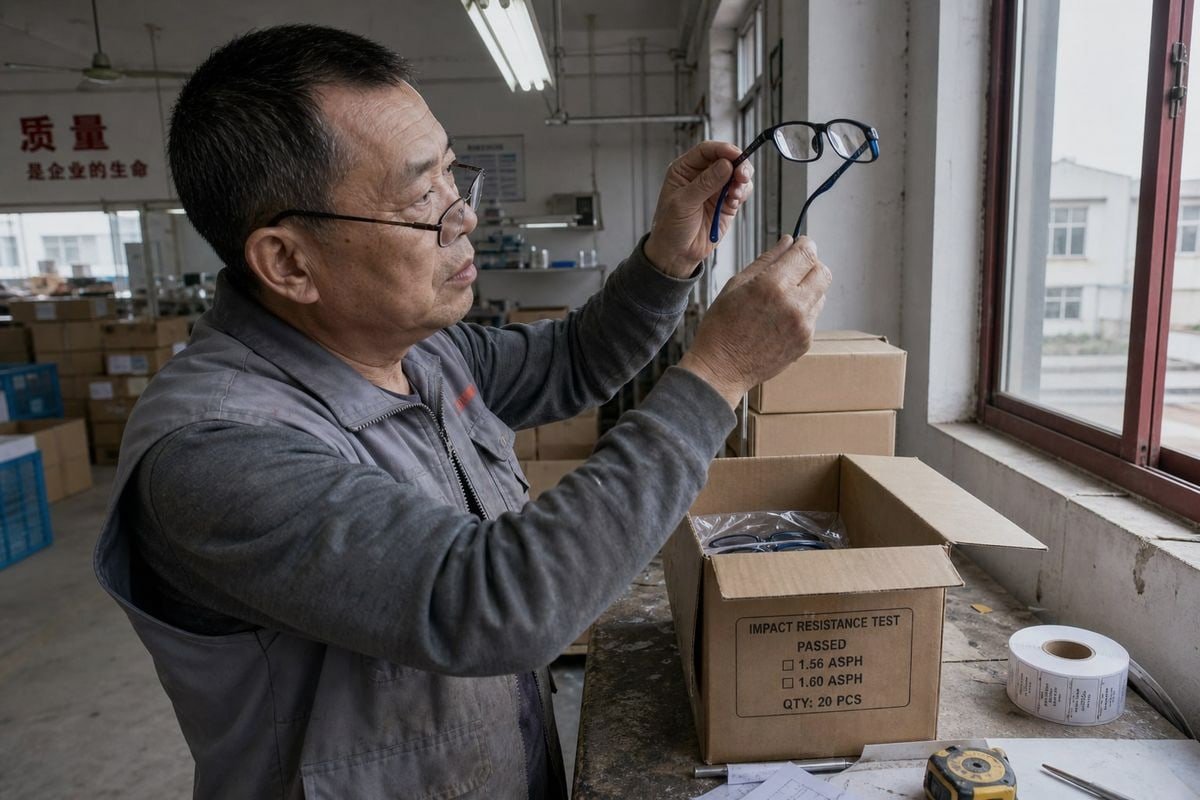
The best-run brands also treat the label as one layer in a larger compliance chain. For children's eyewear, that chain typically includes a Children's Product Certificate, a CPSIA tracking label, and documented impact-resistance certification under 21 CFR 801.410 for every lens. Careful brands are equally cautious about performance claims. A "100% UV400 protection" statement must match tested reality, because false or misleading claims about UV protection are a classic path to misbranding allegations and recalls. The stated intended use also matters — sunglasses marketed for eye protection are held to that promise.
One more pattern worth copying: strong brands split responsibilities clearly with their factory. The factory handles quality system requirements under 21 CFR 820, including labeling controls and documentation; the brand handles establishment registration, device listing, and market-facing claims. When we onboard a new private label client, we put this split in writing during sampling, so nobody discovers a gap after ten thousand units are boxed.
What risks should I consider before finalizing my FDA label design with my manufacturer?
The costliest lesson I have watched a client learn involved a beautiful pastel-pink acetate kids frame with flawless packaging design — and a missing ZIP code. The distributor's US warehouse held the shipment for weeks while stickers were applied by hand.
The main risks are misbranding from a missing address or qualifying phrase, false UV or safety claims, skipped CPSIA tracking labels, unregistered establishment or device listing status, and assuming 510(k) exemption means no labeling duties. Verify each point with your manufacturer before printing.
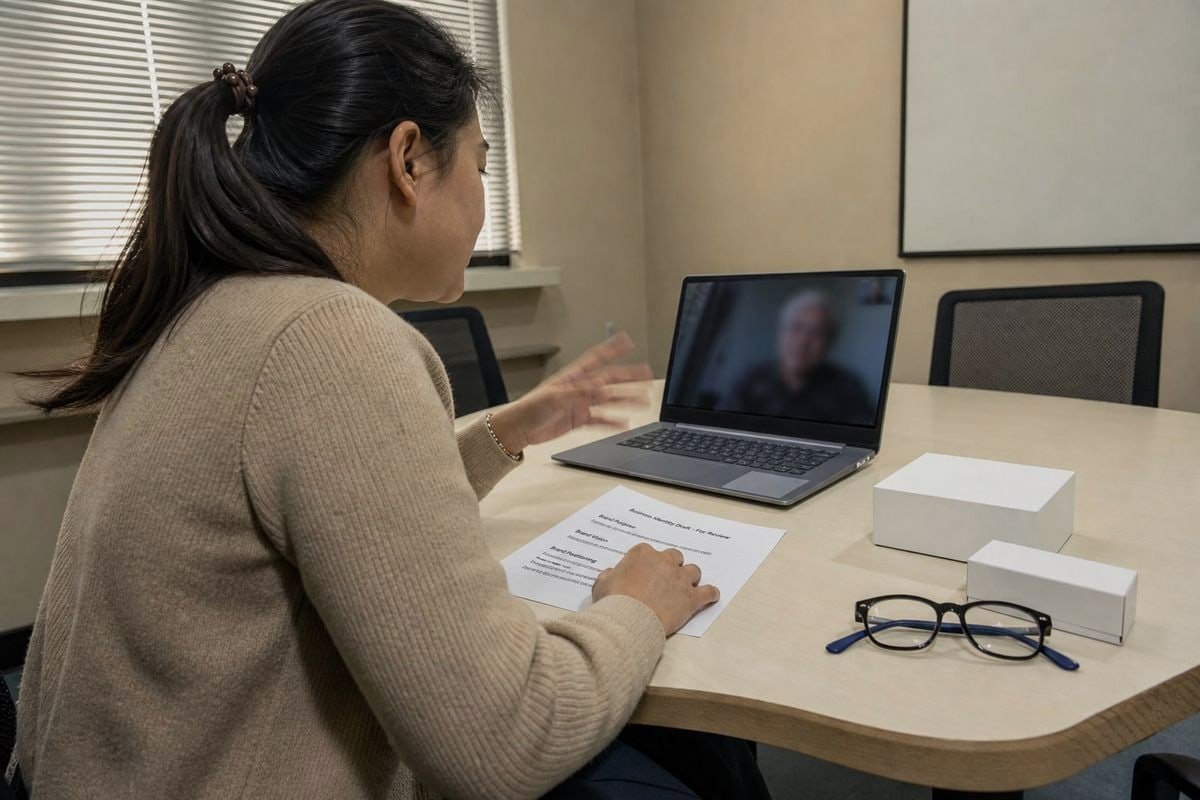
Rather than another table, let me give you the checklist we actually run with buyers before any packaging goes to print. It works as a numbered process, in order:
- Confirm device status. Verify your kids' sunglasses or optical frames are medical devices under FDA rules, and identify which parts (frames, lenses) carry which requirements, including any Unique Device Identification nuances.
- Confirm your role. Decide honestly whether you are the manufacturer or a private label distributor. Your label wording, your registration path, and your liability all flow from this answer.
- Draft the identity block. Write the "Distributed by" or "Manufactured for" statement with your full legal name, street address, city, state, and ZIP code. Do not rely on the directory exception unless your counsel confirms it applies.
- Layer in children's product requirements. Add the CPSIA tracking label, age grading, and any choking-hazard warnings for small parts like nose pads or cases.
- Verify claims against test reports. UV400, polarization, and impact resistance must all be backed by documentation. We keep drop-ball impact test records for the lenses we fit, and we share them with clients for their files.
- Check back-end filings. Establishment registration and device listing 6 should be completed under the correct company name before the product ships.
- Do a physical proof review. Print one sample box. Check font size, conspicuousness, and English language requirements before mass production.
A gray area worth naming: some brand owners argue a small trade name printed somewhere counts as the required "name." The safer reading — and the one we follow on every export order — is that the label must communicate a real, findable business and its relationship to the product, not merely a marketing mark. Some consumer product regimes are more lenient about brand-only labels. Eyewear, as a device, is not one of them.
Conclusion
A brand name alone rarely satisfies FDA labels for kids eyewear. Disclose your business identity, qualify your role, add CPSIA traceability — and verify everything with your factory before printing.
Footnotes
1. Defines eyewear classification and regulatory scope. ↩︎
2. Reference 3. ↩︎
3. Official regulation for medical device labeling requirements. ↩︎
4. Specifies impact-resistance requirements for eyewear lenses. ↩︎
5. Provides information on UDI system and its applicability to eyewear. ↩︎
6. Outlines FDA requirements for registering facilities and listing devices. ↩︎
More Articles You Might Like

August 5, 2026
Bio-Based vs Regular Cellulose Acetate: What's the Difference for Kids' Frames?

August 5, 2026
How Recyclable Are Kids' Optical Frame Materials, and What Eco-Friendly Alternatives Exist?
August 5, 2026
Do Kids Optical Frames Whiten or Age in Storage, and How to Control Warehouse Conditions?
Looking for a Reliable Kids Eyewear Partner?
Explore 800+ ready styles and full OEM/ODM support tailored to your brand.
Get in Touch English
  Español de México
  Deutsch
  Français
  日本語
日本語  العربية
  Português do Brasil