子供の視覚発達のために特別にデザインされた子供用サングラスとは?
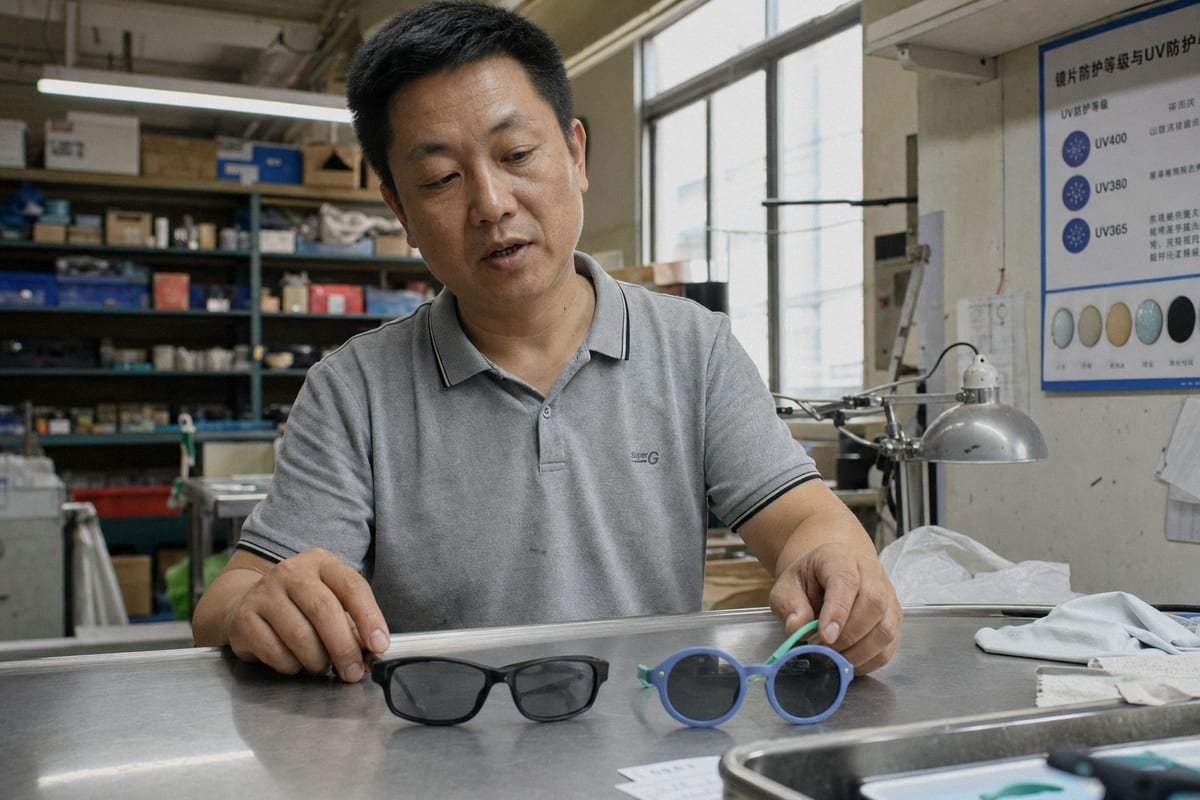
子供用サングラスは毎日私たちの検査台に届きますが、一つ気になることがあります。それは、多くのブランドが、発達中の子供の目に全く対応できない、大人用の縮小フレームを販売し続けていることです。.
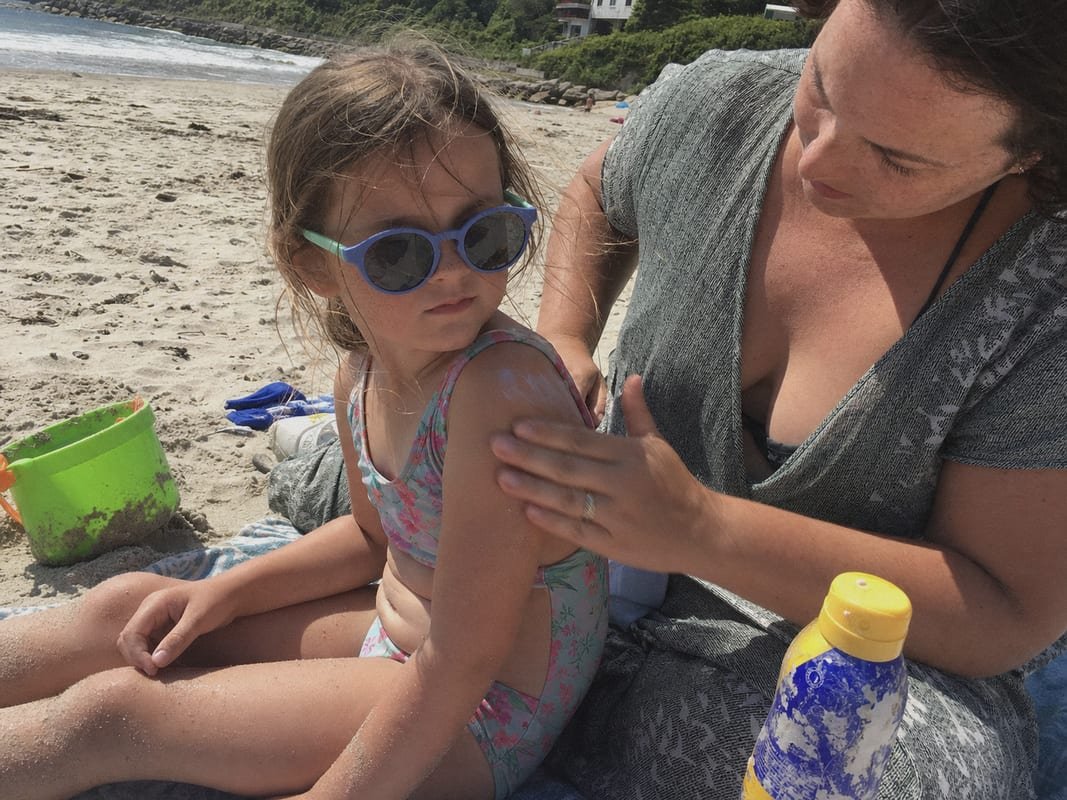
子供用サングラスは、子供の目は大人よりもはるかに多くの紫外線(UV)を透過し、視覚システムはまだ成熟しておらず、アクティブな遊びにも耐え、小さな顔にフィットする、柔軟で安全、耐衝撃性のあるフレームと100%のUVA/UVB保護が必要なため、特別にデザインされています。.
科学とデザインの詳細をご説明します。また、20カ国以上のバイヤー向けに子供用アイウェアを製造する中で学んだことも共有します。.
子供の視覚発達は、どのようにサングラスのデザインを形作るのでしょうか?
昨年、日本のベビーブランドのバイヤーとの製品レビュー中に、彼女は私に簡単な質問をしました。なぜ子供はただ小さな大人用サングラスをかけられないのか?その答えは、彼女の製品ライン全体を変えました。 ここでの発達上の事実はマーケティングの言葉ではありません。それらは小児眼科の研究から来ており、毎週私たちの生産ラインで実際のエンジニアリングの決定を推進しています。 1 なぜ子供の目はより多くの紫外線を透過させるのか.
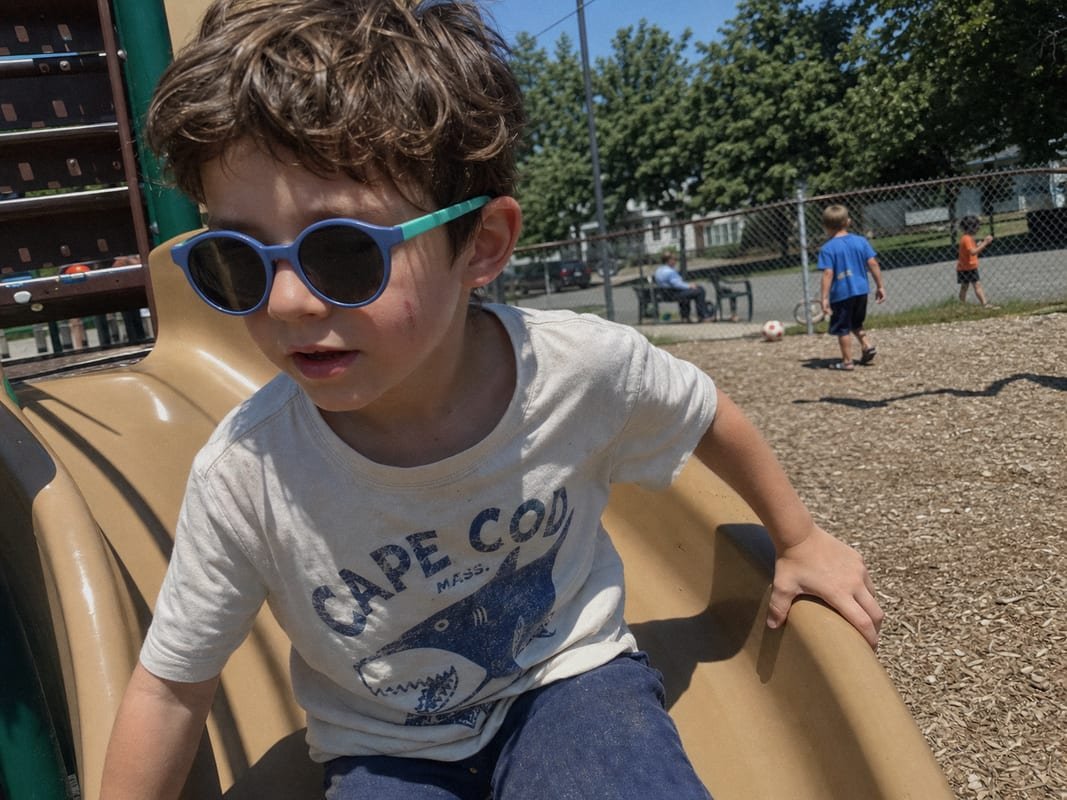
子供の視覚システムは、生後約7〜12年かけて発達し、その水晶体は、25歳以上の成人では約10%であるのに対し、75%以上の紫外線を透過します。したがって、サングラスのデザインは、この脆弱な期間中に、真の紫外線フィルター、確実なフィット感、安全な素材を優先する必要があります。.
水晶体の透明度.
は大人よりもはるかに高いです。レンズはまだ、成熟した目の中で高エネルギー光をフィルタリングする自然な黄色化を発達させていません。そのため、より多くの紫外線が網膜に直接通過します。子供は平均して瞳孔も大きいです。これは、より多くの量の光—そして放射線—が目に入ることを意味します。これら2つの要因を組み合わせると、同じ太陽光の下にいる大人よりも、子供の網膜の紫外線曝露は劇的に高くなる可能性があります。
子供の crystalline lens clarity 2 これらの事実がデザインにどのように反映されるか.
発達上の事実 10歳未満の水晶体は75%以上の紫外線を透過します 3 UV400レンズは100%のUVA/UVBをブロックします(単なる濃い色ではありません).
大きな瞳孔はより多くの光を取り込みます
| 適切なレンズカバレッジとラップアラウンドフレームデザイン | デザインによる対応 |
|---|---|
| 視覚システムは7〜12歳まで成熟します | 健康的な視覚入力をサポートする、光学的にクリアで歪みのないレンズ |
| 薄くデリケートなまぶたの皮膚 | 眼窩領域を保護する広いレンズ面積 |
| 急速に変化する顔の構造 | 成長する顔に合わせたアダプティブブリッジとテンプルの形状 |
| 保護機能と視力矯正機能の違いについて | 保護機能と視力矯正機能の違いについて |
| 保護機能と視力矯正機能の違いについて | 保護機能と視力矯正機能の違いについて |
保護機能と視力矯正機能の違いについて 保護機能と視力矯正機能の違いについて 4 保護機能と視力矯正機能の違いについて.
子供の成長する目を守るために、どのような紫外線対策が必要ですか?
保護機能と視力矯正機能の違いについて.
子供には、UV400と表示された、400ナノメートルまでのUVA/UVB放射線を100%ブロックするレンズが必要です。レンズの暗さだけでは保護を示しません。適切に評価された透明に見えるレンズは、UVを通す評価されていない暗いレンズよりも保護効果があります。.
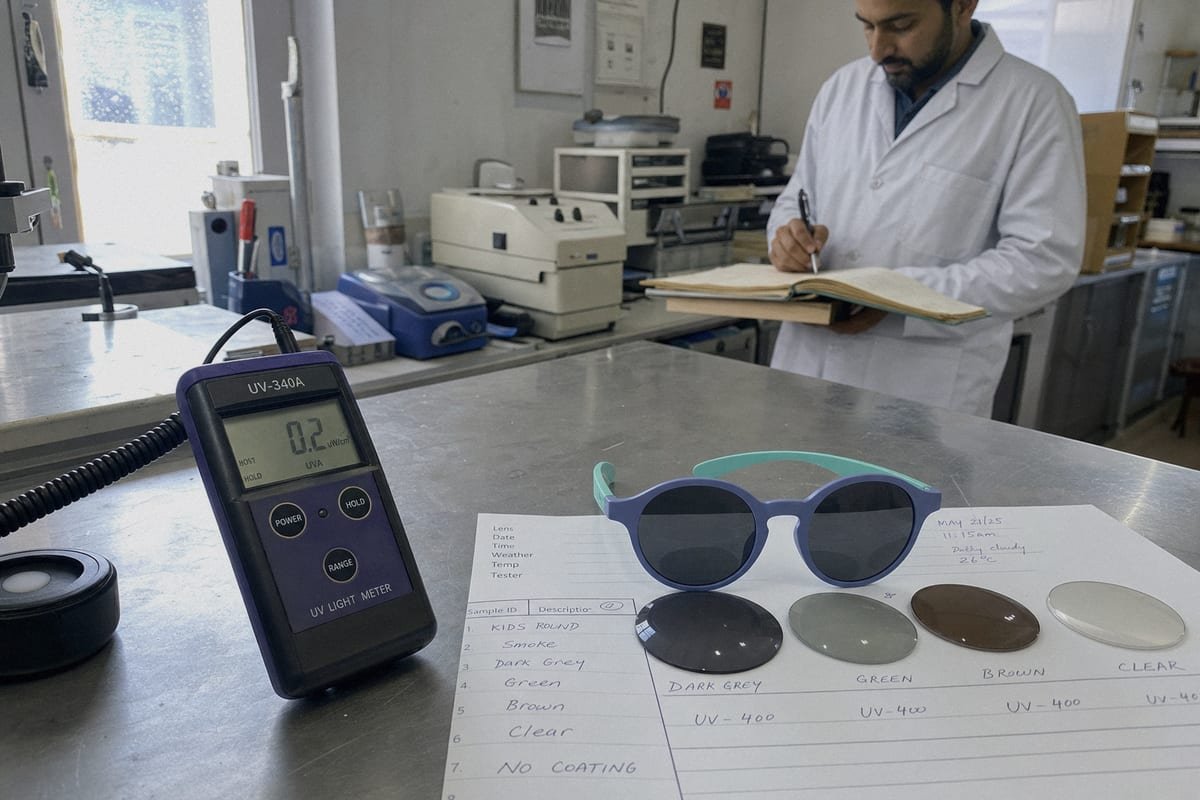
保護機能と視力矯正機能の違いについて 保護機能と視力矯正機能の違いについて 保護機能と視力矯正機能の違いについて 保護機能と視力矯正機能の違いについて 保護機能と視力矯正機能の違いについて.
保護機能と視力矯正機能の違いについて
| 保護機能と視力矯正機能の違いについて | 確認できますか? | 保護機能と視力矯正機能の違いについて |
|---|---|---|
| UV400 | 保護機能と視力矯正機能の違いについて | 保護機能と視力矯正機能の違いについて |
| 保護機能と視力矯正機能の違いについて | 保護機能と視力矯正機能の違いについて | 保護機能と視力矯正機能の違いについて |
| "UV protective" (vague) | No defined standard | No — ask for test data |
| Dark tint, no UV rating | 見た目のみ | いいえ—潜在的に有害 |
| Polarized, no UV rating | Glare reduction only | Not on its own |
What UV protection actually prevents
Short-term, strong UV can cause photokeratitis — essentially sunburn of the cornea. Photokeratitis prevention 5 matters most around reflective surfaces like water, sand, and snow, where UV bounces up into the eyes from below. Long-term, cumulative retinal UV exposure raises the later-life risk of cataracts and macular degeneration. Because so much lifetime exposure happens in childhood, the protective habit has to start early.
Are polarized lenses necessary?
Polarized lens benefits are real: less glare off water and pavement, less squinting, more comfort during sports and beach days. But polarization is a comfort feature, not a safety feature. UV filtering is the non-negotiable. In our catalog, we offer both UV400-only and UV400 polarized options, and we always tell buyers to secure the UV rating first, then decide on polarization based on the end use.
なぜフレームの柔軟性は大人よりも子供にとってより重要なのでしょうか?
A drop-test session in our 5S-managed workshop taught me this lesson vividly: an adult-style acetate frame snapped at the hinge on the third impact, while our TPEE-temple sample bounced, flexed, and went straight back into shape after fifty.
フレームの柔軟性は子供にとってより重要です。なぜなら、子供たちは常に眼鏡を落としたり、ねじったり、座ったり、引っ張ったりするからです。柔軟なTPEEおよびTR90フレームは、折れる代わりに曲がるため、鋭利な破損したエッジが目の近くに来るのを防ぎ、日常のアクティブな遊びにも耐えます。.
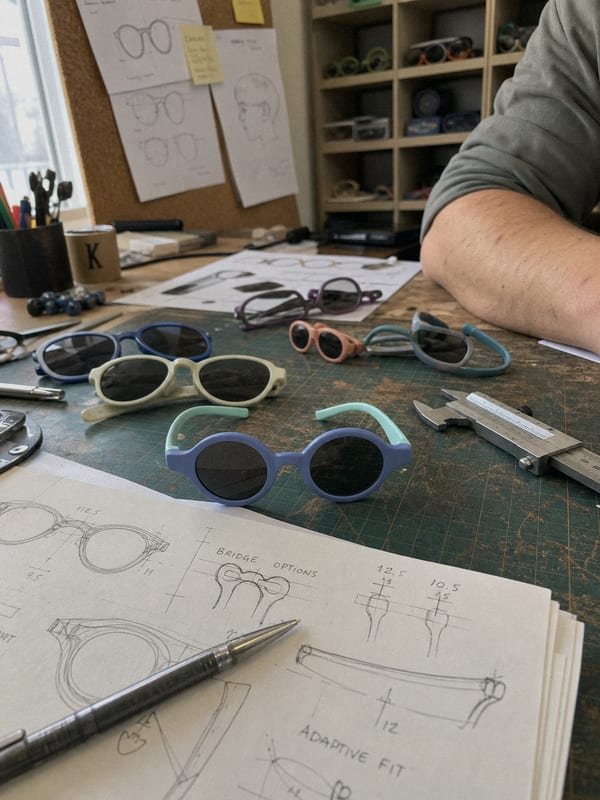
Adults treat sunglasses carefully. Children do not, and they should not have to. So the material science 6 has to absorb the abuse instead. After fifteen years of building children's frames, we have settled firmly on two flexible materials — TR90 and TPEE — often combined, with TR90 fronts and softer TPEE temples.
Why rigid frames fail children
A rigid frame under stress does one of two things: it deforms permanently, or it breaks. Both outcomes are bad. A broken frame can leave sharp plastic edges millimeters from a child's eye. A deformed frame slides down the nose, misaligns the lens optical center with the pupil, and gets abandoned in a backpack. Sunglasses only protect eyes when they are actually worn, and children abandon anything uncomfortable within minutes.
The flexible-material advantage
- 耐衝撃性。. TR90 and TPEE flex on impact and return to shape, and paired with polycarbonate lenses that will not shatter into shards, the whole unit survives falls and ball sports.
- Lightweight comfort. Flexible polymers weigh noticeably less than acetate. Less nose pressure means longer voluntary wear time.
- Secure, gentle fit. Soft temple tips grip without pinching. Our round two-tone styles use gently curved, tapered temples exactly for this reason.
- Safety in failure. Even under extreme force, these materials tear or bend rather than fragmenting.
- Environmentally friendlier chemistry. The TPEE and TR90 grades we use avoid the additive concerns of some cheap plastics touching children's skin all day.
Growing faces add another layer. A child's head width, bridge height, and ear position change fast. Flexible frames tolerate that change far better, keeping the optical center reasonably aligned with the pupil across a wider fit range. For sport styles — like wrap-around shield designs with mirrored polycarbonate lenses — flexibility also lets the frame hug the face during running and cycling without pressure points.
子供の視力ニーズを理解しているメーカーをどのように選びますか?
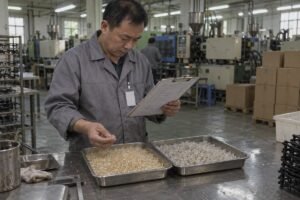
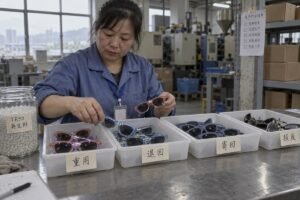
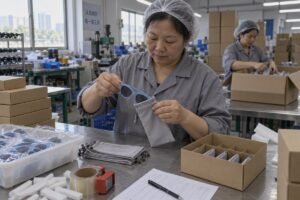
One of the first questions I ask new buyers who contact our Taizhou factory is not about quantity — it is about which safety standard their target market enforces, because that answer reveals whether their previous supplier ever thought about children's eyes at all.
実績のある子供用眼鏡専門メーカーを選ぶ:検証済みのUV400および100% UVA/UVBレンズテスト、TPEEやTR90などの柔軟な子供向け安全素材、関連する安全基準への準拠、実際の工場品質管理、そして小売準備完了のブランド製品を構築するためのOEM/ODMの深さ。.
Not every eyewear factory is a children's eyewear factory. The tooling, materials, testing mindset, and even the aesthetic sensibility 7 are different. Here is the evaluation framework I would use if I were sitting on the buyer's side of the table.
A practical supplier checklist
| 評価エリア | 確認すること | 赤信号 |
|---|---|---|
| レンズの安全性 | UV400 test reports, polycarbonate lenses, impact resistance data | "Trust us, it's UV protective" with no documents |
| 素材 | TPEE/TR90 flexibility, non-toxic and environmentally friendly grades | Brittle generic plastic, no material spec sheet |
| Manufacturing depth | Actual factory with in-house QC, organized workshop | Trading company reselling unknown factories' goods |
| Product range | Broad existing style library to launch without mold costs | Only a handful of adult styles "resized" for kids |
| カスタマイズ | カスタムカラー、ロゴ、レンズ、パッケージ、アクセサリー | Sticker-logo-only "customization" |
| コミュニケーション | Clear technical answers about pediatric ophthalmology basics | Vague replies, price-only conversation |
既存のスタイルライブラリがリスクを低減する理由
New kids' brands often underestimate mold costs. Opening a fresh frame mold is a significant investment before you have sold a single pair. That is why we maintain roughly 800 existing styles — from playful matte periwinkle round frames with mint-teal temples to white wrap-around sport shields with iridescent mirrored lenses. A brand can pick proven shapes, customize colors and branding, and test the market with far less capital at stake. Once a style proves itself, custom development makes sense.
Look for children-first thinking, not adult leftovers
Ask the supplier why their bridge sits where it does. Ask how their temples accommodate a growing head. Ask what happens to the lens in a drop test. A specialist answers immediately and specifically. A generalist changes the subject to price. In our experience exporting to buyers across Europe, Australia, and Japan, the brands that succeed long-term are the ones whose suppliers can defend every design decision with a child-safety reason.
結論
Children's eyes admit more UV, develop for years, and face constant play impacts. Specially designed kids' sunglasses — flexible, UV400-rated, child-fitted — are preventive health tools, not accessories.
脚注
1. Authoritative guidance on why children need sunglasses, relevant for brands targeting this demographic. ↩︎
2. Technical explanation of the crystalline lens structure and its role in light transmission. ↩︎
3. Authoritative medical source confirming that a significant portion of lifetime UV exposure occurs before age 18. ↩︎
4. Global health authority defining refractive errors and their impact on vision. ↩︎
5. Detailed information on photokeratitis, also known as ultraviolet keratitis or sunburn of the cornea. ↩︎
6. Technical details on polycarbonate, a key material used for impact-resistant children’s eyewear. ↩︎
7. Official international standard for sunglasses, ensuring safety and quality beyond just visual appeal. ↩︎
 English
 Español de México
 Deutsch
 Français
 日本語
 العربية
 Português do Brasil