子供用サングラスのフレームが処方レンズに適合するかどうかを確認する方法
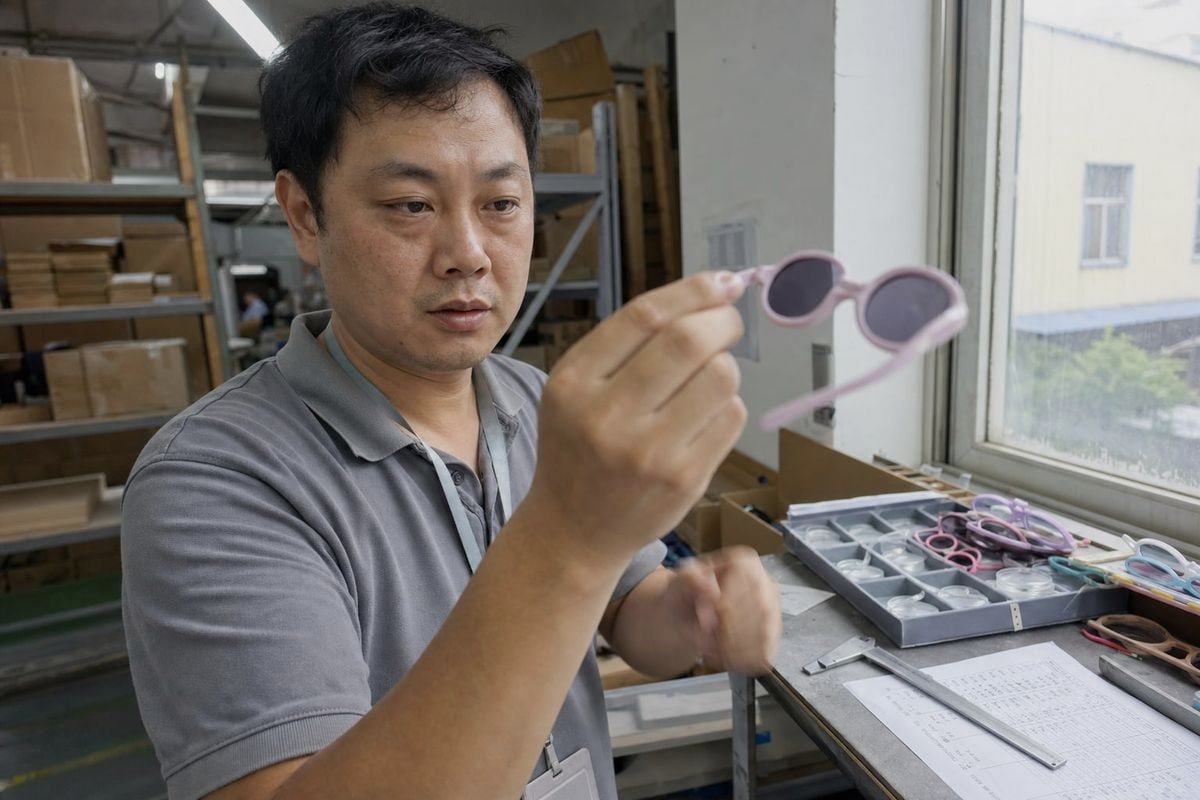
子供用サングラスのフレームが処方レンズに適合するかどうかを確認することは、私たちの台州工場が毎週聞かれる質問です V字型レンズ溝 1. 間違えると、バイヤーは返品、怒った親、在庫の無駄に直面します([こちら](https://okayeyewear.com/what-common-kids-sunglasses-complaints-avoid-them-sourcing/))。確認することで、それらすべてを防ぐことができます。.
子供用サングラスのフレームが処方レンズに適合するかどうかを確認するには、フレームのRX対応表示、レンズ溝の深さ、ベースカーブ、レンズ開口部のサイズを確認し、素材がTR90のような光学グレードであることを確認し、製造元にフィッティングサンプルを依頼し、一般的な小児の瞳孔間距離範囲に対して中心化を確認します。.
その回答は要点をカバーしています。しかし、各チェックには重要な詳細があります。以下では、仕様、素材、サンプリングプロセス、品質管理手順を一つずつ説明します。.
処方箋対応のキッズサングラスを注文する前に確認すべきフレームの仕様は何ですか?
オーストラリアのバイヤーが、完璧に見えるが溝ではなく平らなレンズ棚を備えた競合他社のフレームを送ってきたことがあります。 小児用処方箋 2. 私たちのエンジニアは数分で問題を発見しました。仕様は見た目よりも重要です。.
注文する前に、5つの仕様を確認してください。RX対応の指定、適切なV字型レンズ溝付きのフルリムデザイン、6以下のベースカーブ、印刷されたフレーム測定値(レンズ幅、ブリッジ、テンプル長)、および厚い小児用レンズの端を隠すのに十分なリムの深さ。.
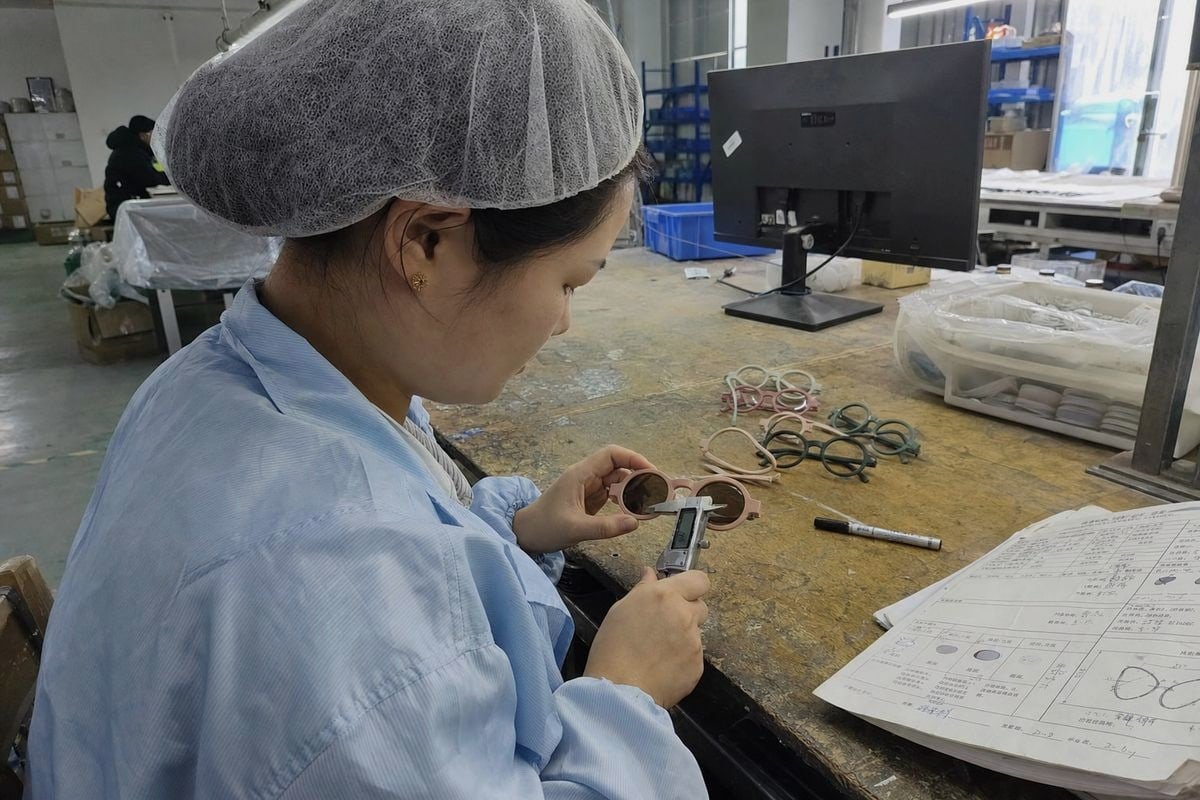
ファッションサングラスとRX対応フレームの違いは、ほとんど目には見えません。だからこそ、多くのバイヤーが引っかかってしまうのです。子供用アイウェアを15年間製造してきた経験から、処方箋への変換に失敗するフレームは、通常、測定可能な数点のいずれかで失敗することがわかりました。そのため、私たちは常にバイヤーに、まず仕様書全体を要求するように伝えています。.
要求すべき主要な測定値
各フレームには通常、テンプルアームの内側にレンズ幅、ブリッジ幅、テンプル長の3つの数字が印刷されています。処方箋用途では、これらの数字は子供の顔に合い、 瞳孔間距離 3. レンズ開口部で目が大きく中心からずれていると、光学ラボは光学中心を正しく配置できず、子供は歪みや眼精疲労を起こします。.
| 仕様 | 確認すること | 処方レンズにとってなぜ重要なのか |
|---|---|---|
| レンズの幅と形状 | エッジ加工されたレンズが入るのに十分な大きさの開口部 | 瞳孔を水平方向に中央に配置する |
| 鼻梁の幅 | 締め付けずにぴったりフィット | 滑りを防ぎ、中心を安定させる |
| テンプル長 | 耳までまっすぐ伸びる | フレームが傾くのを防ぐ |
| レンズ溝 | V字型の溝、平らな棚ではない | 面取りされた眼鏡レンズを所定の位置にロックする |
| ベースカーブ | ベース6以下が推奨 | 周辺の「魚眼レンズ」のような歪みを避ける |
| リムの深さ | 端の厚みを隠すのに十分な厚さ | ハイマイナスまたはハイプラスの端を隠す |
シールドレンズ対デュアルレンズ
シングルミラーシールドレンズを備えたラップアラウンドスポーツスタイルは印象的で、私たちはそれらをたくさん製造しています。しかし、ワンピースのシールドは通常、標準的な処方箋の表面加工には対応できません。処方箋プログラムの場合、フレームは2つの別々のレンズを保持する必要があります。ベース8を超えるハイベースラップアラウンドフレームも、矯正力が追加されると視覚的な歪みを引き起こします。シールドスポーツスタイルと丸いデュアルレンズスタイルの両方を含むラインがある場合は、どのSKUが処方箋に対応しており、どのSKUがプラノ専用であるかを明確にマークしてください。.
子供用の処方レンズをTR90またはTPEEフレームに安全に装着できるかどうか、どうすればわかりますか?
素材の選択は、すべての新しい金型で検討するトレードオフです。TPEEは幼児に柔らかさと安全性を提供し、TR90は剛性とレンズグリップを提供します。適切な答えは、実行する処方箋プログラムによって異なります。.
TR90メモリーポリマーは、光学グレードの素材であり、レンズ溝の張りが安定しており、冷間加工との互換性があり、衝撃に強いため、処方レンズを確実に保持します。TPEEは安全で柔軟性がありますが、より柔らかいため、強い度数よりも度なしレンズや軽い度数に適しています。.

TPEEテンプルを備えたTR90フレームを開発したとき、目標は両方の長所を組み合わせることでした。レンズをグリップする剛性の高いフロントと、激しい遊びで子供を傷つけない柔らかく曲げやすいテンプルです。このハイブリッドデザインは、光学会社にとって最も要望の多い構造の1つとなり、素材の問題をよく示しています。.
TR90が処方箋プログラムに適している理由
TR90メモリーポリマー 眼鏡レンズの取り付け中の熱に強く、曲げた後に元の形状に戻り、レンズが子供がメガネを落としたときに外れないように溝の張力を維持するため、眼鏡用フレーム素材として眼鏡ラボに広く受け入れられています。また、以下のものともよく合います。 ポリカーボネートレンズ 4, その柔軟性のため、小児用処方箋の標準的な選択肢です。 耐衝撃性 5. 多くのラボでは、コールドグルー対応フレームも好みます。コールドマウントは、高温で損傷する可能性のある高温を回避するためです。 反射防止コーティング 6. TR90はどちらの方法にも対応できます。.
TPEEが適している点
TPEEはTR90よりもさらに柔らかく柔軟性があります。その柔軟性は、赤ちゃんや幼児にとって素晴らしいものですが、重いハイマイナスレンズを保持するには理想的ではない理由でもあります。フレームが十分に曲がると、時間の経過とともにレンズの保持力が低下する可能性があります。バイヤーがどのように考えるべきかについて、以下にアドバイスします。
| 素材 | 柔軟性 | 処方箋への適合性 | 最適な使用例 |
|---|---|---|---|
| TR90 | Flexes and recovers | Excellent for most Rx ranges | Kids' optical frames, Rx sunglasses |
| TPEE | Extremely soft and bendable | Plano or very light Rx only | Baby and toddler sunglasses |
| TR90フロント + TPEEテンプル | Rigid front, soft arms | Very good; safe temples for active kids | Rx-ready active kids' eyewear |
One more practical note: TR90 frames can accept wire-core temples, which let an optician adjust pantoscopic tilt and temple bend for a child's lower eye level. Ask your supplier whether the mold supports this. Some do, some do not, and it changes how well an optician can fine-tune the final fit.
製造業者に一括注文する前に、レンズのフィッティングサンプルをリクエストできますか?
A Japanese optical brand once asked us whether sampling was allowed before committing to a container order. My honest answer surprised them: not only allowed, but strongly encouraged. Skipping this step is the most expensive shortcut in eyewear sourcing.
はい。信頼できる子供用眼鏡メーカーは、プレプロダクションサンプルを提供しており、これにより、あなたの光学ラボは実際の処方レンズをフレームにテストカットすることができます。ターゲットカラーのサンプルをリクエストし、溝の深さ、レンズの保持力、センタリングを確認し、大量生産が始まる前に書面で承認してください。.
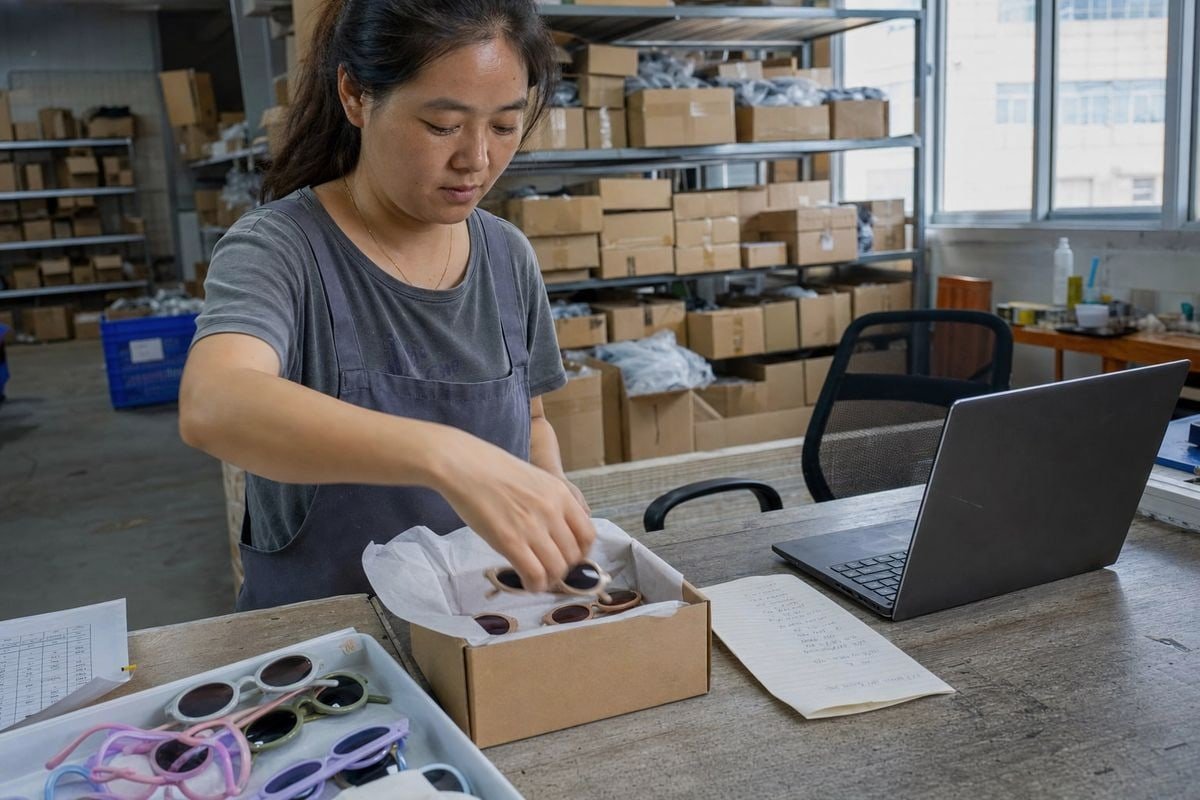
At our factory, sampling is built into every OEM and ODM project, and it is one reason we keep around 800 existing styles on hand. Buyers can pick a proven mold, receive samples within days, and run real-world lens fitting tests without investing in new tooling. That lowers risk dramatically for new brands testing the prescription-ready category.
How a proper sampling process runs
The process is straightforward, but each step exists for a reason. Here is how we structure it with our B2B buyers:
- Select candidate styles. Choose frames already flagged as RX-able, full-rim, with a Base 6 or lower curve.
- Receive physical samples. We ship samples in the actual production material and colorway, because pigments can subtly change material hardness.
- Send samples to your optical lab. Have the lab edge test lenses, ideally polycarbonate, across a realistic prescription range, including a high-minus and a high-plus test.
- Check retention and stress. The lab confirms the lens locks into the groove, shows no stress fractures, and stays seated when the frame is flexed.
- Verify centration. Compare the frame geometry against typical pediatric pupillary distance values for your target age band.
- Approve or revise. Sign off the sample, or request adjustments to groove depth or rim thickness before molds run.
What to ask your supplier during sampling
Ask whether the sample matches production tooling exactly. Ask which lens mounting method the frame is designed for, heat or cold-glaze. Ask for the frame's dimensional tolerances. And ask what happens if your lab rejects the sample. A serious factory will answer all four questions clearly. In my experience exporting to twenty-plus countries, the buyers who ask these questions early almost never face fitting problems at scale.
大量生産において、子供用フレームが処方箋レンズに正確にフィットすることを確認するための品質管理手順は何ですか?
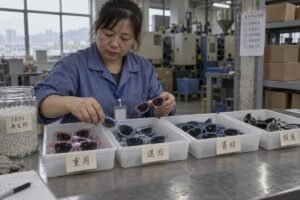
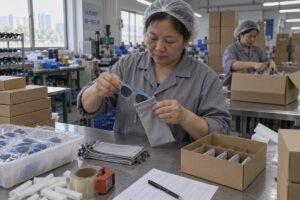
The hardest lesson from our early years was this: one perfect sample proves nothing about ten thousand units. Consistency is a manufacturing discipline, not a design feature. Our 5S-managed workshop was built around that lesson.
スケール確認には、バッチごとの寸法QCが必要です。レンズ溝の深さと開口サイズのゲージチェック、ベースカーブの検証、リムのねじれおよび屈曲テスト、引き出しユニットへのレンズのランダムテスト加工、そして生産前にバイヤーと工場間で合意された文書化された公差。.
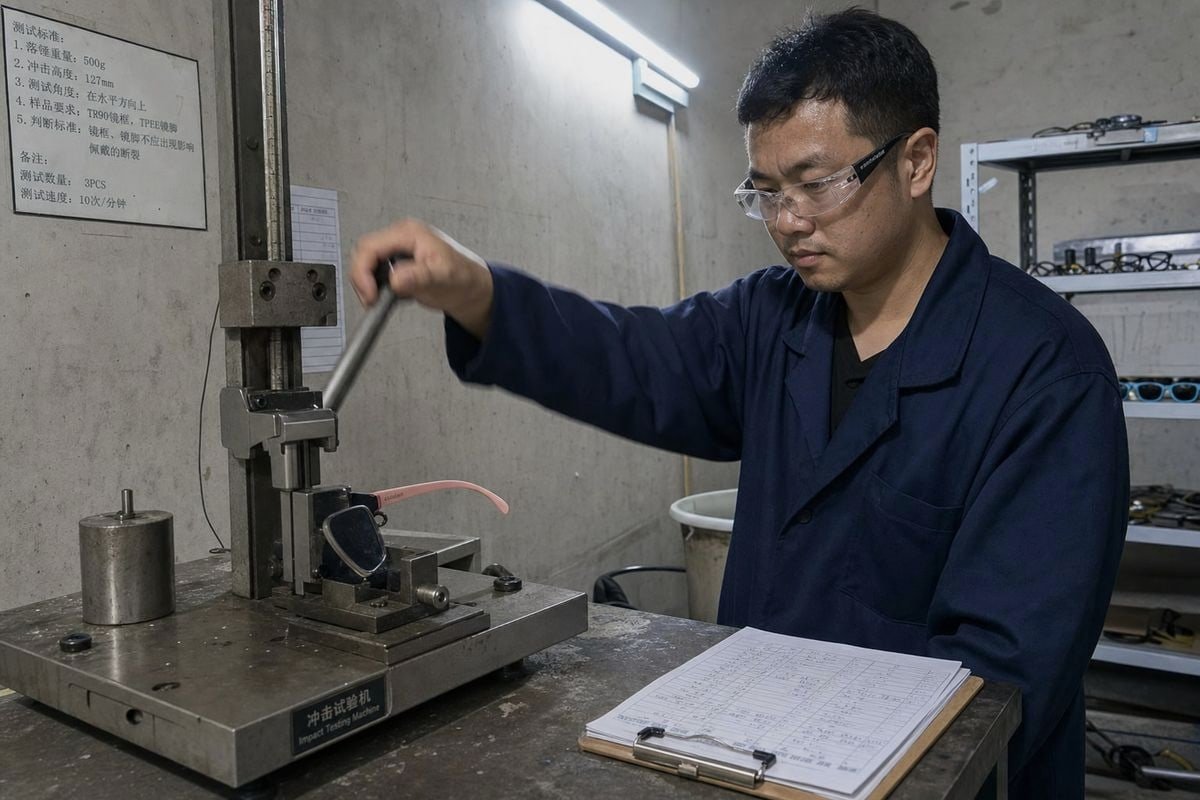
射出成形 7 is repeatable, but it is not perfect. Mold wear, material batch variation, and cooling differences can shift a lens opening by fractions of a millimeter. That shift is invisible on a plano sunglass. On a prescription frame, it can mean a lens that pops out or a groove that no longer grips. So quality control for RX-able frames has to be tighter than for fashion shades.
The QC checkpoints that matter
Across fifteen years and roughly 120 workers on our line, we have settled on a checkpoint structure that catches fitting problems before they ship. The table below shows the checks we consider non-negotiable for prescription-ready kids' frames:
| QCチェックポイント | 方法 | Acceptance focus |
|---|---|---|
| Groove depth & profile | Gauge measurement per batch | Consistent V-bevel channel dimensions |
| Lens opening size | Template or projector comparison | Within agreed tolerance of the master sample |
| ベースカーブ | Curve gauge on frame front | Matches spec so labs can match lens curvature |
| Flex & torsion | Twist and bend test on pulled units | Rim recovers shape, no whitening or cracks |
| Test edging | Random units fitted with real lenses | Lens seats fully, no gaps, no pop-out |
| Fit geometry | Check bridge, temple splay, tilt | Frame sits level with stable centration |
Documentation closes the loop
Numbers only help if both sides agree on them. Before mass production, we lock a golden sample and a written tolerance sheet with the buyer. Every inspection then references those documents, not memory or opinion. Features like adjustable nose pads, where specified, get their own functional check, because a loose pad shifts the lens position on the child's face. For buyers running ongoing programs, we also recommend periodic re-validation, since molds wear gradually. A small quarterly test-edge run costs little and protects your brand's reputation with parents, opticians, and retailers alike.
結論
Guessing whether kids' sunglasses frames fit prescription lenses invites returns and lost trust. Verify specifications, choose TR90 wisely, test samples, and enforce batch QC — then order with confidence.
脚注
1. ISO standard for spectacle frame dimensions supports groove and fit specifications discussed. ↩︎
2. CDC vision health resource relevant to children’s prescription eyewear needs. ↩︎
3. Defines the measurement critical for lens centration mentioned throughout the article. ↩︎
4. FDA guidance on sunglass lens materials supports claims about polycarbonate safety. ↩︎
5. NIH’s National Eye Institute explains refractive errors relevant to lens strength needs. ↩︎
6. Explains the coating technology referenced regarding cold-glaze lens mounting. ↩︎
7. Background on the manufacturing process used to produce the frames discussed. ↩︎

 English
  Español de México
  Deutsch
  Français
  日本語
日本語  العربية
  Português do Brasil