Why Do Kids Feel Dizzy or See Distorted Vision Wearing Sunglasses?
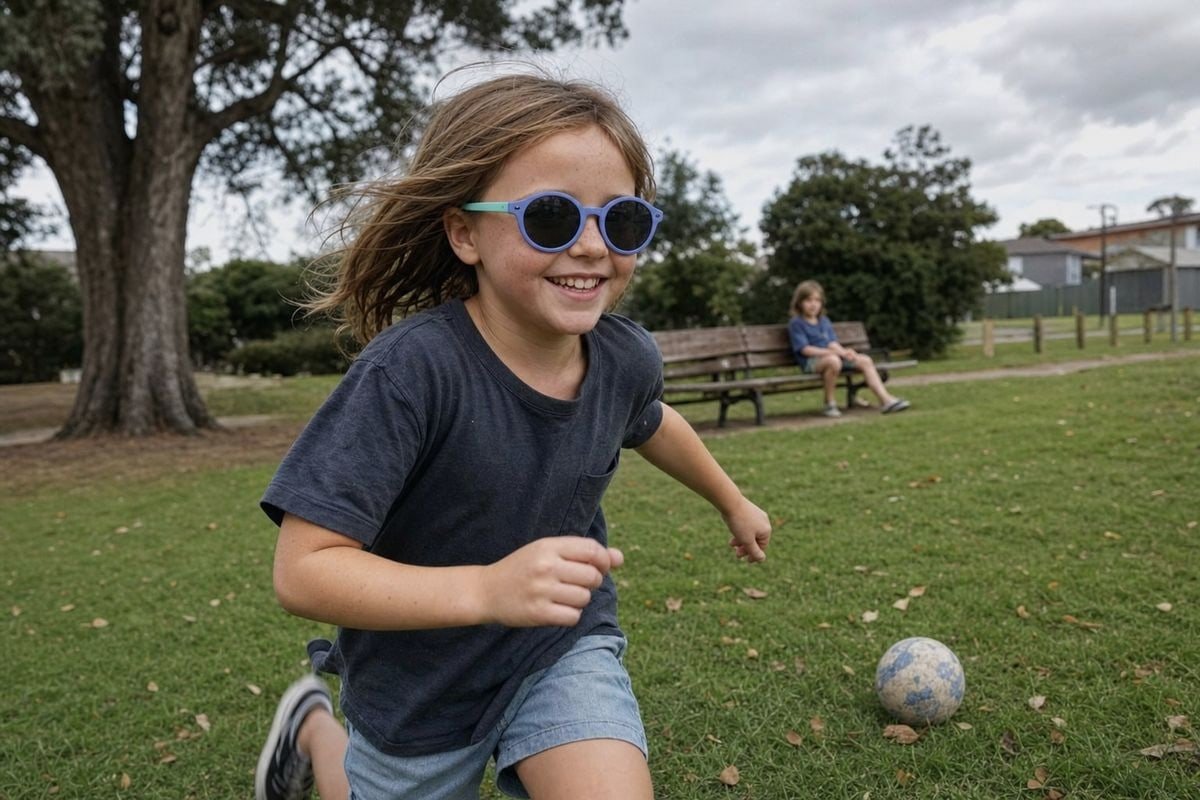
Kids feeling dizzy or seeing distorted vision in sunglasses is a complaint I hear from buyers more often than you would expect vestibular-ocular reflex 1. On our production line in Taizhou, we treat it as a solvable engineering problem. When a child says “the floor looks bent,” parents blame the brand, the brand blames the supplier, and returns pile up. The good news: after 15 years of building children’s eyewear, I can tell you almost every case traces back to a handful of controllable causes.
Kids feel dizzy or see distorted vision wearing sunglasses mainly because of optical lens distortion, overly dark tints, poor frame fit, or misaligned optical centers. Children’s developing visual and balance systems are more sensitive, so warped, low-quality lenses or pressure from rigid frames trigger dizziness, nausea, and visual discomfort.
Let me walk you through each cause, how to test for it before you place a bulk order, and what to demand from any factory you work with.
What Causes Lens Distortion in Children's Sunglasses in the First Place?
During a QC audit last year, our team rejected a batch of injected lenses because the curvature drifted mid-run. That single defect is exactly what makes a child's world look warped.
Lens distortion in children's sunglasses is caused by uneven lens curvature, internal stress from poor injection molding, cheap raw materials, misaligned optical centers, and frames that bend the lens after assembly. Any of these defects refracts light unevenly, producing wavy, "fishbowl" vision that can make kids dizzy.
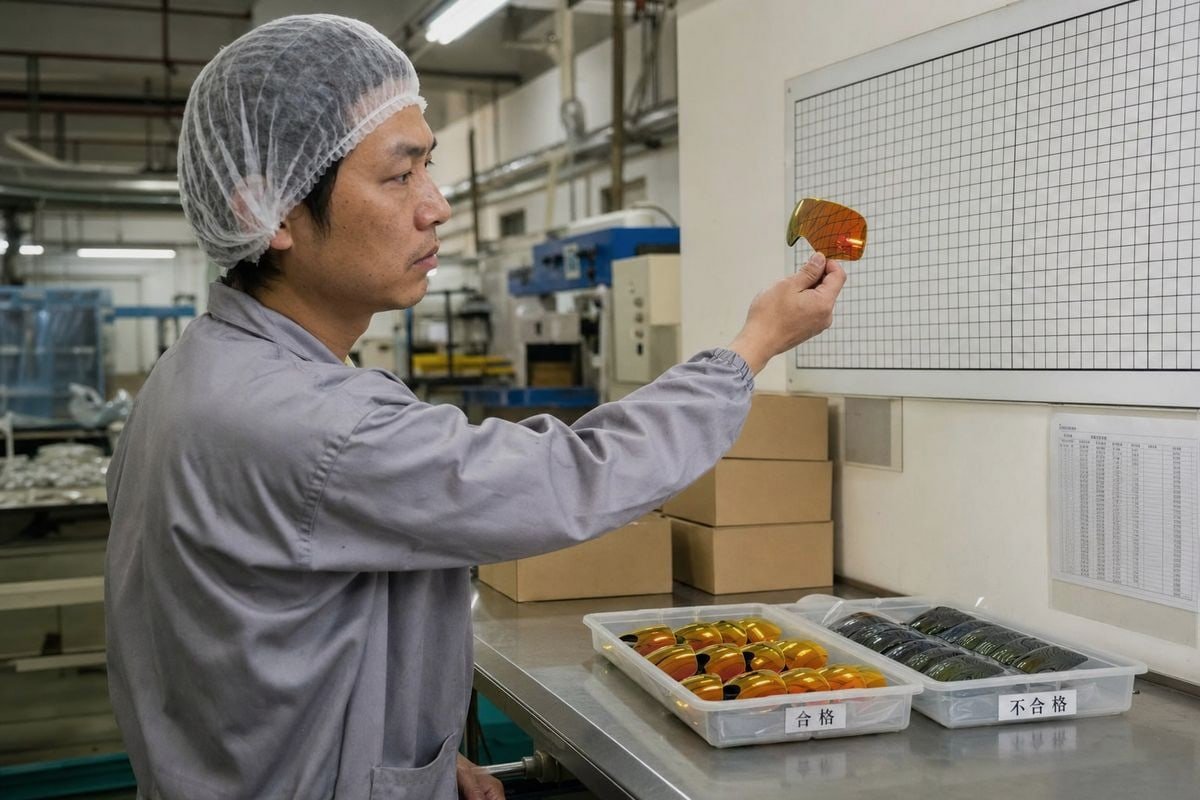
Distortion is rarely one dramatic flaw. In my experience, it is usually a chain of small shortcuts. A supplier saves a few cents on lens resin. The injection machine runs too fast. The lens is cut slightly off-center. Then the frame squeezes the lens after assembly. Each step adds a little optical error. A child's brain, which is still calibrating spatial awareness, notices all of it.
The Main Sources of Distortion
Here is how I break it down when I train new QC staff at our factory:
| Cause | What Goes Wrong | What the Child Sees |
|---|---|---|
| Uneven lens curvature | Cheap molds or worn tooling create inconsistent base curves | Wavy lines, "fishbowl" edges |
| Internal molding stress | Lens cooled too fast during injection | Rainbow patterns, subtle warping |
| Misaligned optical center | Lens cut so the optical center misses the pupil | Prismatic shift, depth errors |
| Low-grade resin | Impurities and inconsistent density in the material | Hazy, uneven clarity |
| Frame-induced bending | Rigid frame pinches and flexes the lens | Distortion that worsens over time |
Why Kids Notice It More Than Adults
Children have larger, more reactive pupils and a still-developing vestibular-ocular reflex 2. Their brains rely heavily on visual cues for balance. So when a lens bends light unevenly, the visual signal conflicts with the inner ear's balance signal. Adults often shrug this off. Kids feel it as dizziness, nausea, or that vague "my eyes feel weird" complaint. This is why we hold children's lenses to tighter optical tolerances than adult fashion sunglasses, not looser ones. A wraparound sport shield, like the mirrored single-lens styles we produce, needs especially careful curve control because the lens sweeps across the whole field of view.
How Can I Tell If a Supplier's Lenses Meet Optical Quality Standards Before I Order?
A procurement manager from Australia once asked me this exact question on a video call. I answered by walking her through our lens inspection bench, live, piece by piece.
Verify lens quality before ordering by requesting UV400 test reports, checking optical power and prism tolerance data, performing a grid-line distortion test on samples, asking for polarization efficiency figures, and confirming the factory tests lenses after frame assembly, not only before mounting.
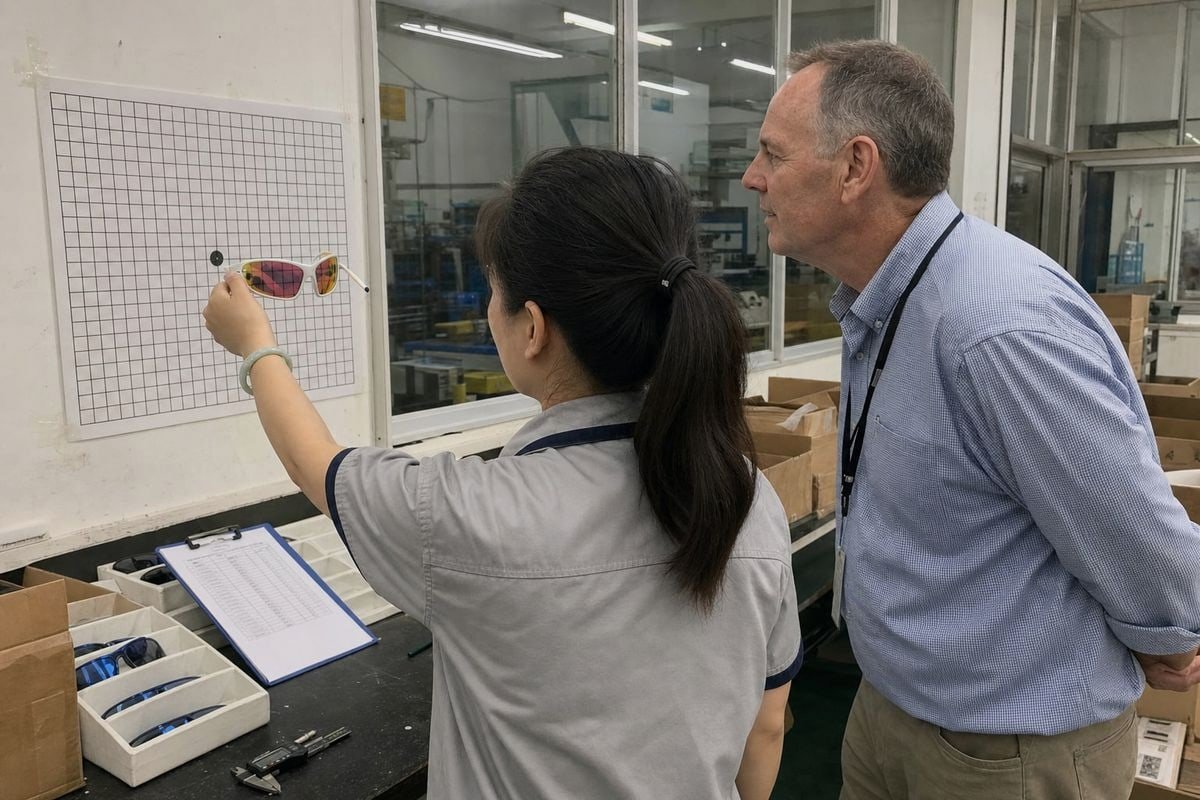
Do not rely on photos or promises. Insist on physical samples and documented tests. Any factory serious about children's eyewear will provide both without hesitation. When buyers visit our 5S-managed workshop, I actually encourage them to run these checks themselves.
Simple Tests You Can Run on Samples
You do not need a lab for a first screening. Try this process:
- The grid test. Hold the sunglasses at arm's length and look through the lens at a tiled floor or graph paper. Move the lens slowly. Straight lines should stay straight. Any waving or bulging signals distortion.
- The reflection test. Look at a fluorescent light reflected off the lens surface. The reflection should glide smoothly. Rippling reveals uneven curvature.
- The stress test. View the lens through a polarized filter 3 against a screen. Rainbow blotches indicate internal molding stress.
- The wear test. Have someone wear the sample for 20 to 30 minutes while walking. Dizziness or eye strain during this simple trial predicts customer complaints later.
Documents to Request From the Supplier
| 文書 | それが証明するもの | Red Flag If Missing |
|---|---|---|
| UV400テストレポート | Full UVA/UVB blocking | Claims of "UV protection" with no data |
| Optical power / prism tolerance report | Lenses will not create unintended magnification or prism | "Trust us, it's fine" answers |
| Polarization efficiency data (if polarized) | Glare reduction actually works | Vague marketing language only |
| Material safety documentation | Lens and frame materials are child-safe | No traceability of raw materials |
| Post-assembly inspection records | Distortion checked after the lens is mounted | Testing only loose lens blanks |
That last row matters more than most buyers realize. A perfect lens can distort once a rigid frame squeezes it. At our facility, we inspect finished pairs, because that is what actually sits on a child's face.
Could Poor Frame Fit or Rigid Materials Be Contributing to My Customers' Dizziness Complaints?
Early in my career, I learned a hard lesson: we fixed a client's lens issue completely, yet complaints continued. The real culprit turned out to be stiff temple arms pinching small heads.
Yes. Rigid frames that pinch the temples, press on the nose, or sit crooked on a child's face cause pressure sensations kids describe as dizziness. Poor fit also shifts the lens optical center away from the pupil, adding genuine visual distortion on top of physical discomfort.
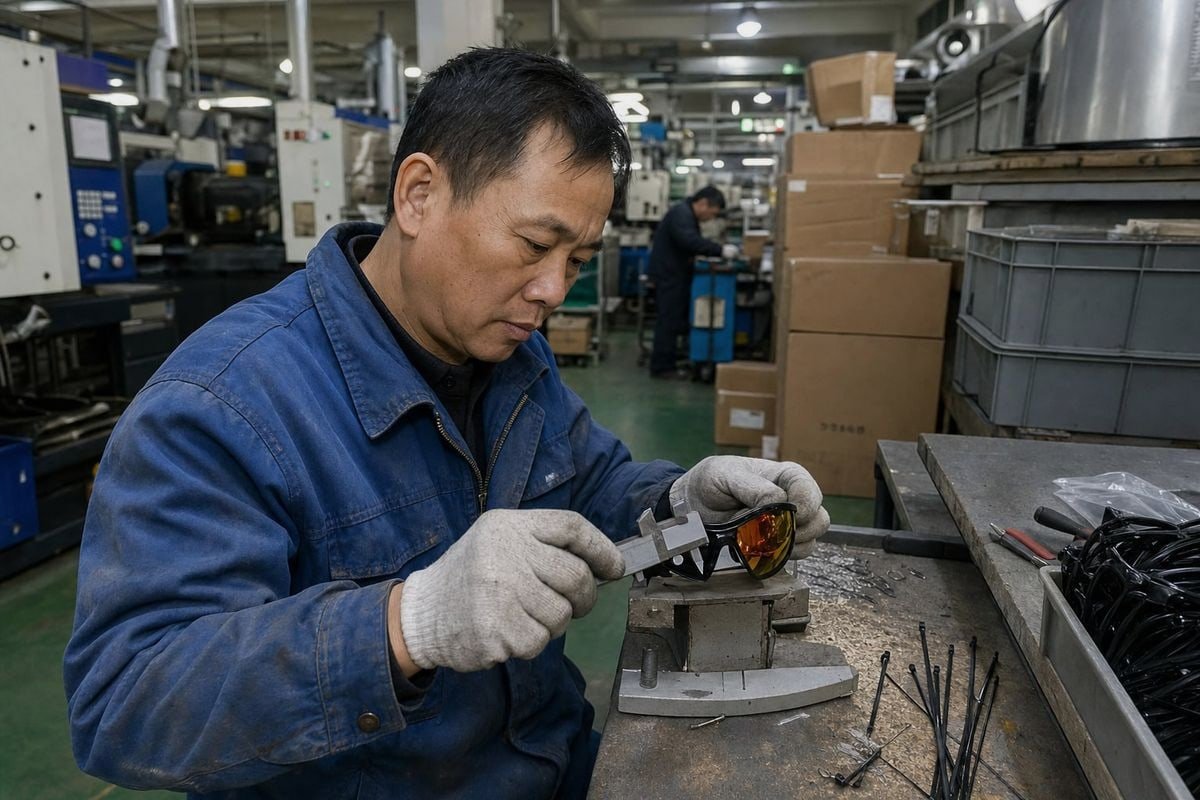
Frame fit is the most underrated variable in children's eyewear. Kids' heads vary enormously between ages two and ten, and children rarely articulate discomfort clearly. They just say "I feel funny" and pull the glasses off. Then the parent leaves a one-star review about "dizzy sunglasses."
How Fit Problems Create Dizziness
Two separate mechanisms are at work. First, mechanical pressure. Tight temples compress the sides of the head. Hard nose bridges dig into soft cartilage. Sustained pressure creates headache-like sensations that young children interpret and report as dizziness. Second, optical misalignment 4. When a frame is too wide, too narrow, or sits crooked, the child looks through the lens off-center. Even a well-made lens delivers distorted, prism-shifted images when viewed away from its optical center. So a bad fit converts a good lens into a bad one.
Why Material Choice Changes Everything
This is exactly why we build most of our children's frames in TR90 and TPEE 5. TR90 gives structural memory and durability. TPEE temples add soft, rubber-like flexibility where the frame touches the head. The combination lets a frame flex outward for a larger head, then return to shape, without the clamping force a rigid acetate or hard plastic frame applies. Flexible materials also survive being sat on, twisted, and thrown into backpacks, which matters because a bent frame is a misaligned frame. On our round two-tone youth styles, we deliberately curve the temple tips and keep the frame lightweight, so the pair stays put without gripping. A frame should hold with geometry, not with force. When your frames do that, a whole category of "dizziness" complaints simply disappears.
What Should I Look for When Sourcing a Manufacturer to Avoid Distortion Issues in Bulk Orders?
Buyers from more than 20 countries have toured our workshop, and I have noticed the experienced ones all inspect the same things. Their checklist is worth sharing.
Choose a factory with proven children's eyewear specialization, documented lens and post-assembly optical testing, flexible child-safe materials like TR90 and TPEE, consistent injection-molding process control, batch-level QC records, and an existing style library so you can validate quality on proven molds before investing in custom tooling.
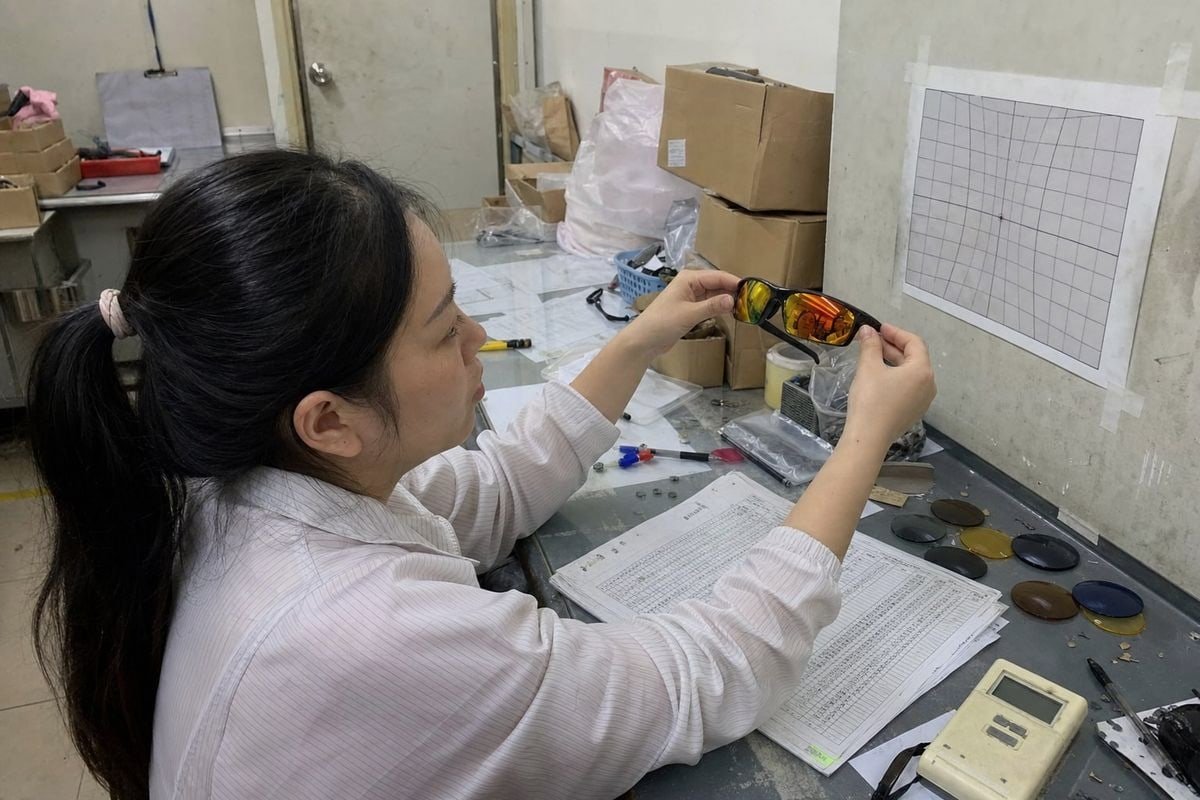
Distortion problems in bulk orders almost never appear in the golden sample 6. They appear in unit 3,000, when tooling wears, resin batches change, or a rushed production schedule shortens cooling times. So you are not really auditing a sample. You are auditing a process.
A Sourcing Checklist That Actually Predicts Quality
| What to Evaluate | Why It Prevents Distortion | How to Verify |
|---|---|---|
| 子供向けの専門経験 | Children's tolerances differ from adult fashion eyewear | Ask how long they have made pediatric frames; ours is 15 years |
| Injection process control | Stable cooling and cycle times prevent lens stress | Request process parameters and factory tour or video audit |
| Post-assembly optical checks | Catches frame-induced lens bending | Ask for finished-pair inspection records |
| Material traceability | Consistent resin means consistent optics | Request material documentation for TR90, TPEE, lenses |
| Batch QC sampling plan | Detects drift across a long production run | Ask for their AQL sampling method in writing |
| 既存のスタイルライブラリ | Proven molds carry proven optics | Test market with existing tooling first |
Start With Proven Molds, Then Customize
Here is a practical strategy I recommend to new brands. Do not open custom molds on day one. A brand-new mold is an unproven variable, and unproven variables are where distortion hides. Instead, pick from a mature style library — we maintain roughly 800 existing styles for exactly this reason — and customize colors, lens tints, logos, and packaging around proven geometry. You launch faster, with lower risk, on optics that have already survived thousands of wearers. Once your line sells, invest in custom tooling with confidence, and insist your factory validates the new mold with the same grid tests and wear trials described earlier. Also agree on the boring details up front: tint darkness categories suited to children, whether polarization fits your market, and a pre-shipment inspection protocol 7. Clear specifications on paper prevent dizzy kids in stores.
結論
Dizziness and distorted vision in kids' sunglasses are warnings, not mysteries. They trace back to lens distortion, dark tints, misalignment, and rigid, ill-fitting frames — every one preventable at the factory.
If those complaints reach your customers, they damage your brand long before anyone blames the supplier. Reviews mention "cheap," parents stop trusting the label, and retailers hesitate on reorders. Prevention costs far less than that. Demand grid tests, UV400 documentation 8, post-assembly inspection, and genuinely flexible child-safe materials like TR90 and TPEE. If you want a partner that treats children's optics as an engineering discipline rather than a price race, our team in Taizhou is happy to send samples and test data — reach Alan Kong at sales@okayeyewear.com, and let's build sunglasses kids actually want to keep on their faces.
脚注
1. Explains the balance-vision reflex referenced when discussing children’s dizziness sensitivity. ↩︎
2. Explains the balance-vision system whose immaturity in kids causes dizziness with distorted lenses. ↩︎
3. Background on polarizing filters clarifies how the stress test detects internal lens molding defects. ↩︎
4. NIH resource on balance disorders links visual misalignment to dizziness symptoms described in children. ↩︎
5. Background on thermoplastic elastomer materials explains why TPEE and TR90 flex without pinching. ↩︎
6. Alibaba sourcing platform context supports the golden sample concept in bulk manufacturing orders. ↩︎
7. ITC trade resources support best practices for pre-shipment inspection in international manufacturing sourcing. ↩︎
8. WHO reference on UV radiation supports the importance of verified UV400 protection claims. ↩︎

 English
  Español de México
  Deutsch
  Français
  日本語
日本語  العربية
  Português do Brasil