What Ratio of Extra Hinges and Temple Parts Should I Order for Kids’ Sunglasses Repairs?
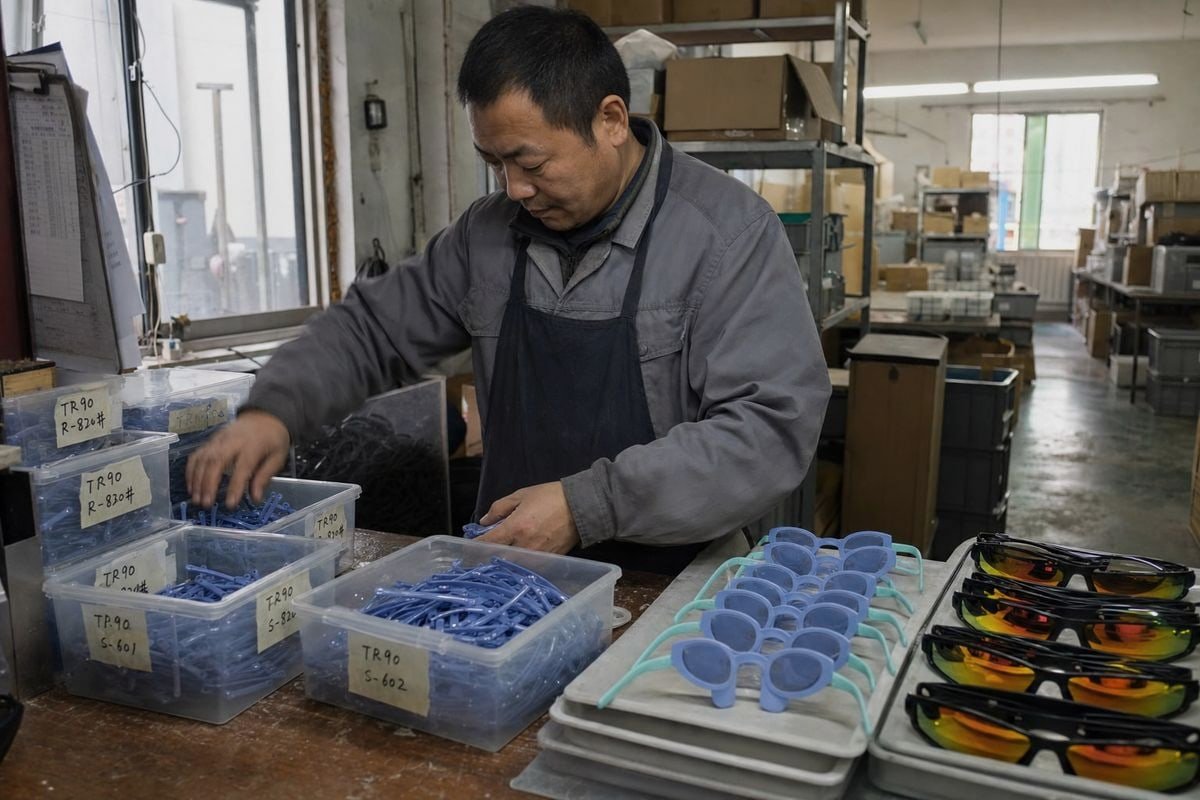
The right ratio of extra hinges and temple parts 1 is a question our factory in Taizhou hears constantly. Order too few, and one broken hinge strands a customer flexible frames 2. Order too many, and dead stock eats your margin.
For kids’ sunglasses repairs, stock spare parts at 10–15% of your order volume, with hinges outnumbering temple parts roughly 2:1 to 3:1. Hinges fail more often than full temple arms, so a 100-pair order needs about 10–15 hinge sets and 4–6 replacement temples.
That is the short answer. But the exact numbers shift with frame material, hinge type, and your return rate monthly repair volume 3. Let me walk you through how we help buyers plan this.
How many spare hinges and temple tips should I stock per 100 pairs of kids' sunglasses?
Last spring, a buyer in Australia emailed me in a panic. Her first container had landed, sales were strong, but she had zero spare parts and a growing pile of warranty claims. We fixed it, but airfreighting hinges is expensive.
Per 100 pairs of kids' sunglasses, stock 10–15 hinge sets, 4–6 replacement temples, 5–8 pairs of temple tips, and one screw assortment covering M1.0 and M1.2 sizes. Kids' frames break more often than adult frames, so a 10–15% spare ratio is the safe baseline.
The 10–15% baseline exists because children's eyewear has a meaningfully higher breakage rate than adult lines. Kids sit on their sunglasses. They pull them off with one hand. They hyperextend the arms past the natural stop. Every one of those habits stresses the hinge first, then the temple.
Here is the key insight most first-time buyers miss: hinges and temples do not fail at the same rate. In our warranty data across kids' styles, hinge-related issues — loose barrel hinges 4, stripped screws, fatigued spring hinges — appear far more often than a fully snapped temple arm. Many repairs only need one side fixed, not both. That is why your stock should never be a flat 1:1 across part types.
A baseline stocking table per 100 pairs
| Part type | Quantity per 100 pairs | Why this amount |
|---|---|---|
| Hinge sets (left + right pairs) | 10–15 | Highest failure point on kids' frames |
| Replacement temples | 4–6 | Needed only when the arm itself snaps |
| テンプルチップ | 5–8 pairs | Wear out from chewing and rough handling |
| Screw assortment (M1.0 / M1.2) | 1 kit per 100 pairs | Screws loosen constantly on small hardware |
| Nose pads (if applicable) | 4–6 pairs | Low cost, worth including |
One packaging detail matters here. Wholesale eyewear components are often sold as matched left/right sets — a listing of "10 sets" usually means 10 right hinges plus 10 left hinges. Confirm this with your supplier before ordering, or you may under-order by half without realizing it.
What replacement parts ratio do experienced buyers recommend for TR90 and TPEE frames?
There is a trade-off we discuss with almost every new client: flexible materials like TR90とTPEEで 5 dramatically reduce frame breakage, but they concentrate the remaining failures at the hinge joint. The material bends; the metal hardware does not.
Experienced buyers of TR90 and TPEE kids' frames typically order hinges to temples at about 3:1, because flexible frames rarely snap but their hinges still loosen and fatigue. For spring-hinge styles, add 25–30% more hinge stock, since springs are the most frequent mechanical failure point.
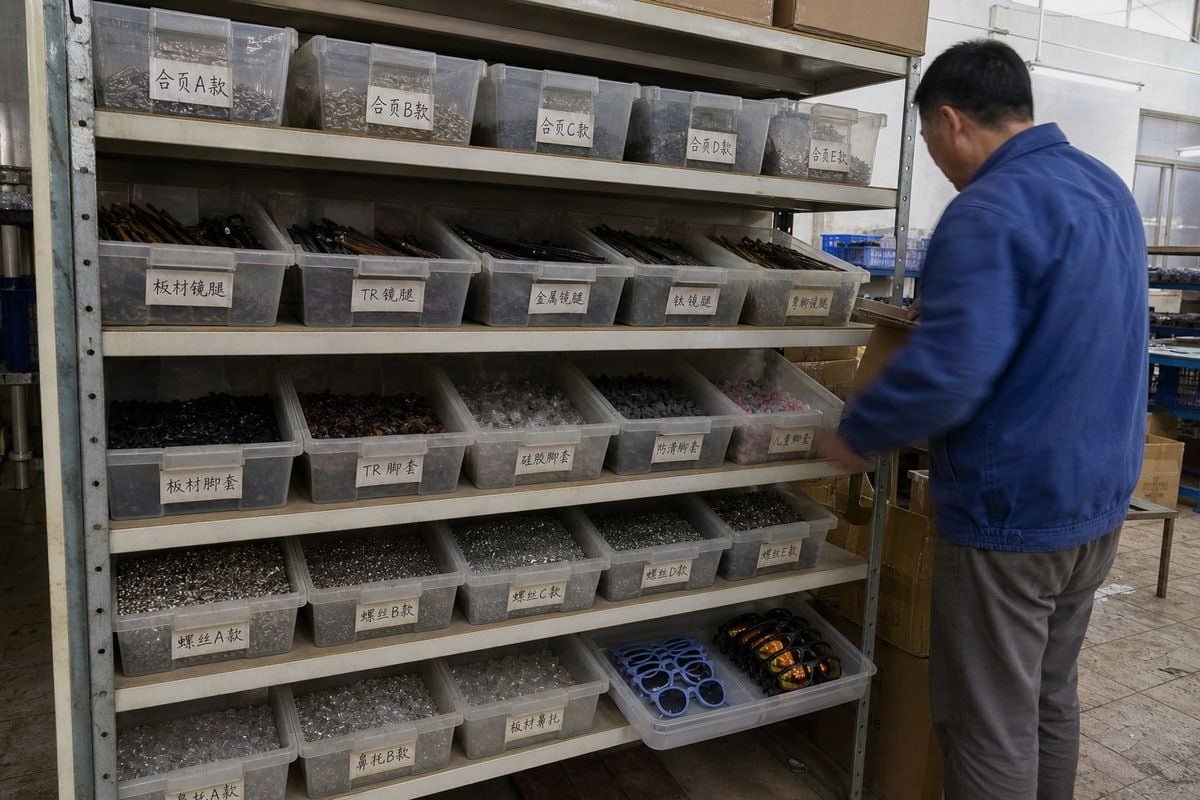
We have worked with TPEE and TR90 for fifteen years, and the pattern is consistent. These flexible memory resins absorb the abuse that would shatter an で、ヒンジで真っ二つに折れ、もう1つは柔軟なフレームで、2シーズン後もまだ機能していました。素材の選択がその違いを説明しました。 6. So the temple arm itself survives. What gives out is the connection point.
There is another compatibility issue that catches buyers out. TR90 and flexible resin frames often use heat-sunk or snap-fit hinges. These are not cross-compatible with standard acetate frame parts or metal-frame hardware. A universal repair kit bought online will often not fit. This is why we always recommend ordering spare parts from the same production run as the frames — the hinge geometry, screw size, and temple length are guaranteed to match.
Ratio guidance by frame construction
| 修理はフレームの構造によって異なります。インターネット上の一般的なアドバイスでは、この点が省略されていることがよくあります。実際に効果があるのは次のとおりです。 | Hinge : temple ratio | 注記 |
|---|---|---|
| TR90とTPEEテンプル | 3:1 | Frame flexes; hinges take the load |
| TR90 with spring hinges | 3:1 plus 25% extra hinges | Springs fail from hyperextension |
| Rigid plastic kids' frames | 2.5:1 | More temple snaps than flexible resins |
| Metal or mixed-material frames | 2:1 | Broader failure spread; keep a wider mix |
The spring hinge question
Some buyers ask whether スプリングヒンジ are worth the added parts complexity. Our view: yes, for active kids, because the spring absorbs hyperextension that would otherwise transfer straight into the frame front. But treat spring hinges as a separate stock category from fixed barrel hinges. They are a distinct repair class, and the parts are not interchangeable.
A fair objection is that some repairers prefer minimal fixes — tightening and re-seating rather than replacing — and therefore need fewer parts. That works for a hobby repairer. For a brand honoring warranty claims at retail speed, waiting on optical repair tools and improvised fixes costs more in customer goodwill than a modest parts inventory ever will.
Can OKAY EYEWEAR supply matching spare parts kits alongside my bulk sunglasses order?
A Japanese baby-brand client once told me the reason she stayed with us was not price — it was that every reorder shipped with a small, labeled spare parts kit her customer service team could actually use. That feedback shaped how we package repair components today.
Yes. OKAY EYEWEAR supplies matched spare parts kits — hinges, replacement temples, temple tips, and correctly sized screws — pulled from the same production run as your bulk order. Kits are packed by frame model, labeled left/right, and can be branded to match your retail packaging.
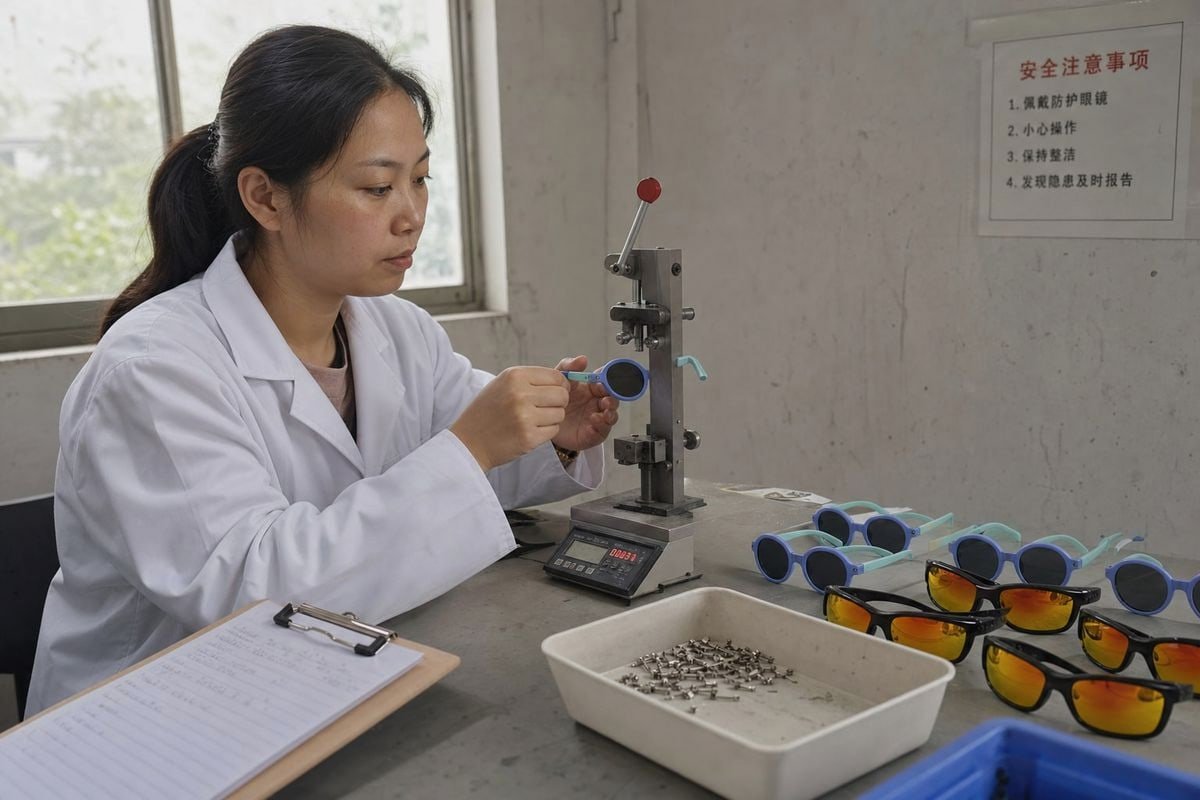
Because we run around 800 existing styles, we can pull spare components for any frame you order without new tooling. That matters more than it sounds. Third-party parts almost never match kids' frames precisely — temple lengths differ, hinge barrel spacing differs, and color batches differ. A replacement temple molded six months later in a different resin lot can show a visible color mismatch, especially after the original arms have had 紫外線暴露 7. Parts from the same run avoid all of that.
What a typical kit includes
- Left/right hinge sets matched to your frame model, in your chosen quantity.
- Replacement temples in the exact color batch, packed in pairs so tension and color stay balanced.
- Temple tips molded from the same TPEE lot as the originals.
- A screw assortment sized to the actual hardware — usually M1.0 or M1.2 for children's frames, not the M1.4 standard used on adult eyewear.
- Optional basic optical repair tools (mini screwdriver, hinge alignment guide) for retail or service-desk use.
For OEM/ODM clients, we can print your logo on the kit packaging so it works as a warranty-support accessory rather than a bag of loose metal. Several of our importers in Europe now sell a small branded repair kit alongside the sunglasses — it turns a cost center into a margin line and signals durability to parents. If you want to discuss quantities for your specific styles, Alan Kong at sales@okayeyewear.com can map a kit to your order before production starts.
How do I calculate spare parts needs based on my brand's return and repair rate?
Early in my export career, I watched a distributor guess their spare parts order, run out of hinges in eight weeks, and then over-order temples they never used. The lesson stuck: calculate from your own data, not from a generic rule.
Multiply monthly repair volume by the percentage of repairs involving hinges to get hinge demand, and by the percentage needing full arm replacement to get temple demand. Then add 20–30% safety stock, and reorder when inventory drops to 20% of your seasonal starting level.
The formula is simple, but each input deserves attention. Start with your actual return and repair numbers. If you are a new brand with no history, borrow the industry baseline: kids' lines see a noticeably higher breakage rate than adult lines, so assume 10–15% of units will need some intervention in the first season.
The three-step calculation
- Hinge demand per month = repair volume × share of repairs involving hinges (often 60–75% for kids' frames).
- Temple demand per month = repair volume × share needing full arm replacement (often 15–25%).
- Safety stock = add 20–30% on top of both figures to cover wrong sizes, stripped screws, mismatched handed parts, and repeat adjustments.
Adjustments that change the math
| 要因 | 調整 | Reason |
|---|---|---|
| Summer / camp season peak | +25% hinge stock | Physical activity spikes; frames get hyperextended more |
| Wrap-around or high-wrap styles | ~2x spare ratio | Curved geometry concentrates stress at the hinge |
| Modular tool-less temples | Move toward 1:1 spares | Parents swap arms themselves; no labor cost |
| Very low repair volume | Reduce assortments | Large mixed kits waste money when failure sizes vary |
Seasonality deserves emphasis. Repairs cluster around school holidays and summer camp months, so inventory replenishment should follow your sales curve, not the calendar. A simple min-max trigger works well: when any critical component falls to 20% of your seasonal opening stock, reorder. Our production lead times let most clients fold parts reorders into their next frame shipment, which keeps freight costs near zero.
One more high-volume note. If you run a large children's eyewear program, a model-specific stock plan beats any universal ratio. Track which styles generate claims, and weight your parts orders accordingly. We share per-style component lists with repeat clients precisely so they can do this.
結論
Order spare hinges and temple parts at 10–15% of volume, weighted 2:1 to 3:1 toward hinges. Match parts to the production run, add safety stock, and reorder seasonally — we can pack it all with your bulk order.
脚注
1. Provides technical background on the components and terminology used in standard eyewear construction. ↩︎
2. Authoritative overview of common materials used in the construction of flexible eyewear frames. ↩︎
3. Authoritative resource on managing stock levels and inventory for repair operations. ↩︎
4. Explains the mechanical design of barrel hinges commonly found in traditional and children’s eyewear frames. ↩︎
5. Official technical data for Grilamid TR90, the industry-standard transparent polyamide for high-quality flexible frames. ↩︎
6. Technical overview of cellulose acetate, the primary material used for high-end rigid eyewear frames. ↩︎
7. Government resource explaining how ultraviolet radiation causes degradation and color changes in polymer materials. ↩︎
 English
  Español de México
  Deutsch
  Français
  日本語
日本語  العربية
  Português do Brasil