What Are the Best Sunglasses Options for Nearsighted Kids?
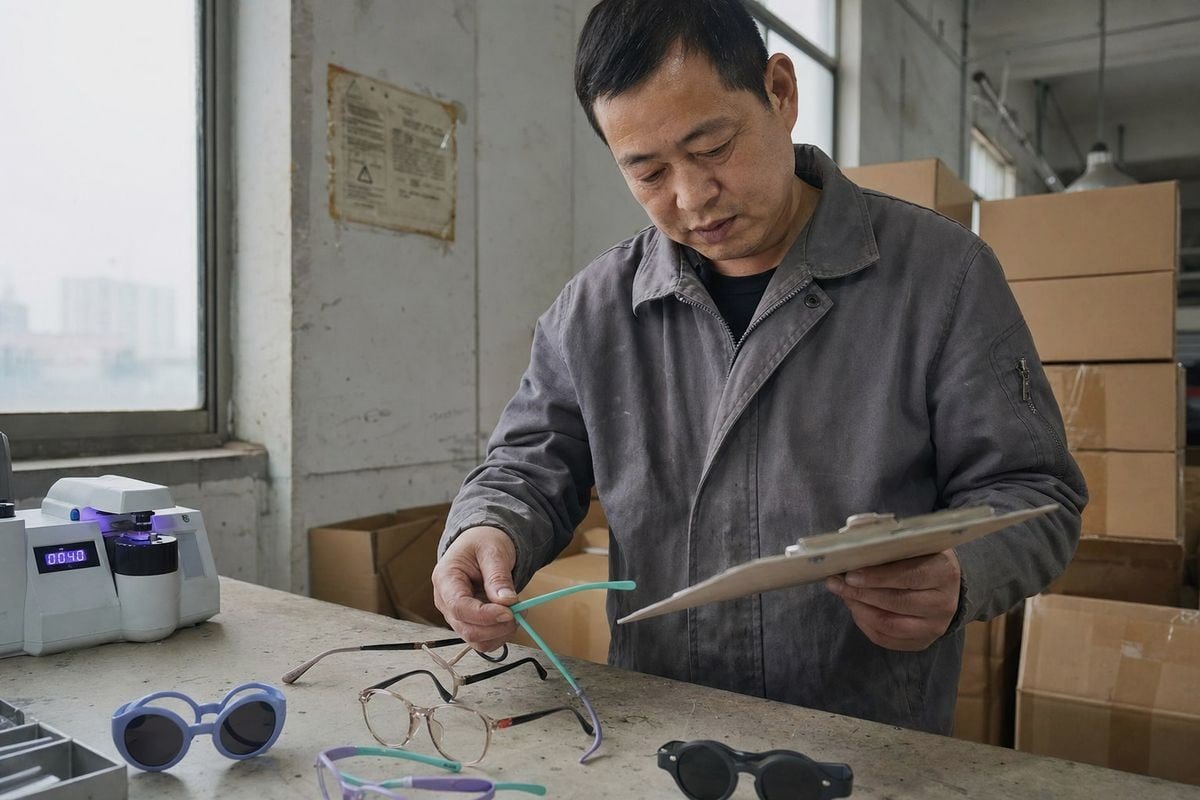
Finding the best sunglasses options for nearsighted kids 1 is a real headache for parents and brands alike — and our factory hears about it from buyers in 20+ countries.
The best sunglasses options for nearsighted kids are prescription sunglasses with UV400 polycarbonate lenses in flexible TR90 or TPEE frames. These combine vision correction, 100% UVA/UVB protection, and impact resistance in one pair that children will actually keep on their faces.
Let me break this down properly. In this article, I will cover lens choices, low-MOQ sourcing, frame materials, and how to find the right factory partner.
What lens options work best for kids who need vision correction in their sunglasses?
A buyer from Australia once asked me why her tinted kids' lenses kept failing drop tests. The answer was simple: she had chosen the wrong lens material for children.
Polycarbonate lenses with UV400 protection are the best choice for nearsighted kids' sunglasses. They accept prescriptions, resist impact far better than standard resin, weigh very little, and block 100% of UVA and UVB rays. Polarization is a helpful bonus, not a requirement.
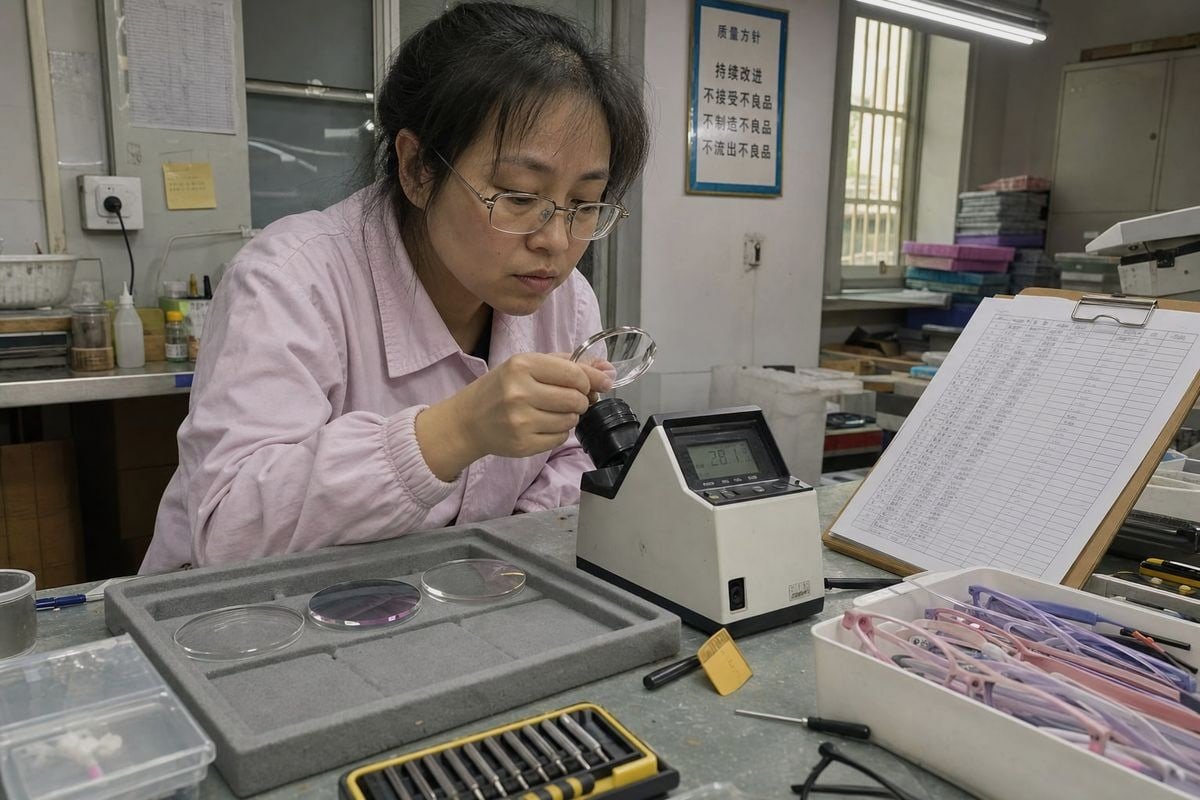
Lens choice is where most of the safety and performance lives. In our Taizhou workshop, we treat the lens spec as the first decision, not the last one. Here is why.
Start with UV protection, not tint
A dark lens without UV filtering is worse than no lens at all. The tint makes the pupil open wider, letting in more harmful light. So the first line on any spec sheet should be UV400 or 100% UVA/UVB blocking 2. Every children's lens we produce is checked against this benchmark before anything else.
Compare the main lens options
| Lens Type | Prescription-Ready? | 衝撃強度 | 最適 |
|---|---|---|---|
| ポリカーボネート 3 (UV400) | はい | 素晴らしい | Active nearsighted kids, sports |
| CR-39 resin | はい | 中程度 | Light daily wear, older kids |
| Polarized polycarbonate | はい | 素晴らしい | Water, snow, bright pavement |
| Photochromic | はい | 接触点に集中 | Kids who move indoors/outdoors often |
| Basic tinted acrylic | いいえ | 悪い | Not recommended for prescriptions |
What about polarization?
偏光レンズ 4 cut glare from water, sand, and roads. Kids feel more comfortable at the beach or on a bike. But polarization does not add UV protection by itself. We tell buyers to treat it as a comfort upgrade. If the budget forces a choice, choose verified UV400 first, polarization second.
Keep lens darkness reasonable
Very dark lenses are not automatically better. If a child cannot see well in shade, the sunglasses come off and stay off. A medium tint with full UV blocking usually wins on real-world compliance. Also remember that a nearsighted child's prescription changes as they grow, so plan for regular eye exams 5 and lens updates.
Can I order prescription-ready sunglasses frames from a manufacturer without high MOQs?
Last year, a startup kids' brand from Japan came to us with a great concept but no budget for custom molds. Our existing-style catalog solved that problem in one meeting.
Yes. Factories with large existing style libraries can supply prescription-ready kids' sunglasses frames at low MOQs — often a few hundred pieces per style. Choosing from ready-made molds avoids tooling costs, shortens lead time, and lets new brands test the market with less risk.
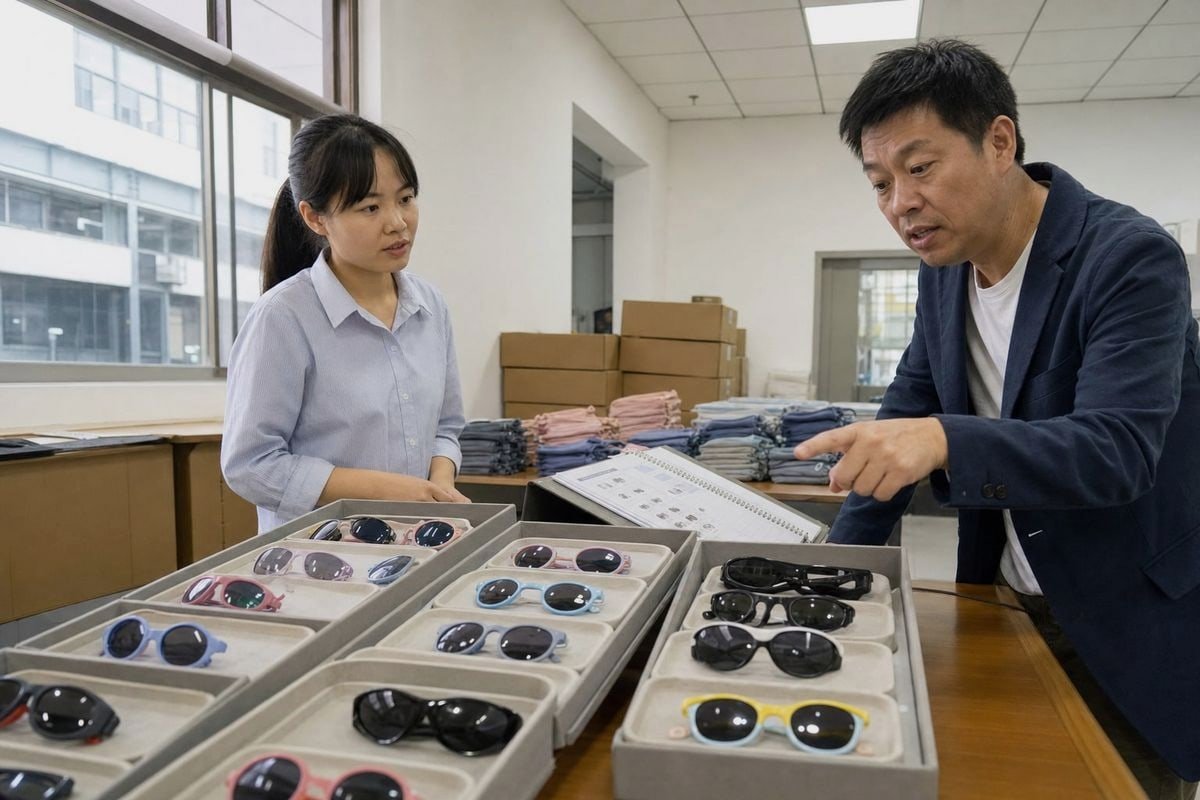
MOQ anxiety is one of the most common concerns I hear from new buyers. So let me explain how the economics actually work, and how to keep your order small without sacrificing quality.
Why existing styles change the math
Custom molds for a new frame shape can cost thousands of dollars and take weeks. That investment only makes sense at high volume. But when a factory already owns hundreds of tested molds — we maintain roughly 800 active styles — the tooling cost disappears. You choose a shape, then customize color, logo, lenses, and packaging. That is why our low-MOQ orders can still look fully branded and retail-ready.
Typical low-MOQ customization options
- Pick an existing prescription-ready frame from the catalog.
- Select frame colors from standard or Pantone-matched options.
- Choose lens spec: UV400 tinted, polarized, or demo lenses for optical labs.
- Add your logo by pad printing, laser engraving, or temple deboss.
- Finish with custom pouches, cases, hang tags, and cartons.
What raises MOQ, and what does not
| カスタマイズ | MOQ Impact | 理由 |
|---|---|---|
| New color on existing style | 低 | Only material batching changes |
| Logo printing | 低 | Simple added process step |
| Custom lens tint | 中程度 | Lens supplier batch minimums |
| Custom packaging | 中程度 | Print run minimums |
| Brand-new frame mold | 高い | Full tooling investment required |
One practical tip: many nearsighted kids will get their prescription lenses fitted locally by an optician. So brands often order frames with plano UV400 lenses or demo lenses, letting the optical shop handle the Rx. This keeps your inventory simple and your MOQ low.
Which frame materials are safest and most comfortable for nearsighted children who wear glasses daily?
The trade-off we weigh every day in product development is simple: a frame must survive being sat on, yet feel like nothing on a child’s nose bridge.
TR90 and TPEE are the safest and most comfortable frame materials for children who wear glasses daily. Both are lightweight, flexible, and shatter-resistant, so frames bend instead of breaking. Silicone-based frames suit toddlers, while TR90 with soft TPEE temples works best for school-age kids.
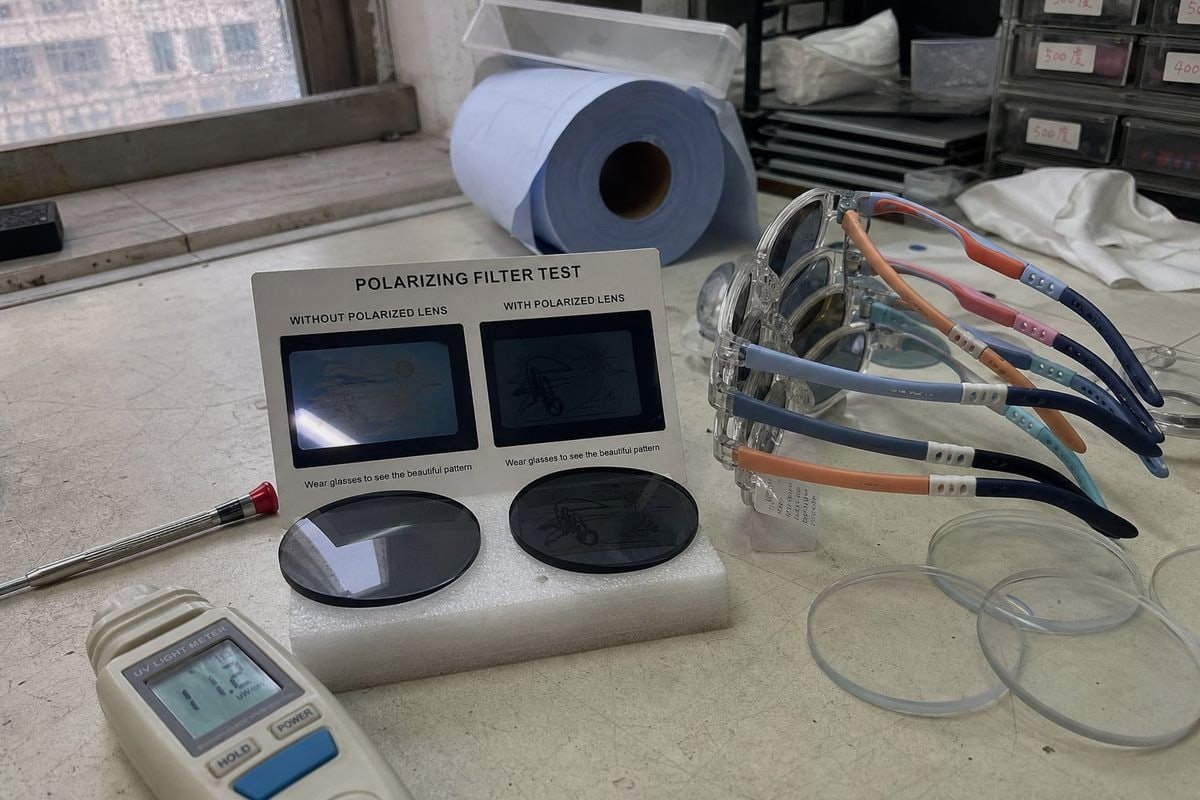
Material choice matters more for nearsighted kids than for occasional sunglasses wearers. A child who needs correction wears their frames for hours every day. Small comfort problems become big compliance problems.
Why flexibility is a safety feature
Rigid frames snap. When they snap, they leave sharp edges near a child's eyes. Flexible materials absorb the abuse instead. In our 15 years of eyewear work, we have settled on TR90 6 for the frame front and TPEE for the temples as the strongest combination. The TR90 front holds prescription lenses securely. The TPEE temples flex outward when a child yanks the glasses off with one hand — which every child does.
Material comparison for daily wear
| 素材 | 中程度から重い | 柔軟性 | Best Age Range | 注記 |
|---|---|---|---|---|
| TPEE | 非常に軽い | 非常に高い | Babies to 8 years | Soft, environmentally friendly, nearly unbreakable |
| TR90 | 軽い | 高い | 4 years and up | Holds Rx lenses well, memory flex |
| Silicone-based | 非常に軽い | 非常に高い | Toddlers | Grippy, gentle on skin |
| Standard acetate | 中程度 | 低 | Teens/adults | Stylish but brittle for young kids |
| Metal | 中程度 | 低 | 推奨しません | Hinge pinch and bend risks |
Comfort details that keep glasses on faces
Beyond the base material, small design choices decide whether a child wears the glasses or hides them in a backpack. We pay attention to rubberized temple tips that grip without pressure, molded or adjustable nose pads for low bridges, curved temple ends for active play, and smooth edges with no exposed screws near the skin. Environmentally friendly material choices also matter to many of the European and Australian brands we serve, and TPEE performs well on that front too.
How do I find a factory that can combine optical-grade lenses with durable, kid-friendly frames?
Early in my career, I watched a promising kids' brand fail because their supplier could make sunglasses or optical frames — but not both to the same standard. That lesson shaped how we built our own production line.
Look for a specialized children's eyewear factory, not a general trader. Verify flexible-material expertise, in-house quality control, UV400 lens verification, an existing style library, and full OEM/ODM support. Ask for samples, factory photos, and process documentation before committing to any order.
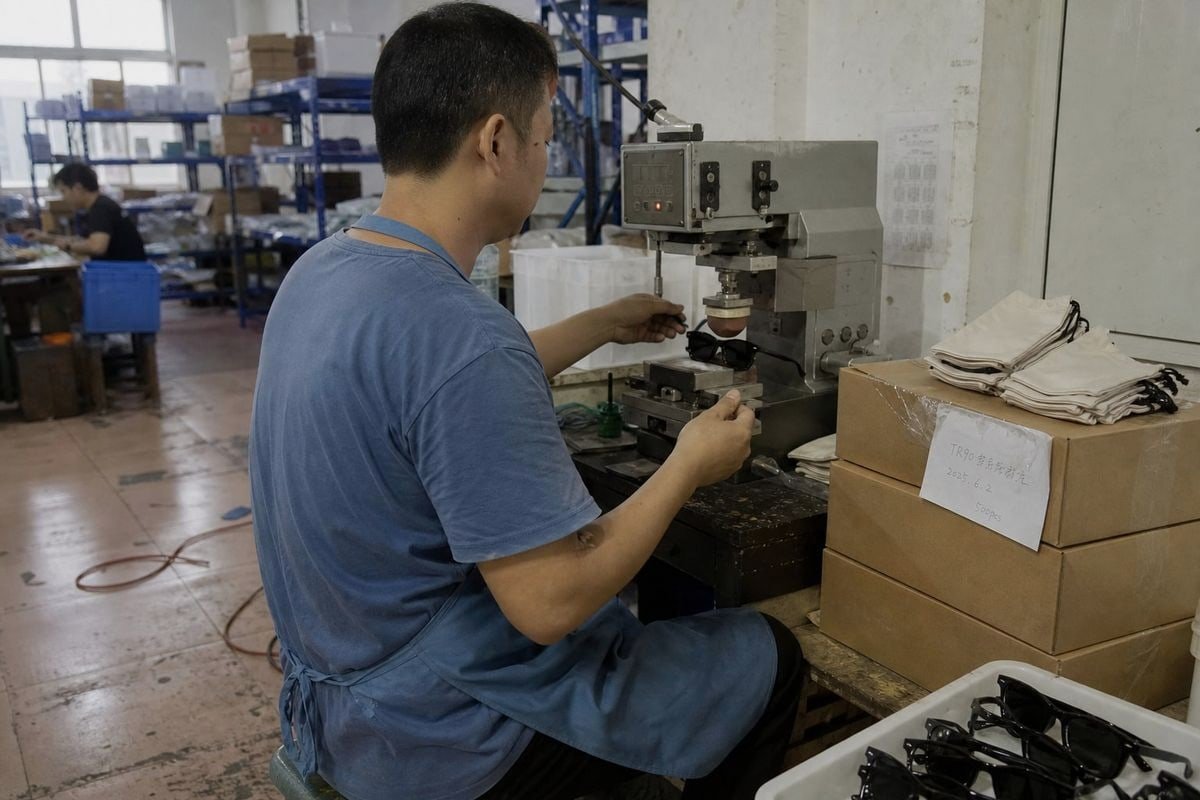
Combining optical-grade lenses with kid-proof frames is genuinely harder than it sounds. The lens groove tolerances must be tight enough to hold prescription lenses, while the frame material must stay soft enough to flex. Many suppliers can do one or the other. Fewer can do both.
A practical vetting checklist
- Confirm it is a real factory. Ask for workshop photos, worker counts, and production videos. Traders add margin without adding control.
- Check children's eyewear specialization. Kids' frames need different tooling, sizing, and safety thinking than adult lines. Our 5S-managed workshop with about 120 workers runs children's styles as the core business, not a side line.
- Test the materials yourself. Request samples and twist them. TR90 and TPEE frames should return to shape. If a sample cracks, walk away.
- Verify lens claims. Ask for UV400 transmission reports and confirm the lens material is polycarbonate or an equivalent impact-resistant option.
- Evaluate OEM/ODM 7 depth. A capable partner handles custom colors, logos, lens options, packaging, and accessories under one roof, with consistent quality control at each step.
- Judge communication speed. Clear answers within a business day usually predict how problems will be handled after you order.
Questions worth asking in the first email
Ask how many existing children's styles they hold, whether frames are prescription-ready, what their QC checkpoints are, and how they pack for retail. The quality of those answers tells you more than any price quote. A supplier who explains trade-offs honestly — like when polarization is worth it and when it is not — is thinking like a long-term partner, which is exactly what a growing kids' brand needs.
結論
Nearsighted kids deserve sunglasses that correct, protect, and survive. If your current supplier cannot deliver all three, that gap becomes your brand's problem. Prioritize UV400 lenses, flexible TR90/TPEE frames, and a specialized factory partner — then your customers' children will actually wear what you sell.
脚注
1. Explains myopia in children, giving medical context for the article’s core audience. ↩︎
2. WHO fact sheet supports the UV radiation protection claims made about lens choice. ↩︎
3. Background on polycarbonate material properties relevant to impact-resistant lens claims. ↩︎
4. Explains the optical principle behind polarization mentioned as a comfort upgrade. ↩︎
5. CDC vision health resource supports advice on regular eye exams for children. ↩︎
6. TR90 is a nylon-based copolymer; background link clarifies the material family referenced. ↩︎
7. Defines OEM/ODM manufacturing terminology used when describing factory sourcing services. ↩︎
 English
  Español de México
  Deutsch
  Français
  日本語
日本語  العربية
  Português do Brasil