What Are the Benefits of TR90 & TPEE Kids Sunglasses, and What Age Should Kids Start?

TR90 & TPEE kids sunglasses solve a problem I see constantly on our production line: children snap rigid frames within weeks, leaving small eyes exposed to harmful UVA and UVB rays.
TR90 & TPEE kids sunglasses offer lightweight comfort, impact resistance, and flexible, unbreakable frames that survive rough play. Children can start wearing sunglasses at around 6 months old; babies under 6 months should rely on shade and hats instead of eyewear.
That is the short answer. Now let me break down the safety science, the age guidelines, and how buyers can source these frames the smart way.
How do I know if TR90 and TPEE frames are truly safe for my child's face?
Last year, a QC batch test in our Taizhou workshop stuck with me: we twisted a TPEE frame 180 degrees, and it sprang straight back. That resilience is exactly what child safety demands.
TR90 and TPEE frames are safe because they are hypoallergenic, BPA-free materials that bend instead of shattering. They will not break into sharp fragments near a child's eyes, and premium versions are REACH compliant, preventing skin absorption of endocrine-disrupting chemicals.
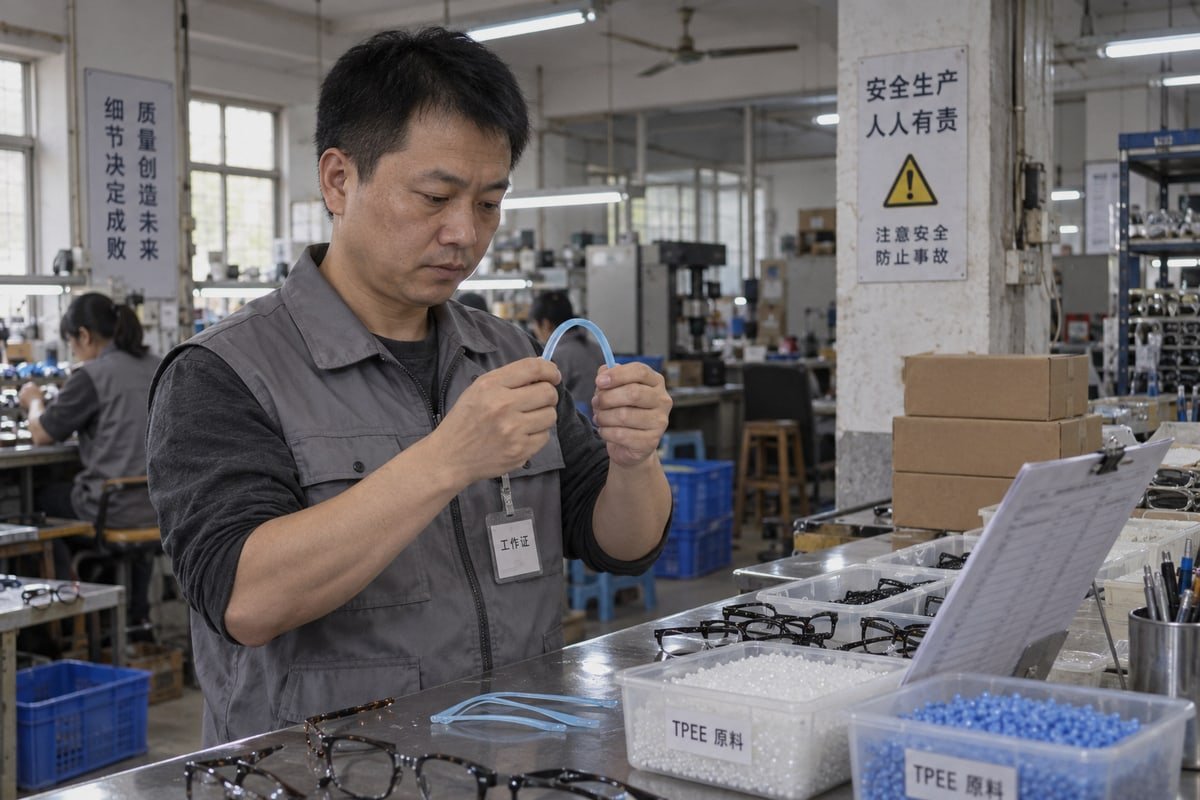
Safety in children's eyewear comes down to three layers: chemical safety, mechanical safety, and optical safety. In our 15 years of making kids' frames, we have learned that a frame can pass one layer and still fail another. So parents and buyers should check all three.
Chemical safety: what touches the skin matters
Children have thinner, more absorbent skin than adults. That is why premium TPEE and TR90 frames are manufactured to be BPA-free and REACH compliant 1. This prevents the absorption of endocrine-disrupting chemicals through a child's skin. Both materials are also hypoallergenic and skin-friendly. They suit children who get irritation from standard plastic or metal components, especially when sweat and sunscreen are mixed in.
Mechanical safety: no sharp breaks
Traditional rigid plastic can shatter into sharp pieces during a fall. TR90, a memory polymer, and TPEE, a 熱可塑性ポリエステルエラストマー 2, both flex under extreme pressure and return to their original shape. High impact resistance means no jagged edges near a child's cornea.
Optical safety: the non-negotiable layer
Frame material never replaces lens quality. Children's lenses are more transparent than adult lenses, so more light reaches the retina. UV400 protection blocking 99% to 100% of UVA and UVB rays is the baseline for retinal damage prevention.
| Safety Layer | チェックすること | 子供にとってなぜ重要か |
|---|---|---|
| 化学物質 | BPA-free, REACH compliant | Thin skin absorbs chemicals more easily |
| Mechanical | Flexes without snapping; impact standards like ANSI Z80.3 | No sharp fragments near eyes during falls |
| Optical | UV400, 100% UVA/UVB blockage | Transparent young lenses risk retinal damage |
What age should my child start wearing sunglasses, and why does it matter?
Buyers in Australia and Japan ask me this question more than any other. Their customers — young parents — want a clear, medically grounded answer, not a vague sales pitch.
Children can start wearing sunglasses at around 6 months of age, once they begin spending time outdoors. Babies under 6 months should be kept out of direct sunlight and protected with shade, a stroller canopy, and a brimmed hat instead of eyewear.
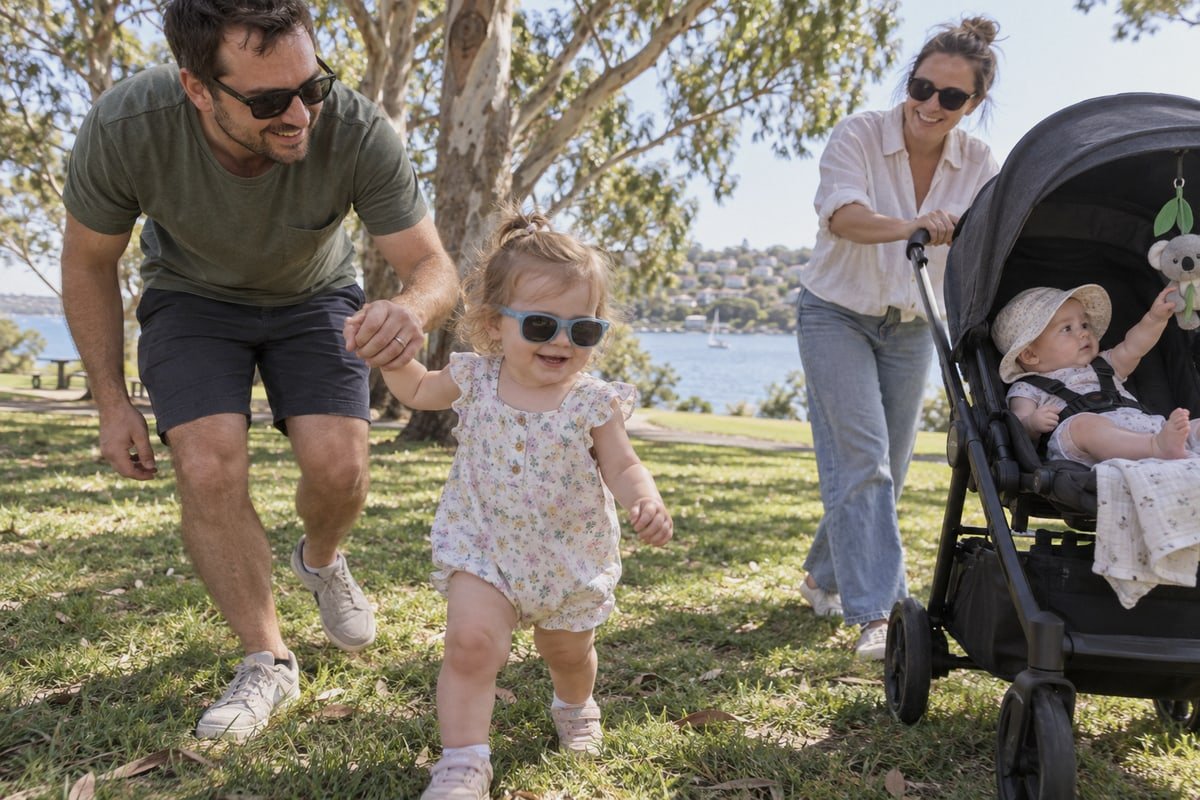
Pediatric eye health experts agree on the timeline, but the reasoning deserves a closer look. A child's crystalline lens is more transparent than an adult's. That means more UV light reaches the retina, and the damage is cumulative over a lifetime. Early ocular sun safety habits pay off decades later.
Here is a practical, age-based roadmap I share with our brand partners:
| 年齢範囲 | Recommendation | Best Material Fit |
|---|---|---|
| Under 6 months | No direct sun; use shade, canopy, brimmed hat | None — avoid direct exposure |
| 6 months – 3 years | Introduce sunglasses for outdoor time | TPEE — soft, chew-safe, flexible |
| 3 – 6 years | Daily outdoor wear, sturdier frames | TR90 or TR90 with TPEE temples |
| School-age and tweens | Focus on durability, style, and compliance | TR90 — structured, grown-up look |
Why age is not the whole story
One useful nuance: the best starting age is not purely chronological. Head size, behavior, and tolerance all matter. Some brands size kids' sunglasses by head circumference rather than age alone, and I think that is the smarter approach. A large-headed two-year-old may fit a frame labeled for age three.
Another point worth raising: one ophthalmology source notes there is no reason a child under one year cannot wear sunglasses, as long as the eyewear meets 安全基準 3 such as ANSI Z80.3. So the 6-month guideline is a starting point for toddler eye protection, not a hard barrier.
The compliance factor
A pair of sunglasses only works if the child keeps it on. For babies, that means soft materials and optional straps. For tweens, it means style. Our clients consistently tell us that older kids reject babyish designs, which quietly ruins the sun protection plan.
Why are flexible materials better than traditional plastic for active kids?
The trade-off I weigh every day at our factory is simple: rigid acetate looks premium, but flexible TPEE and TR90 survive real childhood. For active kids, survival wins every time.
Flexible TR90 and TPEE frames outperform traditional plastic because they are lighter, virtually unbreakable, and shatter-resistant. They withstand bending, backpack crushing, chewing, and playground drops, then return to their original shape, while rigid plastic snaps and creates sharp, dangerous edges.
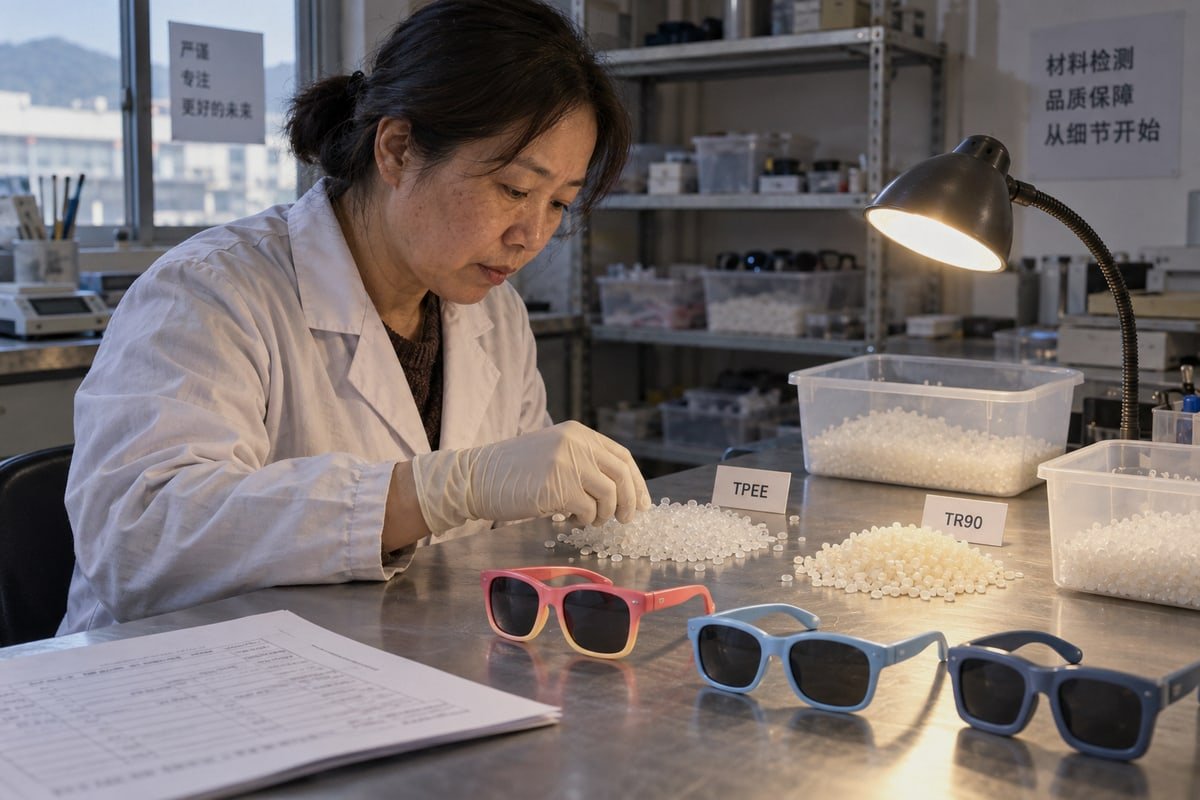
Let me put the comparison in plain terms. Traditional acetate and standard injection plastics are stiff. Stiffness feels solid in the hand, but on a playground it becomes a liability. When a stiff frame hits concrete, the energy has nowhere to go. The frame cracks. Flexible materials absorb that energy instead.
Weight: the hidden comfort factor
TR90 and TPEE are significantly lighter than acetate or metal. This reduces fatigue and pressure on a child's developing nose bridge and ears. In our experience, weight is the number one reason toddlers pull glasses off. A lighter frame means longer wear time, which means more actual UV protection delivered.
Grip without straps
TPEE has an inherent surface friction that gives it a self-securing grip on the flatter nasal profiles of toddlers. The frame maintains optical alignment without restrictive elastic straps. Parents notice this immediately.
A bonus for optical programs
TR90 has a unique thermal memory that allows cold-glazing of prescription lenses. Budget plastics often need heat treatment for lens fitting, which warps and structurally weakens the frame. TR90 avoids that problem entirely. This is why we build our TR90 kids optical frames on the same platform as our sunglasses.
| プロパティ | TR90 / TPEE | Traditional Rigid Plastic |
|---|---|---|
| 中程度から重い | 非常に軽い | Heavier, tiring for small faces |
| 破損時の挙動 | 曲がり、元に戻る | シャープな破片に砕ける |
| Chew and pull tolerance | High, especially TPEE | Low — cracks under stress |
| レンズのフィッティング | Cold-glazing possible with TR90 | Often heat-treated, risking warping |
| 肌触り | Hypoallergenic, soft touch | Can irritate sensitive skin |
One honest counterpoint: no medical rule says every toddler must have a specific frame material. Experts focus first on UV-blocking polarized lenses, proper fit, and early outdoor protection. My response to that objection is practical, not medical. A frame that breaks in week two protects no one in week three. Durability is what keeps UV400 protection on the child's face.
How can I source durable, kid-safe sunglasses for my brand without high MOQs?
A founder from a European baby brand once told me her biggest fear was not price — it was committing to custom molds before knowing what would sell. That conversation shaped how we structure our catalog.
Source from a specialized OEM/ODM factory that offers a large library of existing styles, such as OKAY EYEWEAR's roughly 800 ready designs. This lets brands launch TR90 and TPEE kids sunglasses without heavy mold investment, then add custom colors, logos, and packaging as volumes grow.
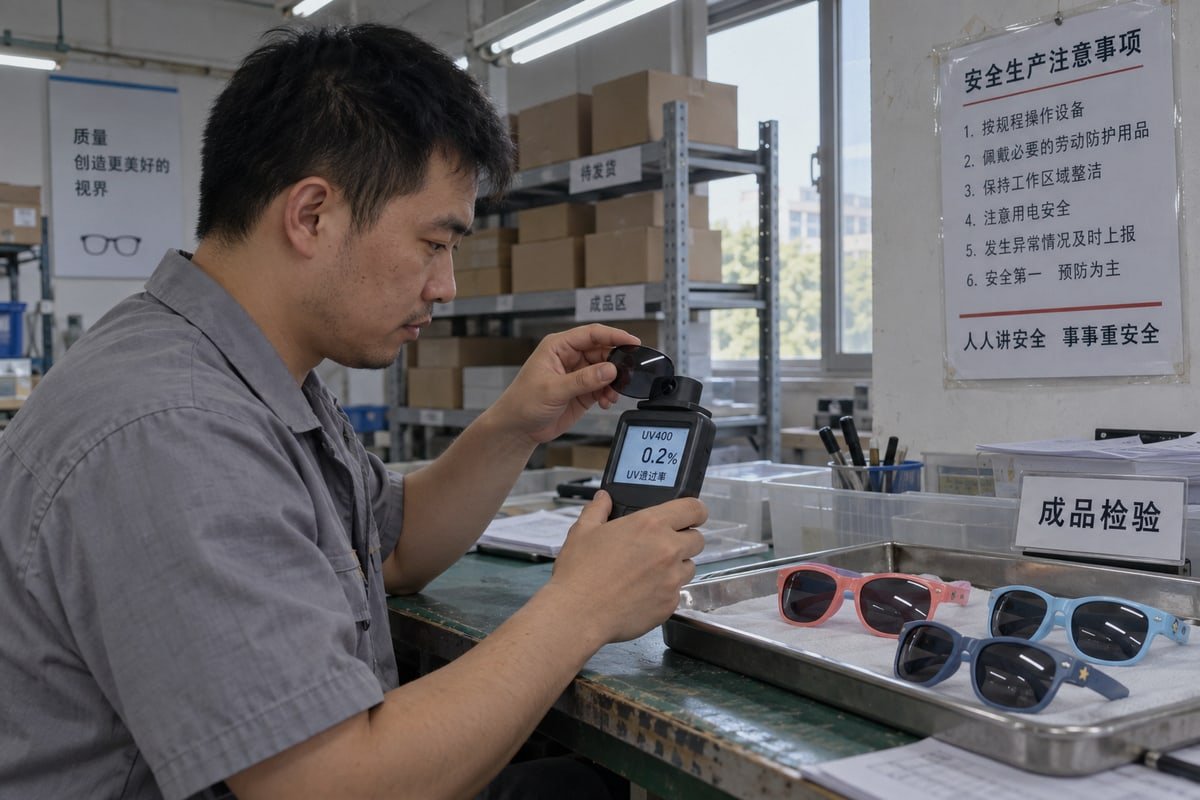
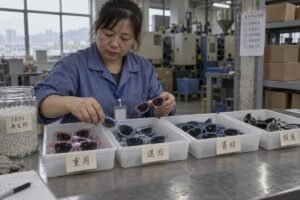
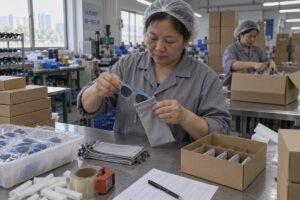
Sourcing children's eyewear is different from sourcing adult fashion frames. The safety stakes are higher, the parents are pickier, and the retail buyers demand documentation. Here is the process I recommend to new brand partners, based on how we run our own Taizhou facility with around 120 workers and a 5S-managed workshop.
A step-by-step sourcing path
- Start from an existing style library. Choosing from ready designs — we maintain about 800 — removes mold costs and lets you test the market with lower risk. Our translucent gradient wayfarers and candy-colored crystal frames came from exactly this kind of catalog-first approach.
- Verify the material story. Ask for confirmation that frames are genuine TPEE or TR90, BPA-free, and made with environmentally friendly inputs. Material storytelling is now a real marketing differentiator: soft and chew-safe for toddlers, lightweight and stylish for older kids.
- Lock in lens specs. UV400 and 100% UVA/UVB保護 4 are baseline expectations in kids' listings today. Polarized lenses with CE markings add a premium tier, and emerging HEV blue light filtration options address cumulative oxidative stress from both sun and screens.
- Confirm it is a real factory. A trading company adds cost and blurs quality accountability. Visit, video-call the workshop, or audit. We welcome all three.
- Layer in customization gradually. Custom temple colors, logo printing, retail-ready packaging, and accessories can come after your first reorder, once sales data justifies them.
What to ask before signing
Ask about age-appropriate sizing by head circumference, not just age labels. Ask how frames behave in twist and drop tests. Ask about lead times and QC checkpoints. A partner focused on long-term brand building will answer all of this clearly. A low-price supplier usually will not.
結論
Cheap rigid frames break, exposing young eyes to UV harm. The fix is simple: TPEE for babies, TR90 for active kids, UV400 always — sourced from a genuine flexible-material specialist.
Interested in sourcing the products mentioned in this article? See details and request a quote here:
脚注
1. Official ECHA overview of REACH regulations concerning chemical safety in consumer products. ↩︎
2. Technical overview of thermoplastic elastomers, including TPEE material properties. ↩︎
3. Official American National Standards Institute portal for eyewear safety standards. ↩︎
4. American Academy of Ophthalmology guidance on UV protection and eye health. ↩︎
 English
  Español de México
  Deutsch
  Français
  日本語
日本語  العربية
  Português do Brasil