Do Private Label Kids’ Sunglasses Require Manufacturer Compliance Under Australia’s Safety Standards?
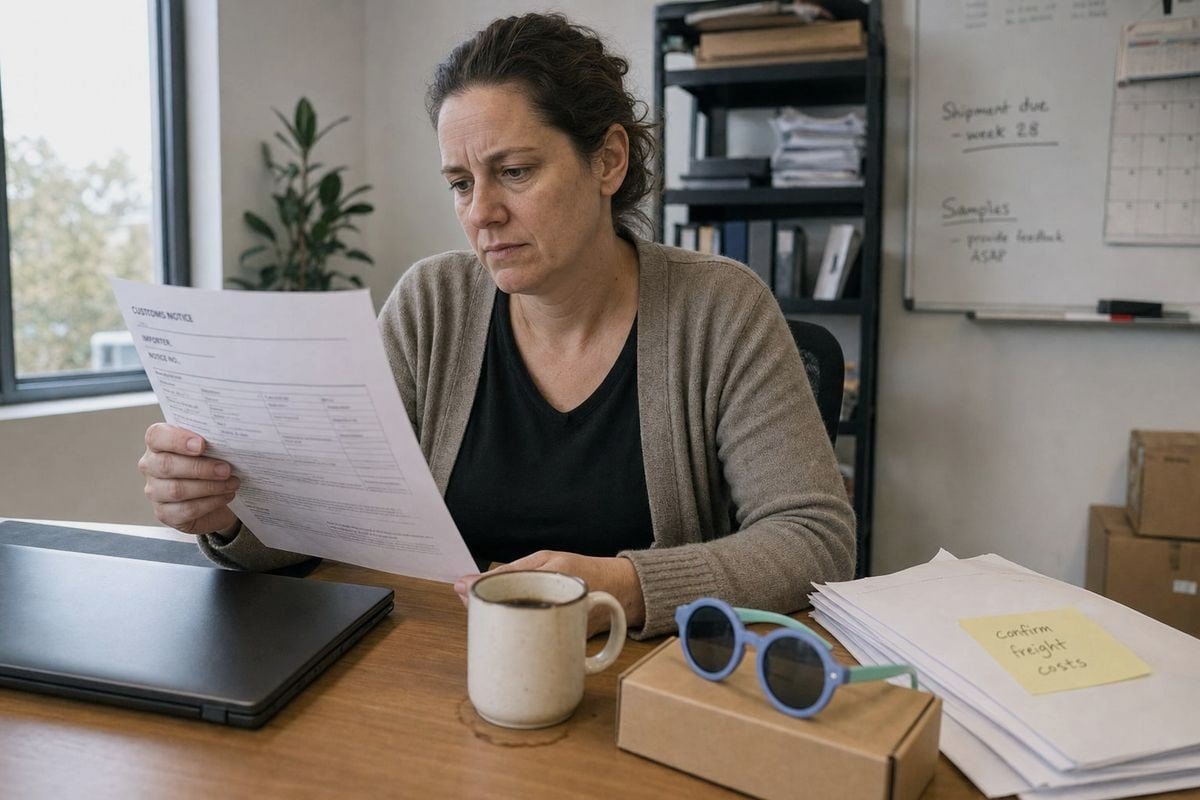
Private label kids’ sunglasses can sink a brand fast if compliance is fuzzy. I have watched buyers assume our factory paperwork alone covered Australia — until a customs question landed on their desk.
Yes. Private label kids’ sunglasses sold in Australia must comply with the mandatory Consumer Goods (Sunglasses and Fashion Spectacles) Safety Standard 2017, which incorporates AS/NZS 1067.1:2016. Under Australian Consumer Law, the private label brand owner is treated as the manufacturer and carries full legal responsibility for compliance.
That short answer hides a lot of practical detail. Let me walk you through what the rules actually require, who carries the risk, and how to work with a factory so nothing falls through the cracks.
What Australian safety standards do private label kids' sunglasses actually need to meet?
A procurement manager from Melbourne once emailed me a simple question: "Is your test report enough for Australia?" It was a fair question, and the honest answer needed context about which standard actually governs children’s sunglasses there.
Kids' sunglasses sold in Australia must meet the mandatory safety standard based on AS/NZS 1067.1:2016, in force since 1 July 2019. It covers design, construction, lens performance, UV protection levels, impact resistance, and lens category labeling — and it explicitly includes children's sunglasses in its scope.
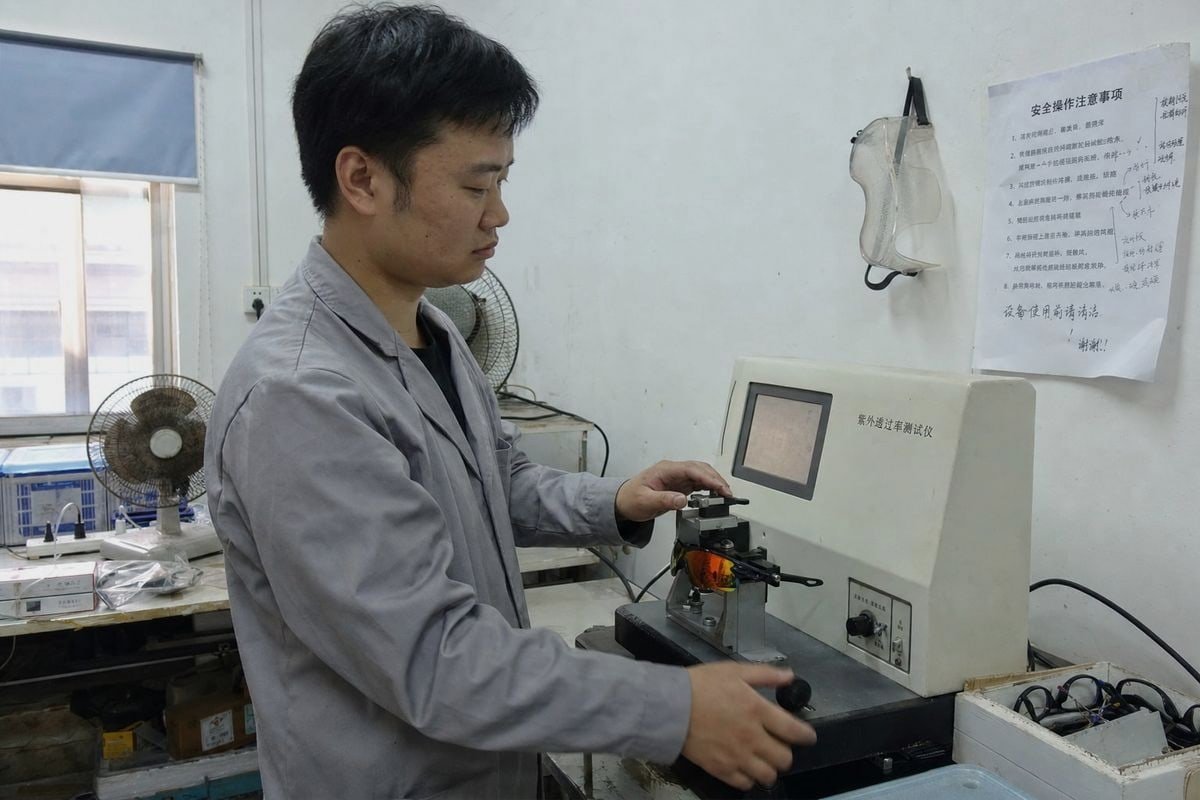
The mandatory standard is not optional guidance. The ACCC mandatory safety standards 1 framework makes it illegal to supply non-compliant sunglasses or fashion spectacles in Australia. ARPANSA reinforces this: sunglasses cannot be sold in Australia unless they have been tested to the mandatory standard. The scope covers non-prescription sunglasses, fashion spectacles, clip-ons, visors — and children's sunglasses specifically.
The key technical requirements
The standard sets requirements across several dimensions. Here is what matters most for kids' products:
| 要件 | What it means in practice |
|---|---|
| UV保護 | Lenses must block ultraviolet radiation 2 up to 400nm — stricter than the 380nm benchmark common in Europe and the US |
| Lens category (0–4) | Every pair must be labeled with its glare-reduction category |
| Lens transmittance | Light transmission must match the claimed category and stay uniform across the lens |
| 耐衝撃性 | Lenses and frames must not shatter into dangerous fragments |
| 構造 | No small parts that detach and create choking hazards for children |
| Labeling | Supplier identification and lens category on a permanent or removable label |
Watch the toy sunglasses classification trap
One nuance trips up many new brands. Toy sunglasses fall outside the sunglasses standard, so some low-cost kids' eyewear gets marketed ambiguously to dodge testing. That is a risky game. If a product is intended to function as sunglasses — worn outdoors, marketed for sun protection — the mandatory sunglasses standard applies. In our experience, regulators and retailers look at how the product is actually used and promoted, not just what the packaging claims. When we develop children's styles at our Taizhou factory, we design and test them as real eye and face protection products, never as toys, because that is how children will wear them.
Can my manufacturer provide compliance documentation and test reports for AS/NZS standards?
Documentation is where good factories separate themselves from cheap ones. When our team prepares a shipment for an Australian children's brand, the paperwork file is often thicker than the packing list — and that is exactly how it should be.
A capable manufacturer should provide current AS/NZS 1067.1:2016 test reports from an accredited laboratory, a supplier declaration of conformity, lens category and UV400 verification, and written confirmation that the shipped product matches the tested sample. If a factory cannot produce these, treat it as a red flag.
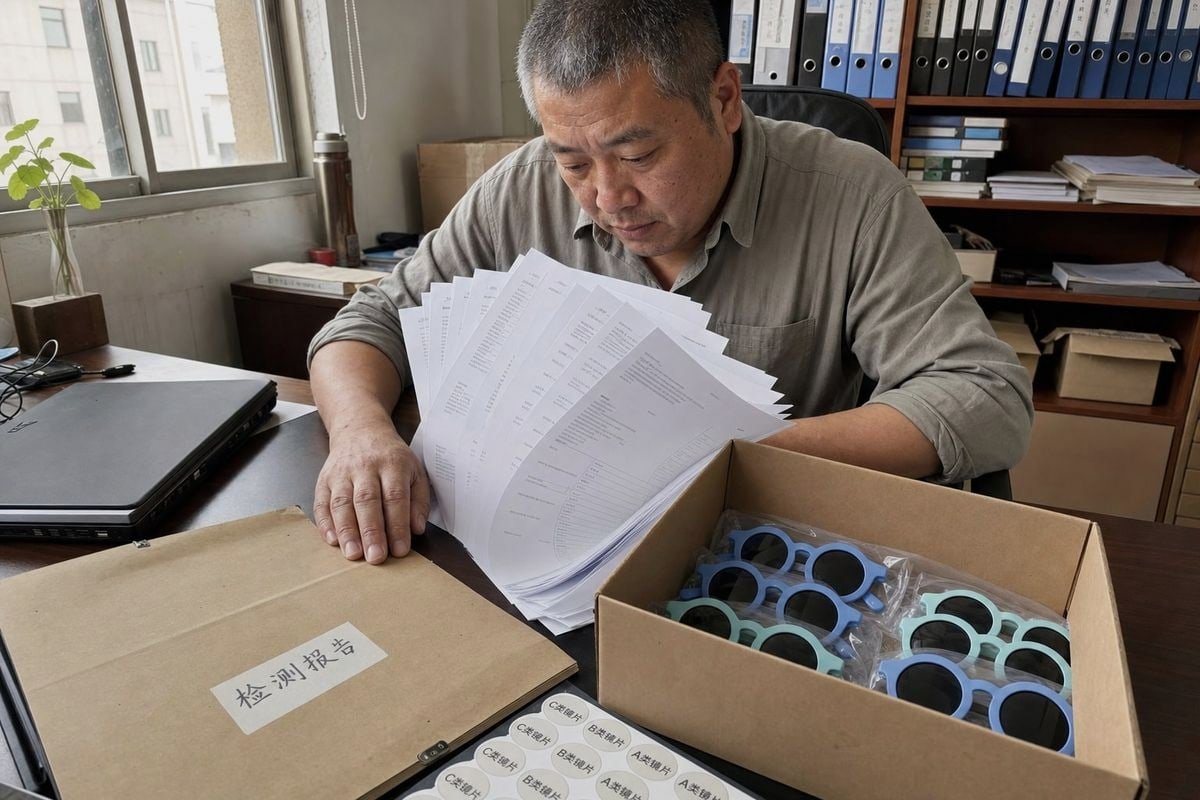
Let me be direct about what "compliance documentation" should actually contain, because vague promises are common in this industry. A one-page certificate with no test data behind it is close to worthless. Australian retailers, insurers, and regulators want traceable evidence.
The documents that matter
| 文書 | 確認すること |
|---|---|
| Third-party test report | Issued by an accredited lab, referencing AS/NZS 1067.1:2016, dated recently, and covering the exact model and lens you are buying |
| Supplier declaration of conformity | Signed, identifying the specific product, materials, and lens category |
| Lens category verification | Transmittance data confirming the claimed category (0–4) |
| Label artwork approval | Proof that the swing tag or sticker carries the lens category and Australian supplier details |
| Batch traceability records | Lot numbers linking shipped goods back to tested production runs |
Marketing claims are not test evidence
Here is a common buyer objection I hear: "The lens is stamped UV400 and the listing says polarized — surely that proves compliance?" It does not. Claims like UV400 or polarized are marketing statements until backed by product safety testing 4 reports against the actual standard. We offer both UV400 and polarized lens options across our roughly 800 existing children's styles, but we never tell a buyer the claim itself is the compliance. The test report is the compliance. The claim is just the headline.
One more practical point: test the version you will actually sell. If you customize colors, change lens suppliers, or switch from TR90 5 to another frame material, the earlier report may no longer represent your product. Whenever an Australian client asks us to modify a lens spec, we flag whether retesting is needed before mass production. That conversation costs nothing. A recall costs everything.
Who is responsible for compliance testing if I import private label sunglasses from China?
A lesson I learned early in fifteen years of exporting eyewear: buyers who assume "the factory handles compliance" are the ones who get hurt. The legal reality in Australia is quite different, and every private label founder should understand it before the first purchase order.
The Australian importer, distributor, retailer, or private label brand owner is legally responsible for compliance — not the overseas factory. Under Australian Consumer Law, the brand owner is deemed the manufacturer and must be able to prove the product complies before it is supplied for sale.
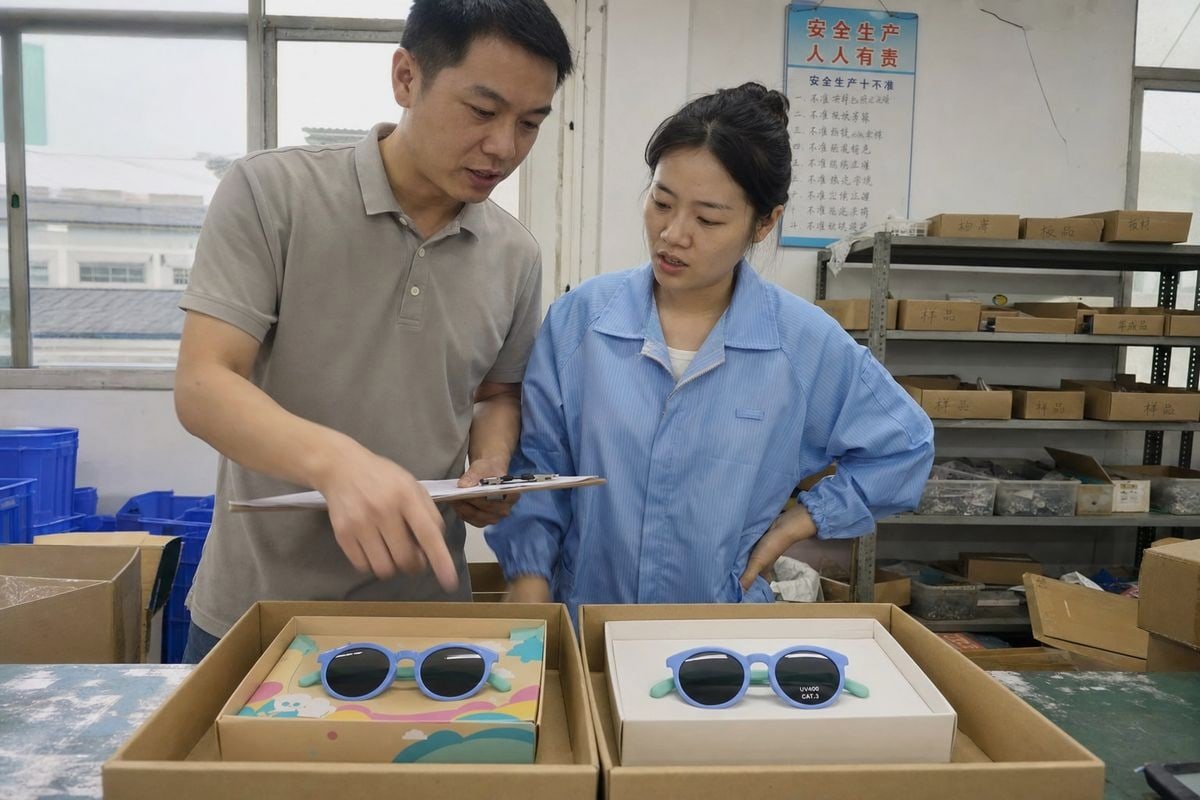
This is the point most first-time importers miss. Importing eyewear regulations in Australia place the duty squarely on the entity supplying goods into the Australian market. ARPANSA explicitly says the retailer, distributor, or importer must check compliance. The ACCC has backed this up with enforcement: recalls, court-enforceable undertakings, and products pulled from shelves for missing mandatory lens category labeling or failing lens performance tests.
The private label liability chain
Think of it as a chain where the weakest documented link becomes your problem:
- The overseas factory produces the goods and should test them.
- The importer brings them into Australia and inherits legal responsibility.
- The brand owner puts their name on the product and becomes the "deemed manufacturer" under Australian Consumer Law 6.
- The retailer supplies to consumers and must also not sell non-compliant goods.
Notice what is missing? The Chinese factory does not appear in the Australian enforcement chain at all. Regulators cannot easily reach an overseas producer, so the law makes the local supply chain accountable. Even influencers who co-brand kids' sunglasses in collaboration deals are increasingly viewed as deemed manufacturers, with personal exposure for safety claims made in promotional content.
The real cost of getting it wrong
The penalties are not trivial. Non-compliance can trigger mandatory recalls and civil penalties reported at over $1.1 million for corporations and $220,000 for individuals. Beyond fines, a recall of a children's product damages retailer relationships and consumer trust in ways that take years to rebuild. So the real question is never "Is the factory compliant?" It is "Can I prove this product complies before I sell it?" We structure our documentation for Australian clients around exactly that question, because we know their name — not ours — sits on the swing tag.
How do I choose a manufacturer that can guarantee ongoing compliance for my kids' eyewear brand?
Trade-offs come up in every sourcing decision, and one we discuss openly with buyers is this: a slightly higher unit price from a factory with real compliance systems is almost always cheaper than the cheapest quote plus a recall. Choosing the right partner is a risk decision, not just a price decision.
Choose a factory with accredited AS/NZS 1067.1:2016 test experience, documented batch traceability, consistent QC on children's products, willingness to support retesting after design changes, and transparent communication. Ongoing compliance depends on systems and honesty, not a single certificate at the start.
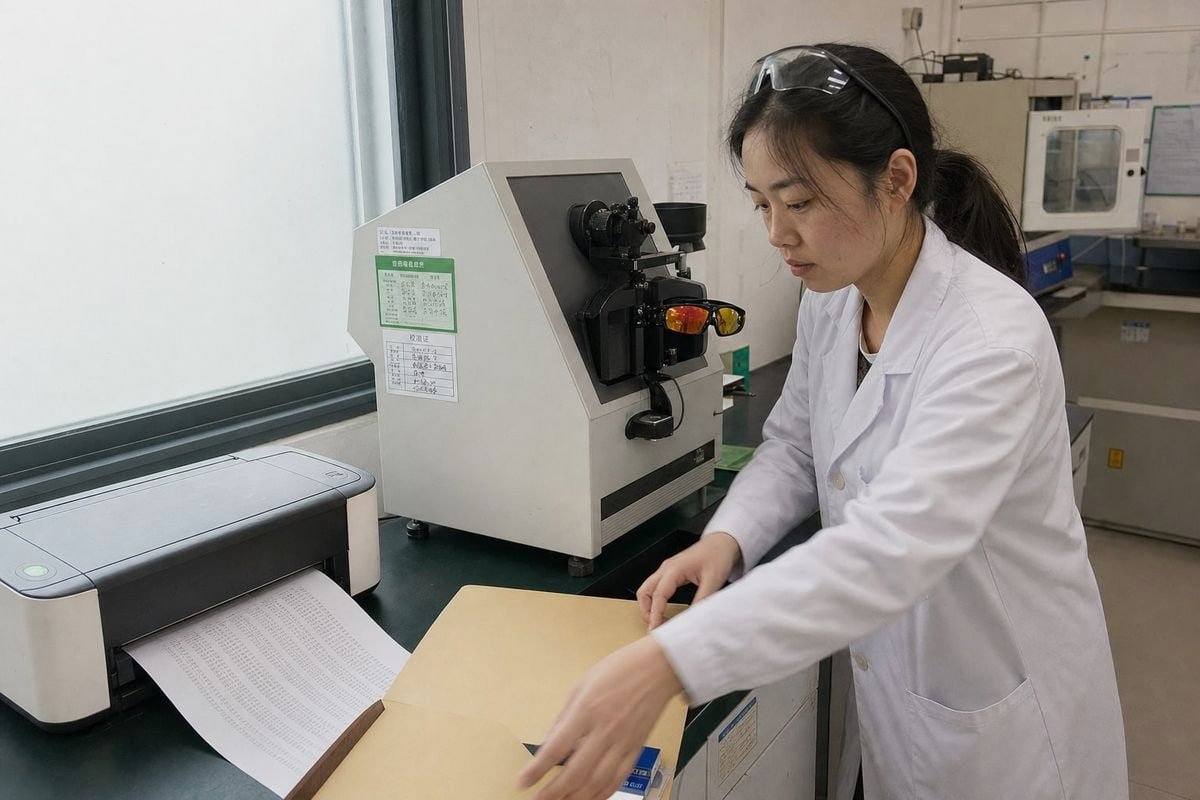
At our 5S-managed workshop in Taizhou, around 120 people build children's eyewear every day, and the habits that keep products compliant are boring, repetitive, and essential: incoming lens inspection, material verification, hinge torque checks, and label review before packing. When you audit a potential supplier, look for those habits, not just a framed certificate.
A practical supplier evaluation checklist
| Evaluation area | What a strong answer looks like |
|---|---|
| Test evidence | Recent accredited-lab reports to AS/NZS 1067.1:2016 for children's models, shared without hesitation |
| Material expertise | Real knowledge of flexible, child-safe materials like TPEE and TR90 — not generic hard plastics rebranded as "kids' safe" |
| Change control | The factory flags when a color, lens, or material change requires retesting |
| Traceability | Batch and lot numbers linking shipped cartons to tested production runs |
| Labeling support | Correct lens category labeling and Australian supplier details on retail-ready packaging |
| Sample consistency | The delivered product matches the tested and approved sample, confirmed in writing |
Why material knowledge matters for ongoing compliance
Compliance is not static. Materials behave differently over a product's life, especially under Australia's high UV indices. Newer sustainable materials such as bio-acetates can warp or lose lens tension faster in harsh sun, and recycled ocean plastics 7 can show unpredictable brittleness in high-salinity coastal environments — both call for extra aging and stress testing. This is one reason we build most children's frames in TR90 with TPEE temples: these flexible materials hold their shape, flex instead of snapping, and stay comfortable on small faces through rough daily use. A material that survives real Australian playgrounds is a material that keeps your test report meaningful over time.
Lower your launch risk with existing tooling
Finally, consider how you enter the market. New brands do not need to gamble on custom molds from day one. Our buyers often launch by selecting from existing styles — we maintain about 800 — then add custom colors, logos, lenses, and packaging through OEM/ODM support. Existing tooling means the base design already has a testing history, which shortens your path to a compliant, retail-ready product. Some clients now go further and add QR codes on swing tags linking to batch-specific lab results — an emerging "digital product passport" practice that gives Australian retailers and parents instant proof at the point of sale.
結論
Private label offers no compliance shortcut in Australia. Prove AS/NZS 1067.1:2016 compliance before you sell, keep documentation traceable, and partner with a factory that treats children's safety as the product itself.
脚注
1. Government source detailing mandatory safety standards enforcement referenced in the article. ↩︎
2. WHO fact sheet on UV radiation exposure supports the UV protection discussion. ↩︎
3. Background on sunglasses standards and UV lens categories referenced throughout article. ↩︎
4. Comprehensive overview of product testing from a high-authority source. ↩︎
5. Wikipedia background on nylon-based polymer materials like TR90 used in eyewear frames. ↩︎
6. Official government portal for the Australian Consumer Law. ↩︎
7. EPA resource on ocean plastics relevant to sustainable material discussion in article. ↩︎
 English
  Español de México
  Deutsch
  Français
  日本語
日本語  العربية
  Português do Brasil