Platform Escrow or Deposit+Balance Wire: Safer for First China Kids’ Optical Frames Orders?
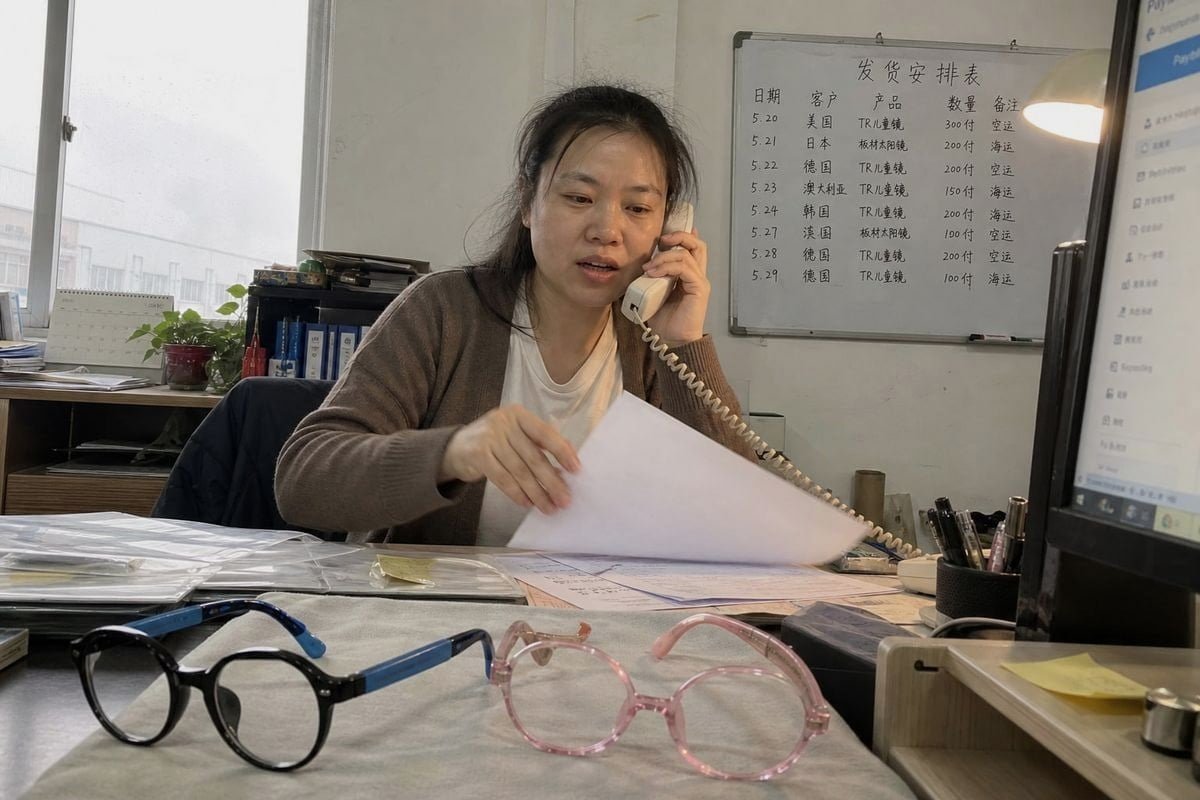
Choosing between platform escrow 1 and a deposit+balance wire for your first China kids’ optical frames order feels risky. At our Taizhou factory, we see that hesitation from new buyers every single week.
Platform escrow is usually safer for a first kids’ optical frames order from China, because funds stay in a neutral account until shipment or receipt conditions are met. If escrow is unavailable, use a small deposit plus a balance wire released only after a passed pre-shipment inspection.
That is the short answer. The full answer depends on order size, [supplier verification](https://okayeyewear.com/how-find-reliable-kids-sunglasses-suppliers-china-to/), and how you gate the final payment. Let me walk you through each piece.
How do I decide between platform escrow and traditional deposit+balance wire for my first order with a Chinese eyewear factory?
A buyer from Australia once asked me on a video call whether our 30/70 T/T terms were "safe enough" for her first order. My honest reply: it depends on what you verify first.
Decide based on relationship stage and order size: choose platform escrow for a first order with an unverified supplier, especially under roughly $5,000. Choose deposit+balance wire only when the supplier is verified, the bank account matches the legal entity, and the balance is inspection-gated.
Here is the quick comparison I share with new buyers before we even talk about styles or molds:
| 要因 | Platform Escrow (e.g., Alibaba Trade Assurance) | Deposit+Balance Wire (T/T payment) |
|---|---|---|
| に最適 | First orders, trial orders, unverified suppliers | Verified suppliers, repeat orders |
| Fund control | Held by platform until conditions are met | Leaves your bank immediately |
| Buyer protection | Platform-mediated refunds and dispute resolution | None built in; relies on contract and trust |
| コスト | Fees built into platform or seller pricing | Roughly $30–$50 per bank transfer |
| 柔軟性 | Governed by platform rules | Fully customizable milestones |
| スピード | Slightly slower release cycles | Fast and simple |
The three questions that actually decide it
First, is this supplier on a platform with escrow coverage that applies to your full order value? Coverage can be capped by the supplier's profile limit, so check before you assume protection.
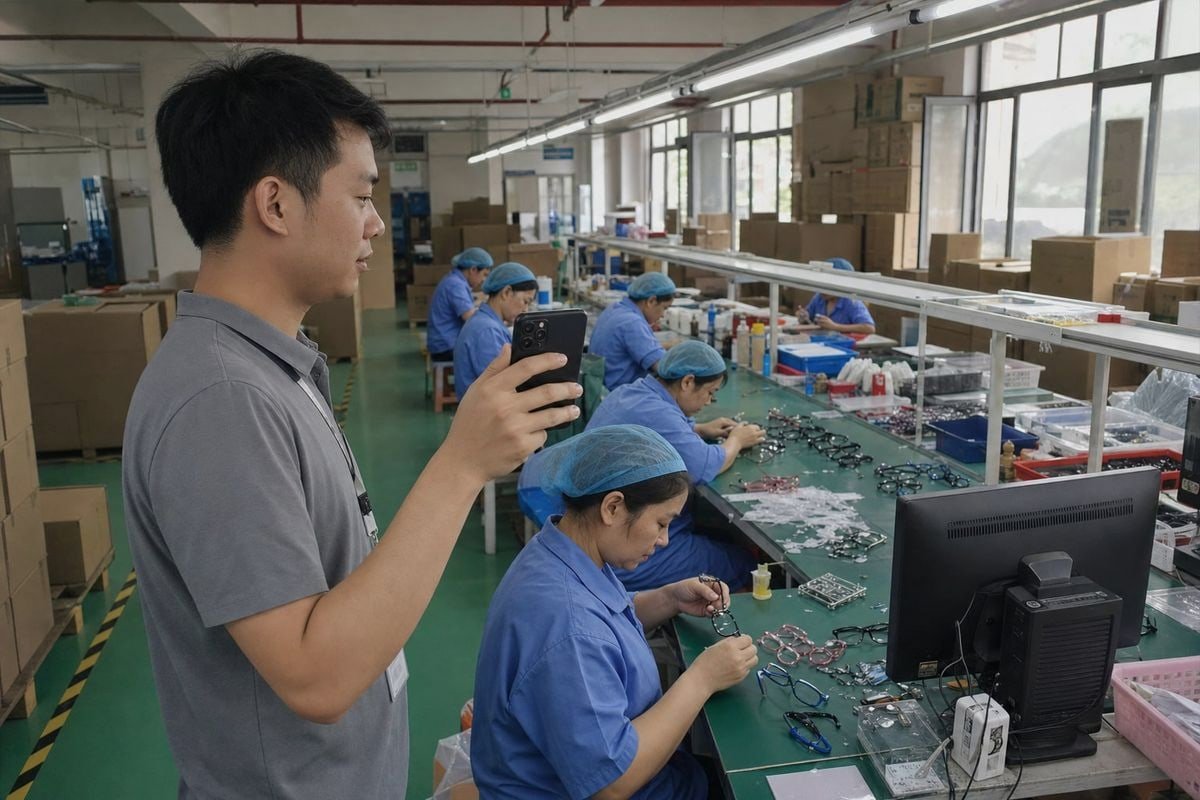
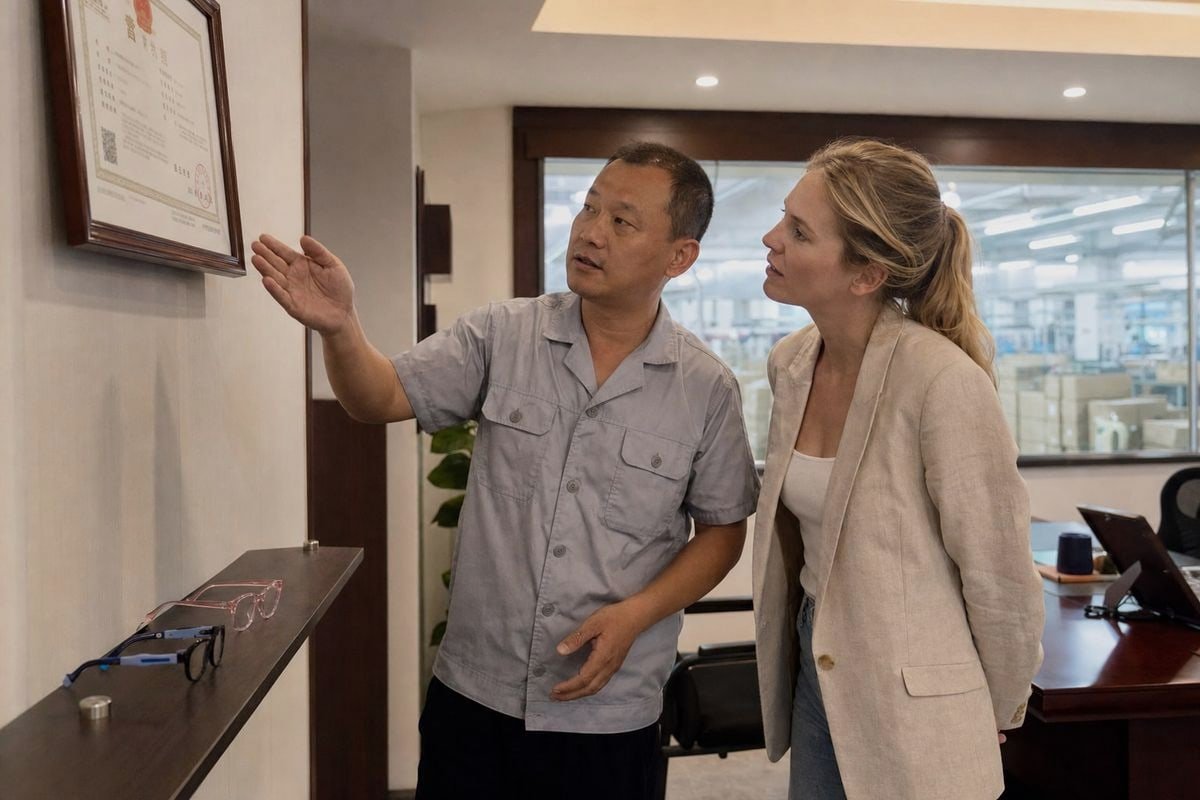
Second, can you verify the factory independently? Supplier verification means checking the business license, confirming the receiving bank account name matches the registered company name, and ideally seeing the workshop on video. Our team runs live factory tours for exactly this reason. A buyer who has seen our 120-worker production floor and 5S-managed workshop makes a very different risk calculation than one looking at a listing page.
Third, can you tie the balance payment to a real milestone? A wire is dangerous when it is unconditional. It becomes far more reasonable when the balance only moves after a passed quality control inspection.
If you answer "no" to the first two questions, escrow is your safer path. If you answer "yes" to all three, a structured T/T payment works well and costs less friction. The mistake is treating the payment method as the whole safety plan. It is one layer, not the plan itself.
What risks should I watch for when wiring a deposit before my kids' optical frames go into production?
Years ago, one of our European customers nearly wired a deposit to a fraudster after a spoofed email "updated" our bank details mid-negotiation. A single phone call to our office stopped it.
The main risks are payment fraud through changed bank details, deposits sent to personal accounts, unverified suppliers disappearing, and disputes over specs that were never written down. Reduce them by verifying the legal entity, matching the account name, and confirming any bank change by a trusted channel.
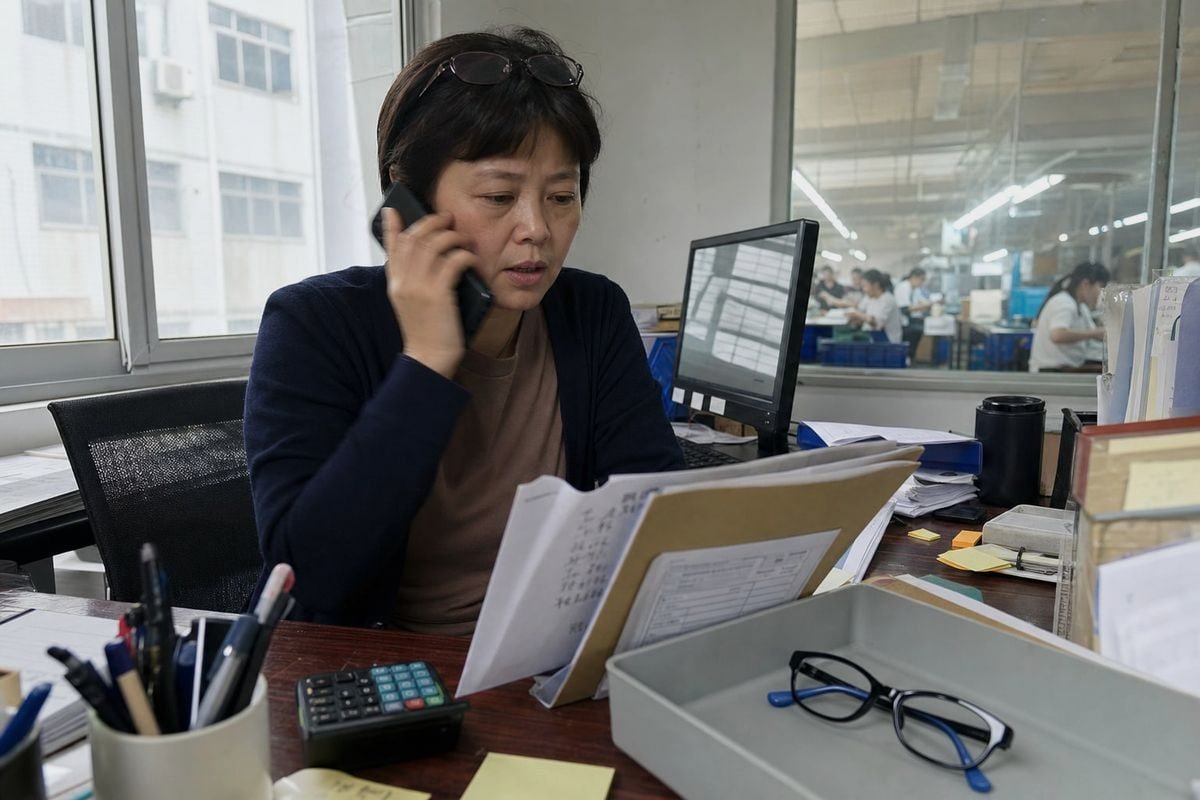
Wiring money across borders is routine, but the failure modes are predictable. Let me break down the international trade risks I see most often from the factory side.
The bank-detail switch
This is the single most damaging scam in our industry. A hacker intercepts an email thread and sends "new" bank details right before your deposit is due. The fix is a strict rule: never accept a bank-detail change that is not confirmed through a separate, trusted channel, such as a phone call to a number you already have. We tell every new customer this on our first call, because it protects both of us.
Personal accounts and untraceable methods
Never pay into a personal bank account, and avoid Western Union or MoneyGram entirely. These methods offer virtually no buyer protection. A legitimate factory invoices from its registered company account. If the account name does not match the business license, stop and ask why.
Never pay 100% upfront
Staged payments give you leverage through production and shipping. A 30% deposit covers the factory's material risk; the 70% balance is your control point. Paying everything upfront removes every ounce of that leverage.
Undefined specifications
For children's optical frames, vague specs are a financial risk, not just a quality one. If your purchase agreement does not state TR90 material grade, temple length, bridge dimensions, finish tolerances, and kids eyewear safety standards 2 such as CE or CPSIA compliance, you have no measurable basis for a dispute later. Write the specs down, link them to payment release, and negotiate clear penalties for non-compliance or production delays before the deposit moves.
Can platform escrow really protect my payment if quality or safety issues come up with TR90 frames?
There is a trade-off we explain to buyers honestly: escrow protects the payment flow very well, but it cannot inspect a hinge or measure a bridge width for you.
Yes, partially. Escrow protects against non-delivery and goods that clearly mismatch the agreed terms, and it enables platform dispute resolution. But it does not cover consequential losses, claim windows can be as short as 30 days, and it cannot replace written specs and pre-shipment inspection.
Understanding what escrow does and does not do is the difference between real safety and false comfort. Here is the honest breakdown:
| シナリオ | Does escrow help? | 理由 |
|---|---|---|
| Supplier never ships | はい | Non-delivery is the clearest escrow-covered case |
| Frames arrive in wrong color or material | Usually | Mismatch against agreed platform terms supports a claim |
| Hinge failures found 45 days after delivery | Often no | Claim windows can be around 30 days from delivery |
| Lost retail launch revenue from delays | いいえ | Remedies are typically refunds, not broader damages |
| Order value exceeds supplier's coverage cap | Partially | Protection may be capped by the supplier's profile limit |
Why TR90 frames need more than escrow
TR90 is our core material for kids' optical frames, often paired with TPEE temples for flexibility. It is an excellent material, but quality varies by resin grade, molding temperature control, and finishing. A dispute claim that says "quality is bad" will struggle; a claim that says "temple length measures 128mm against a specified 120mm ±1mm" is winnable. Escrow rewards buyers who documented their specs inside the platform order.
The parts escrow genuinely covers well
To be fair, Alibaba Trade Assurance and similar systems are strong for first-time B2B buyers. Funds stay out of the supplier's hands until you confirm receipt or the inspection window ends. If the supplier fails to ship, or the shipment obviously contradicts the order terms, the refund process works. That is real buyer protection, and it is why we still recommend escrow for buyers testing an unfamiliar supplier.
The layer escrow cannot provide
Child-safety expectations — lead-free materials, impact resistance, regional compliance — must be verified before the goods ship, not disputed after. Pair escrow with a third-party pre-shipment inspection and you cover both the money and the product. Escrow alone covers only the money, and only within the platform's rules.
What payment terms do experienced importers recommend when sourcing children's eyewear from Taizhou manufacturers?
After fifteen years supplying children's eyewear brands across 20+ countries from our Taizhou factory, I have watched payment terms evolve from blunt wires into milestone-based workflows.
Experienced importers recommend escrow for first orders under about $5,000, a 30/70 T/T split with pre-shipment inspection for $5,000–$20,000 orders, and a letter of credit or hybrid structure above that. Repeat orders with trusted suppliers typically transition to straight T/T terms.
The market has largely settled on order-size thresholds, and they match what we see across our own customer base:
| Order value | Recommended structure | Why it fits |
|---|---|---|
| Under ~$5,000 | Platform escrow, or PayPal for small samples | Buyer-friendly protection at trial-order scale |
| ~$5,000–$20,000 | 30% deposit, 70% balance after passed inspection | Balances factory cash flow with buyer control |
| Above ~$20,000 | Consider L/C or hybrid deposit+documents structure | Bank-backed document control justifies added complexity |
| リピート注文 | Straight T/T with contract and periodic inspections | Trust and process history reduce risk enough |
The milestone workflow serious buyers use
Modern sourcing from China is moving away from a binary "escrow vs. wire" choice toward payments tied to verifiable progress. Here is the sequence we run with most new brand customers:
- Approve a physical sample before any production payment. With around 800 existing styles in our catalog, most buyers can sample without mold investment, which keeps first-order risk low.
- Pay the deposit only after the sample, specs, packaging, and safety requirements are documented in the purchase agreement.
- Confirm production start with photos or video from the line.
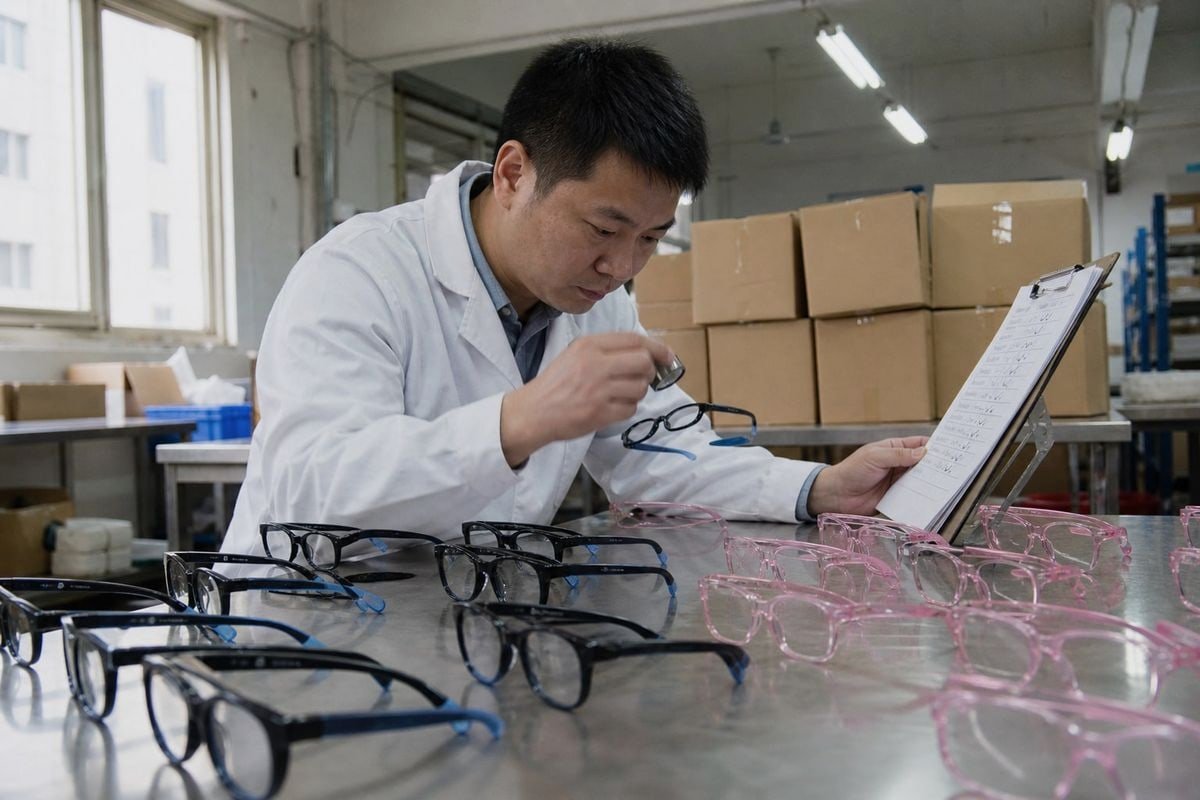
- Book an independent third-party quality control inspection before shipment, checking quantity, dimensions, frame alignment, hinge function, finish defects, branding accuracy, and packaging durability.
- Release the balance only against a satisfactory inspection report, or against shipping documents for established relationships.
Answering the "escrow is always safest" objection
Some sourcing operators argue a properly structured 30/70 wire plus inspection is safer in practice than escrow, because it aligns with how factories actually work and gives finer control over milestones. There is truth in that — for verified factories. But it collapses if the supplier disappears or refuses to cooperate. So sequence it: start with escrow, build trust over two or three orders, then transition to T/T with robust contracts. Some buyers also use specialized B2B cross-border payment platforms for better rates and integrated compliance checks along the way. That hybrid path balances cost-efficiency and security better than picking one method forever.
結論
For a first China kids' optical frames order, use platform escrow when available; otherwise, wire a small deposit and gate the balance behind a passed inspection. Payment control plus product control is the real safety formula.
脚注
1. Explains the role and benefits of escrow services in international trade transactions. ↩︎
2. Official US regulation defining children’s products, including eyewear, under the Consumer Product Safety Act. ↩︎
3. Authoritative government resource explaining what a letter of credit is and its function in international trade. ↩︎
 English
  Español de México
  Deutsch
  Français
  日本語
日本語  العربية
  Português do Brasil