子供用サングラスのPCレンズとアクリルレンズ:違いは何?
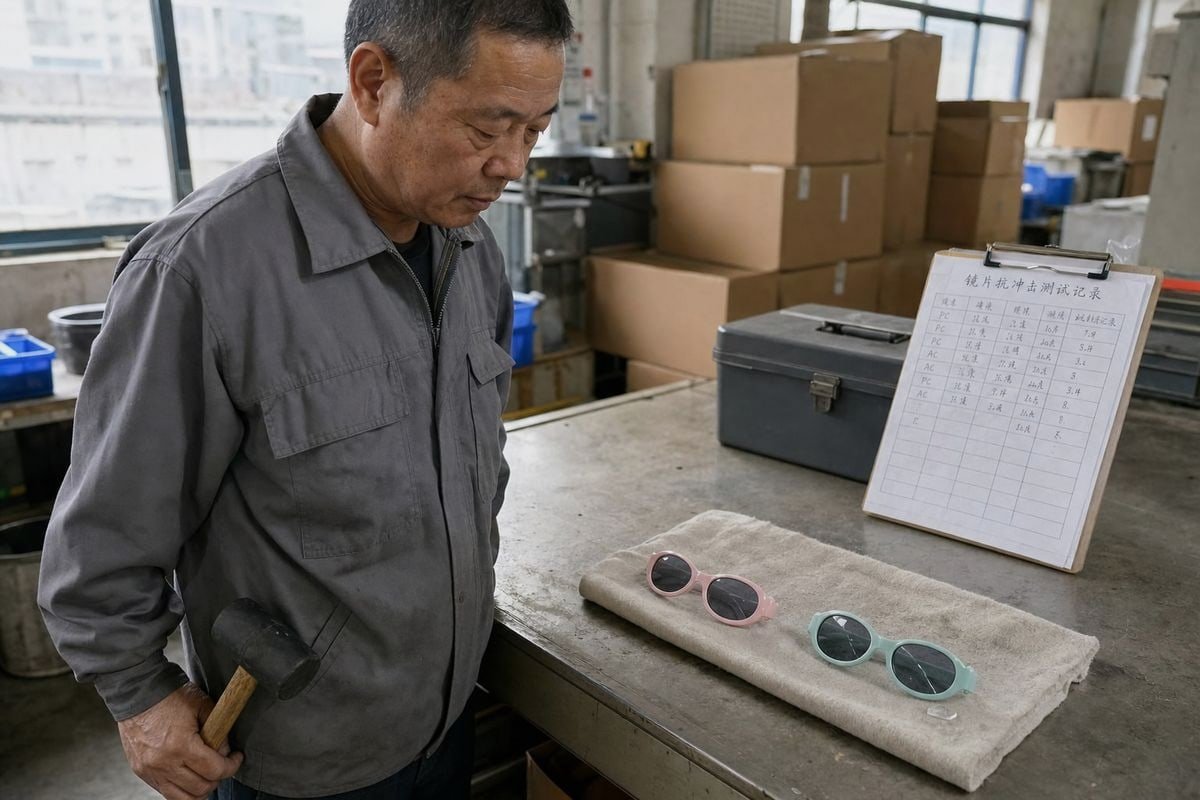
子供用サングラスのPCレンズとアクリルレンズのどちらを選ぶかで、多くの購入者が迷っています。台州の生産ラインでは、間違ったレンズ選びが良質な製品をダメにするのを見てきました。.
PC(ポリカーボネート)レンズは耐衝撃性に優れ、事実上割れにくく、子供用サングラスとしてより安全であるため、活発な子供たちに好まれています。アクリル(PMMA)レンズはコストが安く、鮮明な視界を提供しますが、衝撃で割れやすく、軽量で価格重視の使用に適しています。.
どちらの素材もプラスチックですが、子供の顔での挙動は大きく異なります。比較する際に実際に重要な点を説明します。.
子供用サングラスのラインナップにおいて、PCレンズとアクリルレンズのどちらがより安全かを知るにはどうすればよいですか?
昨年、5S管理されたワークショップでの落下テスト中に、 アクリル製サンプルレンズが 1 端から割れました。その隣にあったポリカーボネートレンズはただ跳ね返っただけでした。その瞬間が多くのことを物語っています。.
ポリカーボネートは、子供用サングラスのより安全なレンズ素材です。衝撃を吸収しても鋭利な破片に砕け散らないため、スポーツ用アイウェアや安全メガネの標準となっています。アクリルは、硬い衝撃でひび割れたり、ささくれたりする可能性があり、子供の目の近くで実際の危険を生み出します。.
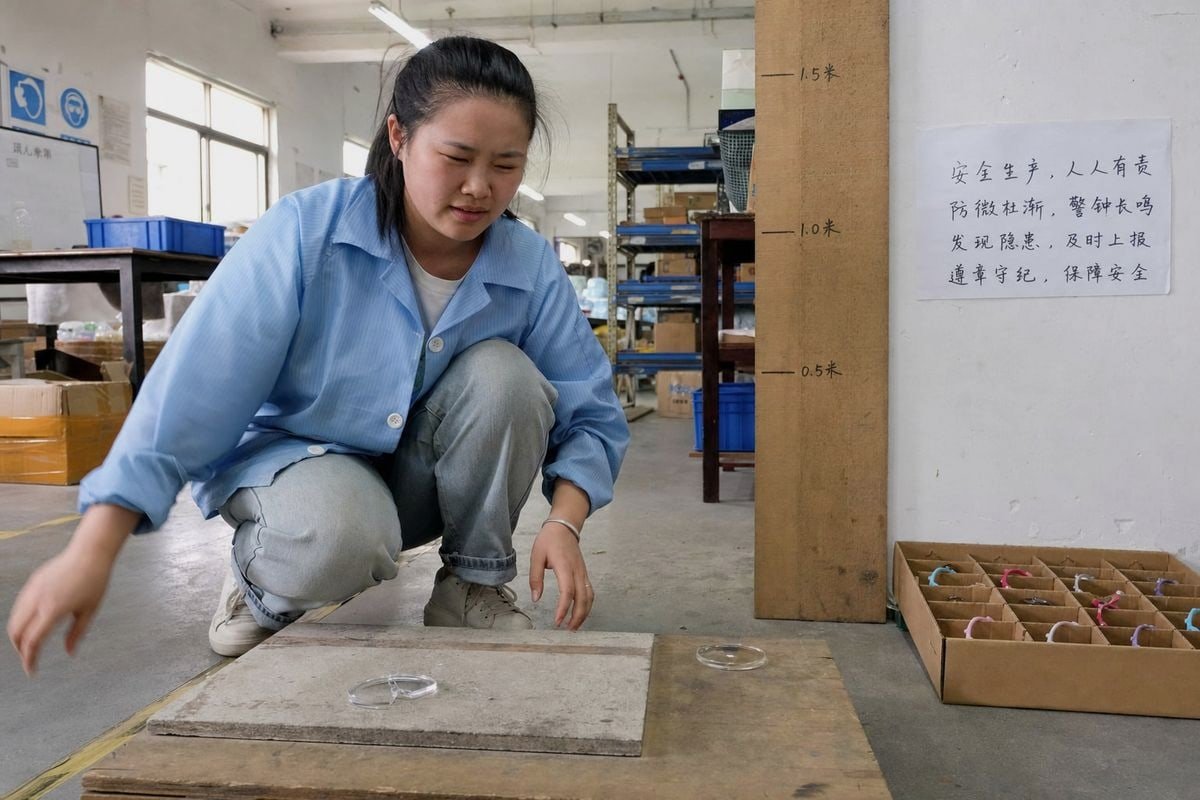
安全性は、ブランドが新しい子供向けコレクションの開発を依頼する際に私が最初に適用するフィルターです。子供たちはサングラスを丁寧に扱いません。コンクリートに落としたり、座ってしまったりします。自転車、スクーター、遊び場で着用します。したがって、問題はレンズが衝撃に耐えられるかどうかではありません。問題は、それが衝撃を受けたときに何が起こるかです。.
なぜ衝撃時の挙動が仕様書よりも重要なのか
ポリカーボネートは、強度のために設計された熱可塑性プラスチックです。消費者ガイドでは、通常のプラスチックやガラスよりも約10倍の耐衝撃性があると説明されることがよくあります。衝撃を受けると、たわんでエネルギーを吸収します。アクリル(PMMAとしても知られる)は、より硬く、脆いです。鋭い衝撃を受けると、割れやすくなります。子供の目の近くでは、その違いは学術的なものではありません。.
これが、ポリカーボネートがANSI安全基準に基づいて製造されたほとんどのスポーツおよび安全用アイウェアで参照される素材であり、小児用アイウェアの供給元が子供向けに推奨する理由でもあります。.
| 安全性要因 | ポリカーボネート(PC) | アクリル(PMMA) |
|---|---|---|
| 耐衝撃性 | 非常に高い、事実上割れない | 低〜中程度、割れる可能性がある |
| 破損モード | たわんでエネルギーを吸収する | 断片に飛び散る可能性がある |
| スポーツ/安全用途 | はい、広く使用されている | ほとんど推奨されない |
| 活動的な子供への適合性 | 素晴らしい | 限定的 |
レンズとフレームの組み合わせ方
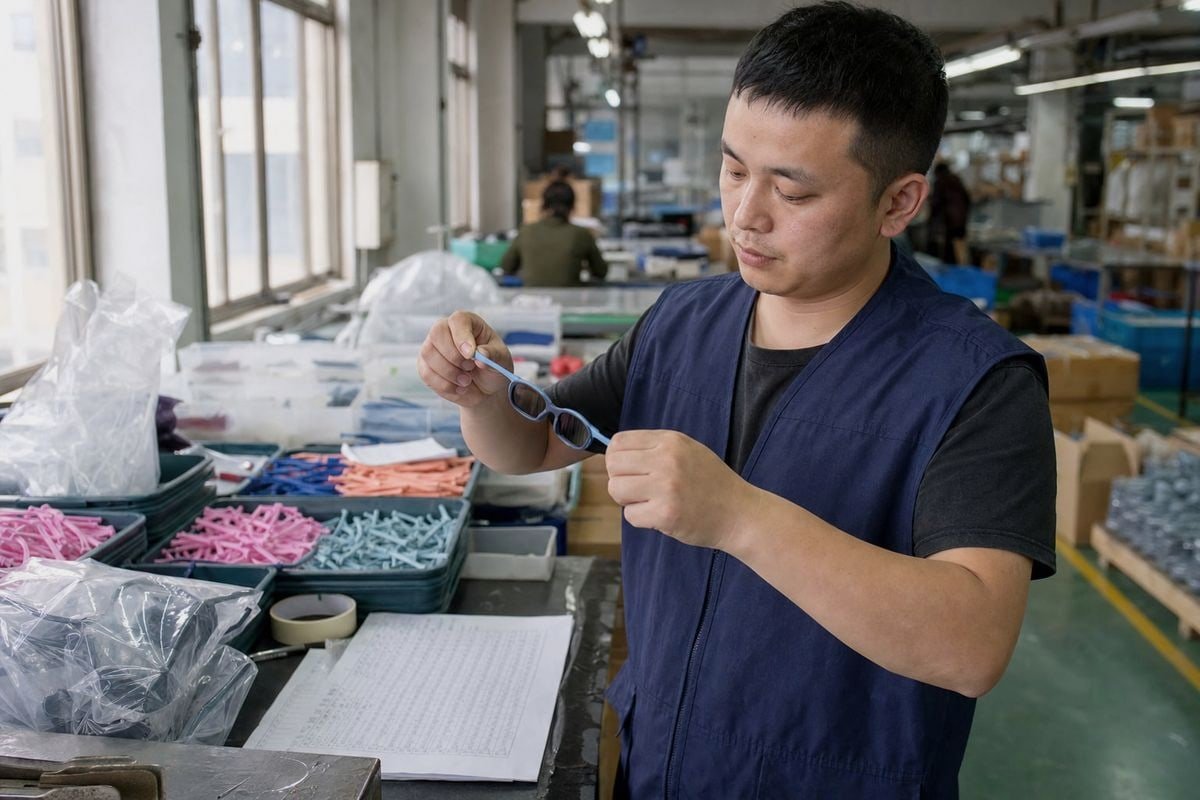
安全なレンズには安全なフレームが必要です。当社の工場では、割れにくいレンズとTPEE製フレキシブルフレームを組み合わせています。 TR90構造 2, 、これにより、製品全体が壊れるのではなく曲がります。サプライヤーを監査する場合は、レンズだけでなく両方の部品について質問してください。.
子供用メガネのUV400保護には、どのレンズ素材がより優れていますか?
オーストラリアのバイヤーから、見た目が同じ2つのレンズがなぜこれほど異なる保護を提供するのか尋ねられたことがあります。答えは、表面ではなく素材の中にあります。.
ポリカーボネートは、UVカット機能が素材自体に組み込まれており、こすれて落ちることがないため、より信頼性の高いUV400保護を提供します。アクリルレンズは通常、UVコーティングや処理を追加することに依存していますが、これらは時間の経過とともに劣化する可能性があるため、子供たちに対する長期的な保護はそれほど信頼できません。.
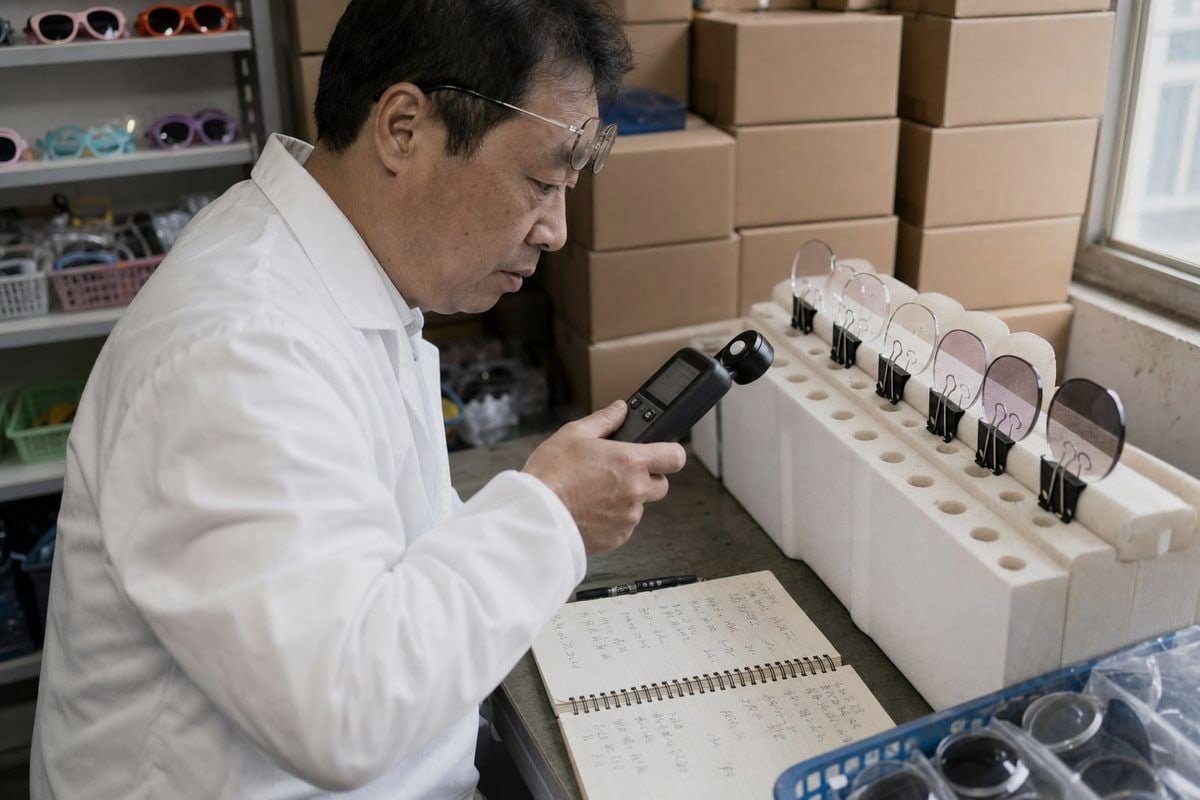
子供の目の健康は、子供用サングラスが存在する理由そのものです。子供のレンズと角膜は、大人よりも多くの紫外線を透過するため、早期の保護が重要です。そのため、当社が出荷するすべての子供用スタイルは、 ラップアラウンドスポーツシールドから丸いソフトフレームまで, 、レンズの色に関係なく、UV400保護を基本として満たす必要があります。.
内蔵保護 vs 適用コーティング
ここが重要な違いです。ポリカーボネートは、その化学的性質の一部として、 UVAおよびUVB 3 を自然にブロックします。無色透明のPCレンズでさえ、紫外線をフィルターします。アクリルはUV安定性にすることができ、高品質のアクリルレンズはUV400に達するように処理できます。しかし、その保護は、ベースポリマーからではなく、添加剤またはコーティングから来ることがよくあります。処理が薄い場合や不適切に適用されている場合、バッチごとに保護が不均一になる可能性があります。.
新規購入者が常に混乱するもう1つの点は、 レンズの暗さ 4 がUV保護と同等ではないということです。UV処理が弱い非常に暗いアクリルレンズは、サングラスがないよりも悪いと言えるかもしれません。なぜなら、暗い色合いの後ろで瞳孔が拡大し、より多くの紫外線を透過してしまうからです。.
サプライヤーに確認すべきこと
- サンプルだけでなく、実際の生産レンズのUV400テストレポートを要求してください。.
- 保護が固有(PC)かコーティングベース(アクリル)かを確認してください。.
- 生産中のUVメーターを使用したバッチレベルのQCチェックをリクエストしてください。.
- Consider polarized lenses for beach and water-focused product lines, since they cut glare on top of UV filtering.
We run UV checks on incoming lens batches precisely because paperwork alone has burned buyers before.
アクリルレンズは、アクティブな子供向けのポリカーボネートと同じ耐衝撃性を持っていますか?
Honesty matters more than a quick sale in this business. When a promotional products client insists on acrylic for a sporty style, I tell them plainly what the trade-off is.
いいえ。アクリルレンズはポリカーボネートの耐衝撃性には及びません。PCは硬い衝撃を吸収して無傷でいられますが、アクリルは脆く、同じ力でひび割れる可能性があります。スポーツ、サイクリング、または激しい遊びをするアクティブな子供たちにとって、ポリカーボネートは唯一の責任ある選択肢です。.
Let me be balanced here, because acrylic does have genuine strengths. It offers excellent optical clarity, with high light transmission and less edge distortion than polycarbonate. Its natural surface is also harder, so it resists everyday scratches better than uncoated PC. Neither material is naturally scratch-proof, which is why a scratch-resistant coating matters on any kids' lens, especially polycarbonate.
But impact performance is where the gap becomes a canyon. Some children's lens guides note that well-made PC lenses can be dramatically more impact-resistant than standard resin lenses 5 while also being noticeably lighter. Acrylic simply was not engineered for that job.
Heat and real-world durability
There is a second durability issue buyers often miss. Acrylic softens and can deform at relatively low temperatures, which matters for sunglasses left on a car dashboard in summer. Polycarbonate holds its shape under heat far better. For products sold into hot climates, this alone can decide the material.
| Durability Factor | ポリカーボネート(PC) | アクリル(PMMA) |
|---|---|---|
| 耐衝撃性 | 素晴らしい | 不良〜普通 |
| 耐熱性 | High, resists warping | Can deform in hot cars |
| Surface hardness | Softer, needs hard coating | Naturally harder surface |
| 中程度から重い | Very light and thin | 軽い |
| 光学的な透明度 | 接触点に集中 | 非常に良い |
One caution on PC: it can react badly to certain chemicals, such as DEET-based insect repellents, so a quality hard coat also protects against chemical crazing. On sporty wraparound shields like the ones we produce with mirrored gradient lenses, we always specify hard-coated polycarbonate for exactly this reason.
耐久性があり、費用対効果の高い子供用サングラスコレクションには、どのレンズオプションを選択すべきですか?
Fifteen years of building kids' eyewear has taught me one pricing lesson: the cheapest lens is rarely the cheapest decision once returns and reviews arrive.
耐久性があり、ブランド価値のある子供用サングラスコレクションのために、傷防止コーティングを施したポリカーボネートレンズをお選びください。アクリルは、軽い日常的な使用に限定される低コストのファッションまたはプロモーションラインにのみ使用してください。アクリルによる単位あたりのわずかな節約は、PCの安全性と耐久性の利点をほとんど相殺しません。.
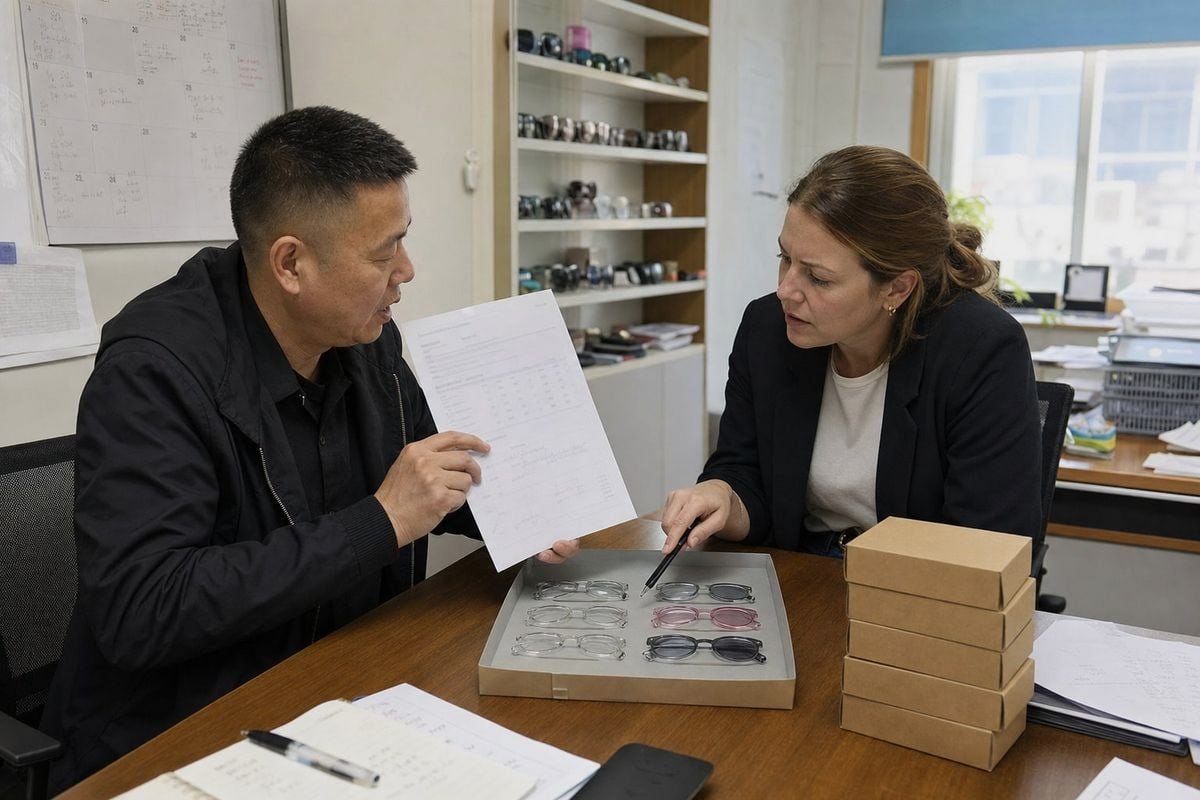
Cost is real, so let me frame it the way I do with procurement managers. Acrylic is cheaper to produce, which is why it dominates mass-market "toy" sunglasses. Polycarbonate costs more per lens. But the difference at factory pricing is modest compared to retail margins, and it buys you a stronger safety story, fewer breakage complaints, and a product parents trust.
A practical decision framework
| Your Product Goal | Recommended Lens | 理由 |
|---|---|---|
| Sport and outdoor kids' line | PC, hard-coated, UV400 | Impact safety, heat stability |
| Everyday kids' sunglasses brand | PC with scratch-resistant coating | Durability plus parent trust |
| Beach and water collection | PC with polarized lenses | Glare reduction plus safety |
| Budget promotional giveaway | Acrylic with verified UV400 | Lowest cost, light use only |
Matching lenses to age groups
Age changes the math too. Toddlers need the most forgiving combination: shatterproof PC lenses inside soft, lightweight frame materials that flex when grabbed or chewed. School-age kids need everyday toughness for backpacks and playgrounds. Sporty teens need wraparound coverage 6 and coatings that survive sweat, sunscreen, and gear bags. This is why we pair PC lenses with TR90 frames and TPEE temples across most of our roughly 800 existing styles, so brands can test a market segment without heavy mold investment.
My honest guidance: prioritize safety and UV first, comfort second, coatings third, and let price be the tiebreaker, never the driver.
結論
Weak lenses create real risk for kids and real returns for brands. Polycarbonate solves both: shatterproof, UV-reliable, lightweight. Choose PC for active wear; save acrylic for casual budget lines.
脚注
1. Wikipedia entry for PMMA (acrylic) detailing its physical properties, brittleness, and common industrial applications. ↩︎
2. Authoritative Wikipedia section covering plastic frame materials including TR90 (Grilamid). ↩︎
3. EPA guide explaining the different types of ultraviolet radiation and the necessity of blocking them for health. ↩︎
4. American Academy of Ophthalmology article explaining that lens darkness is unrelated to actual UV protection levels. ↩︎
5. Wikipedia page for CR-39, the standard resin material used in traditional eyeglass lenses compared to polycarbonate. ↩︎
6. High-authority medical source from the AAO explaining why wraparound styles offer superior eye protection. ↩︎

 English
  Español de México
  Deutsch
  Français
  日本語
日本語  العربية
  Português do Brasil