How to Verify a Supplier’s AS/NZS 1067.1 Test Report for Kids’ Sunglasses?
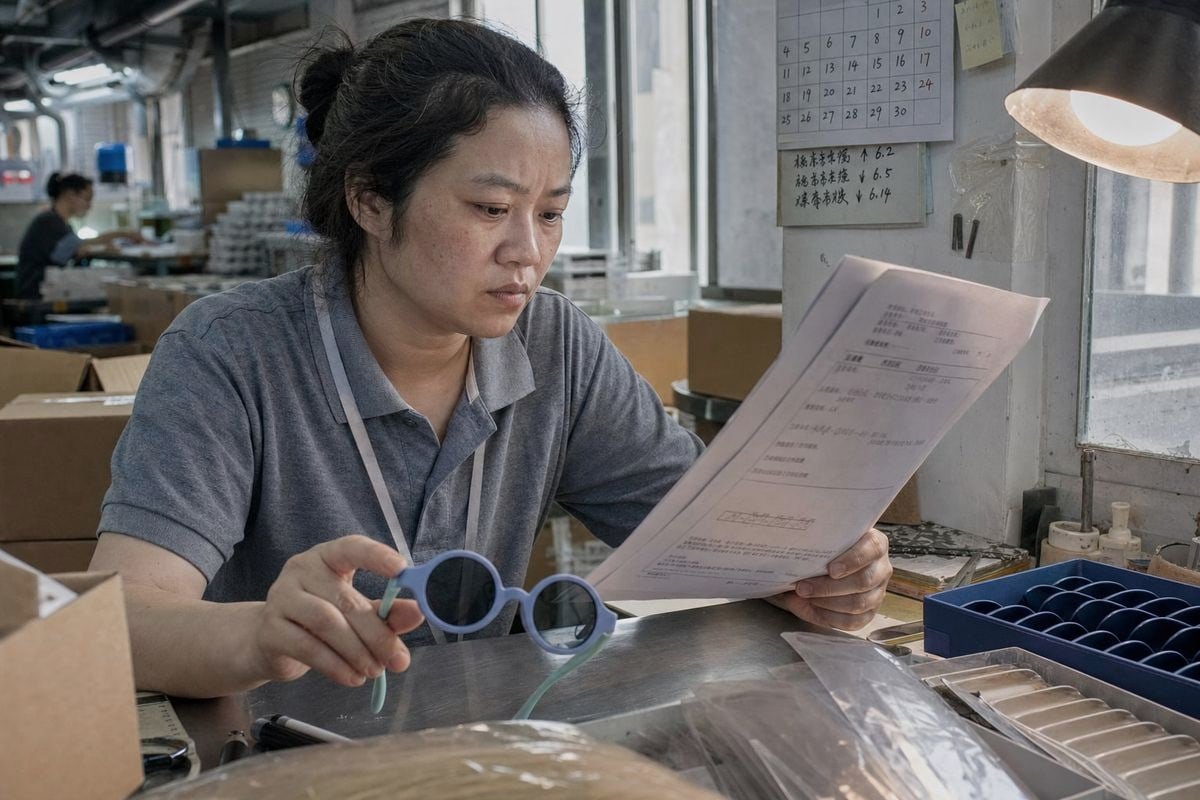
Verifying an AS/NZS 1067.1 test report properly is something we deal with weekly at our Taizhou factory. Too many buyers accept a PDF, ship the goods, and discover problems at customs.
To verify a supplier’s AS/NZS 1067.1 test report, confirm it cites AS/NZS 1067.1:2016, matches your exact kids’ sunglasses model and lens tint, comes from a NATA or ILAC-MRA accredited laboratory, covers construction, transmittance, and eye coverage sections, and states the lens category clearly.
That single sentence covers a lot. Below, I break each step down into a practical checklist you can use before you place your next purchase order.
What details should I check first on an AS/NZS 1067.1 test report?
Last year, a buyer from Melbourne sent us a competitor's report to review. Within five minutes, our QC team spotted that it cited an outdated standard version. That is where checking always starts.
First, confirm the report cites AS/NZS 1067.1:2016 by name, not an older or unrelated standard. Then check the report number, issue date, laboratory name, applicant name, sample photos, and the stated lens category classification. Missing any of these makes the document unreliable as compliance evidence.
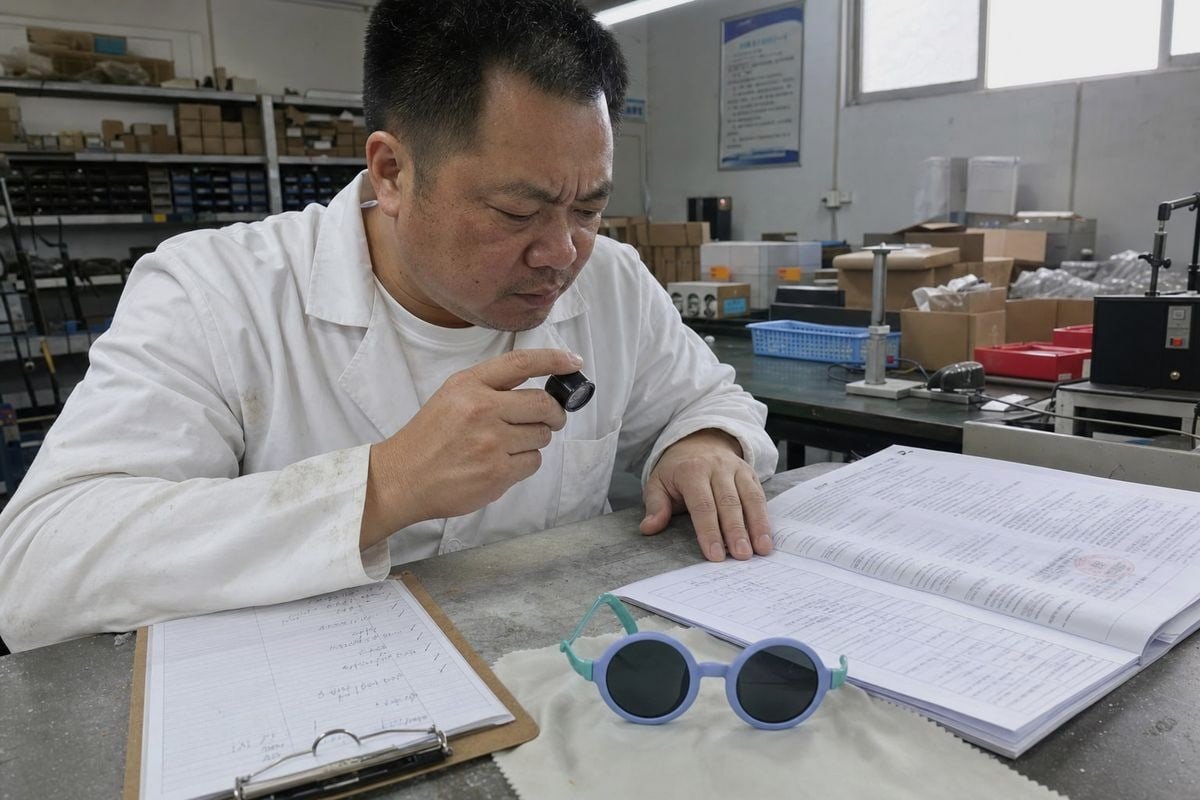
A legitimate laboratory test certificate follows a predictable structure. Once you know what belongs on the page, gaps become obvious fast. In Australia, the ACCC mandatory standards for sunglasses 1 are based on selected sections of AS/NZS 1067.1:2016, not the whole document. So a report that vaguely says "UV protection tested" tells you almost nothing.
The core fields every valid report must show
Here is the field-by-field breakdown we use when reviewing reports for our own kids' sunglasses lines:
| レポートフィールド | What to Look For | なぜ重要なのか |
|---|---|---|
| 引用された基準 | AS/NZS 1067.1:2016 exactly | Older versions or "UV400" claims do not prove compliance |
| Report number | Unique, printed on every page | Needed to verify with the lab |
| Issue date | Within the last 12–24 months | Old reports may reflect obsolete materials |
| Applicant name | Your supplier's legal name, or an authorization letter | Confirms the supplier has rights to the report |
| Sample description | Model, colorway, lens material, frame material | Ties the paper to a real product |
| Lens category | Category 0–4 stated clearly | Australia requires lens category classification for labeling |
| Test scope | Construction, filter quality, transmittance, eye coverage | These sections form the mandatory requirements |
Standard version and scope traps
Watch for two common traps. First, some suppliers submit reports written against ISO 12312-1. An ISO 12312-1 comparison is useful background, but the Australian and New Zealand framework is its own compliance target. Second, some reports only cover optional or internal QC checks. The mandatory sections include transmittance and filter categories, general transmittance requirements 2, and eye coverage with field of view. If those sections are absent, the report is incomplete no matter how official it looks.
Also confirm the transmittance testing covers the 280nm to 400nm range. The Australian standard is stricter here than some EU or US approaches, which often stop at 380nm. This matters directly for UV radiation protection 3 on a child's developing eyes.
How can I confirm the test report actually matches the sunglasses I'm ordering?
A trade-off we discuss with brand clients constantly: testing every colorway costs more upfront, but one mismatched report can void your entire compliance position. We learned to never cut this corner.
Match the report's sample photos, model number, lens tint, coating, and frame material against your physical order sample. A report covers only the exact frame-and-lens combination tested. A different color, tint, coating, or shape needs its own verification or a batch-specific certificate of conformity.
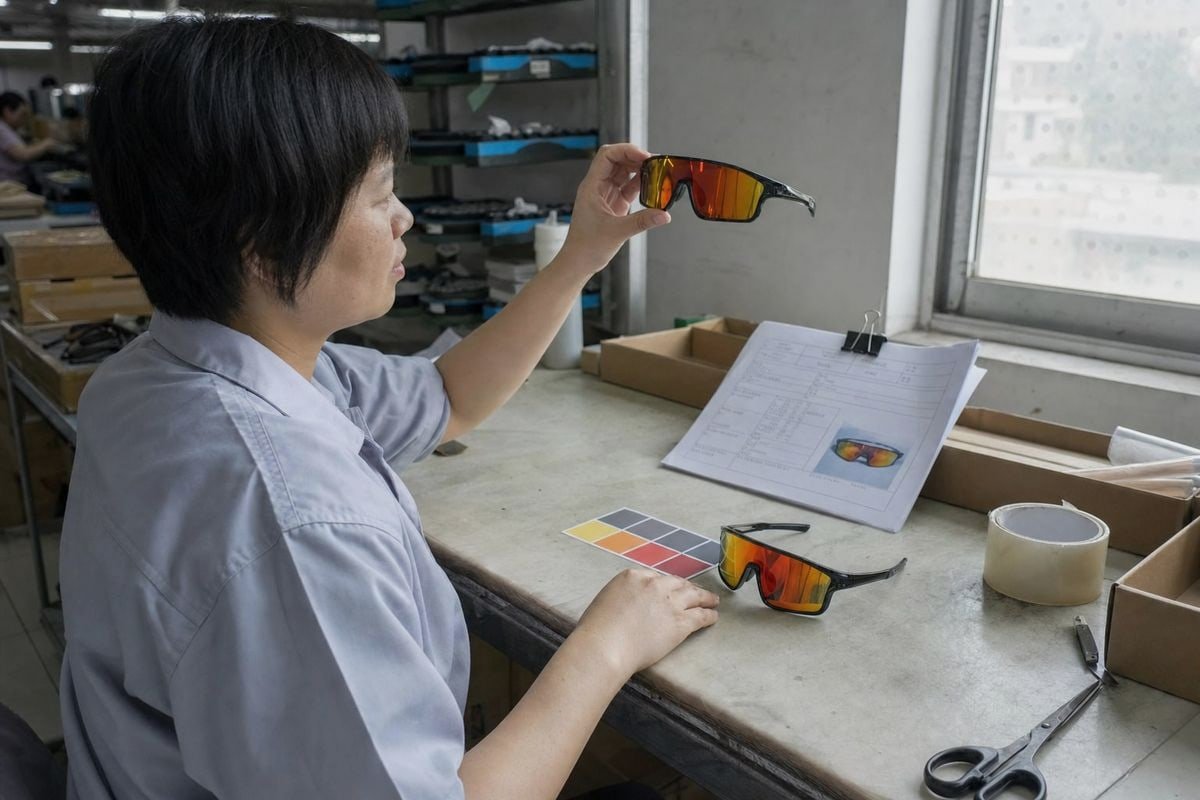
Document existence and product-specific compliance are two different things. This is the single biggest misunderstanding we see among newer importers. A supplier can hand you a completely genuine report, yet it may cover a "golden sample" tested two years ago with different lens stock. The paper is real. The compliance claim is not.
Step-by-step matching process
Here is the process we recommend, and the one we follow in our own 5S-managed workshop before shipment:
- Compare photos. Put the report's sample images next to your physical pre-production sample. Check frame shape, hinge hardware, and lens tint. A periwinkle-blue frame with dark gray lenses is not the same product as the identical frame with a mirrored gradient lens.
- Match identifiers. The model number, style code, and colorway in the report should match your purchase order line items exactly.
- Check materials. If the report says ポリカーボネートレンズ 4 in a TR90 frame, but your order specifies TPEE temples, ask why. Material changes affect construction test results.
- Verify lens variants separately. A report for a Category 3 gray lens does not cover a mirrored, polarized, or gradient version of the same frame. Transmittance results are lens-specific.
- Request batch linkage. Ask for a batch-specific certificate of conformity that connects the original lab report to your production run. This prevents "batch variation," where cheaper untested materials get substituted after the sample passed.
Kids-specific fit details to cross-check
For children's models, also verify eye coverage and field of view results against the actual frame geometry. Children's products can fail if the lens size, bridge fit, or frame proportions leave the eye exposed. We design our kids' frames around smaller interpupillary distances 5 precisely because reports based on adult IPD settings can hide prism imbalances that cause headaches or eye strain in young wearers. If the report does not reference child-appropriate fitting parameters, raise the question with the lab or supplier before signing off.
Which lab accreditations make an AS/NZS 1067.1 report trustworthy?
When we arrange testing for clients shipping to Australia, the first question we ask a lab is not the price. It is whether their accreditation scope actually lists this standard.
Trustworthy reports come from laboratories holding NATA accreditation in Australia, or ILAC-MRA equivalent accreditation such as HOKLAS or CNAS, specifically scoped for AS/NZS 1067.1:2016. Accreditation for unrelated standards, or supplier self-issued certificates, do not carry the same evidential weight.
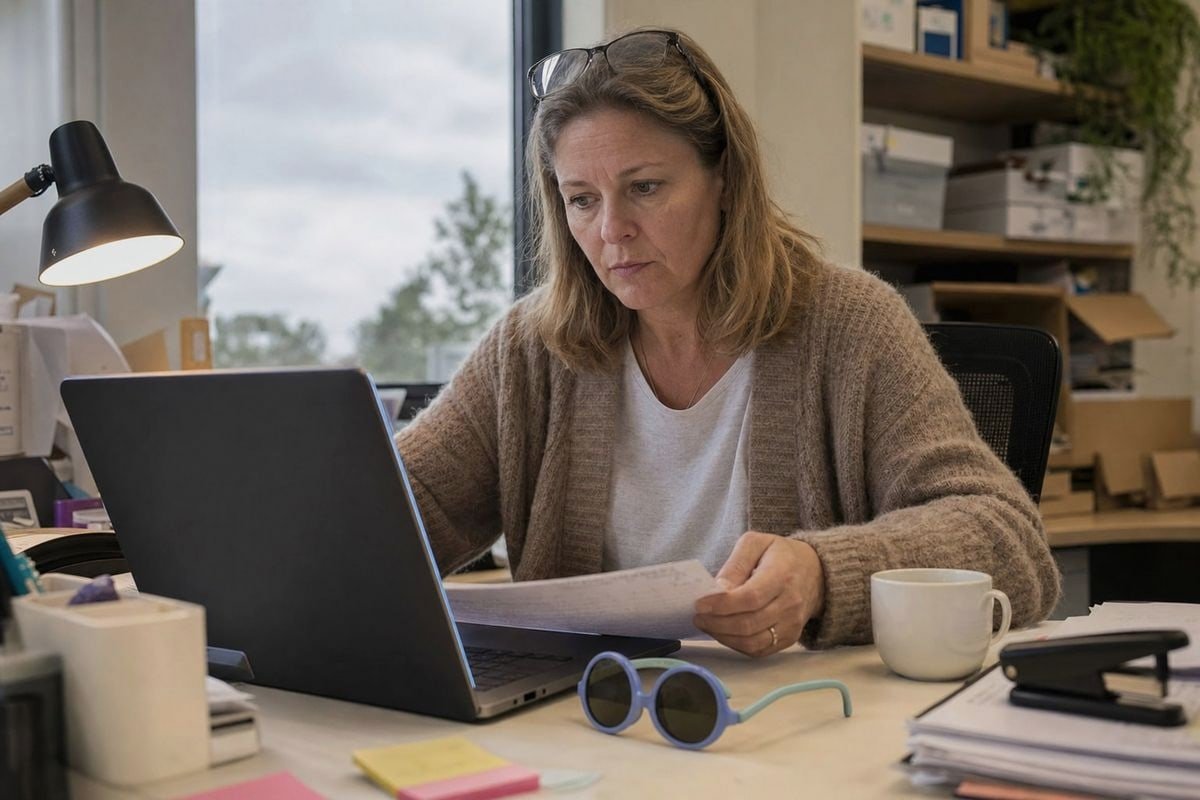
Accreditation is the backbone of a credible laboratory test certificate. But not all accreditation claims mean what buyers assume they mean. A lab can be legitimately accredited for textile testing and still have zero authority on sunglass optics. Scope matters more than the logo.
How accreditation systems connect
子供製品証明書 ILAC MRA mark 6 is the international thread that ties national accreditation bodies together. A NATA accredited laboratory in Australia and a CNAS-accredited lab in China both operate under this mutual recognition arrangement, so their reports can be accepted across borders when the scope covers the right standard.
| Accreditation Body | Region | 確認内容 |
|---|---|---|
| NATA | オーストラリア | Scope explicitly lists AS/NZS 1067.1:2016 sunglass testing |
| HOKLAS | Hong Kong | ILAC-MRA member; check the scope certificate for eyewear |
| CNAS | Mainland China | ILAC-MRA member; common for factory-arranged testing |
| Specialist bodies (e.g., ARPANSA) | オーストラリア | Government radiation agency; tests to the mandatory sections and typically issues results within 10 business days |
Three verification actions to take
First, ask the supplier for the lab's accreditation certificate 7 alongside the test report. The scope annex should mention sunglasses or ophthalmic filter testing 8. Second, search the accreditation body's public directory for the lab's name. Third, cross-check whether the issuing lab actually advertises sunglass testing under this standard on its own website. If the lab exists but has never offered eyewear testing, that mismatch is a serious problem.
One nuance worth stating plainly: an accredited lab producing a genuine report can still leave you non-compliant if the tested sections were only optional checks. Accreditation answers "who tested it." It does not answer "was the right thing tested." You need both answers before treating the document as proof of eye protection requirements being met.
What red flags suggest a supplier's compliance certificate might be fake?
A buyer from Brisbane once forwarded us a "certificate" from another vendor with three different fonts on one page. Fifteen years in this industry teaches you that forgery usually looks lazy, if you know where to look.
Red flags include inconsistent fonts or formatting, missing report numbers, no sample photos, a one-page "certificate" without the full report, an applicant name that doesn't match the supplier, test dates older than two years, and a lab that doesn't answer verification emails or list the report in its database.
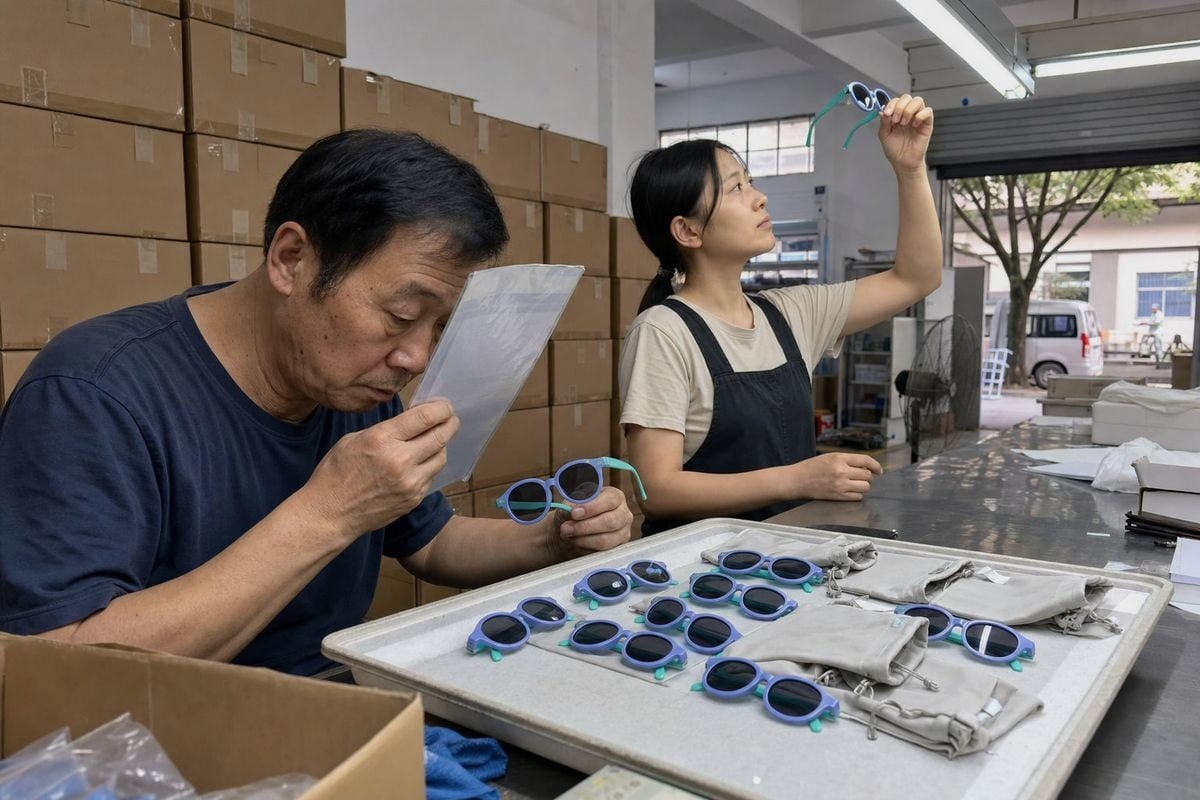
Document fraud is unfortunately common in consumer goods supply chains, especially for high-volume imports and private-label kids’ products. Supplier quality assurance should never rest on a single PDF. Here is how we teach clients to pressure-test a suspicious document.
Visual and structural warning signs
Manipulated PDFs usually betray themselves. Look for mismatched fonts, blurry laboratory logos, misaligned tables, pixelated stamps, and page numbers that skip. Genuine reports have consistent branding, a revision history, and sample identifiers on every page. A summary certificate with no underlying full report attached is another warning. Always demand the complete report, not just the cover page.
Content-level red flags
| 赤信号 | What It Likely Means | Your Action |
|---|---|---|
| Report cites a standard other than AS/NZS 1067.1:2016 | Wrong or recycled document | Reject and request correct testing |
| No lens category classification stated | Mandatory labeling data missing | Ask the lab to confirm the category |
| Applicant is an unknown third party | Report borrowed from another factory | Request a letter of authorization from the original manufacturer |
| Report covers "toy sunglasses" | Wrong product scope entirely | Children's sunglasses are in scope; toy-labeled sunglasses are excluded from the standard |
| Category 4 lens on a kids' product | Too dark for varied lighting; often restricted | Question the spectral transmittance graph and the intended use |
| Lab won't confirm the report number | Possible forgery | Walk away or re-test independently |
The toy sunglasses trap
One compliance trap deserves special attention. The standard excludes sunglasses clearly and legibly labelled as toys, along with prescription eyewear, solaria eyewear, and sports eye protection under other standards. Some suppliers exploit this by presenting toy-classification documents for products that will clearly be sold and worn as functional children's sunglasses. If your product is meant to provide real UV radiation protection outdoors, it must be treated as children's sunglasses under the mandatory framework. A report for reading spectacles or toy eyewear cannot be reused, full stop.
When in doubt, email the laboratory directly with the report number and product description. Legitimate labs confirm quickly. Silence or evasion is your answer.
結論
Verify the standard version, match the exact product, confirm lab accreditation, and hunt for red flags. A report that fails any of these steps is not proof of compliance.
At our factory, we have spent fifteen years building children's eyewear around this exact discipline. With around 800 existing TR90 and TPEE styles, full OEM/ODM support for custom lenses, colors, and packaging, and testing arranged through properly accredited laboratories, we help brands avoid the false-compliance trap entirely. If you are sourcing kids' sunglasses for Australia or New Zealand and want a partner who treats the AS/NZS 1067.1 test report as seriously as you do, reach out to Alan Kong at sales@okayeyewear.com. We will walk you through the documents before you commit to a single unit.
脚注
1. Official Australian government page for the mandatory sunglasses standard mentioned. ↩︎
2. NIST technical resource on transmittance measurement services and standards. ↩︎
3. Authoritative WHO information on the health impacts of UV radiation. ↩︎
4. Wikipedia entry for the common lens material used in sunglasses. ↩︎
5. Technical definition of the distance between pupils, critical for eyewear fit. ↩︎
6. Explains the international mutual recognition arrangement for laboratory accreditation. ↩︎
7. NATA is the primary accreditation body in Australia for laboratory testing. ↩︎
8. General technical background on optical filters used in eyewear testing. ↩︎
 English
  Español de México
  Deutsch
  Français
  日本語
日本語  العربية
  Português do Brasil