How to Verify Product Names and Quantities on Invoice vs Packing List for Kids Optical Frames from China?

Verifying product names and quantities on invoice vs packing list sounds boring — until our export team watches one mismatch stall a buyer’s kids optical frames at customs for two weeks.
To verify product names and quantities on invoice vs packing list for kids optical frames, compare each line item’s description, model number, quantity, and unit of measure. Confirm carton breakdowns sum to invoice totals, references match, and any wording differences still describe the same product.
That is the short answer. Below, I will walk you through the exact checks we run before every shipment leaves our factory in Taizhou, so you can catch document errors before they become customs problems.
What details should I double-check first when comparing my invoice and packing list line by line?
A few years back, one of our European buyers received documents where the invoice said "pairs" and the packing list said "pieces." Our export desk caught it before the container closed — barely.
Check five details first: the product description, the model or SKU code, the total quantity, the unit of measure, and the invoice reference number on the packing list. If all five align line by line, the documents almost certainly describe the same shipment.
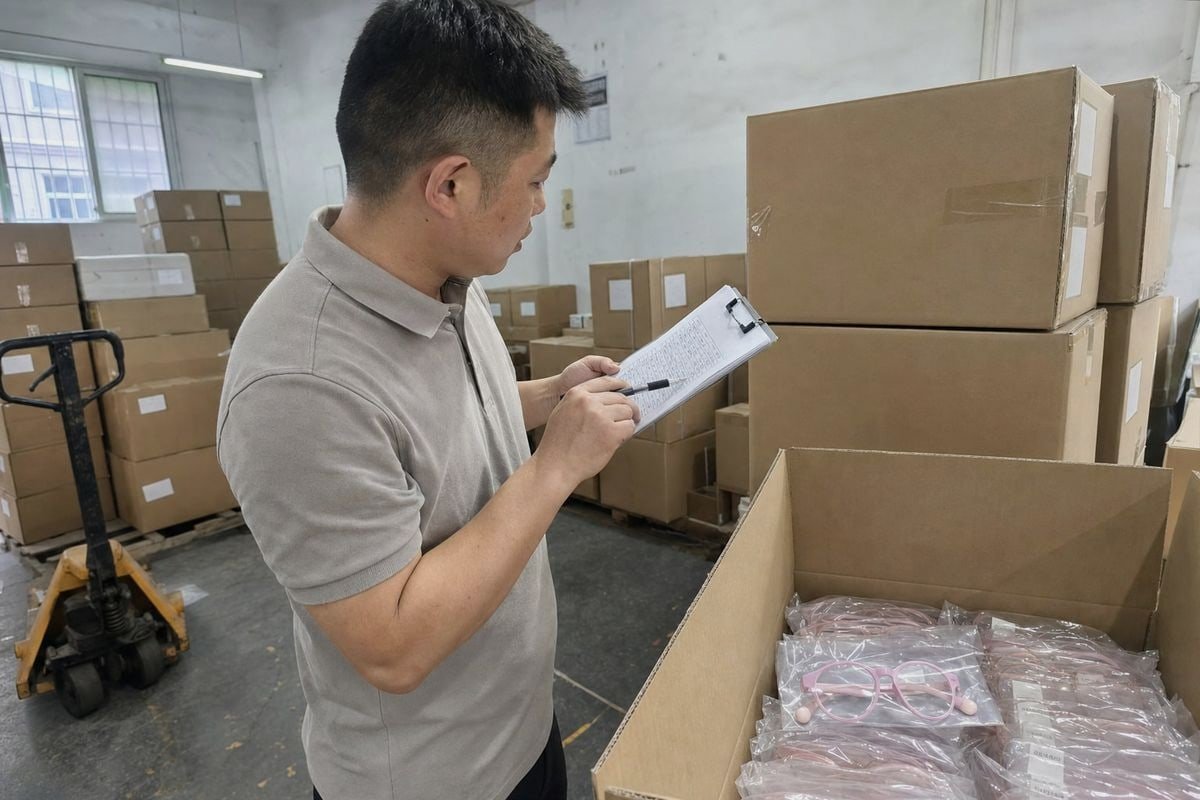
Start with a simple truth: the two documents serve different jobs. The commercial invoice 1 is the value document. It carries product descriptions, quantities, unit prices, and totals, and customs uses it for import duty assessment 2. The packing list is the physical document. It carries carton counts, net and gross weights, and dimensions, and it usually shows no prices at all. So do not expect them to be identical. Expect them to be consistent.
The fields that must match — and the fields that should not
Here is the side-by-side view we use in our own 5S-managed export workflow:
| Field | Must match across both? | なぜそれが重要なのか |
|---|---|---|
| Product name / description | はい | Supports customs clearance documentation and HS Code classification 3 |
| Model / SKU number | はい | Prevents color and size assortment errors |
| Total quantity | はい | Carton sums must equal invoice totals |
| Unit of measure | はい | Pcs vs pairs vs cartons is the top false-discrepancy source |
| Invoice / shipment reference | はい | Links the two documents to one transaction |
| Unit price and total value | Invoice only | Packing lists should not copy pricing fields |
| Weights and dimensions | Packing list focus | Must reconcile with carrier paperwork |
Then check the practical sequence. First, read the product name. Second, verify quantity and unit. Third, count cartons and check weights. Fourth, confirm the invoice number appears on the packing list. Finally, run a 船荷証券 4 cross-check so the carton count and gross weight on the carrier document agree with both papers. If your shipment includes multiple styles, colors, or frame sizes — which kids optical frames orders almost always do — reconcile line by line, not just the grand total. A correct total can hide two lines that were swapped.
How can I confirm that product names on the documents match the actual kids optical frames I ordered?
When buyers order our TR90 kids optical frames with TPEE temples, the same product can be described three different ways across a purchase order, an invoice, and a packing list. That drift is where trouble starts.
Match the model number character-for-character on both documents, then confirm the description covers the same frame material, size, and age group as your purchase order. Broad versus specific wording is acceptable only when both clearly point to one identical product.

Product names for children's eyewear vary more than most categories. A single frame — say, a glossy black rounded-rectangular front with navy TPEE temples and silicone ear hooks — might appear as "kids optical frames" on one document and "children's eyeglass frames, model OK-K123, TR90, 48-16-135" on the other. Is that a discrepancy? Not automatically. The rule we teach buyers is simple: same goods in a different format is fine; different goods, or wording that cannot support classification, is not.
How to normalize product names before comparing
- Anchor on the SKU. Run SKU reconciliation first. If model OK-K123 appears on both documents, small wording differences around it usually resolve themselves.
- Check the material word. TR90, TPEE, and acetate carry different HS Code classification outcomes. Plastic frames typically fall under 9003.11, and that code should be identical on both documents to avoid customs holds.
- Check size and age wording. Kids frames vary by lens width, bridge, and temple length. If one document lists 48-16-135 and the other lists 46-15-130, that is a real discrepancy, not formatting.
- Check color and assortment. A translucent pink acetate frame and a black-and-navy sporty frame are separate line items. Never let a supplier merge them into one generic line.
- Watch translation drift. Bilingual Chinese-English document sets should be translated together with consistent terms. English descriptions alongside Mandarin help both Chinese export customs and destination authorities read the file smoothly.
For US-bound shipments, also confirm the supplier's FDA medical device listing 5 details are cited correctly, since optical frames are regulated products. And ask for a material safety data sheet where your market requires proof of the frame material — it should name the same TR90 or TPEE that the invoice describes.
What should I do if the quantities on my invoice and packing list don't match before shipment?
There is a trade-off we weigh every time a discrepancy appears late on a Friday: fix the paperwork and risk missing the vessel, or ship and hope. In fifteen years of exporting eyewear, hoping has never once been the cheaper option.
Stop the shipment, notify the supplier in writing, and identify whether the mismatch is a unit-of-measure difference, a carton math error, or a real quantity gap. Require corrected documents — or a corrected physical count — before the goods leave the factory.
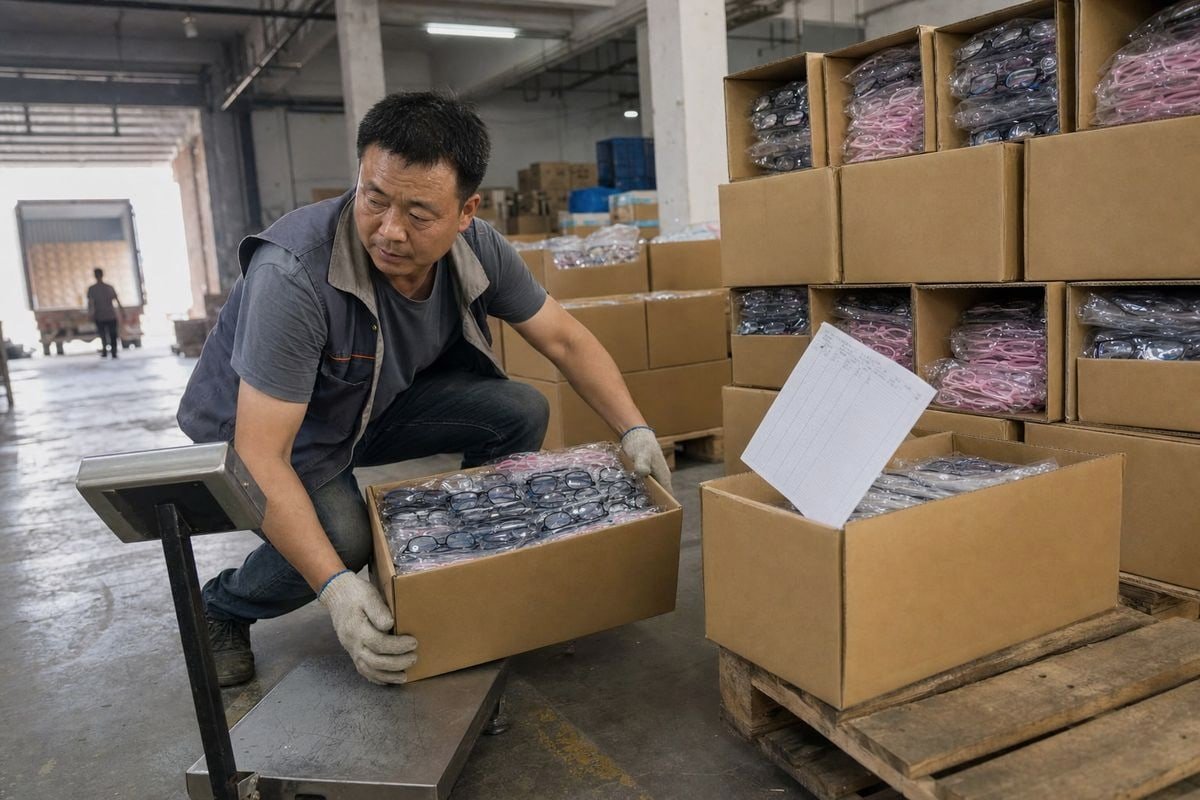
First, diagnose before you escalate. Most "discrepancies" we see are not missing goods. They are formatting problems. Run unit of measure verification before anything else: an invoice showing 500 pcs against a packing list showing 10 cartons is not a mismatch if each carton holds 50 pcs. Normalize everything to pieces, then compare.
A quick diagnostic table
| Symptom | Likely cause | Fix |
|---|---|---|
| Invoice in pcs, packing list in cartons | Unit mismatch | Convert cartons to pieces; confirm carton quantity |
| Carton sums ≠ invoice total | Math or typo error | Recalculate; ask supplier to reissue the wrong document |
| Gross weight higher than expected | Unlisted samples or "free" promo items | Declare everything; undeclared items cause customs seizures |
| One SKU over, another under | Assortment packing error | Request repack and a corrected packing list |
| Totals differ with no explanation | Real shortage or overage | Demand a physical recount before export |
Second, verify against reality, not just paper. A pre-shipment inspection report 6 is your independent referee. It counts actual cartons and actual frames, so you know which document is wrong. We encourage our buyers to book third-party inspections precisely because the report settles quantity disputes in minutes instead of days.
Third, check shipping mark consistency. The marks printed on the cartons must match the packing list, or your destination warehouse will flag the receipt even when the counts are right. Finally, compare the corrected documents against your purchase order — a three-way match, not a two-way one. Some buyers now use AI-driven OCR software to automate this three-way match and eliminate manual entry errors, which we think is a smart step for anyone importing multiple styles per order.
How can I work with my supplier to prevent these discrepancies in future orders?
A procurement manager from Australia once told me she chose our factory partly because our documents "read the same three times in a row." That comment shaped how we train our export desk to this day.
Prevent discrepancies by agreeing on a master SKU naming convention, fixing units of measure in your purchase order, requiring draft documents before shipment, and using a shared pre-shipment checklist. Consistent templates matter more than any single correction.

Prevention is a systems question, not a trust question. Even a careful supplier drifts when every order is documented from scratch. So build the system once, then reuse it.
Set the naming convention at the purchase order stage
Your purchase order should define the exact product name, model code, material, size, color, and unit for every kids optical frame you buy. When we onboard a new brand — often one choosing from our roughly 800 existing styles to avoid mold investment — we lock these names into their order template on day one. The invoice and packing list then copy the same wording automatically. No drift, no translation surprises.
Require draft documents before the goods move
Ask for draft invoice and packing list files three to five days before export. Review them against the purchase order while there is still time to fix errors. Confirm the HS code appears identically on both drafts, and that customs clearance documentation such as certificates and listings is attached, not promised.
Build compliance into the checklist
Regulations keep tightening. China's 2025 export rules now require disclosure of the actual manufacturer's identity rather than a generic trading company — one more reason to work with a real factory. For the US market, validate that CPSIA tracking labels 7 appear on the packing list so every batch of kids frames traces to its production run. For Europe, start asking suppliers for structured digital product data now, because the EU Digital Product Passport will link each frame to a unique identifier or QR code.
| Prevention step | When | Owner |
|---|---|---|
| Master SKU and unit definitions | At purchase order | Buyer + supplier |
| Draft invoice and packing list review | 3–5 days before export | Buyer |
| 出荷前検査レポート | Before container loading | Third party |
| Tracking label and compliance check | Before export | Supplier QC |
| Three-way match (PO, invoice, packing list) | On document receipt | Buyer |
結論
Verify the same item, count, unit, and reference across both documents before export. Our team at OKAY EYEWEAR checks these four points on every kids optical frames shipment — you should too.
脚注
1. Defines this key trade document referenced throughout the comparison process. ↩︎
2. WTO resource on tariffs and duty assessment relevant to customs valuation. ↩︎
3. Explains harmonized system codes referenced for classifying optical frame materials. ↩︎
4. Background on this carrier document used to cross-check carton count and weight. ↩︎
5. Official FDA guidance on medical device registration and listing requirements. ↩︎
6. Background on independent verification process used to settle quantity disputes. ↩︎
7. CPSC official rules on tracking label requirements for children’s products. ↩︎



 English
  Español de México
  Deutsch
  Français
  日本語
日本語  العربية
  Português do Brasil