子供用光学フレームの出荷前サンプル検査の手配方法
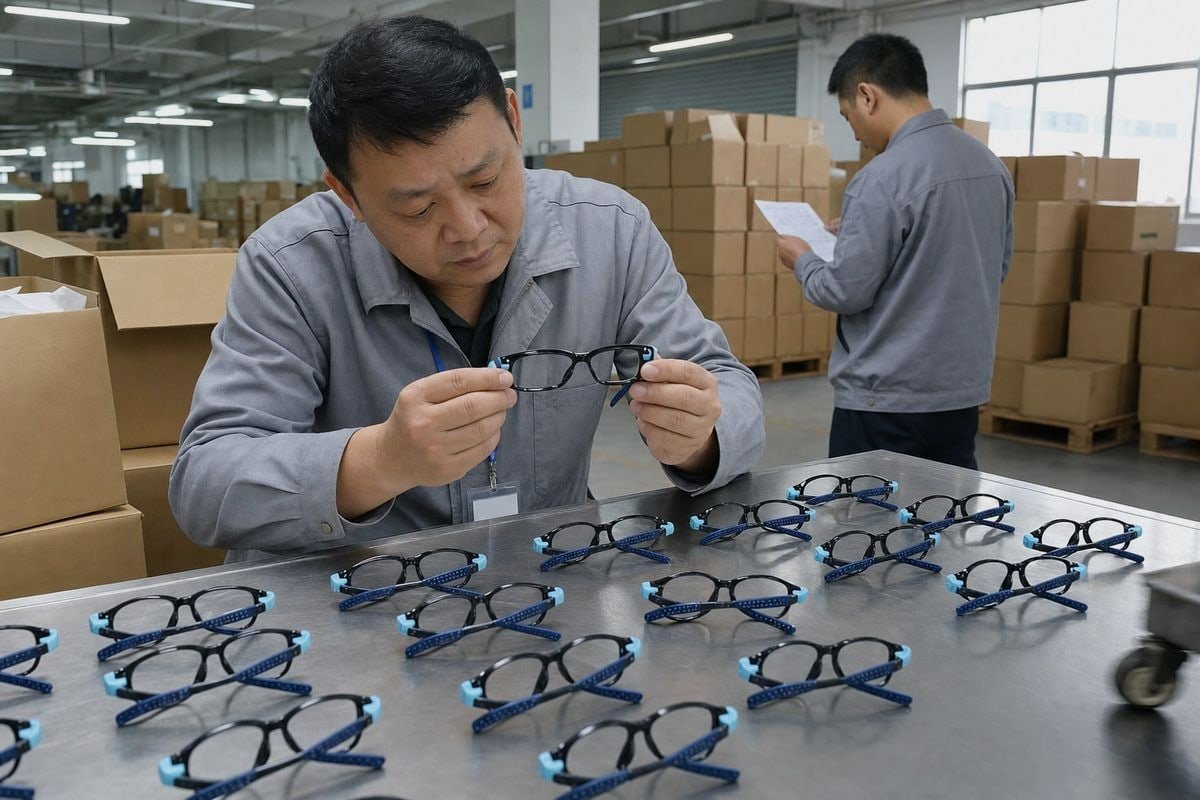
手配 子供用光学フレーム 1 注文品が8,000キロメートル離れた工場に梱包されている場合、出荷前サンプル検査の手配はリスクが高いと感じられます。1つの欠陥を見逃すと、発売が失敗する可能性があります。台州の生産ラインでは、この検査を子供たちに商品が届く前の最後の安全ゲートとして扱っています。.
子供用光学フレームの出荷前サンプル検査を手配するには、承認されたゴールデンサンプルを確認し、生産が少なくとも80%梱包されるまで待ち、AQLサンプリング基準を使用してランダムなユニットを選択し、出荷を承認する前に安全性、寸法、ヒンジ機能、レンズ保持、ラベリング、およびパッケージングを確認します。.
それが簡単な答えです。詳細はより重要であり、特に子供用アイウェアの場合はそうです。 FDA登録 2. 以下に、私たち自身のB2Bバイヤーとともに行っている各段階を説明します。.
フレームメーカーから出荷前サンプルを依頼する際に、最初に確認すべきことは何ですか?
オーストラリアのバイヤーが一度、ビデオ通話だけで一括注文を承認しました。カートンが到着したとき、テンプルの色は2段階ずれていました。私たちは今、すべての注文に対して署名されたゴールデンサンプルを要求しています 私たちのワークショップで。 ゴールデンサンプルは、あなたの法的および実用的なアンカーです。それなしでは、色、テンプルの形状、または仕上げに関する紛争は、一方が他方に対して言葉を交わすことになります。子供用フレームはこれを悪化させます。ブリッジの幅やテンプルの柔軟性のわずかな違いは、言葉で説明するのが難しいですが、子供の顔で簡単に感じることができます。したがって、物理的な参照は、大量生産が始まる前に存在する必要があります。.
まず、承認されたゴールデンサンプルと書面による仕様書を確認してください。両当事者はサンプルに署名と日付を記入し、管理された照明の下で写真を撮り、安全に保管する必要があります。その後のすべての検査は、記憶やメールではなく、この参照と比較して製造ユニットを比較します。.
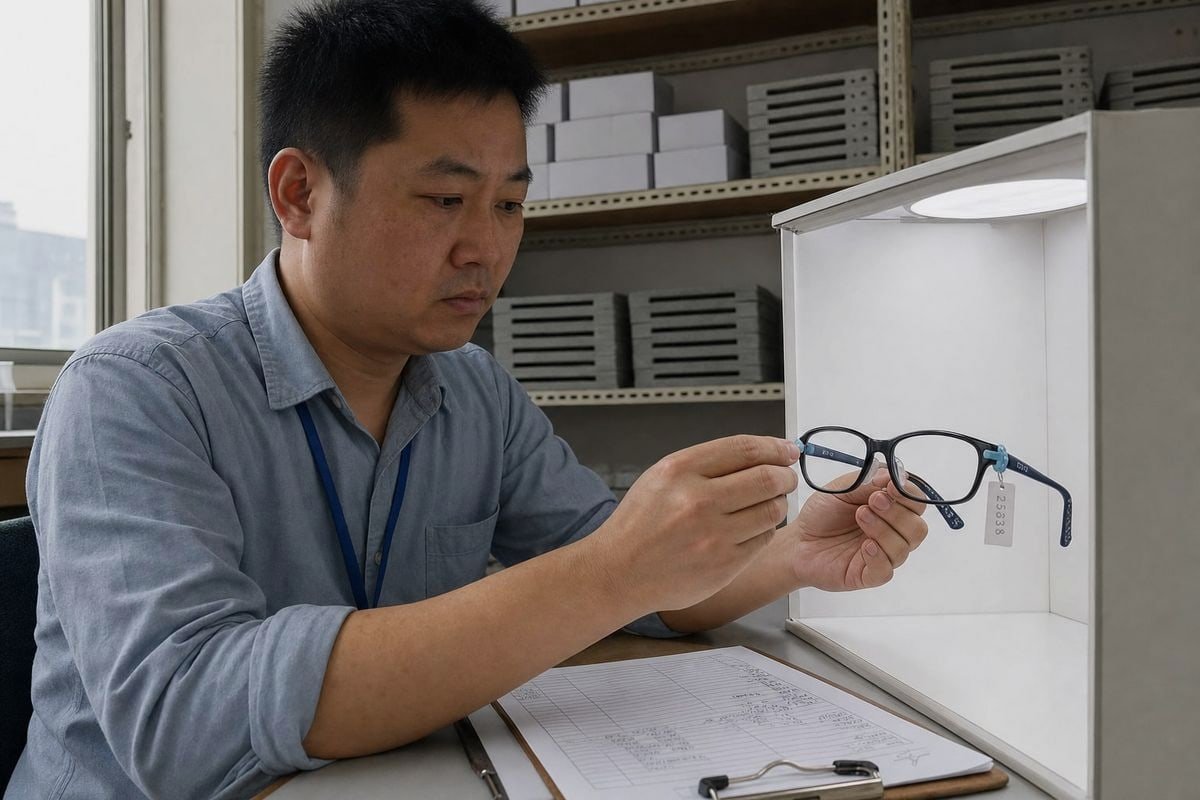
完全な参照パッケージを作成する.
Build a Complete Reference Package
合意された欠陥許容基準, 、誰もが後で主要な欠陥としてカウントされるものについて議論しないように。, 検査官に早期に資料を送る.
検査予定日の少なくとも1週間前に、承認されたサンプルのコピーを検査チームに送ることをお勧めします。工場QCまたは
サードパーティ検査サービス のいずれを使用する場合でも、検査官は参照を手元に置かずに適合性を判断できません。 3, 最初に確認する項目.
| 署名されたゴールデンサンプル | 子供用フレームにとってなぜ重要なのか |
|---|---|
| 色、形状、仕上げの紛争を解決する | 公差付き仕様シート |
| 小さな顔には寸法のずれの余地がない | パッケージングおよびラベリング基準 |
| 小売対応のプレゼンテーションと法的表示 | 欠陥分類基準 |
| 感情が入る前に合格/不合格を定義する | 検査のタイミングと場所 |
| 検査された商品が最終的な出力を反映していることを確認する | 署名され、写真撮影されたゴールデンサンプルは、出荷前検査にとって最も重要な参照です。 |
子供用メガネフレームの出荷承認前に、安全性と素材の品質を確認するにはどうすればよいですか?
子供たちはメガネをぞんざいに扱います。テンプルの先端を噛んだり、フレームの上に座ったり、片手で引っ張ったりします。したがって、安全レビューは、仕上げを賞賛するだけでなく、その乱用をシミュレートする必要があります。私たちのラインでは、TR90フレームにTPEEテンプルを使用しています。これは、これらの柔軟な素材が乱暴な取り扱いに耐えるためですが、優れた素材でもバッチレベルの検証が必要です。.
鋭利なエッジや小さな部品の緩みがないか、触って確認する監査を実施し、ヒンジの耐久性テスト、180度の屈曲回復チェック、コーティングの密着性チェックを行い、対象市場のCPSIA安全規制に対して鉛およびフタル酸エステルテストレポートを確認することで、安全性を確認してください。.
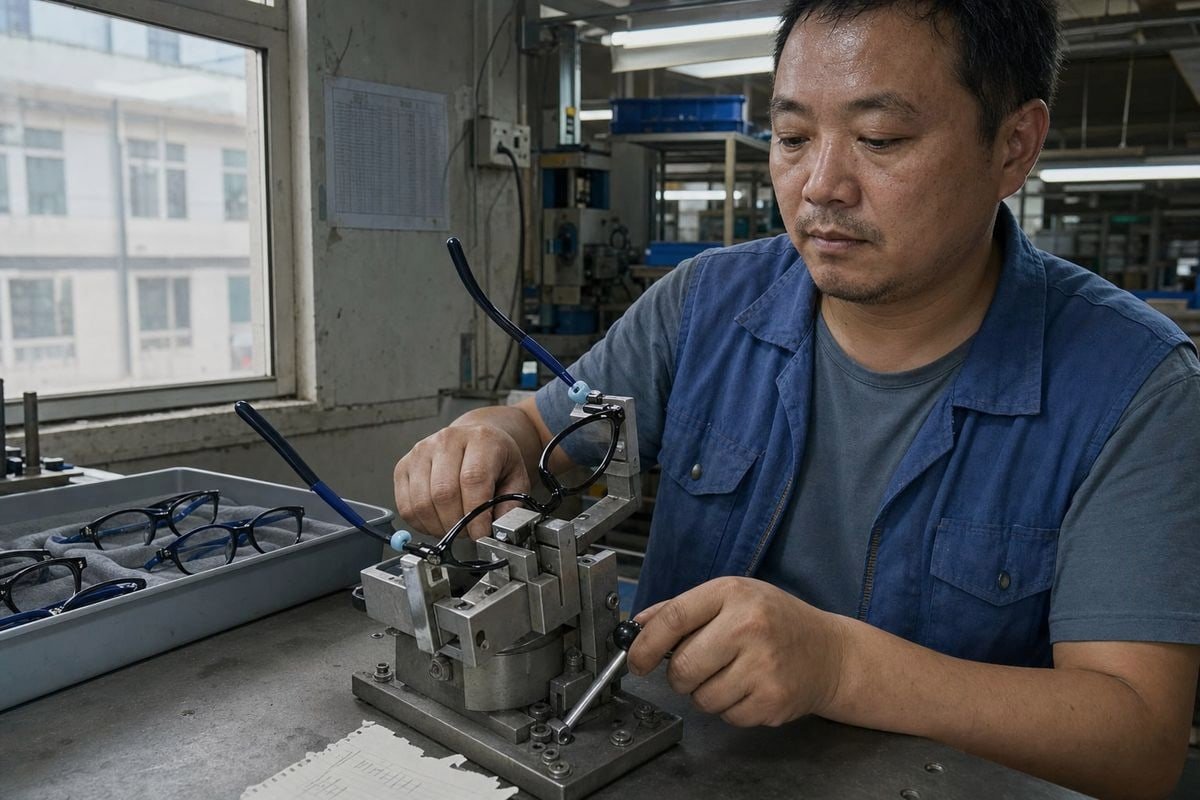
重要な機械的虐待テスト.
柔軟なテンプルで虐待テストを実行します。テンプルを通常の着用位置をはるかに超えて伸ばし、破損したり張力を失ったりしないことを確認します。次に形状記憶をテストします。フレームを約180度曲げ、永久変形なしで元の形状に戻ることを確認します。TR90素材の品質はここで現れます。本物のTR90は回復しますが、安価な代替品はひび割れたり、曲がったままになります。
化学的および表面的な安全性 スプリングヒンジ 4 次に、触感による監査を行います。すべてのエッジ、レンズ溝、ノーズパッドネジに沿って指を滑らせます。バリや小さな緩んだ部品は、幼い子供にとって窒息の危険となります。次にコーティングを確認します。テンプルコーティングに対する唾液耐性のシミュレーションテストは、低アレルギー性の仕上げが噛まれたときに剥がれたり化学物質が漏れたりしないことを確認します。テープを使用したコーティング密着性チェックは、子供の口の中で剥がれる前に弱い塗料を捕捉します。.
書類チェック
最後に、書類と物理的なユニットを照合します。鉛およびフタル酸エステルテスト証明書が実際の生産バッチをカバーしていることを確認します。米国向けの注文の場合、.
CPSIA安全規制
が適用され、光学フレームにはFDA登録が必要になる場合があります。ヨーロッパの場合は、, 文書が最新であることを確認してください。フレームにバイオベースまたはリサイクル素材を使用している場合は、バッチ固有の持続可能性証明書と物理的なユニットを相互参照して、サプライチェーンの管理権限を保護してください。 5 合格基準 CEマーキング認証 6 鋭いエッジとバリ.
| 滑らかで、バリや鋭い継ぎ目がない | 方法 | 触感による監査 |
|---|---|---|
| 鋭利なエッジとバリ | タッチアンドフィール監査 | No cutting or abrasive points anywhere |
| Hinge durability | Repeated open/close and over-extension | Smooth action, no cracking, tension retained |
| 形状記憶 | 180-degree flex test | Full recovery, no deformation |
| Coating safety | Saliva-resistance and adhesion check | No peeling, leaching, or flaking |
| Chemical compliance | Batch test reports | Lead and phthalate results within limits |
大量生産出荷前にサプライヤーにどのような検査基準を遵守してもらうべきですか?
A procurement manager from Japan once asked me why we do not inspect every single frame. I explained that checking all 5,000 pairs would delay her shipment two weeks and still miss systemic issues.
一般検査レベルIIのAQLサンプリング基準に従うようサプライヤーに依頼してください。通常、主要な欠陥はAQL 2.5、軽微な欠陥はAQL 4.0とし、フレームの寸法、耐久性、機械的性能に関するISO 12870への準拠を基準とし、結果は欠陥分類レポートに記録してください。.
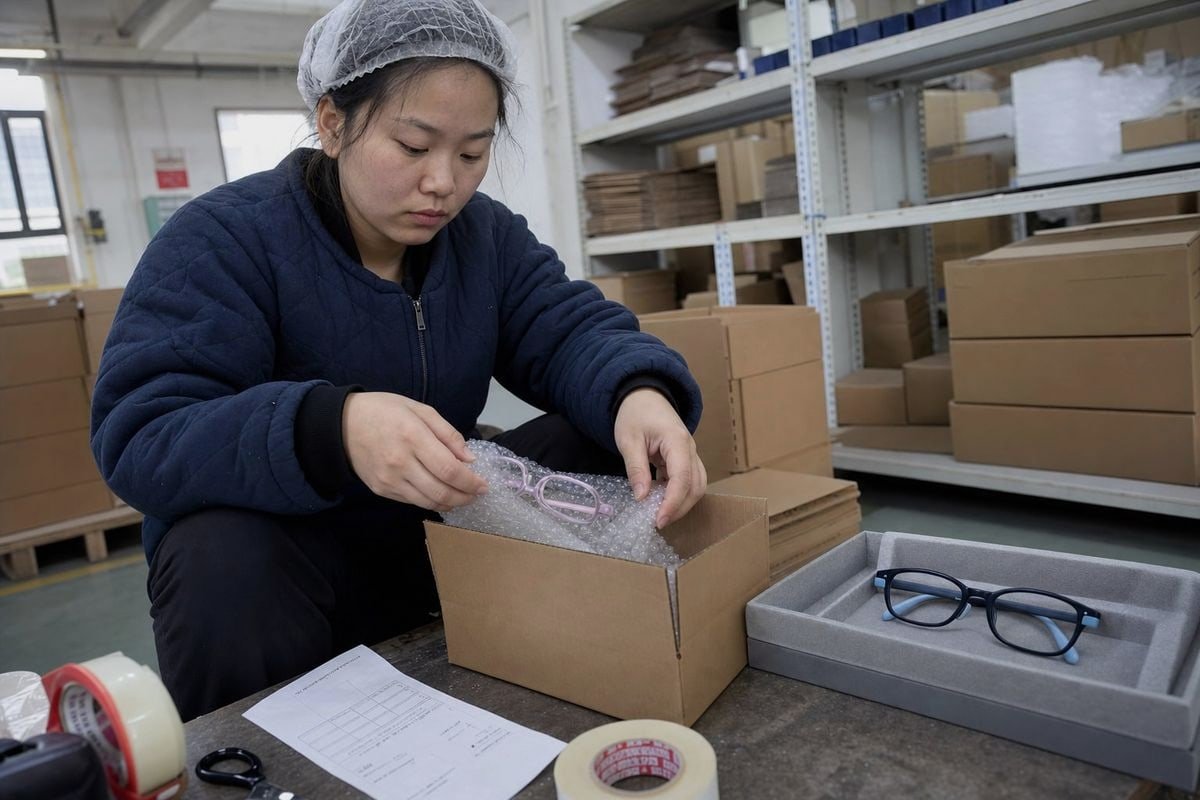
Full inspection of every unit is impractical for most orders. Random sampling under an AQL plan is the industry standard AQLサンプリング基準 7, and it works because a statistically valid sample represents the whole lot. For an order of roughly 1,000 to 3,000 pairs at general inspection level II with AQL 2.5, the inspector checks around 80 to 125 random units pulled from randomly selected cartons.
Timing the Inspection Correctly
Some guides say inspect when 80% is packed. Others say wait until everything is finished. Here is how I resolve that tension for our buyers: the cleanest rule is that inspection should happen when the order is fully produced and mostly packed, so the sample reflects final output, not an early production stage. Inspecting too early lets late-run defects slip through unseen.
Classifying Defects Consistently
The defect classification report is where standards become decisions. Major defects on kids' frames typically include misaligned hinges or temples, frames that do not sit flat, incorrect dimensions, lens pop-out or poor seating, wrong color versus the golden sample, loose nose pads or screws, and visible cracks. Minor defects are cosmetic: light scratches, slight color variation, or finish marks visible only up close. Use precision calipers to verify bridge width and temple length against the approved ergonomic specs, because fitting issues on small faces are always major, never minor.
| 欠陥の種類 | 例 | 標準AQL |
|---|---|---|
| 重大な | Choking hazards, chemical non-compliance, structural breaks | 0 accepted |
| 主要な | Misaligned hinges, lens pop-out, wrong dimensions, wrong color | 2.5 |
| マイナー | Light scratches, faint color variation, small finish marks | 4.0 |
Also standardize who inspects. Factory QC is faster and cheaper, and our 5S-managed workshop runs internal checks on every order. But for large, customized, or first orders, an independent third-party inspection service adds objectivity that protects both sides if a dispute arises.
出荷前検査プロセス中に高額な遅延や却下を回避するにはどうすればよいですか?
The hardest lesson from my fifteen years in eyewear came from a rushed order where nobody agreed on rework rules upfront. The re-inspection cost more than the freight. Preparation prevents that.
検査官にゴールデンサンプル、仕様書、および受け入れ基準を1週間早く共有し、事前に合格、条件付き合格、または不合格の決定モデルに合意し、製造中にパッケージングとラベリングを検証し、梱包期限前に検査日を予約することで、遅延を回避します。.
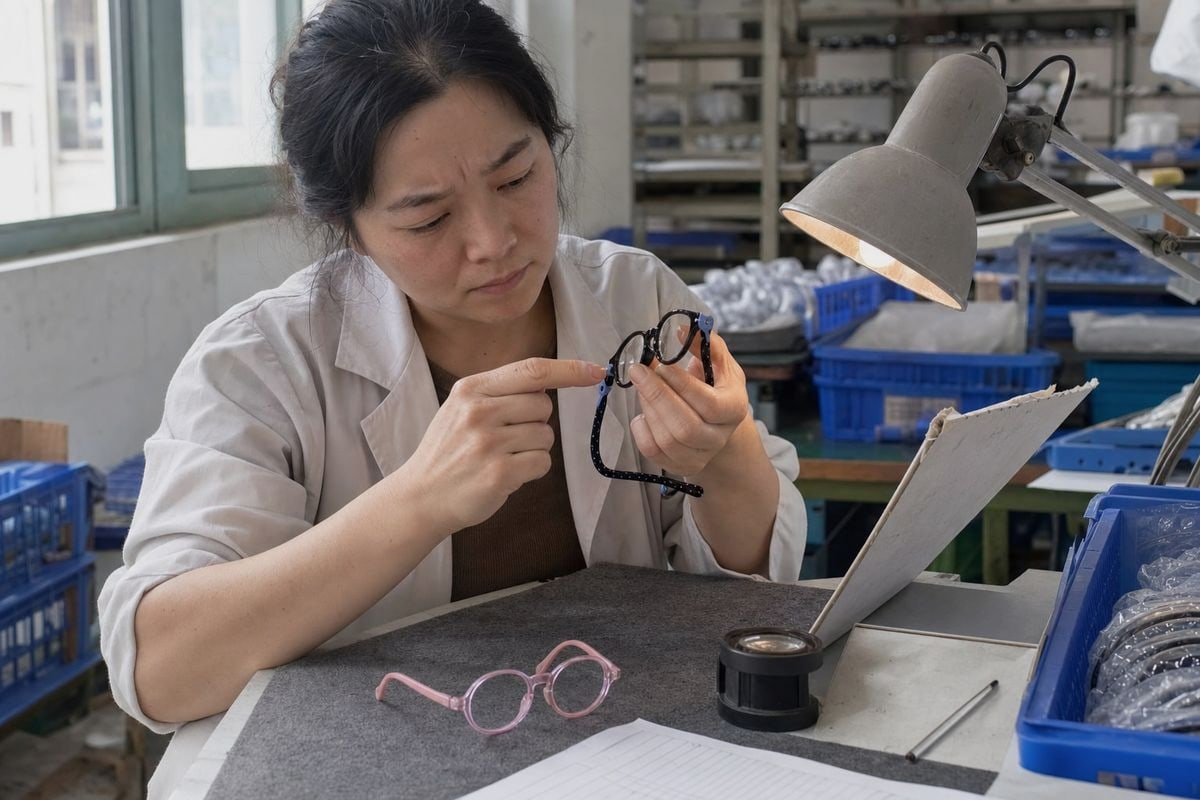
Most inspection failures are not really quality failures. They are communication failures that surface at the worst possible moment. The fix is to move every decision earlier in the timeline, so inspection day only confirms what everyone already expects.
Agree on the Decision Model Before Inspection Day
A simple three-tier model removes ambiguity. Pass: defects stay within AQL limits and no safety or functional issues appear, so goods ship. Conditional pass: small issues like a labeling error or a sortable cosmetic batch can be reworked quickly, then verified with photos or a short re-check. Fail: too many major defects, a serious mismatch to the golden sample, or recurring functional problems, which triggers rework and full re-inspection before release. Write this model into your purchase order.
Fix Labeling and Packaging Early
Packaging rejections are the most avoidable delay of all. Validate tracking labels, barcodes, and age-appropriateness markings during production, not at final inspection. When we prepare branded retail-ready packaging for our OEM clients, we send carton and label photos for approval weeks before packing starts. A wrong barcode discovered at final inspection means re-labeling thousands of boxes under time pressure.
Keep a Feedback Loop for the Next Order
Treat every defect classification report as input for the next production run. If hinge screws recur as a minor issue, adjust torque settings and tolerances before the next order, and tighten that line item in the checklist. Buyers who share inspection data with us consistently see fewer findings on repeat orders. That is how a pre-shipment sample inspection for kids' optical frames evolves from a gate into a continuous improvement tool.
結論
A pre-shipment sample inspection is your last chance to catch safety, fit, and labeling problems before kids' frames reach the market. Prepare early, sample smartly, decide clearly.
脚注
1. Authoritative overview of eyewear categories and terminology. ↩︎
2. FDA guidelines for registering medical devices, including optical frames, for the US market. ↩︎
3. Wikipedia page covering the industry standard for pre-shipment inspections. ↩︎
4. Technical overview of hinge mechanisms, including spring-loaded types used in durable eyewear. ↩︎
5. Official government resource for US consumer product safety requirements for children. ↩︎
6. European Commission guide on CE marking requirements for products sold in the EU. ↩︎
7. Authoritative Wikipedia entry explaining AQL standards for quality control. ↩︎

 English
  Español de México
  Deutsch
  Français
  日本語
日本語  العربية
  Português do Brasil