How to Verify a Chinese Supplier Meets FDA QMSR & ISO 13485 for Kids Optical Frames?
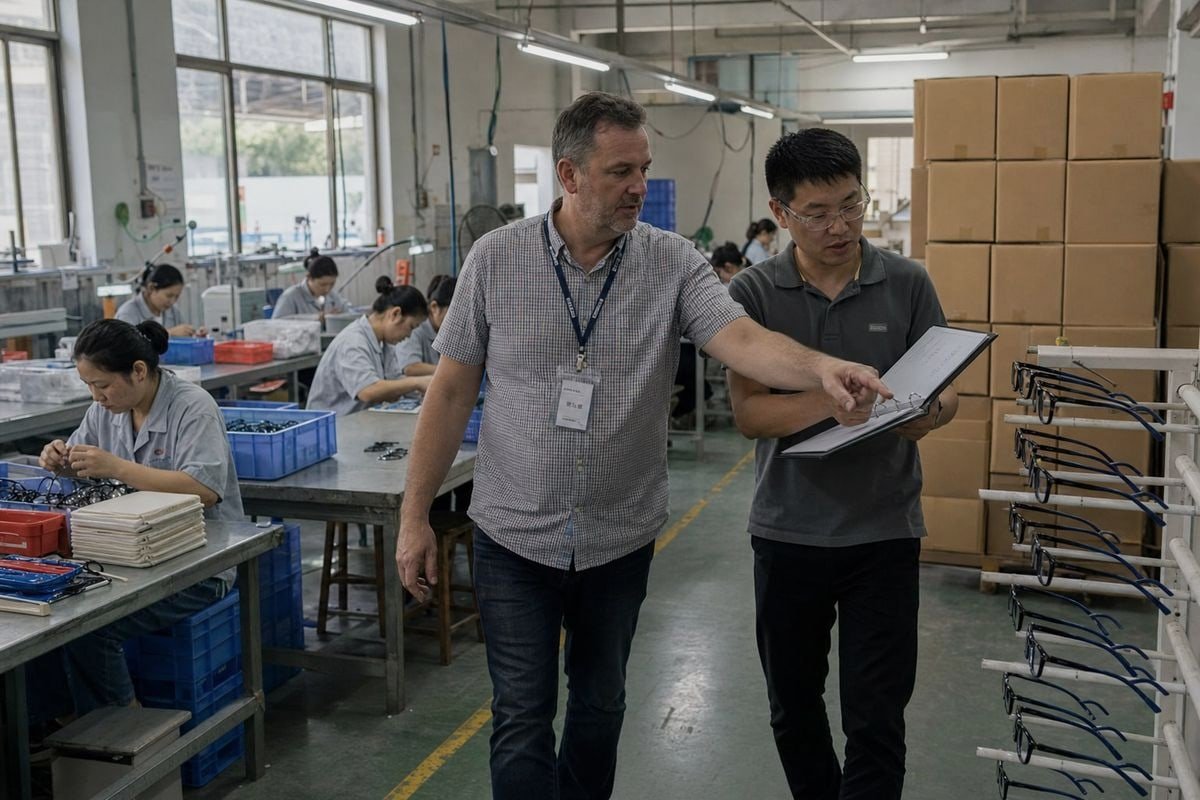
Buyers ask me weekly how to verify a Chinese supplier meets FDA QMSR 1 and ISO 13485 for kids optical frames. Honestly, most vetting I see stops at a PDF certificate.
To verify a Chinese supplier meets FDA QMSR and ISO 13485 for kids optical frames, confirm the certificate’s scope and registrar, review audit reports, CAPA records, traceability, and design controls, then audit the site, sign a quality agreement, and inspect pilot production against child-specific safety checks.
That single sentence hides a lot of work. So let me break it down step by step, the same way we walk our own B2B customers through supplier qualification before they commit to a purchase order.
What documents should I request to confirm ISO 13485 and QMSR compliance before signing a contract?
A procurement manager from Australia once emailed us a one-page checklist before her first visit to our Taizhou factory. Her document list was smart, and I have borrowed from it ever since.
Request the ISO 13485:2016 certificate with full scope, quality manual, internal audit and management review records, CAPA log, complaint-handling procedure, process validation reports, incoming inspection records, traceability records, training files, and a signed quality agreement covering FDA QMSR obligations before contracting.

The key point buyers miss is this: FDA finalized the QMSR on February 2, 2024, and it becomes effective on February 2, 2026. The QMSR incorporates ISO 13485:2016 by reference into 21 CFR Part 820 2, but it also keeps U.S.-specific requirements around records, labeling, and complaint files. So a supplier who says "we are ISO certified, so we meet QMSR" is only telling you half the story. You need documents that prove both layers.
The core document request list
Here is the list we prepare for our own customers during supplier qualification. Ask for every item, and ask how recent each one is.
| 文書 | 登録番号 | Red flag if missing |
|---|---|---|
| ISO 13485:2016 certificate 3 | A certified quality management system exists | Expired date or vague scope |
| Quality manual | The QMS is documented, not verbal | Generic template with no product mention |
| Internal audit records | The factory checks itself | No audits in the last 12 months |
| Management review minutes | Leadership reviews quality data | No sign of top-management involvement |
| CAPA log | Problems get fixed at the root | Zero CAPAs ever recorded |
| Process validation reports | Critical steps are controlled | "We just know how to do it" |
| Traceability records | Lots can be tracked and recalled | Batch numbers only on cartons |
| Training records | Workers are qualified for their tasks | No records for QC staff |
Why a quality agreement matters
Beyond certificates, we always recommend a signed quality agreement 4. It defines who handles complaints, how change control works, how nonconforming product is reported, and what post-market surveillance data the factory must share. In our experience exporting to 20+ countries, this document prevents more disputes than any certificate ever will. It also proves the supplier understands contract manufacturing responsibilities under a regulated framework, not just a commercial invoice relationship. If a factory refuses to sign one, that tells you something important before money changes hands.
How can I verify a factory audit or certification is genuine and not outdated or fabricated?
Years ago, a European importer showed us a competitor's "ISO certificate" that listed a trading office address, not a factory. That moment taught me how common paper-only compliance really is.
Verify certificates directly with the issuing registrar using the certificate number, confirm the site address matches the actual production location, check the scope covers optical frame manufacturing, review the issue and expiry dates, and cross-check third-party audit reports from firms like SGS, TÜV, or Intertek.

Fabricated or outdated paperwork is the single biggest risk in regulated sourcing from any country. The good news is that verification is a repeatable process. We encourage buyers to treat it like a mini medical device audit done from their desk, before spending money on flights.
A four-step authenticity check
- Registrar verification. Take the certificate number and check it on the registrar's public database, or email the registrar directly. Legitimate certification bodies respond. Also confirm the registrar itself is accredited by a recognized accreditation body.
- Site and entity matching. The certified legal entity and address must match the factory you will actually use. Trading companies often present a partner factory's certificate as their own. Ask for the business license and compare names character by character.
- Scope reading. The scope wording must cover the real activity, for example manufacture of optical frames or spectacle frames, not just "sales of eyewear products." A certificate for injection molding of general plastics does not cover pediatric eyewear safety controls.
- Recency and audit trail. Ask for the most recent surveillance audit report, not just the certificate. Certificates run on three-year cycles with annual surveillance. A supplier who cannot show last year's surveillance findings may have lapsed.
Cross-checking beyond the certificate
Independent evidence strengthens the picture. Third-party audit reports from SGS, TÜV Rheinland, or Intertek show how the factory performed on a specific date, with photos and nonconformity lists. You can also ask whether the supplier holds an FDA Establishment Registration and whether relevant products appear in FDA device listings, where applicable to the product classification. For factories serving the Chinese domestic medical market, familiarity with NMPA regulations and Good Manufacturing Practice 5 (GMP) principles is another positive signal, because it shows the quality culture runs deeper than one export certificate. Finally, verify any testing laboratories the supplier uses. Accredited labs with a traceable track record reduce data integrity risk on impact resistance testing and biocompatibility testing reports.
What quality control steps should I expect during production to ensure consistent compliance with these standards?
On our own line in Taizhou, we weigh a constant trade-off: inspection depth versus lead time. For children's frames, we have learned the hard way that depth always wins.
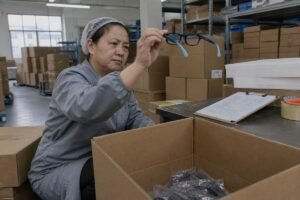
Expect documented incoming material inspection, first-article approval, in-process checks at molding, assembly, and finishing, calibrated measurement equipment, validated critical processes, lot-level traceability, AQL-based final inspection, and hinge, lens-retention, and finish testing specific to children's frames, all recorded and auditable.
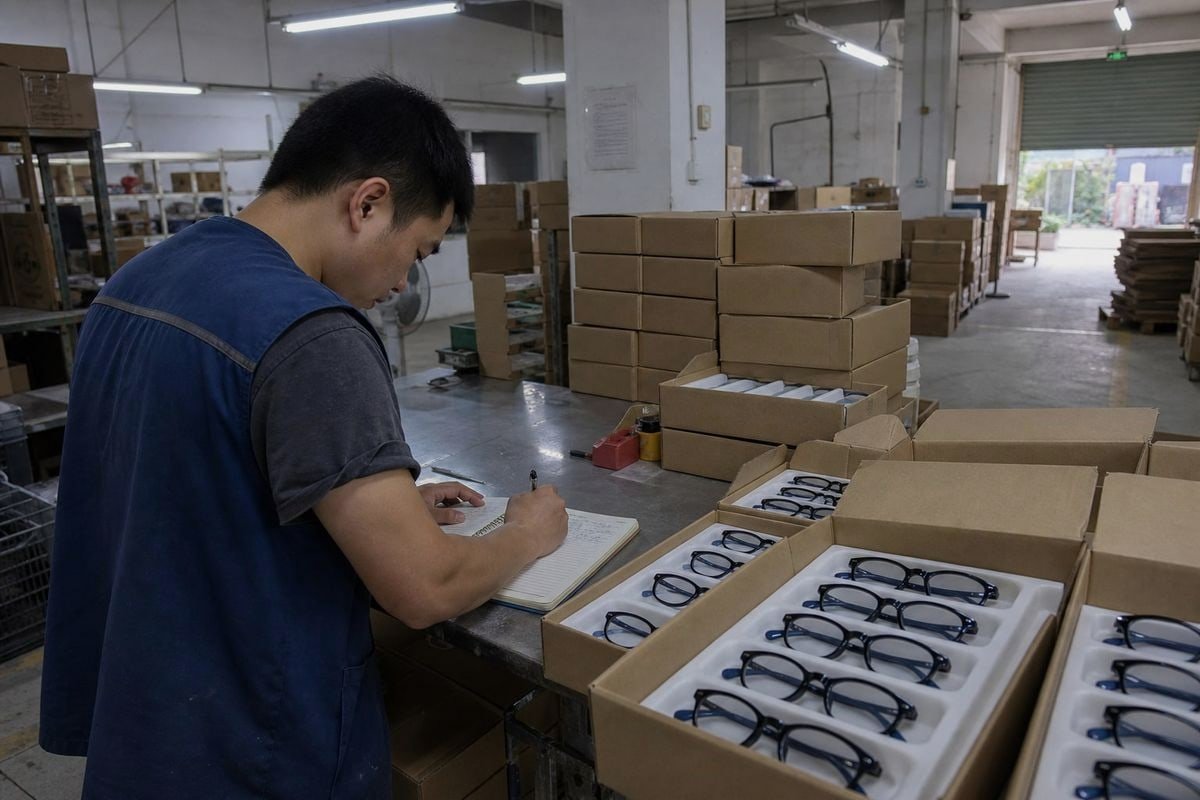
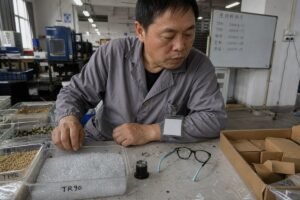
Consistent compliance is not a final inspection at the end. It is a chain of controls running from raw material to packed carton. Under both ISO 13485 and QMSR thinking, every link must leave a record. Here is what that chain looks like on a real kids' frame production run, based on how we run TR90 and TPEE production in our own 5S-managed workshop.
The control chain, stage by stage
| Production stage | Control activity | Child-specific focus |
|---|---|---|
| Incoming materials | Material certificates, chemical limit checks | Lead, phthalates, skin-contact safety |
| 射出成形 | Process validation, first-article inspection | Dimensional consistency for small faces |
| 組み立て | Work instructions, in-process sampling | Hinge cycling, temple flexibility, lens retention |
| Surface finishing | Coating adhesion and finish checks | No sharp edges, smooth silicone tips |
| 最終検査 | AQL sampling against a defect list | Small-parts and breakage risk review |
| Packing | Labeling and lot marking verification | Traceability codes on unit packaging |
The systems behind the checkpoints
Checkpoints only work if systems support them. First, the factory needs a risk management system that identifies child-specific hazards, such as small detachable parts or brittle fracture, and links each hazard to a control. Second, equipment calibration must be current, because uncalibrated gauges produce confident but wrong data. Third, purchasing controls must extend to sub-suppliers. The hinge maker and the raw TR90 resin supplier both affect your product, so ask how the factory qualifies and monitors them, including how supplier corrective action requests are handled. Fourth, design controls matter whenever the factory designs or modifies frames. When we develop a new flexible temple design, we document design inputs, verification tests, and change control, because a design change without records is where consistency quietly dies. Finally, expect defect escalation rules: who stops the line, who opens a CAPA, and how you as the buyer get informed. Ask to see one completed example of each record. Real factories can show them within a day.
Can a smaller kids' eyewear brand still work with a QMSR-compliant factory without ordering huge volumes?
A two-person startup brand from Japan once told me they assumed compliant factories only wanted six-figure orders. That assumption almost pushed them toward an uncertified workshop.
Yes. Smaller brands can work with QMSR-ready factories by choosing existing certified frame styles instead of custom molds, which cuts minimum order quantities and tooling costs, then adding custom colors, logos, lenses, and packaging while inheriting the factory's established quality system and traceability.
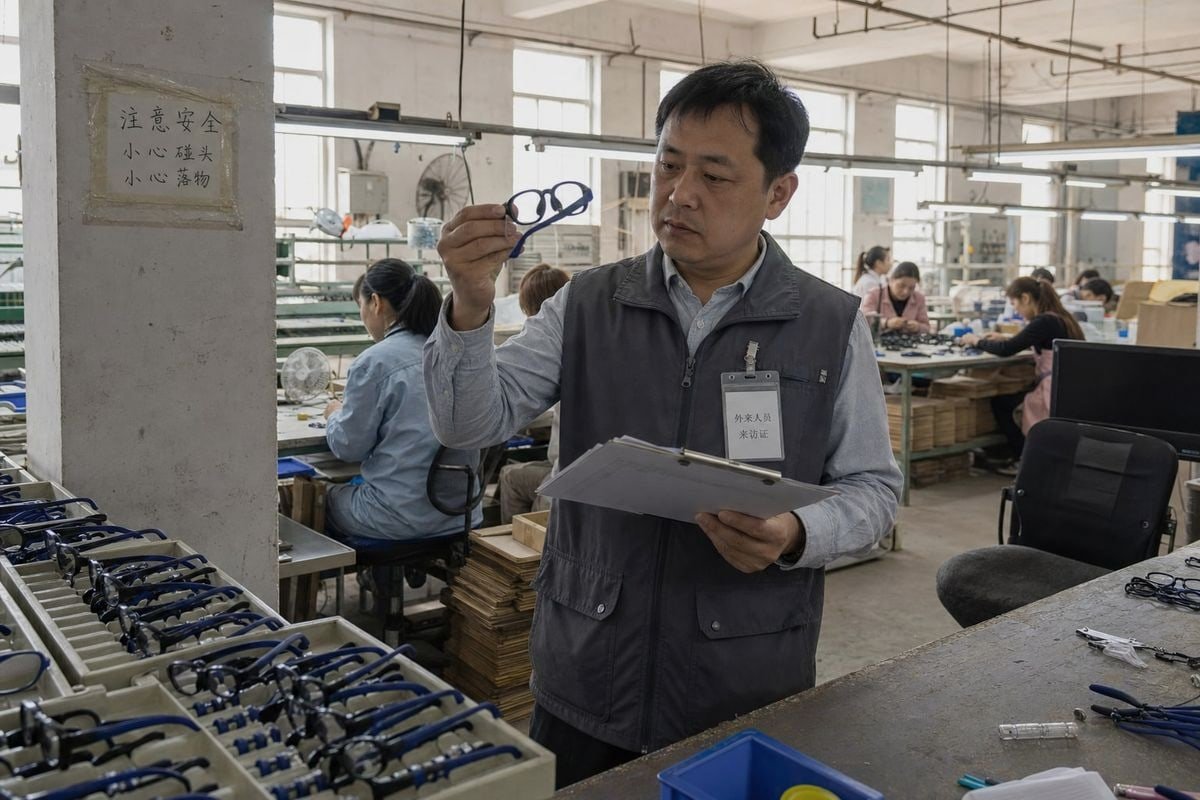
The volume myth persists because people equate compliance with custom tooling. In reality, the quality system belongs to the factory, not to the order size. A 1,500-piece order made under documented design controls, validated processes, and lot traceability is just as compliant as a 100,000-piece order. What changes is how you structure the project.
Two paths for smaller brands
| 要因 | Custom mold path | Existing style path |
|---|---|---|
| Upfront tooling cost | 高い | None or minimal |
| 一般的なMOQ | High, to amortize the mold | Much lower per style |
| Time to market | Months | Weeks |
| Compliance documentation | Built during development | Already established for the style |
| 特徴 | Full design ownership | Colors, logos, lenses, packaging |
At our factory, this is exactly why we maintain around 800 existing styles, from glossy black frames with flexible two-tone rubber temples and cable ear hooks, to translucent blush-pink acetate-look frames with soft silicone tips. A new brand can pick a proven style, customize the colorway and branding, and launch with retail-ready packaging without funding a mold. The existing style already carries its inspection history, material documentation, and validated processes.
What smaller buyers should still insist on
Lower volume does not mean lower diligence. Even at small quantities, insist on a quality agreement, lot-level traceability on your shipments, pre-shipment inspection reports, and clarity on complaint handling and post-market surveillance support. Ask how the factory would help you respond if a retailer reported a hinge failure. A serious partner will answer with a procedure, not a shrug. In our experience, brands that start small but verify properly become the long-term customers who scale into custom development later, because trust was built on records, not promises.
結論
Certificates open the door, but records, audits, and child-specific controls prove real compliance. Verify scope, systems, and production evidence, and even small brands can source kids optical frames with confidence.
脚注
1. Official FDA regulation for medical device quality management systems. ↩︎
2. Official FDA regulation outlining current good manufacturing practice requirements for medical devices. ↩︎
3. Explains ISO 13485:2016 certification for medical device quality management systems. ↩︎
4. Replaced HTTP 404 link with official FDA guidance on quality agreements, which is highly authoritative and relevant to medical device QMSR obligations mentioned in the article context. ↩︎
5. Official FDA information on current good manufacturing practices for medical devices. ↩︎
 English
  Español de México
  Deutsch
  Français
  日本語
日本語  العربية
  Português do Brasil