How to Schedule Rolling Launch Cadence for Kids Optical Frames Procurement?
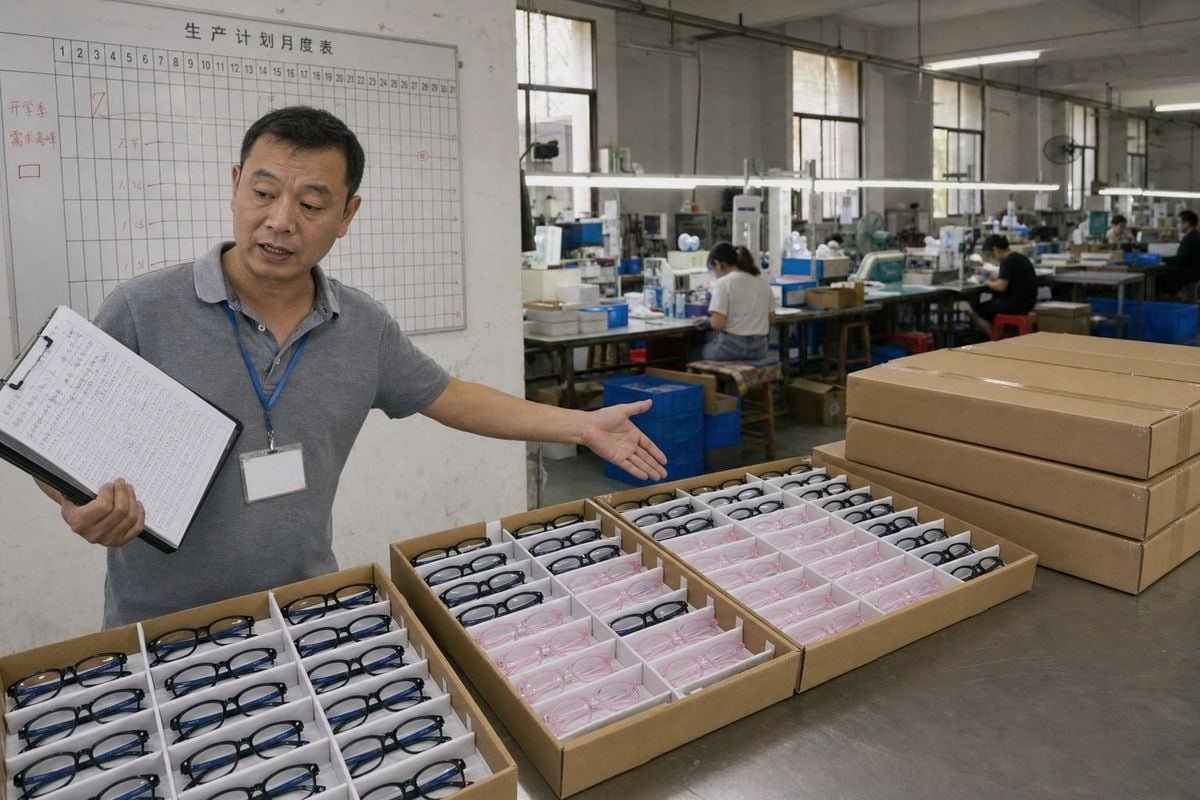
A rolling launch cadence for kids optical frames procurement stops one painful problem I see constantly at our factory: buyers sinking their whole budget into one giant order that flops.
Schedule a rolling launch cadence by splitting kids optical frames procurement into waves: a pilot wave of 3–5 core styles, an expansion wave adding colors and age bands, then replenishment waves for winners — each back-planned from production lead times and school-season demand peaks.
That is the short answer. Below, I break down how to budget each wave, sequence styles, sync lead times, and use existing molds to move faster.
How can I plan a rolling launch cadence without overloading my inventory budget?
Last spring, a first-time buyer from Australia asked us to quote 3,000 pieces across 12 styles UV400 verification 1. We talked her down to a pilot order instead — and her business survived because of it.
Plan the cadence by capping each wave at a fixed share of your budget: roughly 30% for the pilot, 40% for expansion, and 30% held in reserve for replenishment. Test 3–5 styles with 100–200 pieces before committing to custom OEM volumes.
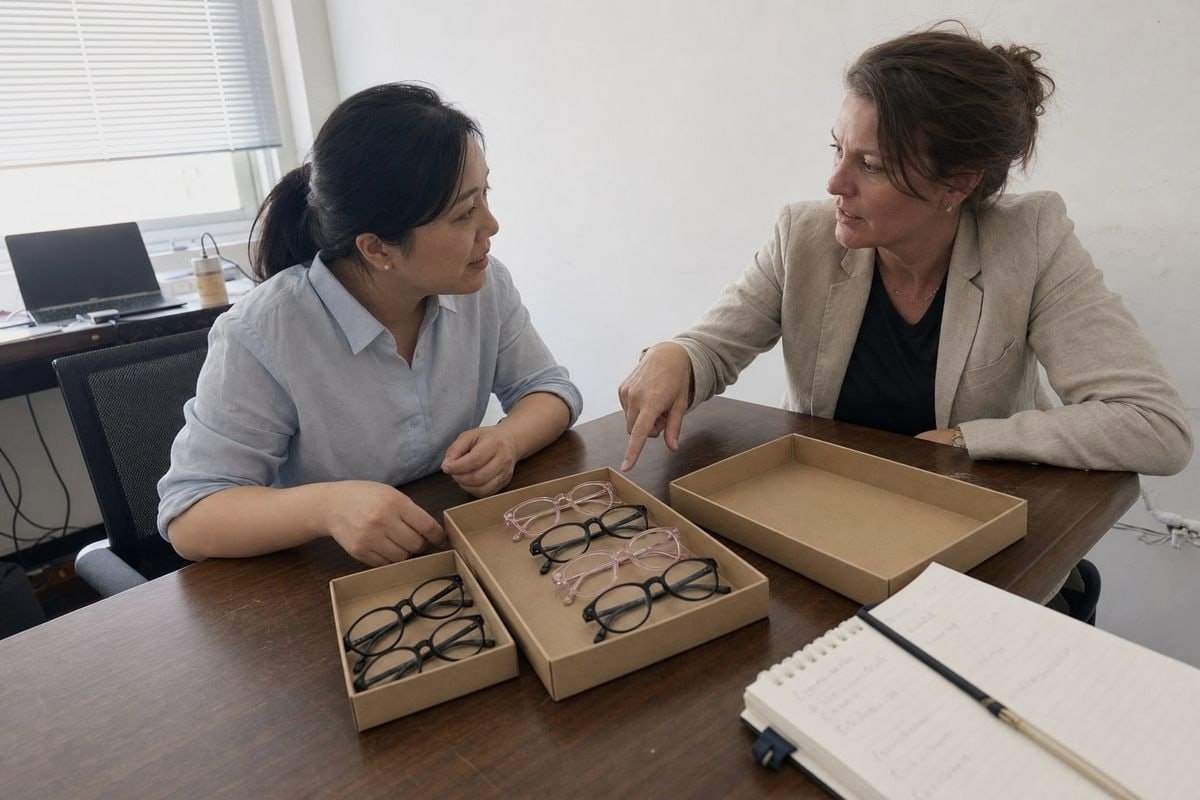
The core idea is simple. A rolling launch cadence is a planned sequence of small releases, not one large all-at-once buy. In the children's eyewear market, this matters more than almost anywhere else. Kids' fit windows are narrow, style demand shifts fast, and safety compliance adds cost to every SKU. If you spend everything up front, you have no money left to reorder the styles that actually sell.
Set wave budgets before choosing styles
I always tell buyers to fix the money first. Decide your total optical inventory budget for the season, then split it across waves. Here is the structure we recommend to new brands sourcing from our line:
| Wave | Budget share | 目的 | 通常の量 |
|---|---|---|---|
| Wave 1 — Pilot | ~30% | Test demand across 3–5 styles | 100–200 pieces total |
| Wave 2 — Expansion | ~40% | Add colors, sizes, secondary styles | Scaled by pilot sell-through |
| Wave 3 — Replenishment reserve | ~30% | Reorder proven winners fast | Held until data confirms demand |
A common objection: bigger single orders lower unit cost. That is true on paper. But in children's frames, the savings rarely outweigh the risk of dead stock in wrong sizes, unproven colors, or styles that parents skip. Demand forecasting 2 for a new kids collection is guesswork until real sell-through data arrives. The rolling model turns guesswork into a feedback loop, which is the whole point of modern product lifecycle management 3.
Keep your reserve untouched. When a style outperforms, the reserve funds a fast refill — often from ready stock — before your shelves go empty during back-to-school season.
What order should I introduce new kids optical frame styles to keep buyers engaged?
There is a trade-off we weigh with every collection plan: launch your boldest designs first for attention, or your safest core styles first for cash flow. In kids optical frames, core first almost always wins.
Introduce core everyday styles in versatile colors first, then release fashion colors and translucent or pastel variants in wave two, and finish with seasonal or trend-led designs. Sequence within each wave by age band so every fit segment sees something new.
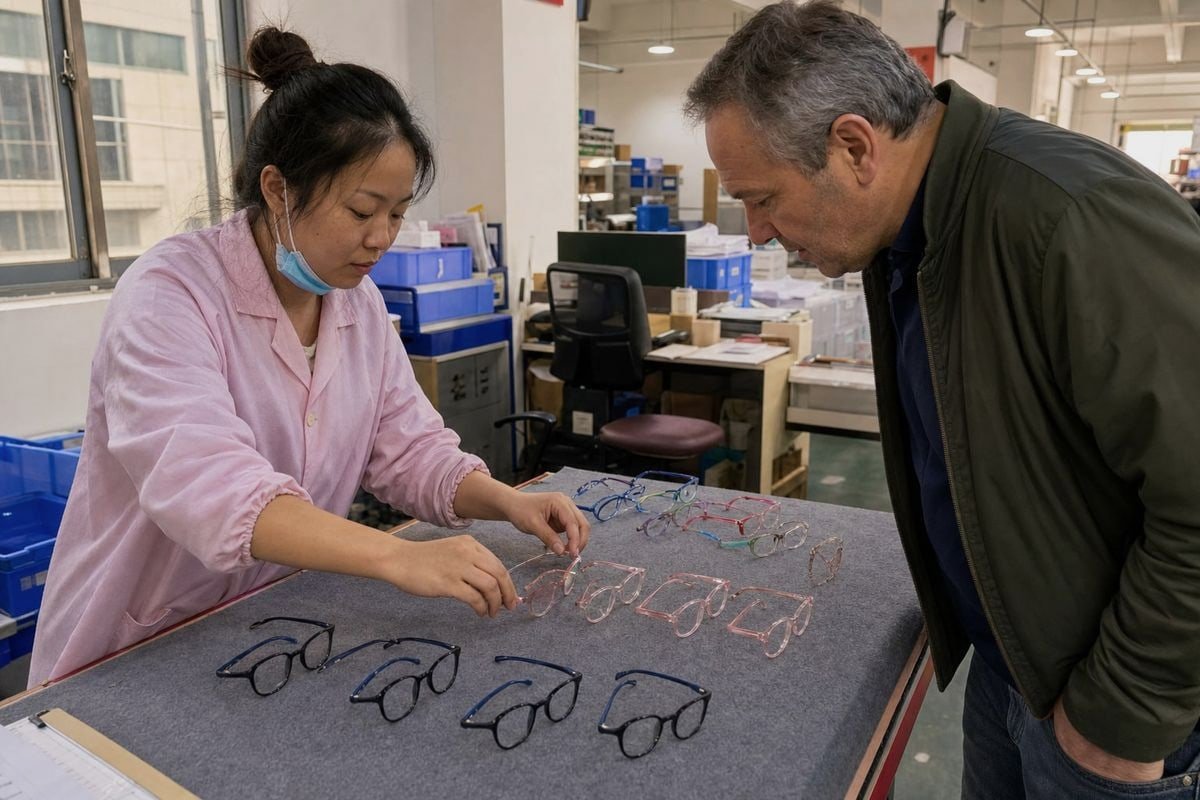
Style sequencing is a go-to-market strategy question, not just a merchandising one. Parents buy kids frames on fit, durability, and comfort first — style second. So your first wave should prove you can serve the basics: a rounded rectangular black frame with flexible temples for active school-age kids, a soft neutral for younger wearers, and one clear standout piece.
A practical three-wave style sequence
From our experience supplying brands in Europe and Japan, this order keeps retail buyers and end customers engaged without exhausting your assortment early:
- Wave 1 — Core sellers. Neutral, unisex, durable designs. Think glossy black fronts with two-tone flexible temples and secure cable ear hooks. These are the frames opticians reorder.
- Wave 2 — Color and personality. Translucent pastels, blush-pink acetate looks with a soft cat-eye shape, jelly finishes. Same proven shapes, new emotional appeal.
- Wave 3 — Trend and season. Limited colorways timed to back-to-school, holidays, or popular-culture moments. Scarcity here builds urgency.
Segment every wave by age band
Never treat kids frames as one size category. Each wave should touch each fit cluster, because a retailer serving toddlers and pre-teens needs newness in both:
| Age band | Approx. frame fit | Wave 1 role | Wave 2+ role |
|---|---|---|---|
| Toddler / preschool | Smallest widths, short temples | One core style | Add one color option |
| Early school age | Mid widths, flexible temples | Two core styles | Colors + one new shape |
| Older child / pre-teen | Near-teen sizing | One to two styles | Trend-led designs |
This age-segmented drip keeps your assortment feeling fresh across the whole children's eyewear market, and it gives you clean sell-through data per segment — which sharpens demand forecasting for the next wave.
How do I coordinate production lead times with a staggered launch schedule?
A lesson I learned the hard way: years ago, a European client planned a September launch but confirmed colors in July. Custom production plus shipping made the date impossible, and the whole wave slipped past back-to-school.
Back-plan every wave from its retail launch date. Subtract shipping time, quality inspection, production lead time, and sampling. Custom OEM waves need the longest runway; ready-stock replenishment needs the shortest. Lock decision dates for each wave into a shared calendar with your supplier.

Coordinating lead times is where rolling cadence either works or collapses. Even large public tenders for optical products phase deliveries across many weeks — staged milestones over months are normal in serious procurement. Private brands should borrow the same discipline: fixed decision gates, phased deliveries, and call-off style reorders placed as and when required.
Back-plan from the shelf date
Work backwards through the eyewear supply chain. A realistic planning skeleton looks like this:
| 子供用アイウェアの5段階QC計画 | Custom OEM wave | Ready-stock refill |
|---|---|---|
| Sampling and approval | 2–4 weeks | Not needed |
| Production | 4–8 weeks | Days to ~1 week |
| QC and compliance checks | ~1 week | Quick verification |
| Sea or air freight | 1–6 weeks | Same, or air for speed |
| Buffer | 1–2 weeks | 1週間 |
On our production line, we schedule capacity for repeat customers ahead of peak season, because everyone wants delivery before school terms start. If you wait until August to book September goods, you are competing with every other brand for the same machines and containers. Reserve capacity early, even if final colorways come later.
Build compliance gates into the calendar
Every wave should pass a compliance checkpoint before it ships — not just the first one. Children's product quality standards 4 demand repeated testing: impact resistance, restricted substances 5, UV400 verification for sun lenses, and correct age-grade labeling. We run these checks per batch in our 5S-managed workshop, and we encourage buyers to request documentation each wave. A compliance failure caught at the gate costs days; one caught at customs or on shelf costs the whole launch.
Good vendor management ties this together. Share your launch calendar with your factory, agree decision deadlines, and treat reorder windows as fixed appointments. Logistics optimization — consolidating waves into shared containers, or splitting a wave between sea and air — then becomes a planned choice instead of an emergency.
Can working with a factory offering 800+ existing styles help me launch new collections faster?
When we were developing our TPEE-temple frame range in Taizhou, we noticed something: buyers who selected from our existing style library launched months faster than those who insisted on fully custom tooling from day one.
Yes. Choosing from a library of 800+ proven styles removes mold development entirely, cutting months off launch timelines. You can pilot with existing shapes at low minimums, apply custom colors and logos, and reserve full custom tooling for proven winners in later waves.
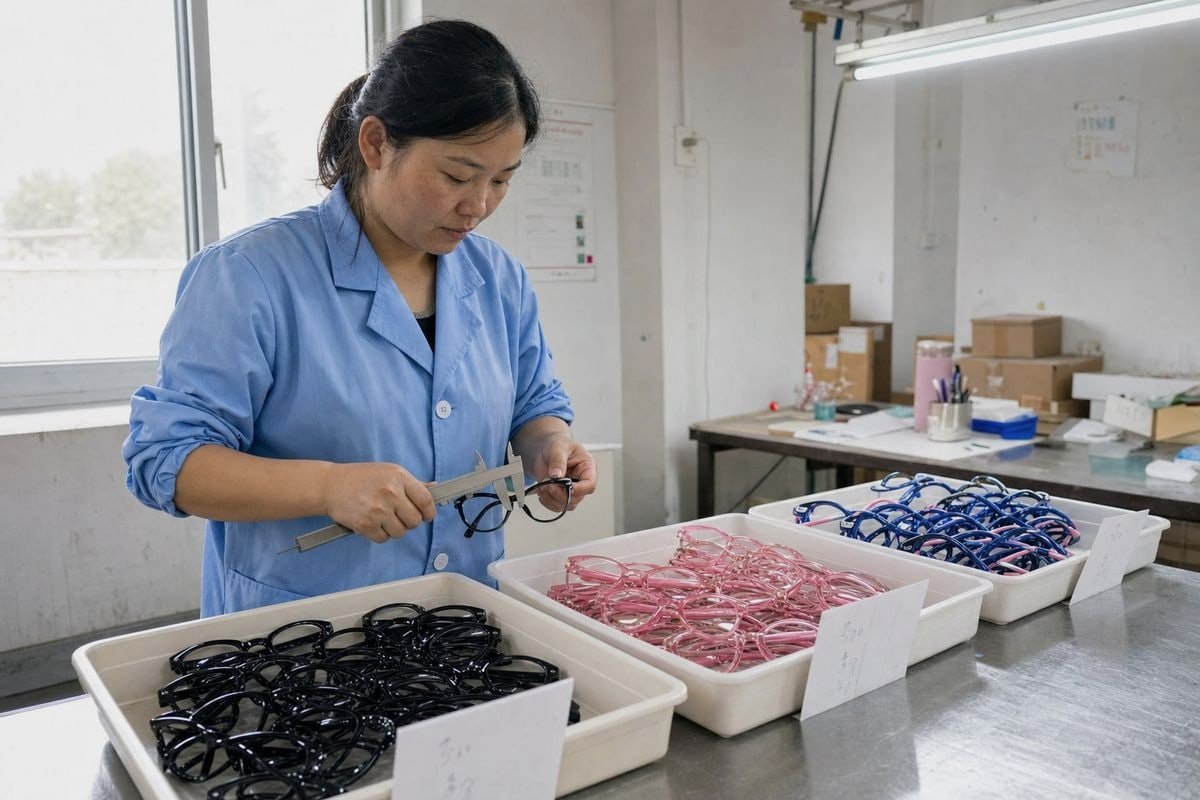
New molds are the slowest, most expensive part of eyewear development. Tooling takes weeks, requires higher minimums — custom OEM in kids frames commonly starts around 300–500 pieces per style — and locks capital into an unproven design. An existing-style library flips that equation.
How an existing library accelerates each wave
At our factory, we keep roughly 800 styles in TR90, TPEE, and flexible combinations, covering toddler through pre-teen fit bands. Here is how that maps onto a rolling cadence:
- Wave 1 speed. Pick pilot styles from existing molds. No tooling, no tooling risk, faster sampling. Your pilot ships in weeks, not months.
- Wave 2 differentiation. ODM customization — your colors, your logo on the temple, your lenses, your retail-ready packaging — makes an existing shape look and feel exclusive to your brand without new molds.
- Wave 3 investment. Once sell-through proves a shape works for your market, commission a fully custom design. Now the tooling cost sits on top of real demand data, not a guess.
Some buyers worry that existing styles feel less premium. In practice, end customers judge frame materials, comfort, finish, and packaging — not whether the mold was exclusive. A flexible TR90 front with soft TPEE temples, finished in your brand's colorway with professional packaging, reads as fully branded on shelf.
There is one more advantage that rarely gets mentioned: a deep style library supports optical inventory control. When a style sells out, a close sibling from the same library can fill the gap while replenishment runs, keeping your assortment full without emergency tooling. That continuity is what turns a one-time order into a durable product lifecycle management system.
結論
Rolling launch cadence turns risky bulk buying into a repeatable system: pilot small, expand what sells, replenish fast, and gate every wave with compliance. Plan waves with your factory, and launch with confidence.
脚注
1. Explains the UV400 standard for eye protection. ↩︎
2. Explains demand forecasting in supply chain operations. ↩︎
3. Defines the concept of product lifecycle management. ↩︎
4. Authoritative government source, directly addresses children’s products and their regulations. ↩︎
5. Details CPSC prohibition of phthalates in children’s products. ↩︎

 English
  Español de México
  Deutsch
  Français
  日本語
日本語  العربية
  Português do Brasil