How to Request ANSI Z80.3 UV & Lens Test Reports for Kids’ Sunglasses from China?
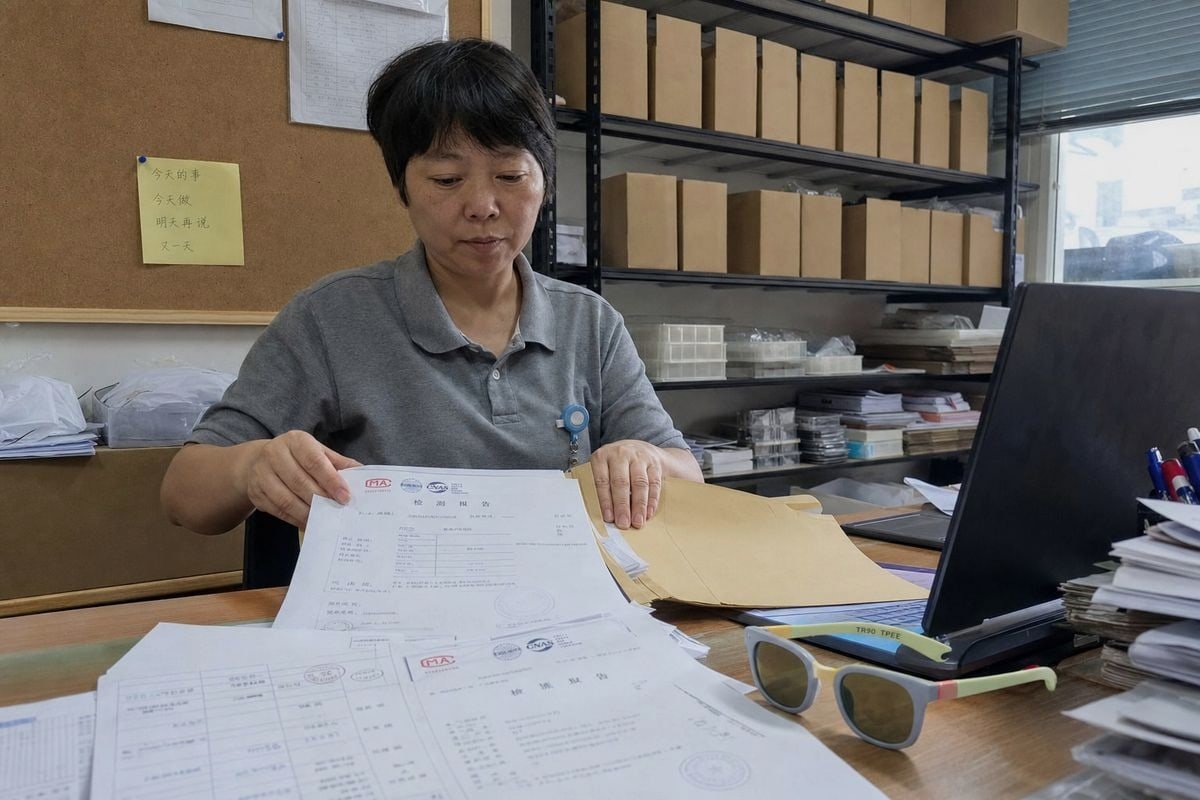
リクエスト ANSI Z80.3 1 UV and lens test reports sounds simple until a supplier sends you a one-page “Pass” certificate. On our production line in Taizhou, I have seen buyers accept exactly that — then face marketplace suspensions, customs holds, or worse, kids wearing lenses that were never actually measured. The fix is a [disciplined document-request process](https://okayeyewear.com/how-request-third-party-testing-reports-kids-sunglasses-suppliers/), and I will walk you through it.
To request ANSI Z80.3 UV and lens test reports, ask your China supplier for the full accredited-lab report tied to your exact SKU, showing measured UVA/UVB transmittance, luminous transmittance, the standard edition year, lab accreditation proof, and photos of the tested sample matching your production version.
That is the short answer. Below, I break down exactly which documents to demand, [how to spot fakes](https://okayeyewear.com/how-verify-authenticity-supplier-test-reports-sourcing-kids-sunglasses/), which labs to trust, and how to lock all of this into your purchase agreement.
What documents should I ask my China supplier to prove ANSI Z80.3 compliance?
A buyer from Australia once told me she had "the certificate" for a kids' style similar to ours — one laminated page, no data, no lab name. That conversation shaped how our factory now prepares compliance files for every export order.
Request the full ANSI Z80.3 lab report PDF from an accredited third-party lab, the lab's accreditation certificate, measured UVA/UVB and luminous transmittance data, drop-ball impact resistance results under 21 CFR 801.410, a Children's Product Certificate for CPSIA, and photos linking the tested sample to your SKU.
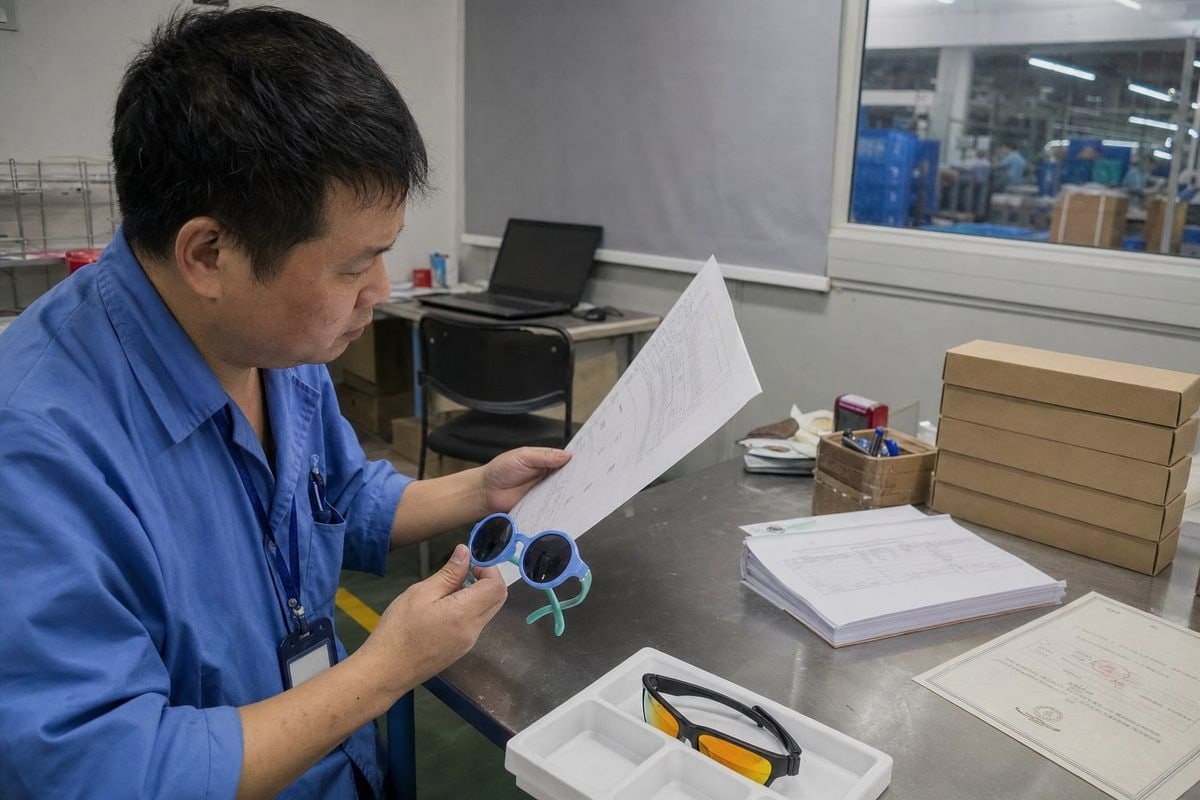
A generic "UV report" is not a compliance file. ANSI Z80.3 covers nonprescription sunglasses and fashion eyewear with plano lenses, and it addresses spectral transmittance, UV protection, traffic-signal recognition, labeling, and durability. A legitimate report reflects all of that scope. When we prepare documentation for our TR90 and TPEE kids' frames, the file always contains far more than a UV claim.
コア文書セット
Here is the full package I recommend you request, in writing, before paying any deposit:
| 文書 | 登録番号 | してきましたが、バイヤーが早期に適切な書類を求めることで、ほぼすべての下流の問題を回避できることを学びました。注文する前に要求することをお勧めします。 |
|---|---|---|
| Full ANSI Z80.3 test report (PDF) | Lens meets UV, transmittance, and optical requirements | Supplier only offers a summary page |
| 21 CFR 801.410 2 drop-ball test data | Impact resistance testing passed (mandatory for the US) | "We don't need that for sunglasses" |
| 子供向け製品証明書 (CPC) | CPSIA 3 safety standards met for lead and phthalates content | Supplier confuses CPC with the lab report |
| Lab accreditation certificate | The lab is a CNAS accredited laboratory 4 or ILAC-recognized | Only a factory-issued letter exists |
| Tested sample photos | The tested unit matches your production item | Photos show a different lens color or frame |
| 適合宣言書(DoC) | Links results to your specific shipment batch | Supplier refuses batch-level paperwork |
Why kids' sunglasses need more than ANSI Z80.3 alone
Here is a nuance many first-time importers miss. ANSI Z80.3 is not a children-only standard. It governs sunglasses generally. Because your product is a children's product, US law layers CPSIA safety standards on top — meaning lead and phthalates content testing and a CPC issued against those results. If your sunglasses have toy-like features, ASTM F963 5 toy safety requirements can also come into play. When buyers ask us about our flexible TPEE temples, I always explain that material safety documentation and optical documentation are two separate files, and you need both.
Also confirm the standard edition. ANSI published a 2025 revision updating UV attenuation claims, spectral transmittance requirements, frame finishes, and radiation resistance testing. A report citing an outdated edition may not support current marketing claims.
How do I verify that UV400 and lens test reports are accurate and not fabricated?
There is a trade-off I weigh constantly in export paperwork: speed versus verifiability. A fast, pretty certificate closes deals quickly. A verifiable report takes longer to produce. In fifteen years of making children's eyewear, I have learned the slower path is the only one that survives a customs query.
Verify a report by checking the lab's online verification portal using the unique report number, confirming the ANSI Z80.3 edition year, matching model numbers and sample photos to your SKU, and ensuring measured UVA/UVB transmittance values appear — not just an unsupported "UV400" statement.

Fabricated reports usually fail on details, not headlines. A forger will copy the "PASS" conclusion but rarely reproduces coherent measurement data. So your verification should focus on the numbers and the traceability trail.
5段階の検証プロセス
- Check the report number on the lab's official portal. SGS, Intertek, TÜV, and most major labs offer online report verification. Type the number in yourself; never rely on a screenshot the supplier sends.
- Confirm the lab, not the factory, issued the report. A factory-issued certificate is a self-declaration, not third-party lab testing. It carries little weight with customs or Amazon.
- Match the product identity. The report should show your model number, lens material, tint, coating, and polarization status. A report for a gray non-polarized lens does not cover an orange mirrored gradient lens — the coatings change the spectral behavior.
- Read the actual numbers. A credible report lists UVB transmittance and UVA transmittance as measured values — compliant kids' lenses often read at or near 0.00% — alongside luminous transmittance and signal-color transmittance data. If a lens claims better-than-baseline UV performance, the report should state the mean UV transmittance in the 315–380 nm region.
- Check the standard edition and test date. A 2016-dated report referencing a superseded edition is a warning sign, especially now that the 2025 revision is live.
What the numbers should look like
| パラメータ | What a real report shows | What a fake often shows |
|---|---|---|
| UVA transmittance | Measured %, e.g., 0.00–0.5% | Blank, or just "UV400 PASS" |
| UVB transmittance | Measured %, near zero | Missing entirely |
| Luminous transmittance | A specific %, tied to lens category | A generic category label with no value |
| サンプル写真 | Match your SKU and colorway | Different frame or no photos |
| レポート番号 | Verifiable on lab portal | Not found, or belongs to another product |
When our engineers develop a new lens tint, we retest rather than reuse an old report, because we know spectral results shift with coating and dye changes. Any supplier who tells you "the report covers all colors" is either careless or hiding something.
Which third-party labs can I trust to retest samples before placing a bulk order?
Last spring, a Japanese baby-brand buyer asked us to send golden samples of a round two-tone kids' style directly to an independent lab before signing the PO. We encouraged it. Confident factories welcome retesting; nervous ones negotiate against it.
Trust internationally accredited labs such as SGS, Intertek, TÜV Rheinland, TÜV SÜD, Bureau Veritas, and QIMA, or a CNAS accredited laboratory with ILAC recognition. Send sealed golden samples yourself, request ANSI Z80.3 plus drop-ball and CPSIA testing, and keep retained counter-samples.

Retesting before a bulk order is cheap insurance. A full optical and safety panel typically costs a few hundred US dollars — a fraction of the cost of one detained container. Here is how I advise buyers to structure it.
Choosing and briefing the lab
Pick a lab with an office in both China and your home market if possible. That simplifies sample logistics and dispute handling. When you brief the lab, specify the exact tests: ANSI Z80.3 spectral transmittance (UVA, UVB, luminous transmittance, traffic-signal recognition), 21 CFR 801.410 impact resistance testing, and CPSIA chemical testing for lead and phthalates content. If you also sell into Europe, add ISO 12312-1 6 compliance to the same submission — one sample set can serve both markets, but the reports are separate and not interchangeable.
Controlling the sample chain
The retest only means something if the sample chain is honest. I recommend this process:
- Receive pre-production samples from the factory in sealed, signed bags.
- Photograph and serial-number each sample yourself.
- Ship samples to the lab directly, not through the supplier.
- Keep one retained counter-sample for future comparison against mass production.
- During pre-shipment inspection, ask the inspector to run batch-specific spectrometer spot-checks so mass-produced lenses actually match the golden sample's UV400 performance.
One more check: search the FDA's 輸入アラート 86-07 7 list for your supplier's name. Factories previously flagged for impact-resistance failures face detention without physical examination, regardless of the paperwork attached to your shipment. Also confirm the factory maintains FDA medical device registration where required for eyewear entering the US, since sunglasses fall under FDA's device framework for impact resistance.
What should I include in my purchase agreement to guarantee test reports match every shipment?
The hardest lesson I have learned in this industry did not come from testing — it came from contracts. Early in our export history, a client's agreement said only "product must be UV400." When a dispute arose over lens sourcing, that vague line protected nobody. Our contracts, and the ones we sign with brand customers today, are far more specific.
Include clauses requiring an accredited ANSI Z80.3 report per SKU, a batch-linked Declaration of Conformity with each shipment, frozen material and lens specifications matching the tested golden sample, retesting rights at supplier cost on failure, and penalties for undisclosed material or coating changes.
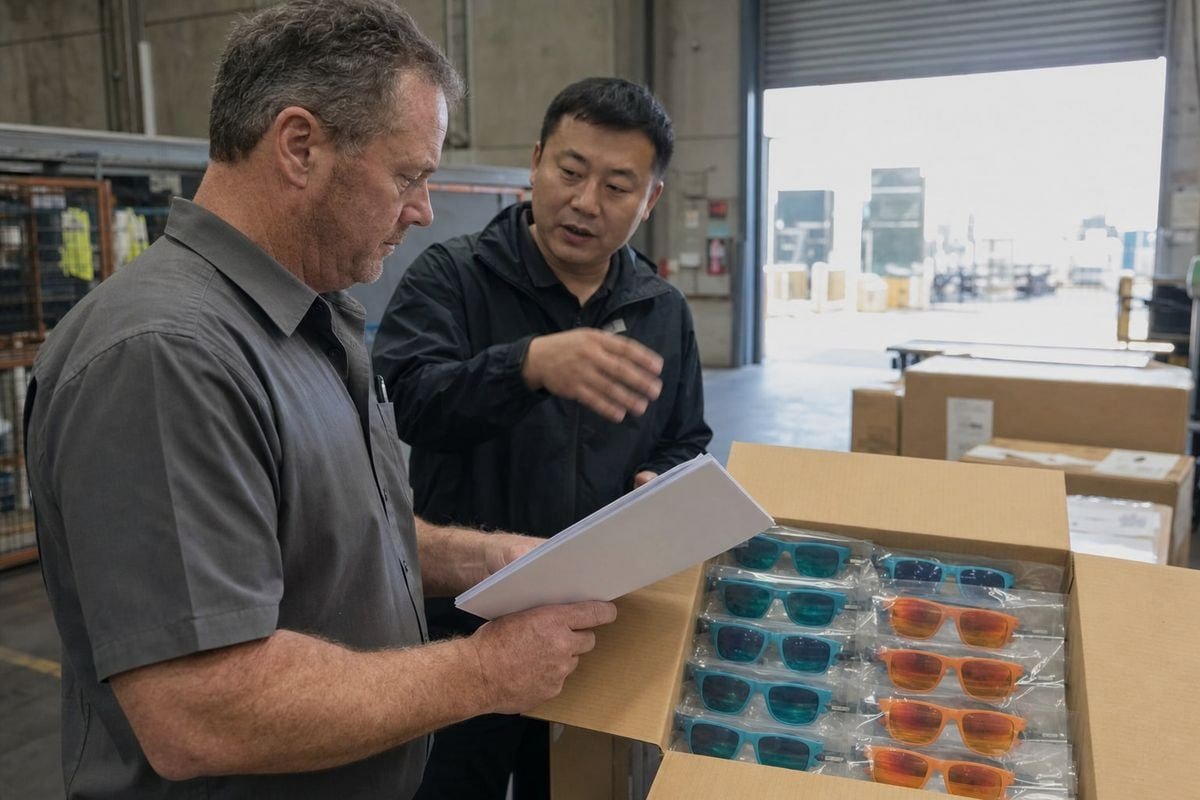
A test report proves one sample passed on one day. Your purchase agreement is what extends that proof across every carton you ever receive. The goal is simple: make the tested configuration the contractual configuration.
Clauses that actually protect you
| 条項 | 何を記載すべきか | なぜそれが重要なのか |
|---|---|---|
| Specification freeze | Lens material, tint, coating, polarization, and frame material match the tested sample; no substitution without written approval | Silent material swaps are the top cause of report-shipment mismatch |
| Batch DoC | Supplier issues a Declaration of Conformity referencing the lab report number for each shipped batch | Links paperwork to physical goods for customs |
| Retest rights | Buyer may retest any batch; if it fails, supplier pays testing, rework, and replacement | Shifts the cost of failure onto the party who controls production |
| Document delivery | Full compliance file delivered before balance payment, and within 48 hours of any marketplace or customs request | Prevents "we will send it later" delays |
| Standard-edition currency | Reports must reference the current ANSI Z80.3 edition and be renewed when the standard or the product changes | Protects you from the 2025 revision gap |
Build in traceability, not just paperwork
Forward-looking brands are going further. Several of our OEM customers now print QR codes on packaging or hangtags linking to the compliance file — an early form of digital product passport 8 thinking. It reassures retailers, speeds up marketplace audits, and builds trust with parents. If your supplier offers custom packaging, this is easy to add during the ODM stage, and it costs almost nothing compared to the credibility it buys.
Finally, define who owns the reports. If you pay for testing, state in the contract that the reports are issued in your company's name. That prevents the same paperwork from being resold to your competitors.
結論
Weak paperwork puts children's eyes and your brand at risk. Demand full ANSI Z80.3 reports, verify them, retest independently, and lock compliance into every contract. Careful buyers ship with confidence.
脚注
1. Background on sunglasses standards and optical requirements referenced throughout the article. ↩︎
2. FDA regulation governing impact resistance testing for sunglasses sold in the US. ↩︎
3. Official source explaining CPSIA safety requirements for children’s products including lead testing. ↩︎
4. Official accreditation body referenced for verifying legitimate third-party testing labs in China. ↩︎
5. Background on ASTM standards body relevant to toy safety requirements mentioned in the article. ↩︎
6. Official ISO standard page for sunglasses requirements relevant to European market compliance. ↩︎
7. FDA import alert database used to check suppliers flagged for compliance failures. ↩︎
8. Background concept on traceability technology mentioned as an emerging compliance practice. ↩︎

 English
  Español de México
  Deutsch
  Français
  日本語
日本語  العربية
  Português do Brasil