How to Provide After-Sales Parts Support for Discontinued Kids Sunglasses?
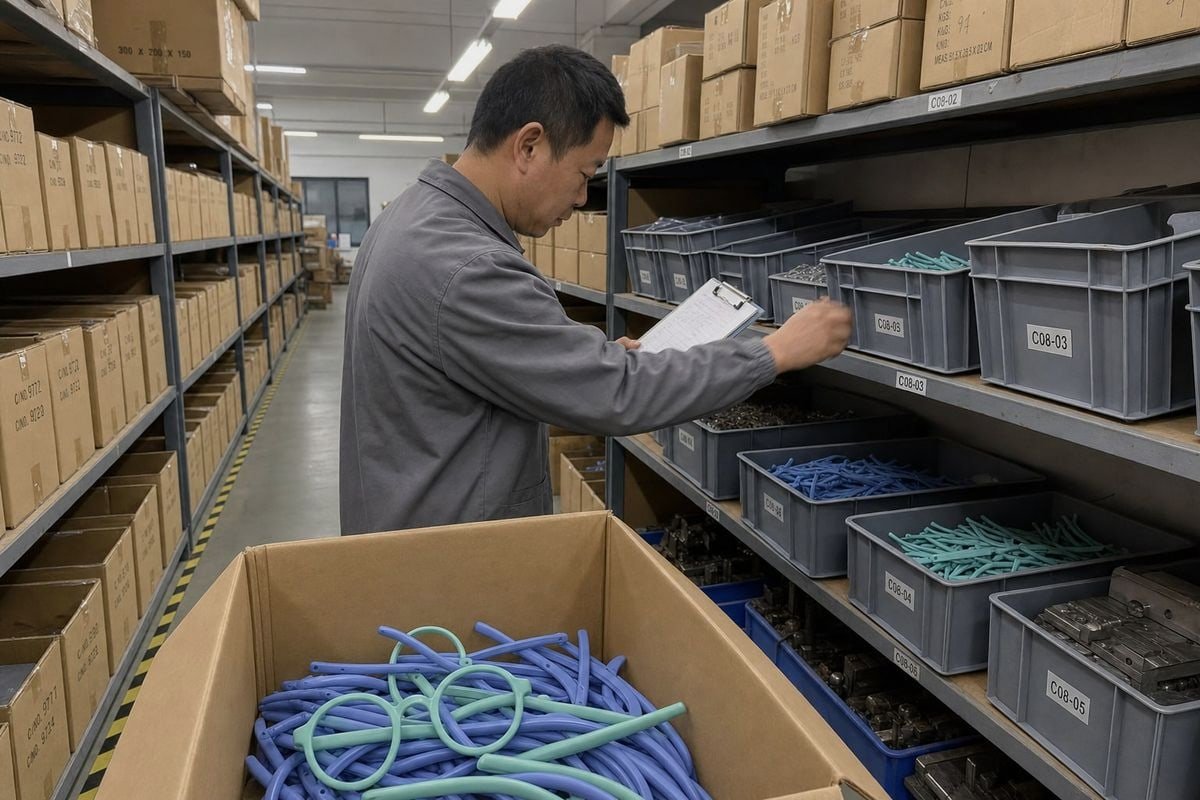
Last year, a buyer emailed our Taizhou factory in a panic: after-sales parts support for discontinued kids sunglasses had become her biggest customer complaint. Sound familiar?
To provide after-sales parts support for discontinued kids sunglasses, place a last-time buy of high-wear parts before discontinuation, keep a model-number parts database, ask your factory to retain molds or components, and offer equivalent replacement styles when original parts finally run out.
That sounds simple on paper. In practice, it requires planning before a style ever leaves your catalog. Let me walk you through how we help brands do it, step by step.
How can I secure spare parts for children's sunglasses styles my supplier no longer produces?
A German importer once asked us to revive a style we had retired two seasons earlier. His retail customers still wanted temples and nose pads. Our answer surprised him: yes, partially.
You can secure spare parts by contacting the original factory for residual stock, ordering a final production run of components, sourcing compatible parts from current models, or using third-party component sourcing for generic items like screws, hinges, and nose pads.
The first thing I tell buyers is this: discontinued does not mean gone. When we retire one of our roughly 800 styles, the components rarely vanish overnight. Leftover temples, lens blanks, and hinge sets 1 often sit in our warehouse for a year or more. So your first move should always be a direct request to the original supplier.
Here is the practical order of operations we recommend:
- Ask for residual component stock. Factories often hold overrun parts from the last production run.
- Request a final small-batch run. If the 射出成形金型 2s still exist, a factory can usually produce a minimum batch of temples or fronts.
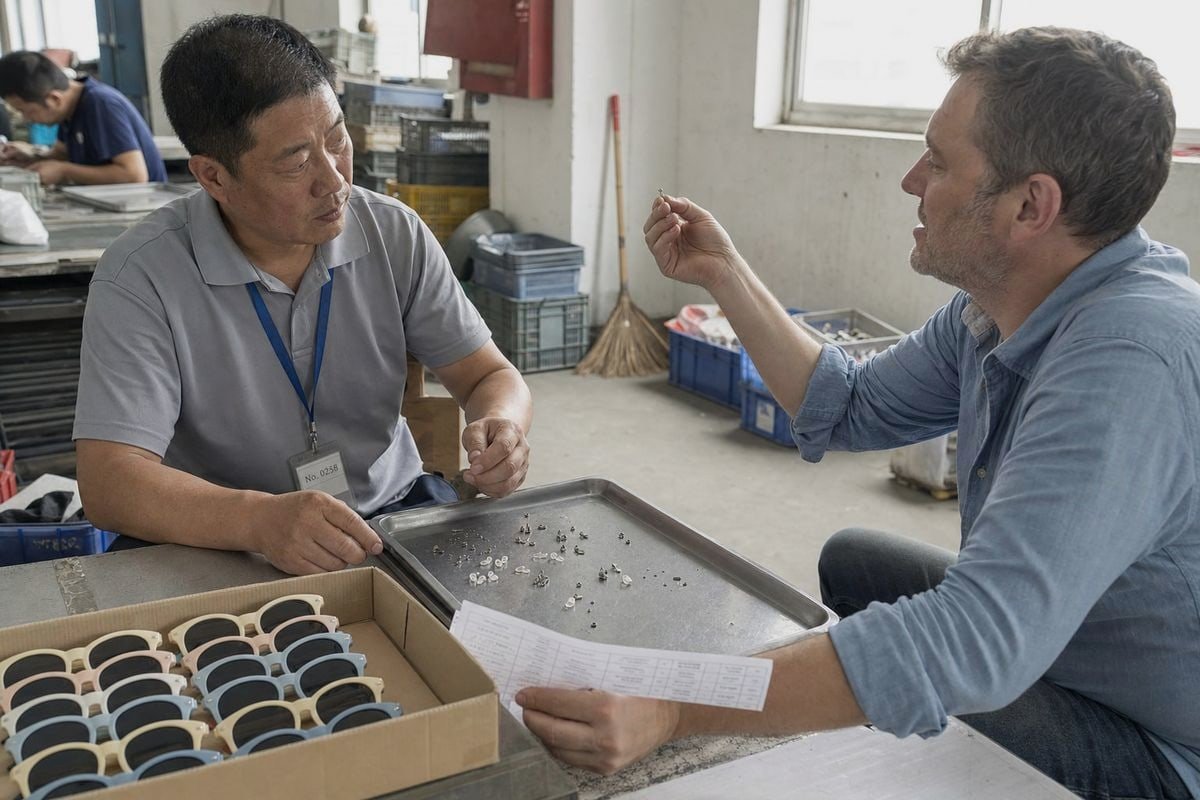
- Check frame component compatibility. Many kids styles share hinge screws, nose pad shapes, or lens curvatures with newer models. We map these overlaps for our clients.
- Use third-party component sourcing for generic hardware. Standard screws and silicone pads do not need the original mold at all.
- Harvest parts from returns. Defective or returned units become a small parts bank for reverse logistics teams.
What determines whether a part can still be supplied?
| Part type | Typical availability after discontinuation | 理由 |
|---|---|---|
| Screws and hinges | 3–5+ years | Generic, shared across many models |
| ノーズパッド | 2–4 years | Often standardized shapes |
| Temples/arms | 1–3 years | Mold-specific, but molds may be retained |
| Shield or shaped lenses | 6–18 months | Cutting dies and coatings are style-specific |
| Full fronts | Until stock runs out | Rarely reproduced after mold retirement |
The lesson from major eyewear brands applies here too. Julbo services out-of-warranty sunglasses 3 for five years after a product leaves its collection, subject to stock. Maui Jim keeps parts for discontinued styles "for quite some time" and then evaluates each returned item. These brands can only do that because they secured parts early. You can copy the same playbook at a smaller scale, and your factory relationship is the key that unlocks it.
What replacement parts should I stock before a kids' sunglasses style gets discontinued?
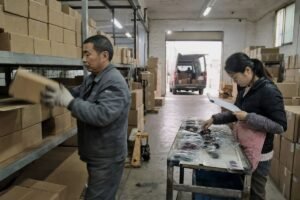
In our 5S-managed workshop, we track which components fail most in the field. The data is remarkably consistent: kids break the same three or four parts, in the same ways, every season.
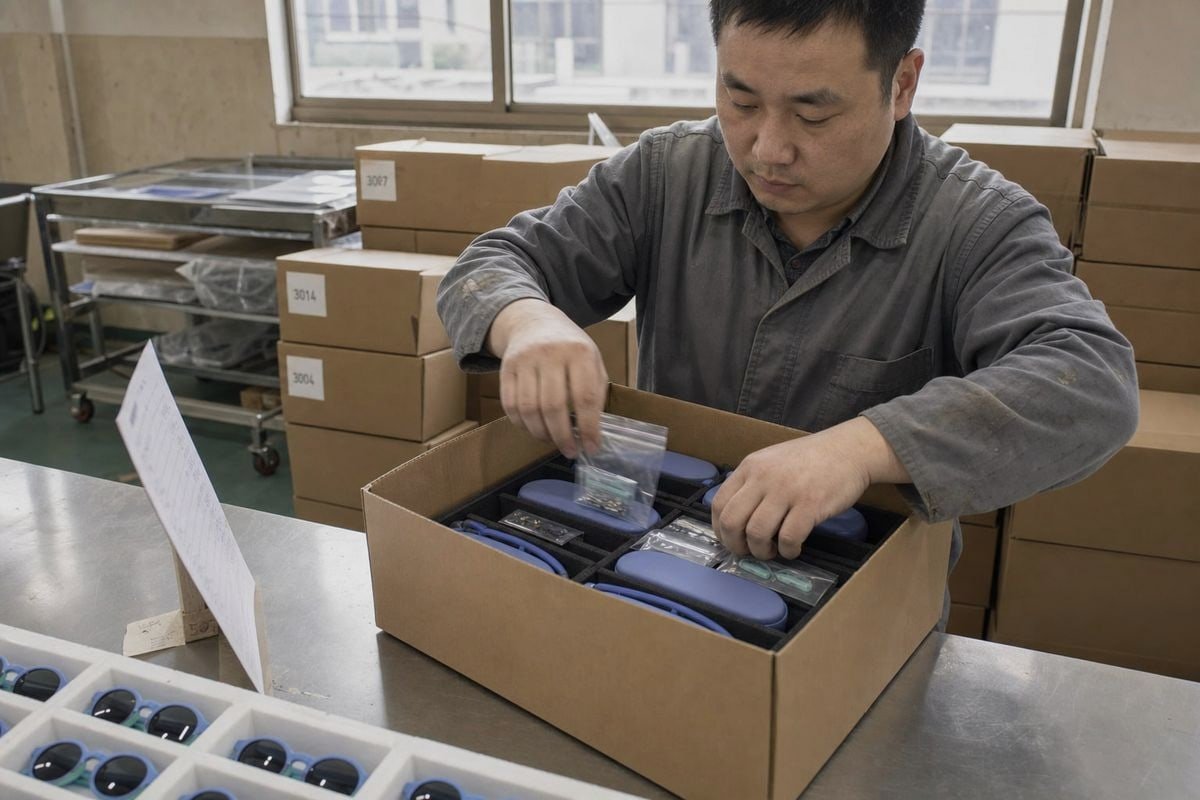
Before discontinuation, stock temples, hinge screws, nose pads, and replacement lenses at roughly 3–5% of lifetime unit sales. Prioritize high-wear items that break first on active children, and add spare cases and eyewear repair kits for low-cost customer goodwill.
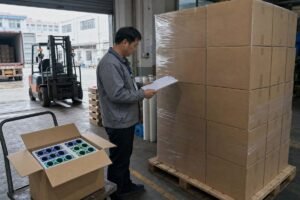
A last-time buy is the single most important decision in this whole process. Once we decommission a mold or reassign a production line 4, reproducing a style-specific part becomes expensive or impossible. So the question is not whether to stock parts, but how many and which ones.
From fifteen years of making flexible TPEE and TR90 kids' eyewear 5, here is what actually breaks. Children sit on their sunglasses. They twist temples past the hinge stop. They drop them lens-down on concrete. Flexible materials absorb most of this abuse, which is exactly why we build with them, but hinges and lenses still take the most damage.
Recommended last-time buy quantities
| コンポーネント | Failure frequency | Suggested stock (% of units sold) | 注記 |
|---|---|---|---|
| Replacement lenses | 高い | 3–5% | Scratches are the top complaint on shield styles |
| Temples (left and right) | 高い | 3–4% | Kids twist and snap them; stock both sides |
| Hinge screws | 中程度 | 5%+ | Tiny, cheap, easy to lose; overstock freely |
| ノーズパッド | 中程度 | 2–3% | Mostly relevant for optical-style frames |
| Cases and pouches | 低 | 1–2% | Cheap goodwill item for warranty fulfillment |
Two smart additions beyond individual parts
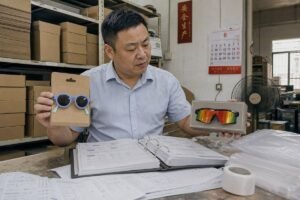
First, consider a universal eyewear repair kit: generic screws, a mini screwdriver, and spare pads that fit multiple discontinued models. One SKU covers many legacy styles. Second, if you sell sport shields like our wraparound gradient-lens models, stock extra lenses specifically. A mirrored orange-to-yellow shield lens is the most visible part of the product and the first thing parents notice when scratched.
One caveat I raise with every buyer: kids outgrow frames. Do not over-invest in parts for a small junior size. A child wearing that frame today may need the next size up in eighteen months. Stock lean for small sizes and heavier for the sizes that span wider age ranges. This is basic product lifecycle management, applied to a category where the end user literally grows out of the product.
Can I get a factory to keep molds or components available for long-term after-sales support?
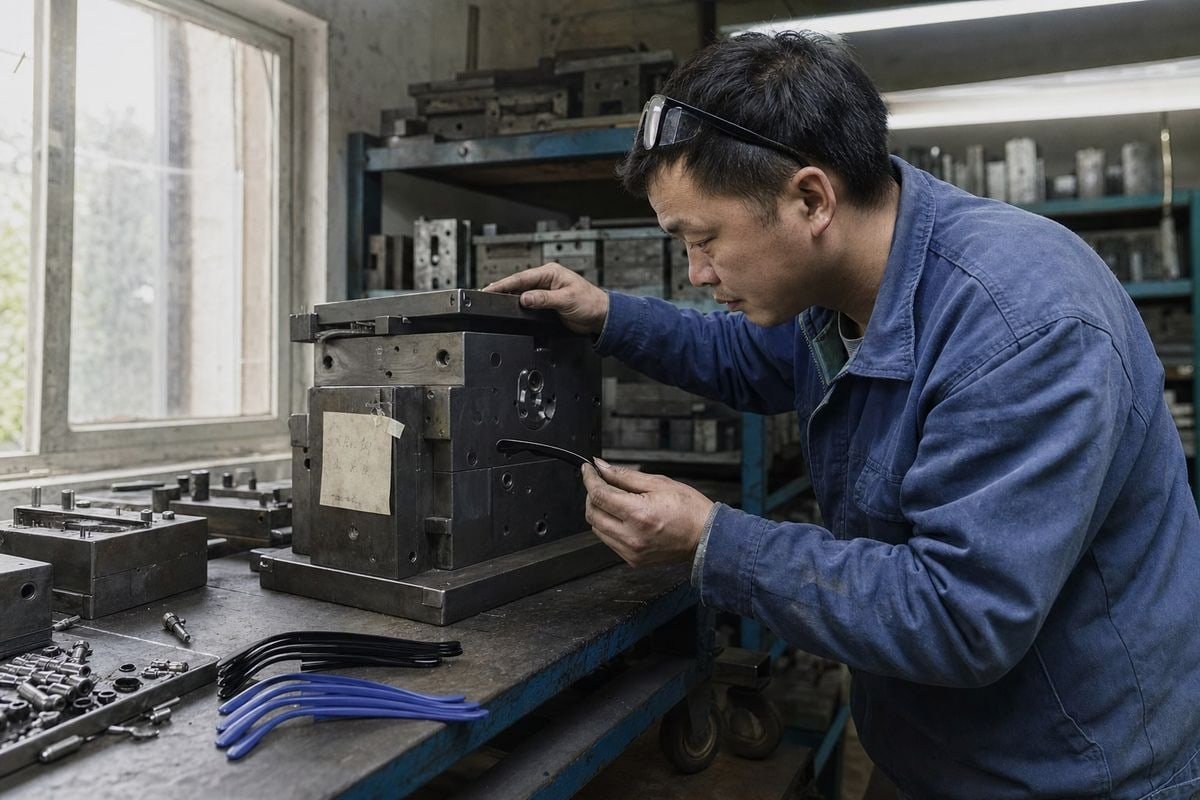
Every autumn, we sit down and decide which of our injection molds to maintain, store, or retire. Mold retention is a real cost to us, so we treat it as a partnership conversation, not a default service.
Yes, most factories will retain molds and components for long-term after-sales support if you agree on terms upfront: a mold storage period, minimum reorder quantities for small part runs, and sometimes a modest retention fee or annual purchase commitment.
Here is the honest factory perspective. A steel injection mold takes space, needs rust prevention, and occupies a slot in our storage system. If a buyer disappears for three years and then asks for 200 temples, the setup cost of mounting that mold may exceed the order value. So the buyers who get great legacy product support are the ones who negotiate it before the style ships, not after it breaks.
What to put in your agreement
- Mold retention period. Ask for a written commitment, typically 2–5 years after the last production order. We keep molds for active partners as standard practice.
- Minimum run quantities for parts. Agree on a realistic MOQ for component-only orders. Small runs of temples or fronts are feasible; single-piece production is not.
- Component reservation. Ask the factory to set aside overrun parts from the final production batch instead of scrapping them.
- Notification before mold destruction. A simple clause: the factory must offer you a last-time buy before any mold is retired.
- Ownership clarity. If you paid for a custom mold in an ODM project, confirm in writing that it is yours and cannot be retired without your approval.
There is also a newer option worth discussing: 3D printed spare parts. For non-optical components like temple tips or hinge covers, additive manufacturing 6 can provide small quantities without any mold at all. The surface finish and flexibility differ from injection-molded TPEE 7, so we do not recommend it for load-bearing hinges on children's frames, but it is a genuine fallback for cosmetic parts. Some buyers worry this compromises safety; that is exactly why the original factory, which knows the material specs, should manage it rather than a random print shop.
A modular design philosophy helps even more. When we develop new styles, we deliberately reuse hinge geometries and screw sizes across generations. That backward compatibility means a current-production temple can often repair a frame we stopped making two years ago.
How do I choose a manufacturer that reliably supports discontinued styles with spare parts?
A procurement manager from Australia once told me she switched suppliers not over price or quality, but because her old factory ghosted her when she asked for spare hinge screws. That conversation shaped how we structure our own after-sales promises.
Choose a manufacturer with a documented parts policy, model-number traceability, mold retention terms in writing, a large existing style catalog for equivalent substitutions, and responsive communication. Test them by asking how they would supply parts for a style retired two years ago.
The eyewear industry gives you a clear benchmark. Luxottica backs products with a 24-month warranty 8 and runs model-number parts lookup. Costa charges a flat professional repair fee plus parts, and offers an equivalent style when inventory runs out. Ray-Ban repairs out-of-warranty frames for a processing fee. These systems all share one trait: they were designed in advance. Your manufacturer should be able to plug into that same logic at B2B scale.
Supplier evaluation checklist
| Criterion | What to ask | Green flag | 赤信号 |
|---|---|---|---|
| Parts policy | "Do you sell components separately?" | Written policy with MOQs | "We only sell complete units" |
| Traceability | "Can you identify parts by model number?" | Model codes molded into temples | No consistent SKU system |
| Mold retention | "How long do you keep molds?" | 2–5 years, stated in writing | Vague or verbal-only answers |
| Catalog depth | "What equivalent styles exist?" | Hundreds of in-stock styles | Only made-to-order production |
| コミュニケーション | Send a test parts inquiry | Reply within 2 working days | Silence or deflection |
| Factory status | "Are you a factory or trader?" | Direct workshop access, QC records | No visibility into production |
Why catalog depth matters more than people expect
This is the point buyers underestimate. When original parts are truly exhausted, the industry-standard fallback is an equivalent replacement, exactly what Costa and Julbo do. A factory with a deep existing catalog, like our library of around 800 styles, can nearly always offer a close substitute: same size range, same flexible TPEE or TR90 construction, similar shape. That fallback protects your customer retention strategies when repair is no longer possible. A parent who receives a fast, fair replacement offer stays with your brand; a parent who receives a dead-end email does not.
Also weigh the repair-versus-replace tension honestly. Some argue small kids' frames never justify long-tail parts logistics, since children outgrow them anyway. There is truth in that for the smallest sizes. But a hybrid model resolves the objection: stock cheap high-wear parts for repairability, and lean on equivalent-style substitution for everything else. You get the sustainability and trust benefits of repair without warehouses full of dead inventory.
Finally, verify how the supplier supports your own customer-facing workflow: photo-based defect evaluation, proof-of-purchase rules, and clear escalation. If your factory can answer a defect photo inquiry with a same-week parts quote, your end customers will feel it.
結論
Discontinued should never mean unsupported. Plan a last-time buy, secure mold retention in writing, keep parts traceable, and choose a factory partner who treats legacy support as part of the product.
脚注
1. Technical information regarding hinge mechanisms and their importance in mechanical assemblies. ↩︎
2. Overview of the injection molding process used to create plastic eyewear components. ↩︎
3. Official warranty and repair policy from a leading manufacturer of performance sunglasses. ↩︎
4. Authoritative Wikipedia entry for production line manufacturing concepts. ↩︎
5. Technical details on TR90, a high-quality thermoplastic used in durable eyewear manufacturing. ↩︎
6. Government resource explaining 3D printing technologies and their industrial applications. ↩︎
7. Explains the properties of TPEE, a common material for flexible children’s eyewear frames. ↩︎
8. Corporate overview of the world’s largest eyewear company and its brand portfolio. ↩︎
 English
  Español de México
  Deutsch
  Français
  日本語
日本語  العربية
  Português do Brasil