How to Lock in a Fixed Yearly Price for Kids Optical Frames Despite Exchange Rate Fluctuations?

Locking a fixed yearly price for kids optical frames feels impossible when currencies swing weekly. Our Taizhou factory hears this worry from buyers in twenty-plus countries, and margins genuinely suffer.
To lock in a fixed yearly price for kids optical frames, combine a 12-month fixed-price supplier contract with an FX hedge such as a forward contract. Separate frame pricing from currency risk, agree the invoicing currency upfront, and write price protection clauses into the agreement.
That answer sounds simple, but each piece needs unpacking. Below, I walk through pricing structures, realistic lock-in periods, currency choice, and the exact contract terms to request.
What Pricing Structures Can Protect My Margins from Currency Volatility?
A distributor in Australia once asked me why her landed cost jumped 8% mid-season when our factory price had not changed at all. The answer was pure exchange-rate movement, nothing else.
Four structures protect margins: a fixed-price annual supplier contract, a forward contract that locks the exchange rate, a landed cost buffer of 3–5% built into retail pricing, and blanket purchase orders that fix both volume and unit price for twelve months.
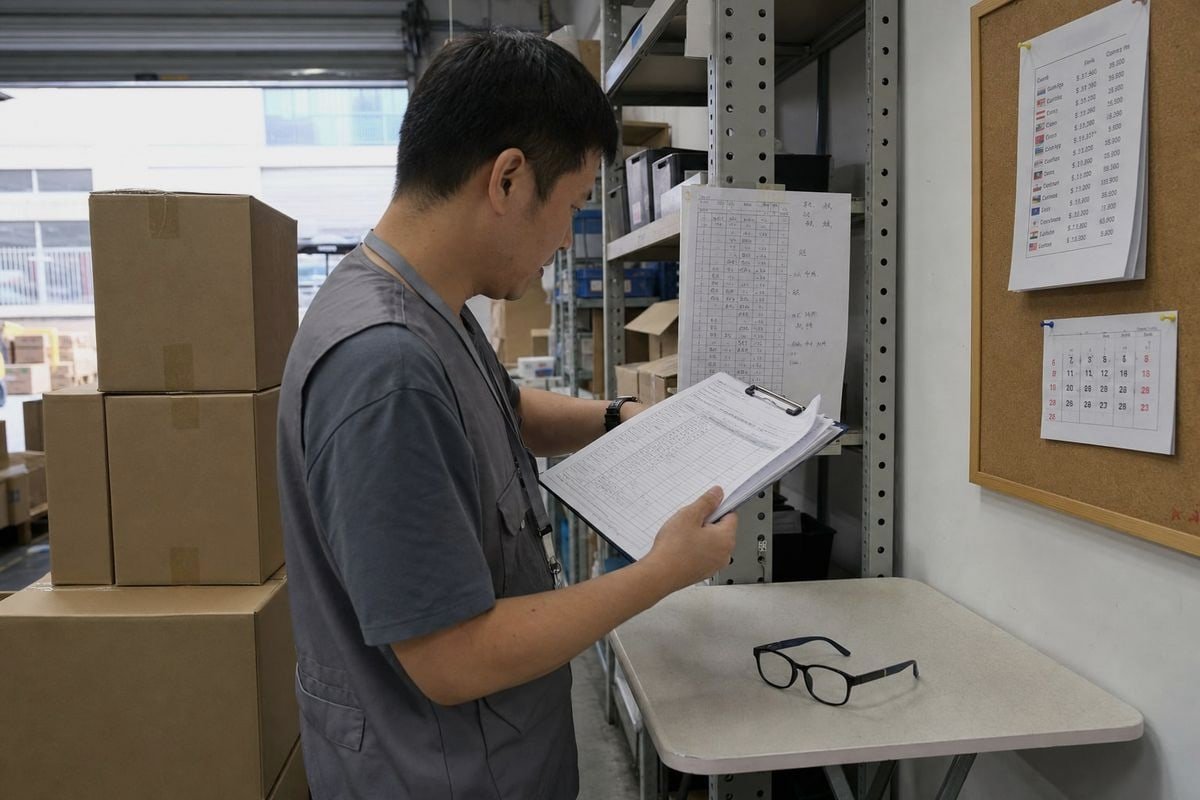
The first thing I tell buyers is this: your retail price and your supplier's exchange rate are two different problems. You can fix one without fixing the other. Smart wholesale eyewear procurement treats them separately and protects each with its own tool.
The four structures compared
| Structure | How it works | Who carries the FX risk | に最適 |
|---|---|---|---|
| Fixed-price annual contract | Supplier guarantees one unit price for 12 months | Mostly the supplier | Buyers with steady demand |
| Forward contract 1 | Bank or FX provider locks today's rate for future payments | Neither — the rate is fixed | Buyers paying in USD or RMB |
| Landed cost buffer | Add 3–5% contingency margin to retail price | The buyer, softened by the buffer | Small importers, first orders |
| Blanket purchase order 2 | One PO covers the year, released in scheduled batches | Shared, defined in the PO | Chains and larger distributors |
In our experience, the strongest protection comes from stacking two of these. A buyer signs a blanket purchase order with us at a fixed unit price 3, then hedges the payment currency with a forward contract on their side. Their landed cost analysis then becomes a stable spreadsheet instead of a moving target.
There is a real objection here. Some buyers say they should simply hedge everything with forwards and skip the contract work. The problem is commitment. If your demand forecast drops, you must still settle the forward contract. That is why I push buyers toward contract discipline first, hedging second. The contract fixes the frame price. The hedge fixes the currency. Together they give you a true fixed yearly price for kids optical frames.
One more layer often gets ignored: import duty fluctuations. Tariff changes can erase a currency hedge overnight. Your buffer margin should cover duty risk too, not just FX risk.
How Long Can I Realistically Lock in a Fixed Price with My Manufacturer?
Every autumn, our sales team sits down with returning buyers to set next year's pricing. Fifteen years of doing this has taught us exactly where a price lock holds and where it breaks.
Most manufacturers will hold a fixed unit price for 6 to 12 months when the buyer commits to a defined annual volume. Locks beyond 12 months are rare because material costs, labor, and import duty fluctuations become too unpredictable for either side to absorb safely.
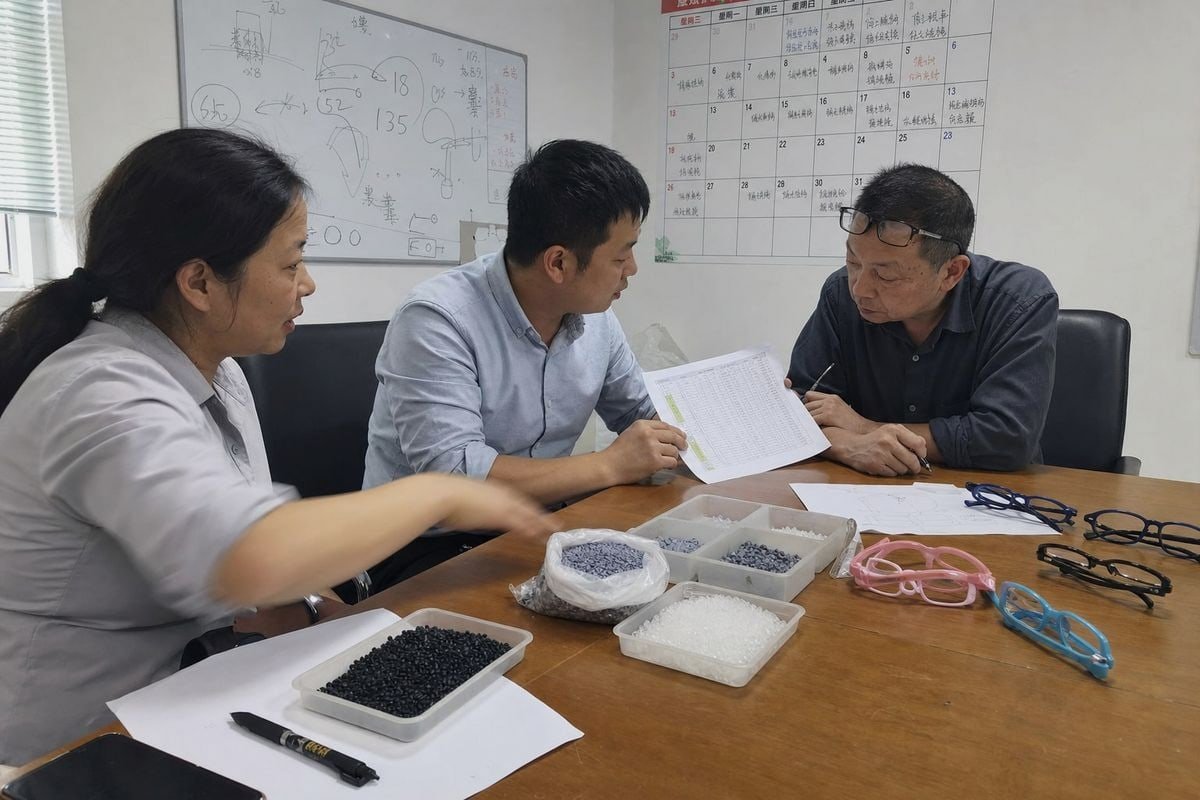
Let me be honest about what happens inside a factory when we quote a fixed annual price. We are betting on TR90 and TPEE resin costs, labor rates, and packaging costs staying within a band. We can hold that bet for a year. Beyond that, we would either pad the quote heavily or expose ourselves to losses. Neither outcome helps you.
What makes a longer lock possible
Three factors stretch the realistic lock-in window:
- Committed volume. A blanket purchase order for the full year gives us production planning certainty 4. In return, we hold the price and often add annual volume discounts.
- Existing tooling. Buyers who select from our roughly 800 existing styles avoid mold amortization debates. A price on a proven style is far easier to freeze than a price on a brand-new custom frame.
- Scheduled releases. If shipments are spread across four quarterly releases, we can lock material purchasing on our side too. That is supply chain risk management working in both directions.
Typical lock-in windows by commitment level
| Buyer commitment | Realistic price lock | 注記 |
|---|---|---|
| Spot orders, no forecast | Per-order quote only | Price valid 30–60 days |
| Annual forecast, no PO | 6 months | Reviewed at mid-year |
| Blanket PO, scheduled releases | 12 months | Most common for optical chains |
| Multi-year partnership | 12 months with renewal clause | Re-priced annually with a cap |
One caution from experience: a manufacturer who promises a 24-month fixed price with no volume commitment is usually pricing in a huge cushion, or planning to quietly cut material quality later. For children's eyewear, where flexibility and safety depend on genuine TPEE and TR90 material 5, that second scenario is dangerous. A 12-month lock with an honest renewal mechanism protects your margin and your product quality at the same time.
Should I Negotiate Prices in USD or My Local Currency to Reduce Risk?
The trade-off comes up in nearly every contract negotiation we run: a Japanese buyer wants yen invoicing, we quote in USD, and someone has to own the gap in between.
Negotiate in USD if you can hedge it cheaply with forward contracts, because USD quotes from Asian factories carry no hidden currency markup. Negotiate in your local currency only if the supplier's conversion premium is smaller than your own hedging cost.

Here is the mechanic most buyers miss. Currency risk never disappears. It only moves. If you demand invoices in Australian dollars or euros, our factory then carries the exposure between your payment and our RMB costs. We must price that risk into the quote. You pay for the hedge either way — the only question is who hedges more efficiently.
A simple decision framework
Ask yourself three questions:
- Can I access forward contracts easily? If your bank or an FX platform offers forwards with a modest deposit — commonly cited around 5–10% — hedging USD yourself is usually cheaper than paying a supplier's built-in conversion buffer.
- How stable is my currency against USD? Buyers holding euros or yen face different volatility 6 than buyers holding emerging-market currencies. Higher volatility strengthens the case for local-currency invoicing, even at a premium.
- How predictable is my order schedule? Forwards need known payment dates. If your inventory stocking programs release orders on fixed quarterly dates, forwards fit perfectly. If your ordering is erratic, a supplier-side fixed local-currency price may serve you better despite the markup.
| シナリオ | Better invoicing currency | 理由 |
|---|---|---|
| Buyer has FX hedging access, predictable POs | USD | Cleanest factory price plus cheap forward cover |
| Buyer is small, no hedging tools | Local currency | Supplier premium beats unmanaged exposure |
| Highly volatile local currency | Local currency, if supplier agrees | Transfers extreme risk to the party better able to manage it |
| Mixed multi-country retail operation | USD with regional forwards | One hedging program covers all markets |
From our side of the table, we respect buyers who raise this openly. When a buyer says they will handle currency hedging strategies 7 themselves and asks for our sharpest USD price, we know we are dealing with a professional operation. That confidence tends to improve every other term in the negotiation too.
What Terms Should I Include in My Contract to Guarantee Price Stability?
A lesson I learned early in our export business: the contracts that survive currency shocks are the ones that named the shock before it happened. Vague agreements collapse; specific ones hold.
Include a fixed unit price valid for 12 months, the invoicing currency, a committed annual volume with release schedule, a price protection clause capping any adjustment, defined payment timing, and a renegotiation trigger tied to a published exchange-rate threshold.
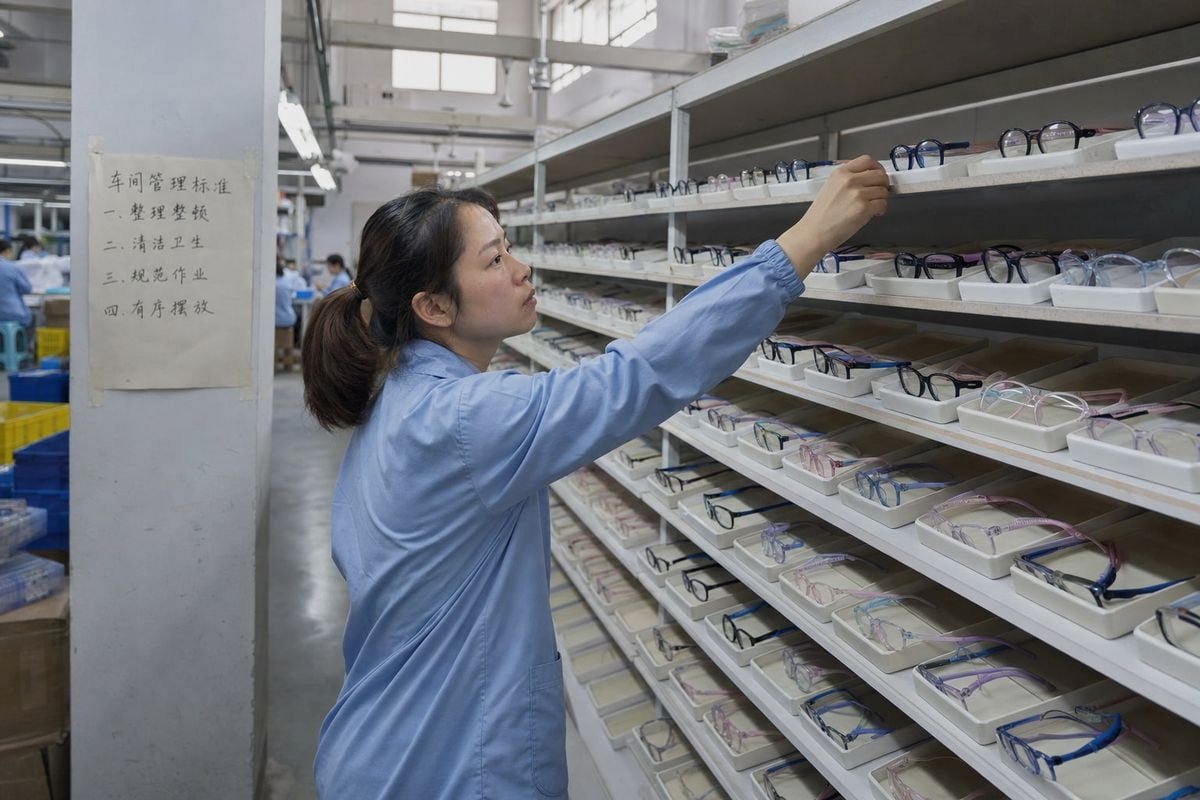
Contract design is where FX protection actually starts — before any bank product is involved. When our team drafts an annual supply agreement with a distributor or optical company, we work through a specific checklist. I will share it here because it saves both sides from painful mid-year conversations.
The essential clause checklist
- Fixed unit price and validity period. State the price per SKU and the exact start and end dates. Reference the product spec — frame material, temple construction, lens type, packaging — so the price cannot be "held" by downgrading components.
- Invoicing currency and payment terms. Name the currency, the deposit percentage, the balance timing, and the payment method. Ambiguity here is where transaction-day surprises live.
- Volume commitment and release schedule. A blanket purchase order with quarterly releases lets us lock our own raw material buying. Your price stability depends on our cost stability.
- Price protection clause with a corridor. A fair structure: the price stays fixed unless the reference exchange rate moves beyond an agreed band — say plus or minus a defined percentage — at which point both parties renegotiate only the affected portion. This caps your worst case without forcing the supplier into loss-making territory.
- Adjustment cap. Even if renegotiation triggers, cap any single adjustment. This makes your annual budget defensible.
- Quality lock. For children's frames, specify that material grades and safety standards cannot change during the term. Price stability achieved through silent material substitution is not stability at all.
- Review meeting date. Schedule a formal review at month nine to set next year's terms early, avoiding a rushed renewal.
Some buyers ask why we accept price protection clauses that limit our own upside. The answer is positioning. We would rather be the reliable long-term partner whose landed cost analysis a buyer can trust for twelve months than the cheapest quote that gets re-shopped every quarter. Predictability is a product feature — for parents buying frames, and for the brands supplying them.
結論
Currency swings punish unprepared buyers first. Pair a 12-month fixed-price contract with forward-contract hedging, clear invoicing terms, and protective clauses — and your kids frame pricing stays predictable all year.
脚注
1. Authoritative Wikipedia entry defining forward contracts for financial risk management. ↩︎
2. Reliable Wikipedia definition of blanket orders in procurement and supply chain management. ↩︎
3. Wikipedia entry defining contract types where the payment amount does not depend on resources used or time spent. ↩︎
4. Overview of how production planning stabilizes supply chains and manufacturing costs over time. ↩︎
5. Comprehensive overview of thermoplastic elastomers used in manufacturing durable eyewear. ↩︎
6. Financial definition of price fluctuations and their impact on international trade and currency risk. ↩︎
7. Authoritative source explaining methods to reduce foreign exchange risk in international trade. ↩︎


 English
  Español de México
  Deutsch
  Français
  日本語
日本語  العربية
  Português do Brasil