How to Handle Cost Changes from Raw Material Prices and Exchange Rates When Sourcing Kids’ Optical Frames?

Cost changes from raw material prices and exchange rates hit our kids’ optical frame buyers hard last year. One price notice plus one currency swing can erase an entire season’s margin overnight.
Handle cost changes from raw material prices and exchange rates by tracking full landed cost, requesting itemized unit cost breakdowns, negotiating price adjustment clauses tied to a material price index, splitting FX exposure with your factory, and pre-qualifying alternative materials like TR90 and TPEE before shortages hit.
None of this requires predicting markets. It requires building a system that absorbs volatility. Below, I break down each lever you can pull, starting with raw material spikes.
How can I protect my margins when raw material prices for TR90 or TPEE suddenly rise?
Last spring, our TPEE 1 pellet supplier raised prices twice in one quarter. Our production team in Taizhou had to rework quotes for a dozen brand clients within weeks.
Protect your margins by requesting a Bill-of-Materials breakdown to isolate the true cost driver, pre-qualifying substitute materials, batching orders before announced increases, and negotiating escalation clauses that only trigger when a published material price index moves beyond an agreed threshold.
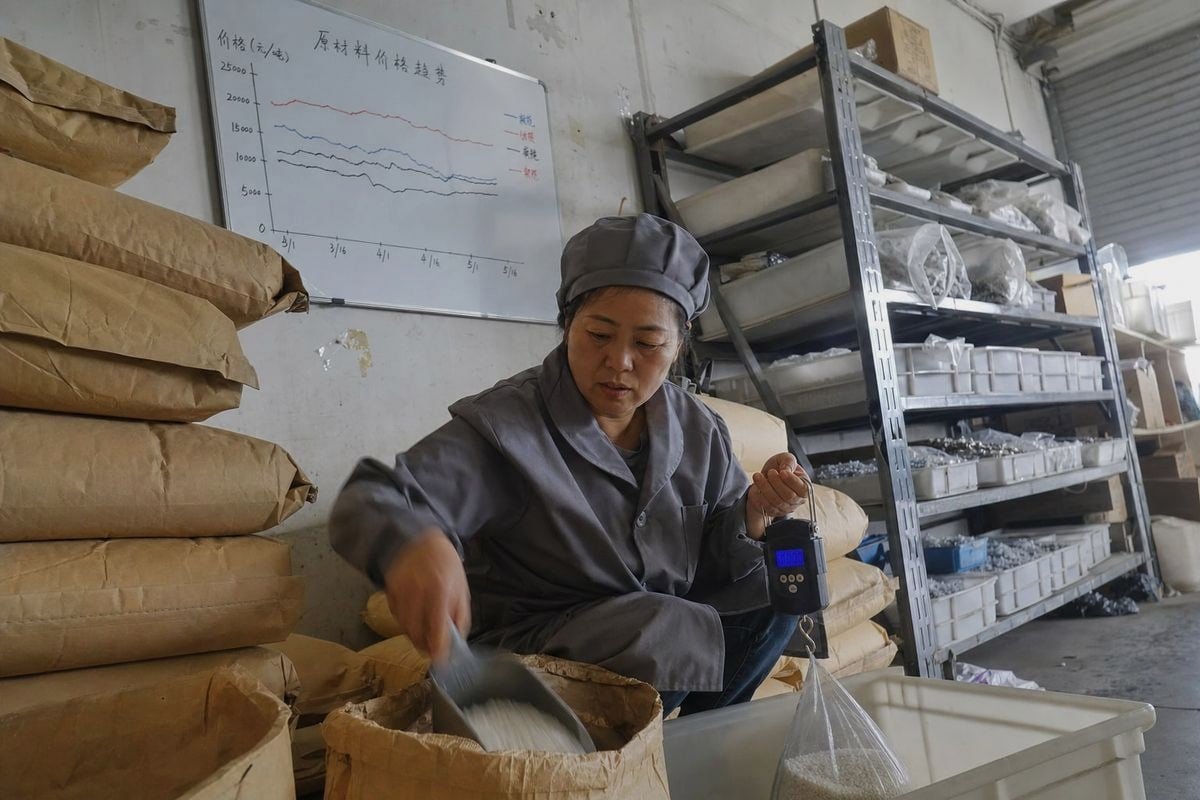
The first thing I tell buyers is this: never accept a blanket "raw materials went up" explanation. Ask which material, by how much, and against which benchmark. When we issue a price revision at our factory, we show the resin cost as a separate line. TR90 memory plastic 2 and TPEE follow petroleum-linked cycles, but they do not move in lockstep. Sometimes only one input spikes. If your supplier cannot show you a unit cost breakdown, you cannot negotiate from facts.
Know where the money actually goes
A typical kids' optical frame has a cost structure like this:
| Cost Component | Typical Share of Ex-Factory Price | Volatility Level |
|---|---|---|
| Frame material (TR90/TPEE resin) | 25–35% | 高い |
| Demo lenses | 10–15% | 中程度 |
| Hinges, screws, silicone parts | 8–12% | 中程度 |
| Labor and assembly | 20–30% | Low–Medium |
| Packaging and accessories | 5–10% | 低 |
| Overhead and margin | 15–25% | 低 |
Notice that even a 20% resin spike moves your total unit price by only 5–7%. That framing changes negotiations completely. A supplier asking for a 15% across-the-board increase after a 20% resin move is padding the request.
Use design flexibility as a hedge
Because we maintain around 800 existing styles, many of our clients can shift between TR90 frames with TPEE temples and full-TPEE constructions without new mold investment. Pre-qualify these alternatives during calm periods, not during a shortage. For 子供用アイウェア 3, any substitution must still pass flexibility, impact, and safety expectations — cheaper material that snaps on a playground is the most expensive material you can buy. Bio-based polymers are also worth qualifying early, since they follow different market cycles than petroleum plastics and can decouple part of your cost base from oil volatility.
Should I lock in fixed pricing with my kids' eyewear manufacturer or accept flexible quotes tied to market rates?
A distributor client from Australia once asked us to hold pricing for eighteen months. We agreed — then resin fell, and he quietly wondered if he had overpaid. Both structures carry risk.
Neither pure option is ideal. The best approach is a hybrid: fix prices for six to twelve months, then attach price adjustment clauses with pre-defined triggers linked to a material price index, so quotes only move when costs genuinely move — in either direction.

Here is the trade-off I walk buyers through. Fixed pricing gives you budget certainty and simple retail planning. But your factory prices in a risk premium to cover potential increases, and if markets fall, you are locked in above market. Flexible quotes track reality more closely, but they make forecasting painful and expose you to sudden hikes mid-season.
Compare the three structures honestly
| Structure | Budget Certainty | Risk of Overpaying | 最適 |
|---|---|---|---|
| Fixed price (12+ months) | 高い | High if markets fall | Stable, high-volume core styles |
| Fully flexible quotes | 低 | 低 | Spot orders, new style tests |
| Indexed hybrid with triggers | Medium–High | 低 | Ongoing programs, long-term partners |
The hybrid model works because it removes guesswork from both sides. In our long-term supply agreements, we typically define a corridor: if the referenced material price index 4 moves less than an agreed percentage, prices hold. Beyond that band, either party can request a documented adjustment at scheduled review points, usually quarterly. Crucially, the clause works both ways. If resin drops sharply, you get relief too. That symmetry keeps the relationship healthy over years, not just one order cycle.
Match the structure to your product mix
For core kids' optical styles that reorder every season, negotiate the longer fixed window with an escalation clause. For test styles pulled from an existing catalog — one reason brands work with our 800-style library is exactly this low-risk testing — accept flexible quotes, since volumes are small and the exposure is limited. Committing minimum annual quantities on your core styles is your strongest lever for a favorable fixed window, because it lets the factory plan resin purchasing and manufacturing lead times with confidence.
How do exchange rate fluctuations between my currency and RMB affect my landed cost on optical frame orders?
Buyers often focus on the ex-factory quote and forget the currency underneath it. Our export team sees this constantly: the factory price holds steady, yet the buyer's landed cost still climbs.
If your currency weakens against the RMB or the USD quote currency, every stage costs more: deposit, balance payment, freight, and import tariffs and duties calculated on a higher declared value. A 6% currency move can wipe out a hard-won 6% negotiation win.
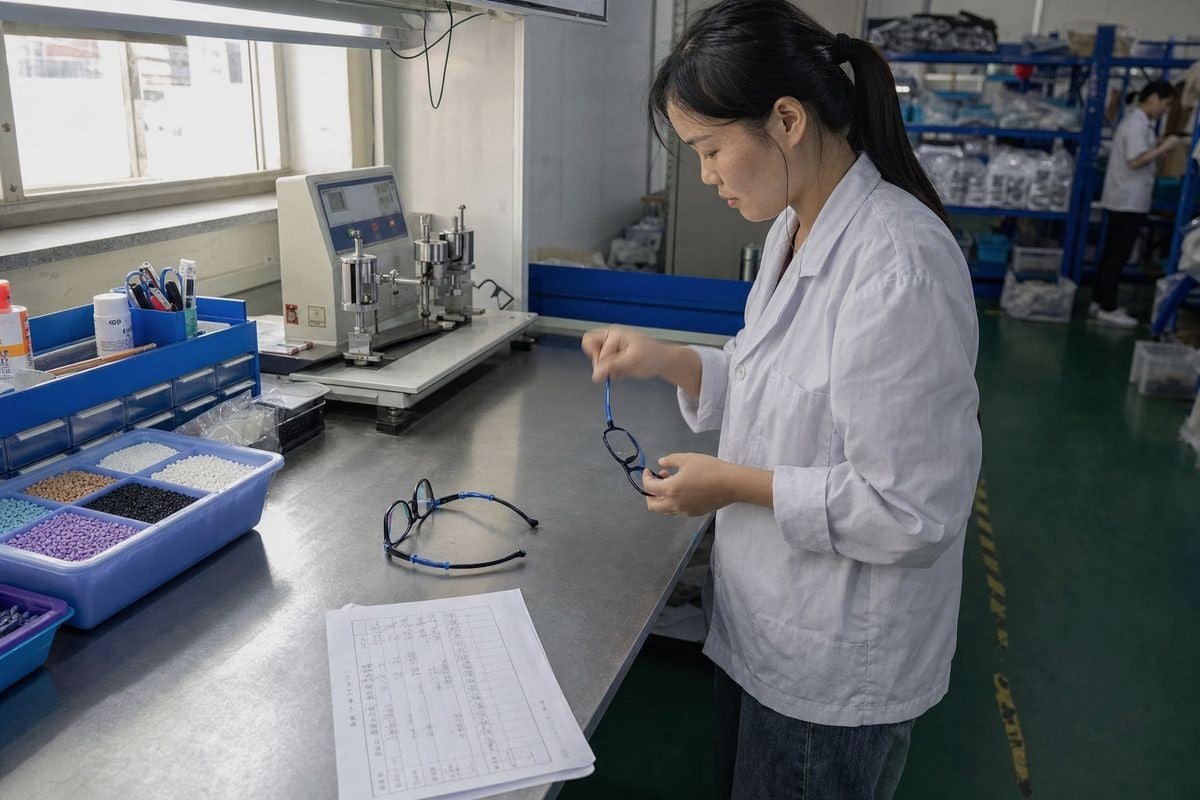
Most Chinese eyewear factories, ours included, quote in USD. So buyers in Australia, Japan, or Europe actually carry two layers of currency exposure: their home currency against the USD, and indirectly the USD against the RMB, which shapes how factories set and revise USD quotes over time. When the RMB strengthens against the USD, Chinese factories feel margin pressure and eventually pass some of it through.
Landed cost is the number that matters
Think in total landed cost, not unit price. For a typical order under FOB shipping terms 5, your landed cost stacks up like this:
| Landed Cost Layer | Affected by FX? | Affected by Raw Materials? |
|---|---|---|
| Ex-factory unit price | Indirectly (RMB/USD) | Directly |
| Ocean or air freight | Yes (often USD) | いいえ |
| Import tariffs and duties | Yes (on converted value) | Indirectly |
| Insurance and inland transport | Partially | いいえ |
| Warehousing and handling | いいえ | いいえ |
The timing gap is where FX quietly bites. On a standard order, you pay a deposit at order placement and the balance at shipment. With manufacturing lead times of 45–60 days for customized kids' frames, the rate can drift meaningfully between those two payments. Practical currency hedging strategies for smaller brands include splitting payments to shorten each exposure window, holding funds in a multi-currency account and converting during favorable rate windows, and building a 5–8% currency buffer into your landed cost budget. High-volume importers can go further with forward contracts 6 that lock a rate for the full order cycle. Also ask your factory to separate the material component from the FX component whenever a price revision arrives — the two often get blended into one number, and they deserve different responses.
What contract terms can I negotiate with my factory to stay protected against future cost changes?
Fifteen years of export work taught our team one lesson: the contracts that survive volatility are the ones that define adjustments before anyone needs them.
Negotiate five protections: a fixed quote currency, indexed price adjustment clauses with defined triggers and review dates, an FX-sharing band that splits currency moves beyond a threshold, itemized BOM transparency on any revision request, and pre-approved alternative materials written into the specification.

A contract cannot stop markets from moving. It can only decide, in advance, who absorbs what and how disputes get resolved. When we build supply agreements with long-term brand partners, we treat these clauses as relationship tools, not legal weapons. Ambiguity is what destroys partnerships; clear rules protect both sides.
The negotiation checklist
Work through these terms in order of impact:
- Fix the quote currency and validity period. Specify USD or RMB explicitly, and state how long each quote holds — 60 or 90 days is common.
- Define adjustment triggers. Tie any price reset to a published material price index, with a minimum movement threshold (for example, ±5%) before either party can invoke it.
- Set scheduled review points. Quarterly reviews prevent surprise mid-season increases and give both sides predictable renegotiation windows.
- Add an FX-sharing band. Currency moves within a small band are absorbed by each side; beyond it, the impact splits by an agreed ratio.
- Require BOM transparency. Any revision request must show which components changed, separating material inflation from FX effects.
- Pre-approve substitutes. Write qualified alternative materials and components into the spec, so switches during shortages need no re-engineering.
- Protect quality standards. State that no adjustment mechanism permits unapproved material downgrades — critical for children's safety compliance.
One more structural option worth raising: for very tariff-exposed markets 7, some brands use a postponement strategy, importing semi-finished frames and completing final assembly regionally. It adds complexity, but it shifts where value is declared and reduces FX exposure on finished goods. Supply chain volatility also argues for keeping a qualified backup supplier — though in our experience, buyers get the best pricing by concentrating core volume with one trusted factory while maintaining that alternate in reserve. The same logic applies to material sourcing on the factory side; we maintain multiple resin channels the way an acetate house manages cellulose acetate sourcing across suppliers.
結論
Volatility in resin prices and currencies is permanent. The brands that thrive don't predict it — they build sourcing systems that absorb it without sacrificing safety or margin.
You cannot control commodity markets or exchange rates. You can control your supplier mix, contract structure, material options, payment timing, and landed cost visibility. Track costs by component, negotiate indexed adjustment clauses with two-way triggers, split FX exposure fairly, and pre-qualify alternatives before you need them. When we work with kids' eyewear brands across 20+ countries, the most resilient partners are never the ones chasing the lowest quote. They are the ones who set clear rules with a trusted factory, protect quality as non-negotiable, and treat cost changes as a process to manage — not a crisis to survive.
脚注
1. Explains the thermoplastic elastomer category referenced for temples and constructions. ↩︎
2. Background on the polyamide-based material class used in TR90 frames. ↩︎
3. Official federal regulation defining eyewear as a children’s product for safety compliance purposes. ↩︎
4. World Bank tracks commodity price indices used for adjustment clause benchmarks. ↩︎
5. ICC publishes the official Incoterms rules governing FOB shipping definitions. ↩︎
6. Explains the financial hedging instrument used to lock exchange rates for orders. ↩︎
7. WTO provides authoritative context on tariffs affecting cross-border sourcing decisions. ↩︎



 English
  Español de México
  Deutsch
  Français
  日本語
日本語  العربية
  Português do Brasil