How to Handle Mid-Production Price or Term Changes from a Kids’ Sunglasses Supplier?
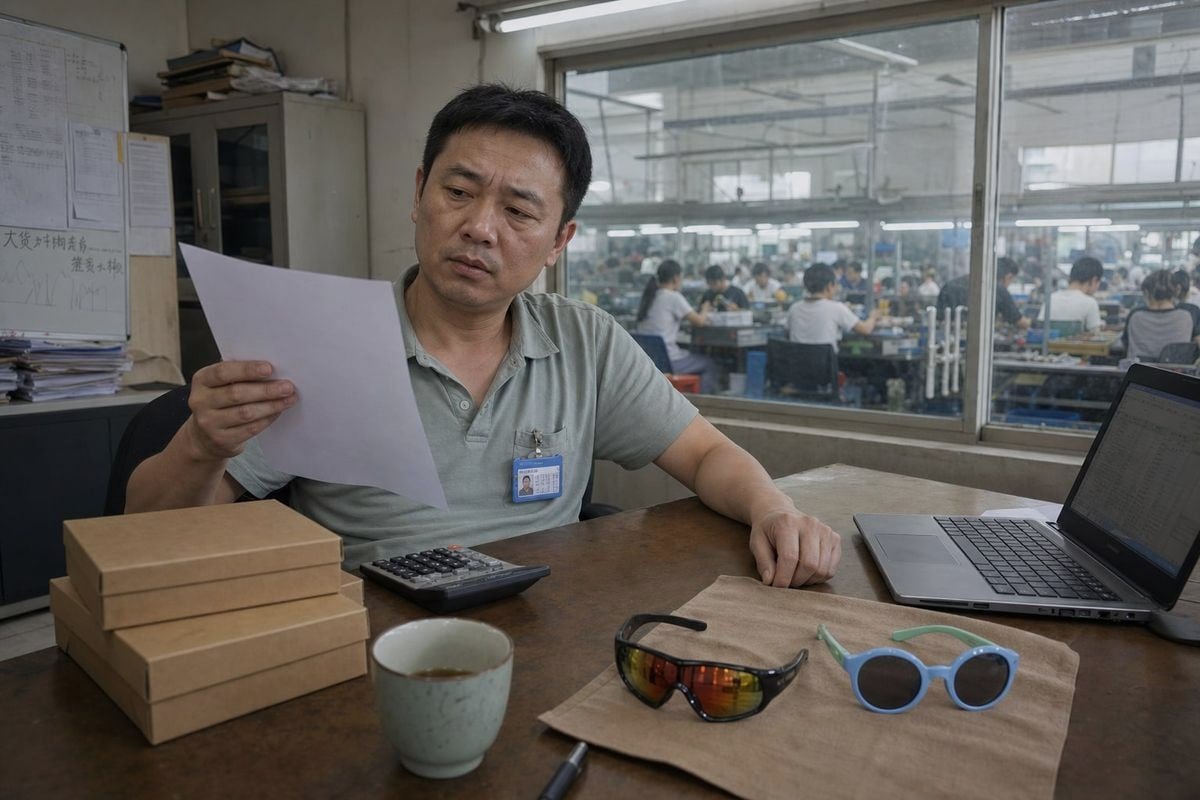
Mid-production price or term changes can wreck a season. On our Taizhou production floor, I have seen buyers panic when another factory suddenly demanded more money mid-run.
Handle mid-production price or term changes by acknowledging the request without accepting it, demanding a written cost breakdown, reviewing your contract for fixed-price or notice clauses, benchmarking the claim against market data, then negotiating a phased, conditional, or delayed adjustment — always confirmed in writing.
That is the short answer. Now let me walk you through each step, from the first email you receive to the contract clauses that stop this from happening again.
What Should I Do If My Supplier Suddenly Raises Prices Mid-Production?
A buyer from Australia once forwarded me a rival factory's email: a 12% increase, halfway through a kids' sunglasses order. Her first question to me was simple — is this normal?
Do not accept or reject immediately. Acknowledge receipt, state the request is under review, and ask for a written, component-level cost breakdown. Then check your contract, benchmark the claimed increase against market data, and negotiate from evidence — not from the supplier's headline number.

The first 24 hours matter most. Your reply sets the tone for everything that follows. In our fifteen years running an eyewear factory, I have learned that a price request is an opening position, not a fact. Treat it that way.
Step One: Respond Without Agreeing
Send a short, neutral reply. Say you have received the request and are reviewing it. Avoid any phrasing that could be read as acceptance, such as "understood" or "we can work with that." Ask the supplier to put the full request in writing, including the exact percentage, the effective date, and the reason.
Step Two: Demand a Cost Breakdown
Ask which specific input rose. Was it TR90 resin? TPEE pellets 1? Lens coating? Labor? Freight? Request evidence for each claim. A serious factory can show you material invoices or index movements. When our own material costs shift, we can document it line by line — a supplier who refuses to do this is usually padding the number.
Step Three: Verify the Claim
Compare the explanation against public resin indices, your prior quotes, and a quick RFQ refresh with one or two backup factories. Often the underlying input moved 4%, but the supplier asked for 12%.
| ステップ | タイミング | Goal |
|---|---|---|
| Neutral acknowledgment | Within 24 hours | Avoid implied acceptance |
| Written breakdown request | Day 1–2 | Force evidence, not claims |
| Contract review | Day 1–3 | Check fixed-price and notice clauses |
| Market benchmarking | Day 2–7 | Separate real inflation from markup |
| Counter-proposal | Week 1–2 | Negotiate phasing, timing, or trade-offs |
For a compliance-sensitive product like children's eyewear, add one more check: confirm the factory is not quietly substituting cheaper materials or lenses to offset costs. A material swap can invalidate your safety test reports 2.
How Can I Protect My Order When Payment Terms Change Unexpectedly?
Term changes worry me more than price changes, honestly. When a factory suddenly demands 100% payment before shipment instead of the agreed 30/70 split, it often signals cash-flow trouble on their side.
Protect your order by refusing verbal term changes, checking whether your PO fixes payment terms, asking why the change is needed, and negotiating safeguards — such as third-party inspection before final payment, split shipments, or escrow — before releasing any additional funds.

Payment terms exist to balance risk between buyer and seller. When a supplier shifts that balance mid-order, you need to understand why before you agree to anything. In our export work across 20+ countries, we hold agreed terms on confirmed orders precisely because term stability is what long-term buyers pay for.
First, Diagnose the Reason
Ask the supplier directly why terms must change now. The honest answers usually fall into a few categories, and each one calls for a different response.
| Supplier's Stated Reason | What It May Signal | Your Best Response |
|---|---|---|
| Raw material suppliers demand cash | Genuine upstream pressure | Offer partial acceleration tied to milestones |
| Bank credit tightened | Factory cash-flow stress | Add inspection before payment; consider escrow 3 |
| "Company policy changed" | Vague — possibly opportunistic | Point to the signed PO; hold firm |
| Currency or tariff shifts | Verifiable external event | Verify, then negotiate a temporary adjustment |
Then, Add Safeguards Before Conceding
If you decide to accelerate any payment, buy protection with it. Reasonable safeguards include a third-party pre-shipment inspection 4 before the final payment, a split-batch arrangement so finished units ship under original terms, and photographic or video evidence of your goods in production. Never wire extra money against verbal promises.
Keep Your Team Aligned
Loop in finance and operations immediately. A term change affects cash flow, landed cost, and delivery planning サプライチェーン管理 5. Everyone should work from one written version of the revised agreement. For seasonal kids' eyewear, a two-week payment dispute can cost you the retail window, so decide quickly — but decide on paper.
Should I Include Price Lock Clauses in My Supplier Contracts to Avoid This?
Every quotation we issue carries a stated validity window, and I encourage buyers to ask for one. It surprises me how many purchase orders I see from new brands with no pricing language at all.
Yes. Include a price hold period (typically 90 days from PO confirmation), a clause requiring mutual written consent for any change, and advance notice of 60–90 days for future adjustments. Optionally, add a material variance clause tied to a public resin index.
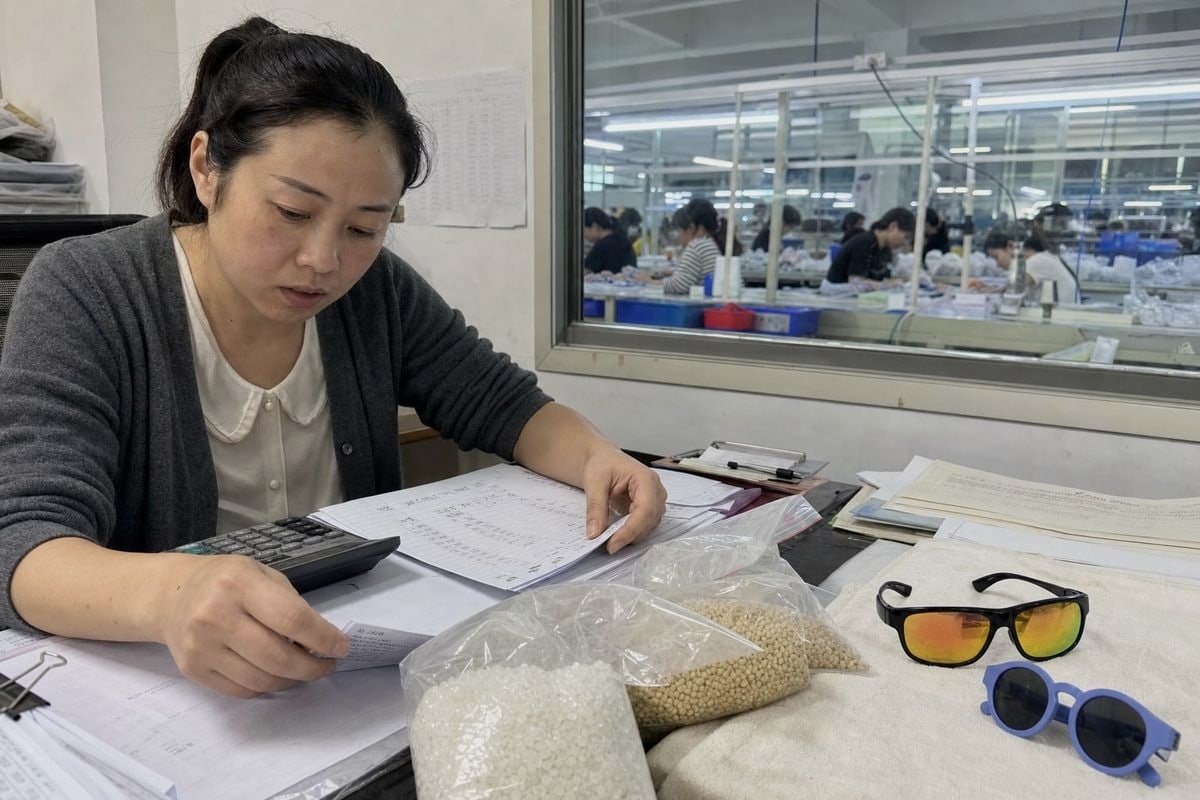
A price lock clause does two jobs. It removes ambiguity during production, and it forces both sides to plan honestly at quotation time. Reputable factories accept these clauses because they quote realistically in the first place. Suppliers who resist a 90-day hold are telling you something about how they quoted.
The Clauses That Actually Matter
Not every clause carries equal weight. Based on the disputes I have watched buyers face, here is how I would prioritize them for a kids' sunglasses program.
| 条項 | それがすること | 提案された条件 |
|---|---|---|
| Price Hold Period | Freezes quoted prices after PO confirmation | 90 days minimum |
| Mutual Consent Rule | Blocks unilateral changes to price or terms | No change without written agreement by both parties |
| Notice Period | Gives you time to react to future changes | 60–90 days before any new pricing takes effect |
| Material Price Variance Clause | Allows adjustment only if a public index moves | Trigger threshold, e.g., index moves beyond ±5% |
| Change-Order Procedure | Documents every mid-run alteration | Signed change order for price, spec, or schedule |
| WIP Protection | Shields goods already in production | Changes apply only to POs placed after the effective date |
Why the Variance Clause Is a Fair Trade
A variance clause tied to a resin index sounds like a concession to the supplier. In practice, it protects you. It converts vague inflation claims into a verifiable, math-based trigger. If TR90 or TPEE 6 feedstock genuinely spikes beyond the threshold, the adjustment is transparent and proportional. If it does not, the supplier has no contractual basis to ask. It also preserves a clean price baseline — any adjustment is a documented deviation, not a permanent new normal you must negotiate down from later.
One more practical tip: keep a change impact log. Record every mid-production alteration — price, lens material, hinge type, coating spec. For children's eyewear, this traceability protects your safety documentation as much as your margin.
How Do I Choose a Kids' Sunglasses Manufacturer That Won't Change Terms Mid-Order?
Last year a European baby-brand buyer told me why she left her previous factory: three orders, three "surprise adjustments." The pattern, not the percentage, was what broke her trust. Prevention starts at supplier selection.
Choose a factory with financial stability, deep material expertise, written quotation validity, transparent costing, and a track record with brand buyers. Verify their existing style library, QC systems, and willingness to sign price hold and mutual consent clauses before the first PO.
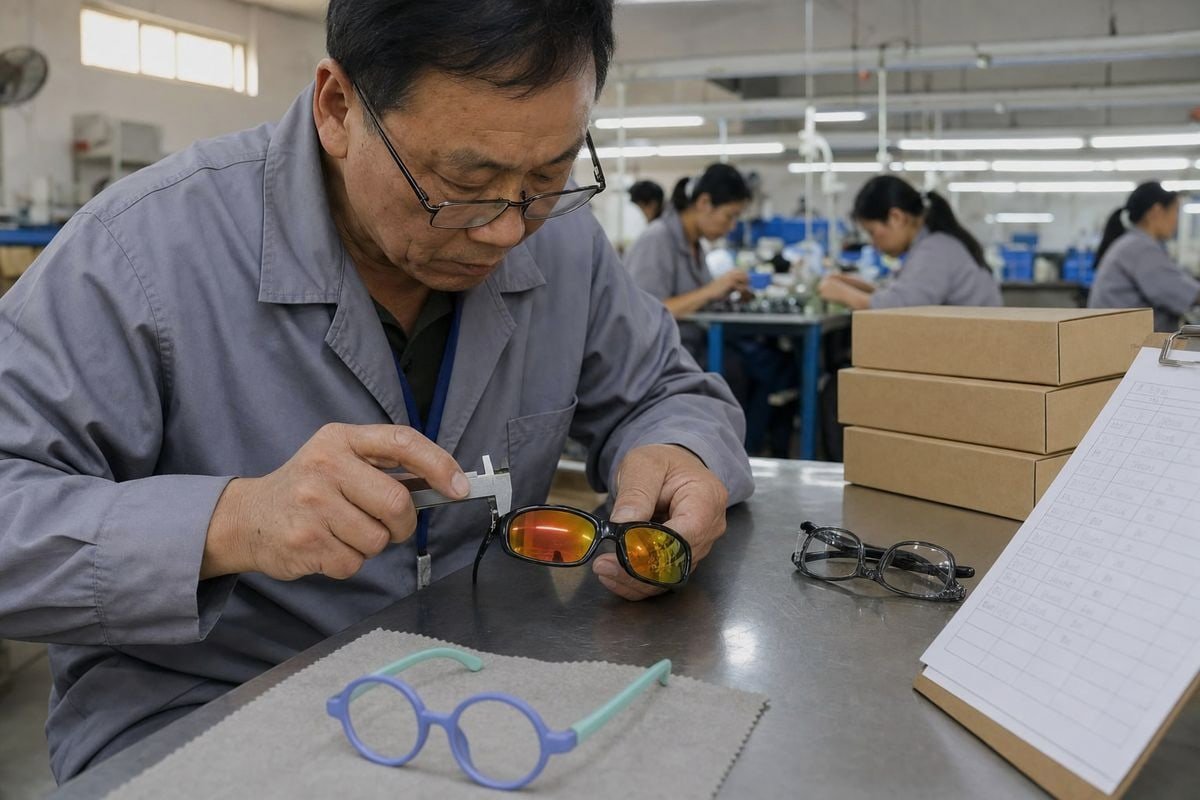
Mid-order changes rarely come out of nowhere. They usually come from factories that quoted too aggressively to win the order, run thin cash reserves, or subcontract work they cannot control. You can screen for all three before you commit.
Signals of a Stable Partner
Look past the showroom and check the fundamentals. A factory with its own workshop, a real workforce, and organized production management has far less reason to squeeze buyers mid-run. Our own facility runs about 120 workers under 5S管理 7, and I always invite serious buyers to audit exactly these things — because unstable suppliers cannot show them.
Here is a practical screening checklist:
- Ask for quotation validity in writing. A confident factory states how long its price stands.
- Test cost transparency early. Request a rough cost structure at the RFQ stage. Evasive answers now predict evasive answers later.
- Check material ownership. Factories with genuine TPEE and TR90 expertise buy resin in stable volumes and absorb small fluctuations. Traders and assemblers pass every ripple straight to you.
- Prefer a large existing style library. Choosing from proven, tooled styles — we maintain roughly 800 — avoids mold-cost surprises, which are a common trigger for mid-project renegotiation.
- Review their brand-buyer references. Factories serving children's brands in regulated markets understand that a spec or price change can invalidate test reports, so they treat stability as part of the product.
- Confirm QC and documentation habits. A factory that signs change orders and keeps inspection records will also honor pricing paperwork.
- Keep a qualified backup supplier. Even with a great partner, a second qualified source keeps every negotiation honest.
Finally, weigh price against posture. The cheapest quote often funds itself through later adjustments. A partner positioned on quality, safety, and long-term supply usually costs slightly more upfront — and dramatically less across a full season.
結論
Mid-production changes threaten margin, deadlines, and compliance. Respond calmly: verify, negotiate, document. Better yet, choose a stable kids' sunglasses manufacturer and lock terms before production begins.
脚注
1. Background on thermoplastic elastomer materials used in eyewear frame manufacturing. ↩︎
2. ISO standards underpin the compliance testing referenced for children’s eyewear safety. ↩︎
3. Background concept on the financial safeguard mechanism suggested for payment protection. ↩︎
4. Authoritative source explaining third-party inspection services referenced as a payment safeguard. ↩︎
5. General background on managing supplier relationships and procurement risk. ↩︎
6. Explains the elastomer material class used in eyewear components. ↩︎
7. 5S is a recognized workplace organization methodology mentioned for factory management. ↩︎


 English
  Español de México
  Deutsch
  Français
  日本語
日本語  العربية
  Português do Brasil