How to Specify Delivery Dates and Handle Delays When Ordering Kids’ Sunglasses?
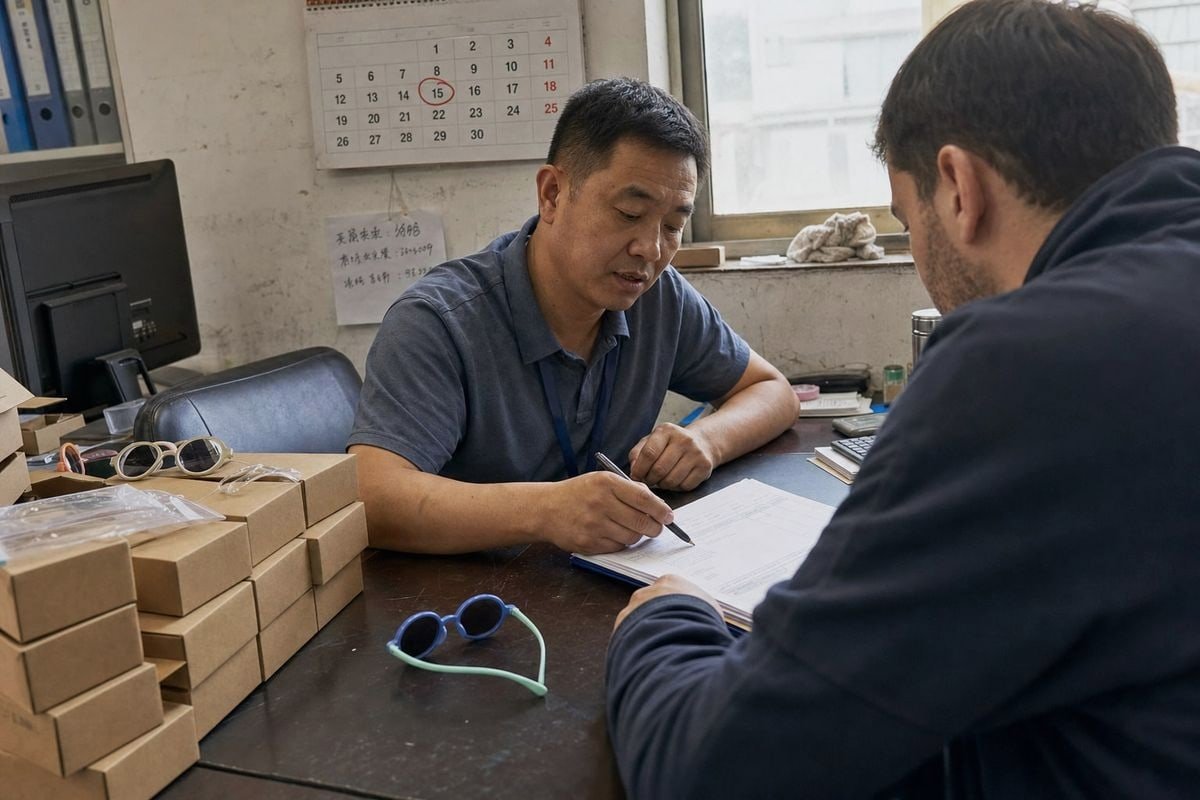
Specifying delivery dates for kids’ sunglasses orders sounds simple until a shipment slips. I have watched buyers lose entire summer launches because nobody wrote the date down properly at our Taizhou factory.
To specify delivery dates for kids’ sunglasses orders, state an exact ex-factory date in your purchase order, separate production time from transit time, confirm the date in writing after payment, and agree on a delay-notification rule so the supplier must alert you early with a revised date.
That is the short version. The details matter more. Below, I walk through how to write dates into your order, what to do when a delay notice arrives, how to protect a launch, and [what lead times are realistic](https://okayeyewear.com/how-assess-if-supplier-kids-sunglasses-lead-time-realistic/).
How do I clearly specify delivery dates when placing my kids' sunglasses order?
A purchase order 1 once landed on my desk that said only "ship ASAP." Our production team read that as four weeks. The buyer meant ten days. Neither of us was wrong — the PO was.
Specify delivery dates by writing the exact ex-factory or on-board date in the purchase order, defining whether it means production completion or vessel departure, tying the clock to deposit receipt and artwork approval, and requiring written supplier confirmation of that date before production starts.
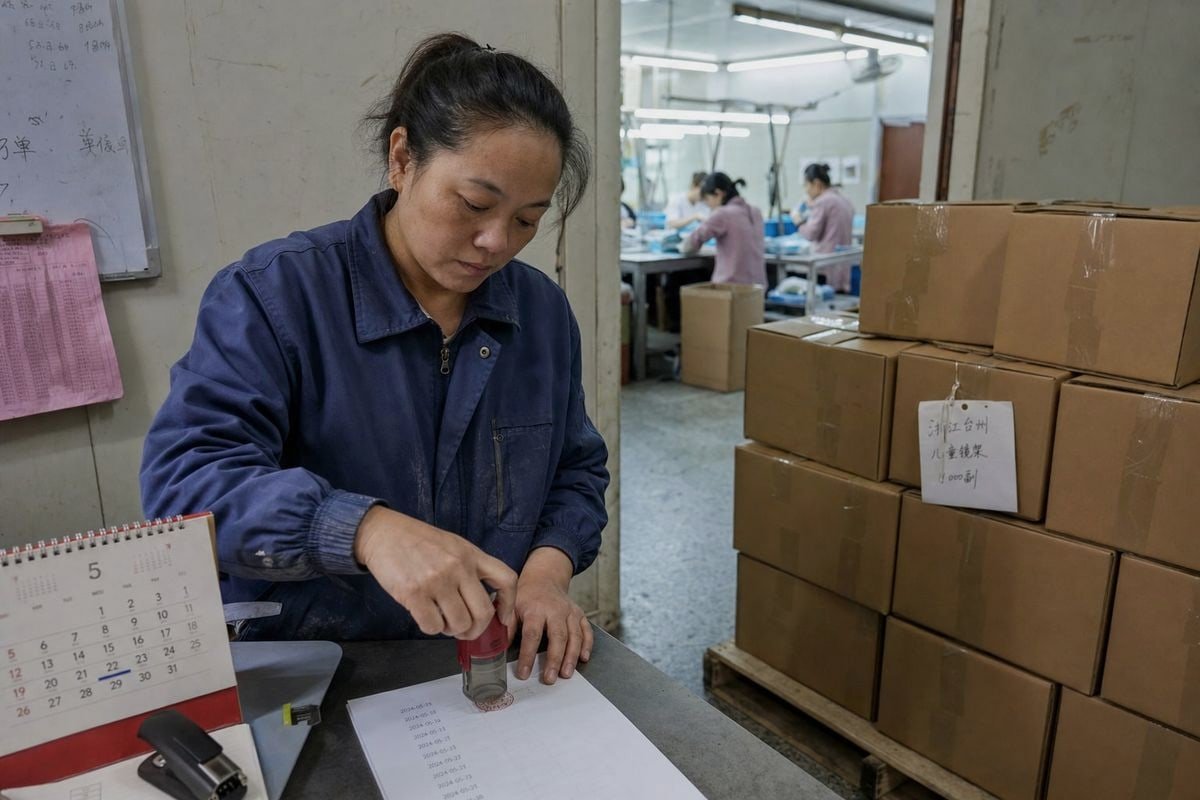
The single biggest cause of delivery confusion is vague language. "Four weeks" means nothing until both sides agree on when the clock starts and what event stops it. In our experience shipping children's eyewear to buyers in 20+ countries, the clock should start on a verifiable event — usually deposit receipt plus final artwork or sample approval. If your logo film is still under revision, production has not started, no matter what the calendar says.
Define which date you actually mean
Buyers often mix up three different dates. Put the exact one in your contract:
| Date type | What it means | Who controls it |
|---|---|---|
| Ex-factory date 2 | Goods finished, packed, ready for pickup | The factory |
| On-board / departure date | Goods loaded on vessel or aircraft | Factory + forwarder |
| Arrival / delivery date | Goods reach your warehouse | Carrier + customs |
We can commit firmly to the ex-factory date 3. We can influence the departure date. We cannot control ocean transit or your 通関手続き 4. So your PO should fix the ex-factory date and then add realistic transit time on top.
Write the trigger conditions into the PO
A clean delivery clause reads something like: "Ex-factory within 30 days of deposit receipt and final pre-production sample approval, whichever is later." That protects both sides. It also removes the classic dispute where a buyer approves samples two weeks late and still expects the original ship date. Finally, ask your supplier to confirm the date back to you in writing after the deposit clears. At our factory, we send that confirmation as standard practice, because a date both parties have signed is a date both parties defend.
What should I do if my supplier notifies me of a production delay?
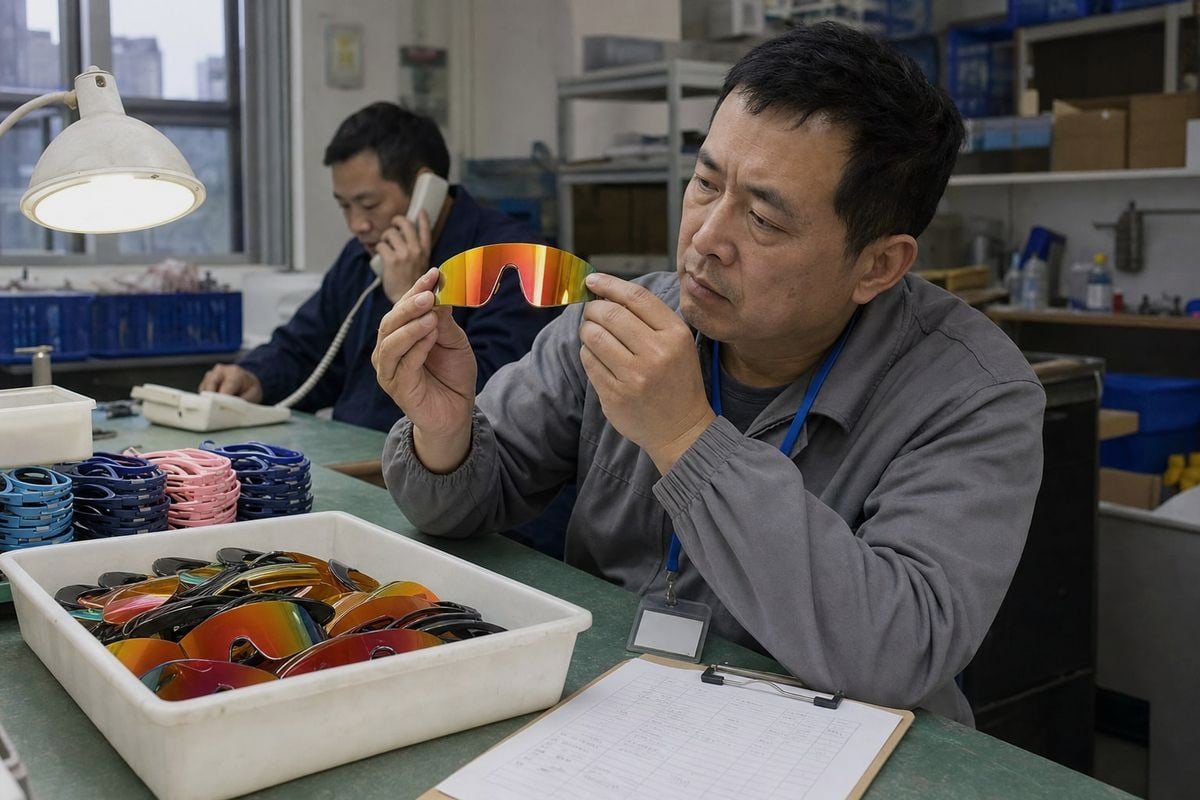
Last year, a lens-coating batch failed our QC check on a mirrored shield style, much like the orange-to-yellow gradient lenses we run. We emailed the buyer the same day with a revised date. He later told me that early honesty was why he reordered.
When a supplier notifies you of a delay, ask for the specific cause, a revised confirmed date, and a partial-shipment or air-freight option. Then reassess your own deadline, inform your sales channels early, and document the new date in writing before agreeing to anything.
A delay notice is bad news, but it is also useful information — if you respond in the right order. Panic emails and threats rarely speed up a lens supplier or a customs office. A structured response usually does. Here is the sequence I recommend to our own buyers when something slips on our side or on the logistics side.
A five-step response process
- Get the real cause in writing. "Production delay" is not a cause. Ask whether it is raw material, a failed QC batch, a machine issue, or an upstream component like 偏光レンズ 5. The cause tells you how reliable the new date is.
- Demand a specific revised date, not a range like "soon." A serious factory will give you a new ex-factory date and stand behind it. Vague reassurance is a warning sign.
- Explore split shipments. If 70% of your kids' sunglasses are finished, shipping that portion first can save your launch while the rest follows.
- Compare freight upgrades. Moving part of the order from sea to air often recovers two to four weeks. Ask who covers the cost difference — this depends on who caused the delay.
- Update your own commitments. Tell your retail partners or customers before the promised window passes, with the revised date. Proactive communication protects your brand far better than silence.
One more point from our side of the table: a factory that reports delays early is usually a better long-term partner than one that stays quiet until the ship date. We would rather send an uncomfortable email on day ten than a disastrous one on day thirty. Judge suppliers by how they handle delays, not by whether delays ever happen.
How can I protect my launch schedule when working with an overseas eyewear factory?
There is a trade-off we discuss with almost every new brand: fully custom molds and colors look great, but existing styles ship weeks faster. With around 800 ready designs in our catalog, we often steer first launches toward that faster path.
Protect your launch by reverse-calculating a must-order-by date with a two-to-three-week buffer, approving samples quickly, choosing existing styles over new molds for the first run, agreeing on penalty or remedy terms for lateness, and getting weekly production updates with photos.
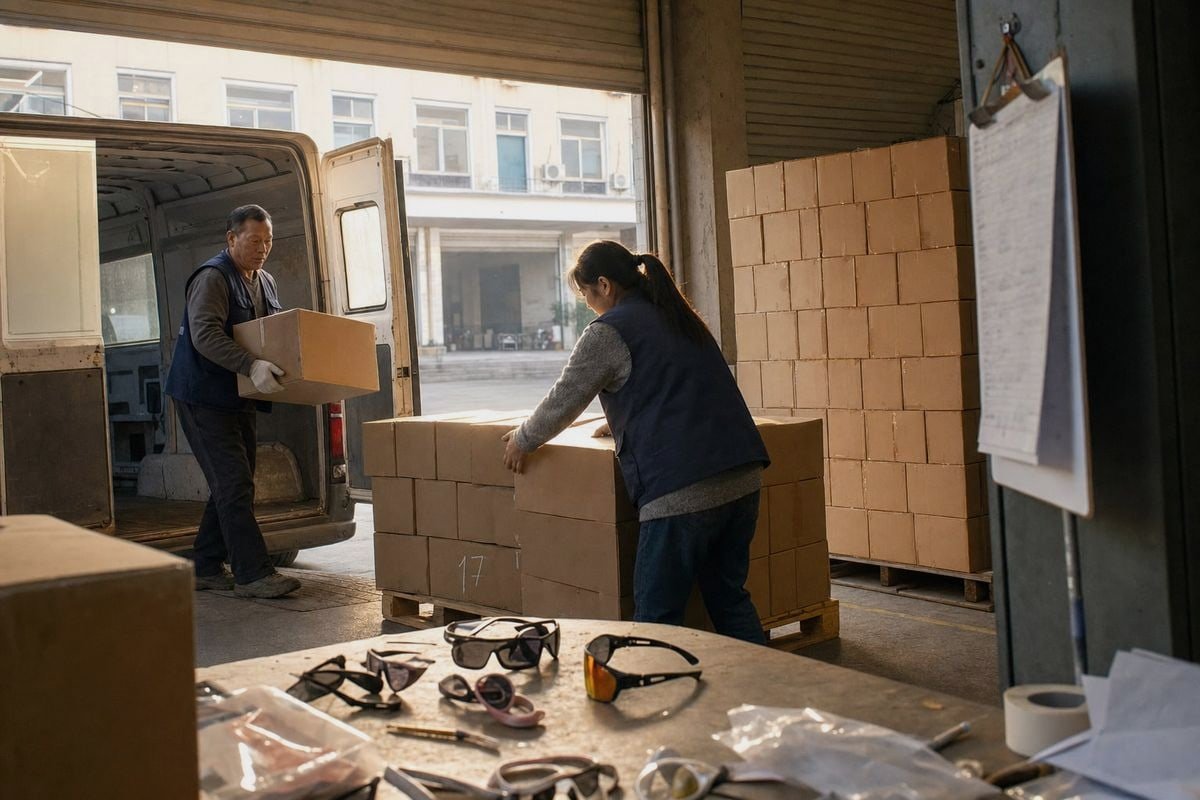
Launch protection is mostly done before you place the order, not after. The buyers who never miss a season all do the same things: they plan backward from the launch date, they build slack into every stage, and they remove avoidable custom work from the critical path.
Reverse-calculate your must-order-by date
Start from your launch day and subtract each stage. Then add buffer. A typical sea-freight plan for a European or Australian kids' brand looks like this:
| ステージ | Typical duration | 注記 |
|---|---|---|
| Sampling and approval | 1–2 weeks | Faster with existing styles |
| Production | 3〜5週間 | Depends on customization level |
| Sea freight | 3〜5週間 | Varies by destination port |
| Customs and inland delivery | 1–2 weeks | Include compliance paperwork time |
| Safety buffer | 2–3 weeks | Absorbs any single-stage slip |
For a June 1 summer launch, that math points to placing your order in late January or February. Buyers who order kids' sunglasses in April for a summer season are gambling, especially since Q1 includes Chinese New Year, when most factories close for two to three weeks.
Remove risk from the critical path
Three practical moves make the biggest difference. First, use catalog styles with custom colors and logos instead of new tooling 6; this cuts weeks and mold cost. Second, approve pre-production samples within days, not weeks — sample approval delay is the most common buyer-side cause of missed dates. Third, confirm your children's product compliance documents (such as test reports your market requires) before shipment, because a customs hold on kids' products can quietly add weeks. We also send progress photos from our workshop on request; a weekly photo of your goods on the line is the cheapest insurance you can buy.
What lead times should I expect when ordering custom kids' sunglasses in bulk?
Fifteen years of running eyewear production has taught me one blunt lesson: the lead time a buyer wants and the lead time physics allows are rarely the same, and honesty about that gap saves relationships.
Expect roughly 30–45 days of production for custom bulk kids' sunglasses after sample approval, plus 5–10 days for air freight or 25–40 days for sea freight. Fully custom molds add 4–8 weeks; simple logo and color customization on existing styles stays at the shorter end.
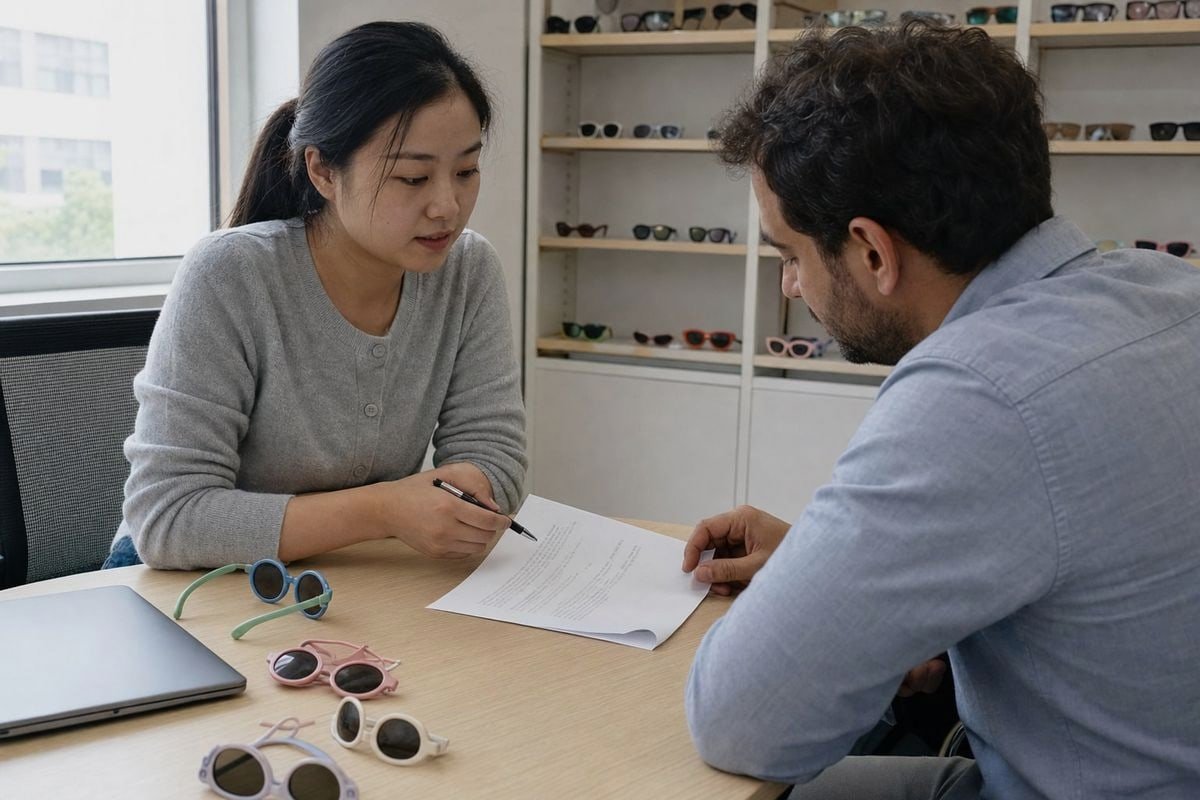
Lead time is not one number. It scales with how much you customize and when you order. A private-label order using one of our existing TR90 or TPEE 7 styles with a printed logo moves through the workshop far faster than a brand-new frame that needs tooling, first-shot inspection, and revised samples. Seasonality matters too. Order books for summer eyewear fill up between January and March, and lead times stretch during that peak.
Lead time by customization level
| Customization level | Typical production time | What it includes |
|---|---|---|
| Stock styles, standard colors | 2–3 weeks | Pick from existing catalog, basic packaging |
| Custom colors + logo on existing styles | 4〜6週間 | Pantone matching, logo printing, branded packaging |
| Custom lenses (polarized, mirrored, gradient) | 5–7 weeks | Lens sourcing, coating, extra QC on optics |
| Fully custom design with new molds | 10–16 weeks | Tooling, sample rounds, validation, then production |
Why kids' eyewear takes the time it takes
Children's sunglasses are not just small adult sunglasses. Flexible materials like TPEE need correct processing to keep temples soft yet durable, and every batch should pass safety and impact checks appropriate for children’s products before packing. Mirrored gradient lenses — like the orange-to-teal shields popular in sport styles — require coating runs where a failed batch must be redone, not shipped. Cutting corners on these steps shortens lead time and shortens product life equally fast. My advice: ask suppliers to break their quoted lead time into stages. A factory that can show you where each week goes is a factory that can actually hit the date.
結論
Vague dates sink launches; missed summers cost real revenue. Specify exact delivery dates in writing, respond to delays with structure, buffer your schedule, and partner with a factory that communicates early.
脚注
1. Explains the standard commercial document formalizing order terms including dates. ↩︎
2. Incoterms define trade terms like ex-factory that clarify shipment responsibility points. ↩︎
3. Defines standard trade term used to clarify ex-factory shipment responsibilities in purchase orders. ↩︎
4. WTO governs international trade rules including customs procedures affecting shipments. ↩︎
5. Background on the optical technology used in polarized sunglass lenses. ↩︎
6. Alibaba.com is a major sourcing platform illustrating catalog styles versus custom tooling. ↩︎
7. ISO develops material and safety standards relevant to flexible eyewear components. ↩︎
 English
  Español de México
  Deutsch
  Français
  日本語
日本語  العربية
  Português do Brasil