How to Compare Material Options From Suppliers for Kids’ Optical Frames?
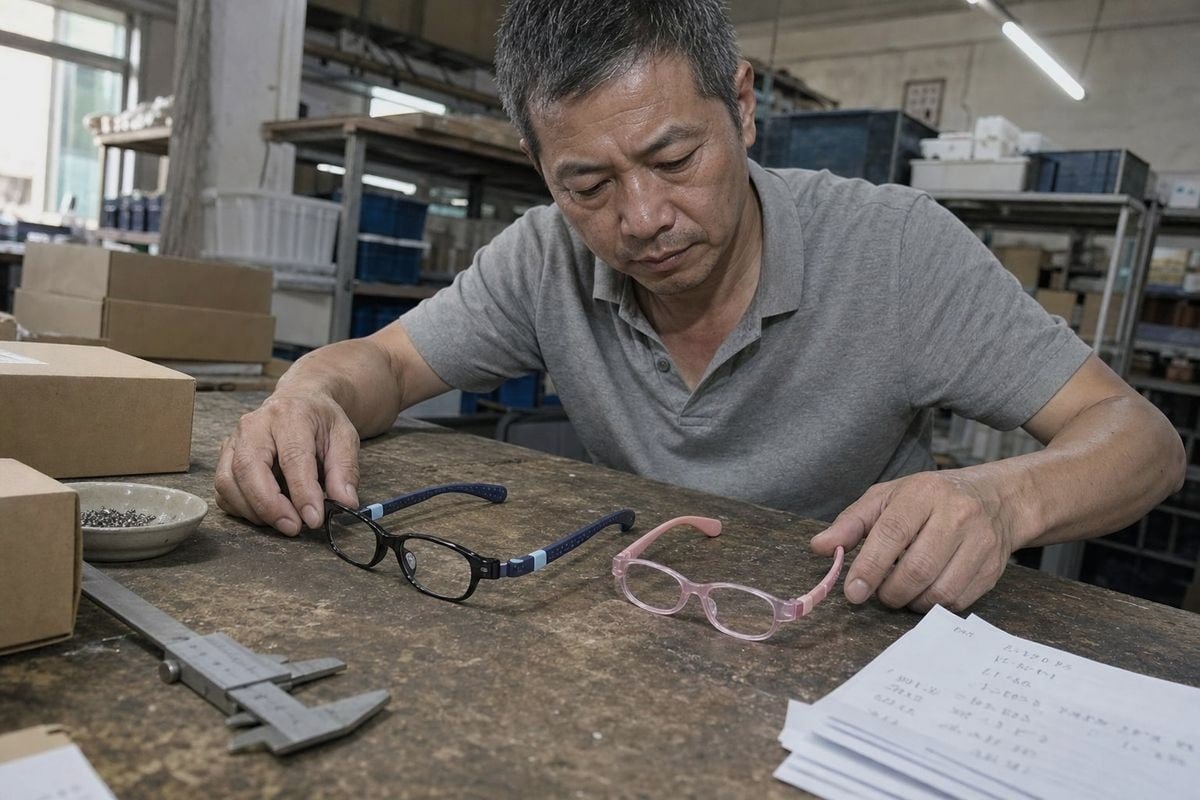
Comparing material options from suppliers for kids’ optical frames stumps many buyers REACH 1. I have watched brands lose a season because one temple snapped in testing. On our production line in Taizhou, we solve that daily.
To compare material options from suppliers for kids’ optical frames, match the material to the child’s age first, then verify each supplier’s third-party test reports, batch consistency, hinge quality, and coating safety. Score suppliers on documentation and quality control, not on unit price alone.
That answer sounds simple. The hard part is doing it in the right order. Below, I walk through material safety, supplier questions, hands-on testing, and how all of this shapes your brand. Let’s start with the material question buyers ask us most.
How do I know if TR90 or TPEE is the safer choice for my kids' frame collection?
A buyer from Australia once asked me to bend a sample temple 180 degrees on a video call. I did it twenty times. That TPEE temple bounced back every time, and she placed her first order that week.
Neither TR90 nor TPEE is universally safer; the right choice depends on age. TPEE is softer and more forgiving, so it suits toddlers and very young children. TR90 memory plastic offers structure plus flexibility, making it the safer, more practical default for school-age kids.
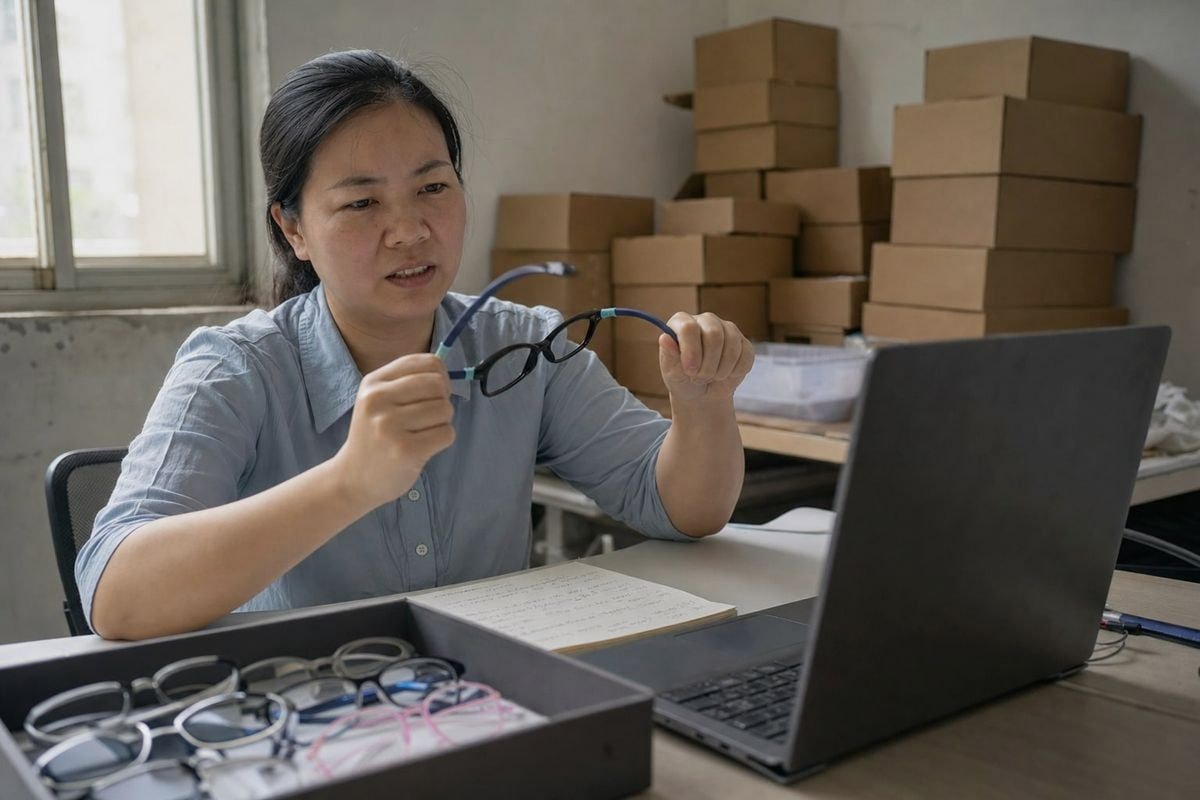
Safety in children's eyewear is really about two failure modes. The frame can break and create a sharp edge. Or the frame can press too hard and irritate young skin. TR90 and TPEE each solve those risks in different ways, so we often combine them.
Match the material to the age group first
Our engineers design many hybrid styles: a TR90 front for lens stability, with TPEE製フレキシブルフレーム 2 or temples for softness where the frame touches the face. One of our popular kids' optical styles pairs a glossy TR90 front with rubbery two-tone temples and silicone temple tips, plus adjustable ear hooks for a slip-resistant fit during play. That combination is not decoration. It is age-based risk engineering.
Here is the comparison we share with buyers:
| プロパティ | TR90 memory plastic | TPEE |
|---|---|---|
| Typical frame weight | 12–15 g | 10–14 g |
| 柔軟性 | High; returns to shape after twisting | Very high; almost rubber-like |
| Breakage risk | 非常に低い | Near zero |
| Lens retention | Excellent; holds ポリカーボネート 3 securely | Good, best with a structured front |
| Best age range | Roughly 3–16 years | Roughly 0–6 years, or as soft temples |
| Skin comfort | Good; smooth and light | Excellent; soft against skin |
| Styling options | Wide color and finish range | More limited detailing |
For context, silicone frames run about 8–12 g and suit ages 0–4, while flexible stainless steel 4 sits around 14–18 g for ages 7–16. So the practical rule is: soft materials for toddlers, TR90 memory plastic for school-age kids, and structured or metal options only for older children.
One more point buyers often miss. Both materials should come with hypoallergenic properties and BPA-free certification backed by lab reports, not just a claim on a spec sheet. A safe polymer from a careless factory can still fail if the coating, hinge, or colorant is wrong. That leads directly to the supplier questions.
What questions should I ask suppliers to verify their material safety certifications?
The trade-off I weigh most often is speed versus proof. A buyer wants samples in a week, but real verification means checking test reports for every component. In our 15 years of exporting kids' eyewear to 20+ countries, the buyers who ask hard questions early always have smoother launches.
Ask suppliers for recent third-party test reports from recognized labs like SGS, Intertek, or TÜV, material certificates for every component, market-specific compliance proof such as CPSIA and REACH, and samples from multiple production batches to confirm consistency.
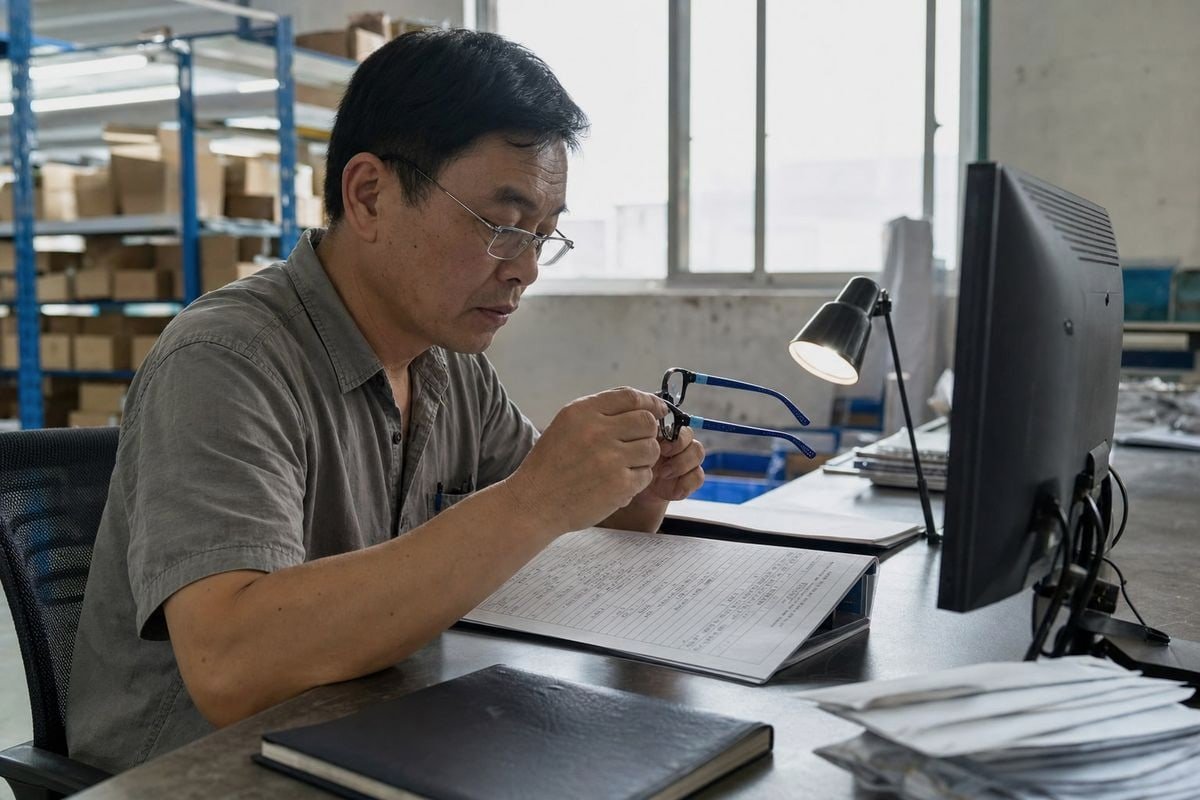
Certificates are easy to claim and easy to fake. Your job is to test whether the paperwork matches the product in front of you. A serious factory expects these questions. A trading company reselling unknown stock usually stumbles on them.
The exact questions to send your supplier
- Can you share third-party test reports dated within the last 12 months? Old reports may cover a different resin batch or an older colorant recipe. Verify the report number directly with the lab when possible.
- Do the reports cover every component? Frame body, nose pads, silicone temple tips, hinges, screws, and coatings all touch a child's skin. A safe TR90 front means little if the temple tip coating contains restricted phthalates 5.
- Which markets do the reports address? CPSIA 6 matters for the US. REACH and EN standards matter for Europe. Generic "non-toxic" claims are not compliance. Ask for market-specific readiness, not vague assurances.
- Can you show BPA-free certification and heavy-metal test results for the exact color masterbatch used in my order? Colorants change between runs. Batch traceability is the real test of supplier quality control protocols.
- What incoming raw-material inspection do you run? At our 5S-managed workshop, raw TR90 and TPEE pellets are checked against supplier certificates before they enter production. Ask any factory to describe the same process. Vague answers are a warning sign.
- Can you provide impact resistance standards documentation for the frame-lens combination? Children's lenses should be polycarbonate or Trivex, and the frame rim must hold those thicker safety lenses securely. Frame and lens safety must be verified together, not separately.
- What are your wholesale manufacturing lead times, and do they change if I require pre-shipment lab testing? Honest suppliers build testing time into the schedule. Suppliers who promise identical lead times with or without testing are telling you something.
Some buyers worry these questions will offend a factory. In my experience, the opposite happens. Factories that invest in compliance are proud to answer. The ones who dodge were never going to protect your brand anyway.
How can I test flexibility and durability before committing to a bulk order?
Early in my career, I learned a lesson the hard way. A sample passed every desk check, but the production batch used a slightly different hinge screw. Returns followed. Since then, our factory treats sample-stage testing as a rehearsal for mass production, never a formality.
Test samples by twisting temples 180 degrees, flexing the bridge repeatedly, checking hinge cycles for looseness, and comparing samples from at least two different batches. Request the supplier's own torsion and hinge-cycle test data, then verify it with your own hands-on checks.
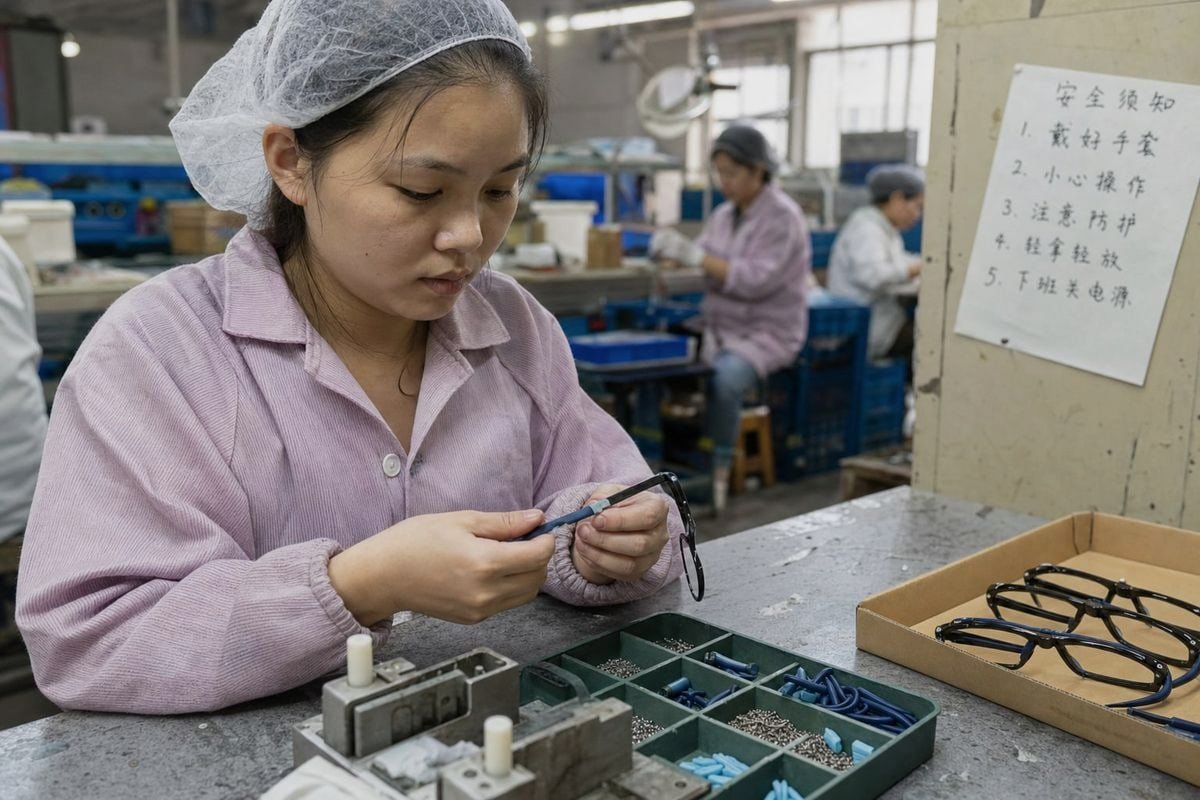
You do not need a lab to run a first-pass screen. You need a repeatable routine and samples from more than one batch. Consistency between batches predicts your defect rate far better than one perfect showroom sample.
A practical hands-on test routine
Run each check on every sample, and log the results side by side:
| Test | How to do it | Pass signal |
|---|---|---|
| Temple twist | Twist the temple 180 degrees, 20 times | Returns flat, no whitening or cracks |
| Bridge flex | Spread the temples well past normal wear width | Frame springs back to original shape |
| Hinge cycle | Open and close each temple 200+ times | No loosening, squeaking, or wobble |
| Drop test | Drop from table height onto hard floor, 5 times | No cracks, lenses stay seated |
| Lens retention | Press lenses firmly from behind | Lenses do not pop or shift |
| Coating rub | Rub temple tips with a damp cloth, 50 strokes | No color transfer or peeling |
| Edge check | Run a fingertip along every edge and rivet | Rounded edges only, no sharp points |
Ask for the supplier's own test data
A capable factory runs frame durability testing internally and can show you the numbers. Ask for hinge-cycle counts 7 and torsion stress results calibrated for children's rough handling, not adult wear patterns. Kids adjust, drop, and sit on glasses far more often than adults do. Also check spring hinge mechanisms if the style uses them; a 180-degree spring hinge should feel smooth through hundreds of cycles, with no gritty resistance.
Finally, insist on samples from two or more pre-production batches. When we develop a custom colorway for a client, we send batch samples precisely so the buyer can confirm that flexibility, finish, and fit hold steady from run to run. If a supplier resists sending multi-batch samples, treat that as your answer.
Why do material choices affect my brand's long-term quality reputation with parents?
A European buyer once told me something I repeat to our whole team: parents forgive a scratched lens, but they never forgive a frame that hurt their child. That sentence shapes how we choose materials for every one of our roughly 800 existing styles.
Parents judge a kids' eyewear brand by whether frames survive real life: rough play, drops, and daily twisting. Material choices drive breakage rates, comfort, and returns, so the right material builds repeat purchases and referrals, while the wrong one quietly destroys trust.
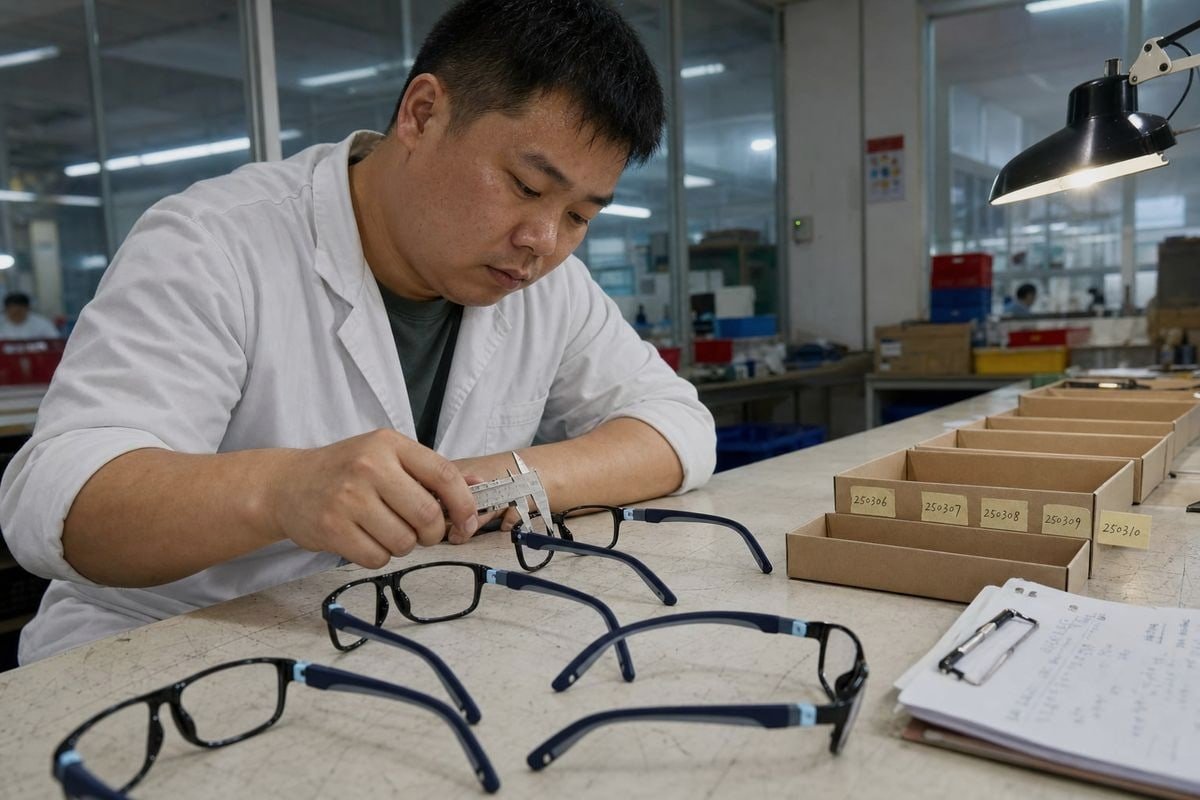
A child's frame is a repeat-purchase product. Kids grow, prescriptions change, and parents come back every year or two. That repeat cycle is where material decisions compound into reputation, for better or worse.
How material decisions show up in parent experience
Think through the chain of cause and effect:
- Weight drives wear compliance. A heavy frame slips on an undeveloped nasal bridge. The child pushes it up all day, then refuses to wear it. Lightweight ergonomic design is not a luxury in kids' eyewear; it decides whether the glasses get worn at all.
- Flexibility drives breakage rates. Frames that survive twisting and drops mean fewer warranty claims, fewer angry reviews, and fewer refunds eating your margin.
- Skin comfort drives daily satisfaction. Materials with genuine hypoallergenic properties, plus soft silicone temple tips, prevent the red marks behind the ears that make parents blame your brand, not the fit.
- Repairability drives perceived value. Suppliers offering modular parts, where temples or bridges can be replaced independently, help parents extend frame life and remember your brand kindly.
- Positioning drives material tier. If you sell a premium fashion line for older kids, cellulose acetate 8 quality matters, and bio-based, phthalate-free acetates answer growing parental demand for sustainable materials. If you sell active everyday frames, TR90 with TPEE temples usually delivers the durability story parents actually pay for.
Here is a common objection: "Cheaper materials let me price lower and sell more." That works once. In children's products, tolerance for failure is far lower than in adult fashion frames. One broken hinge in month two costs you the family's next three purchases and every referral they would have made. Some suppliers now even offer antimicrobial surface treatments to reduce bacterial buildup from playground handling, which gives parents one more reason to trust the product. The smartest choice aligns safety, compliance, and brand positioning, not the highest or lowest price point.
結論
Compare materials by age fit first, then qualify suppliers on certifications, batch consistency, and testing discipline. Choose the material-supplier combination that protects children and your brand together.
脚注
1. EU chemical safety regulation cited as a compliance benchmark for European eyewear markets. ↩︎
2. Industry association resource explaining thermoplastic elastomer materials like TPEE used in eyewear. ↩︎
3. Background on polycarbonate, the impact-resistant lens material recommended for children’s eyewear. ↩︎
4. Background on stainless steel properties relevant to the frame material comparison table. ↩︎
5. EPA resource explains health risks of phthalates, the chemical hazard mentioned in coating safety checks. ↩︎
6. Official US regulation governing children’s product safety compliance referenced for market-specific testing. ↩︎
7. Links to ISO, the standards body relevant to durability and hinge-cycle testing methodology. ↩︎
8. Explains the acetate material referenced for premium frame positioning and sustainability claims. ↩︎
 English
  Español de México
  Deutsch
  Français
  日本語
日本語  العربية
  Português do Brasil